“Our first care was for the poor sick; their numbers had increased terribly during the fatigue and exposure of the last three days. In the Hussar Hospital alone, for one wing of the regiment, there were thirty-six patients, all suffering more or less from prostration of strength. For them there was no remedy, but absolute quiet and perfect rest. The total of the 95th Regiment then in hospital was eighty-five men, and the only two medical officers, at that time attached to them, were also sick. None, but those who have gone through it, can tell the effects of a hot-weather campaign upon the nervous system. The constitution becomes completely shattered and broken up. “
Central India Field Force
4th Company, 2nd Battalion Artillery
Gunner Peter Gaffey – slightly wounded, 16 June
Drivers
Seetul – severely wounded. Died of wounds
Bhiva – slightly wounded
HM’s 14th Light Dragoons
Lance Corporal James Badder – slightly wounded, 16 June
Privates
Davis, Thomas – slightly wounded, 16 June
Overing, Edwin – severely wounded, 16 June
Williams, James – severely wounded, 16 June
71st Highland Light Infantry
“Great sufferings from the excessive heat were undergone by the Central India Field Force…to avoid the excessive power of the sun, the marches were always, when practicable, conducted at night, but owing to the heat and the plague of flies, but little rest could be got in the daytime, the thermometer in the tents generally standing at 120°. About 50 men of the regiment died of sunstroke on the march, and many died soon after arrival at Morar from utter exhaustion and weakness.”
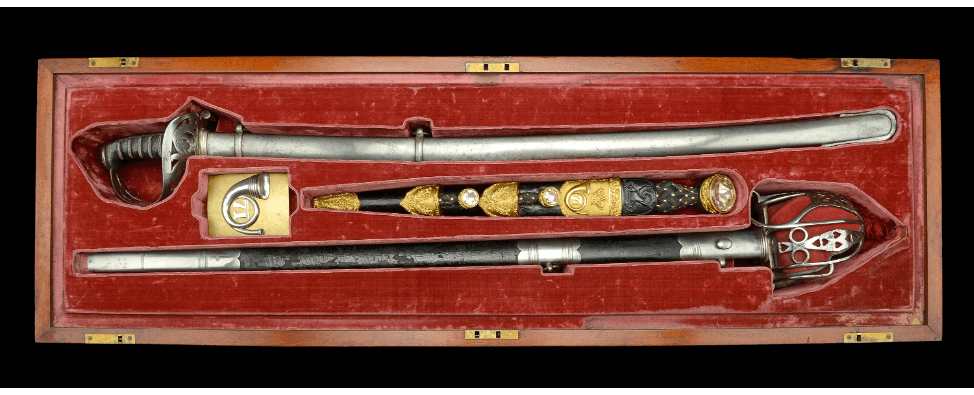
Lieutenant Wyndham Neave – killed in action at Morar, 16 June. Born on 21 November 1834, the 4th son of Sir Richard Digby Neave, Bart.
In a letter to his father Lieutenant John Lightfoot of the Bombay Horse Artillery described the action, ‘Just at this time there came a cheer from the rear and up came the 71st at the double, I ceased firing and they rushed past straight at the nullah, the rebels did not wait for their approach but, throwing down their muskets they drew their swords and waving them over their heads, dashed forward to meet the 71st, young Neave son of Sir Digby Neave was killed at the first onset, but not a rebel escaped. They were killed to a man!’ (Noonan’s)
Grave at the Christian Cemetery, Gwalior – “Sacred to the memory of Lieutenant Wyndham Neave, 71st Highland Light Infantry, who was killed in action at Morar Gwalior on 16th June 1858. Aged 23 years and 7 months. This monument is erected by his brother officers.”
Sergeants
McGill, Hugh – killed in action, 16 June
Shaddon, William – died of sunstroke
Wilson, James- dangerously wounded, 16 June
Corporal Thomas Leslie – killed in action, 16 June
Privates
Anderson, Allen – slightly wounded
Brown, Daniel – killed in action, 16 June
Cromar, James – slightly wounded, 16 June
Daly, Bernard – dangerously wounded, 16 June
Fergusson, Donald – slightly wounded, 16 June
Kinniburgh, David – killed in action, 16 June
Nicholson, Samuel – severely wounded, 16 June
Watson, William – severely wounded, 16 June
86th Regiment of Foot
Corporal William Taylor- wounded 20 June
Private William Grice – dangerously wounded 20 June. Died of wounds
25th Regiment Bombay Native Infantry
Lieutenant Wellington Rose – mortally wounded. Died of wounds 19 June.
“Wellington Rose (1826-1858) was the first to scale the walls of Gwalior Fort and to plant the British flag on its ramparts. The feat was warmly cheered, and his kinsman, Sir Hugh Rose, (afterwards Lord Strathnairn), used to relate that he had mentally resolved to recommend the plucky lad for the Victoria Cross for what he had done, when a moment later a fakir was observed stealing up behind him, who levelled his pistol at him, although by this time the fort had capitulated. Poor Wellington Rose was mortally wounded, and he died on June 19, 1858. His brother Arthur died from the effects of excessive fatigue a fortnight later at Kaira.”
Family stories can be taken with a pinch of salt, and although no one mentions Rose placing the flag on the ramparts, it is simply too good a tale to leave out. Rose’s action on 20 June was no less daring, for he, with a small band of sepoys and Scindia’s police, took Gwalior Fort.
Havildar Buldee Singh – dangerously wounded
Naik Doorga Singh – slightly wounded
Sepoys
Chota Singh – severely wounded
Goonajee Gowra – slightly wounded
Mahadoo Gowlee – slightly wounded
Mattadeen Moraye – dangerously wounded
Ramlal Tewarry -sword cut
Seemumber Ahir – dangerously wounded
3rd Regiment Cavalry, Hyderabad Contingent
Troopers
Maddoo Khan – killed in action
Hassan Khan – killed in action
Issery Singh – dangerously wounded
Shaikh Kabiruddin – slightly wounded
Najmuddin Khan – slightly wounded
Brigadier Smith’s Brigade, Rajputana Field Force
3rd Troop Horse Artillery
Sergeant T.H. Law – contusion in the abdomen
Corporal W. Graggs – severely wounded, right leg amputated
Gunners
Currie, Thomas – slightly wounded
Shorten, Steven – slightly wounded
Artillery
Gunners
Connors, Patrick – killed in action, 16 June
Field, John – severely wounded 16 June
Hennessey, John – severely wounded. Died of wounds, 16 June
HM’s 8th Hussars
“Lieutenant Reilley, killed by sunstroke within minutes after having ridden a dashing and eager charge, was brought into hospital; and later in the day, he, with poor Berry and two other men, on a non-commissioned officer, was consigned to a hastily made grave, with as much care as circumstances would allow.”
Lieutenants
Jenkins, R.W. – slightly wounded, 17 June
Reilly, John – died of sunstroke, 17 June – Enlisted: c. 1848. Served in the Crimean War 1854-56. Awarded Crimean War medal. Clasps: Alma, Balaclava, Inkerman, Sevastopol. Cornet and Riding Master, 8th Hussars: 3rd September 1854. Ordered to proceed to Depot in England: 15th December 1854. Lieutenant: 14th September 1855. Indian Mutiny medal (clasp for Central India). Although gazetted to the 8th Hussars, Reilly served with the 4th Light Dragoons in the battles of 1854. He received his Crimean medal from Queen Victoria on Horse Guards Parade on the 18th of May 1855. He was mentioned in dispatches for gallant conduct before Gwalior on the 17th of June 1858.
Assistant Surgeon – H. Sherlock – severely wounded by a spent ball, on 17 June, received a special mention in despatches, “For rendering great assistance in bringing in the wounded under fire.”
Sergeants
Lynch, J. – shot, and subsequently beheaded on 17th June.
Holding the rank that he did (paymaster’s clerk) according to Mrs. Duberly, Sergeant Lynch had “no business to have gone into action; but it must be difficult for any soldier who is worthy of the name to keep himself back in the day of battle: at any rate, there they all were, orderly-room clerk, schoolmaster sergeant and paymaster clerk; of these volunteers, one was killed, and a second wounded, in endeavouring to save the life of his comrade.
“The bodies of several non-commissioned officers and men who had fallen the day before (16 June) were found in the cantonments mutilated. One was lying near some burnt haystacks, half roasted away; Sergeant Lynch was beheaded; and three others were also discovered in the Lashkar, also with their heads cut off, and hanging up by their heels.”
Ward, Joseph – severely wounded, 17 June
Corporal Thomas Smith – killed in action, 17 June
Privates
Berry, Edward – severely wounded, died of wounds – a bandsman of the 8th Hussars. His leg was so badly shattered that an immediate amputation at the hip was considered necessary. Dr. Lockwood carried out the surgery with Berry under the influence of chloroform. Berry remarked, when first struck, that his wound was mortal – within half an hour of the operation, he died.
Bowler, John – killed in action, 17 June
Cave, James – slightly wounded, 17 June
Cox, Thomas – killed in action, 17 June
Hollis, George – severely wounded, 19 June
Jackson, Alfred – killed in action, 17 June
Kelly, Michael – slightly wounded, 17 June
Lindsay, James – killed in action, 17 June
Pearson, John – slightly wounded, 17 June
Tuft, George – died of sunstroke, 17 June
1st Native Light Cavalry (Bombay Lancers)
Captain W.W. Anderson – slightly wounded in the arm by a musket ball, 19 June
Lieutenant J.W. Heath – killed in action, 19 June
Cornet W. Mills – killed, musket ball through the spine, 19 June
Naik Shook Lal – severely wounded
Troopers
Shaikh Kyrastee – slightly wounded
Maun Singh – slightly wounded
Shaikh Sillar Bux – severely wounded
Shaikh Noor Mahomed – severely wounded
HM’s 95th Regiment
Brigadier Smith in his report on the operations of the 17th said:-” I have only to add that I cannot
speak too highly of the steady and soldierlike conduct of both officers and men of the 95th Regiment and of the 10th Native Infantry, who, though exhausted by fatigue and want of food, stormed the heights under a burning sun and a heavy fire. “
Lieutenant J.A.R. Raines – “severely wounded by a musket ball in the left arm, but he continued in command of the Regiment.” 19 June
Lieutenants
Crealock, J.N. – slightly wounded –” Seated on an eminence by himself, the writer disconsolately watched the movement, for an accident of a temporary nature made walking painful.” 17 June
Sexton, J.M. – “was nearly blown to pieces by an explosion of powder, and was so severely burnt that he had to retire to camp, but not until he had been compelled to do so by Assistant-Surgeon Clarke of the 95th.” 19 June
Corporal Joseph Hunt – burnt in an explosion, 19 June
Lance Corporal Michael Hogan – severely contused, 19 June
Privates
“As the relieving company under Brevet-Major Plunkett came up, a round shot knocked over a section of fours, taking off the head of the left hand man, cutting the pouch off the next, broke the thigh of the third, and cut away the calf of the fourth.”
Bird, John – severely wounded
Hall, William – dangerously wounded 17 June. Died of wounds
Dutton, Robert – severely wounded in the hip when his company advanced to assist Lieutenant Maurice’s Company, 17 June.
Johnson, Thomas – slightly wounded, 18 June
McCartney, Joseph – slightly wounded, 19 June
Nelson, Hugh – dangerously wounded, left leg amputated, 19 June
Pike, William – severely wounded, 19 June
Robinson, Henry – slightly wounded, 19 June
Rodden, Edward – slightly wounded, 19 June
Shaw, Joseph – killed in action by round shot, 19 June
Suttle, James – severely wounded, 17 June
Swan, James – slightly wounded, 17 June
The little water we had with us had been sparingly drunk, for many had to have their heads soused to
save them from succumbing to the sun. Several, however, had sunstroke, and more than one poor boy,
who had lately joined us, rolled about in agony with the cramp. (Ah, me! those Kilmarnock caps with
covers or a dirty white towel round them, no wonder we were bald at twenty-five and grey at thirty; try
them, gentlemen, on the anniversary of Waterloo on a rocky hill, without water to drink and nothing to smoke!)
10th Regiment, Bombay Native Infantry
Naik Hanuman Dhobe – slightly wounded
Sepoys
Babujee Kuddon – slightly wounded
Ittoo Pendickar – severely wounded
Thakoor Purrand – severely wounded
Fifer Davee – severely wounded
Bheestee Sewa Juddoo – slightly wounded
Sources:
The Revolt in Central India 1857-59, Compiled in the Intelligence Branch (Simla: Government Monotype Press, 1908)
Campaigning Experiences in Rajpootana and Central India during the Suppression of the Mutiny, 1857-58 – Mrs. Henry Duberly (London: Smith, Elder & Co., 1859)
Selections of Letters, Despatches and other State Papers Preserved in the Military Department of the Government of India 1857-58, Vol IV – edited by George W. Forrest (Calcutta: Superintendent Government Printing India, 1912)
Historical Record of the 14th (King’s) Hussars from 1715 to 1900 – Col. Henry Blackburne Hamilton (London: Longmans, Green & Co., 1901)
History of the Royal Irish Rifles – Lt. Col. George Brenton Laurie (London: Gale & Polden, 1914)
The 95th (The Derbyshire) Regiment in Central India – General Sir Julius Raines, KCB (London: Swan Sonnenschein & Co., 1900)
Casualty Roll for the Indian Mutiny, 1857-59 – compiled by I.L. Tavender (1983)
https://thirdwatchprotection.com/wp-content/uploads/2020/11/FAMILY-MEMBERS-THAT-SERVED-IN-THE-MILITARY-CLAN-ROSE-EDITION-2.pdf
https://www.noonans.co.uk/auctions/archive/past-catalogues/566/catalogue/382350/
https://www.qrhmuseum.com/
 Mutiny Reflections