The Gwalior Campaign
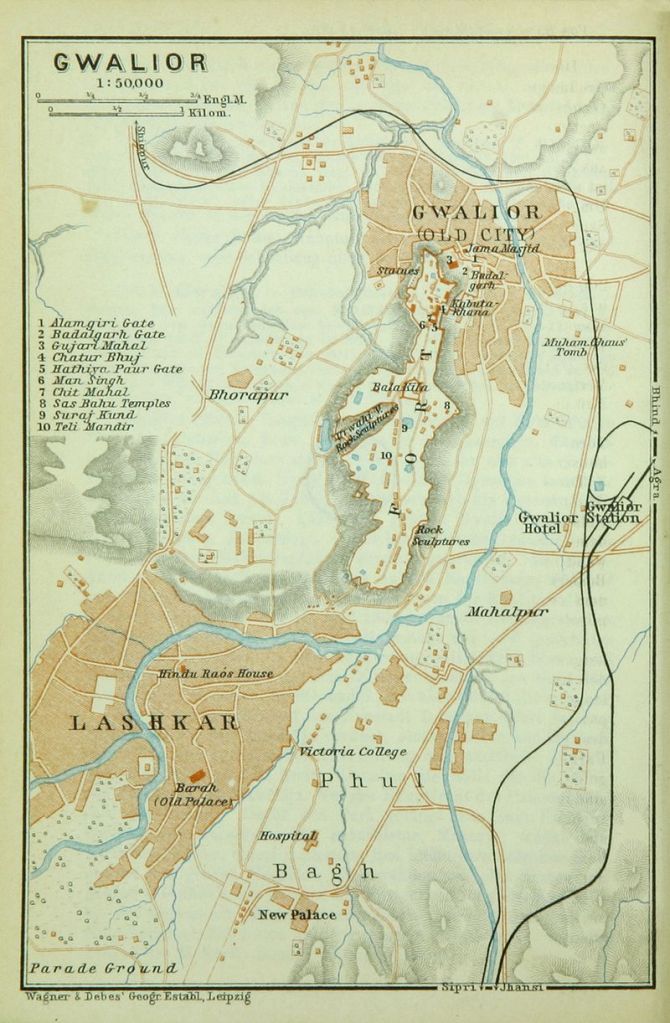
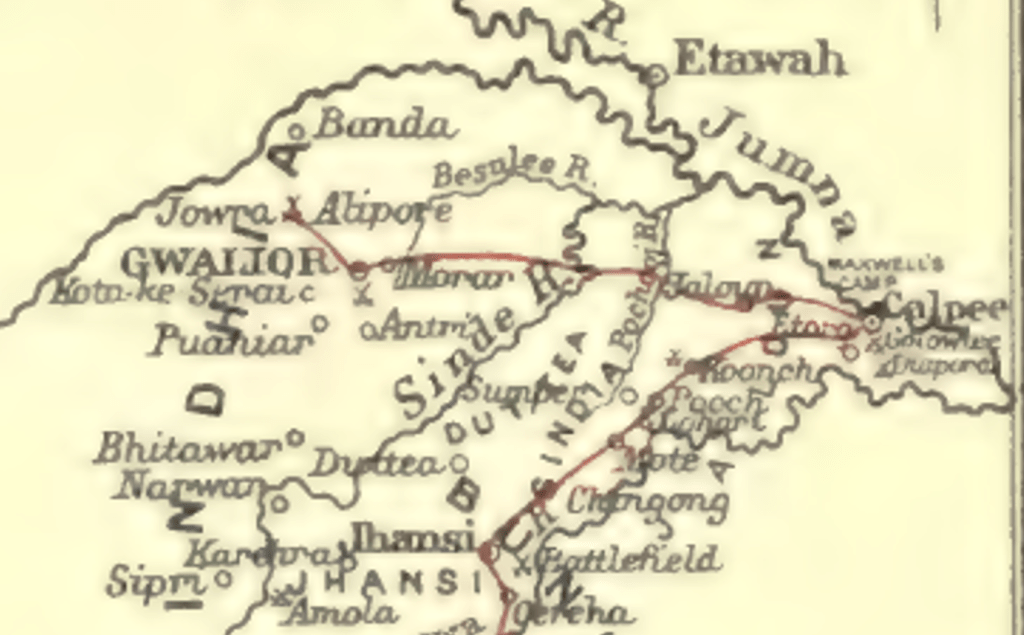
The base of operations for what was now called The Gwalior Campaign was Agra. Communications between the two places were the shortest and in the best of order, but its only imperfection was the difficult ford on the River Chambal. While Sir Hugh Rose still intended to invest Gwalior, to a limited extent, like at Kalpi, he did not plan a siege. Instead, he would attack on its weakest side and then let the investing troops deal with the escaping rebels. A successful attack either inside or outside the city would then be followed by the capture of the fort.
What Sir Hugh Rose lacked was information about the rebel positions; he had neither a plan of Gwalior nor a map of the environs. As such, a lengthy reconnaissance was in order and without giving himself a rest, he rode off to ascertain what he was facing. He had positioned his troops according to some sound advice received from Sir Robert Hamilton and Major Macpherson, both of whom were well acquainted with Gwalior, but Rose wanted to see it for himself. With much trouble, he ascertained that the weakest side of Gwalior, and consequently the best suited for an attack, was the east, where the city was commanded by high hills. The hills were difficult to access, but the slopes, which descended gradually towards and close to Lashkar, would allow Rose, after taking the hills, to drive the rebels down from the slopes. Then, with the hills in his possession, he could position his artillery on the lowest slope to cannonade the Lashkar itself: covered by artillery, he would then storm Lashkar and cut the rebel line effectively in two, with one part in the old city and the other in the Lashkar. Thus situated, he was also protected from the fire that the fort would undoubtedly throw at him.
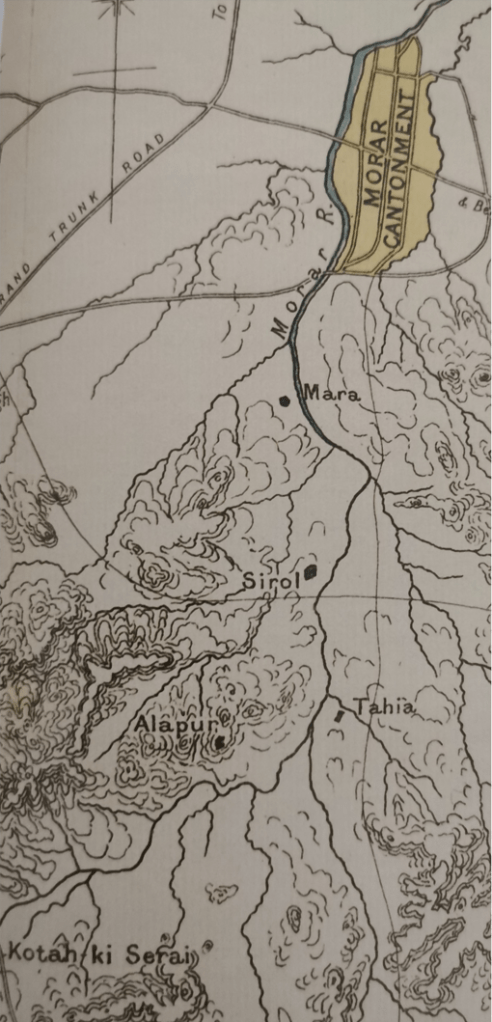
To invest Gwalior from the south, Major Orr with the Hyderabad Contingent moved from Jhansi to Punniar, an old battlefield southwest fourteen miles from Gwalior, on the Gwalior-Sipri Road. While Orr was numerically too weak to attack Gwalior from the south, he could still thwart the rebels’ escape with the assistance of other investing corps. Brigadier Smith and the Rajputana Field Brigade were ordered to march to Kotah-ki-Serai, seven miles south-east of Gwalior and remain there, while Colonel Riddell would move his column, which included a field battery, a wing of Meade’s Horse, a Regiment of the 3rd Bengal Europeans and 200 Sikhs and siege train seven miles north of Gwalior and invest the city on the west. Rose himself would take his position with his brigade at Morar where Brigadier General Napier joined him.
However, the rebels had other plans.
Battle of Morar – 16 June
If Rose or his men thought they would have a day’s rest, they were quite mistaken – with the sun high in the sky, Captain H.D.Abbot who was reconnoitring in front with a portion of the Hyderabad Cavalry, reported to Rose that the rebels were in the Morar Cantonments, just five miles east of Rose’s position at Bahadurpore. Rose rode out to assess the situation for himself. When he returned, he countermanded the order to set up camp and planned his attack on Morar.
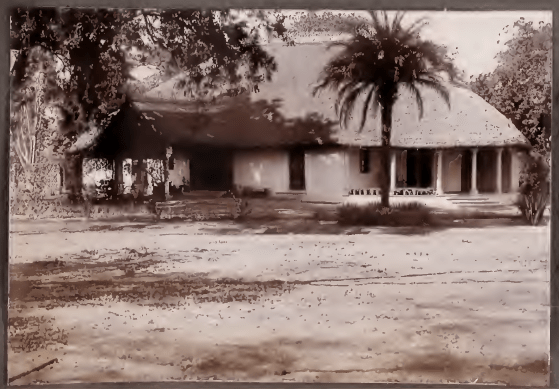
The Morar Cantonments lay on the right bank of the River Morar and could be traversed from east to west via the road to Gwalior. Between them and Rose’s position at Bahadurpore, the country was open and level, with the exception of some nullahs which ran along the eastern side. To the southeast, the country was broken and hilly. Once the families and officers of the Gwalior Contingent had made their homes here – the bungalows had only been partially burnt, and Scindia had taken much trouble to repair the damage and construct new buildings to house the force that would garrison Gwalior in the future.
“Intervening between the fortress and our force were the English cantonments, embosomed in bright green trees, with a picturesque church steeple and bungalow roofs peeping out from among them. They were as familiar faces, and associated strangely with the rebel ranks drawn up in front of them. They were a loadstone which drew us on them one day sooner than the will of our General dictated, for we had come a long night’s march, and lacked the energy to fight. Once again, Englishmen were called on to be up and doing, while the igneous-born rock of Gwalior looked on.”
The rebels, however, were holding the cantonments with cavalry while they held the ground to the right and right front with infantry, bodies of whom had been hidden in the nullahs. A battery of guns formed their centre but was concealed; another was positioned to the right. Rose intended, while masking the dangerous ground on his left front, to outflank and “roll up” the cavalry which formed the rebels’ left wing. The 86th Foot and 25th Bombay NI were deployed as his front line with some guns under Lieutenant Strutt, the Bombay Artillery in the centre and detachments of the 14th Light Dragoons on the flanks. Brigadier General Napier was in command of the 2nd line. Told to pay special attention to the “dangerous country” of hills and the nullahs to his left and rear, and ordered to advance in echelon from the right with the 71st Highlanders and some Madras Sappers & Miners. A wing of the 14th Dragoons protected Napier’s left flank; they were in turn accompanied by the 1st Troop Bombay Horse Artillery under Captain Lightfoot, and the 2nd reserve Bombay Artillery under Lieutenant Harcourt. The 3rd Bombay Cavalry formed the rear guard. Rose further sent cavalry patrols into the hills on the left and rear to search for any rebels who might be hidden.
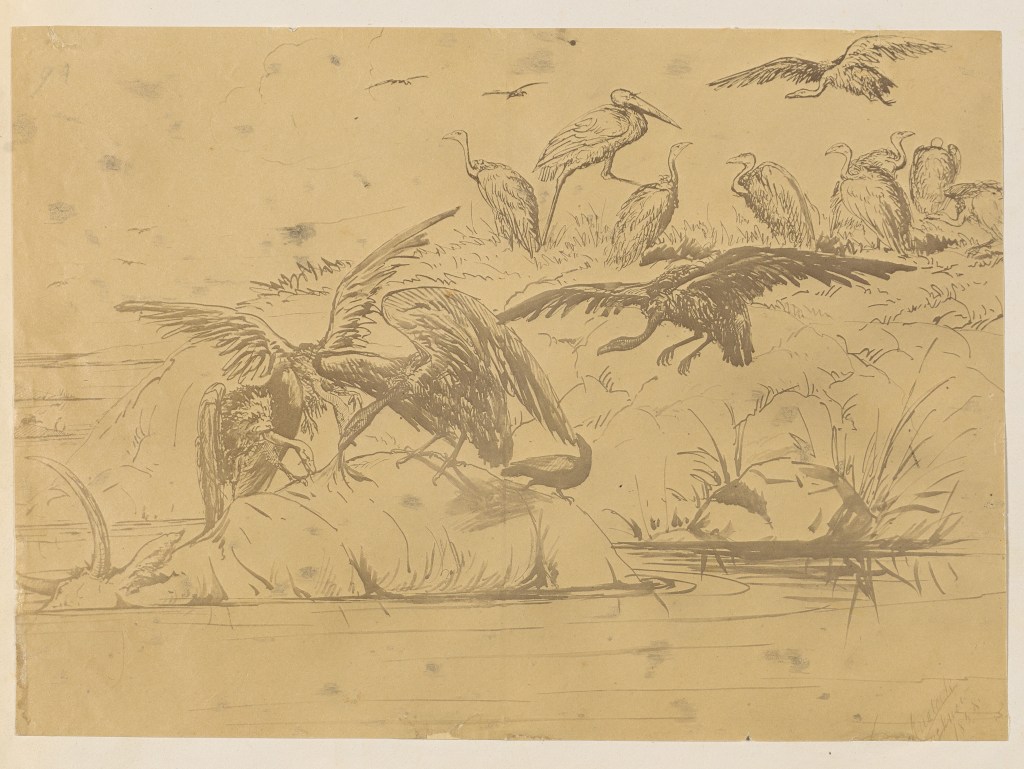
“The two Brigades, having assumed the order of battle- the 1st and 1st line being under the immediate command of Sir Hugh, and the 2nd, which was exceedingly weak, numbering about a thousand men, under General Napier, C.B., steadily advanced against the enemy in front of the cantonments. scaring, as they passed, the birds of prey which were gorging themselves on the dead horses left by Scindiah’s troops, when pretending to oppose the advance of the rebels on his capital. As we advanced, the enemy retired under cover of the cantonment houses and trees.”
It was not a simple task. As Rose approached Morar, he moved his front line diagonally to the right but quickly found himself fighting the broken ground, a mistake apparently caused by Scindia’s agent, who claimed he lost his way. Now, in the direct fire of the rebel central battery and the enfilading fire from that on their right, Strutt, realising there was no time to lose, pushed up his guns with all speed while Harcourt quickly reinforced him, to check the firing of the central battery. Meanwhile, Lightfoot galloped up to engage the rebel right flank battery. Now under the cover of the artillery, Rose held to the left with the 25th Bombay NI and sent the 86th forward in skirmishing order. These swung around the rebel right flank and chased their cavalry out of the cantonments.
Meanwhile, the cavalry was having as bad a time as the rebels in the nullahs. Forced to make a lengthy detour to the right to avoid the broken ground, Captain Abbott found a crossing over the nullahs in front of the cantonments and came down on the rebel left. However, as soon as the advance of the 86th was known, the rebels withdrew their guns across the river and before Abbot got anywhere near them, the bulk of the rebel cavalry was seen following the guns and Abbott missed them.
Napier followed up with the 2nd Line, and it was just his good fortune that his information regarding the nullahas was correct – the reconnaissance party he had sent confirmed they were indeed full of rebels, well hidden in the depths. The 71st were sent forward and were received with a well-directed fusilade, killing Lieutenant Neave and five men. They had almost made it within “musket length” of the rebels when Neave was shot in the chest: the man who shot him did not live long enough to reload – within minutes; he fell, riddled with bullets. The troops had faced nullahs before at Kalpi, and they knew they would have to take them all. Behind the 71st came the 25th Bombay NI, who brought an enfilade fire on the nullahs, while the 71st rushed forward with their bayonets. The rebels who fled the nullahs were swiftly caught by a worse foe for a wing of the 14th Dragoons, who had wheeled around Rose’s left flank and were waiting for the hapless survivors. In the foremost nullah alone lay 70 dead men who had belonged to Scindia’s faithless guard. They were wearing English accoutrements and breastplates on which were engraved “1st Brigade Infantry.” The rebels who had been turned by Captain Abbott’s advance were also caught by the Dragoons – they came upon them in the plains before they could reach the hills.
After two hours of severe fighting, Morar was captured, and Sir Hugh Rose had won his first fight against the rebels he knew from Kalpi and their new Gwalior friends. It was not the outcome that Tope and the Rani had hoped for. Rose now had command of the line of not just the Morar River but the road to Agra, but he could communicate freely with Dholpore on his right and Kotah-ki-Serai on his left. Thanks to Scindia, the Morar Cantonments answered admirably to the wants of his men with shelter, adequate protection for his wounded and sick, and enough space for his Commissariat and Ordnance stores. Rose was regaled with an actual residence of his own and the church, though minus its furniture, which had been destroyed, at least gave the men the idea they were once again in civilised country. The camp was pitched in the once “well-cared-for gardens of the officers of the Contingent, and which were still covered by flowers and shrubs, lime, custard apple, and pomegranate trees, and vines.”
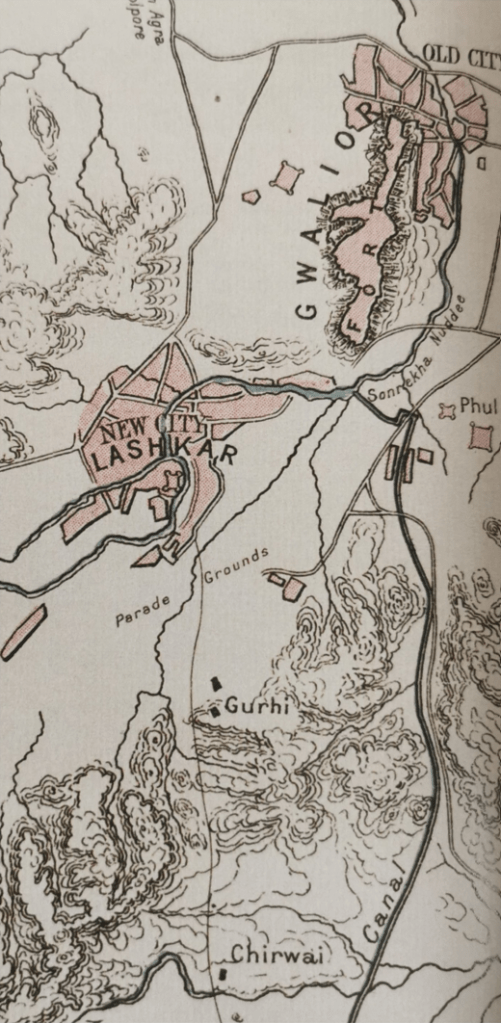
From Morar, Rose could now reconnoitre Gwalior for himself and determine if his plan for investing the place actually held merit. To his satisfaction, it did, provided everyone was in place. He ordered Brigadier Smith and the Rajputana Field Brigade to advance from their current position at Antri through the pass to Kotah-ki-Serai, four miles south of Gwalior. Smith had advanced his force along the Gwalior road by the ford across the river, to find the rebels soundly occupying the hills on his right front. They occupied a two-mile road, which led through a pass through the hills, and they also had possession of an old, dry canal, which was cut out of the rock, that ran from the ford on the left of the road to the foot of the rock of Gwalior.
Kotah-ki-Serai – 17 June
At seven in the morning, Brigadier Smith reached Kotah-ki-Serai. His advance had been unremarkable and unopposed, but he was ready for surprises. As such, he sent out a forward party to reconnoitre. They returned with the news that the rebels were indeed in the hills just east of the canal and their guns occupied a position on a ridge 1500 yards north of Kotah-ki-Serai, thus commanded Smith and his brigade most admirably. Smith was not going to give them a chance to realise their luck. He decided to take the initiative and drive the rebels out of the hills and the canal.
The 95th were just pitching their tents and settling down to their breakfast when “the whole force was startled to hear a gun fired from the heights to the north and to see a round shot bounding into the camp. This was the opening of the ball for at once the bugles sounded the ‘assembly’ and soon after the infantry of the Brigade, commanded by Lieut-Colonel Raines, formed up.”
The column was halted as Smith and his staff rode off to reconnoitre; the 8th Hussars from the advance guard served as his escort and three officers of the 95th in “some unexplained capacity.” The staff officers wheeled off in different directions while the Smith rode towards the nearest hill. According to Crealock, who had accompanied Smith, the ground they were now traversing was broken and communication had become difficult when suddenly, “we rode into what seemed a semi-circle of musketry. It was a surprise and no mistake; the words ‘fours about’ were distinctly given by some one not in command of the escort, and promptly obeyed-luckily the smoke of the volleys and the dust caused by the wheeling troop hung heavily in the morning air, for all the party had not succeeded in obeying the order.” Smith’s horse was shot and he found himself uncomfortably on foot and had to be helped up by the two infantry officers and the regimental bugler, Barter.
“The Brigadier was, however, only stunned and regained his manners before his recollection of events, insomuch that he refused to accept a mount offered by one officer, and resolutely argued that it would be injudicious to retire until he had found his pistol. As he was a General and the other officers young and inexperienced, a search was set on foot, and the pistol was found; he was then induced to mount the trumpeter’s horse. It is needless to say that Trumpeter Barter-holding on to a stirrup-had to go at a rapid pace, as the little party briskly beat a retreat without further controversy, followed by a few shots. The escort would appear not to have realised the mishap, and it was only on the Brigadier’s return to the column that the question ” where’s the Brigadier ” received a satisfactory answer.”
The Brigade had been drawn up in lines of columns – “the 95th-five hundred bearded sunburnt men, in once – white sea- kit smocks and tattered blue trousers-here and there bare feet, here and there native slippers-while for head-dress the Kilmarnock forage cap with a white cover did duty, sometimes assisted by a towel or a roll of coloured cotton,” No.1 Company was on the left in echelon, however their commander found he had no orders so he covered the left flank of the advance, which had now been ordered. They quickly came up to the position where Smith had been ambushed and found the rebels had become tangled in their own plans. As much as they had wanted, they could not follow Smith as the canal, both deep and wide and well hidden by bushes, separated them from the British. “No. 1 Company was
the old Grenadier Company, and still retained in its ranks the tallest men in the Regiment, and they made but small work of the dyke; but their commander, unlike them, had not been selected on account of his stature, or indeed on any grounds but his seniority as a subaltern, so he would have miserably perished had not his stalwart subaltern assisted him. The men were too eager to try conclusions with the rebels we saw retiring before us, and required forcible Saxon to recall to them the fact that the fortress of Gwalior could not and ought not to be captured by them alone.”
With the infantry not interested in meddling with the 95th, No. 1 Company now extended itself on the spur of the hill and began taking shots at the rebel cavalry, who were trying their best to ride up to meet them. From the right, there came the sound of firing at a distance of some four hundred yards; but the 95th were in no fit condition to help. The men had marched through the night and the morning’s work was on an empty stomach under a merciless sun. A wing of the battalion, which had been held in reserve, now came up to relieve No. 1 Company and they were ordered to retire to the right rear.
“We then found that we had more men down with the sun and exhaustion than we could carry back, so we retired to a neighbouring knoll from which we could cover the ground; the poor fellows were stretched about, exposed to the fierce sun, while the enemy’s cavalry hovered round us, but our Enfields soon drove them off. We could see on the hills above us a vast concourse of the rebels, many of them in red, while new batteries were constantly opening fire. We were told that they had that day sixty-two guns on the hills…Soon after, some of the 8th Hussars relieved us of anxiety about our scattered sun-struck men, and we were recalled to the main body, whom we found with arms piled, trying to breakfast off water and native tobacco.”
While Crealock might give us some insight into the day, his telling, though amusing, is not quite the whole battle.
When Raines and the 95th had gained the hills to to the rear of their camp, during which a company of the 95th was sent to skirmish along the base of the hill to the left, Raines noticed the rebels had, at a distance of some 1000 yards, on a hill, their guns; they had also placed their infantry and cavalry on another of the same height. He called the halt and assembly only to have the rebels open fire with shrapnel. On his immediate right, some 500 yards distant on the direct road to Gwalior, stood 100 sowars of the Gwalior Contingent Cavalry, well protected by a high embankment. Raines realised they would try to turn his right flank with a charge and cut him off from his reserve, so he quickly retreated. In the rear, he found Major Vialls, commanding the reserve, engaged in a fight with the Gwalior Contingent Cavalry, with two companies of the 95th, keeping them in check. Raines advanced up the Gwalior road, with the cavalry and guns retiring in his front.
Meanwhile, Smith advanced his cavalry to the head of the pass, where he left some infantry to protect the defile in the rear. Then he directed the cavalry to charge the three hundred rebel sowars who had taken their stance in front of Gwalior.
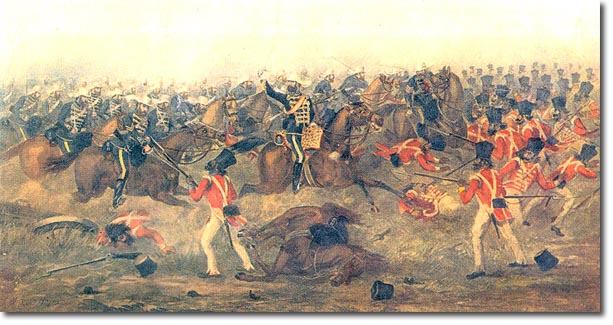
The 8th Hussars under Captain Clement Walker Heneage rode down the pass in file and advanced for 300 yards. Then they formed at a gallop and charged on the rebels. Their first line was cut down, forcing the others to turn and flee towards Phool Bagh. Now the Hussars met a check – the ground was rough and broken, and intersected with a myriad of small nullahs, obliging a third of the squadron to diverge to the right under Lieutenant Hardinge; the rest with Captain Henage, Captain Poore and Lieutenant Reilly swerved a little to the left and continued the attack, charging through the rebel camp. The rebel gunners tried to stop the onslaught, but the Hussars were too fast – before they could fire off their first salvo, the gunners were slain, and the Hussars took three of their guns. The guns from the fort now opened fire, and the rebels unmasked their field guns on the right and left, but it was no use. The Hussars, after passing through the camp and crossing the road from Gwalior to Morar, continued their rush. They came across a large force of cavalry and infantry trying now, in one disorganised mass, to escape from their camp to the fort. Many turned to fight, but the Hussars never slackened their pace and dashed straight through them, swords flying, cutting down scores where they stood. They continued their charge right through the Phool Bagh Cantonment.
Somewhere in the midst of the battle, the Rani of Jhansi, in front of her troops, was cut down by a Hussar. He did not know he had killed a woman. Dressed as a man, she had bravely made her last stand with her men. In her, the rebels lost their best military leader, a blow they would find hard to recover from.
With the entire ground now cleared, Captain Heneage withdrew the Hussars at an easy pace and shortly after, Lieutenant Hardinge joined him. He and his men had charged the right of the camp, passed through it and captured four guns. Hardinge was shot at by a dismounted sowar, who missed him but hit Hardinge’s horse in the eye. He was then attacked by two more sepoys, but even dismounted, he managed to kill them both.
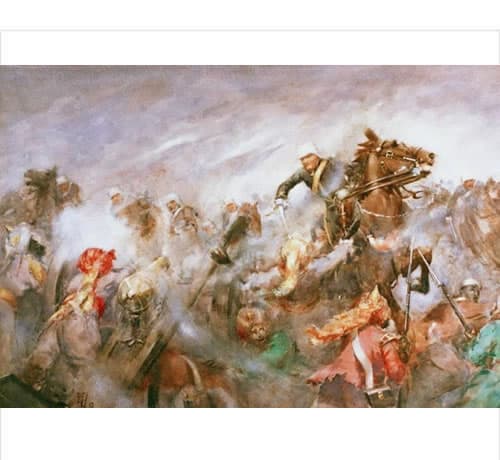
After the charge, Captain Heneage was overcome by the sun and passed out; Lieutenant Reilly died soon after from exhaustion. Colonel Hicks of the Bombay Artillery and Assistant Surgeon, who had both charged with the cavalry, now took care of the wounded on the field, although Hicks himself had been shot. The squadron was so completely exhausted they could barely stay in their saddles, but they would need to rally one more time.
The rebels had decided they were not quite finished for the day and now formed up at the front and the flanks, but the 95th fortuitously arrived near the guns, and the Hussars formed to their front in line, in single rank, to show an extended front. Behind them, the Bombay Lancers arrived as the second line. However, no one charged.
“The cavalry was then retired by alternate troops, protected by the artillery, during which movement both arms showed the greatest steadiness, and entered the ravines under the protection of the infantry posted there. Brigadier Smith then took up a position on the heights for the night, sending for his baggage, and placing it in a sort of an amphitheatre formed by a portion of the hills he had occupied. Both ends of the defile were guarded by strong infantry pickets, and strong cavalry and infantry pickets were thrown out towards the heights on the right; the left was defended against any sudden assault by steep bank and a canal.”
Smith retired to his tent and wrote his report to Sir Hugh Rose, in which he now asked for reinforcements.
The Death of the Rani of Jhansi
unknown artist
Wellcome Collection
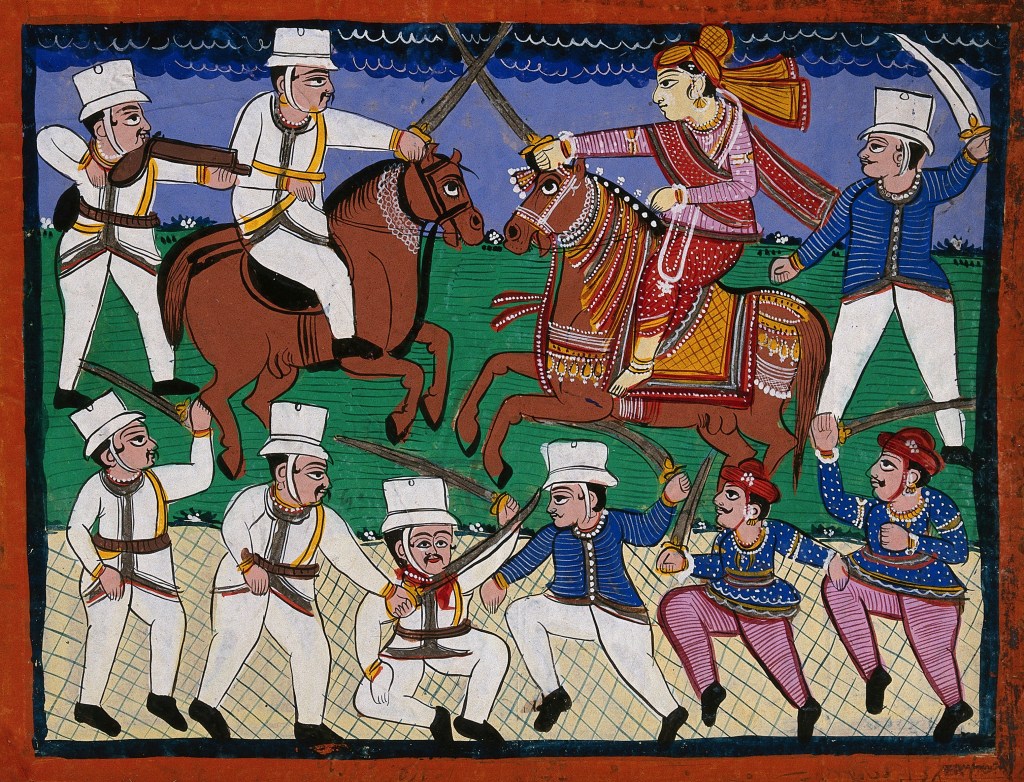
There are several accounts of the Rani’s death. Major Macpherson states she was near the Phoolbagh batteries, “seated, says her servant, drinking sherbet, with 400 of her 5th Irregulars near her, when the alarm was given that Hussars approached. Forty or fifty of them came up, and the rebels fled, save about fifteen. The Rani’s horse refused to leap the canal when she received a shot in her side, and then a abre cut on the head, but she rode off. She soon fell and dead and was burned in a garden close by.”
However, Sir Robert Hamilton, who was on the spot, made his own inquiries, and his account does not include sherbert.
“The fact that the Rani had been killed was not known in Brigadier Smith’s camp until he heard of it by a note from me. It occurred, from all I could ascertain, whilst the Rani, with a ground in which were the Rao Sahib and Tantia, were looking at the advance on the heights early in the day. The Rani was on horseback, and close to her was the female (a Mohammedan long in the family), who never seems to have left her side on any occasion. These two were struck by bullets and fell. The Rani survived about twenty minutes; she was carried towards Phool Bagh, the Rao Sahib attending her.”
These two versions were put forward by Sen in his book, 1857; however, the actual manner of her death is unclear. The Hussars, in their history, believe she was cut down by a Hussar who had mistaken her for a man. However, it is only fair to add that D.V. Tahmankar, who wrote “The Rani of Jhansi” in 1958, states that she had advanced with her men and gave battle, covered by intense artillery fire. Then, inspired by her presence, the troops rallied and attacked again until they were forced back by Captain Heneage. The rebels held their ground and in the thick of the fight, “the Rani…using her sword with both hands and holding the reins of her horse in her mouth,” when she was mortally wounded by a carbine shot. However, Tahmankar concedes that his objective was to paint the Rani as a fearless leader who died in battle. No one doubts the Rani’s bravery nor her resourcefulness, and whether she was killed by a bullet or a sword cut does not detract from the fact that she did inspire her followers with courage and determination.
However, General Sir O’Moore Creagh (VC), who wrote The VC and DSO, had a different take altogether, regarding the Hussar’s charge.
“There was no pretence of resistance any longer except for a slight, full-armed figure that was helplessly whirled along in this cataract of men and horses. Again and again, this one leader, gesticulating and vociferating, attempted to stem the torrent of routed rebels, but in vain. There was no possibility of holding up the broken Mahrattas, and at last a chance shot struck down, across the horse’s neck, this one champion of the retreating force. A moment later, the swaying figure was overtaken and one stroke from a Hussar’s sabre ended the whole matter.”
Now, without the Rani, the rebels still had to face Sir Hugh Rose, who was now closing in on Gwalior. The next two days would decide the course of the rebellion.
Sources:
The Revolt in Central India 1857-59, Compiled in the Intelligence Branch (Simla: Government Monotype Press, 1908)
Bulletins and Other State Intelligence for the Year 1858, Vol II – T.L. Behan (Harrison & Son, London Gazette Office, 1860)
Rulers of India – Clyde and Strathnairn – Maj.Gen. Sir Owen Tudor Burne KCSI (Oxford: Clarendon Press, 1892)
Selections of Letters, Despatches and other State Papers Preserved in the Military Department of the Government of India 1857-58, Vol IV – edited by George W. Forrest (Calcutta: Superintendent Government Printing India, 1912)
Historical Record of the 14th (King’s) Hussars from 1715 to 1900 – Col. Henry Blackburne Hamilton (London: Longmans, Green & Co., 1901)
History of the Royal Irish Rifles – Lt. Col. George Brenton Laurie (London: Gale & Polden, 1914)
History of the Indian Mutiny, commencing from the close of the 2nd Volume of Sir John Kaye’s History of the Sepoy War, Vol. III – Col. G.B. Malleson (London: W.H. Allen & Co., 1888)
The 95th (The Derbyshire) Regiment in Central India – General Sir Julius Raines, KCB (London: Swan Sonnenschein & Co., 1900)
The Rebellious Rani – Brigadier Sir John Smyth (London: Frederick Muller Ltd, 1966)
Recollections of the Campaign in Malwa and Central India under Major General Sir Hugh Rose – Asst. Surgeon John Henry Sylvester (Bombay: Smith, Taylor & Co., 1860)
 Mutiny Reflections