We have seen in the previous posts, starting with, The Army Has Ceased to Fear how, leading up to 1857, the Bengal Army was poised on the brink of mutiny. Their grievances were both real and, in part, based on a system that encouraged a class hierarchy within the army itself that was unknown in either Bombay or Madras. Whether it was calculated to solidify for the EICo an undeserved legitimacy in front of the peoples of Bengal or was done with the true interests of the soldiers in mind, it must be remembered that this hankering after everything class and caste was what finally brought an end to the EICo army itself. After 1857, John’s Company would cease to exist forever.
Those Cartridges
Although this history is no longer taught as often in schools as in the previous century, there was a time when everyone accepted that the mutiny of 1857 was brought about by the introduction of Enfield cartridges to India. The narrative of how they were greased with fat, objectionable to Hindus and Muslims, is taken, even now, at face value. Unfortunately, nothing is as simple as that. If only it were!
The cartridges caused the mutiny, and at the same time, they didn’t.
Gallery of Firearms
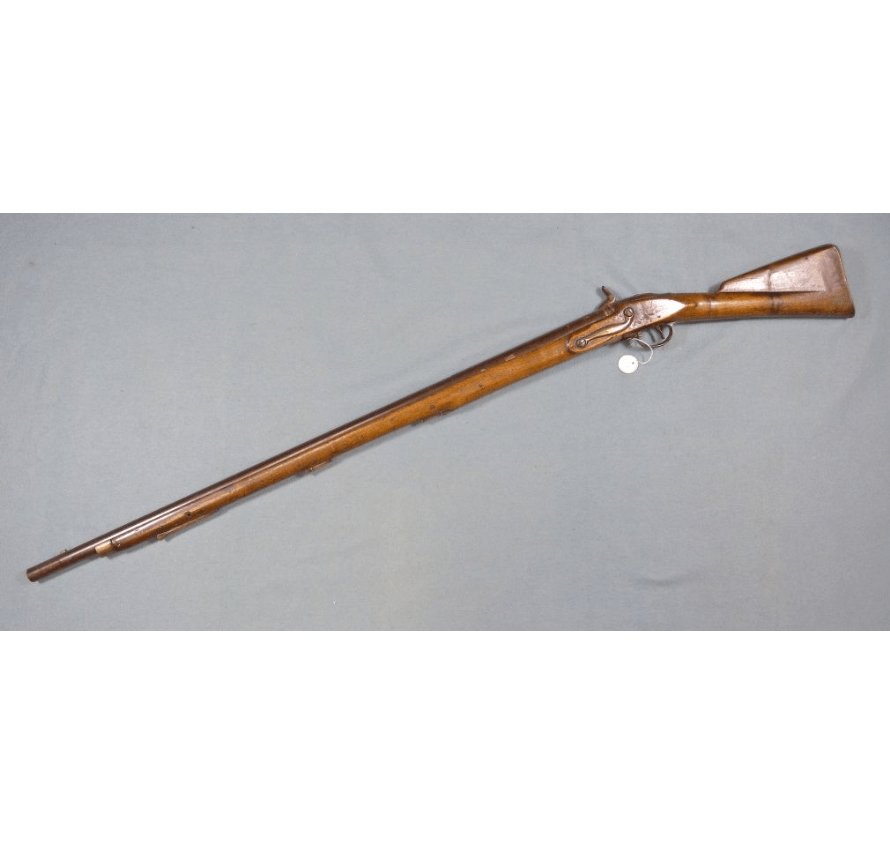
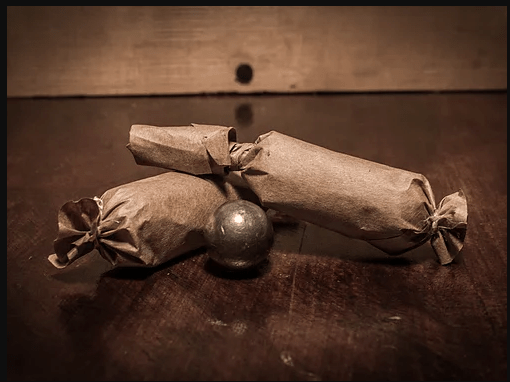
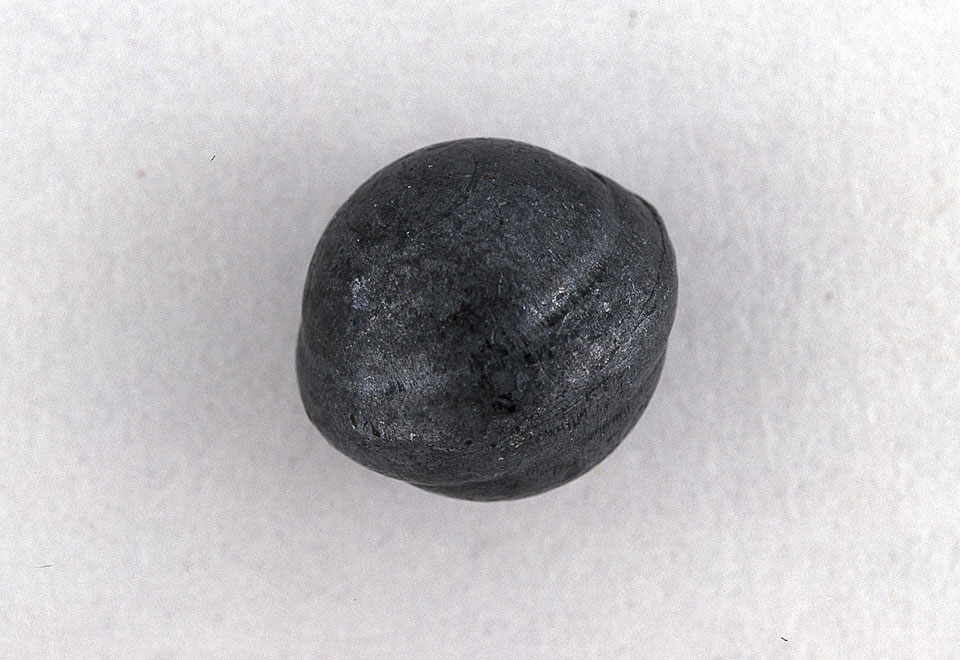

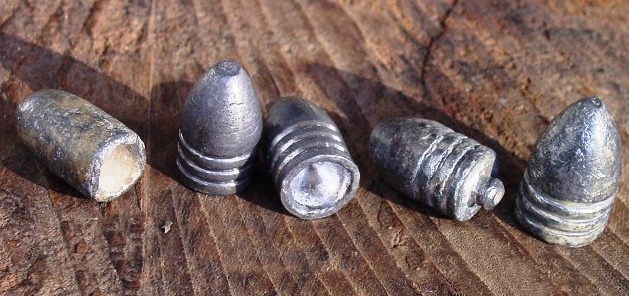

In 1840, the EICo switched from using the flintlock to percussion caps – the Brown Bess, which had been in use since the 1700s, was converted; the design stayed the same, but it was fitted with percussion caps. The move was designed to provide the same ammunition in India as that used by the British Army. Over the next 10 years, 460’000 of these percussion muskets and their fellow carbines and pistols were sent to India from the Military Stores Department in London. Despite the change, the Brown Bess India Pattern would remain the standard musket from 1797 until 1854. Although trusty, the Brown Bess had obvious disadvantages. It was a smoothbore, large calibre weapon, which fired a ball three-quarters of an inch in diameter – by today’s standards is three times the diameter of a modern .22 calibre round. Loading was through the muzzle, with each bullet being dropped down a three-and-a-half-foot-long barrel before firing. The weapon itself weighed 4.8 kilograms (10,5 pounds) and had a full length of 1.49 meters (58,5 inches) — the barrel was 1,1 meters (42 inches) in length.
It was heavy, slow to load (though some soldiers quickened the process by dropping the cartridge in the barrel and then thumping the butt of the musket on the ground, yet even the most experienced could not manage more than three shots a minute), and accuracy was questionable at best, estimated at 50 to 100 yards. It also forced the army to adopt different tactics for its use — men would be formed shoulder to shoulder in lines, with the front line firing, then dropping down so the next line could fire, and so on. The theory was that with hundreds of muskets firing at the same time, chances were some of the shots would find their mark. Using linear tactics with men packed tightly into blocs made it more difficult for them to follow their natural instincts and scarper. It required a tremendous amount of personal courage to stand in line exposed to enemy fire. War was indeed not for the faint of heart, as, when armed with a Brown Bess, men could be placed as close as 25 meters in front of their enemy to ensure the weapon’s effectiveness. When the firing had run its course, the British were feared more for their bayonet charges, for at the end of the musket was a 44 cm razor-sharp blade.
Supplying these smooth-bore weapons to India stopped in 1851 for the British government had got their hands on the Minié rifle. Developed to solve the conundrum posed by the Brown Bess (the ball needed a loose fit when loading, but a tight fit when firing), two French men Henri-Gustave Delvigne, who invented the hollow-based, elongated bullet which expanded when fired, to which Captain Claude Etienne Minié (of the Chasseurs d’Orleans) added a cup in the hollow that helped the bullet to maintain a uniform expansion. This joint concept gave rise eventually to the percussion lock, Pattern 1851 Rifled Musket or the Minié Rifle. Loading was easier and faster, and the accuracy was now 600 yards. Three shots a minute was now no longer wishful thinking but a certainty, and a skilled rifleman could fire more often. It was even fitted with sights and had shrunk in size, with the Minié barrel coming in at 960mm (37,7 inches). However, the British government stopped short of actually putting the Minié rifle into general use (though it was used in the Crimean War) as the .702 bore was considered to be too large. However, without the Minié, there would not have been an Enfield Rifle.
The Pattern 1853 Enfield was chambered to fire a Minié-type ball, and with its smaller calibre of .577, it was considered the ideal weapon for the British Army. Retaining the same muzzle-loading drill, riflemen could fire a minimum of 3 shots a minute. Developed by the Royal Small Arms Factory, the Enfield’s barrel was 99cm (39 inches), but weight-wise it did not differ greatly from the Brown Bess. Unloaded, the Enfield still managed a hefty 4,3 kilograms (9,5lb) and still stood a full 1,4 meters (55 inches) in length. However, this was the gun chosen for use in India.
This is where the story becomes interesting, and cracks in the accepted narrative begin to appear. Initially, 30’000 of the new Enfield rifles were promised for use in India. These were supposed to have arrived on those shores in 1854, but a delay of two years set things back somewhat — the factory where the Enfield was produced could not make the demand, and then Lord Ragland decided to have an issue in Crimea in 1854, so the consignment to India was destined to be delayed. The first Enfields arrived in India in the spring of 1856, and although they were supposed to be for the Bengal Army, the government decided instead to give them to the men of H.M. 60th Rifles, a European regiment whose own arms were well past use. It must also be pointed out that by the time the mutiny broke out a year later, there were only 12’000 Enfields in the Bengal Presidency, and the only regiment that actually used them was the 60th Rifles which had 1040 of them in their possession, with the rest distributed to the various arsenals in the Presidency. In Meerut, for example, there were only 525 Enfields available and none of them was in use by Indian troops.
The gun itself was not the problem. It was the cartridges.
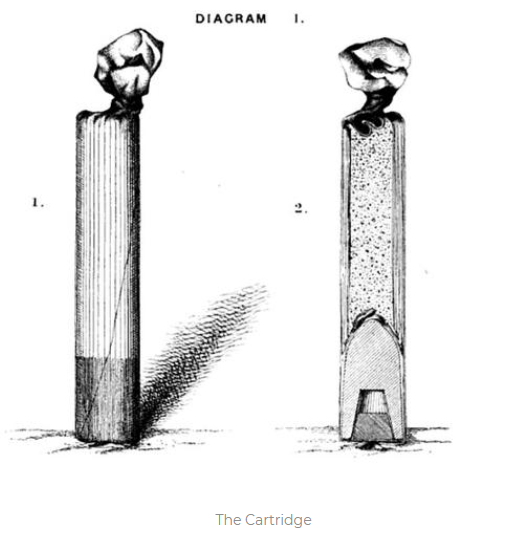
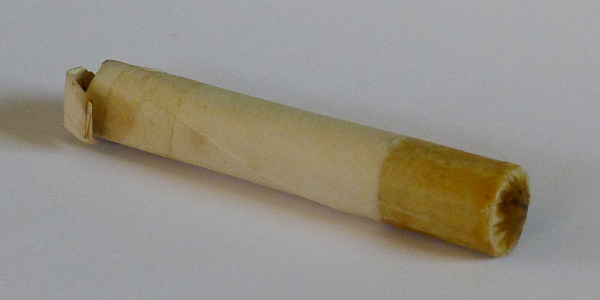
Muzzle-loading percussion firearms in the 19th century were fiddly things to load. The cartridge was a rolled-up tube of paper which housed not only the ball but the powder. The powder was measured for one shot. It was accepted practice that to use the cartridge, the tip had to be bitten off, then the powder poured down the barrel, followed by the ball and the paper — this would then all be forced down using a ramrod. Unfortunately for the Enfield, the bore was grooved, and this meant that the lower end of the cartridge needed to be greased to load it with any efficiency.
The 60th Rifles, along with Bengal Native Infantry regiments, had been using the Brunswick since the 1840s – this one required the cartridge and ball to be separate – with the paper tube only holding the powder and the ball covered by a patch of cloth that was soaked in either beeswax or coconut oil. Unfortunately, the Brunswick used a round that was specific to the grooves in the rifle, and it had to be physically seen when loaded; it all matched up, so it was very difficult to load at night when the grooves could not be seen. The accuracy varied little from that of the Brown Bess (200-300 yards), and weight-wise was practically the same, up to 4,5 kilograms, depending on the model. The Enfield solved all sorts of problems.
The first Enfield cartridges arrived in India in 1853 to see how they fared in the climate. An early warning was already given to the Military Board that they should be aware of what the cartridges were greased with; otherwise, it would be impossible to ask an Indian regiment to test them. At the time, the cartridges were greased with tallow of an undetermined sort, though it was most likely cow or pig fat. The Military Board did not particularly care for sound advice, and the cartridges were issued to the sepoys who guarded Fort William, those stationed in Cawnpore, and in Rangoon. However, it must be remembered that the sepoys only carried the cartridges in their pouches; they did not use them.
It turned out the Indian climate proved no problem to the cartridges — nor did any sepoy or European officers complain about them in any way at all. Test successful, these were gathered up and sent back to England in 1855; a year later, shortly after the rifles arrived, so did the first shipment of greased cartridges and bullet moulds.
Now, things become problematic.
The Bengal Army Ordnance Department started making cartridges at Fort William, Meerut, and Dum Dum – and they followed the same recipe as the Royal Woolwich Arsenal in England, using tallow, stearin, and wax. No one in the Ordnance Department, however, thought to specify what kind of tallow was being used. It was a careless, foolish mistake. By January 1857, the 60th had their full consignment of Enfields, and in conjunction with this, the Bengal Native Infantry started sending groups of seven men — 1 European officer, 1 native officer and 5 non-commissioned officers and sepoys – directly to their nearest depots where they received instruction on handling the Enfield. However, no one had even handled a greased cartridge when rumours regarding the fat were already circulating.
The initial story has been told and retold with variations over past centuries, but it basically comes down to a conversation between 2 men, a high-caste sepoy and a low-caste labourer at the Dum Dum magazine, outside Calcutta. The labourer requested the sepoy for a drink from his lota (a brass water pot) – when the sepoy refused because he did not know which caste the labourer belonged to, the labourer said he might as well give it to him as soon he would have no caste anyway, the cartridges he would be biting open in the future were covered with animal fat. The story spread like wildfire. From here, it is not difficult to understand why the idea that the British were coming to Christianise India was so readily believed.
So what did the British do? Hearing the rumour, Captain Wright as commandant of the Dum-Dum Rifle Instruction Depot, wrote a report stating his concerns regarding the story, which he handed over to Major Bontein, commandant of the Musketry Depot – and he in his turn stated in his report that two-thirds of the native soldiers, including all of their Indian officers of his depot, objected to the cartridge. They further requested that the grease be changed to wax or oil. Both reports were subsequently sent to Major-General B. Hearsey, commander of the Presidency Division, and from him, forwarded to Colonel Birch.
On the 27th of January 1857, Colonel Birch, as Military Secretary to the Government of India, did one of two things: first, he ordered that the cartridges at the instruction depots of Meerut, Sialkot, Dum Dum, and Ambala were to be issued only ungreased, and the sepoys could choose whatever grease suited them best. In principle, it was a good idea, but in practice, it wouldn’t work. Birch was informed by Colonel Abbott – the Inspector-General of Ordnance – that the cartridge had to be greased before it was closed up with the ball inside. His solution was to use the Brunswick method: issue the balls covered with the patches the men were already accustomed to, and only put powder in the cartridges themselves. Not that anyone listened.
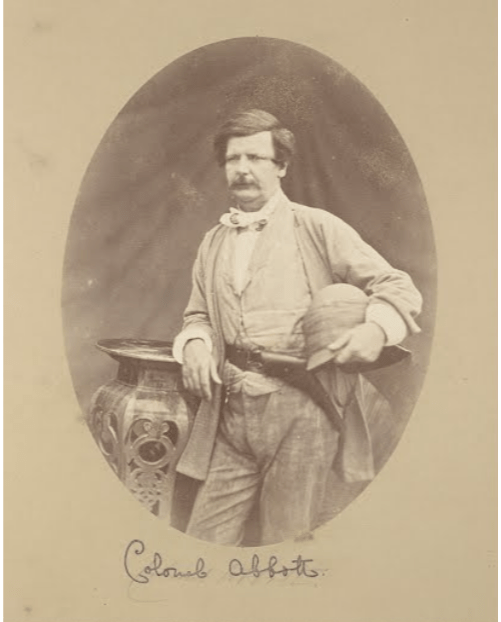
Abbott went one step further and issued an investigation to figure out what tallow was used, but all he could ascertain was that no one had taken any real precautions in this regard. It was certainly a mixture of beeswax and tallow, but the tallow was undetermined. On the 29th of January, he recommended to Birch that it was essential that only sheep or goat’s fat be used in the future if tallow was needed at all.
It has never been confirmed that cow or pig fat was used on the cartridges, but common sense dictates that it probably was. Lord Canning in February 1857 believed it was, and Abbott himself admitted it was probable.
While this was a genuine grievance and the sepoys were certainly in their right to object, it must be remembered that up to this point, not a single sepoy had handled an Enfield cartridge, or ever would. There had been no cartridges made in Dum Dum, as no one had been able to manufacture one as yet, since they were still learning how to make them. Nor had any been sent from Fort William, where they were being made, and how the labourer could have known anything at all about the grease being used is something that must be left to speculation. Needless to say, it caught the attention of the authorities, who thought they were dealing with the situation in a mindful manner. Unfortunately for them, the sepoys didn’t agree.
Announcing that the sepoys could grease the cartridges themselves in the future only cast more doubt into already wary minds – no less than 4 regiments of the Bengal Native Infantry stationed at Barrackpore were now loudly voicing their own fears – not just about the grease, but the paper used for the cartridges.
At separate parades held on the 4th of February, the men of the 2nd BNI and later the 34th BNI were shown the ungreased cartridges and the paper used in manufacturing them. Four days later, at a court of inquiry, the men made it clear that the paper itself would destroy their caste. Some mentioned the Fort William story, and others spoke of rumours in the town. Some stated the paper seemed to be greased as it smelled odd when burned; yet another proclaimed he had tried to dissolve the paper in oil, which then convinced him it wasn’t greased! Nevertheless, the native officers refused to bite off the ends of the cartridges in front of their men as they would certainly object to them doing so.
At no time was the paper itself greased, not with tallow or otherwise. The only problem that could be ascertained was that it was a different paper altogether – the English paper was thicker than the regular paper used for the cartridges. The objectionable paper was manufactured in India. It is here that we first see signs of a bigger conspiracy working on the minds of the soldiers — some unseen entity that was desperate to keep the story of the tainted grease alive.
Berhampore
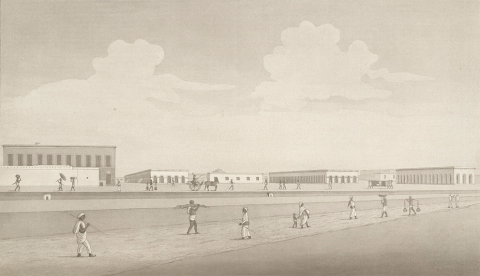
200 kilometres away from Calcutta at Berhampore, the first signs of mutiny started to ferment. The men of the 19th BNI refused to take the copper caps for firing exercises on the 27th of February as they believed the paper used for the blank cartridges was smeared with tallow, either cows’ or pigs’ fat.
However, the problem had not begun within the ranks of the 19th, but by rumours fed to them by a company of the 34th BNI who had arrived in Berhampore two days earlier, bringing with them “imaginary details” of cartridges smeared in beef-fat and they made sure the 19th received the full extent of the stories circulating at the time, with every intention to alarm the sepoys of the 19th BNI.
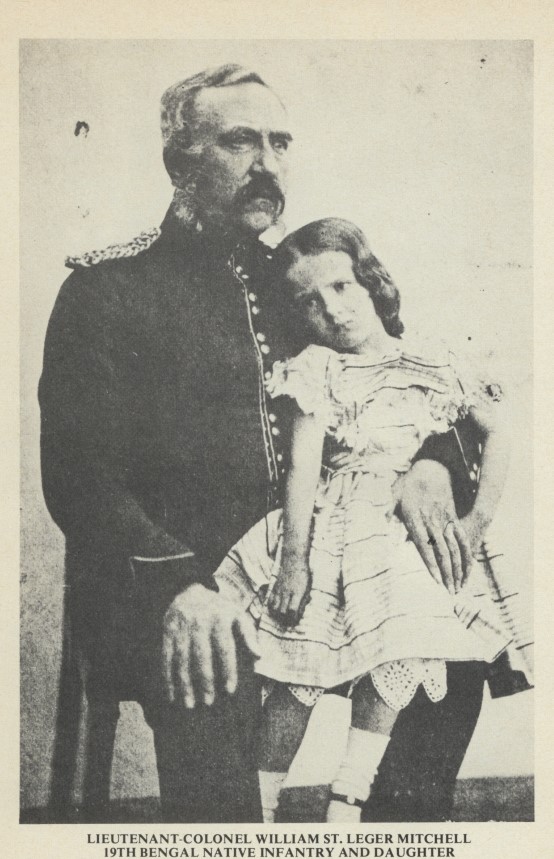
The cartridges they were being given, however, were not for the Enfield. They were for the very same muskets they had been using all along. On the 26th, some of the men had seen the blanks in the bell of arms and had ascertained that they were of two types, of which one looked quite different to what they were used to. Fearing it was a batch that had been sent up from Calcutta and was thus tainted, they refused to accept any at all on the 27th. Lieutenant-Colonel Mitchell stressed to the native officers that these cartridges did not come from Calcutta; they had been made in 1856 by the men of the 7th BNI. He further stated that anyone objecting would be court-martialled if they refused to receive them on the 27th. Panic is contagious, and by 11 pm the 19th broke open the bell of arms and grabbed their muskets. Mitchell ordered the 11th Irregular Light Cavalry and some European artillery to stand to arms as he went off to negotiate with what were now mutineers. It was less of a discussion but more of a wild and angry harangue, led by Mitchell, who did not help matters by bringing with him the 11th Irregular Cavalry and the two guns of the native battery with him, directly into the lines of the 19th. The native officers of the 19th begged Mitchell for patience and tried in all earnestness to get this rather stubborn officer to understand the men were afraid, “wildly excited and incapable of listening to reason,” faced as they were with the very idea of their complete destruction, not only religiously but very possibly by Mitchell’s guns. Mitchell could be persuaded to withdraw the cavalry and the guns; the men consented to give up their arms and head back to their lines. The next morning, the 19th BNI appeared on parade, submissive and apologetic, and from that day onwards, until their disbandment, caused no further trouble.
Of course, another Court of Inquiry was set up.
This time, the men of the 19th sent their petition to Major-General Hearsey, in which they stated they had been hearing rumours of the greased cartridges for over 2 months already, and it caused them to fear for their caste. The appearance of the 34th with their wild stories had not helped matters. Although Mitchell had assured them the grease for the cartridges would be made in front of the sepoys by their regimental pay havildars, they had seen the cartridges in the bell of arms on the 26th of February, and they looked different. So they believed these were from Calcutta.
What they also mentioned was that Colonel Mitchell had threatened to send them all to Burma, where, for their disobedience, they would all die terrible deaths if they continued to refuse the cartridges. Somehow, from this, they were able to deduce that, in fact, the cartridges must be greased. So to protect themselves, they had seized their guns that evening as they also believed the artillery and cavalry were being sent to kill them all.
So now, it was no longer about the cartridges, it was about the paper — what the sepoys did not realise is that they were right about there being 2 different kinds, one was made in a mill in Serampore, and it had a darker finish, while the paper they were used to was made in England by John Dickinson & Co. Yet neither paper was greased.
What Berhampore should have shown the British, but didn’t, was that the sepoys did not trust the European officers. They instead put their trust in rumours and in elements within the regiment who were skilled at playing on their fears; they had convinced the 19th NI to commit mutiny.
What the Court of Inquiry concluded was that Lieutenant Colonel Mitchell “had not shown the temper and firmness which are required of a Commanding Officer,” and he was duly censured and recommended to be “employed in other duty more suitable than the command of a Regiment.” The 19th was subsequently marched down to Barrackpore and, on the 31st of March, disbanded. As for Mitchell, he would be sent to command the 1st Bengal European Fusiliers and spend the rest of his career uneventfully.
Ambala
By mid-March, the Musketry Depot at Ambala too had been stricken by disaffection. Here, the men from forty-one Bengal infantry regiments were being schooled in the use of the new Enfield. It must again be stressed that none of them had an actual Enfield but they were being drilled as to how to use one. Their instructor, Lieutenant Martineau, had done all he could to explain to the men that they could apply the grease of their choice themselves- but some of the sepoys were not convinced. Discussing among themselves if they would accept Enfield cartridges or not, a few came to the conclusion that by doing so, it was “not acceptable to their comrades in their respective corps.” In other words – tainted or not, they would be ostracised when they returned to their regiments even if they never touched an Enfield cartridge. They then proceeded to claim everyone felt the same way. It was not a unanimous opinion; some of the native officers refused to be baited by the sepoys. One Jemadar went so far as to state to Martineau that,
“I will fire when I am told, & I know many others will do the same. I have sufficient confidence in the Government & my officers to know that no improper order will be given to us & to demur using the cartridges merely because they are of a different form, or made of different paper, is absurd, in fact, there is no question of caste in the matter, & he who refuses to obey proper orders, or who cavels about doing so on the pretext of religion, is guilty of mutinous and insubordinate conduct.”
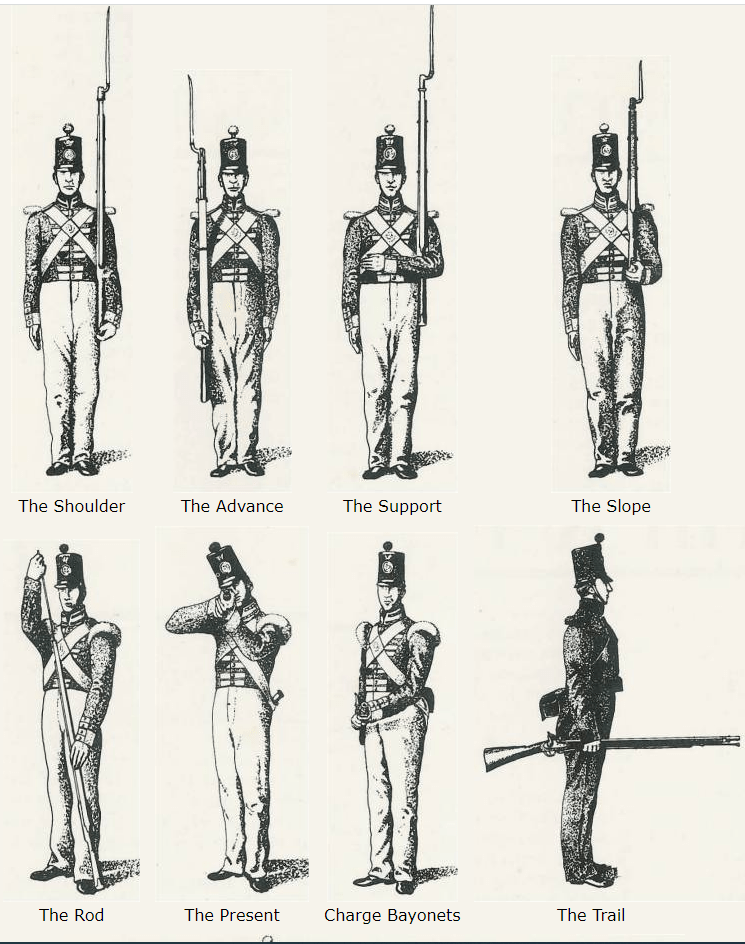
It did not help matters when later, on the 19th of March the Commander-in-Chief arrived in Ambala with the 36th BNI as his escort; two men from that regiment, a havildar and a naik who were doing detachment duty in Ambala were shunned by the men they had previously considered their friends – they were refused entry to their tents and taunted as Christians, for using the Enfield. Martineau interceded on their behalf and on that of the other Indian officers who “regarded the insult as intended for all who, as good soldiers, were obeying the orders of Government by using the new Enfield rifle.” In his own inquiries, Martineau found that the rumour of the tainted grease was “generally credited”, and he confirmed that assemblies were taking place in practically all corps from Calcutta to Peshawar – formed by men who had made up their minds to regard anyone who touched the cartridge as pariahs.
General Anson now did what he thought was best. Acting on the information given to him by Martineau, he addressed the native officers at a parade on the 23rd of March. Unable to speak the language himself, he spoke to them through an interpreter. He would say the same words that officers would say repeatedly over the coming months. The government had no intention to Christianize them; they would not interfere with their caste or religion, and he requested the officers to tell all those they had under their authority that the rumours were “groundless and false.” It was a nice speech.
The officers, in their turn, speaking to Martineau, said they knew the rumours were false, but what could they do when it “was universally credited, not only in their regiments but in their villages & their homes.” They themselves would not disobey the rules and would fire when ordered, but they wanted the Commander-in-Chief to understand what it meant for them to lose their caste.
Martineau himself, although sympathetic to the worries of the officers, could only point out his own belief that the cartridge issue should be seen as “the medium than the original cause of this widespread feeling of distrust that is spreading dissatisfaction with our Rule.” He was justified in thinking so – until now, only the Hindu sepoys had raised any objections to the cartridges or had shown any real concern. The Muslims, on the other hand, did not appear bothered at all and actually laughed at it. General Anson concurred, seeing the cartridge question as “more a pretext than a reality,” adding, “The sepoys have been pampered and given way to, and have grown…insolent beyond bearing.” However, he had enough sense to realise that the native officers in Ambala were truly afraid of being socially shunned, so he ordered that target practice be stopped at all three musketry depots until the government had had enough time to assess the situation.
The End of the 19th Regiment, Bengal Native Infantry
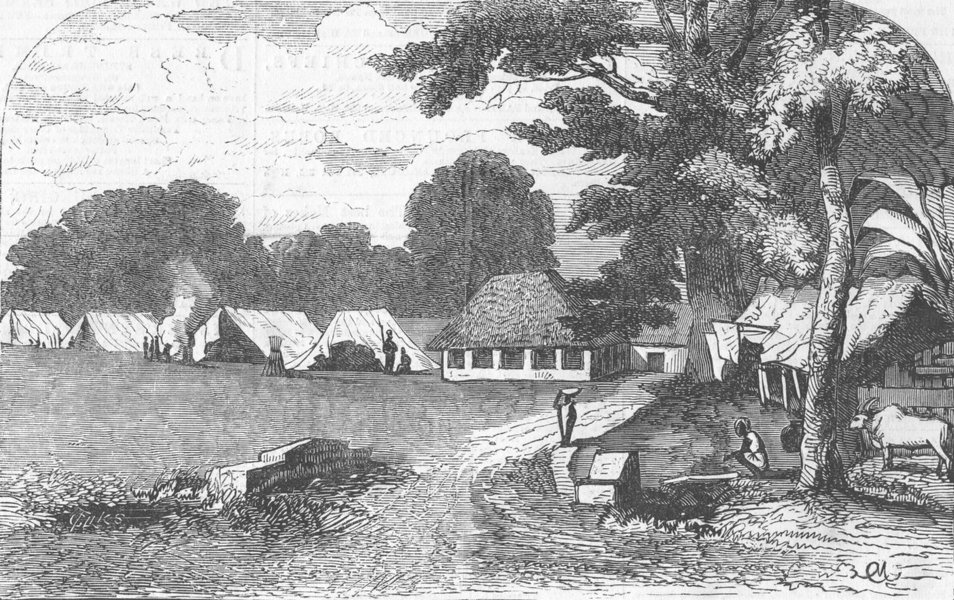
While all of this was playing out in Ambala, another scenario was soon to start in Barrackpore: the disbanding of the 19th BNI. They were marched to Barrackpore to be formally disbanded in the presence of all troops available, which included HM’s 84th Foot, recently arrived from Burma. Unlike the sepoys at Ambala, the 19th received far less sympathy for their conduct, even though their grievances were not dissimilar. The only difference was that the 19th had taken up their arms and had refused to stand down when ordered. In the eyes of Lord Canning, this was nothing less than “open and defiant mutiny.” Issuing a general order, Canning further announced “the unvarying rule of the Government of India to treat the religious feelings of all its servants of every creed, with careful respect,” and should the sepoys have trusted the Government, believed their commanding officer and not credited “the idle stories with which false and evil-minded men have deceived them, their religious scruples would still have remained inviolate.” Their fate was sealed.
The 19th began their final march on the 20th, and ten days later had reached Barsut, eight miles from Barrackpore, where emissaries of the 34th BNI, who had until now done nothing but provide the 19th with bad advice, urged the 19th to resist all attempts at disbandment and murder their officers. They promised the 34th would stand by their side and not a single sepoy in Barrackpore would stand in their way. The 19th refused. The next morning, they were marched onto the parade ground at Barrackpore to meet their fate. Assembled were the HM’s 84th, a wing of the HM’s 53rd, a troop of Horse Artillery sent from Dum-Dum, a troop of Madras Horse Artillery, the Governor-General’s bodyguard and all four native regiments that represented the Barrackpore Brigade.
“The disarmament was carried out with all due solemnity; the general order for disbandment was read; the sepoys obeyed without hesitation the command to pile arms and hang the belts on the bayonets; the colours of the regiment were placed on a small pile of crossed muskets; the men were marched off to a distance from their arms, and the pay due to them was disbursed. In consideration of their good behaviour during the five weeks that had elapsed since their outbreak, they were not stripped of their uniforms and were provided with transport to convey them to their homes…They marched off to Chinsura in a body, cheering General Hearsey as they left.”
With their disbandment, the 19th Regiment of Bengal Native Infantry – Ung Ka Pultan – ceased to exist, bringing to an end 81 years of service in the army of the East India Company. Of course, this was hardly the end of the rumours, and while the 19th had been waiting for their disbandment, another scenario was playing out in Barrackpore.
Sources:
The Mutiny of the Bengal Army – By One Who Served Under Sir Charles Napier, 1858
Annals of the Indian Rebellion, 1857, 1858 Noah Alfred Chick, 1859
A History of the Indian Mutiny – T.R.E Holmes 1883
The Great Mutiny: India 1857 – Christopher Hibbert, 1978
The Indian Mutiny: 1857 – Saul David, 2002
Fraser, John. “SOME PRE-MUTINY PHOTOGRAPH PORTRAITS.” Journal of the Society for Army Historical Research, vol. 58, no. 235, Society for Army Historical Research, 1980, pp. 134–47, http://www.jstor.org/stable/44230330.
A Postscript to the Records of the Indian Mutiny – Lieutenant-Colonel G.H. D. Gimlette, 1927
 Mutiny Reflections