In the previous posts, we looked at some of the reasons why the Bengal Army mutinied. Pay and pension were deciding factors as was the question of overseas service, promotion by seniority, and, of course, the neglect of this new breed of European officer. These are obvious causes that would have sparked a mutiny in any army. However, the Bengal Army was unique – its very structure and recruiting policies were unlike that of Bombay and Madras. Even though by 1857, the exclusiveness of the recruits was breaking down and more and more men of other castes and creeds joined up, it was altogether still a contentious issue. Officers in the Bengal Army were wary of issuing orders that might injure caste; it was a sentiment that gave the army unprecedented power over their weakened commanders. The soldier, in their turn, no longer respected their officers – men who had been strangled by a government that believed in benevolence rather than discipline.
By 1857, discipline had reached its lowest point in the Bengal Army. Wiser men had been talking for years that the various grievances needed to be addressed, not just from the sepoy side but from the side of the officers as well. While the European officers saw their regiments merely as stepping stones out of the army, serving as little as possible with them, the sepoys were disgruntled by their poor pay, stifled personal ambitions and onerous peacetime duties with little change of routine. They were also pandered to by the officers in ways that were unheard of in Bombay or in Madras.
Caste and Religion in the Bengal Army
It is popular opinion that the Mutiny of 1857 was largely caused by gross insensitivity by the Europeans to the caste and religious prejudices of the men who served under them and were left with no choice but to defend their religion. Although this was a contributing factor to the Mutiny as a whole, it cannot be given precedence as the only cause. However, we will look at this in light of three previous outbreaks.
Too understand the caste system prevalent in India in 1857, we must first understand what is meant by caste. Ancient religious texts divided Hindu society into four classes or varnas, which are not only pre-ordained but mutually exclusive- Brahmin or priests, Kshatriya or warriors, Vaishya, who are farmers and merchants, and Shudra, the lowest menial caste. The Untouchables were outside the caste system altogether and included anyone who worked with anything considered unclean. Christians and Muslims were, by their very existence, considered unclean.
We must understand that the structure of this society was by no means fixed. Subdivisions in castes or Jatis would regularly appear; joining another caste depended as much on the willingness of the Jati itself to accept the rules and manners of others. Jatis were movable while caste was not. The system was based on region and occupation, and each section and division was regulated by a local committee. This committee was charged with establishing rules and acting as judges on those who infringed them. The worst punishment was, of course, expulsion, which would leave an individual with a loss of his caste. However, it must also be stressed that Indian civil society did not take caste distinctions as seriously among themselves as the Europeans would later do. In fact, in their anxiety to please everyone’s wishes and desires, the Europeans created a class system exclusive to the Bengal Army. The Company’s early reliance on recruits who were exclusively Brahmins led to a caste monopoly in the army itself – Warren Hastings and his successors wanted a high-caste army to provide their burgeoning rulership with a stamp of legitimacy. Recruitment was more often than not a family affair, with the son following the father into the service and a majority of the men coming from the same area, predominantly Oudh, thus encouraging future loyalty. The army then actively promoted the sepoy’s religious, dietary, and travel biases, further marking out their high caste status more acutely than it would have been done had they remained at home.
To further perpetuate this exclusiveness, the Bengal sepoy was isolated from the influence of Brahmin priests ( who might have seen things differently from the Company’s idea of what caste really was), while temples were, more often than not, deliberately situated outside military cantonments. They basically became a class of their own. Although this did create a widely homogeneous Bengal Army, it also created a myriad of problems for their commandants. We will explore this further in the next chapter when dealing with the subject of tainted cartridges.
Mutiny at Vellore
That is not to say that caste was not a genuine concern to the men in the army.
There had been various outbreaks of mutiny throughout the 19th century in India, starting with Vellore in the Madras Presidency in 1806, caused by dress regulations which were introduced with absolutely no regard to the men at all. The new dress code stipulated that Hindus could no longer wear religious markings of any kind while on duty, Muslims were instructed to shave their beards and trim their moustaches, and the new round hat was designed to offend everyone, as it included a leather cockade of unknown animal origins. Besides the objectional material, the hat was also objectional in design, as it was similar to those worn by Europeans and Christian converts. The idea was to give the army a “soldierly appearance”, but all it did was cause a justifiable outcry. Anyone who refused to wear the new uniforms was punished severely – two men were sentenced to 90 lashes each and dismissal from the army, while a further 19 were sentenced to 50 lashes, but their sentences were dismissed.
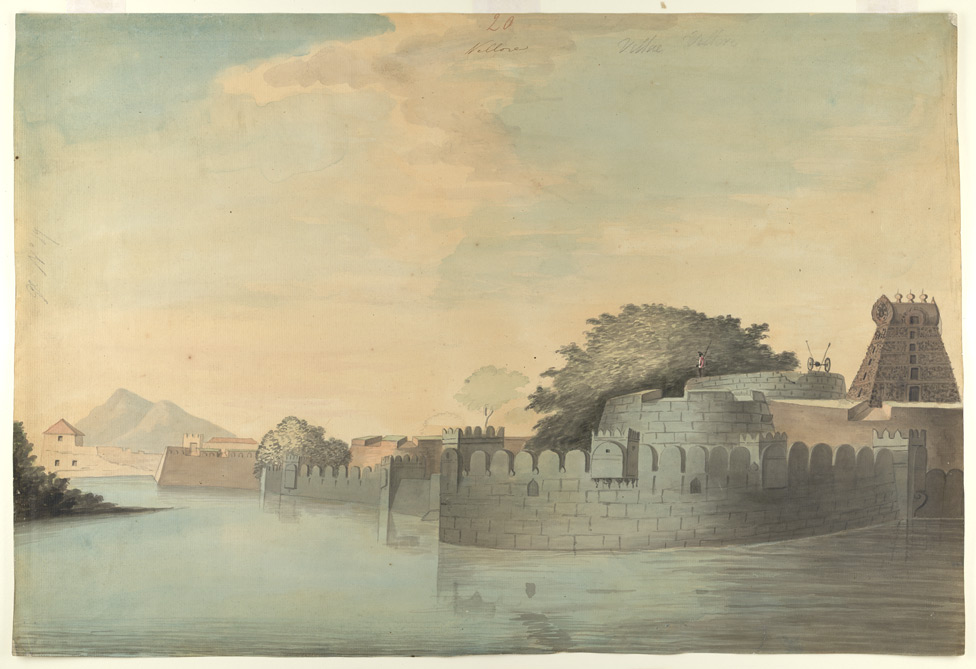
Matters were not helped when the sons of the deposed leader Tipu Sultan, who were confined in Vellore – when, with the aid of civilian conspirators, they intended to seize hold of the Fort to which they were confined by calling on the aid of the sepoys. When the time came, however, the sons did not have the stomach for mutiny and refused to take charge. As we will see later, the civilian conspiracy was also rife in 1857. The Vellore Mutiny was a bloody affair, with fourteen officers and 115 men of the 69th Regiment killed. It led to the disbandment of three Madras regiments and the death of 350 mutineers, 100 by execution alone.
The senior British officers who had issued the new dress regulations were all recalled post-haste to England, which even included the Commander-in-Chief of Madras Army, John Craddock who ended up having to foot the bill for his passage back to England himself. The Governor of Madras, too, was recalled, and it was publicly stated that the mutiny was the direct result of interference with the social and religious customs of the sepoys. It was also seen as direct neglect by the commanding officers, who had deliberately refused to listen to the sentiments of their men. It goes without saying, that uniform regulation was abandoned. As for the royals, they were banished to Calcutta, as far away from the Madras Army as possible.
The Sindh Batta Mutiny – 1844
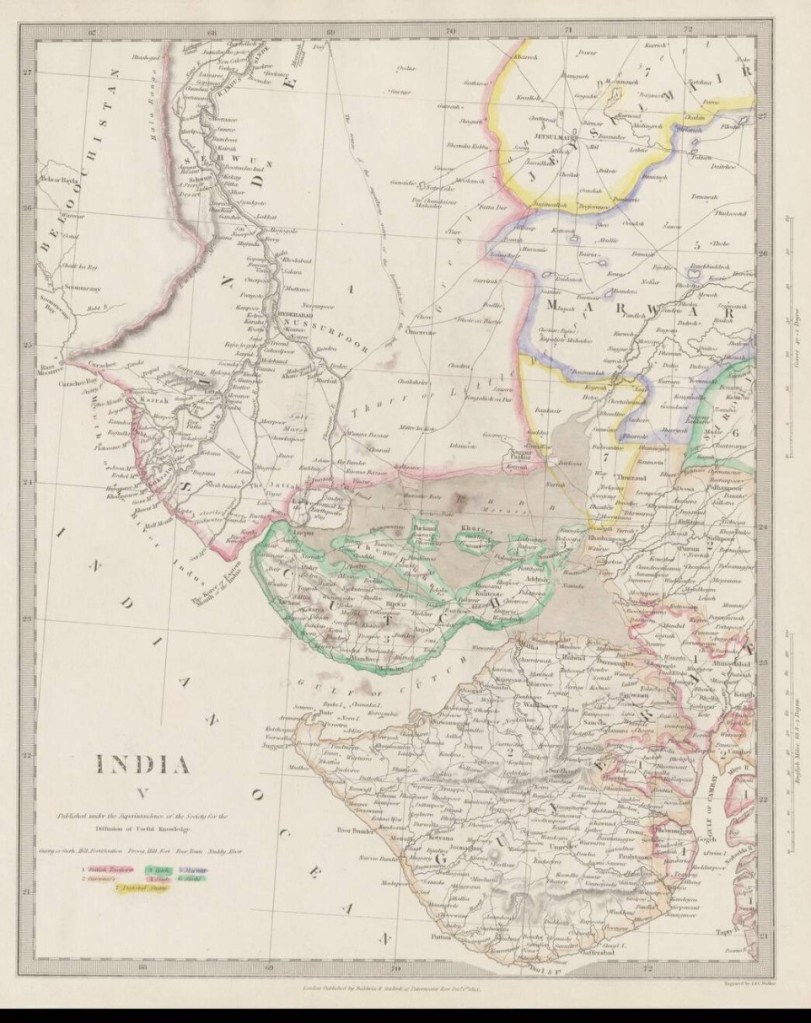
With the end of hostilities in Afghanistan and the annexation of the province of Sindh in 1843 by General Charles Napier, the British had managed to consolidate their borders along the western frontier and control a strategically important territory which could prove useful should they consider tackling Afghanistan again in the future. It was decided that Sindh would fall under the control of the Bombay Presidency, but to maintain peace, it would be garrisoned by regiments from Bengal.
The regiments told off for duty in Sindh at first did not object. It was dreary, desolate and dangerous, but they would go – that is, until they were informed that their extra pay, or batta, a paltry Rs 12 a month, would be cut. This pay had been implemented in 1838 for the troops crossing the Indus on their march from Kandahar to Kabul, but was withdrawn from the troops in Sindh in 1840 when it was decided that the duties they were performing were in fact nothing short of ordinary. However, with renewed hostilities in Afghanistan, the batta was quickly reintroduced as an inducement (it was called Pollock’s Batta) and then stopped altogether once the Afghan war was over and Sindh was conquered. While the logic may have been sound from the financial point of view of Lord Ellenborough, it did not sit well with the sepoys.
The 34th BNI flatly refused to go and stopped their march in Ferozepore with the reasoning that, “unless its services were purchased by the grant of the additional allowances given to the soldiery beyond the Indus in times of war.” With the Sikhs so close by and the threat of war looming, it would not do to have a mutinous regiment anywhere near the frontier. Things rapidly went from bad to worse – the 7th Bengal Cavalry broke into open mutiny, and even though their officers offered to pay them from their own salaries, the cavalry refused to answer the trumpet call to march, and sat themselves down just outside Ferozepore. Following their lead, the native artillery now refused to march, and rumours began to spread as far as Ludhiana and Multan that line regiments, if ordered to attack the mutinous regiments, would refuse to do so. The Sikhs, in the meantime, thought this was a perfect time to send emissaries to the regiments and offer them not only their sympathy but their full support. It was deemed too dangerous to disband the regiments at Ferozepore, and they finally agreed, without any consequences for their actions, to return to the stations they had originally come from.
Now other regiments were sent up to the frontier; it had initially been thought to allow those mutinously disposed to leave first before the other regiments arrived; unfortunately and most incautiously, they crossed paths.
As such, the 69th now refused to embark on the boats across the Indus if their batta was not reinstated, and the 4th BNI, who were considered one of the most trustworthy and loyal, followed the example of the 69th. Meanwhile, good news came from Ambala – the 64th BNI, who had been marched there from Benares, offered to take the place of the other regiments ordered to Sindh. They were eager to wipe out the stain left on their regiment by what they called a few bad eggs, and their general, a man named Fast who had been with the regiment throughout his career, was eager to help them on their quest. Eager to show their gratefulness to the staunch 64th, a letter was drawn up to reward them for their services which stated
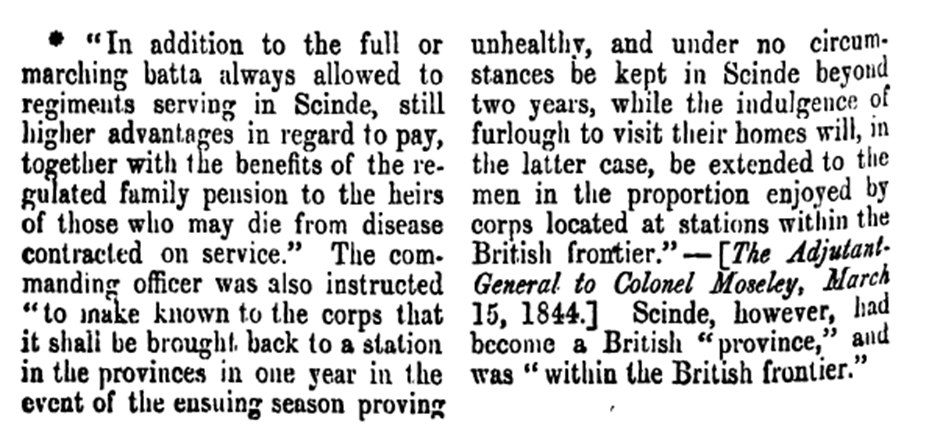
This was by no means a return to Pollock’s Batta but rather a means thought up by the Commander-in-Chief to reward the loyal 64th by offering them special pay and pensions, plus the added benefit of a change in their terms of service.
Unfortunately, those bad eggs were once again stirring up trouble, leaving the 64th in an “excitable state” on the march, and their mutiny at Mudki, which was also caused by the fact that the sepoys did not like the line of march and felt they were being set up for a trap, was hushed up by their officers. Eager to make things better, Colonel Mosley had the letter read to the sepoys during their next parade, and the ever-enthusiastic colonel could not be prevented from adding his bit by announcing the full batta would be restored. This was far from the truth, and by the time the now pacified regiment reached Shikarpur in Sindh, they were, of course, very disappointed on pay day when the promised Pollock Batta was nowhere in sight.
This led to a near mutiny and required the level head of an old EICo officer, named George Hunter, then serving in Sindh, to bring the whole situation under control. Arriving on the scene, he ordered a parade and commenced paying the troops himself, ignoring the pleadings of Mosley to allow the European officers to take up the work instead. At first, things went well, but as the evening wore on, more and more men refused to accept their pay. Once again, Mosley pleaded and this time Hunter acquiesced. No sooner had he done so than the officers began down the road of flattery and downright begging the men to accept their pay, that the situation flew out of control. The sepoys rushed up to Hunter and said they had been lured to Sindh by false promises; others simply picked up rocks and bricks and threw them at the old officer.
Hunter and the other officers retreated, and the men returned to their lines. The next morning, to Hunter’s surprise, he found them drawn up on the parade ground, as if nothing had ever happened. He now began, once again, to disburse pay – this time only 10 men refused and one of whom did so because he felt he had been passed up for a promotion. As the men came up, they were ordered to pile arms – now, with their pay in their pockets were ordered to unpile. This effect was electric – “Each man seemed to read what was in his neighbour’s heart, and without any previous concert, therefore, they clung to each other in the disobedience.” Only three grenadier sepoys stepped forward and took their arms – Hunter promoted them on the spot. Not a single man stirred to follow their example, and what had started out as a calm morning rapidly fell into confusion.
Hunter and the other officers vainly pleaded with the sepoys to return to duty, but it was no use. They were now insisting once again, they would only do so if they received the Pollock batta as promised by Mosley and his adjutant. If it was not forthcoming, they would gladly take their discharge and go home.
To prove their point, the regiment now planted itself on the ground under the blazing June sun and refused to move. Seated around the piled arms, or lying on the ground, the sepoys could not be induced to go to their Lines to cook their food, nor did they accept any water. Their uniforms, highly impractical for a day of sitting in the sun, remained buttoned as if they were still on parade – the day wore on into night, and still the sepoys sat. Hunter decided the best thing to do was to leave them to it.
The next morning, Hunter returned to the parade ground, but this time he only brought along his personal ADC. The sepoys were certainly worse for wear and nearly too exhausted to answer the call to arms. However, they managed to get to their feet and fall in. They took their muskets with little reluctance, and Hunter offered to meet with one man from each company in his quarters to hear their grievances. Without the presence of Mosley and the other officers, the sepoys behaved with sense – they agreed to speak ot Hunter and allowed the parade to be dismissed without any incident.
As instructed, the men arrived at Hunter’s quarters at the appointed time. Hunter met the several delegates one by one and each man told him the same thing – Mosley had promised them General Pollock’s batta but the 12 rupees they had been expecting had suddenly become only eight. With the evidence before him that the regiment had indeed been lied to by their colonel, Hunter did the only sane thing he could do – he removed Mosley not only as station commander but as colonel of the regiment, and ordered the 64th to march to Sukkur, which was on the way back to their old province.
The march proceeded without a hitch, and Hunter most gladly deposited the 64th close to the lines of the European troops while he set about trying to sort out the worst offenders of the regiment.
For Colonel Moseley, the affair ended badly – he was eventually court-martialled and cashiered. For the 64th, there was another ending altogether.
Hunter drew them up once again on parade and explained that while their grievances were just, their actions could not go unpunished. However, he was not seeking to heap shame on the regiment; only the men who had instigated this whole tamasha would be punished. While they would be tried by court-martial, and as for the rest, whom he pardoned, he “trusted that the mercy shown on them would not be thrown away, that they would repent of their misconduct and return to their allegiance.”
As it was, 39 men were given up by the regiment, and the subsequent court-martial showed mixed results. One man was acquitted, six were given over for capital punishment, while the death sentence passed on the rest was commuted to imprisonment and varying terms of hard labour.
For the 34th Regiment, things went far worse. Having mutinied “on the frontier, almost in sight of the Sikh army,” they were disbanded and their number was struck off the army list. It would be two years before a new regiment was raised. The remaining regiments were left unpunished.
Barrackpore, 1824 and 1852
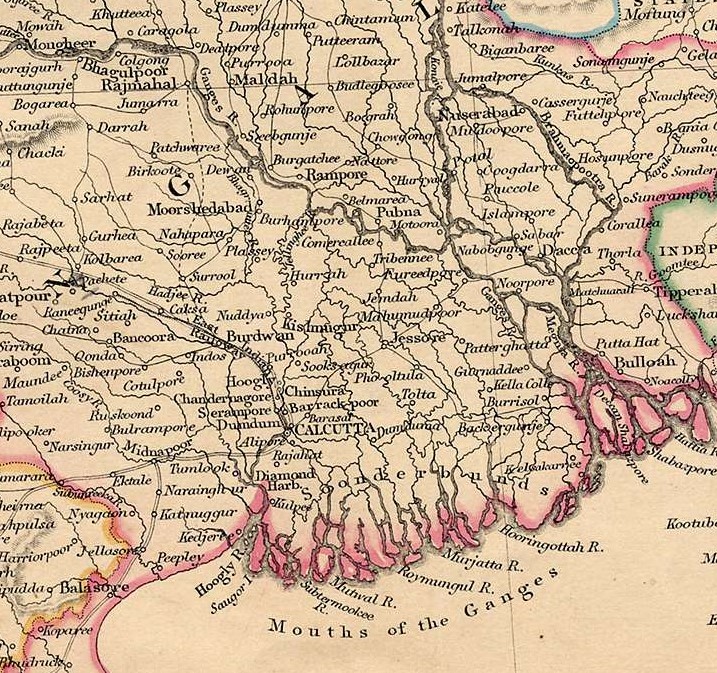
In 1824, the British were waging war against Burma, a conflict which would result in three wars altogether and end up being the most expensive conflict of the 19th century – financially ruinous to the tune of 1.1 billion pounds sterling in today’s currency and the deaths of 15000 European and Indian soldiers, with the Burmese casualties unknown to this day. However, for the sake of this article, we will concentrate not on the Burmese War itself but on its repercussions in India.
In the same year, three regiments of the Bengal Native Infantry – the 26th, the 47th, and the 62nd – had been ordered for duty in Burma. They were three of the seven regiments that had only recently arrived in Barrackpore, having endured the long march from Mathura a distance of some 1600 kilometres. Exhausted, they were told off to proceed to Chittagong, another 500 kilometres away, where they were to prepare for a further march to Burmese territory.
The first problem with these orders began with the lack of bullocks to transport their equipment. As each high caste soldier had his own brass cooking utensils, it was not possible for them to carry these next to their bedding, knapsack, musket, and ammunition. It was common practice for their equipment to thus be transported by bullock cart – but only animals of the most inferior quality could be found (the rest had already been purchased by the army, sequestered for use in Burma and had been sent by sea). The sepoys were further expected to pay for the animals themselves. As a result, they requested double batta (campaign allowance paid for service in hostile territory), which was refused. Instead, the sepoys were told to simply carry what they could and leave the rest behind. The commanding officers then offered each regiment 4000 rupees in advance to defray the costs but this still meant the sepoys would ultimately still have to pay for baggage charges from their own pockets. It was not helped when a subedar major threatened the men – if they did not stop their grumbling, they would be sent to Burma by sea.
On 1 November, the 47th NI first refused to proceed onwards to Chittagong – appearing on the parade ground without their knapsacks and flatly disobeying any orders to march. They again demanded double batta or bullock carriages for their equipment. Unable to make a decision and equally unable to quell their discontent, their commanding officer, General Dalzell, proceeded to Calcutta for an audience with the Commander-in-Chief, General Sir Edward Paget. Meanwhile, in Barrackpore, the situation went from bad to worse, with 20 men of the other two regiments defecting to the 47th. Sepoy Bindi Tiwari took charge of the situation, and under his leadership, the sepoys maintained order and remained on the parade ground while a petition was sent to Paget. The petition was straightforward – their disobedience was due to religious scruples alone, and they requested to be released from the service if the demands were not met. Paget, in his turn, replied that any legitimate demands would be addressed if the sepoys laid down their arms. When they refused, he ordered two regiments of European troops (the 47th Lancashire Regiment of Foot and the 1st Royal Regiment) troopers Governor-General’s Bodyguard – stationed in Calcutta – to proceed to Barrackpore accompanied by the horse artillery from Dum Dum, a military station close to Calcutta. In Paget’s eyes, the sepoys were now mutineers.
What ensued on the 2nd of November was nothing short of a one-sided massacre. Paget ordered the regiments to surround the parade ground (out of sight, mind you) and sent a final message to the sepoys to lay down their arms or else discussion would be impossible. He then gave them a mere 10 minutes to make up their minds. Whether the sepoys hesitated or refused the ultimatum is an open question, as they had not been given any time to decide either way. Paget ordered the cannons to open fire, which had been placed to the rear of them. It is no wonder the sepoys tried to flee, but the British regiments now attacked them from all sides. The sepoys had no chance of resisting or fighting, for that matter. Their muskets were not loaded. Many fled for safety to the nearby river but drowned trying to cross it; others hid in neighbouring houses, but they were dragged out by other sepoys and bayonetted to death.
Figures for this horrible slaughter are inaccurate at best. Of the 1400 men on the parade ground, 180 were killed during the attack, though the number was widely disputed, varying from 180 (officially) to as many as 600. Of civilian casualties, no one could be sure, but undoubtedly, many innocent bystanders were killed.
Of the sepoys who were captured, eleven were identified as ringleaders and hanged – they were from all three regiments, six from the 47th, four from the 62nd, and one from the 26th. The court-martial was uncompromisingly swift as they were hanged on the parade ground the very same day. 52 sepoys were sentenced to four years of hard labour in chains, while others were given lesser terms. The 47th itself was disbanded and struck off the army list as unworthy of further service. All of their British officers were transferred to the newly formed 69th Regiment. As for Bindi Tewari, he was caught on 9 November and hung in chains – his remains were then left to rot on public display. It is then no wonder that after this, desertion from the army was rife for months to come.
Unlike in Vellore, which had consequences for the British officers and for the Governor-General himself, nothing at all happened to Paget. The incident was covered up; press reports were largely suppressed, and those that did mention it trivialized the whole incident. Despite the rumours, basic details were not released to the public. Six months later, the Oriental Herald took up the story, calling the incident the “Barrackpore Massacre” in which they severely criticized Paget in particular for his violent approach to what was essentially a peaceful protest. They further demanded that the government immediately issue the sepoys with high pay and transport for their equipment. Labelling the Governor-General Earl Amherst an “evil genius” and flatly blaming him for his inability to de-escalate the situation without resorting the murder, they wrote,
“If this example was necessary to preserve the obedience of native troops, how miserably precarious is the tenure of our authority! It was not necessary; may God forgive those who have brought this stain upon the British name.”
Although a report by a Court of Inquiry did vindicate the sepoys, stating they had had justifiable grievances, the only reform that came from this deplorable situation was that all Bengal regiments designated for General Service now received the concessions the sepoys had originally demanded. Paget was never disciplined for his actions, none of the officers involved received any punishment, and as for Amherst, he kept his position. Any further calls for an investigation were quashed at a parliamentary level – the influential arms of Amherst and Paget were particularly long.
The Barrackpore Massacre was still alive in many men’s minds 33 years later and was used in some instances as an excuse to murder officers in 1857 – a seed of distrust had been sown in 1824. Although it can be said the sepoys may not have been overly keen on going to Burma where the climate was wretched, the terrain difficult, and the inhabitants supremely war-like, this also showed a distinct sign of a serious lack of empathy between officers and their men and should never have escalated to this horrific conclusion.
In 1852 another uprising broke out in Barrackpore under not dissimilar circumstances when reinforcements were needed to fight in the 2nd Burmese War and we again meet Lord Dalhousie.
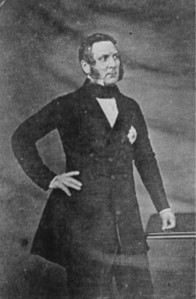
In 1852, there were six regiments designated as General Service regiments; the rest were pledged to only serve in India. Desiring a native regiment to go to Burma as reinforcements, Dalhousie arbitrarily chose the 38th. His reasoning appears to be that since they were already in Barrackpore, they were the obvious choice. He could have called on any of the other six regiments, and he could even have called for volunteers from anywhere else in India, but he had his sights on the 38th. The order was sent to Barrackpore. Three companies of the 38th at the time were serving on detached duty in Midnapore, a further 650 men were on guard duty at Fort William in Calcutta, while the rest were in Barrackpore. Their commanding officer, Lieutenant-Colonel Burney ordered the pay havildars to proceed to Fort William and ask the men what they felt about going to Rangoon.
Initially, most of the sepoys of the 38th did not appear particularly worried about service in Rangoon, stating they would be willing to go if their officers went too. However on the 14th of February, just two days after their initial response, Burney was removed temporarily as their commander and sent to serve with a different corps.
Here entered now Major Knyvett, who assembled the native officers on duty at Fort William – he explained the advantages of serving abroad and told them again what the Governor-General wanted from them. The officers did not object to going but refused to answer for the men. The situation seemed to have been deflected for a moment, but the government was not letting up. On the 27th of February, Lieutenant-Colonel Hamilton, the commander of the Bengal Presidency was directly informed by Dalhousie through a letter that if the 38th did not volunteer to go to Rangoon by sea, then they would be marched to Arakan instead to relieve the 67th (which was a general service regiment) who would go in their place.
The letter, however, was not published straight away – it was delayed until the whole of the 38th was assembled in Barrackpore. On the 6th of March, Burney returned to the regiment and resumed his command. He took the situation in hand and issued a regimental order based on the letter. He demanded that on the 8th of March, the company commanders assemble their men, take roll and then ask each one to volunteer by signing the roll – and any man who refused to do so was to be questioned why he declined.
From the sepoy’s point of view, this was no longer voluntary, but compulsion, and on 8 March, the men showed a “great disinclination” to fall in on parade. Although after much persuasion they did, yet no one could be persuaded to go to their company commander’s quarters and sign the roll. Brigadier Warren, as station commander had the authority to repeal Burney’s order – he addressed the regiment the following morning on parade. His approach was to tell the assembled men that although the government would like them to proceed to Rangoon by sea if they were not willing to do so, then they would march overland to Arakan to relieve the 67th NI (which happened to be a general service corps) who would then take the place of the 38th in Burma. To this, the sepoys had no objections being quite willing to move anywhere by overland.
The native officers, however, did not let up and continued to try and persuade their men to undertake the sea journey, while Burney went as far as to tell them that Arakan was nothing more than punishment; if they did not volunteer, their pensions would be forfeited. The men finally went to complain directly to their company commanders on 17 March as they had by now endured about as much harassment as they could stand – as they were marching to the officer’s quarters, they were seen by their adjutant, Lieutenant Castle. Ordering they were ordered to go back to their lines, the men refused.
Castle assured them that an investigation would be launched into this whole rotten affair, and the men finally acceded to go back to their lines.
An investigation was started, and at the Court of Inquiry, Burney reported he had acted on his own initiative, stating that the opinions he had received from the havildars were sufficient to convince him that they spoke for the whole regiment. He also admitted to resorting to threats if they did not agree to go to Rangoon. In his defence, Burney said he had insisted on the signing of the roll so he could not be blamed at any future date for not taking the regiment’s feelings into consideration. The court did not agree. Major Knyvett’s dislike of Burney was quite clear, and although he too was censured by the Court of Inquiry for his hamhandedness (and for his thoughtless replacement of a Brahmin havildar with a Rajput one), it had been Knyvett who had reported Burney’s conduct directly to the station commander Warren.
Burney recommended to the court that 400 men of the 38th be dismissed from service for disaffection; the outcome was very different. In the final report, only eight names were mentioned, and only these were summarily dismissed from the service. In this case, it was Dalhousie who was forced to stand down, and the sepoys gained a resounding victory. Burney was reprimanded for his handling of the situation and censured by transfer to the 32nd BNI; his men were ordered to Dacca, an infinitely worse station than Arakan, where many of them were to die of fever and disease.
It was the military’s way of getting rid of a bungling officer and a disgruntled regiment. Interestingly enough, the sepoys of the 38th had never been ordered at any time to board any ships whatsoever. Although they were not effectively guilty of insubordination since they had not enlisted in a general service regiment, they had previously volunteered to serve in Afghanistan (which entailed crossing the Indus, which would result in loss of caste), which might have given the Governor-General the wrong idea about their disposition.
High-caste sepoys from other regiments had previously served not only in Mauritius but in Java. During the mutiny itself, three disarmed regiments of the BNI would volunteer to serve in China, where no overland route was available. The men of Bombay, not dissimilar to caste from the Bengal brethren as a quarter of them were high caste men from Bengal, regularly served outside India, fighting in Persia in 1856-1857. The difference was that in Bombay the army understood that although they would be asked to volunteer for service outside of Bombay, it was more a formality than a choice. The rule was the same for all three armies, but the interpretation was different: “The sepoys of the Madras and Bombay armies enlist upon the understanding that they will go wherever they are sent. At the same time, it is the practice at Madras to appraise the sepoys of a regiment ordered on foreign service, that if any are unwilling to follow their colours, their places will be supplied in volunteers.”
The sepoys in Bengal enlisted with the understanding that unless they were in a general service regiment, they would not be sent by sea to serve outside Bengal.
In the most simple terms, caste was held in higher consideration in Bengal, reinforcing an exclusivity that was not present in the other armies. As one Brahmin naik put it following his transfer to the Bombay Army away from his native Bengal, when asked by a European officer why he was willing to serve in a regiment thoroughly mixed in caste, he stated that in Hindustan caste ruled the regiment, in Bombay, it was the pride of the corps.
“The story spread like wildfire all over India. The effect of it was most disastrous on discipline. In the lines and huts of the sipahis the warmest sympathy was expressed for a regiment that could thus successfully defy a Governor-General.”
COl G.B. Malleson, C.S.I,
The Indian mutiny of 1857
Brigadier John Jacob, although harsh in his words, does have a point. It is what happens when an army no longer has any discipline and when authority has been swept away.
“Instead of being taught to pride themselves on their soldiership and discipline, the sepoys are trained to pride themselves on their absurdities of caste, and think that their power and value are best shown by refusing to obey any orders which they please to say do not accord with their religious prejudices. It is a grave mistake to suppose that religious feelings have any real influence on these occasions …, but it is certain that the Bengal sepoy is a stickler for his imaginary rights of caste for the sake of increased power; he knows that by crying out about his caste, he keeps power in his hands, saves himself from many of the hardships of the service, and makes his officers afraid of him.”
Now that we have assembled some understanding of the state of affairs affecting the Bengal Army, not just in 1857 but through its tumultuous past, we will move on to 1857 itself. The next chapter will deal directly with the infamous cartridges, another mutiny in Barrackpore, and its far-reaching consequences and we will also explore the civilian conspiracies surrounding the mutiny.
Sources:
“A few remarks on the Bengal army and furlough regulations, with a view to their improvement, by a Bombay officer [J. Jacob]. Reprinted., with corrections”– Brigadier-General John Jacob1857
“Views and Opinions of Brigadier John Jacob, collected and edited by Captain Lewis Pelly”, 1858
“The Indian Mutiny of 1857,” Col G.B. Malleson, 1891
“A History of the Indian mutiny and of the disturbances which accompanied it among the civil population” – T. Rice Holmes, 1898
“From Sepoy to Subedar, Being the Life and Adventures of Subedar Sita Ram, a Native Officer of the Bengal Army, Written and Related by Himself” – Translated by Lieut.-Col. Norgate, B.S.C., and edited by Lieut.-Col. D.C. Phillott, F.A.S., 1911
“The Indian Mutiny: 1857″ – Saul David, 2003
“The Indian Mutiny” – Julian Spilsbury, 2007
“The Mutiny of the Bengal Army, An Historical Narrative,” by One Who Has Served Under Sir Charles Napier, 1858
“The Structure and Organisation of the Bengal Native Infantry with Special Reference to Problems of Discipline (1796-1852)”, Amiya Sen, 1961
 Mutiny Reflections