“It is the wish of the Governor-General in Council that the force should be directed through the Nizam’s dominions to Nagpore, and eventually to Jubbulpore. Whether it will be necessary to call the force further beyond the Nerbudda to Saugor or elsewhere is yet uncertain. It must depend upon the work which the column from Bombay may have in hand in Rajpootana, or in the western portion of Central India, after it shall have assembled in the month of January, and upon the course of events in Bundelcund, Central India, and Oudh, which may possibly occupy the force in Bengal, and make it necessary to leave the Saugor territory in the care of the Madras column. It is the desire of the Governor-General in Council not to draw that column further northwards than can be avoided, but it must be prepared to operate even beyond Saugor if required.” (Despatch from Lord Canning to the Madras Government, November 13, 1857)
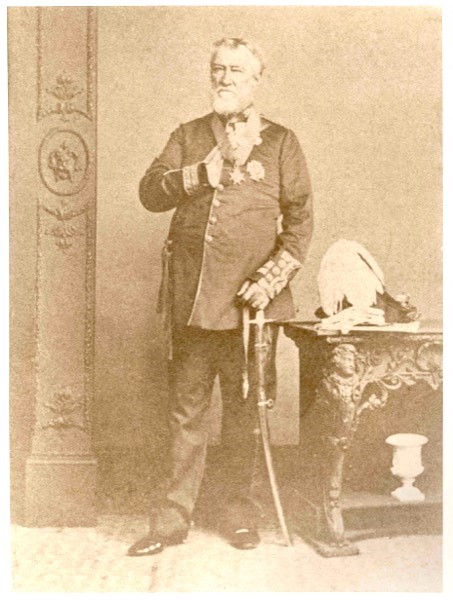
The man chosen to lead, what would be called the Saugor Field Force, was General George Cornish Whitlock. Born in 1798, the son of George Whitlock Esq., of Ottery St. Mary in Devonshire, he was commissioned as an ensign in the Madras Army in 1818. Although he was attached to the rifle corps, Whitlock’s name appeared on the strength of the 8th Madras Native Infantry (MNI). Within the first 12 months of service, he was gazetted to lieutenant and would see action for the first time towards the end of the Second Maratha War. In 1823, he transferred to the 36th MNI and participated in the Burmese War of 1823–26. After thirteen years of service, Whitlock was gazetted a captain. He served in the Coorg affair with distinction and was given command of the regiment following the death of the major. Subsequently, he served on the Divisional Staff as Deputy-Assistant Adjutant General for five years. By 1840, and now a major, Whitlock transferred to the 3rd MNI, much to the regret of the officers and men. He was promoted to lieutenant colonel in 1845. Here he remained until 1853, when the Commander-in-Chief requested Whitlock to raise the 3rd Madras European Regiment and became their first commander. In 1854, he became a full colonel and was appointed Brigadier of Kurnul in the Madras Presidency.
As it is, General Whitlock, a thoroughly likeable man, had, since the Coorg affair in the 1830s, not been about much. He had remained in Madras, rising in rank, from post to post, with little distinction. He was a man who had, with time, lost some of the youthful vigour required for rigorous campaigning. However, in 1857, the government in India did not have much choice in men or, indeed, little time to assess if they were suitable for the work at hand. Madras had already sent Neill to the field with his Blue Caps early in May. They had also replied by providing troops for the Nagpur Moveable Column.
However, with forces still stretched out towards Oudh, the Madras Government was further directed to organise a force for service in Nagpur and Sagar-Narbada Territories. The government elected Whitlock, now Major-General Whitlock, to the command. The field force, known as the Kurnul Moveable Column, consisted of two troops of horse artillery, three companies of field artillery with two light field batteries attached. Further, HM’s 12th Lancers, the 6th and 7th Madras Light Cavalry, HM’s 43rd Regiment of Foot, the 3rd Madras Europeans, and the 1st, 5th and 19th MNI, constituted the infantry, along with two companies of Madras Sappers.
The force was directed to relieve Sagar; however, as Sir Hugh Rose correctly surmised, they could not reach the place for months to come, and he had undertaken the task with the 2nd Brigade of the Central India Field Force. As it was, Whitlock did not march until January; he reached Kempti on the 10th and remained on the frontier of the Sagar-Narbada Territories for another two weeks before starting the 150-mile march to Jabalpur, which he reached on 6 February.
It would appear that Whitlock rather liked Jabalpur. Citing a variety of excuses as to why he could not possibly join Sir Hugh Rose in Sagar, he simply dug in his heels and did very little of anything at all. His force had grown with the addition of the Nagpur Moveable Column, which had been directed to wait for Whitlock’s arrival, and detachments from the Hyderabad Contingent:
Saugor Field Force
A Troop, European Horse Artillery
E. Troop, Native Horse Artillery
Detachment, Royal Artillery
Detachment Madras Foot Artillery
HM’s 12th Lancers
4th, 6th & 7th Madras Light Cavalry
One Squadron, 2nd Cavalry, Hyderabad Contingent
3rd Madras European Regiment
1st Regiment, Madras Native Infantry
23rd Regiment, Madras Infantry
Nagpur Moveable Column
Commanding: Colonel Miller, 33rd Madras Infantry.
One Squadron. 4th Madras Cavalry
D Company, 3rd Battalion, Madras Artillery
33rd Madras Infantry
Rifle Company, 1st Nagpore Irregular Infantry
On 11 February, the 4th & 6th Madras Light Cavalry were ordered to Allahabad, but on receiving news that the Nana Sahib had crossed into Bundelkhand with his force, General Whitlock ordered them to halt until his force could join them.
Major Erskine, Commissioner of the division, though undoubtedly pleased he was no longer holding his division alone with just the Nagpur Moveable Column for support, would shortly change his mind about Whitlock. When he arrived in Jabalpur, he informed Erskine his orders were to “attend to the Commissioner’s requests, and to reinstate our authority in the south of Saugor. The General was unacquainted with this part of the country, and of the state of affairs in it; consequently, he asked the Commissioner for a written statement of the affairs of each district, and for a memorandum of what troops should be left at each station, and for a sketch of proposed operations.” And here the problems started.
Erskine quickly provided Whitlock with everything he requested; the commissioner’s proposal was a sound one, to advance on Damoh and Sagar in two columns, by two different routes, thus clearing away the rebel strongholds along the way. Whitlock agreed to every point in the plan and, with much eagerness, on their march to Nagode, Erskine joined him as guide to the force. With plans supposedly settled, Erskine would suddenly be faced with the real issue of General Whitlock. Two days before the force marched, he received the following letter: “With every desire to carry into operation the contemplated movement on Saugor in two columns, I feel, after mature consideration, that my force is too small to admit of its being separated, and that its movements in one body would have a more beneficial effect throughout your division.” Erskine, now feeling somewhat doubtful of Whitlock, agreed to keep the force as one, and the march commenced on the 17th. Things did not go well.
“…for what reason that is not quite clear, he changed his mind; and although the strongholds of the rebels were pointed out to him, and he had a very large and fine force, he never fired a single shot during his stay in the division, nor did he send one man out against the rebels.” The information received by Erskine is that these strongholds were not being held by mutinous sepoys but by “undisciplined natives and matchlock men,” as everyone else had been driven off already by Sir Hugh Rose. Still, Whitlock refused to engage. His force had been somewhat reduced — the Nagpur Moveable Column was deemed to be of better effect if they returned to Nagpur, and Whitlock had also left a small force to guard Jabalpur, but his artillery alone, in Erskine’s estimation, would have been sufficient to turn the strongholds into dust. Taking the example of Sir Hugh Rose, whose casualties, even when attacking Rahatgarh, had been minimal, Whitlock’s behaviour was, in Erskine’s mind, inexcusable.
The force reached the fort at Jokai on 24 February, supposedly to meet the Raja of Rewa. Although Jokai itself had been razed to the ground, Lieutenant Osbourne and the Rewa levies had managed to not just to capture the fort, but render it indefensible. No amount of pleading from Erskine could dissuade Whitlock from parading his troops to a few sundry local chieftains and the Raja of Nagode, who had come, probably out of curiosity, to see the Madras men in the splendour. The Raja of Rewa had declined the invitation. The Nagode Raja informed Erskine that the information about the Nana Sahib had been wrong — neither he nor his troops were advancing on Bundelkhand, leaving Whitlock with no choice but to allow the 4th and 6th Madras Cavalry to proceed, with considerable delay, to Allahabad. The show in Jokai over, Whitlock, now, proposed, for whatever reason, to march the whole way back, not to Sagar, but to Damoh.
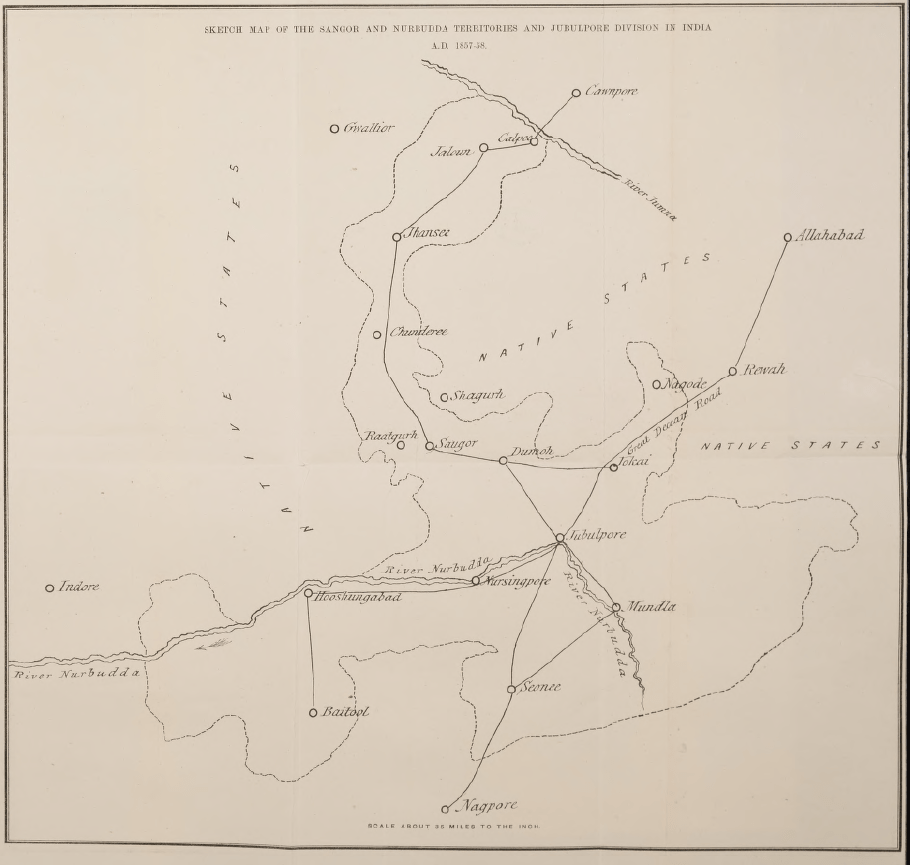
Whitlock, with Erskine still in tow, marched off towards Damoh on 26 February. Once again, Erskine, in vain, tried to persuade Whitlock to do something. Instead, the march proceeded slowly in seven stages. As for the rebels, they must have found this all quite amusing. They persisted in following Whitlock’s column, clearing off to the flanks as soon as he passed, and then closed in behind him. Over and over again, bodies of rebels were sighted near the line of the road and in the jungles; Whitlock would quickly agree to attack them, but then did nothing. Near Damoh, Kishore Singh of Hindoria, a noted rebel chieftain who had been molesting the peasantry for months with relentless plundering, was allowed to continue in his wayward actions, while Whitlock marched calmly past. For reasons known to him, and perhaps suffering from the effects of the sun, on 1 March, Whitlock wrote to Erskine,
“I am adopting measures which will enable me, I hope, not only to destroy the strongholds you refer to, but to prevent also the escape of the rebels now occupying them.”
What those measures were, Erskine never found out. All he could see around him were looters, armed with matchlocks and swords, who continued doing “terrible harm to the peaceable people, whom they plundered and murdered.” None of this had any weight with Whitlock; perhaps, he felt the enemy was beneath him, and the value of his force was too high to be wasted on fighting with rabble. He arrived in Damoh on 2 March. The troops of the Raja of Panna, who had been holding the place for the British, were duly thanked, and Erskine sent them home, as there would now be sufficient troops to hold Damoh without causing the Panna Raja any more inconvenience.
Whitlock, for his part, would now consider that his place was, in fact, supposed to be Sagar. On 5 March, accompanied by some artillery and lancers, with 200 Madras Europeans and a detachment of Madras infantry, he arrived. The remainder of his force he left at Damoh, under Brigadier Carpenter. Sir Hugh Rose had left a week earlier towards Jhansi, but Whitlock had no pressing need, nor orders to join him. While he had been loath to split his force up on the road to Rewa, he was certainly doing his best to make up for it now. He ordered 200 of the Madras Europeans and 70 Madras Infantry to garrison Sagar, and sent a further 100 Europeans, 2 guns and seventy men of the Madras Infantry to Jabalpur to bring in monies from the treasury. Then, after nearly a week in Sagar, he returned to Damoh with his lancers and artillery. Once again, urgent appeals from Erskine for assistance fell on deaf ears, leaving Erskine no choice but to write an official letter of complaint to the government, outlining his inaction. He then also washed his hands of Whitlock.
Major Erskine rode off to Sagar to elicit the support of Brigadier Wheeler, who had recently arrived to replace Brigadier Sage. Wheeler, with the enthusiasm, Erskine was beginning to doubt still existed in the army, soon set to work to clear the Sagar District, with the Bengal troops at his disposal and a new police levy. Erskine further raised new levies and police forces to prevent any further mischief, which could have been prevented had Whitlock deigned to do his job.
Erskine also issued an unusual proclamation, which would do much to restore confidence in the countryside. With the approval of the government, Erskine stated: probably in many cases the people had been misled – he had no desire to “take the lives of innocent and misguided people who had not committed any great crime”, and called on anyone who happened to be in possession of Government property or “property no their own,” were to give it up forthwith to the newly appointed district officer. If they did so, no punishment would be forthcoming, and theft would be forgiven. He further requested that the prisoners, who, at Damoh, had been released by the mutinous sepoys, turn themselves in. To his surprise, nearly all of them did so. Erskine reviewed their cases, and all the women and except for a few men, were pardoned.
As for Whitlock, Erskine decided his history was better left for someone else to relate his “doings and honours, for he was knighted.”
General Whitlock continued on in what was his usual fashion, as one officer put it, like a faulty revolver – the barrel turns but no shot comes out. Canning saw it fit to send him off towards Nagode and Panna via Hatta, leaving Sagar, as Erskine pointed out, in the same state as he had found it. With no opposition, he reached Panna on 29 March and halted again for nearly a week. On the very day Jhansi was stormed and taken — 3 April — Whitlock received a despatch from Sir Hugh Rose to move with all haste towards the place. Instead, Whitlock marched his force over the difficult Marwa Ghat to Mandala, where he now needed to repair the guns and carriages damaged in the crossing. Then on 6 April, under the earnest pleadings of the Political Assistant of Bundelkhand, Major Ellis, he decided to take by surprise a band of some 2000 rebels at Jhigan, seventeen miles from Chhatrapur. He marched the same day to Chhatrapur and arrived there on the 9th.
Jhigan and the Taking of Banda
The force marched on 10 April in the evening, proceeding over difficult terrain and dense jungles. The guides lost their way, and the force ended up marching directionless for hours, only reaching Jighan at dawn the next morning.
There was little time for delay. Whitlock advanced with the A Troop Horse Artillery, two squadrons of Lancers and a detachment of 2nd Cavalry, Hyderabad Contingent, while the rebels quickly evacuated Jhigan. The artillery opened fire, and the cavalry charged. The remainder, who had survived this onslaught, fled towards the jungle, setting fire to the grass behind them to prevent any hasty pursuit. In all, 97 rebels were killed and 33 captured, nine of whom were ordered hanged. Jhigan village and the small stronghold were destroyed.
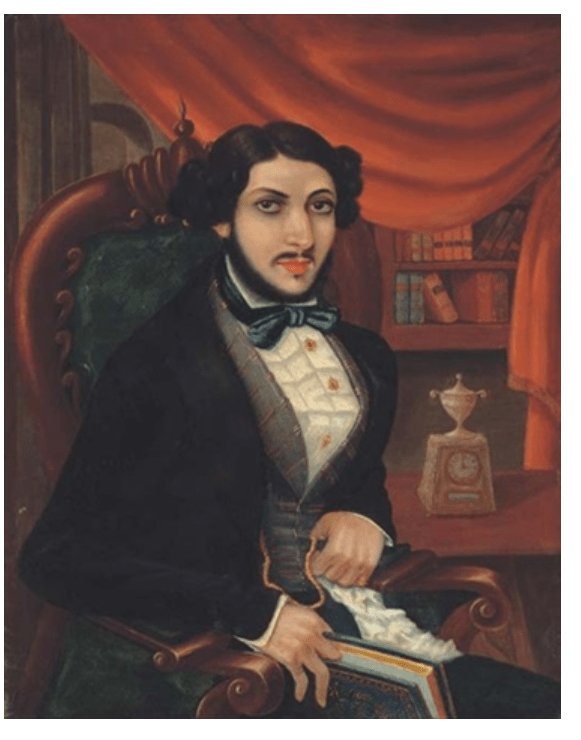
The Nawab of Banda had been ruling quite independently over Banda and the related district ever since he had been given over to rebellion in 1857. The collector at the time, Mr Mayne, did not believe the nawab had acted independently, because in his judgement he was a “fool,” and “utterly wanting in brains and judgement.” At the time Banda went over to the rebel cause, the Nawab was receiving an annual pension from the EICo to the tune of £ 40,000, which, for obvious reasons, was now null and void. When Mayne knew him, he was an “idle fellow”, very fond of his horses and his women, who enjoyed a good day’s shooting with his English rifles. He was a “man of pleasure and incapable of transacting the most trifling public business; he was entirely in the hands of those about him, and he acted on their advice. ” In 1857, there was certainly doubt whether the British would be able to continue in India, and the Nawab did what he thought was best to secure his own interests, but in actual fact, he had personally not acted with any open hostility towards the British. It was not the Nawab who rebelled on 14 June, but his own household and his troops. Mayne had been forced to leave but had remained in contact with the Nawab over the following months, so he knew the difficulty of his position. On one hand, he rescued fugitive Europeans passing through Banda, on the other, he was faced with increased anarchy in the district and overwhelming threats from the Bundelkhand rajas. Aware that the Nawab had neither resources nor power outside his own four walls, they exerted enough pressure on the young man that he finally capitulated, and he became, at best, a reluctant rebel. By throwing in his lot with the Bundelkhand Rajas, he was able to prevent the escalation of violence in his district, which was mostly perpetrated by the very men he was forced to join. Under their direction and influence, he commenced not only raising his own levies but casting guns. Now, with Whitlock approaching, he would be forced to fight.
The Nawab Hatches a Plan
Whether the ambush he set for Whitlock was the Nawab’s own doing is a matter of some speculation. He certainly had an army to throw at him, consisting of 850 sepoys of the mutinous 50th BNI, 200 of the 23rd BNI, the 2nd Regiment of Cavalry, Gwalior Contingent and half a battery of guns. He also had his own levies and rebels from Bundelkhand on his side. Whitlock, in the meantime, was marching to Mahoba, unaware that it was the Nawab who had withdrawn the mutinied regiments from that station and had moved them to Kabrai, 24 miles west of Banda. Faulty intelligence, planted by the Nawab’s spies, had given Whitlock the security of thinking that west of Banda, he could expect no rebel activity at all. However, as they passed Kabrai, just before daybreak, the rebels opened a heavy fire on Whitlock’s troops. The cavalry and horse artillery went to the front, but the rebels retreated before they could meet them on the field, and their losses were few. While a pursuit proved hopeless, this ambush gave Whitlock a moment’s thought. If the rebels had stood their ground and given him a fight at Kabrai, they could have caused his column serious damage – by retreating, they had, in effect, exposed themselves, and now Whitlock knew his arrival at Banda would not be an easy one.
The Nawab took up a position at Goera Mughali, eight miles west of Banda, and five miles from the Ken River, to prevent Whitlock from gaining the city. The position was not only well chosen, but it was a strong one. The artillery commanded the main road by which Whitlock was marching, allowing the Nawab to withdraw his guns should he be hard-pressed. The intervening grounds were cut up by numerous ravines and nullahs, which covered his entire front, thus affording his skirmishers excellent cover, while movements against their flanks with cavalry and artillery would be hindered by the difficulty of the terrain. He also outnumbered Whitlock, having a total of 9000 men of all arms, including his own levies and the mutinied regiments. He would be facing Whitlock’s force of 2,300.
The Battle of Banda, 18 April
It was the advanced guard under Colonel Apthorp with the 3rd Europeans who first met the Nawab’s infantry. Apthorp ordered his men to form line, 600 yards in advance of the rebel position, with Captain Macintire’s squadron of 2nd Cavalry, Hyderabad Contingent on the right. After a short advance, it was found that two of the rebel guns had been placed to enfilade the infantry on their advance, so Apthorp ordered Macintire to charge the guns. Macintire, with much flair, took up the call and raced off towards the guns with his men, charging through the deep nullahs, over and past the hidden rebel skirmishers, and managed, with trifling loss, to capture one of the guns.
Whitlock had now come up. He directed it to the left to cooperate with the advance guard, which was now facing considerable difficulties. With their flanking fire, he was able to relieve the advanced guard, and the infantry was soon in among the rebels with their bayonets. Shortly after, the cavalry and artillery turned the rebels’ left flank, but not before the Hyderabad Contingent Cavalry faced the ever-increasing problem of forcing horses through rough ground; seeing them struggling to cross, the rebels took advantage of their situation to open up a withering fire of grape and musketry at 20 yards. The 12th Lancers, realising they would face the same, were formed in line by Major Oakes, who commanded them to cross the nullahs in single file before attempting a charge to assist the Hyderabad Cavalry. Once across, Oakes formed them in line and ordered the charge. Seeing the Lancers approaching, the rebels did not wait for their onslaught but turned and fled. Undeterred, the Lancers followed them for the next four miles to the Ken River, where they cut up nearly 300 of them. Oakes then reassembled his men and brought them back to the main column.
The advance was now on the Nawab’s second position. Oakes detached a troop of the Lancers to protect the artillery to their left, and a troop of the Hyderabad Cavalry took the right flank. They then charged the small hillock on which the rebels had placed a large brass gun. The gun was taken, and the rebels fled down the other side, with the cavalry still in pursuit. However, the retreat was covered ably by some heavy guns to the left of Banda Fort, causing Oakes to check his men. In agreement with the officer commanding the European Horse Artillery, it was deemed necessary to retire out of their range and wait until the heavy guns of Whitlock’s column could be brought up. While it was difficult to bring them into position, the 18-pounders soon “made some excellent practice.” After four hours, the rebels began to retreat in earnest. As they fell back, they occupied every available ground for resistance, but the Horse Artillery guns and the infantry were not far behind, forcing them closer and closer to the River Ken with each step.
In their midst, the Nawab of Banda left the scene of battle, leaving behind him nearly a thousand men, dead and wounded. Instead of pursuing the fleeing Nawab, Whitlock chose instead to harass a small fort with his guns, as he had been told, quite erroneously, that the rebels were all hiding inside. Instead, they were crossing the Ken River. By the time Whitlock realised his mistake, they were gone.
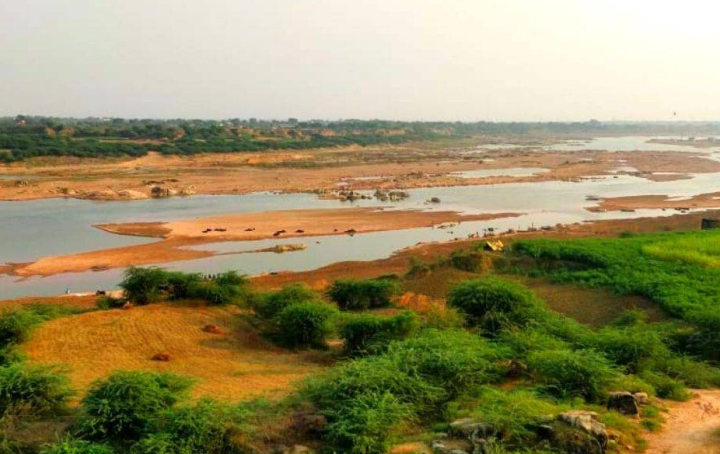
All that was left now was to take Banda.
Hastily, the principal inhabitants of Banda approached Whitlock with a flag of truce. They informed him that the Nawab was gone, and the mutineers had set fire to their lines. When the British walked into the fort, so great was the panic and so sudden the flight of the Nawab’s retainers, they found food was still cooking in his kitchens. It also appeared he had taken nothing with him. Thirteen large brass guns were found, besides several of smaller calibre; the palace contents, including his treasure, elephants, camels, horses and grain, were found exactly as he had left them. It is no wonder, it was later reported, that villagers who had witnessed the Nawab’s passing, he had done so with tears in his eyes. He had gone, in the short space of four hours, from a nobleman with a fine home to a penniless rebel who faced the very real likelihood of hanging from a gibbet. There really was nothing for it – the Nawab continued his march with the rebel column and joined hands with a much larger force that would soon be facing Sir Hugh Rose at Kalpi. It was by far not the end of the rebellion in the neighbouring districts. Kalpi, Hamirpur and Jalapur still stood defiant, and two brothers at Kirwi, calling themselves Peshwa, had amassed an army of 15,000 men and 40 guns, with which they still held the eastern half of the Banda district.
Banda Station had not fared as well as the palace. It was nothing more than a heap of ruins. All the trees that had once shaded the main roads had been chopped down; the church was missing its roof, and the tower had been used for target practice by the rebel artillery, even its walls had been undermined. The monuments in the cemetery had been defiled, and all the stones and marble tablets were missing. Some were later brought in by villagers who had been using them to grind their spices on.
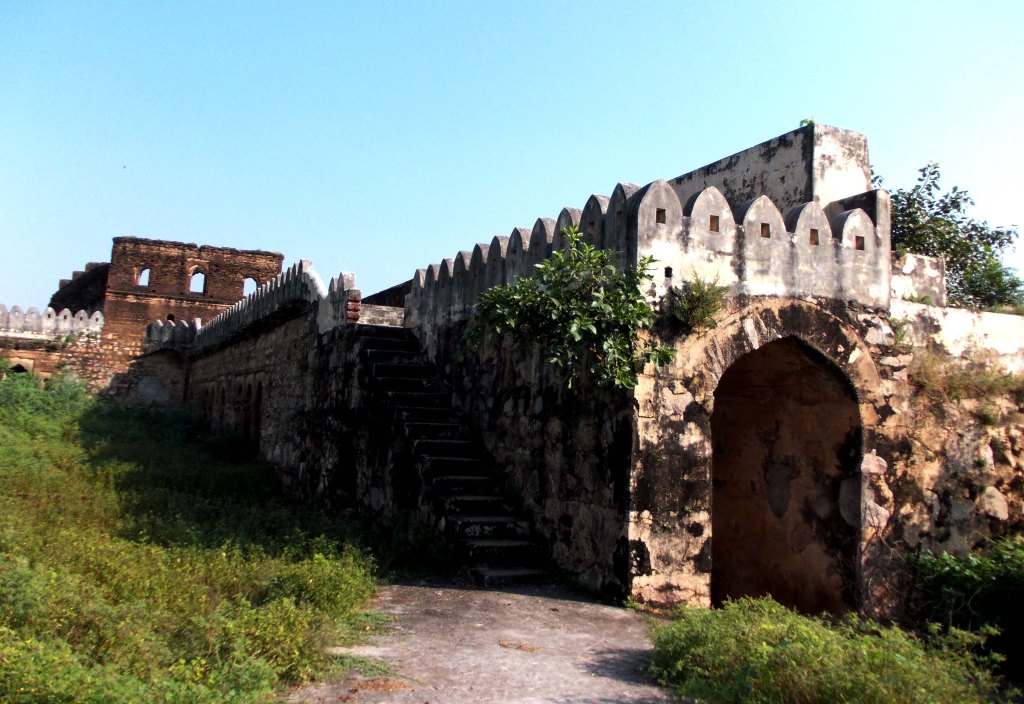
If Whitlock had liked Jabalpur, he certainly liked Banda much more. He now excused himself from the field to wait for the arrival of the Second Brigade, Saugor Field Force under Brigadier McDuff. They had been advancing in Whitlock’s rear since 18 March and had done a few of the things Whitlock didn’t. They had prevented the mutineers from heading into the Mirzapore district and had also taken measures to deal with plunderers around Nagode. They would not join Whitlock until 27 May.
McDuff was more than a little surprised to find Whitlock still there; there was no secret to the matter that Whitlock had missed the Battle for Jhansi, and now, despite despatches from Sir Hugh Rose, he had managed to miss the Battle of Kalpi as well, which was concluded on 23 May. What Rose thought of this, he did not let on. When Whitlock marched again, it would, once again, be in a completely different direction from Sir Hugh Rose, and it would not be until 2 June.
What was the reasoning now, for Whitlock’s non-action? It was quite simple – he felt he did not have enough men to be of any assistance to Sir Hugh Rose and even apprised Canning of the fact. In a letter, requesting reinforcements for his force to be taken from north of the Yamuna, Canning replied that there was no one to spare, so Whitlock determined to remain in Banda. Almost on the same day, General Mansfield, Sir Colin Campbell’s Chief of Staff, wrote a letter to Whitlock directing him to march up the right bank of the Yamuna to assist Rose at Kalpi, but at the same time, gave Whitlock a loophole. By stating he should only march if he deemed the area around Banda and to the east was sufficiently pacified, giving Whitlock the chance to reply, that no, indeed, it was not. So he remained in Banda. His only action up to the taking of Kirwi, in light of pacification, would be to send a detachment under Brigadier Carpenter to escort the Raja of Chirkari back to his capital, where his family was facing some danger from insurgents. Around the same time, his men began to fall ill, giving Whitlock another reason to stay where he was. He had had the courtesy to write back to Sir Hugh, stating that as soon as his 2nd Brigade arrived, he would certainly march to meet him before Kalpi, but for now, he did not feel his force could be of any use in its present, undermanned state. When Kalpi fell, he quickly wrote the following missive to Sir Hugh Rose, offering firstly his warmest congratulations, and
“I was to have marched this morning to join you, but now proceed to look after Narrain Rao, who has a large column of rebels and guns with him. My small column has suffered very severely. My aide-de-camp and myself were prostrated from the effects of a coup de soleil, and I am only now recovering. We have lost from sunstroke five officers and several men. It was frightful, the heat. Now we are all better. The rain has cooled the air considerably. I have just heard that some of the cavalry from Calpee are making their way to Narrain Rao, but I disbelieve the fact. I fancy the rebels look to the effect of the sun on our troops, but you have set them to rights on that point.”
Taking Kirwi
We will conclude this messy chapter on Sir General Whitlock with his non-battle at Kirwi. Malleson, in his usual acidity, makes the following remark:
“The reader will not have failed to see how, in every particular, the action of Sir Hugh Rose had cleared the way for the action of General Whitlock. It was Sir Hugh who, at Garhkota and on the Betwah, had disposed of the enemies with whom, but for that, Whitlock would have had to deal. The defeat of Tantia Topi on the Betwah alone made it possible for Whitlock to march on Banda. Yet—extraordinary
perversity of Fortune!—whilst Sir Hugh and his force endured all the hardships of the campaign and did by far the most important part of the fighting, Whitlock and his little army, up to the time of the capture of Banda, gained all the substantial advantages. The spoils of Banda, which would not have been gained but for the action of Sir Hugh Rose, were allotted to Whitlock’s force alone. The same blind goddess, not content with one perverse distribution of her favours, now set about to perpetrate another.” For now Lord Canning order Whitlock to march against the Raos of Kirwi.
The two young raos, Narain Rao and Madho Rao, the adopted sons of the Peshwa Ragonath Rao, had, on the same pretence of grievance as their relative Nana Sahib, thrown in their lot with the rebellion, as they felt the pension awarded to their adoptive father by treaty, and withdrawn on his death, was rightfully theirs. It was not as if they were living in poverty, as Whitlock would soon find out.
Until the third week of May 1858, they had been reposing in comfort and peace in their domain at Kirwi. The Nawab of Banda had been covering them from British attack, and although Whitlock had taken Banda in April, they also knew Tantia Tope was at large, and he would certainly baffle Sir Hugh Rose at Kalpi. As a precaution, in case things went belly up, they did write to Sir Robert Hamilton, professing not just their loyalty but, if worse came to worst, their surrender; but as soon as intelligence reached them that Whitlock was to march to Kalpi, they hastily forgot their offer. Unfortunately, they were wrong.
Sir Hugh Rose, to their horror, took Kalpi, routing not just the rebel force but their protector, the Nawab of Banda. Now it looked as if Whitlock was coming for them. Instead of offering a fight, the raos rode out to meet Whitlock, and ten miles from Kirwi, at Bharatkup, they surrendered. On 2 June, when Whitlock entered Kirwi, Sir Hugh Rose, who, it seems, had given up on Whitlock at this point, was entering into a very dangerous fight in Gwalior.
It looked as if the raos had indeed handed over the keys of the kingdom to Whitlock.
“In the palace-yard were more than forty pieces of cannon, of calibres between 18 and 3-pounders; an immense quantity of shot, shell, and powder; two thousand stand of arms with accoutrements complete; muskets and belts belonging to several regiments which had mutinied. The gun-foundries and powder-manufactories had been, up to two days prior to the surrender, working full tides. But in the palace itself was stored the wherewithal to compensate soldiers for many a hard fight and many a broiling sun, but in this case gained without a shot. In its vaults and strongrooms were specie, jewels, and diamonds of priceless value.” In all, the combined treasure of Banda and Kirwi would amount to £700,000 (as of 2017, this was worth approximately £41,390,440.00).
For a commander who had, effectively managed to not fight much in the Indian Mutiny, he certainly cleaned up nicely. Perhaps this was why Charles Rathbone Lowe wrote, “and though he cannot be regarded as taking high rank as a soldier, the name of Sir George Whitlock may not unworthily be placed among those of India’s distinguished generals.” Nothing else comes to mind besides that he undoubtedly enriched many a purse back in England.
The Banda-Kirwi Prize Money
It is no wonder, then, that everyone else wanted a share of what Whitlock found at Banda and Kirwi. Argued before the High Court of the Admiralty, the case, called the Banda-Kirwee Prize Money Case, would rage on until 1867, with the lawyers carrying away a tidy sum of £60,000 for their own pockets, and ultimately, the following pay-out was made:
| Recipient | Amount |
|---|---|
| Lord Clyde | £60,000 (£3,756,540.00) |
| General Whitlock | £12,000 (£751,308.00) |
| a Captain | £600 (£37,565.40) |
| a Lieutenant | £325/£375, depending on length of service. (£20,347.93 / £23,478.38) |
| a Sergeant | £100 (£6,260.90) |
| a Private | £50 (£6,260.90) |
On 28 March, 1867, nine years after its capture, the payment of the first instalment of the prize money was issued by the Governor-General, as follows: “The Banda and Kirwee prize money is payable to the Commander-in-Chief, Lord Clyde, and Head Quarters’ Staff, who were in the field between the 19th April and 6th June, 1858, and to the troops of the Saugor and Nerbudda field force who were under the immediate orders of Major-General Sir G.C. Whitlock, K.C.B., between those dates.”
The troops entitled to it were two troops of Madras Horse Artillery, one company of Royal, and three of Madras, Foot Artillery; one company of Madras Sappers, a wing of the 12th Lancers, and a detachment from the 2nd Cavalry of the Hyderabad Contingent; Her Majesty’s 43rd, and the 3rd Madras Europeans; and the 1st, 19th, and 50th Regiments of Madras Native Infantry. Two additional payouts were made, raising the total of an individual’s prize money – in the case of a private, he received a final total of £ 75 ( £4,695.68). All other claims, including those of the officers under Sir Hugh Rose and Major General Roberts, were rejected.
Where medals were concerned, the men of Whitlock’s column received the India Mutiny Medal with one clasp, for Central India. They further received six months’ batta, which would not be paid out until 1859.
General Sir George Whitlock, KCB
After Kirwi, Whitlock, rather grandly, left the field. The Saugor Field Force was broken up and distributed in the district over the next months; a portion finally did end up in Kalpi, if only to relieve the detachment left there by Sir Hugh Rose when he went off to deal with Gwalior. They took part in operations in Bundelkhand for the remainder of the year. Whitlock fixed his headquarters at Mahoba and, eventually, in July, was given divisional command of Sagar. Due to the rains, which conveniently were now falling, the detachments of Brigadiers Carpenter and McDuff were momentarily hindered, but by August, they had taken up some of the work of chasing rebels out of the district. Whitlock himself would take to the field for the last time in December 1858 when he engaged what was left of the Bundelkhand rebels close to Kirwi at the fort of Punwari, where it was once again his fortune to stumble across treasure.
With his pockets considerably heavier than when he arrived in India, Whitlock closed his mutiny services. Lord Clyde sent him an autographed letter of congratulations, the House of Parliament mentioned him in a vote of thanks, he was created KCB, and on 30 September 1862, he received his colonelcy in the 3rd Madras Europeans. Sir George Whitlock commanded the northern division of the Madras Army for one year from 1860, but his declining health forced him to resign his command and return to England. The same year the prize money was finally paid out, Whitlock was seized with “an attack of paralysis,” and died the following January at his home in Exmouth.
Sources:
Central India during the Rebellion of 1857-1858 – Thomas Lowe (London: Longman, Green, Longman & Roberts, 1860)
A History of the Hyderabad Contingent – Major Reginald George Burton (Calcutta: Government of India Central Printing Office, 1905)
The Revolt in Central India 1857-59, Compiled in the Intelligence Branch (Simla: Government Monotype Press, 1908)
A Chapter of the Bengal Mutiny as Seen in Central India, by One Who was There in 1857-58 – W. Erskine (London: William Blackwood and Sons, 1871)
Selections of Letters, Despatches and other State Papers Preserved in the Military Department of the Government of India 1857-58, Vol IV – edited by George W. Forrest (Calcutta: Superintendent Government Printing India, 1912)
Soldiers of the Victorian Age – Charles Rathbone Low (London: Chapman & Hall, 1880) pp. 105–125 Lieutenant-General Sir George Cornish Whitlock, K.C.B.
History of the Indian Mutiny, commencing from the close of the 2nd Volume of Sir John Kaye’s History of the Sepoy War, Vol. III – Col. G.B. Malleson (London: W.H. Allen & Co., 1888)
Links:
Currency conversion: https://www.nationalarchives.gov.uk/currency/#
FIBIwiki
 Mutiny Reflections