The unexpected arrival of the Nawab of Banda and his army of 2000 horse, infantry, and a few guns bolstered the rebels’ flagging enthusiasm for the campaign at hand. They had, since January, faced nothing but defeat—in all, Sir Hugh Rose had routed them no less than 13 times, nor had their unceremonious ousting from Kotah by Roberts helped their morale. Now, ensconced in Kalpi, the Rani and the recently arrived Rao Sahib (a nephew of the Nana Sahib of Bithur) were finding it increasingly difficult to prevent the men from squabbling amongst each other or even attend to their duties. Tantia Tope was seen as the cause of their woes—every time he had taken them to the field, he had always made sure he was the first one to leave; as good a strategist as he undoubtedly was, the mutterings of the men were clear: their British officers, the very ones they had murdered or chased off, for all their faults, had never abandoned them in battle. The feeling of being used as cannon fodder by the man who had promised them swift victory was becoming prevalent. It was just as well that Tope had chosen, after his defeat at Kunch, to head off to Chirki, near Jalaor, where his parents resided. He would return, but not to Kalpi.
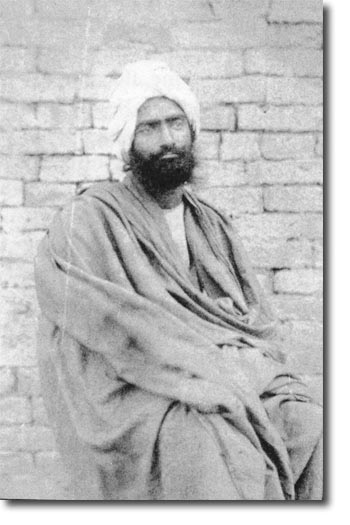
However, the Nawab of Banda, who had once displayed much sorrow at the mutiny in his dominions, was now a fugitive himself, having been sent packing by no great adversary in the form of Brigadier Whitlock. With precious little left open to him, he now set aside his own disheartened feelings and threw himself with all enthusiasm to rally the Kalpi garrison. With his confidence and vigour, the troops’ demeanour swiftly changed from despair to confidence—they could, after all, “win their right to paradise by exterminating the infidel English.” It really was that simple. So the sepoys who had left the disgruntled returned to Kalpi, while the distrustful and the battle weary put their differences aside to make as hot a welcome for Sir Hugh Rose as they could manage. They had their spies, too, and their reports were quite heartening for the rebel cause: correctly, they reported that the Central India Field Force was low on ammunition; he was also forced to leave a garrison in Jhansi, depleting, though not considerably, his numbers. He was also facing problems replenishing his stores of food and campaign necessities. Besides this, the summer sun was taking a terrible toll on his men, and the casualties were mounting with every step they took towards Kalpi.
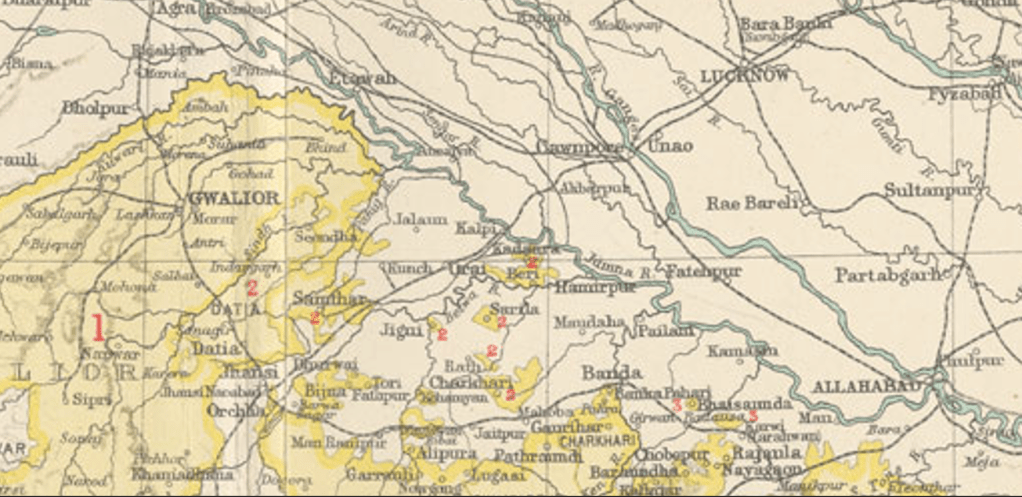
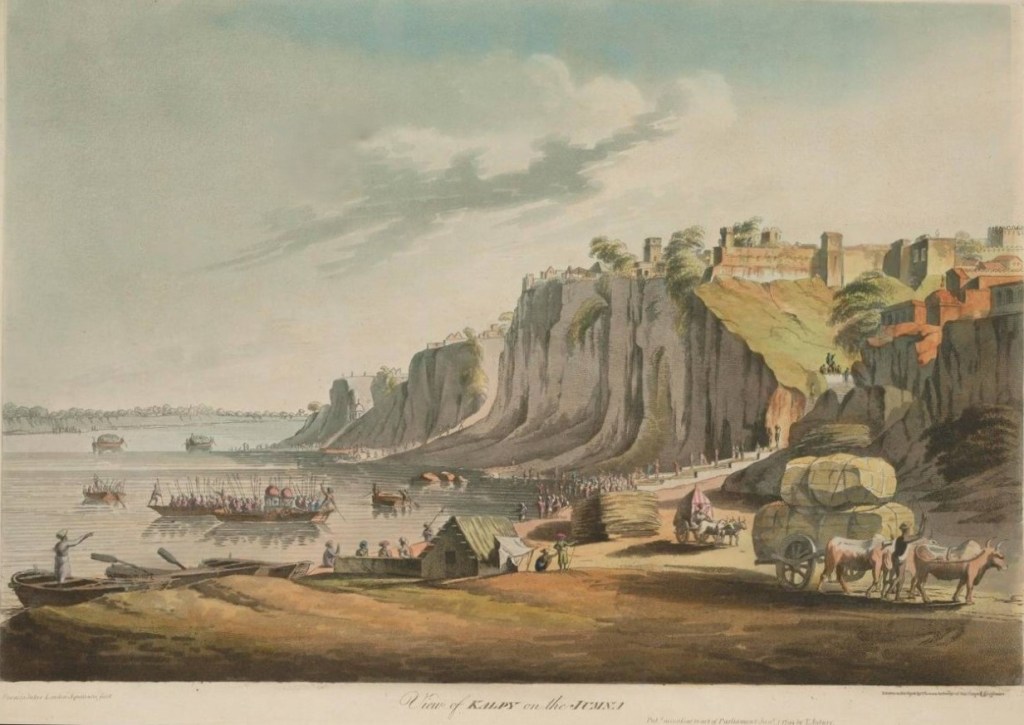
The importance of Kalpi, on the river Yamuna, was not lost on the rebels, nor, for that matter, on Sir Hugh Rose. Besides being their only arsenal, full of stores and munitions of all sorts, its location was giving the British sleepless nights. As long as it remained in rebel hands, the British troops engaged in operations in the Doab, the line of the Ganges, Oudh and Rohilkhand, were at the mercy of attack from the line of the Yamuna. Kalpi was at the heart between the two—take the heart, and the rebels would lose their strategic foothold; they would also have one less place to run to and rally.
However, Sir Hugh Rose had certainly surprised them. He was not an officer the sepoys knew; he did not fight like the officers they were accustomed to, and his tactics were foreign and strange. They were also contending with other forces they had never before seen—the terrifying Hyderabad Contingent Field Force had shown themselves not just skilful in battle but merciless; they had been thwarted by other sepoys of the Bombay regiments who had shown time and again what they thought of the rebellion and coercing them to change sides had proved fruitless; and then the new European troops were proving themselves to be a cut above those they had faced in Oudh. These men were fresh on the field, driven by duty: a professional army without sentiment. Driving them into the sea was proving a cut harder than the rebels had ever imagined. However, the one advantage the rebels still had over the freshly arrived troops, and that was the merciless heat. While there had been some care taken to provide them with better uniforms and head coverings, the best tactic the rebels could employ was forcing them to fight at the hottest time of the day. Nothing could save a man from the sun. A general order, issued by Tope, had stated well back when he opened his campaign in 1857, that “as the European infidels either died or had to go into hospital from fighting in the sun, they were never to be attacked before ten o’clock in the day in order that they might feel its force.” While it would have been a bit much to wait for them all to die of sunstroke, as a strategy, it was certainly making itself felt.
The Defence of Kalpi
The Fort of Kalpi was, by most estimations, “wretched as a fortification”, but considering its position, this was irrelevant. It was a rectangular structure, with a dome on top, with walls no less than 9 feet thick; however, it stood 120 feet above the riverbed, making it an unusually strong position. It was further protected on all sides by ravines and to its rear by the river, from which rose the rock upon which the fort was built. The rebels would take advantage of everything Kalpi had to offer and on their return, reoccupied the strong positions in the ravines; they further retook the entrenchments which they had built and armed to stop the Rose’s advance a few miles to the front of the 84 temples, which were two miles from Kalpi itself. In several places, they cut deep trenches across the road and put up barricades. What with the ravines, such obstacles, for the lack of space, provided little room to turn. The plan was clever—if Rose managed to drive them from the entrenchments, then they could fall back on the temples; the ravines offered them a third option, followed by the town of Kalpi itself as the fourth line of defence, a further network of ravines between the town and the fort the fifth and finally, the fort itself. Kalpi would prove, once and for all, that when well led, the rebels were indeed a serious force to be reckoned with; at Kalpi they had the advantage of the grounds, the sepoys of the 8th, 23rd, 40th and 50th Regiments, Bengal Native Infantry, had not only fought the British before but had retained their high standard of discipline; the 5th Bengal Irregular Cavalry and the Gwalior Contingent, present in all arms had lost none of the eagerness for a fight. Their leaders knew full well that Sir Hugh Rose could not risk a siege, and they planned to meet him, for the first time in the Central India Campaign, on the offensive. For Sir Hugh Rose, it would be a battle he could not afford to lose, but the question was open who really had the upper hand. A crucial week of assaults and hand-to-hand combat would now ensue, with both sides vying for dominance.
The story continues in A Different Kind of Warfare.
Sources:
Behan, T. L. Bulletins and Other State Intelligence for the Year 1858. Vol. III. London: Harrison & Son, London Gazette Office, 1860.
Burne, Owen Tudor. Rulers of India: Clyde and Strathnairn. Oxford: Clarendon Press, 1892.
Forrest, George W. A History of the Indian Mutiny. Vol. III. London & Edinburgh: William Blackwood & Sons, 1902.
Forrest, George W. Selections of Letters and other State Papers. Calcutta: Superintendent of Government Printing, 1912.
Gimlette, G. H. D. A Postscript to the Records of the Indian Mutiny. London: H.F. Witherby, 1927.
Intelligence Branch, comp. The Revolt in Central India 1857-59. Simla: Government Monotype Press, 1908.
Jocelyn, Julian R. J. The History of the Royal and Indian Artillery in the Mutiny of 1857. London: John Murray, 1915.
Laurie, George Brenton. History of the Royal Irish Rifles. London: Gale & Polden, 1914.
Malleson, G. B. History of the Indian Mutiny, commencing from the close of the 2nd Volume of Sir John Kaye’s History of the Sepoy War. Vols. II & III. London: W.H. Allen & Co., 1888.
Smyth, John. The Rebellious Rani. London: Frederick Muller Ltd, 1966
 Mutiny Reflections