The Field Forces
First Brigade
Brigadier C.S. Stuart, Bombay Army, commanding:
One squadron, 14th Light Dragoons
One troop, 3rd Bombay Light Cavalry
HM’s 86th Regiment of Foot, two companies
25th Regiment, Bombay Native Infantry
Three light field batteries, one belonging to the Royal Artillery, one to Bombay, and the third to Hyderabad.
Sappers
Second Brigade
Brigadier Steuart, 14th Light Dragoons, commanding:
14th Light Dragoons, headquarters
3rd Bombay Light Cavalry, headquarters
3rd Bombay European
24th Regiment, Bombay Native Infantry
One battery, Bombay Horse Artillery
One Light Field Battery
One Battery, Bhopal Artillery
One Company, Madras Sappers
Hyderabad Contingent Field Force
Major Orr commanding;
three regiments of cavalry
two regiments of infantry
one field battery
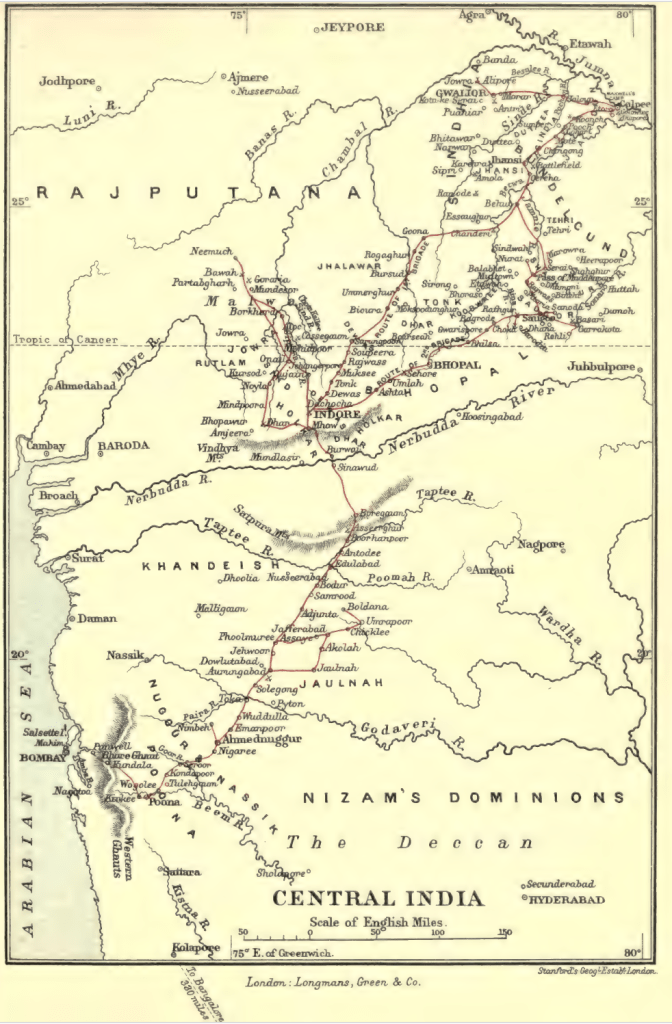
Since the taking of Jhansi, Sir Hugh Rose had not been idle. Only part of his force could now take advantage of the break; not everyone was given that luxury. His main concern, until he could be sure Kotah was taken, was to protect Jhansi from any attacks from either the Kotah rebels or the late Chanderi garrison. Tossed from the position in the fort, the Chanderi garrison had made an incursion on the road between Jhansi and Goona to cross the Betwa River. To keep Jhansi safe, he would have to go on the offensive.
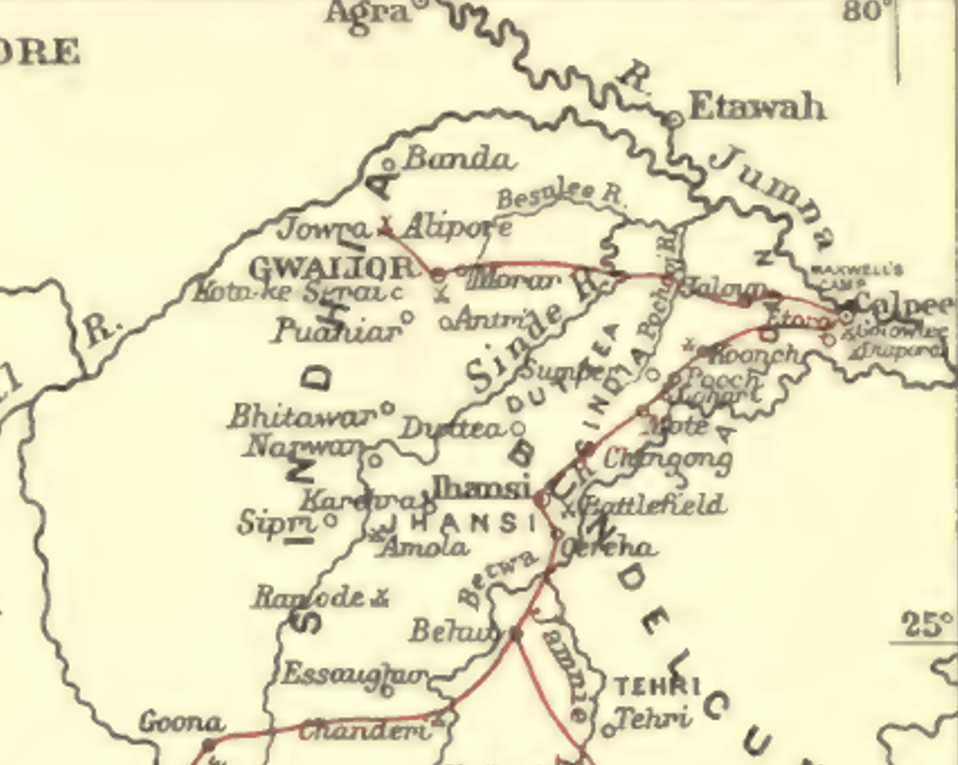
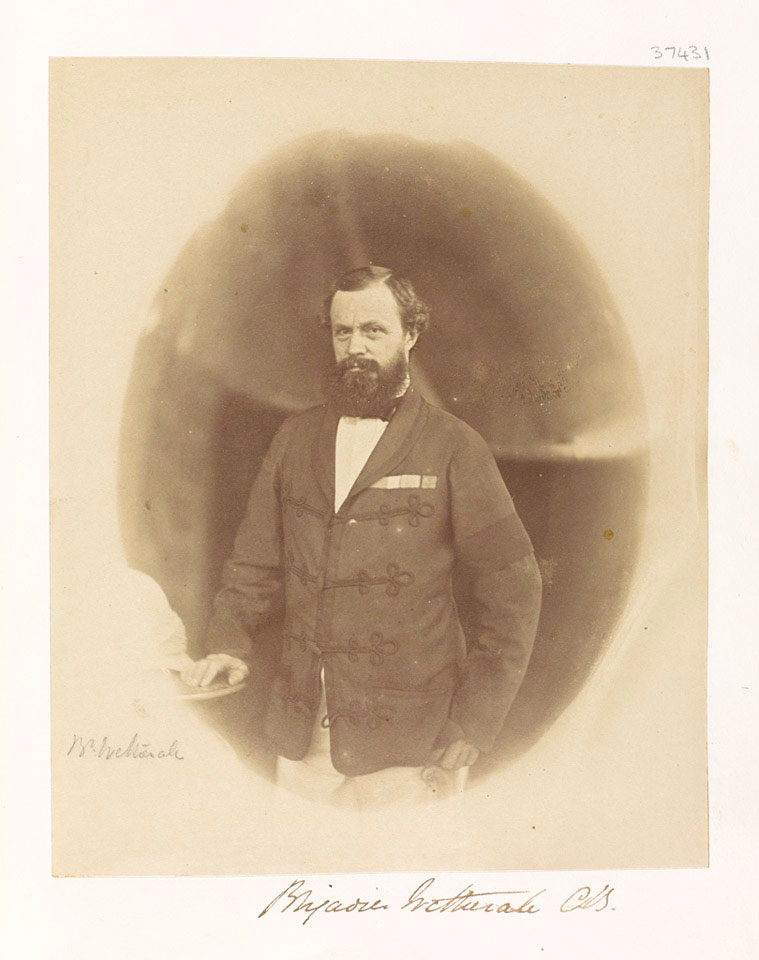
On 18 April, acting on intelligence received from Colonel Wetherall, who was on the road to join Rose’s staff, Colonel Lowth of the 86th was ordered to take a small fort, some 30 miles from Jhansi, which had been taken by the Chanderi rebels. Lowth set off with 50 sowars of the Hyderabad Cavalry, a wing of the 3rd Bombay Cavalry, the 25th Bombay NI, half the Bombay 4/2 Battery and a howitzer manned by the Royal Artillery. They swiftly crossed the distance only to find the fort that Wetherall had said was teeming with rebels was empty. At the village of Bedora, they found the colonel and his escort, whom they now brought to Jhansi.
The next day, a wing of the 3rd Bombay Cavalry rode to Goona to form a junction with the 71st Highlanders, who had been pushed up with some haste from Bombay to join Sir Hugh Rose. Then, with the Hyderabad Field Force ever on hand, Sir Hugh sent Major Orr with the 1st and 4th Cavalry across the river to the village of Mau, some 40 miles from Jhansi and beyond the Barwa Sagar. Here, it was rumoured the rebels, along with the Banpur and Shahgarh rajas, were now reassembling. Major Orr was then to proceed north to Gurserai to gain intelligence from the loyal chieftain before moving against Kotra, a strategically important ford on the Betwa River, which, according to reports, was back in rebel hands. Orr was then to establish a junction with Major Gall. To gain information regarding rebel movements on the Kalpi Road, Major Gall, with a column consisting of one squadron of the 14th Light Dragoons, the 3rd Cavalry, Hyderabad Contingent, some companies of the 3rd Europeans and the 25th, Lightfoot’s Battery and three guns was sent out on the night of 22 April.
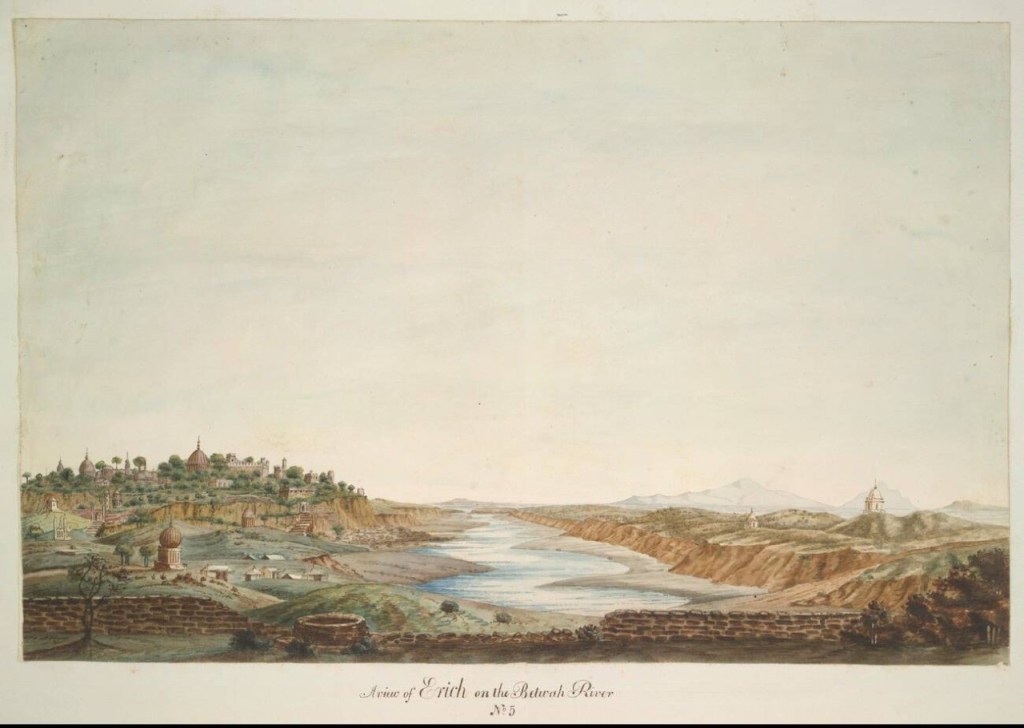
While Major Orr did not find any rebels at Mau, between Gurserai and the Betwa, he came upon the Banpur and Shahgarh rajas, ensconced in a small fort. Unprepared for Orr, most of the rebels fled, leaving behind three guns; however, the rajas escaped southwards, well provided in supplies and carriage by the treacherous Jigni raja. To Orr’s relief, the Kotra ford was held by levies of Gurserai — the chieftain had not been slow on the uptake and, realising any incursions over the Betwa could also lead to attacks on his district, had secured the ford in advance of Major Orr. Orr was now free to ride to the Erich Ford across the Betwa, just west of Kotra and establish communication with Major Gall, who had pushed on to Lohari to await Sir Hugh Rose, expected shortly at Putch.
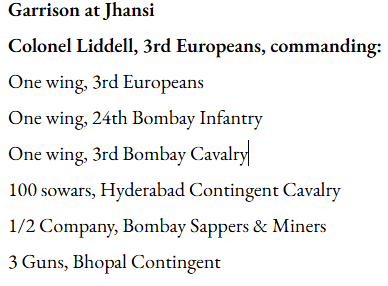
Sir Hugh Rose was finally ready to march on 25 April. Leaving a small garrison at Jhansi, he marched at midnight with the First Brigade, ordering the Second Brigade to follow up two days later. The hot weather had now set in, and there were 102 miles of dusty road to cross to get to Kalpi. However, there was more fighting to be done first.
Lohari, 2 May
On 1 May, the First Brigade reached Putch; on the 5th followed the 2nd Brigade, which had been reinforced two days earlier by the 71st Highlanders. When Sir Hugh Rose arrived at Putch, he was told a very grim story — an outpost of the Hyderabad Cavalry had been basely attacked during the previous night, when Gall had encamped his men at Lohari, eight miles north-west of Putch; their position betrayed to rebels holding out in the mud fort at Lohari — only with luck, had the sowars been able to cut their way out. The Hyderabad Contingent was eager to repay the insult, and Sir Hugh Rose, realising it would not do to leave Lohari in his rear, packed as it was with the mutinous sepoys mostly of the 12th Regiment Native Infantry, he obliged Major Gall to take Lohari.
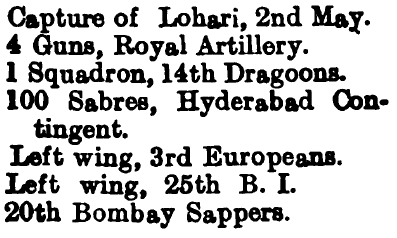
Major Gall marched out at midnight on 2 May. Pushing the cavalry forward at speed, he intended to invest the mud fort at Lohari by daybreak. As he passed Sirsa, he sent a party of the Hyderabad Cavalry under their Duffadar towards Kulliah, to the right, with orders to watch for any rebel movements from that quarter. With his men now in place, Major Gall rode up through Lohari directly to the walls of the fort. Loudly, he announced to Kiladar Manowar Singh (fort commander) that he had but one chance to open the gates and surrender, or Gall was going to blast his fort to bits.
Manowar Singh did not need a second invitation. With a small retinue, he came out and gave up his sword. He told Gall he had no control over the garrison at the fort; the Bengal sepoys had overrun him and his men; while he was more than willing to surrender, he could not speak for the sepoys. He had taken no part in the attack on the Hyderabad Contingent sowars, which was a plot cooked up by the Lohari villagers and sepoys, and as such, if Gall could rid him of this menace, he was certainly not going to stand in his way. His liege lord was the Raja of Santhar, to whom Lohari belonged—one of the lesser chiefs who had professed his loyalty to the EICo—that some of his men were involved in the attack on the cavalry, Singh could not deny, but he claimed coercion.
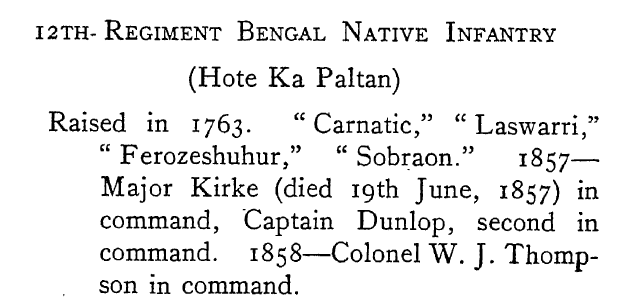
Major Gall then extended the surrender to the garrison, and this time, his announcement fell on deaf ears. The left wing of the 12th Regiment, Bengal Native Infantry had mutinied in June 1857 at Jhansi, and they knew perfectly well there would be no quarter for them. At Lohari, although no more than 150 of the 12th along with a scattering of other mutinous sepoys and deluded men of Santhar were present, they decided that if they had to make a last stand, then Lohari was as good a place as any.
Gall now retreated from the fort walls, and operations began in earnest.
Lohari and the fort were situated on a flat, extensive plain, with the village separated from the fort by some 150 yards of open ground. As for the fort itself, this was not a formidable construction like Jhansi—far from it. The fort was a squat, square-shaped structure, built of mud and sun-dried bricks, flanked by round towers at each corner, with a ditch and a second line of works just outside it. The interior side measured no more than 100 yards. Ordering the skirmishers to advance through the village until they reached some low mud enclosures at the end of the open plain, he then placed two of his guns on the Khullia Road, one howitzer and one gun were then moved opposite a guard house which stood on the east side of the fort, just outside the walls. A company of the 3rd Europeans now advanced and took the guardhouse, close to the ditch—the rebels had wisely retreated from the guardhouses, and had taken up their position behind a third gate inside the fort.
The order to surrender was once again made, but it was once again refused; seeing he had no other choice left, Major Gall directed Captain Field of the Royal Artillery to open fire with his two 9-pounders and the 24-pounder howitzer on a building at the summit of the fort; anywhere the rebels showed themselves over the wall, the artillery further directed their fire at them. The rebels answered with a flurry of shots from their matchlocks and aimed their gun—a single 9-pounder of brass—at the dragoons in the plain, alternately showering them with roundshot and grape. Anyone unwise enough to approach the well under the bastion where the gun had been placed quickly realised the error of his ways, as the matchlock men used his head as target practice.
The engineers quickly surmised that to scale the walls, though not impossible, was difficult, and it would be infinitely easier to blow in the third gate instead. Lieutenant Bonus came up with a clever plan – having found a pair of bellows in a gunsmith’s shop in the village, he filled these with 50lbs of gunpowder, generously donated by the artillery, and with his ingenious devices, advanced to the gte, the storming party at the ready.
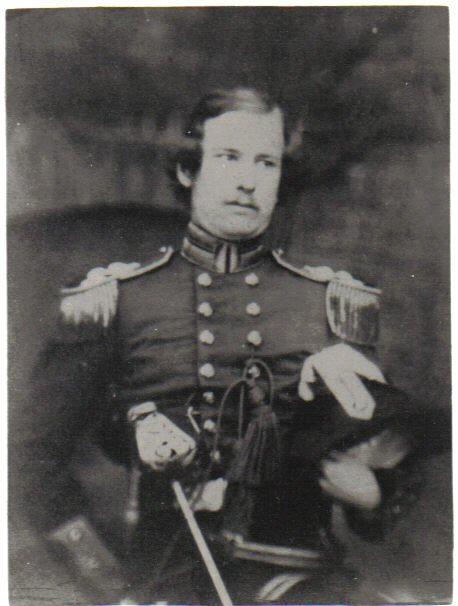
Twenty-five files of the 3rd Europeans under Liuentants Armstrong and Donne with Ensign Newport had been told off as the storming party, while Lieutenant Rose with an equal number of the 25th Bombays formed support. Bonus quickly placed the bellows and lit the fuse – in a roar, the gate vanished in a cloud of smoke and splinters. The storming party dashed through the smoke to meet the rebels. These were more than ready and rushed forward, their tulwars glittering menacingly in the morning sun.
The ensuing hand-to-hand combat was brutal and relentless. With the third gate way in smithereens, the rebels stood firm now at the fourth, which stood at right angles to the third, “and from which a very narrow curved passages, with a seven foot wall on either side, led to the place where the garrison was assembled and from which they rushed yelling, sword in hand and firing matchlocks.” The stormers advanced and were immediately assailed by stones and brickbats from above and by men who cut, stabbed and shot at them from the walls on either side as they passed. The stormers continued forward, and bit by bit, the rebels gave way-until a cloth of burning powder was dropped from above into the midst of the crowded stormers, who, in wise self-preservation, rapidly fell back to avoid being blown up. Seeing they were now at the advantage, the rebels rushed close on the bayonets of the 3rd Europeans, hacking and slashing as they came, but the Europeans stood firm. Another advance now started, but seeing the powder trick had worked once, another cloth was quickly filled and tossed on the stormers, who, seeing they were at a disadvantage, once again retreated. At the third attempt, Lieutenant Donne and Ensign Newport decided there would be no going back – they rallied their men and, with a shout, dashed through the passage, beating off their assailants to the detriment of their limbs, and both men were severely wounded.
Lieutenant Rose had now arrived with the support, and he was not going to let the rebels send him back, but he could only take the advantage with a change of plan. “With a shout and charge, the Europeasn and some of the 25th broke and drove the enemy before them along an uncovered way passing round the walls of the fort; but at less than fifty yards behind the first corner, the fugitives rallied behind two trees, and, firng their matchlocks, again advanced. A bloody melee took place beneath the trees, and on this spot, ten of the garrison were killed.” The remainder, reduced to 25 men, quickly fled. Some vainly found refuge in a guard house below the south wall, and others dashed into the interior of the fort but to no avail; a last stand was made by the last desperate men of Lohari Fort to the left of the gateway near where the battle had begun, and here, the very last man fell. In all, 57 bodies were found within the gateways of the fort and a further 33 inside the fort; all those who attempted to escape were cut down by the cavalry or shot by the infantry waiting outside. The desperation of the last men was recalled in terrible detail:
“ The Major wished to lead the men into the fort, but was pulled back by some of the 3rd regiment, having first received some ugly blows on the head with stones. Upon entering, every male was put to death, one fellow who attempted to effect an escape with his wife, finding it impossible to do so, severed the woman’s head at a blow and then cut his own throat. This is desperate work and something more than fighting.”
Not a single man escaped the fort; by the end of the battle, the entire garrison had been eliminated.
The spoils of the fort were small – one hundred and fifty small arms were seized, and one brass gun, together with drums, bugles, and plates bearing the number of the 12th Bengal Infantry.
Major Gall could not offer his men any rest. In the evening, orders were issued he march to Kunch, nine miles to the fore. “The men were worn out by the heat of the day, and many fell out and had to be carried in the dlioolies. An occasional joke passes off among the older campaigners, and the hopes of meeting the foe keep up their flagging spirits.” By dawn, they arrived in a much-needed grove of trees near the village of Nagapuri 1 1/2 miles from Kunch; here they finally halted, and the men were issued their grog and biscuits. They had little time to rest, for the next fight was already on the horizon.
Kunch, 7 May
“The hot wind blew day and night, and, as our thirst increased, the stock of beer and drinking luxuries became rapidly lessened, and there were few officers who had anything besides water or Commissariat arrack to drink. Metal articles, even in a double-roofed tent, became so hot that it was with difficulty the hand could be kept in contact with them. I had heard of mutton chops being cooked in that way, and imagined I should soon be able to perform the operation.
The country we marched through was flat and without vegetation. A few miserable trees of camel-thorn and prickly pear existed near the villages. The dust was several inches thick on the roads, and, being so disturbed by the advance of the column, rose in such blinding clouds during the still night, that a regular coat formed over men and horses, and at day-break the former looked like so many pantaloons with painted faces and powdered hair: it produced a feeling of suffocation and thirst, which, combined with drowsiness, induced by the very slow pace of a large column, rendered marching by far the most disagreeable part of the campaign. Including halts, the pace could not have averaged two miles an hour. The heat during the day obliged us to march every night, and almost the whole night through, leaving but one or two hours for sleep, which was perfectly out of the question in the day, the attempt produced such a feeling of fullness in the head, making one fearful of apoplexy many of the soldiers who slept during the time the sun shone never woke again, and were found dead.” (Sylvester)
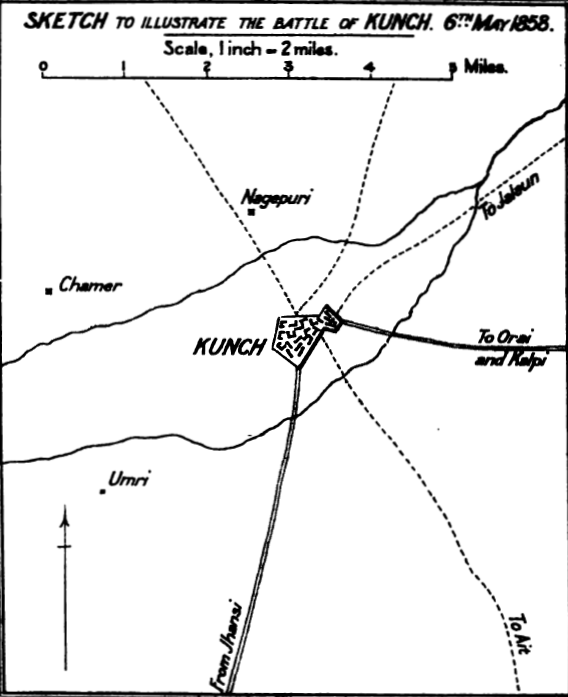
In the growing heat, under a relentless sun, Sir Hugh Rose still had one battle to fight before he could reach Kalpi, and it would be more difficult than any he had as yet planned. Advised to undertake neither a prolonged operation nor a siege due to the heat, Rose made a long flank march with his whole force towards the northwest. Shortly before 10 pm on 6 May, the left, the 1st Brigade made for Nagpuri, while the 2nd Brigade made for Chamra, Major Orr and the Hyderabad Contingent Field Force settled at Umri, while Major A. Scudmore with a squadron of the 14th Dragoons and three guns of the 1st Troop, Bombay Horse Artillery under Lieutenant T.C. Crowe were on the extreme right. To save himself the trouble of besieging Kunch, Sir Hugh determined to make a combined attack from these three directions instead. Now that he had been fighting the rebels for some time, Rose knew that nothing disconcerted them more than turning their flank and threatening their rear, so he determined now “to mask the fortified front on the Jhansi road and Kunch in the flank”.
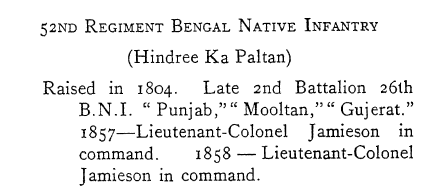
Sir Hugh Rose might have given Kunch a miss had he not received intelligence that the Rani of Jhansi -with a reinforcement of 500 Waliyatis, cavalry from Kotah, the sepoy garrison of Kalpi which included the 52nd Regiment, Bengal Native Infantry, along with Tantia Tope and the Gwalior Contingent and levies of disgruntled rajas – had decided that by no means was he to reach Kalpi. Instead, here, on the road 42 miles from the latter place, he would have to fight them. The town of Kunch itself was open, but it was nevertheless a difficult place to attack, surrounded as it was by forests, gardens and temples enclosures which effectively encircled it, and the rebels had ensconced themselves neatly in the fortified western quarter, holding the Jhansi Gate.
The movements of the Central India Field Force, however, served a purpose – the three positions threatened the rebels’ line of retreat from Kunch to Kalpi, it exposed the northwest of the town to attack, the only side which they had neglected to entrench.
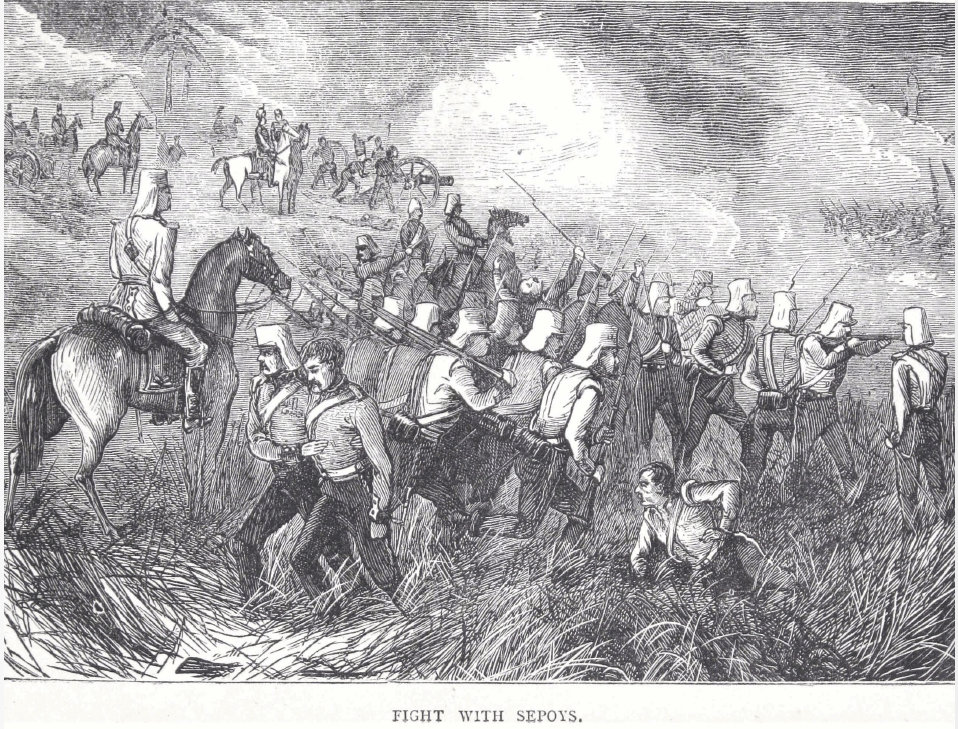
“When we came within sight of Koonch, we perceived videttes and strong pickets of the enemy’s cavalry outside the wood. They conformed to our flank movement and posted themselves nearly opposite to Nagupoora. A few rounds of shrapnel from Captain Lightfoot’s guns emptied some of their saddles, and they disappeared into the wood. The rebel infantry now showed in force behind a long wall to our front, and in the wood to the left of it. I had marched the 1st brigade a distance of fourteen miles from Loharee that morning, for the purpose of surprising the enemy by the flank movement, and not giving them time to alter their plan of defence. To rest and refresh the men, I ordered their dinners to be cooked for them, and in the meantime, battered the wall with the two 18- 18-pounders, and the 8-inch howitzer.
The half-troop of horse artillery, advancing diagonally to their left, shelled the infantry to the left of the wall; the enemy in return shelled the troop, and the siege guns, from a battery to our right. Two of our guns were turned on the battery, and soon silenced it. Lieutenant-Colonel Gall, Her Majesty’s 14th Light Dragoons, galloped gallantly into the wood to reconnoitre, the enemy, although he was in easy musket range of them, did not fire at him because the shelling from the horse artillery had caused confusion in their ranks; he ascertained that the infantry to the left had retreated further into the wood, having in their rear a large body of cavalry; that the siege guns had driven the enemy from the cover of the wall, but that, some way in rear of it, was posted a large body of infantry, with elephants.”
Sir Hugh Rose was determined to drive the rebels out of the woods, the gardens and the temples surrounding Kunch and then take the town by storm, including the broken-down mud fort from which flew the red flag of the rebels. As soon as he had taken this position, the rebels in front and to the left would be cut off from the comrades entrenched on the right, and they would be forced to retreat towards a plain on the other side of Kunch. If all went to plan, they would then be pressed by the 2nd Brigade and Major Orr, while the 1st Brigade would pass through the town to clear off any rebels remaining. As soon as his troops had rested, the artillery opened fire, and the infantry prepared to storm Kunch. A wing of HM’s 86th and the 25th Bombay NI were thrown into skirmishing order, with the 86th on the left and the the 25th on the right, supported resepctively on their flank by half Troop, Horse Artillery, and a troop of the 14th Dragoons, Captain Ommanney’s Battery and two troops 14th Dragoons. Captain Woolcombe’s battery, a troop of the Dragoons and the right wing of the 86th formed a second line in reserve.
“The rapidity and precision with which this formation was made must have surprised the rebels” might be viewed as something of an understatement – the 25th under cover of the guns, swiftly moved through the woods, gardens and temples and occupied each position under a severe fire of musketry and artillery from a battery on the Rose’s right; the sepoys drove on and took the guns. Meanwhile, the 86th, covered by three Horse Artillery guns under Captain Lightfoot and a troop of the 14th Dragoons, made a circuit to the left and, taking every obstacle in their way, now advanced, despite the rain of artillery and musketry falling on their heads, through the whole northern part of the town and took the fort. However, the day was not quite won.
“Just as the 86th and myself with the 25th were about to enter the town. Brigadier Steuart, commanding the 1st Brigade, observed that a large number of rebel infantry, strongly posted in cultivated ground, threatened the right of the line of attack of his brigade; he moved up Captain Field’s guns, with Captains Thomson’s and Gordon’s troops of Her Majesty’s 14th Light Dragoons, and a troop of the 3rd Regiment Hyderabad Cavalry, to dislodge them. The enemy held the position obsti¬ nately, and it was not until a portion of the infantry, 2nd Brigade, moved down on them, from another direction, that they retreated, when Captain Gordon, whom I beg to recommend to his Excel¬ lency for his conduct on this occasion, with his troop, and the cavalry above mentioned, charged and broke the mass, cutting up several of them; topes of trees favored the escape of the remainder. The 2nd Brigade, under Brigadier Steuart, owing to some misconception on his part, did not effect a lodgement in the town, but, moving round the south of it, their artillery and cavalry joined in the pursuit.”
Major Orr and his men moved from Umri directly on Kunch. To his front were some gardens and walled enclosures held by determined bodies of rebels who now took the advantage and opened a withering fire on Orr’s line. Captain Douglas advanced the artillery and returned fire, which not only threw the rebels into some discomfort but allowed for the 5th Infantry, Hyderabad Contingent to advance, driving the rebels from the gardens and enclosures. At the same time, the entire Hyderabad Contingent Cavalry under Captain Murray and Lieutenant Dowkar moved to the right and charged the rebel sowars who had been hovering the whole time on that flank, and, according to Major Orr,
“This service was promptly and effectually performed, the horsemen being driven quite off the field at this point, and forced back within the line of their supports of infantry, occupying several deep ravines and broken ground, [and from the shelter of which a heavy fire was directed. The enemy’s guns at the same time, opened with round shot and shrapnel. The cavalry were subsequently joined by one squadron of Her Majesty’s 14th Light Dragoons and two Horse Artillery guns, the whole commanded by Major Scudamore, and they retained possession of the ground they had gained until the general advance, when they also followed the enemy in pursuit.
The artillery had meanwhile advanced so far as to bring it completely within range of the enemy’s guns from two batteries, and they were thus enabled to open upon it a double fire of round shot, shell, and shrapnel, from the effects of which several casualties occurred. The rebel infantry also, being strongly reinforced, again suddenly came forward with a rush in great numbers, and forced back the detachments holding the garden.”
Major Orr was about to advance again on this point when word reached him that Sir Hugh Rose and the 1st Brigade had taken the fort and town and the whole force was to advance. Step for step, the rebels were driven from any of the enclosures they still held, and as determined as they had been to hold Kunch, they were now just as eager to join in the retreat of the main body, which was proceeding in the direction of the Orai road. Orr moved his cavalry forward, and, joined by the 14th Dragoons, the Horse Artillery and Horse Field Battery took up the pursuit for the next eight miles.
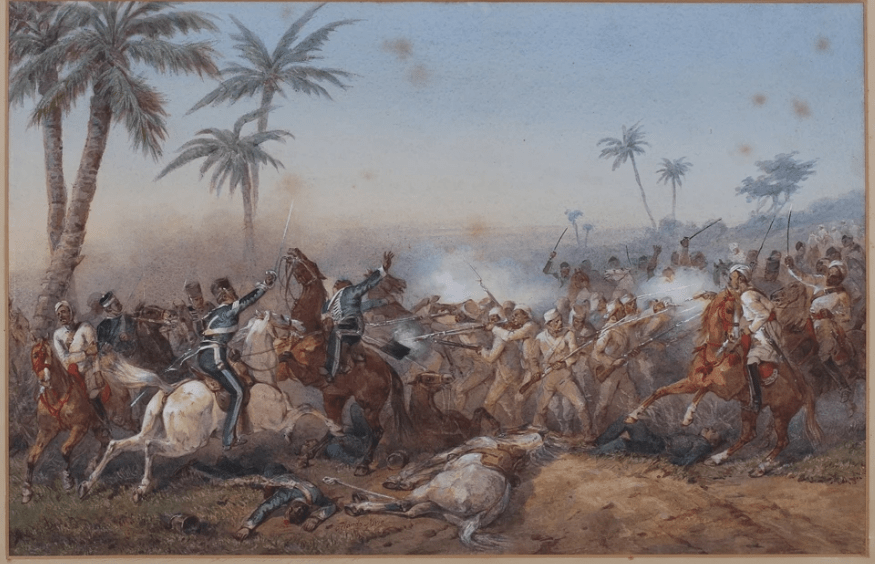
The rebels commenced their retreat with “resolution and intelligence.” Their line of skirmishers fought so well in protecting the retreat of the main body that the British officers could not help admiring their adherence to the rules of Light Infantry Drill, observing the sepoys of the 52nd Regiment had not altogether thrown off what they had learned. Wrote one of the officers:
“Each of the rebels was provided with a Government musket, belt and cartouche box, in capital order, and well provided with cartridges. After firing, down went the musket and out came the sharp cutting native sword. They cut and slashed our horses and men so long as one of their band remained alive. I counted thirty-six regular sepoys lying dead at the spot….In this action, nothing could have been more praiseworthy than the valour displayed by the sepoys of the late Bengal Army, and nothing more disgraceful than the behaviour of the cavalry, who, in every fight I saw, distinguished themselves signally by cowardice! Tantia Tope’s order book was found subsequently at Kalpi, and the last order in it expressed his thanks to the spirit of bravery which animated the men at Kunch.”
The pursuit was begun by Captain McManus with a squadron and troop of the 14th Dragoons charging, first the right and then the latter took left of the portion of the rebel skirmishers. A check was caused at pace as McManus’ squadron was caught in heavy firing, but they got through, and the rebels, though fighting fiercely to the very last, fell to man, cut to pieces by the cavalry. From their position in the centre, the Horse Artillery opened a blazing fire on the poor skirmishers, causing the rebels to throw themselves back on the extreme right of their skirmishers, hoping to enfilade the line of pursuit. It was all in vain. Captain Prettijohn formed to the left and charged, successfully cutting the enfilading line. Then Captain Blyth (14th Dragoons) and Captain Abbott (3rd Cavalry Hyderabad Contingent) both charged and captured a gun under heavy fire, with the other guns falling as the pursuit continued. LIeutenant Lyster (Staff Interpreter), who was carrying an order for the cavalry, found himself suddenly surrounded by a group of thirty sepoys; these did their best to take Lyster, but he managed to cut his way through them, single-handedly.
With nearly all their skirmishers dead or dying and the remainder driven in and their artillery lost, the main body of rebels now lost their heads and crowded the road to Kalpi, “a helpless column of runaways.” It was only their luck that the Horse Artillery and Cavalry were now so done in by the sun and fatîgue they had been reduced to a walk; “the guns were onlky able to rake the column in its depth with round shot and shell, but could not approach sufficiently close to give it grape.” The cavalry only had enough strength left to reach the stragglers who had given up trying to reach the main body. When they reached a small wood and broken ground on the outskirts of a village, some eight miles from Kunch, they took advantage of the cover to break into scattered flight across the country.
“The scorching rays of the sun and the pace at which they retreated told even on the sepoys; several fell dead on the road, struck by apoplexy; many, exhausted, threw away their arms, whistl other,s to quench their thirst, rushed to the wells, regardless of the cavalry.”
Refusing to push their men on further, the cavalry commanders let the remaining sepoys go at the village to which they had followed them and watched them rush across the countryside. After they had watered their horses, they returned to camp. In all, the rebels lost between five and six hundred of the number in the action and the pursuit; the 52nd Regiment, Bengal Native Infantry, which had covered the retreat, was almost destroyed to a man and would never be heard from again. Nine guns, a good amount of English ammunition and stores which had been left behind by the panicked Gwalior Contingent, were taken back to camp.
The Consequences of Defeat
Kunch was yet another defeat for the rebels, and as such, not only was their morale suffering, but the cohesion of the “Army of the Peshwa” was falling into disarray. The infantry sepoys rightly accused the cavalry of having abandoned them; the stern courage of the Waliyatis had been found wanting, and they were accused of leaving the field far too soon. Their excuse was that they had felt their duty was first and foremost to protect the Rani of Jhansi; when she left the field, so did they. The answer rankled the cavalry and infuriated the sepoys. All three arms brought the same charge against Tantia Tope, who had vanished from Kunch almost as quickly as he from the field at Betwa, leaving his army to its fate.
Meanwhile, Sir Hugh was advancing faster than they had expected, naively thinking the hot weather would have put a stop to his operations. Their leaders were no longer as trustworthy as they had once thought them to be, and the sepoys at Kalpi were having second thoughts about this whole venture. Seeing their battered and bruised brethren returning from Kunch had given many the impetus to run, and only eleven sepoys could be induced to perform their duties in either the town or fort. However, those who remained to see this to the end suddenly found themselves bolstered to better heights of feeling – the Nawab of Banda, with a large force of cavalry, infantry and some guns, now appeared in Kalpi. Together with the Rani of Jhansi, he managed to convince the sepoys to fight again.
Kalpi was, after all, their only arsenal, and the rebel leaders were determined to hold it to the end.
Sources:
Behan, T.L. Bulletins and Other State Intelligence for the Year 1858. Vol. III. London: Harrison & Son, London Gazette Office, 1860.
Burne, Owen Tudor. Rulers of India: Clyde and Strathnairn. Oxford: Clarendon Press, 1892.
Forrest, George W. A History of the Indian Mutiny. Vol. III. London & Edinburgh: William Blackwood & Sons, 1902.
Forrest, George W. Selections of Letters and other State Papers. Calcutta: Superintendent of Government Printing, 1912.
Gimlette, G.H.D. A Postscript to the Records of the Indian Mutiny. London: H.F. Witherby, 1927.
Intelligence Branch, comp. The Revolt in Central India 1857-59. Simla: Government Monotype Press, 1908.
Jocelyn, Julian R. J. The History of the Royal and Indian Artillery in the Mutiny of 1857. London: John Murray, 1915.
Laurie, George Brenton. History of the Royal Irish Rifles. London: Gale & Polden, 1914.
Lowe, Thomas. Central India during the Rebellion of 1857-1858. London: Longman, Green, Longman & Roberts, 1860.
Malleson, G.B. History of the Indian Mutiny, commencing from the close of the 2nd Volume of Sir John Kaye’s History of the Sepoy War. Vols. II & III. London: W.H. Allen & Co., 1888.
Smyth, John. The Rebellious Rani. London: Frederick Muller Ltd, 1966.
Stent, George Carter. Scraps from My Sabretasche, Being Personal Adventures While in the 14th (King’s Light) Dragoons. London: W.H. Allen & Co., 1882.
Sylvester, John Henry. Recollections of the Campaign in Malwa and Central India under Major General Sir Hugh Rose. Bombay: Smith, Taylor & Co., 1860.
 Mutiny Reflections