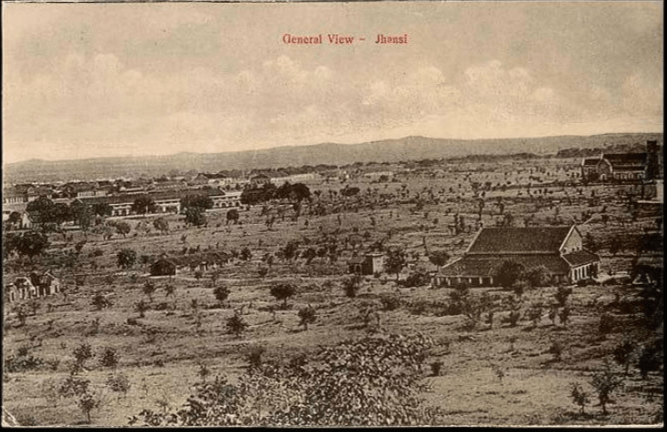
While the fighting was going on inside the city, the cavalry outside had been keeping busy. Their duty was quite clear — prevent any and all from escaping the city. It was disgraceful work, for they were not dealing with fighting men, but desperate fugitives, flying for their lives. In one courtyard alone, the 14th Dragoons killed 200 men who were so “panic-stricken, they threw down their arms and allowed us to butcher them with our swords until we were actually tired with the slaughter.” The orders to the force were clear: regardless of age, any man bearing arms was to be put to death; no mercy and no quarter. Women and children were not to be harmed, but “accidents” happened, and some were shot as they tried in vain to protect their sons. Other women were so terrified by the advent of these mad men, they preferred to throw themselves down wells. Others accepted death at their husband’s hand, preferring his dagger on their throats or his bullet in their brains. This was not Cawnpore, where the frightened population ran out to appease the vengeful army with sweets and food — this was Jhansi: if they could not die in a fight, then at least they would sell their lives dearly.
“Once or twice in our progress through the gardens, we had some little encounters on foot; for the wretches, after firing, would dash under the bushes, Ac, and there was no getting at them unless we dismounted. In one of these bouts I had just put my sword into the ribs of one of these fellows (an artilleryman), and he clung to the bare blade, holding it in his body, and cutting his fingers to the bone in doing so, at the same time making frantic attempts to bite my leg; fortunately my boot protected it, but he held my trousers in his teeth as tenaciously as a bull-dog would, and I had to use the spur of my other boot in his face to make him relinquish his hold. This will give some idea of the savage nature of our warfare in these little skirmishes.”
The reputation of Sir Hugh Rose’s force had preceded them. The skirmishes of the Malwa Field Force were well known, as were their victories, from Dhar to Mandsaur, and more recently on their march from Sagar. In their wake, they had left the dead, countless men who would never return home, and the wounded with their dreadful stories of the cavalry with their unstoppable charges and the infantry, who never seemed to stop once in a run. They might have been few, but Rose’s men were certainly disciplined demons in a fight.
For their part, the Central India Field Force had been hearing horrible stories about the Jhansi massacre. These had been circulating for months now in the press, each more lurid than the next. The dreadful imagery these tales conjured up had filled the men with the idea that they were not fighting humans in Jhansi, but barbaric monsters who cleaved children in half while their horrified mothers were stripped naked and made to watch. The press had certainly done its job well in creating the monster of vengeance. So widespread were these stories that even the investigation into the Jhansi massacre was disbelieved. Men of the force said the official findings were “sanitised” for the sake of the victims’ families, others, who had seen the jumble of bones in a pit in the Jokhun Bagh without a shred of clothing among them, veritably believed they now had proof that the horror stories in the press were true. Matters were not helped when a prisoner, facing the inevitable noose, told Sir Hugh Rose his version of the Jhansi massacre with all the vile embellishments he could think of: after all, he had nothing left to lose, so what did it matter if he told the truth or not. Unfortunately, his tales spread through the camp until everyone was convinced that the several witnesses who came forward must be the ones who were lying. One young officer found a bleached bone hard by the pit and held it reverently in his hands in his mess, declaring he would keep it as a relic, take it home, and bury it in English soil. The regimental surgeon glanced over the macabre trophy to convince him it was not, as the officer believed, the dishonoured bone of a fair European lass, but in fact the shin of someone’s sheep and most likely had been supper.
The other problem was the Rani herself. While the bombardment of the city was ongoing, officers were continually on the lookout for her; she was said by some to be exceptionally beautiful, while others were convinced they were looking for the devil incarnate. She was, in their estimation, an Indian Catherine the Great and Jezebel – “Were it not for the atrocities, however, that she committed, or caused to be committed, she would have had the sympathies of everyone; for she was a perfect Amazon in bravery, heading her troops, mounted like a man, just the sort of dare-devil woman that soldiers admire.” That a woman could be behind the massacre in June was hard for the men to understand since the fairer sex should be incapable of such cruelty; that she most likely was not behind it, they did not want to believe. Matters were made worse when, in her palace, some belongings of the dead were discovered — and when the fort was taken, the rest of it.
“…it was all huddled together in motley mass, with grain and salt, and sugar. There were books by the cartload, and their former owners’ names in them, writing desks, ladies’ work boxes, stationery, apparel of Europeans of both sexes, and the toys of innocent children who had shared the common fate, boxes of medicines, guitars, telescopes, surgeons’ instruments, Macassar oil, looking glasses-in fact, the list was endless.”
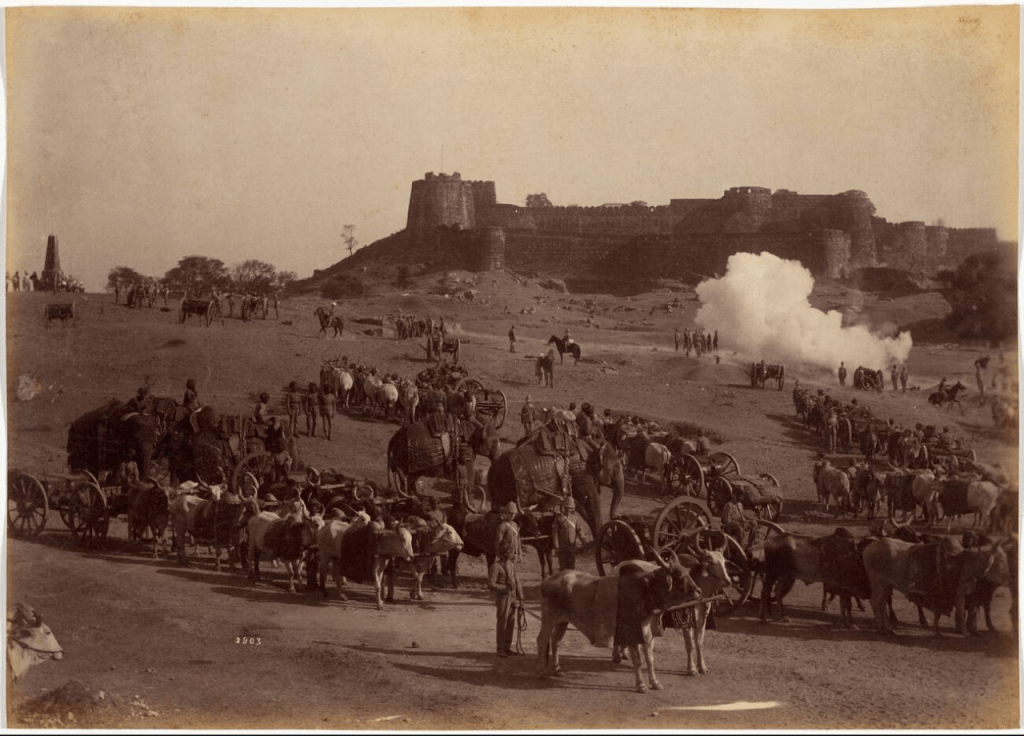
It took, in all, four days of hard street fighting to take Jhansi and over a week to clear it completely and as Lowe states,
“Death was flying from house to house with mercurial speed, not a man was spared, and the streets began to run with blood. Ere long, the houses on both sides of the street leading to the palace were on fire. The heat from the sun and these flames were fearful…the palace was crowded with our soldiery, some lying down worn out with the heat and hard work, some sauntering about with two or three pagrees upon their heads and others round their waists, some lying down groaning from their wounds or the explosion and others busily engaged extinguishing the flames in the rooms were the explosion had taken place. The whole place was a scene of quick ruin and confusion; windows, doors, boxes, and furniture went to wreck like lightning.”
The men who were so inclined, and there were undoubtedly many, plunder was now the order of the day. Jewels were found concealed in the most unlikely places — at the bottom of bags of flour, Lyster claims he found some concealed in a cake. Stent, of the 14th Dragoons, who never entered the palace, while skirmishing, saw a man holding a bundle with great care. Thinking it might well be valuables, he “gently inserted ” his sword into the man’s ribs, dismounted and “took care of it for him.” Stent was not wrong — when he returned to camp that night, he found his prize contained gold mohurs, and a collection of gold bangles, jewellery of all sorts and rings studded with precious stones. “Yet they were, after all, comparatively worthless to me, and I was glad to get rid of them as soon as possible; for the weather was so hot that I could not be burdened with the weight of them. I could not give them over to anyone’s care, as they were loot, and would be handed over to the prize-agent; if I left them in my kit, they might at any moment be stolen, or the baggage might be cut off, and my prize with it; so I gradually got rid of them by buying luxuries, in the shape of delicacies, wine, beer, &c., at exorbitant prices, and finished the last of the rings long after the campaign was over.”
The Rani Escapes
While the carnage in the city was going on, where was the Rani? By sunset on 3 April, Rose’s forces held the whole city, except for the north-east quarter and the fort. While Sir Hugh had wanted to push on, he was advised to let it go for this night; the men were tired, and since the objectives had for the most part been met, the fort could now wait for the next day. Rose acquiesced, and the Rani would spend one last night in the fort she had so valiantly defended.
The question of how she escaped during the night on 3 April, seemingly under Rose’s watchful eye, can be told in different ways, one, which is not plausible, and another which is unverified. According to legend, she jumped her horse over the wall and dropped 20 feet down onto a slope, and then rode out of the city with her son strapped to her back. As amazing as this feat is, it is also the least likely.
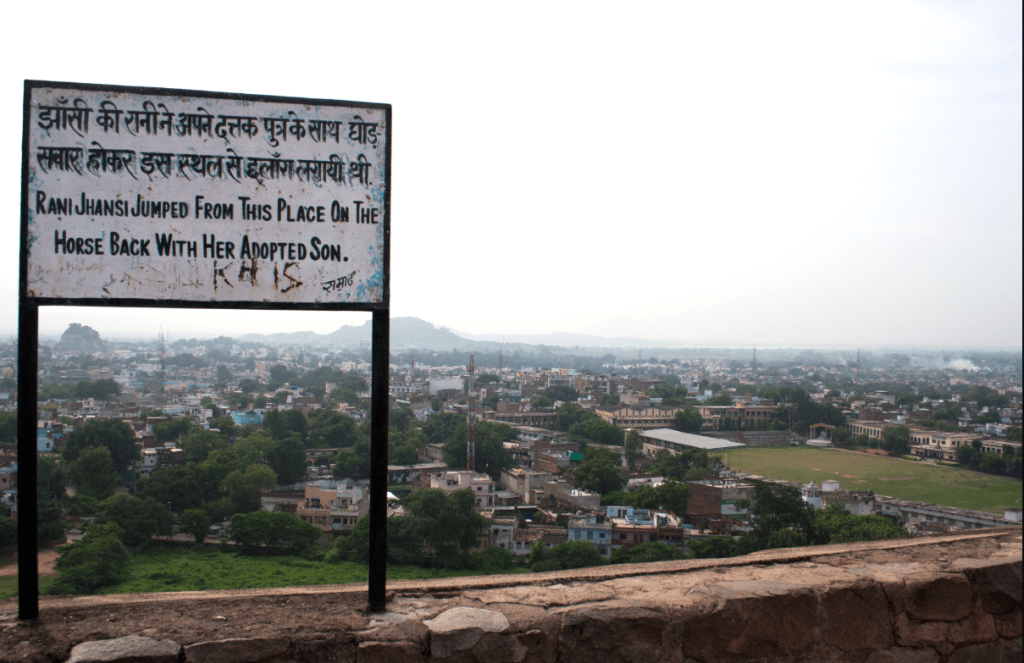
The western wall of the fort and the place she purportedly jumped from coincided with the city wall, but since Sir Hugh had already taken the west but not the north-east, it is not very likely she would have chosen this as her route of escape. Unless her horse was made of very stern stuff, a jump like this would have killed it, as it would not have been landing on soft turf but rocks on a slope with a steep descent. As some 300 retainers left with her, someone would have noticed if it suddenly began raining horses. Although the sign in the picture above purports to show the place she jumped from, it is more folklore than truth.
https://www.awm.gov.au/collection/C213854
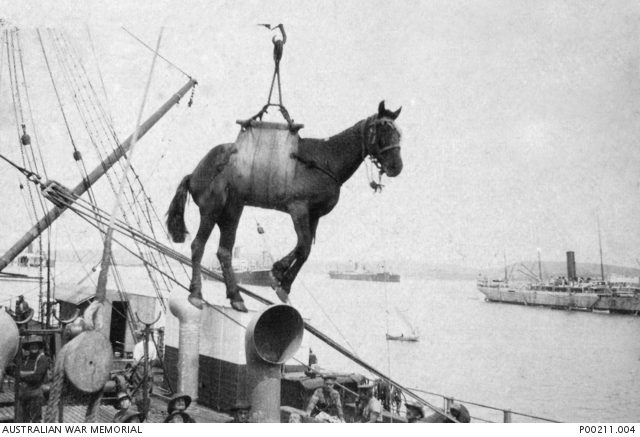
Another story, still somewhat fabulous, has her being lowered, astride the horse from the fort wall, again with her son on her back. It is no easy matter lowering a horse complete with passengers from the top of a wall – a horse on its own would be trouble enough. Again, one must consider the slope and the rocky ground, neither of which is helpful for a stealthy escape. Currently, this story is making the rounds:
“Slings And Slinging”
“When the British army managed to penetrate the fort, the search for Lakshmi Bai and her Son was started, Rani Lakshmi Bai tied her son on her back, took the sword, and stormed into the British troops; anyone who came in front of her sword either lost a body part if not life, or gained a wound. But soon she was outnumbered, she soon climbed a horse and started running to find an escape, because if the Britishers get their hands on her son, then the rebellion would end. In the search of an escape she reached ramp and found herself surrounded by the britishers; she soon turned her horse towards the wall, and jumped out of the fort from Jumping Spot, no british officer had guts to jump from that height to follow her, but that courageous woman jumped from that height with a horse and her son tied on her back and escaped. Hence that very spot is called the jumping spot.” (https://medium.com/@mirroraculous/stepping-into-the-world-of-rani-lakshmi-bai-4cbb3841e8ef)
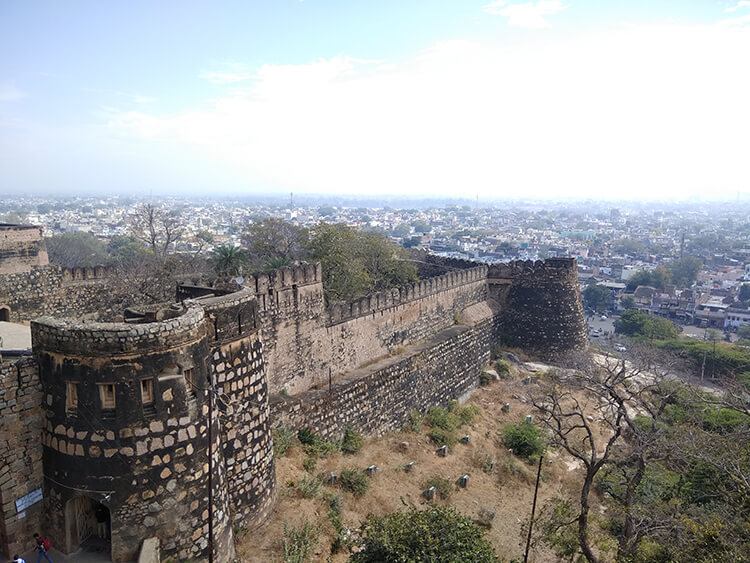
(https://dreamstakingwings.com/jhansi-fort/)
The glaring problem with this story is that the British did not gain the fort on the 3rd of April – they only reached it the next day, when the Rani was already gone. Nor were they searching for her, as they knew she was in the fort. If she had really gone out, with sword in hand and “stormed into the British troops,” it is highly unlikely she would have survived. As her attire was known to be manly, she would not have been spared by either soldiers or cavalry, and most likely mistaken for a sowar; in all, there would have been no Rani of Jhansi at Gwalior in June. Once again, there is the problem with the jump itself. We must also remember that her son was no mere toddler. He was known to be five years old when he was adopted in 1853 – by 1857, he would have been a lad of nine. Even if he was small for his age, nine-year-old boys are not the easiest package to strap to your back and then leap from a wall with, on a horse.
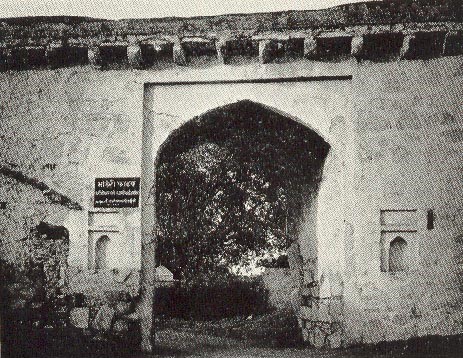
Once again, it is unknown how exactly the Rani managed to escape, or if there is any truth in Smyth’s account of the Rani being, “distressed beyond measure by the shrieks and groans of the wounded and the wailing of the women” leading her to assemble her retainers and tell them she intended to kill herself rather than surrender. This does not seem in keeping with her character, and can be put down to a dose a imagination. The Rani alive would be a more powerful figure and a morale riser for the rebels, and she had no intention of surrendering either her life, her son or the cause. So, escape it would be. Taking all the events of 3 April into consideration, the force 400 strong, which included her father, was possibly sent out as a decoy for her eventual escape – while the British were busy slaughtering the men on that hill, and plundering the city, they were not able to keep an eye on all the ten gates in the city wall of Jhansi. The breach in the wall was only between two of them, but her escape point was through Bhanderi Gate – taking advantage of the darkness of the night and the confusion in the city, she managed unnoticed with some 300 of her retainers to ride out of Jhansi and make for Kalpi.
Once again, while this is the most plausible turn of events, Rose’s ADC, Lyster, possibly not wanting to admit she actually managed to get past without anyone noticing, states the following:
After dinner one evening, Lord Strathnairn, then Sir Hugh Rose, commanding the Central Field Force, said to me, “I am very anxious to capture the Rani, but I do not see my way. I should have to take the fort with my English troops, as I could not depend on the Native troops, as you know, they are in sympathy with the rebels. The English troops are few, and I should have great loss of life, and as there is much to be done ahead, I can’t spare the time. Can you suggest any means of capturing the Rani without the loss of life and loss of time?”
I thought for a few moments and then said, “Try money!”
“I fear,” he replied, “that would lead to many complications, and it might end in the loss of the money, and no result.”
I then said, “Have you any idea in your head?”
His reply was,
“Yes, how would it do to leave them a loophole to escape. Suppose I withdrew a picket from the cordon of troops surrounding the town and fort, she could then escape in the night, as, if I carried out my plan in the day, she will hear of it at once, and will escape with her women and followers in the night. You know the natives well. Can you tell me if the women of the country are accustomed to ride on horseback, as, if they are not, I can easily have the 14th Dragoons ready to start in the morning, and catch her up before she can have got far.”
“Yes,” I said, “I think that would be a good plan.”
Next morning, the General, myself, and his other A.D.C., Captain Rose, started to go round the pickets; in one place, the General ordered the picket to be withdrawn, thereby leaving a gap of about four hundred yards.
Captain Rose remarked to me, “Has the General gone off his head?”
I said, “I should rather think so.”
In the night, we heard heavy firing by the pickets at each side of the gap, firing at the escaping Rani and her followers; but as it was a dark night, the firing was at random, and no one was hit.” (Memorials of an Ancient House, p. 45-46)
Lieutenant Lyster’s story of this “dead secret” plan certainly has some embellishments and was only told many years after Sir Hugh was dead, when there was no longer a reason to keep it quiet. It would basically imply that Sir Hugh Rose had intended to let the Rani escape, which was not in keeping with his character; it also implies he had intended to let her escape well before the attack on 3 April. Again, this seems fantastical, although more than one account does mention the gap in the pickets, so perhaps there is some truth to it, however, it must also be remembered the Rani had supporters in the local population – if Sir Hugh did not order the gap to be made, it is possible someone from his camp from among the followers did so on her behalf.
However, there is as yet one more story. A wounded retainer of the Rani was found the next morning – he stated that she had fled from the fort during the night, accompanied by 300 Walayatis and 25 sowars – after leaving the fort, one of the pickets and driven them back. So the Rani ordered the party to separate into two groups – she took the right through Banderi Gate with a few sowars while the others paired off towards the other gates. If anyone had had a mind to listen, the observatory had telegraphed, “enemy escaping to the north-east,” but it seems no one was paying attention.
As such, detachments of the 14th Dragoons and the Hyderabad Contingent Cavalry did chase her, and it proved she was certainly a better rider than Sir Hugh gave her credit for. Since it was reported Tantia Tope had sent a force out to meet her, guns were sent off in support while Brigadier Steuart, with some cavalry, continued to keep a watchful eye on the fords over the Betwa.
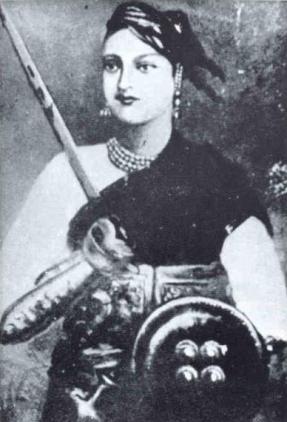
Twenty-one miles from Jhansi at the town of Bhander, the cavalry did come across some cavalry from Tope’s force – they had separated into several parties to give the Rani all possibility to escape. Lieutenant Dowkar of the Hyderabad Contingent Cavalry was sent by Captain Forbes through the town while Forbes pressed on with the 3rd Bombay Cavalry and the 14th Dragoons swung around it on the left.
Dowker found evidence of the Rani’s flight – the campfires were still smouldering and there had been no time to pack up her tent. On the other side of the town, he came up to a strong party of sowars who Dowker and his men quickly engaged in a fight; however, Dowker saw the Rani galloping on ahead on her grey horse; he gave chase. Now, since Dowker himself never confirmed whether the Rani herself nearly severed his arm from the shoulder or if it was one of her retainers, as it stands, Dowker was disabled by the blow and thrown off his horse. As his men rallied around him, the Rani made off towards Kalpi with 200 of her troops still behind her.
Jhansi Occupied
The next day, with the Rani gone, resistance around the fort dwindled and then halted. While fighting continued in the city, it was clear the fort was no longer going to pose any problems for Sir Hugh and he could have thanked his stars it was so.
“If the fortress from the outside looked strong, the inside appeared much stronger, to the most inexperienced eye. The strength of the entrance was visible -steep, and winding through gate after gate, each division of the passage enfiladed by the one above, the walls thickly loopholed for matchlockmen and armed with jinjal and wall pieces, beside traversing guns. One dismounted gun of enormous dimensions lay in the gateway, it looked like one of the large pipes of the Vehar Water Works, and would have burst with a smaller charge.”
In all, some 40 guns were discovered in the fort and enough ammunition to have kept up a lively fight going for some months.
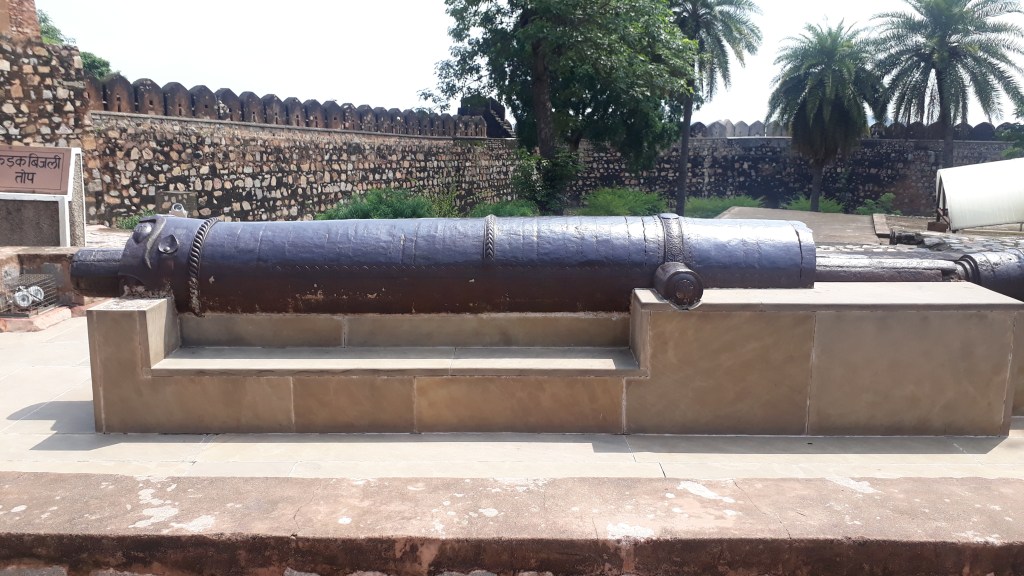
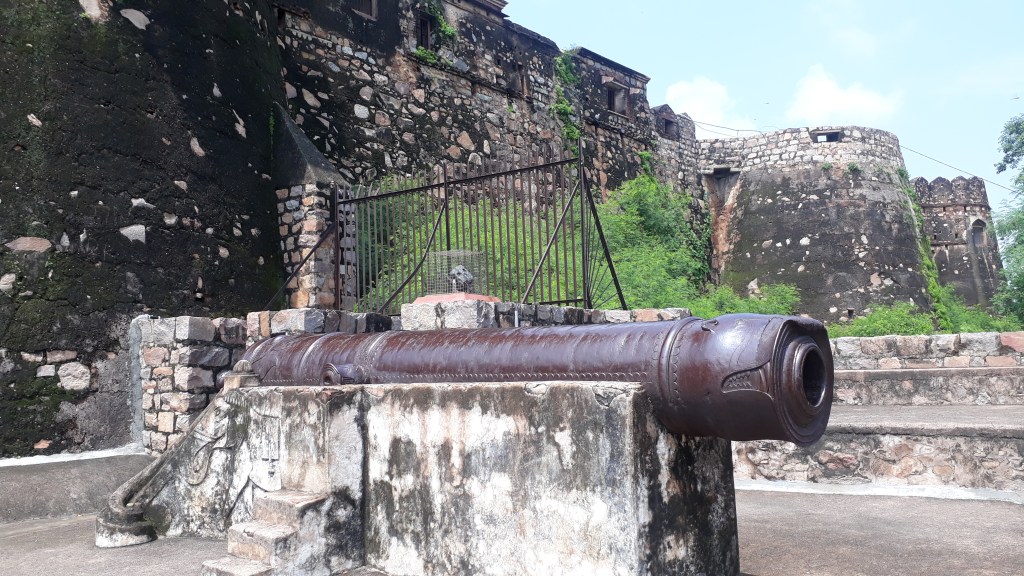
A large part of the interior of the fort was occupied by the main citadel, surmounted by a tall flagstaff tower with a terraced roof, providing an extensive view of the surrounding countryside. “The enemy must have been able to count every tent, and with a telescope (many were found in the fort ) descry all our movements and the exact site of our pickets the excitement which must have prevailed here when Tantia’s army came to their rescue it would be impossible to imagine, and their proportionate chagrin as they saw it fly in disorder before our Dragoons. The havoc of our shot and shell was terrific, and great execution must have been done by these missles.” The artillery had done quite some damage to the fort, judging by the torn roofs of the adjoining buildings, the rents in the floors below and the obvious destruction to the surrounding walls. However, had he stood before the fort for a year, no artillery could have penetrated the granite sufficiently to bring the inhabitants to their knees. Besides a few dead sepoys and artillerymen, there was no one left in the fort, and the usual ravages of plunder would now begin. Although Sir Hugh Rose detested looting, in the first hours, until he had established control of the place and went through it, there was no one to stop the men from taking what they could find. Until then, every room, be it in the palace or in the fort, was thoroughly ransacked – doors inlaid with plate glass, chandeliers, mirrors and native furniture were all smashed to pieces. The destruction was complete for everything was “torn to atoms;” carpets, mats, velvet and satin beds, bedsteads with silver feet, velvet cushioned chairs, and a “brazen throne of excellent old workmanship.” Gold and silver handled tulwars, spears of fine make and silver mounted sticks were rapidly requisitioned by the Indian troops. In the “chaotic confusion,” jumbles of candlesticks, silver birdcages, marble slabs, lampshades, ivory footstools, pagrees and shawls of beautiful workmanship and crockery were trampled on by the soldiery who kicked things aside as if it was little more than rubbish. They were not interested in such trifles -what they wanted was jewels and plenty of these vanished into their pockets before some order was restored. In one of the rooms, Dr. Lowe picked up a few books, among them a copy of Horace, Longfellow and Byron, all inscribed with their dead owner’s names – Sir Hugh Rose allowed him to only keep the Horace. Everything else that had belonged to the Jhansi garrison would be auctioned. Major Robertson of the 25th was placed in command of the fort, while the doctors swiftly requisitioned the palace rooms as a hospital for the wounded and the sunstruck men.
From the time the palace as taken, many of the rebels have begun leaving the city, only to be cut up by Rose’s cavalry pickets. The woods, gardens and roads all around the town were soon filled with the corpses of the fugitives. Early in the morning of the 4th, Rose ordered the outskirts of the city to be cleared by the cavalry and the infantry – the 14th Dragoons, as stated already, killed 200 men in one such patrol. The Walayatis and the Pathans who had served the Rani continued to sell their lives dearly, fighting to the end with “dexterity and firmness.”
In the city, the bitter fighting continued. On 6 April, a final desperate body of 40 men made their last stand in a house they had barricaded; they took with them Lieutenant Sinclair of the Hyderabad Infantry, who was shot dead, Lieutenant Simpson of the Bengal Army was shot through the throat, and many of the rank and file met their end at the hands of these final defenders of Jhansi. The house could only be finally taken when the artillery smashed it to bits, but those who survived the cannonade continued to fight in the vaults of the house until each one was driven to their deaths at the point of the bayonet.
While Dr. Sylvester tries to put a veil on the whole terrible affair by writing, “During the whole siege, the greatest forbearance was shown to all who would peacefully surrender, and yet the estimated number of killed was four thousand: in fact, there was an amount of forbearance and Christian kindness displayed by the Europeans to unfortunate women and children, and to aged men…” the Central India Field Force verily murdered their way through Jhansi – whether everyone they killed were mutinous sepoys or men loyal to the Rani, is questionable. The excuse for putting Jhansi to the sword was, quite broadly, as revenge for a small number of dead Europeans, massacred 8 months earlier. For Sir Hugh Rose, every dead man was one less he would have to meet later in the field.
The women of Jhansi faced a strange fate. Unusually, as is borne out in three different accounts, many joined the English camp. “Numbers of poor women, whose husbands, brothers, or fathers had been killed by us, voluntarily followed us and our fortunes. What were they to do? Having left the city, they could not return; their friends being killed, they had no protectors or home, and in time they came to look on the very men who had killed their relatives—and whom they had been taught to look upon with abhorrence and hatred —as their protectors and friends.” Whether they truly looked on the Europeans as “protectors and friends” is a matter of conjecture, but there was in reality nothing else they could do but to join the long train of camp followers and hope they would receive at least some consideration. Sir Hugh Rose ordered all the prize grain to be distributed to the destitute women and children, the wounded cared for, and the dead disposed of. Estimated between 1000, which seems to low, up to 4000, the corpses were gathered together and burned on pyres.
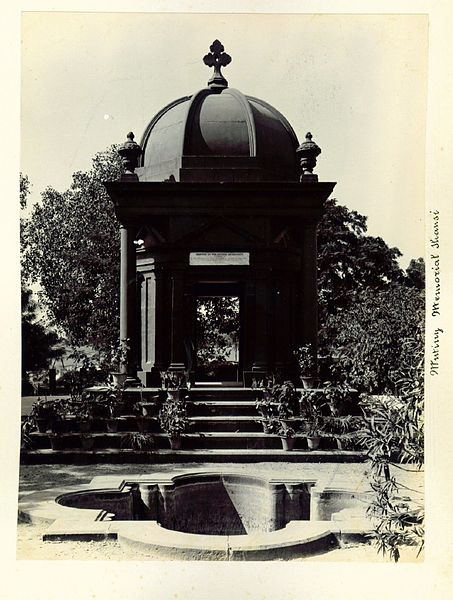
Meanwhile, the survivors of the ill-fated Jhansi garrison gradually came out of hiding – Mrs. Mutlow and her two children, Mr. Reilly and Mr Thyrwitt, showed up in the camp, along with a few clerks and two orderlies of Captain Skene. They would tell their stories of the massacre and their own escapes and show them where the bodies of the victims had been dumped in some old stone pits. These were just outside the city near the Mamelon Battery – Sir Hugh Rose wished for the bodies to be disinterred and reburied in a more suitable spot, but the engineers deemed this plan impractical. The pits were opened, and the surgeons were given a moment to examine the remains – very little remained after so long in the ground, but it was enough to chill those who saw it to the core for it was clear, by the cleaving gashes on the bones, their deaths had been anything but gentle. Only a few fragments of clothing remained – witnesses all agreed the bodies had been stripped of their garments and had lain open to the air for three days. The orderly of Captain Skene had covered Skene’s wife’s face with a kerchief, but had been unable to do anything else for the bodies. In the grisly pits lay the obvious remains of children – some 21 of them were killed in Jhansi. On the 14th of April, a Christian burial service was read over the pit. A few stones were placed around to mark its place, and later, a monument would be raised over the spot.
For the time being, Sir Hugh Rose would remain in Jhansi to protect it from incursions from the fleeing Kotah rebels and the late Chanderi garrison, which had made itself present on the road from Jhansi to Guna. He would wait now for the arrival of General Roberts with his Rajputana Field Force before leaving Jhansi, following on the trail of the Rani and Tantia Tope. If they thought Sir Hugh Rose had forgotten them or had given up the chase, they were in for a surprise.
Sources:
The Revolt in Central India 1857-59, Compiled in the Intelligence Branch (Simla: Government Monotype Press, 1908)
Rulers of India – Clyde and Strathnairn – Maj.Gen. Sir Owen Tudor Burne KCSI (Oxford: Clarendon Press, 1892)
Central India during the Rebellion of 1857-1858 – Thomas Lowe (London: Longman, Green, Longman & Roberts, 1860)
History of the Royal Irish Rifles – Lt. Col. George Brenton Laurie (London: Gale & Polden, 1914)
Memorials of an Ancient House – a History of the Family of Lister or Lyster – Rev. Henry Lyttleton Lyster Denny (Edinburgh: Ballantyne, Hanson & Co., 1913)
The Rebellious Rani – Brigadier Sir John Smyth (London: Frederick Muller Ltd, 1966)
Scraps from My Sabretasche, Being Personal Adventures While in the 14th (King’s Light) Dragoons – George Carter Stent (London: W.H. Allen &Co., 1882)
Recollections of the Campaign in Malwa and Central India under Major General Sir Hugh Rose – Asst. Surgeon John Henry Sylvester (Bombay: Smith, Taylor & Co., 1860)
 Mutiny Reflections