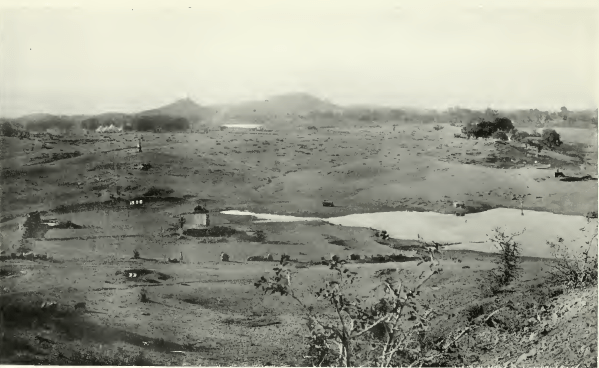
Betwa, 1 April and Jhansi, 3 April
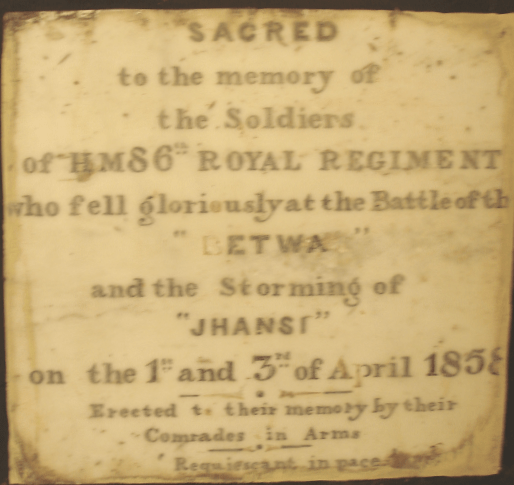
86th Regiment of Foot
Captain & Brevet Major C. Darby – severely wounded
Lieutenants
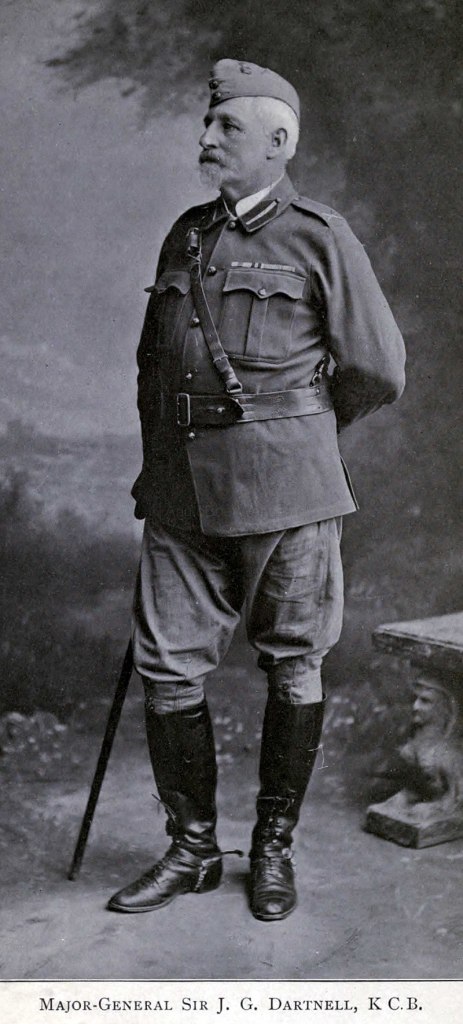
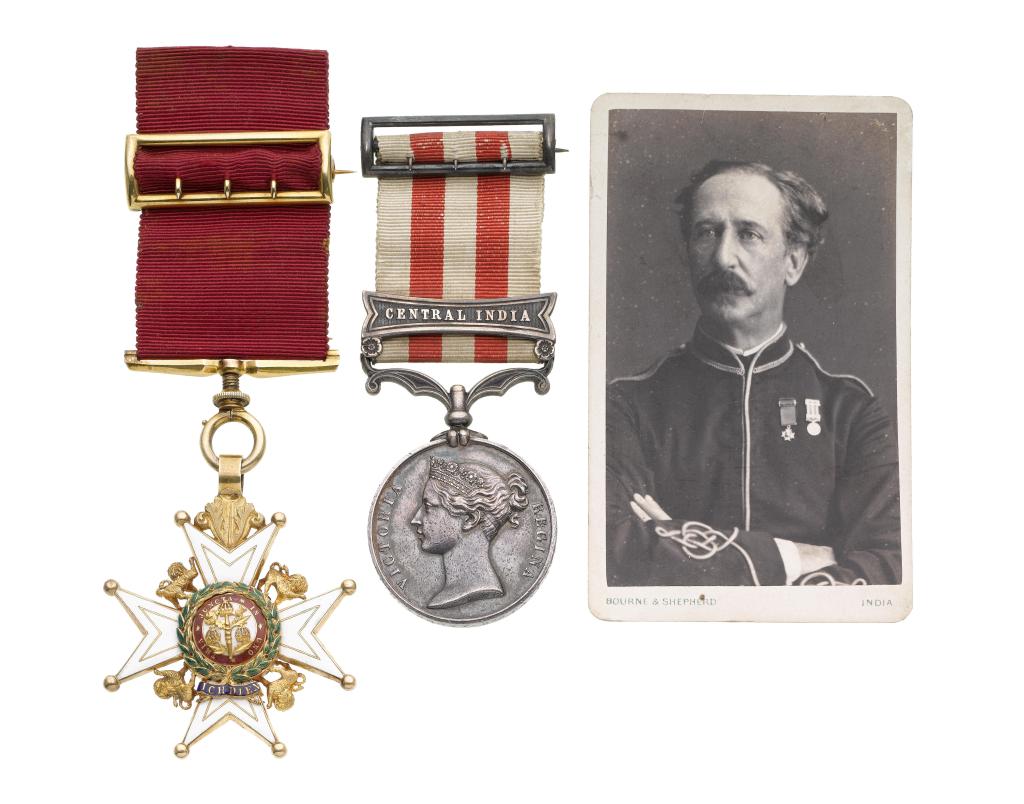
Dartnell, John George – severely wounded with several sword cuts. Dartnell was one of the first men to ascend the ladders at Jhansi. He was set upon by the insurgents who slashed him with their sabres and shot him. He had received four sword cuts and a bullet wound. On the left arm, he sustained three cuts, of which one was seven inches long and had divided the muscles above the elbow to the bone. He had a further cut on the right leg and lost three fingers.
He had joined the 86th Regiment of Foot as an Ensign in 1855 and was promoted to Lieutenant the following year. The first action he took part in was the storming of Chanderi in March 1858. Jhansi was his last for some time as he was invalided home back to England to recover from his wounds. He was recommended for the Victoria Cross for his actions at Jhansi, but the recommendation was not approved; however, his gallantry secured him a promotion to captain in 1859. Dartnell would not make a name for himself in India, but in South Africa. After 30 years of service to the Colony of Natal, Major General John Dartnell retired from the Natal Police and returned home.
Holroyd, William Rice Morland – severely wounded. Born 1835. Joined the EICo army in 1854, assigned to the 23rd BNI, which mutinied at Mhow. Attached to the 86th and then later to the 88th as interpreter. Holroyd was present at the action at Kalpi for which Private Pearson was awarded the VC.
Lewis, R.F. – dangerously wounded. He received a sword cut that extended from the right shoulder across the back to the left hip.
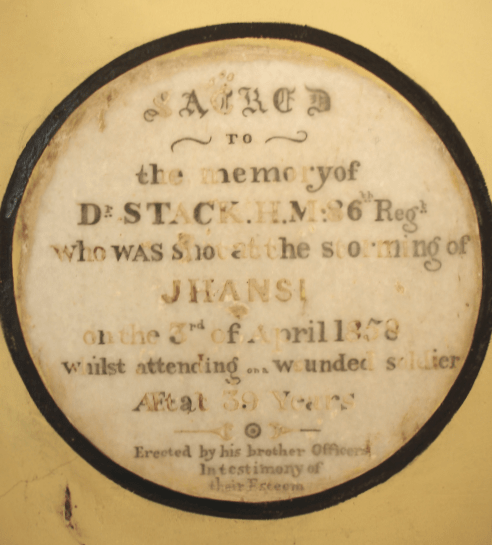
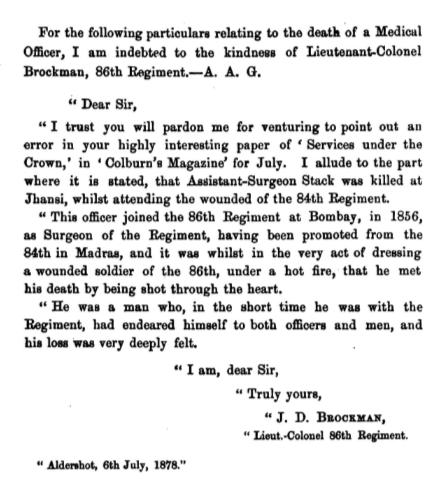
Surgeon Thomas Stack – killed in action – Several troops had been wounded and were lying exposed the continued fire of the insurgents and to the rays of the sun. Ever with his regiment, Stack set himself with his medical kit behind a low wall, no more than 4 feet high and proceeded to deal with the wounded on the other side of it as well as he could. Colonel Stuart ordered him to leave, but Stack refused, saying he would not retire as long as there was a wounded man unattended. He had just commenced binding their wounds and “making the poor fellows as comfortable as could under a heavy fire.” Stack had nearly completed looking after the last man and put a knapsack under his head – he then went back to his supplies and handed over a draught to one of the attendants to give it to the wounded man. The attendant, keeping low, crept to the gap in the wall but came back and told Dr. Stack that he couldn’t do it. Stack took the cup and went over himself. As he pressed the cup to the wounded man’s lips, the brave doctor was shot by a piece of telegraph wire, which lodged itself in his heart. Death was instant. Had he lived, there was no doubt in anyone’s mind he would have received the Victoria Cross.
“Born 19th September 1818. MD at Glasgow, 1843. (Obituary Fermanagh Times 28 August 1902) – “Dr. Stack of the 86th Regiment, referred to above as having been killed, was the brother of the present-day Bishop of Clogher. He was the surgeon of the regiment, a man of great height, powerful physique and a brave soldier.”
Sergeants
Cairns, William – dangerously wounded. Died of wounds – 1 April
Connors, Dennis – severely wounded
Pickering, Thomas – severely wounded
Ensigns
Fowler, G. – slightly wounded
Sewell, – severely wounded by a musket ball, which lodged in his left thigh but was extracted subsequently from his right thigh.
Corporals
Geaves, Francis – severely wounded
Murphy, James – dangerously wounded
Privates
Barley, Richard – severely wounded
Beggs, Robert – slightly wounded
Brady, Stephen – severely wounded
Brinnan, John – severely wounded
Burgin, John – severely wounded
Byrne, John – severely wounded
Cawfield, Peter – severely wounded
Connell, Thomas – severely wounded
Conroy, Peter – dangerously wounded. Died of wounds
Conway, Patrick – severely wounded
Davis, William – severely burnt
Doran, Edward – killed in action
Feeney, Michael – killed in action
Frost, George – slightly wounded
Geraghty, Daniel – wounded
Gould, William – slightly wounded
Hannon, John – severely wounded
Hanney, John – wounded
Hogan, Edward – severely wounded
Keenan, Henry – severely burnt. Died of burns.
Kerr, Abraham – dangerously burnt. Died of burns, 7 May.
Kirwan, William – severely wounded
Leeson, James – killed in action
Letham, George – severely wounded
Lyons, John – severely wounded
Mara, John – killed in action
Matthews, Roger – severely wounded
McCann, John – killed in action
McCormick, David – killed in action
McEvoy, John – slightly wounded
McGuinness, James – severely wounded
McMullen, Henry – severely wounded
McRanee, John – killed in action
Moran, Michael – mortally wounded, died 7 April.
Moriarty, John – severely wounded
Mulvihill, Thomas – slightly wounded
Murphy, James – severely wounded
Murphy, Peter – dangerously wounded
Murphy, Thomas – severely burnt
Naven, Peter – slightly wounded
Nevin, Edward – dangerously wounded
Nolan, James – dangerously burnt. Died of burns, 9 April
Oram, Robert – severely wounded
O’Connor, Timothy – severely wounded
O’Neil, Arthur – severely wounded
Owens, Hugh – wounded
Pearson, James – slightly wounded
Prendergast, Thomas – slightly wounded
Roach, Patrick – severely wounded
Ryan, John – severely wounded
Shanahan, Mathew – wounded
Sullivan, Cornelius – mortally wounded. Died of wounds.
Sweeney, George – severely wounded
Turner, John – dangerously wounded. Died of wounds, 8 April.
Vahey, Thomas – wounded – 1 April
Waldren, James – slightly wounded
Ward, Richard – dangerously burnt. Died 9 April
Webb, Henry – dangerously burnt, died of burns, 7 May
Wheelahman, William – severely wounded
White, William – killed in action
Willihan, William – wounded
Youart, William – severely wounded, died of wounds, 7 May
3rd European Regiment
Captain J.W. Sandwith – slightly wounded
Assistant Surgeon T. Miller – severely wounded
Colour Sergeant Robert Steavens – slightly wounded
Sergeant John Walsh – slightly wounded
Corporals
Amos, William – killed in action, 1 April
Anderson, Alexander – dangerously wounded, died of wounds.
Geddard, James – severely wounded
Groves, James – slightly wounded
Hard, Robert – slightly wounded
Hennessey, Michael -right leg shattered by round shot, leg amputated, 1 April. Died of wounds.
Stewart, John – slightly wounded
Drummer James Goddard – severely wounded
Privates
Allen, George – severely wounded
Archibald, Roger – slightly wounded
Baker, George – dangerously wounded. Died of wounds, 9 April
Bingham, William – slightly wounded
Booth, George – severely wounded
Bryan, Miles – mortally wounded
Burder, William – slightly wounded
Burnham, William – killed in action
Butler, Charles – severely wounded
Claran, John – severely wounded
Clavin, John – severely wounded
Connelly, Patrick – severely wounded
Cohill, M. – slightly wounded
Cox, William – dangerously wounded. Died of wounds, 5 April
Deegan, Timothy – severely wounded
Doran, Patrick – slightly wounded
Eaton, Charles – dangerously wounded. Died of wounds
Falgey, W. – severely wounded
Farrell, Patrick – severely wounded
Fitzgerald, Michael – severely wounded
Gayton, Charles – dangerously wounded. Died 8 April
Grady, John – killed in action
Haley, John – slightly wounded
Henn, Richard – severely wounded
Harrison, John – mortally wounded, survived 18 hours.
Hulston, James – severely wounded
Hutchinson, William – dangerously wounded, died 8 April
Kennelly, Robert – severely wounded
Laird, Thomas – burnt in an explosion at the storming of Jhansi. Died of burns.
Lyle, Samuel – severely wounded
Maye, Patrick – killed in action
McBride, James – severely wounded
McDermott, Patrick – slightly wounded
McKenna, Patrick – killed in action
McKinnon, John – mortally wounded
McLaren, James – killed in action
Maher, Patrick – mortally wounded
Meehan, Patrick – mortally wounded, 1 April. Died of wounds, 12 April.
Mitchell, George – severely wounded
Mould, William – severely wounded
Myles, Bryan – killed in action
O’Halloran, Patrick – slightly wounded
Shean, John – severely wounded
Sinclair, John – slightly wounded
Smith, Charles – slightly wounded
Smith, John – severely wounded
Smith, Thomas – severely wounded
Squirrell, T. – severely burnt at Jhansi. Died of burns.
Tollen, William – slightly wounded
Tyle, Samuel – severely wounded
Watson, Thomas – killed in action, 1 April
Wheeler, William – mortally wounded by gunshot. Survived only two hours.
Wilkinson, William- severely wounded
Williams, Patrick – severely wounded
24th Bombay Native Infantry
Lieutenant Atherton Alan Park (1834-1858) – killed in action. Aged 23. Son of Alexander Atherton Park, of Wimpole Street, London.
Subadar Samajee Alrajee – severely wounded
Havildars
Ramdeen – severely wounded
Seetal Prashad – killed in action
Sepoys
Balda Misser – slightly wounded
Lochun Bahallia – slightly wounded
Kisson Singh – killed in action. Died 5 April
Luxmaon Tanmilkhan – killed in action
Mohun Singh – slightly wounded
Ramjee Sabday – severely wounded
Ramjee Yadow – severely wounded
Subani Ragnra- severely wounded
Tooka Ram – severely wounded
Tookuondeo Sokul – mortally wounded. Died of wounds
25th Bombay Native Infantry
Lieutenant J.J. Fenwick – slightly wounded
Subadar Kesson Singh – slightly wounded
Jamadar Roghooje Powar – slightly wounded
Naiks
Mangal Prashad – severely wounded
Pandu Mengia – killed in action
Lance Naik Durgam Singh – mortally wounded
Sepoys
Ajodia Pershad – dangerously wounded
Atnaram – slightly wounded
Babu Bagwa – slightly wounded
Bhanoo Patku – slight contusion
Bapu Mohitta – dangerously wounded
Buktawar Khan – killed in action
Buldeen Doobay – severely wounded
Chuttoo Gudria – severely wounded
Dhrum Singh – slightly wounded
Essoo Jugdalay – dangerously wounded
Goorbuccus Chowbay – slight contusion
Itoo Sowrah – severely wounded
Juggunath Panday – slightly wounded
Kunie Moori – dangerously wounded
Laumon Ghoy – dangerously wounded
Moona Catchee – slightly wounded
Pandu Juddou – severely wounded
Prashad Moorie – killed in action
Purun Moochee – severely wounded
Rambuccus – severely burnt
Ramdeen Lodh – slightly wounded
Seetal Coonby- killed in action
Sookh Mam – slightly wounded
Ugber Singh – killed in action
One man blown up by Gunpowder, name not known.
8th Madras Native Infantry
Lieutenant Henry Clerk – severely wounded, 1 April
14th Light Dragoons
Sergeant Frederick Cooper – severely wounded
Corporal Edward Smith – slightly wounded
Private John Hoey – slightly wounded
Hyderabad Contingent Infantry
Left Wing, 3rd Infantry
Captain John Sinclair (attached, 39th Madras Infantry) – mortally wounded. Died soon after admission
Naik Lutchman – severely wounded. Died shortly after.
Sepoys
Beechary – slightly wounded
Bindah – severely wounded
Bucktaoor – killed in action
Hanuman – slightly wounded
Joku Singh – severely wounded, died shortly after
Mohamed Ramzan – severely wounded
Naghoji – dangerously wounded. Died 6 April
Ramdeen – severely wounded
Sheikh Baboo – severely wounded, died shortly after
Sheikh Chand – severely wounded
5th Infantry
Sergeant Major Dixon – severely wounded
Subadar Hoosein Bux – dangerously wounded
Jemadar Gunga Singh – severely wounded
Havildar Ram Deen – slightly wounded
Lance Naik Balla Prashad – dangerously wounded
Sepoys
Heera Lal – severely wounded
Bisson – dangerously wounded
Gummaee – slightly wounded
Hyderabad Contingent Cavalry
Captain Henry Dyett Abbott – slightly wounded. Contusion from a musketball. Attached from 31st Madras NI
Lieutenant H.C. Dowker – severely wounded. Attached from 22nd Madras NI
1st Cavalry
Troopers
Binda Singh – slightly wounded
Hussein Ali Meer – killed in action
Jymal Singh – severely wounded
Karim Ali Khan- wounded
Kumerali Khan – slightly wounded
Meah Khan – severely wounded
Meer Amyed Ali, – wounded
Nassirnulla Khan – slightly wounded
Tejmul Singh – wounded
Train Singh, wounded
Tulja Ram – slightly wounded
4th Cavalry
Captain W. Murray – slightly wounded. Contusion from musket ball. Attached from the 46th Madras NI
Jemadars
Ali, Syed Noor – dangerously wounded
Singh, Hanuman – wounded
Duffadars
Himmunt Khan – wounded
Ranjit Khan – killed in action
Trumpet Major Mirza Soorab Beg – severely wounded
Troopers
Akbar Ali Meer – severely wounded
Bagwan Singh, wounded
Ahmed Khan, slightly wounded
Khan Mohamed Khan, wounded
Khairoola Khan – wounded
Sheikh Wazir Ali, severely wounded
Syed Sharief, (2nd Cavalry, attached 4th Cavalry) – wounded
Tahool Khan -wounded
Recommended for Promotion
1st Cavalry Hyderabad Contingent
Ressaldar Allaoodeen Khan, 3rd Troop
Jemadar Mahomedeen Khan, wounded
Kurreem Ali Khan, wounded
Tegmal Singh, wounded
Meer Amyed Al
Train Singh.
4th Cavalry Hyderabad Contingent
Jemadar Hunooman Singh, wounded
Duffadar Himmunt Khan
Troopers
Bugwan Singh
Khan Mahomed Khan, wounded
Khairoolah Khan
Tahool Khan
Syed Sharief, 2nd Cavalry, doing duty with 4th Cavalry.
Recommended for the Order of Merit
1st Cavalry Hyderabad Contingent
Ressaldar Allaoodeen Khan, 3rd Troop
Jemadar Mahomedeen Khan, 3rd Troop, wounded
4th Cavalry Hyderabad Contingent
Jemadar Hunooman Sing, wounded
Bombay Horse Artillery
Lieutenant-Colonel Sydney Turnbull (1811-1858) – dangerously wounded, aged 46. Died of wounds 4 April. He had been shot in the abdomen; according to Dr. Lowe who attended him, “The blood welled out of his wound, and I knew he would die.”
Son of the late William Turnbull. Husband of Sarah née Simon, and father of four children. His son, Colonel Sydney Drummond Turnbull (1st Bengal Lancers), died on 21 February 1911, aged 67, in Kashmir, following injuries sustained after an unfortunate encounter with a leopard.
Captain John G. Lightfoot – slightly wounded, 1 April
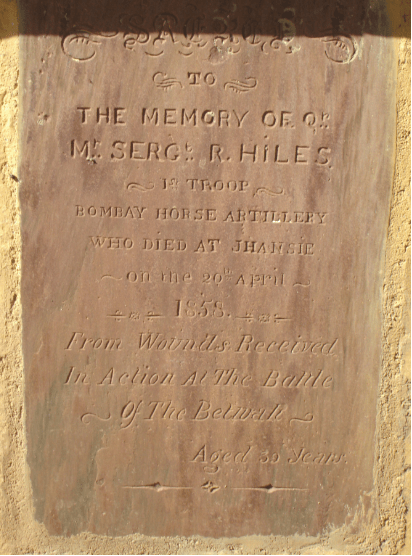
Quartermaster Sergeant Richard Hiles – dangerously wounded, 1 April, died 20 April at Jhansi
Subadar Doowkul Khan – killed in action
Haviladar Ramdual – killed in action
Golandaze Kissoon – severely wounded
Golandaze Perteepal Singh – severely wounded
Gunners
Cox, Henry – killed in action 22 May
Maymalian, John – wounded
Bombardier William Harris – killed in action 22 May
Driver Marwatoo – slightly wounded
Royal Artillery
Lieutenant G. Simpson – severely wounded, 1 April
Gunner J. Ponton – severely wounded, 1 April
Royal Engineers
Assistant Surgeon John Cruickshank – severely wounded
Corporal Nathaniel Johns – slightly wounded
Sappers
McClay, Robert – severely wounded
Moore, George – severely wounded
Ramsey, Hempell – severely wounded
Smith, James D. – severely wounded
Bombay Sappers & Miners
Lieutenants
Dick, William George Douglas – killed in action, aged 22. Son of the late John Campbell Dick, Bengal Civil Service. He was shot while stepping off the scaling ladder onto the fort wall.
Bonus, Joseph – slightly wounded – hit in the head and pushed off the scaling ladder.
“Presently, a tall gaunt figure with a bandaged head, but without sword or helmet, walked past my tent door – this was my friend Bonus. After a little he came to me with broken head and broken knees, full of wrath because he had been hit on the head by stick or a stone, ‘instead of being shot as a soldier should be!’ He was leading a party up a ladder, and when at the top recived a blow that knocked him off, and was very fortunate to have no worse injuries than head cut and bruised, a few teeth loosened, and chipped knees. However, he explained that when he came down he thought he was killed, and lay still till the enemy took to throwing stones and other disagreeable thing at him, then he thought he would try and get up and found that he was able to totter away, though he was half dazed and good for nothing.”
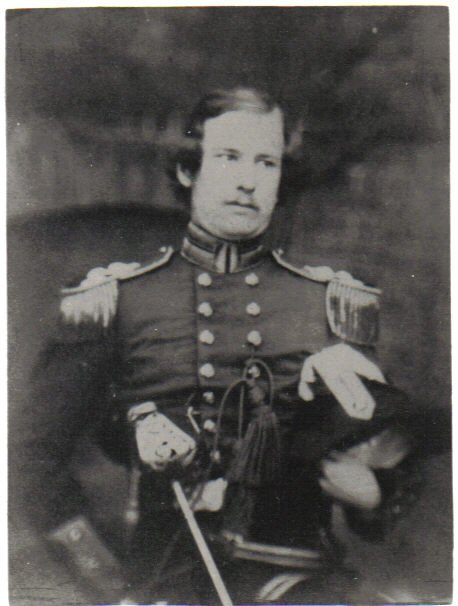
Meikeljohn, Hugh. R. – killed in action. “He was cut to pieces and robbed of everything, even to his socks.” (Lowe) He had been dragged from the ladder over the wall and put to death.
Privates
Bhomoroo Lingoo, – slightly wounded
Dyaram Powa – severely wounded
Oomagee – right arm taken off by round shot
Ramdeen Aheir – severely wounded
Sew Goo Kaum – killed in action
Sundnee – slightly wounded
Madras Sappers and Miners
Lieutenant H. Prendergast, VC – severely wounded at Betwa, 1 April.
Prendergast had received several sword cuts, one quite dangerous, and nearly lost his thumb. For Betwa, he was not detailed to join, but with Sir Hugh Rose’s approval, he rode into battle. He had initially tried to attach himself to the 25th Bombay NI, but their colonel, who, like many in the force, believed Prendergast was bad luck as he always seemed to attract fire, having been injured not just at Mandsaur but also at Rahatgarh, ordered him to push off. As such, Prendergast then went to find Sir Hugh Rose, who was just preparing to lead the charge of the 14th Dragoons.
“The General led us, heading towards the battery, but reined in before arriving at it. I chose a spot where it was possible to jump the ridge, and went at it; in riding up to it, only the heads of men and puffs of smoke could be seen. There was infantry in front, infantry to the right, the battery in front, and bullets pouring down like hail, so that I was inclined to put my head down to prevent their hurting my face. As I came down from the jump I found native artillerymen on my right and Gwalior Contingent on my left; several cut at me, but my horse and I kept our heads and went off, but it was weird work going forward with our wounds open and apparently no Britishers near, and when I reached the ground over which round shot from the batteries on the British left were bounding, I thought it was time to consider my position. Curiously enough, I had not been molested after passing the first group with whom I came in contact. Turning my horse, I observed as a solitary dragoon coming towards me – a tall man with a fair beard; then he threw up his hands and fell off, probably shot through the heart – the horse turned. I could not see far before me, so I determined to trust to the instinct and discipline of the riderless horse, and followed him until I met Fox of the sappers, who accompanied me to the nearest surgeon. By his advice, I kept my thumb that was hanging on by a shred of skin on the back of my hand, though I had a strong inclination to bite it off and have done with it.” The cut on Prendergast’s upper arm had severed the biceps and the deltoid; he had a wound on his index finger, and his thumb was nearly severed. Eventually, his wounds healed, but his arm would never regain its former strength, and his hand would be nearly useless.
Lieutenant F.R. Fox – dangerously wounded – shot in the neck.
Jemadar Ally Khan – slightly wounded
Naik Chupumoetug – slightly wounded
Privates
Appesawarry – severely wounded
Armoogam – dangerously wounded, died of wounds, 10 April
Chennion – slightly wounded
Lutchmanen – slightly wounded
Mamekun – killed in action
Mohamed Cussen – mortally wounded. Survived only 5 hours.
Narradoo – killed in action
Poorun – slightly wounded
Vanketsowarry – severely wounded
Veeraswamy – severely wounded
Sources:
Selections of Letters, Despatches, and other State Papers Preserved in the Military Department of the Government of India 1857-58, Vol IV — edited by George W. Forrest (Calcutta: Superintendent Government Printing India, 1912)
The Story of Our Services under the Crown: A Historical Sketch of the Army Medical Staff— Surgeon-Major Albert A. Gore (London: Baillere, Tindall & Cox, 1879)
Central India during the Rebellion of 1857-1858 – Thomas Lowe (London: Longman, Green, Longman & Roberts, 1860)
History of the Royal Irish Rifles – Lt. Col. George Brenton Laurie (London: Gale & Polden, 1914)
The Life of General Sir H.N.D. Prendergast, R.E., V.C., G.C.B. (The Happy Warrior) – Col. Henry M. Vibart (London: Eveleigh Nash, 1914)
Recollections of the Campaign in Malwa and Central India under Major General Sir Hugh Rose – Asst. Surgeon John Henry Sylvester (Bombay: Smith, Taylor & Co., 1860)
Casualty Roll for the Indian Mutiny, 1857-59 – compiled by I.L. Tavender (1983)
https://fibis.ourarchives.online/bin/aps_view_image.php?mode=browse_picture&id=2303&s_id=717
https://gmic.co.uk/topic/82793-major-general-sir-jg-dartnell-kcb-cmg/
 Mutiny Reflections