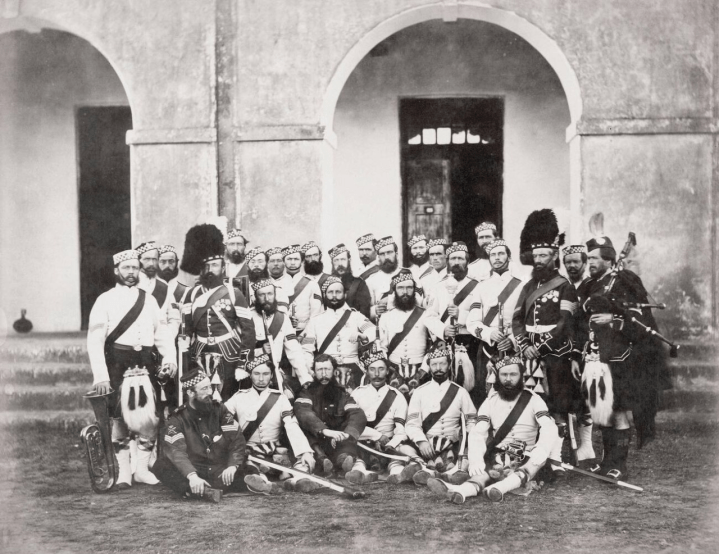
“Soldiers of the Forty-Second, Seventy-Ninth, and Ninety-Third! – old Highland Brigade with whom I passed the early and perilous part of this war, I have now to take leave of you. In a few hours, I shall be on board ship, never to see you again in body. A long farewell! I am now old and shall not be called to serve any more, and nothing will remain to me but the memory of my campaigns, and the memory too, of the enduring, hardy, generous soldiers with whom I have been associated, and whose name and glory will be kept alive in the hearts of our countrymen…Though I shall be gone, the thought of you will go with me wherever I may be, and cheer my old age with a glorious recollection of dangers confronted and hardships endured. The bagpipes will never sound near me without carrying me back to those bright days when I was at your head and wore the bonnet you gained for me, and the honourable decorations on my breast, many of which I owe to your conduct. Brave soldiers, kind comrades, farewell!
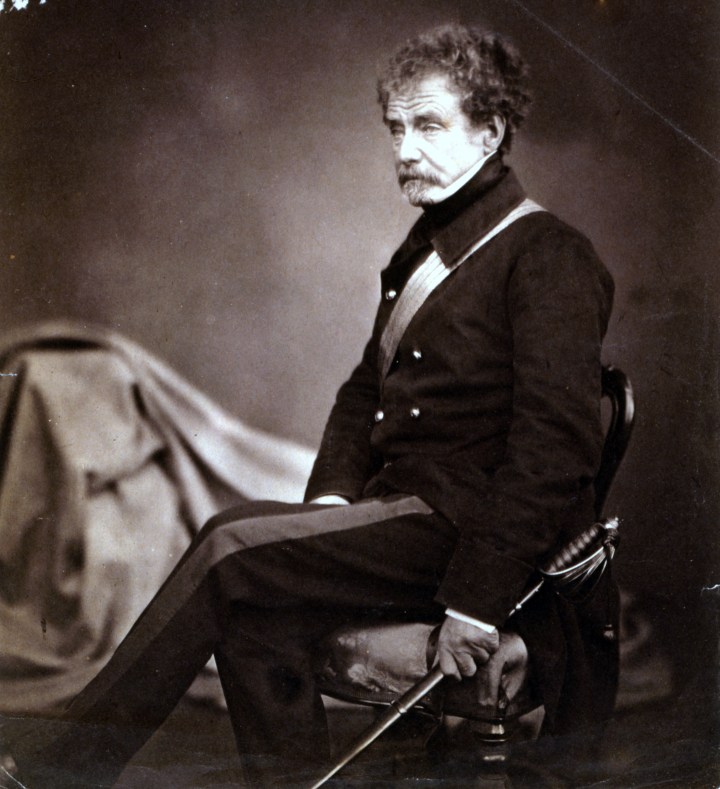
And thus, Sir Colin Campbell left Crimea, his last war fought, the glory and honour won – it was 1856, and the old soldier was ready to go home, after nearly 48 years of almost continuous service.
Not so. The events of 1857 had discomfited the plans of more than one old veteran, and Sir Colin would now join the ranks of Sir Henry Havelock and Sir James Outram in this final fight. It is little wonder a few critical minds wondered what on earth the government, both in England and in India, was doing by dusting off men whom they facetiously referred to as “old fossils.” This was perhaps a little unfair against Sir James, the youngest of the trio, at 54, a full 11 years younger than Sir Colin and 8 years junior to Sir Henry. While Sir James could still be considered as being contemporarily born in the same century, Sir Colin and Sir Henry appeared to many as relics of a bygone era. However, it was exactly this experience that was needed – men who had fought their way through continents and eras, those who had veritably seen it all.
Havelock and Outram had been on active duty when the mutiny broke out, both fighting their way through the rather short Persian Campaign; however, Sir Colin was more or less retired. Following his stirring speech to the Highland regiments in Crimea, he fully expected he was done with soldiering, per se. In the summer of 1856, he took up the position of Inspector General of Infantry and effectively acted as an errand runner as a representative of the queen. There is no doubt these were prestigious positions and completely suited for a man of his age and stature – but anyone who knew Sir Colin also understood him to be a man who would neither disobey an order nor run from a fight. On the 11th of July 1857, when the War Office finally received the news that their Commander-in-Chief in India, the Honourable George Anson, was dead and buried since May, Lord Panmure called the same day for Sir Colin Campbell and offered him Anson’s woefully empty post. This was not essentially true – Patrick Grant, commander-in-chief of the Madras Army and the most senior commander in India following Anson’s death, had been nominated acting Commander-in-Chief of India by Lord Canning. Ever since May, Grant was conducting operations against the rebels safely from Calcutta and, for reasons best left to himself, had not taken to the field – he led by the advice of others and then allowed them to get on with the work. Although Lord Canning tried unsuccessfully to have Grant confirmed in his role, when Campbell arrived in India, Grant was not terribly sorry to hand over the reins and return to Madras.
The government could hardly have done better than nominate Sir Colin for India. Neither age nor faux retirement had dulled his senses; when asked how soon he could leave England, Sir Colin replied he could be ready the same evening. His only stipulation was that the nomination of Colonel Mansfield, a personal friend and then serving as Consul-General at Warsaw, be offered the appointment of chief of staff with the rank of major-general. This affair settled, Campbell packed his portmanteau and prepared to depart the next morning. It was a summons from Queen Victoria that delayed Sir Colin’s London departure by several hours as she desired he wait upon her, and the whole process of leave-taking would finally take place when Sir Colin boarded the continental night train. He briefly broke up his journey to breakfast with an old friend from Crimea in Paris before rushing off to Marseille on the morning of the 14th of July to catch a steamer bound for India on the same day. On the 13th of August 1857, Sir Colin Campbell set foot in Calcutta.
The one month onboard the steamer had been spent coming up with a plan for the forces in India. Essentially, Sir Colin wanted the united forces of the Bombay and Madras armies to advance on Central India, thus engaging the rebels on a different field, relieving the pressure off of Scindia in Gwalior and more essentially ensuring the main lines of communication through India remained open. Then, with Central India pacified and confidence thus restored in the Punjab and Bengal by reducing the rebel influences in the intervening areas, he could then take on Oudh. Although his plan would be implemented, it was not exactly in the order Sir Colin had envisioned. When he arrived in Calcutta, the true scale of the mutiny was laid bare, and it must have been with some surprise he discovered on just how many fronts the government of Calcutta was actually fighting. In August 1857, Sir John Lawrence was still holding the Punjab and pushing forward as much of his force as he could to the succour of Delhi, which was still a month away from being taken. The garrison at Agra was isolated and cut off from all communication, and Lucknow was hemmed in on all sides by mutineers. Sir Henry Havelock, with less than 2000 men, was consolidating his position in Cawnpore, numerically too weak to move on Lucknow and facing the ever-increasing threat of the formidable Gwalior Contingent, who by August still had not decided for sure where and when they would take the field. Bombay had faced a small mutiny in July, and it was not considered prudent to push any troops forward from that presidency. Since early August, there were smaller rumblings in Madras. As we shall see, there was much for Sir Colin Campbell to consider, and while he would take to the field himself, it would not be until October.
At the same time that Sir Colin Campbell was putting the finishing touches on his advance, the force under Brigadier Greathed had been making waves of their own: after leaving Delhi, they fought at Bulandshahr and continued onwards towards Agra. The Battle of Agra would prove that their experiences at Delhi had certainly taught them to be quick on their feet, and although numerically weaker, they defeated the mutineers. In all, the force would garner seven Victoria Crosses for Bulandshahr alone.
Sir Colin Campbell would not wait long in Cawnpore – many of the forces, like that of William Peel, were advancing independently – they would finally meet before the Alamabagh, and the first advance to Lucknow would commence.
 Mutiny Reflections