Cawnpore – and the Disastrous Siege Begins
The history of Cawnpore in 1857 is, above all, infinitely disturbing. It is history at its most punishing, where hopelessness uncomfortably rubs shoulders with human fortitude. Ill-fated from the start, the siege of Cawnpore would last three weeks, a remarkable feat in itself, but the final outcome would not be a glorious one; instead, the pages would run in blood.
We can, in hindsight, blame Sir Hugh Wheeler for a monumental lack of imagination. He could have settled himself in the Magazine, where his population of nearly 1200 would have had ample shelter, and his men would have had enough munitions with which to keep up their defence. Had he considered the situation more carefully, he could have stocked the Magazine with enough provisions and, with some firmness, could have sent off the women and children, despite the protests of their husbands and the ladies themselves, while there was still time. When the mutiny broke out in Cawnpore, on 5-6 June, the events were still unfolding. Allahabad and Lucknow were still safe, and with a decent escort, the ladies could have been sent to either station. On the very day of the mutiny, the river boats were still plying their trade. Some civilians managed to leave Cawnpore before the first shots were fired.
The Magazine was defended on one side by high walls that fell down towards the river; had he needed to flee, he would have had an option. However, as we have seen in Fatehgarh, this was easier said than done, and there is no reason to believe anyone contemplating a flight by boat would have been better off, but at least, there may have been a fighting chance. However, in the early days of the mutiny, officers, Wheeler included, felt it imperative to show they trusted their men implicitly, and this meant desisting from any actions that might be perceived as insulting. This included, in the case of Cawnpore, changing the guard at the Magazine from an Indian to a European one, and as such, Wheeler felt it would have caused a mutiny had he even attempted to gain control of the Magazine.
Where his imagination certainly failed him was in his absolute trust that someone was coming to save him. One of his other reasons for not taking the Magazine as his entrenchment was the fact that it lay off the main road – any army coming to Cawnpore to his aid would be forced to traverse Cawnpore itself, and he, most kindly, wanted to save any relief force the hassle of prolonged street fighting.
On the map below is the position of the Magazine, in yellow and that of the Entrenchment, in blue. As a relief force would likely have take the route over the river, they would have come directly to the entrenchment, whereas the Magazine, when seen like this, would have entailed going through all of Cawnpore.
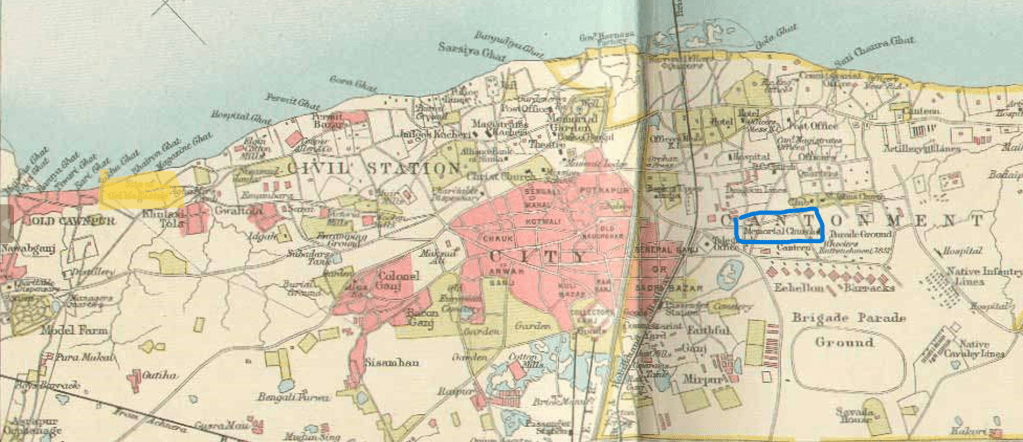
Unfortunately, Wheeler also believed a relief force was coming. As such, he sent men a portion of his fighting force to Lucknow but did not think to send the women and children as well. A small reinforcement had indeed made it to Cawnpore, but they would be the last men to arrive for months. The first man to attempt it would be Sir Henry Havelock, in July, nearly a month after Wheeler’s Entrenchment was dust.
So, Wheeler chose the site of his entrenchment with three ideas in mind:
a. The mutineers would destroy the station but would leave Cawnpore, so a heavier fortification like the Magazine was unnecessary. Conveniently close to the Cantonments, refreshing supplies would not present a problem.
b. The entrenchment was positioned conveniently on the main road, allowing for easier movement for any relieving force
c. The Entrenchment was a temporary measure only, and as such, Wheeler estimated, if he had to hold out at all, at the most, for two weeks until a force could reasonably be expected to march down from Allahabad.
Unfortunately, the mutineers would be stopped by the Nana Sahib from proceeding to Delhi. Wheeler thought he would have a ragtag band of badmashes and perhaps some sepoys to deal with. He could not have fathomed that the Nana Sahib would convince the Cawnpore regiments and artillery to remain behind, leaving him hopelessly outnumbered and outgunned from the start. He never reckoned with the treachery of the Nana Sahib or his wily advisor, Azim Ullah Khan. The Nana had always shown himself a friend to the British, often entertaining them at his palace in Bithoor. This was the wild card that no one was prepared for, but once again, Sir Hugh Wheeler had been warned the Nana was not trustworthy – Martin Gubbins and Sir Henry Lawrence had both repeatedly warned him there was treachery afoot, and this was well before the tragedy at Cawnpore unfolded, as far back as April.
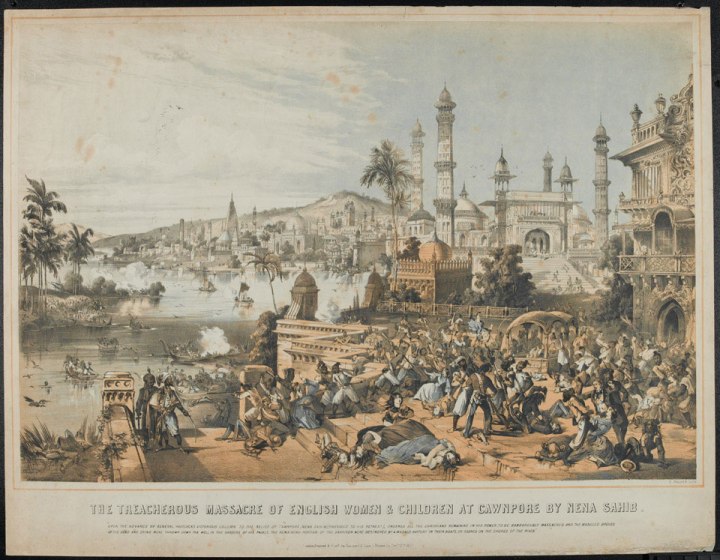
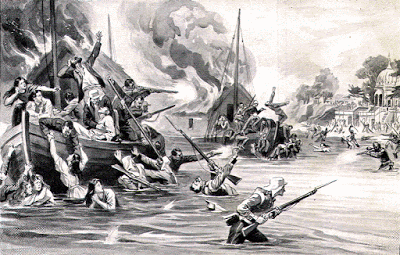
So the Siege of Cawnpore was a combination of faulty leadership, hubris, arrogance and above all, misplaced faith. While a siege in the Magazine might not have ended with all lives saved, it certainly could not have ended any worse. On 26 June, Sir Hugh Wheeler surrendered to the Nana Sahib, and once again, the man who had betrayed him once would betray him again. What Sir Hugh was thinking when he accepted the offer of safe passage to Allahabad by boat, when the river was at its lowest from the very man who had done his best to kill him for three weeks, is anyone’s guess. But once he had accepted the surrender, there was no going back, and now Sir Hugh simply had to accept what was on offer. It can be no coincidence that the massacre at Jhansi occurred under a similar premise; the Rani herself had grown up at the court of Bithoor, so perhaps, there is more to her duplicitous nature than previously thought. At Jhansi, the officers and civilians were simply herded to a garden and massacred; all pretence of safe passage vanished as soon as they stepped out of the fort. At Cawnpore, the theatre was far more elaborate with terms drawn up and signed, boats organised and transport to the ghats forthcoming. In the end, it was, however, no different from Jhansi. In Cawnpore, they were herded to the river and slaughtered wholesale. Had Wheeler known the first fugitives from Fatehgarh had been murdered on the Nana’s behest barely days before his own ill-fated agreement, he might have thought twice about surrendering.
The few who managed to escape Satichaura Ghat met varying fates, and very few would live to tell the story of Cawnpore. Those taken at the river consisted of women and children who would be taken to the Bibighar to await their fate. It is considered that the Nana Sahib had planned to keep them as hostages – a bargaining chip – should he need to wheedle his way out of the Satichaura Ghat Massacre, but that is if one believes he had a conscience. There is nothing to prove he intended to hand them over to the British for his neck; either way, he would have been in the noose. It is unlikely that the EICo would have looked kindly on a man who had betrayed Sir Hugh Wheeler in such a perfidious fashion, no matter how many women and children he saved.
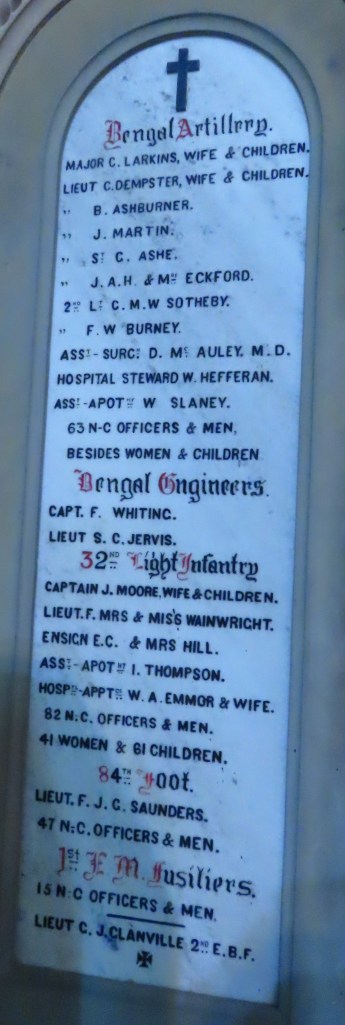
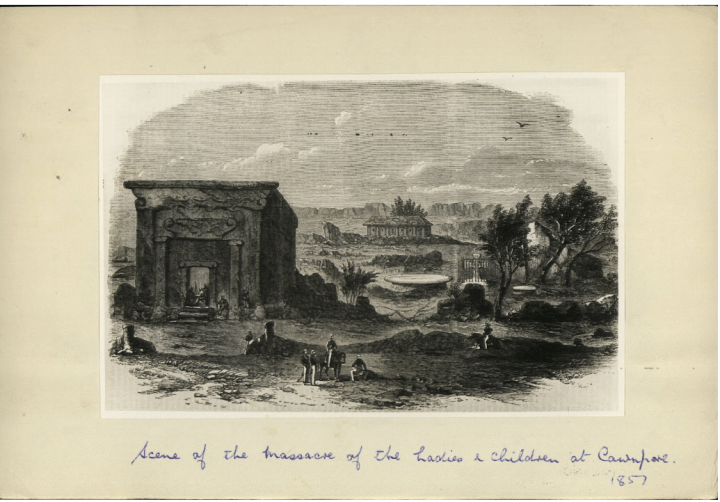
The story of Cawnpore is one of misery, but at the same time, one of tremendous bravery in the face of overwhelming odds, knowing, as they must have done, there was no winning this particular fight. It is impossible to read the events at Cawnpore in any other light than that of a dreadful tragedy. To understand the scale of the tragedy at Cawnpore, we must remember that the people involved were not all military men, and besides civilians, there was a disproportionate number of women and children.
When Sir Henry Havelock began his march towards Cawnpore, it was only a rumour that General Wheeler had surrendered – he would not receive any confirmation of the fact until the day he marched out of Allahabad on July 7.
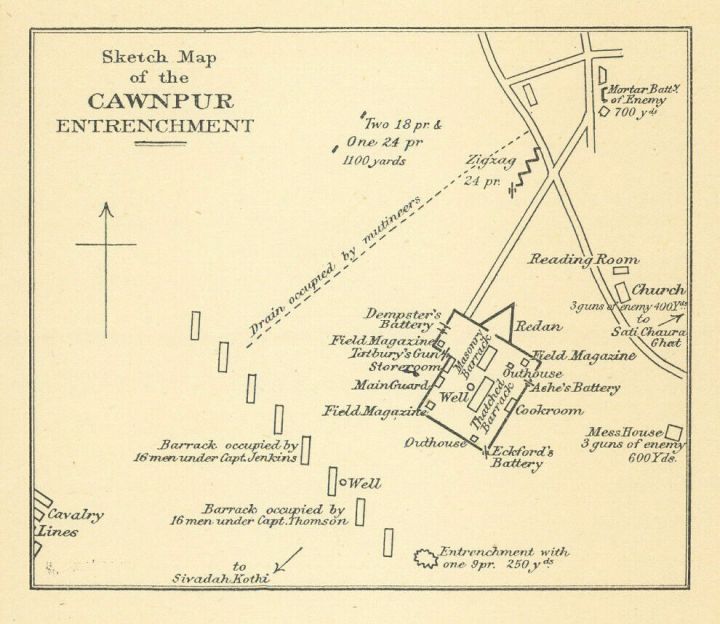
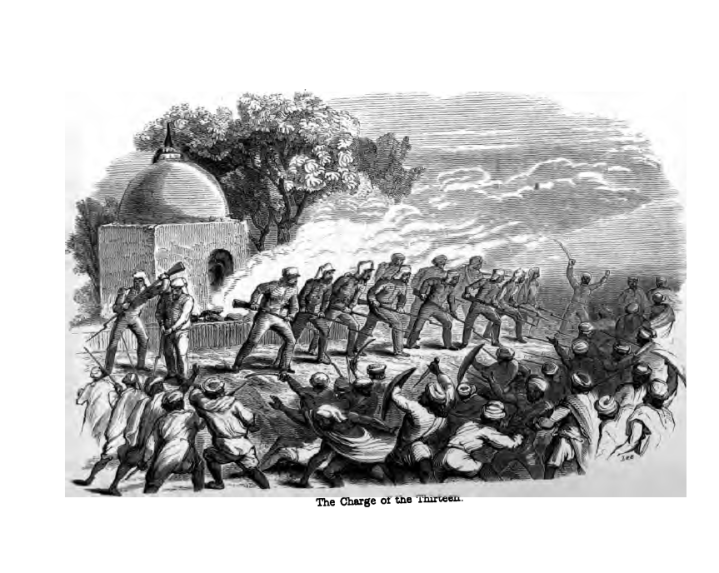
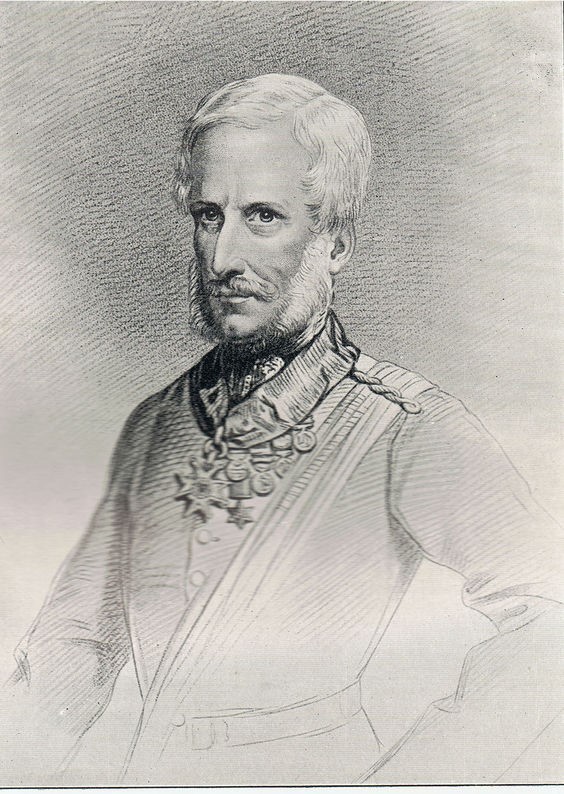
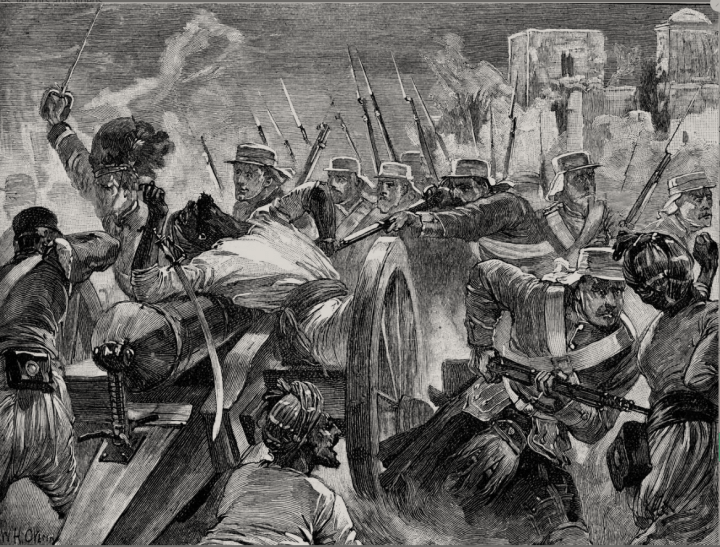
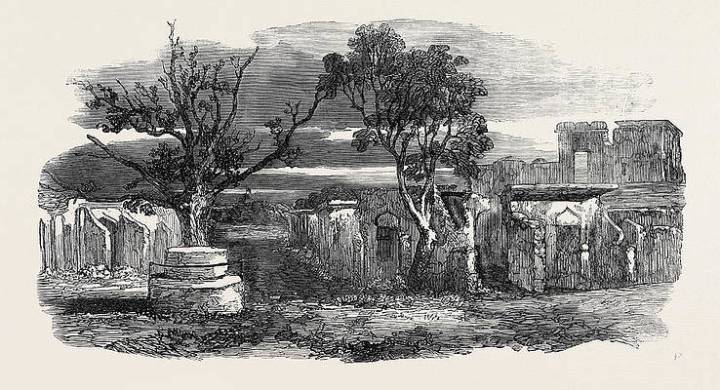

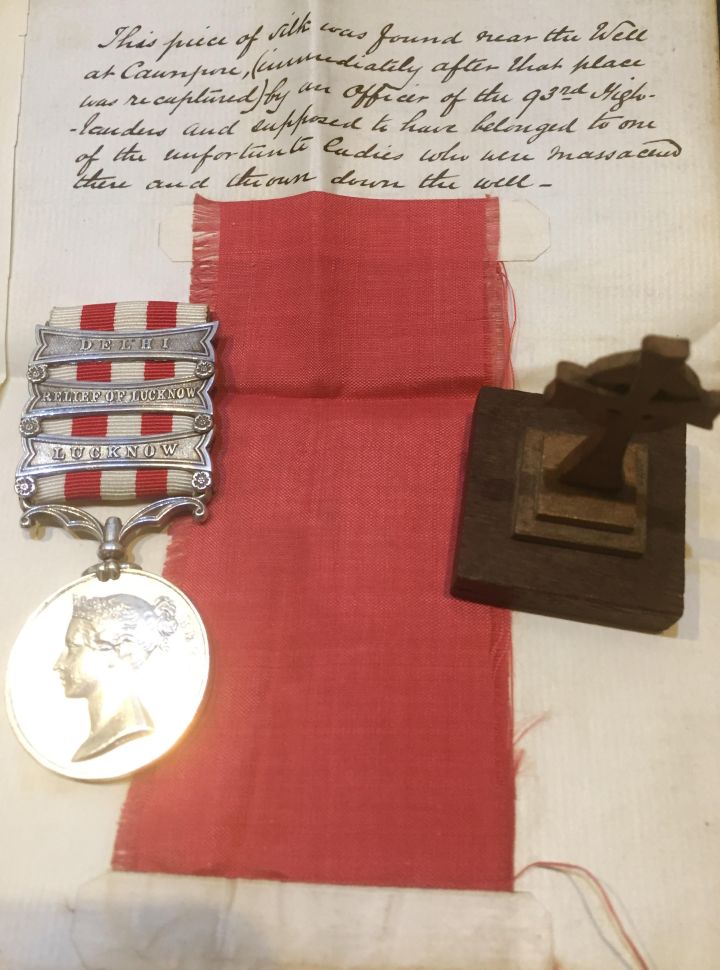
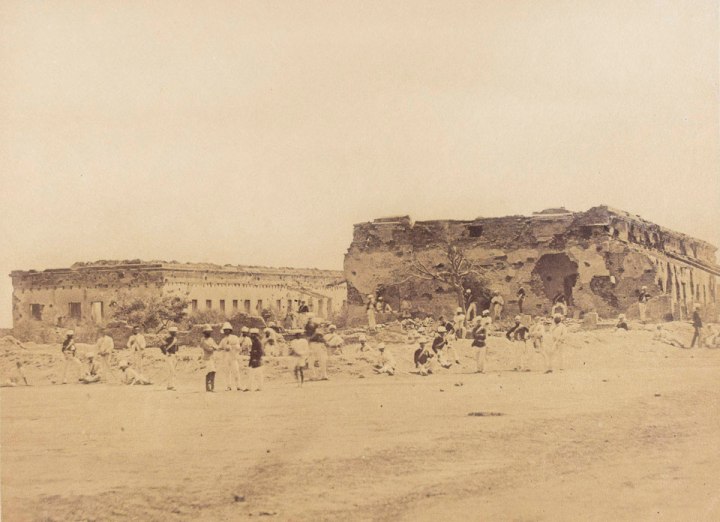
It would take some hard fighting to bring Cawnpore back into British hands; when this was accomplished, it would become the base of operations for the relief of Lucknow.
A visit to Cawnpore by the author in 2023 can be found here:
 Mutiny Reflections