The Camel Dak Comes to Life
Frere’s disappointment with his initial problems to send troops via the river route from Karachi to Multan, led him to explore a new and creative option. In June and July, as more troops returned from the Persian Gulf, every steamer was now needed to convey them but already overladen with men, transporting ordnance was becoming increasingly difficult. Stores were accumulating on Karachi to such an extent that “threatened to become a second Balaklava.” Frere had 45 tonnes of rifle bullets waiting for transport and a further 35 tonnes of other stores stacked up in Karachi with no way of moving them to where they were needed. The Punjab was calling for hospital supplies and clothing while Delhi was desperate for ammunition. As Delhi was being supplied by the Punjab through the Karnal Road, held open by the Patiala Raja, it was imperative that Frere find a way to get the stores out of Karachi.
An option did exist besides the river route and that was by camel. However, depending on the circumstances, a camel train could take up to six weeks to deliver supplies to the Punjab from Sindh, a delay that made the idea rather ridiculous. However, what had not been tried as yet a camel dak.
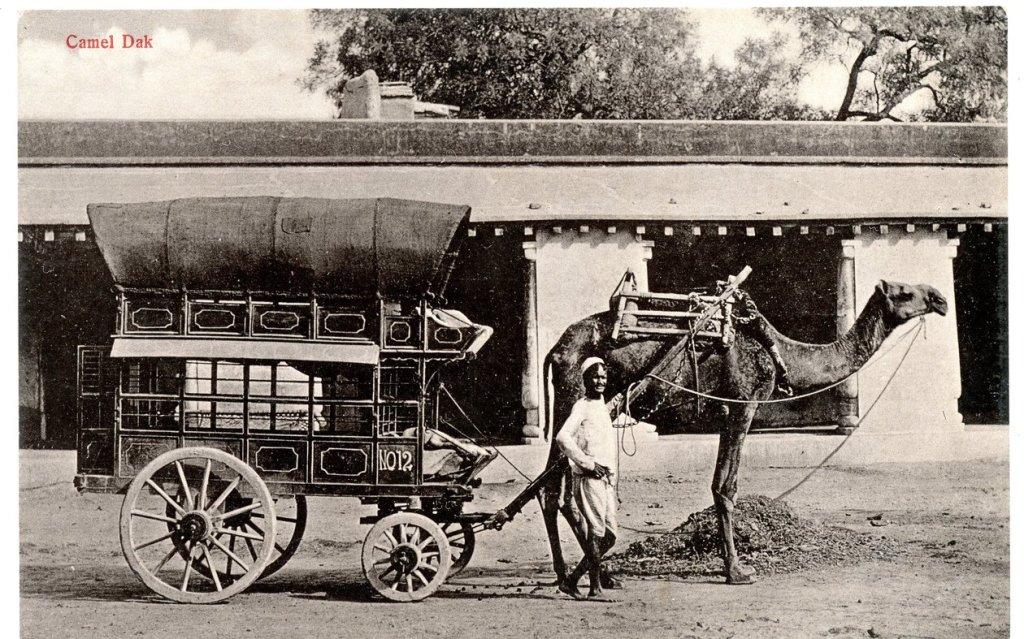
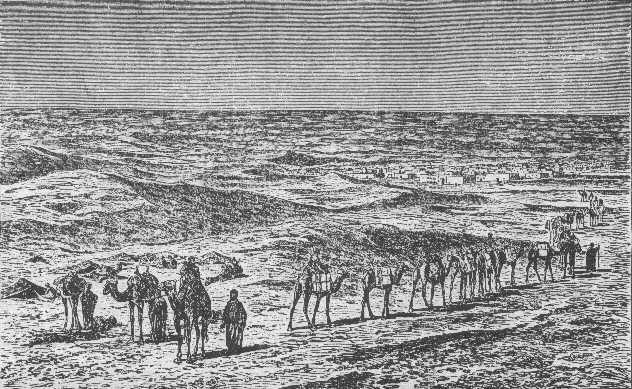
Utilising the same principle as the horse dak, with a relay of fresh horses ready at designated stops along the road, Frere believed it could be done using camels instead. He laid the plans before Colonel George Hutt, who, with his usual enthusiasm, set to work. Hutt, an artillery officer of some distinction who had been serving in Sindh since 1839, called together the chieftains of the Baluch and Brahoe tribes whom he considered his trusted friends to supply him with escorts for the 500 camels he contracted from Morad Khan, a respected Pathan camel dealer from Karachi. The dak was laid at intervals of 25 to 30 miles, with 20 fresh camels at every stage, which was later increased to 60. As each camel could carry a load of 32o pounds when packed, the first dispatches transported nearly 3 tonnes of material every three days. The camels would then return “at leisure, grazing as they went” to be fresh and ready when they returned to their stations. The first dak was such a success, covering 500 miles in 10 days. At one point, Frere used the camels to transport the 7th Dragoon Guards to Hyderabad, conveying detachments of 40 soldiers at a time. However, the government was not that convinced of utilising camels in such a way, so this method was only used once. They had no objections to the camel train and within a few months, Frere had a veritable fleet of 10’000 camels, taking supplies to the Punjab, from whence they were conveyed to Delhi.
“So honestly and well did the camel owners and drivers do their work, that though there was only their word for the performance of their contract, not the value of a bale lashing was ever lost. ‘On one occasion, a barrel of ammunition,’ writes Sir George Hutt, ‘ was missing, and for a long time could not be traced; at last, as the river fell, it was found in the mud. A Brahoe immediately started on a camel, and never stopped till he brought it to me at Kurrachee. He rushed into my tent at a very early hour; ‘ There is your barrel! ’ he exclaimed, and he almost threw it on my bed.”
It was achievements such as these, be it Tyrwhitt’s communication line, the river steamers or Hutt’s camel dak, that ensured the British could continue holding the Delhi Ridge. Without support from Sindh, the situation in the Punjab would have become insupportable, and the mutiny might well have had a very different outcome. However, Frere and his admirable men in Sindh rarely receive the just praise they deserve.
 Mutiny Reflections