Sindh Becomes Part of the Bombay Presidency
Shortly before the departure of Sir Charles Napier, the autonomous but annexed province of Sindh was attached to the Bombay Presidency for administrative, logistical, and geographical convenience, as it was the most practical staging point and supply line for governing the newly acquired territory. This was adding an insult over an insult; in one fell swoop, the people of Sindh were deprived of their national identity, and “Sindhis suddenly ceased to be Sindhis. They became subjects of an alien entity.” (Rtn. Gangaram Shamdas Purswani, “Bombay Presidency, Sindh and Sindhis”). A province that had always been either completely independent, semi-independent or an autonomous state paying tribute to either Indian rulers or Afghans, it had still managed to live according to its own traditions, and maintain not only its own culture but customs. Now, they were saddled onto Bombay, nullifying not only them as a people but the very essence that made them Sindhis in the first place. This uneasy attachment opened the doors to merchants and other groups from Bombay and other parts of India who were neither familiar with the conditions in Sindh nor had any interest in either the people or in developing Sindh in general. The distance between Karachi and Bombay was marred by poor communication links, and official decisions on even trifling matters could not be reached without enormous delays. For the British, Sindh would become a new and pleasurable hunting ground, and they used it as their own personal Shikargarh, wiling away the winter months in the pleasant climate, careless of the fact that the province they were thus abusing still paid 1/4th of their salaries.
While some expense was spent on Sindh in the coming decades, it was hardly that which was needed, nor as much as was spent on Bombay. The government, in later years, would do what was necessary, but as a province, Sindh remained in a state of stunted growth for the next 90 years. It would not be until 1936 that the province was finally detached from Bombay, but by then, it was too late to undo much of the damage that had been done.
Mr Robert Keith Pringle 1847-1850
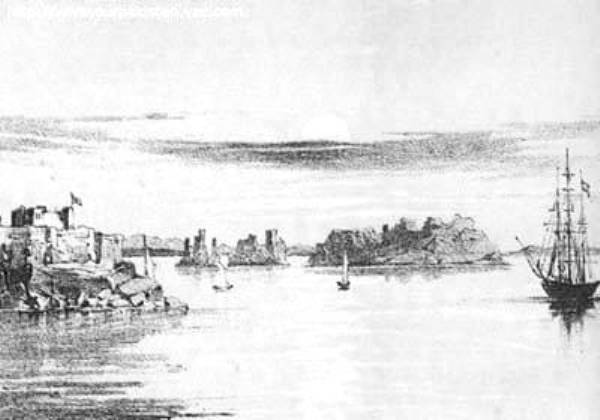
When Mr Robert Pringle arrived in Sindh in October 1847, the province had recently been declared a part of the Bombay Presidency, and ceased to exist as an autonomous state. While this was practical for the EICo, in terms of logistics and administration, it fell foul of the people who had once again been duped by this foreign entity. Napier might have annexed them, but the EICo now summarily robbed them of their very identity. The people of Sindh became a part of the great cogwheels of British Government and a presidency that shared neither history, language, nor culture with them.
Into this very sad state of affairs came Robert Keith Pringle, a Haileybury-trained Scotsman who served in the Bombay Presidency. Born in 1802, he arrived in India in 1820 and started work as an assistant collector in the Deccan districts. Although some might see Pringle as a reformer, having studied political economy under Thomas Robert Malthus and heavily influenced by Ricardian economics, he was very much a theoretical officer, a status much favoured by the EICo, rather than a practical one. He shone in land assessments, applying classical economic principles to land rent and village surveys, allowing him to try out experimental revenue policies in the Deccan.
“Pringle’s most significant contributions in the Deccan centred on revenue administration…he advocated for assessments based on differential soil rents rather than uniform lump-sum collections inherited from Maratha practices, aiming to align revenue demands with agricultural productivity and incentivise cultivation. Between 1829 and 1831, he directed early cadastral surveys in Deccan districts, classifying lands into categories by fertility to enable graduated assessments, which laid foundational elements of the ryotwari system in the region despite challenges from variable rainfall and soil data inaccuracies.”
While all of this certainly impressed his higher-ups in Bombay, and Pringle would eventually see himself elevated to chief secretary of the Bombay Government, his appointment to Sindh could very much be seen as a slap in the face of Charles Napier, who abhorred these old Indian politicals and Pringle was very much one of them. Unlike Napier, who was Sindh’s first Governor, answerable to practically no one, Pringle, now that Sindh was attached to Bombay, was the province’s first Chief Commissioner, subordinate to the Bombay Presidency. With the backing of the Bombay Government, Pringle and Bombay set about dismantling Napier’s military rule.
He then attempted to untangle Napier’s misdeeds and ineffective policies. Sir George Clerk, the Governor of Bombay, personally visited Sindh in the spring of 1848 to investigate the “machinery and methods of its government”, and his exhaustive report would serve to dismiss General William Napier’s self-serving book down to the last letter. Clerk found that during Napier’s governorship, there had been very little administration at all. The actual amount of revenue could not be ascertained, and the extravagant expenditure could not be explained; the collection of land revenue was completely in the hands of the Kardars, who were acting under their own power, quite against everything Napier had claimed. To make matters worse,
“Napier’s confidential Munshi (secretary) had remitted to Bombay, in the names of others, sums amounting to Rs 99,902, losses in the Commissariat Department by swindling Parsee contractors were estimated at 6 lakhs of rupees; there was no official list of Jagirdars, not had their titles and claims been settled, the machinery of civil justice was good, that of criminal justice bad, the canals had deteriorated and government forests were being recklessly destroyed. *
In essence, the British would have to start all over again.
Clerk recommended a complete overhaul of the civil and criminal justice system, establishing four different courts. These were the commissioners’, magistrates’, deputy magistrates’ and kardars’ courts. Ill-health prevented Clerk from travelling extensively through Sindh, and he limited himself to visiting Karachi and Hyderabad, but he managed to meet with local chiefs and acquainted himself minutely with the wants of the people. He was horrified to find that none of Napier’s soldier-civilians could speak Sindhi, much less write in it; he ordered that anyone seeking to serve in Sindh or indeed appointed to the province would have to pass an examination in the Sindhi language, for from now on, it would be the medium of all official business. He also found there were too many of these so-called soldier-civilians and hardly any work for them to do. They would be replaced, not by men of Napier’s ilk, but with solid servants of the Indian Civil Service.
“The accounts of the revenue and disbursement, maintained by the treasurer in Karachi, proved a complete puzzle to the Governor of Bombay; and when he inquired an explanation on certain items they were often at a loss to explain. He discovered that there was a balance in the audited expenditure to the extent of ten lakhs of rupees, but this he knew, was as nothing to the sums received by the Province in specie by bills, remittances, transfer of payments, and the like from Bengal as well as his own Presidency. The military expenditure in Sindh averaged over seventy lakhs of rupees annually on the books of the Bombay Presidency alone. The extra allowances granted to the troops serving in Sindh amounted to 3½ lakhs per annum. Clerk felt that this was a colossal waste and quite a substantial portion of these Sindh troops ought to be dissolved. The charges until the year 1847 averaged over Rs 15,00,000 annually; they then fell by half — a decease far greater than was warranted by the reduction of the garrison.” (“The Story of Sindh – An Economic Survey – 1843-1933).
Pringle, however, was not to last. He had made a valiant attempt to bring Sindh into the folds of not only the Bombay Presidency but also into British India, but it was a task too big for a man whose solid years of civil service experience had still not prepared him to handle a problem as large as Sindh. Disagreements on how to run the province finally reached a head, and in December 1850, barely three years into what should have been his final, monumental task, Pringle resigned. He had achieved very little, but it was a start. When he left, the revenue was finally showing improvements, and expenditure had decreased; the warring tribes on the frontier had settled down without a single shot fired, but as for general improvements to benefit the people themselves, little had come to fruition. Pringle returned to Bombay and would grace the political field as chief secretary to the government until his retirement in 1854, making hardly any waves in the process. Then, like a steady civil servant, he returned to England and set himself up with the purchase of a nice estate in Derbyshire, a true nabob of the old Indian office.
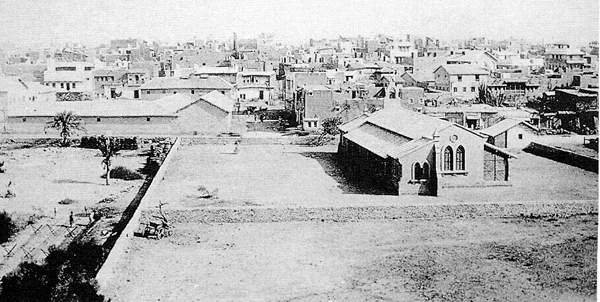
Until now, Sindh had had no champion, no one capable or interested enough to see the province and its people for their true worth. It would take a very exceptional civil servant to spark a revolution in this much beleaguered place on the EICo map, and that man was Bartle Frere. Between 1851 and 1859, great changes would now take place in Sindh, and the province would begin to rise out of the ashes of depredation.
Sources:
Aitken, E.H. Gazetteer of the Province of Sind. Karachi: Mercantile Steam Press, 1907.
Burton, Richard F. Sind Revisited. 1877
Eastwick, J.B. Dry Leaves from Young Egypt, being a Glance at Sindh before the Arrival of Sir Charles Napier. London: James Madder, 1843
Edwards, William. Sketches in Scind. London: Henry Graves, 1846
Goldsmid, F.J. James Outram, a Biography. Vol I. London: Smith, Elder & Co., 1880
Hughes, Albert William. A Gazetteer of the Province of Sindh. London: George Bell & Sons. 1876
Napier, W.F.P. The Conquest of Sindh, in Two Volumes. London. T. & W. Boone. 1845.
Napier, W.F.P. The History of General Sir Charles Napier’s Conquest of Scinde. London: Charles Westerton, 1857
Outram, James. The Conquest of Scinde: a Commentary. In Two Parts. London: William Blackwood & Sons, 1846
Postans, Thomas. Personal Observations on Sindh: the Manners and Customs of its Inhabitants and its Productive Capabilities. London: Longman, Brown, Green & Longman, 1843.
Links:
https://drpathan.com/wp-content/uploads/2025/04/The_Story_of_Sindh_An_Economic_Survey_RD_Choskey_.pdf
https://sindhishaan.com/gallery/karachi.html
 Mutiny Reflections