What Napier Tried To Do
Napier strove to correct what in his mind were the wrongs of the entire population, and tried, through a series of laws which must have appeared strange and unusual to the people of Sindh. Although he was not wrong in stating that killing wives was unlawful, his premise for doing so was the fact that women were being killed because the British had annexed Sindh. The men, fearful that their wives would be abused by the new soldiery, killed them to prevent their dishonour. However, Napier believed wife murder was common practice in Sindh, although he himself admits it had not become common until he showed up.
“People of Sind, the government has forbidden you to murder your wives, a crime commonly committed when the British conquered the country. This crime of woman-murder is forbidden by the religion of the English conquerors; who shall dare to oppose their law? Woe be to those who do. But this is not all, ye Sindians, Balochis and Muhammadans, murder is prohibited by your prophet. You, who murder your wives, outrage your religion as much as you outrage ours! This the government will not permit. Government therefore visited with punishment such murderers, and the crime began to disappear. Some foolish men among you believe that the English are easily deceived, and you have in a vast number of cases, hanged your wives, and then pretended these poor women committed suicide. Do you imagine that the government believe that these women committed suicide? Do you believe that the government can be deceived by such villainy that it will let women thus be murdered? If you do believe this, it becomes necessary to teach you how erroneous your judgement; if you persevere, your sufferings will be great.
You are therefore thus solemnly warned that in whatever village a woman is found murdered, a heavy fine shall be imposed on all and rigidly levied. The government will dismiss the Kardar. It will be ordered all her husband’s relations up to Karachi, and it will cause such danger and trouble to all, that you shall tremble if a woman is said to have committed suicide in your district, for it shall be an evil day for all in that place. You will know that what I say is just, for never is a woman known to have committed suicide in Sind till the law decreed that husbands should not murder their wives, and this year vast numbers of women have been found hanged; gross falsehoods have been put forth by their families that they committed suicide; but woe be to their husbands for the English government will not be insulted by such felons. The murderers shall be sent to labour far away over the waters, and heard of no more.”
However, he also saw that the problem was indeed the very soldiers he had let loose on the countryside, who were the cause of the panic. These regularly oppressed the local villagers by plundering their homes, taking advantage of their women and generally causing fear and mayhem; Napier, for his part, saw that this particular evil was of his doing, and he promptly passed another law. For any soldier caught causing offence and behaving in a villainous manner, the punishment for his misdeeds would be death. He further banned the same-said soldiery from killing peacocks, which, in many parts of Sindh, were revered as deities. Napier objected to “furious driving,” stating in the first part of his decree against it, “Gentlemen, as well as beggars, may, if they like, ride to the devil when they get on horseback, but neither gentlemen nor beggars have a right to send other people there, which will be the case if furious driving be allowed in the camp or bazar…The order is like physic, not agreeable but at times very necessary.”
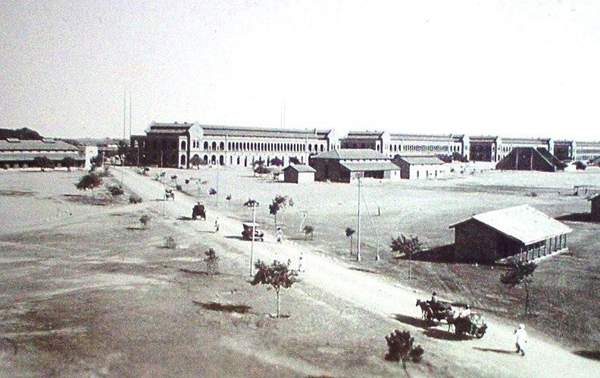
Napier had plans and ambition, but when he finally handed over the reins to Thomas Pringle in 1847, he had not constructed any new roads, the bridges over the rivers had not even been started, his troops were still living in temporary barracks, there were no dak bungalows nor a functioning postal system; in the district stations, there were neither courthouses, jails or police stations and the his soldier-civilians were conducting business from their own bungalows and some larger towns were even found to be lacking a market place. Napier had ruled Sindh through military might with little thought for the people and with even less regard for the very people who were paying his grand salary. These, the politicals and civil servants, the very people who knew the country and spoke its languages, he described as, “a set of old bitches whose God is mammon;” and the young civilians, like James Outram, “as very good fellows who smoke, hunt hogs race, drink beer and issue their orders in bad Hindustani to a subservient set of native clerks.”
It was not for a lack of plans; Napier had plenty. With the 15,000 troops he had at his disposal, Napier still felt he was beset by enemies from all sides and needed to defend his new province at all costs. He occupied himself with building forts and fortifications, accompanied by the occasional display of military might. He projected a bridge over the river Indus at Sukkur, “on the plan of the one thrown across the Rhine by Julius Caesar,” and built an arsenal at Bukkur. He wanted to surround Karachi with fortifications sufficient to overawe anyone mad enough to attack him, but fortunately, this particular grandiose scheme never saw the light of day.
A fort was constructed at Larkana, where the newly formed camel corps, “of which great things were expected,” made their home. He posted detachments of cavalry at Khairo Garhi, Rojan and Khangur, and an entire brigade at Shikarpur with the idea that this was more than enough to terrify the local plunderers into submission. These found the whole proceeding amusing and managed to ravage the entire countryside, eluding every single one of Napier’s troops to the point that “no honest man’s life was safe.” Napier wanted to be known as a peaceable ruler, but there is little to say that his rule was a peaceful one. As a result of the depredations of the plundering bands, he would have to wage two expeditions.
The first campaign was launched in January 1845, when Napier crossed the frontier with generals Hunter and Simpson in tow, and a force of 6000 men, in order to punish the robber bands in their own strongholds. Mir Ali Murad, the deceitful turncoat, provided 4000 Baluchis. The Bugtis of the hills escaped Napier, but the Jakhranis and the Dombkis surrendered, with their redoubtable chief, Birjar Khan. Khan was given over to Ali Murad as a prisoner and remained as such until his death. “Following the policy of Nebuchadnezzar”, Napier then forcibly removed the two tribes from their homelands and resettled them in Janadera on the Upper Sindh Frontier District, where he hoped they would “reform and become peaceful husbandmen.” However, he had completely forgotten the Bugtis, who, seeing that Kacchi Plains from whence the tribes had been banished, were now open for the taking, resumed their work of plunder to such a degree that they were practically unstoppable. Audaciously, they came down in force from the hills, 15,000 strong, to within 15 miles of Shikarpur — “laughing at the terrified garrisons of the frontier forts and carried off 15,000 heads of cattle.” The Bengal cavalry regiment that was sent off in pursuit was too frightened to engage them.
Napier would not come up with a plan to end this lawlessness until January 1847, when he sent Captain John Jacob and the Sindh Irregular Horse from Hyderabad to the frontier. Jacob made his headquarters at Khangur, ” a dirty little hamlet of half a dozen huts and 24 souls” (a far cry from the bustling city of Jacobabad that it would become), and then set about reversing everything Napier had done. Jacob set down his own principles
– to always act on the offensive
– to treat robbery and murder as equally criminal, whether the victim was British or not
– to consider blood feud and aggravating circumstance as proving deliberate malice.
While Napier had played off one tribe against the other, offering a reward of Rs 5 for every Bugti head brought in, Jacob, on receiving two heads, treated the bringer with 24 lashes instead. He ordered the abandonment of all forts and broke up the Sindh Horse into smaller parties; this force, trained, equipped and raised by him, would now patrol the frontier, with orders to instantly attack marauders regardless of numbers. This succeeded insofar as the Bugtis, seeing there was indeed a new lawman in town, decided to attack in force. They intercepted Captain Merewether and 130 men of the Sindh Horse, who not only stood their ground, but cut 600 Bugtis to pieces, allowing only two to spread the word, and took 100 prisoners. The surviving leaders came to Merewether and offered their surrender, thus ending the careers of the plundering Bugtis for good. By 1906, their chieftain, Shahbaz Khan, was a nawab and a KCIE; he would be presented to the Prince and Princess of Wales during their stop off in Karachi and the Princess, so impressed by the man, wanted to have his photograph.
As for Napier’s reformed settlers, the Dombkis and the Jakhranis, these were found by Captain Jacob to be taking part in regular raids along the frontier. The district officers had never suspected them, and Napier thought he had crippled the tribes by taking away their horses. Jacob took things in hand. He disarmed the entire population and cut roads through the dense jungles on the right bank of the Indus, which they had been using as hideouts. It was enough to put the raiders out of commission, so much so that in 1851, it was noted that that, “Single, unarmed travellers seemed now as safe as elsewhere in Sind and the general sense of perfect security was shown by the improved state of the villages and the fact that the people now trust themselves, their cattle and grain yards, day and night, out in the open fields.” But that was hardly Napier’s doing.
Nature herself seemed to be at odds with Charles Napier. In December 1843, a malarial fever broke out that prostrated two-thirds of his troops; a cholera outbreak in Karachi in June 1846 carried off 7000 people in a week, including his nephew John and his child; locusts destroyed a vast area of the season’s harvest, and a flood almost took the rest.
When Napier finally left Karachi (his new capital of Sindh) in October 1847, a salute was fired from the farthest point from the unfinished works he had started; loud enough to be heard but not impressive enough to awe anyone into believing a great man had left. Upon his death in 1853, an obelisk was erected at the same spot from whence the salute had been fired, but it was built in such a mean fashion to be an “application in the art of damning with faint praise.” The authorities also placed a memorial window to Napier in Trinity Church, Karachi, but in 1902, a cyclone (another one of Mother Nature’s gifts) blew it to pieces, and it was never replaced.
 Mutiny Reflections