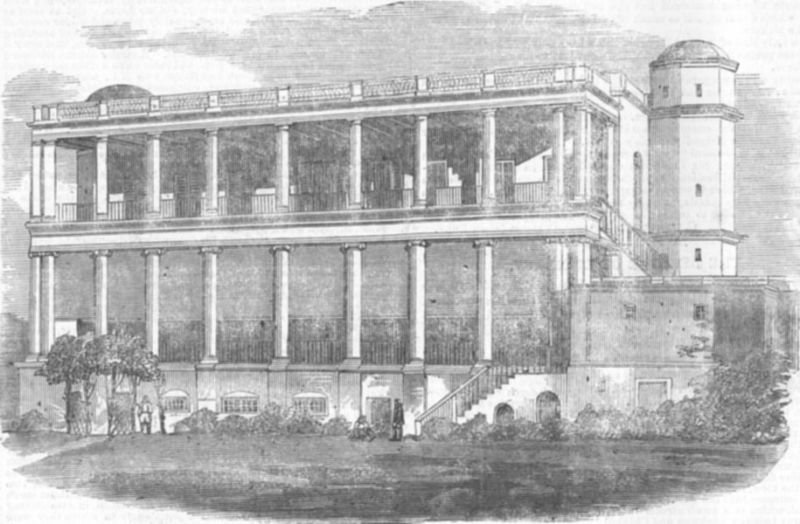
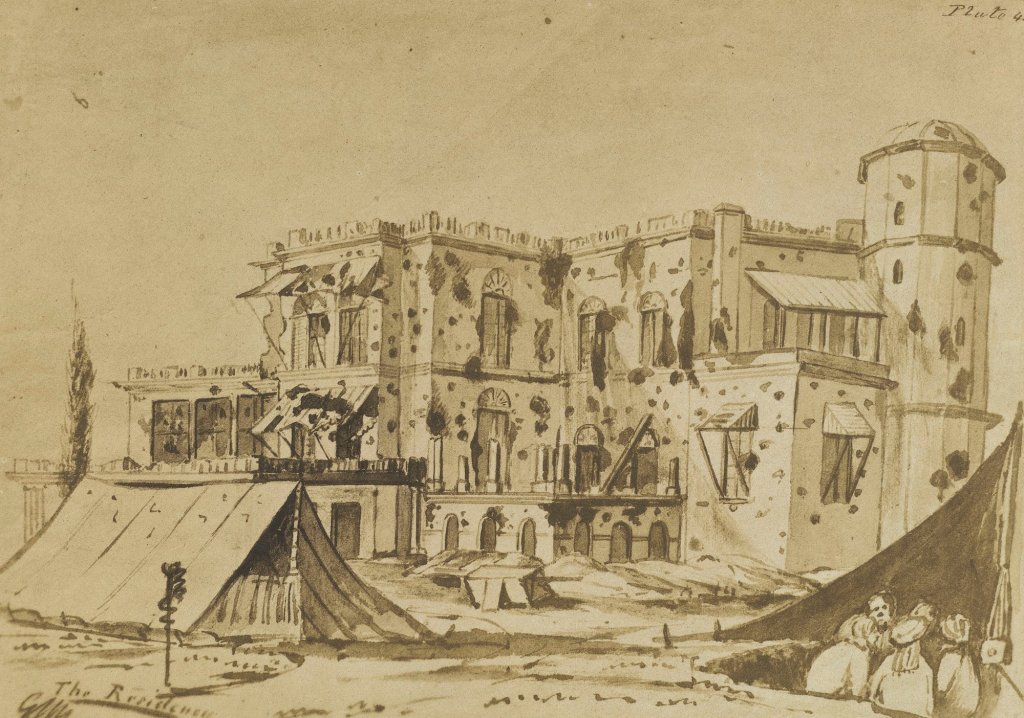
It is difficult to imagine that this had once been “an imposing edifice, along the west front of which extended a wide and lofty collonaded verandah. The main entrance was on the east side, under a handsome portico.” This beautiful brick building, besides having a ground floor, two upper stories, the tyekhanna had “splendid apartments, as lofty and as well arranged as any in the house. Skylights gave excellent light to them…There were little turrets leading up to a fine terrace whence a view of the whole city could be obtained…” On top of the building, a semaphore had been built and a flagstaff. A lookout was posted on the roof throughout the siege. The gardens surrounding the building were carefully planned and abounded with flowers and trees, but fairly soon, the railings around the flowerbeds were used as firewood, the flowers trampled, the trees destroyed and everywhere lay piles of shot and shell. To protect the front of the building, large stacks of firewood had been stored and arranged into a semi-circle. This formed an embankment, about 6 feet high, with embrasures cut through it for four 9-pounders. Dirt had been thrown on the rampart, giving the illusion it was made of solid earth.
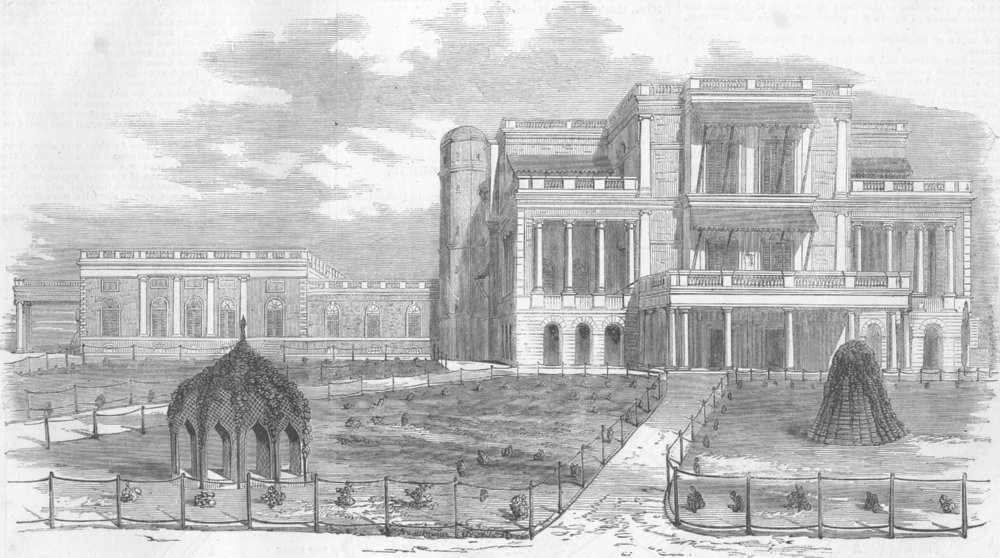
The large windows proved impossible to barricade, and the roof, with its open balustrade, was all but defensible. Sir Henry Lawrence was mortally wounded in a room on the second floor on the 2nd of July, and shortly after, the women and children who had found shelter in the upper storeys moved to the ground floor, but they did not stay long. Some were lucky, they had friends with room to spare in other houses, or influential husbands who secured them quarters in the Brigade Mess – the rest of them fled to the tykhannas.
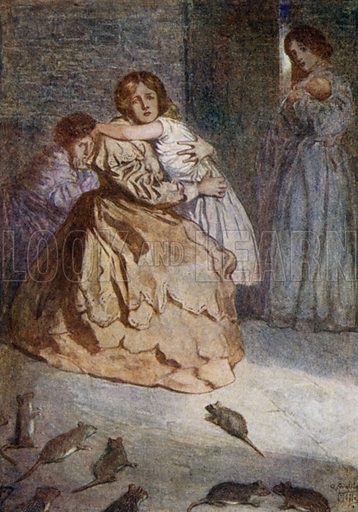
Undoubtedly, the tykhannas were the buildings’ best feature. These had been built to afford the Resident some respite from the gruelling heat of a Lucknow summer, but without any punkahs in place, and lacking any “conveniences”, these rooms turned from an abode of luxury to rather terrible places. The women of the 32nd, their children and many of the families of the Uncovenanted services found shelter in these dark and damp chambers, and when cholera and smallpox made their unwanted appearances, the living conditions down there must have been grim indeed.
On the 24th of August, yet another part of the building fell in, this time, the verandas on the west side, their entire length came down, burying another seven men. The arches of the lower storey were found to be cracked and could no longer withstand a heavy cannonade– it was estimated that nearly one-half of the building had fallen in due to round shot, and the rest was now in imminent danger of following suit. Eventually, the engineers declared the building unsafe, although men of the HM’s 32nd continued to use the lower areas as their quarters.
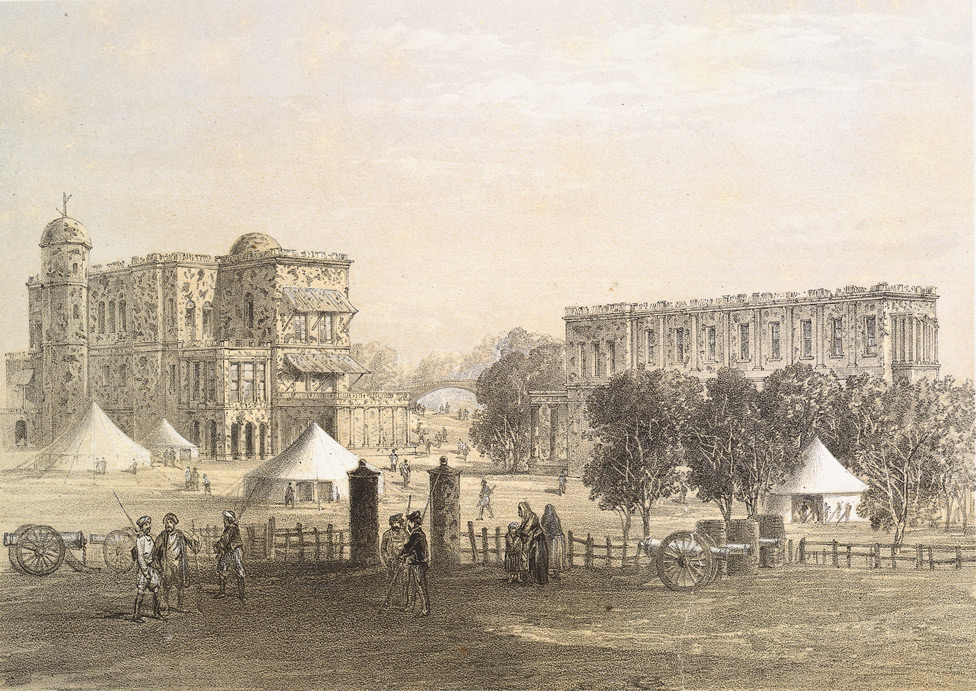
“The moment a man left the entrance pillars he became visible, and from thence, until he reached the gateway, he led the life of a rabbit. But even then, his troubles were not over. A road had still to be traversed, across which the fire was hotter than ever. The enemy could see their victim the whole way, and it was not uncommon for a portly individual, ‘fat and scant of breath,’ to pause for shelter at the gateway to recover wind, preparatory to making his final dart across the road. While so occupied, the enemy ceased firing; but the instant he made his bolt, he was received with a storm of bullets. This game must doubtless have been the source of much amusement and excitement to our rascally foes, but to a man whose duty, in the early days, called him frequently to the Residency, it was the reverse of pleasant, although undeniably exciting.”
 Mutiny Reflections