Samuel Morley, Private – 2nd Battalion, Military Train
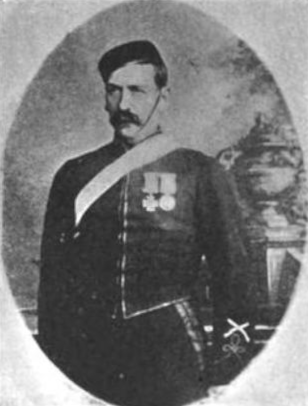
Samuel Morley, Private 201, 2nd Battalion Military Train. On the evacuation of Azimghur by Kooer Singh’s Army on the 15th April 1858, a squadron of the Military Train and half of troop of Horse Artillery were sent in pursuit. Upon overtaking them and coming into action with their rear guard, a squadron of the 3rd Sikh Cavalry (also detached in pursuit) and a troop of the Military Train were ordered to charge, when Lieutenant Hamilton, who commanded the Sikhs, was unhorsed and immediately surrounded by the enemy who commenced cutting him and hacking him whilst on the ground. Private Samuel Morley, seeing the predicament that Lieutenant Hamilton was in, although his own horse had been shot from under him, immediately, and most gallantly, rushed up on foot to his assistance and in conjunction with Farrier Murphy, who has already received the Victoria Cross for the same thing, cut down one of the Sepoys and fought over Lieutenant Hamilton’s body until further assistance came up and thereby was the means of saving Lieutenant Hamilton from being killed on the spot’. ( No. 22411. The London Gazette, 7 August 1860. p. 2934)
The son of Francis Morley, coal higgler (a higgler would sell coal to householders, usually by horse & cart) and his wife Mary (née Barratt), Samuel Morley was born in 1829 in Radcliffe-on-Trent in Nottinghamshire. His life mirrored that of his compatriot, Michael Murphy, to a certain extent — with few prospects and the gruelling life of a farm labourer stretched out before him, at the age of 25, he enlisted in the 8th Hussars in January 1855. Unlike Michael, however, Ensign Samuel Morley was swiftly shipped off to Crimea, arriving just after the fall of Sevastopol as a ” Battle Casualty Replacement.” With all of that over, he returned to England, and in the same batch of volunteers, in October 1856, he joined the Military Train and was placed in the 2nd Battalion.
Until Azamgarh, Private Samuel Morley, just like Farrier Michael Murphy, served as a light cavalryman, fighting through Lucknow and other scrapes. Like Murphy, he helped save Lieutenant Hamilton and received two wounds for his pains — a slash across the scalp and another over his elbow. His long recovery barred him from further service with the Military Train in India. When he returned to England in October 1859 with the regiment, he was more than a little aggrieved to find out that Farrier Michael Murphy had been awarded a Victoria Cross. Upon reading the citation, Morley realised Murphy’s citation was for exactly the same action that had earned him his wounds and being a man who obviously was quite keen to have this particular slight corrected, Morley complained at the next opportunity.
Brigadier Lord George Paget, C.B., during his half-yearly inspection of the regiment at Aldershot in May 1860, received Morley’s claim for the VC directly from the man himself. Morley explained his case, and Paget, remarkably, agreed that Morley had indeed come up short.
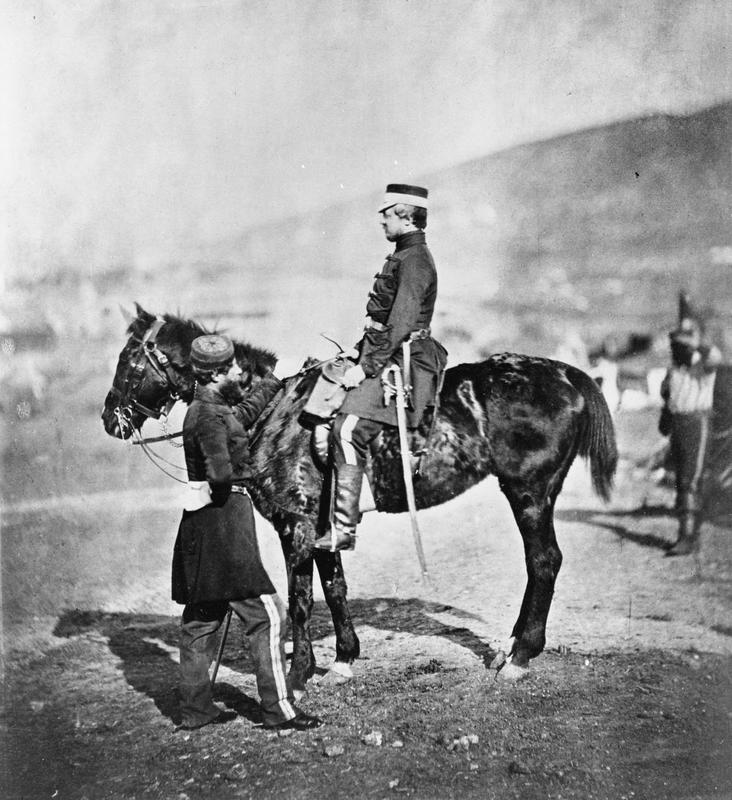
Paget certainly pulled through for Morley. Promising to take up his case at the highest level, he ordered a board of inquiry set up comprising three generals who, after deliberating the case and presumably speaking to other parties, came to the conclusion that Morley did indeed have a valid claim. They sent a letter to the Under-Secretary of State of War, who, acting with some alacrity, presented the case to Queen Victoria. She not only approved the recommendation but also presented Samuel Morley with his medal on 9 November 1860 at Windsor, Home Park.
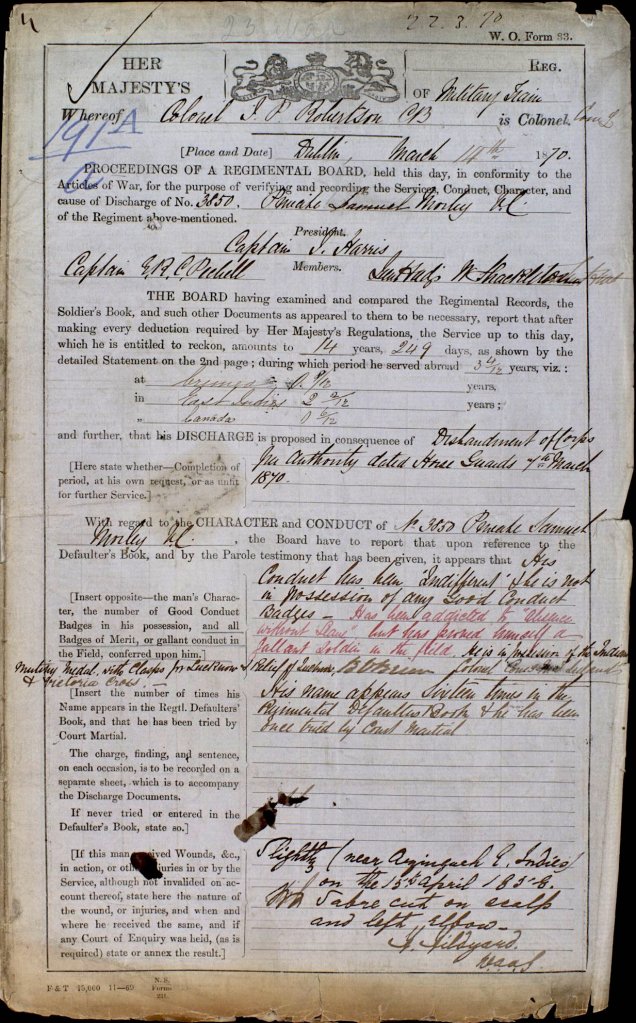
Between July and September 1861, Morley was on “police duty” for the Military Train and then served briefly in Montreal as the private servant of the colonel commanding the regiment; by June 1862, he was back at Aldershot and less than five months later had transferred to the 16th Lancers. Receiving his “discharge by purchase” in 1864, Morley now tried his hand at civilian life. Apparently, he did not like it much, for four months later, he re-enlisted in the 1st Battalion, Military Train at Woolwich. After transferring to the 6th Battalion, then at Curragh, Ireland, something seems to have happened to Samuel Morley. Until now, his career had not been anything out of the ordinary, barring the fact that he was a VC recipient, and this alone should have been enough to keep a man on the straight and narrow. But not so our Private Morley. Unlike Murphy, who seemed keen to actually pursue an honourable career, Samuel was (as his discharge papers would later note) “addicted to being absent without leave,” and by the time he was finally finished with the army, he would have appeared in the defaulters’ book no less than 16 times, had two court martials to his name, and had served two terms in prison. However, none of the charges were severe enough to part him from the VC, and when he finally left the army for the last time in 1870 upon the disbandment of the Military Train, his medal was still firmly pinned to his chest.
Fortunately, Samuel Morley finally settled down. Upon his discharge, he returned home to Radcliffe-on-Trent and found employment in the gasworks. In 1875, he married Mary (née Thornton) and died on 16 June 1888 at his home on Garnett Street, Nottingham. The townspeople were rather proud of his VC, and they paid for, by subscription, to have his grave in the General Cemetery adorned with a fine headstone with a suitably long inscription. As it is known that Samuel Morley was baptised on 4 June 1829, it is unclear why his headstone has him dying at the age of 56, a full three years younger than his actual age of 59.
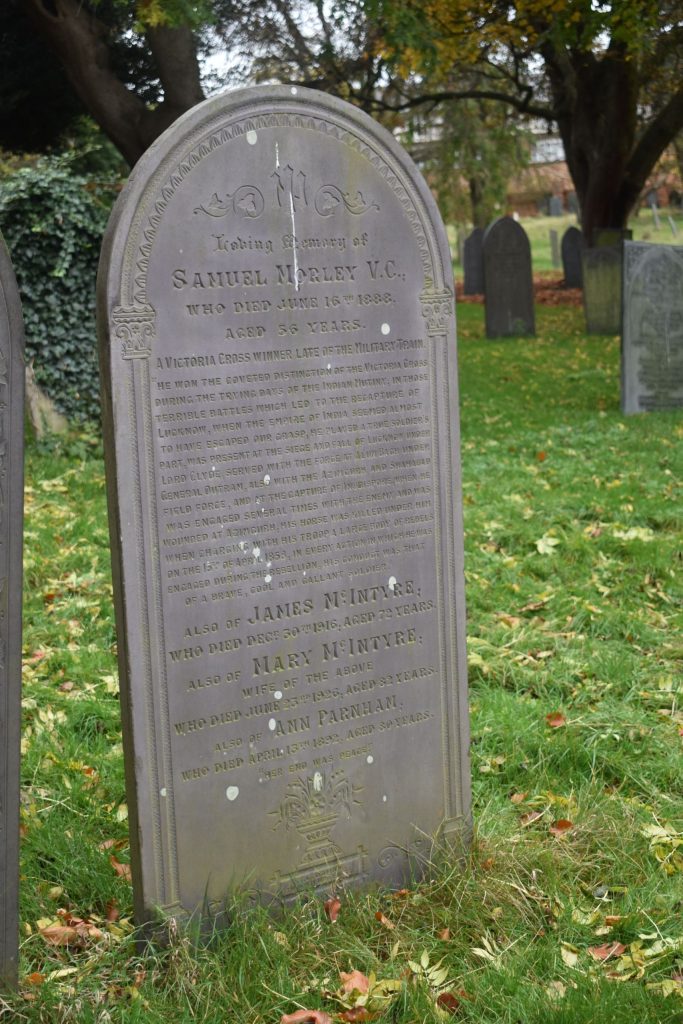
Loving Memory of
Samuel Morley, VC.
Who Died June 16th 1888
Aged 56 Years
A Victoria Cross winner late of the Military Train.
He won the coveted distinction of the Victoria Cross during the trying days of the Indian Mutiny; in those terrible battles which led to the recapture of Lucknow, when the empire of India seemed almost to have escaped our grasp, he play a true soldier’s part, was present at the siege and capture of Lucknow under Lord Clyde, served with the force at Alum Bagh under General Outram, also with the Azimgurh and Shahabad Field Force, and at the capture of Injdispore when was engaged several times with the enemy and was wounded at Azimgurh, his horse was killed under him when charging with this troop a large body of rebels on the 15ht o April 1858, in every action which he was engaged in during the rebellion, his conduct was that of a brave, cool and gallant soldier.
Like Murphy’s, Morley’s medals were presumed lost for many years but did eventually reappear. They are now held at the Royal Logistic Corps Museum, Worthy Down, Winchester.
Sources: Samuel Morley
https://www.nottinghamshire.gov.uk/culture-leisure/heritage/remembering-ww1/the-victoria-cross/201-samuel-morley-vc
https://vcgca.org/our-people/profile/1135/Samuel-MORLEY
radcliffe-on-trent-local-history-society.co.uk/samuel-morley
Izzard, Brian. Glory and Dishonour: Victoria Cross Heroes Whose Lives Ended in Tragedy or Disgrace. Stroud: Amberley Publishing, 2018.
 Mutiny Reflections