The Rifle Brigade (The Prince Consort’s Own)
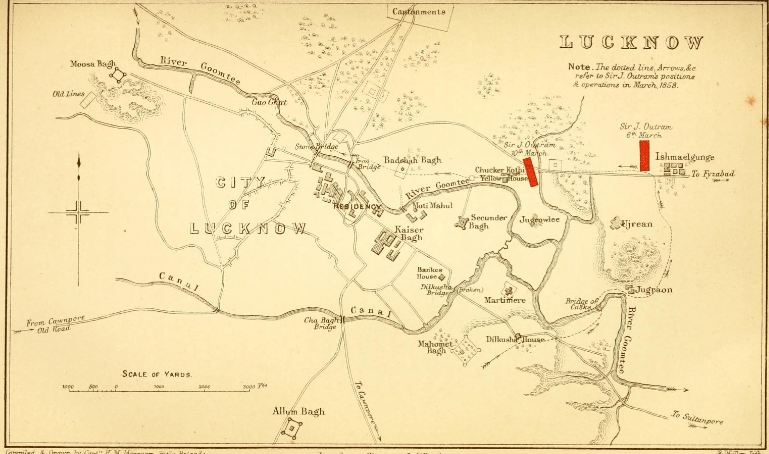
“For conspicuous gallantry at Lucknow on the 11th March, 1858. Captain Wilmot’s Company was engaged with a large body of the enemy near the Iron Bridge. That officer found himself at the end of a street with only four of his men, opposed to a considerable body. One of the four was shot through both legs and became utterly helpless: the two men lifted him up, and although Private Hawkes was severely wounded, he carried him for a considerable distance, exposed to the fire of the enemy, Captain Wilmot firing with the men’s rifles and covering the retreat of the party.” (Despatch of Brigadier-General Walpole, C.B., dated 20th of March, 1858. The London Gazette of 24 December 1858, No. 22212, p. 5515)
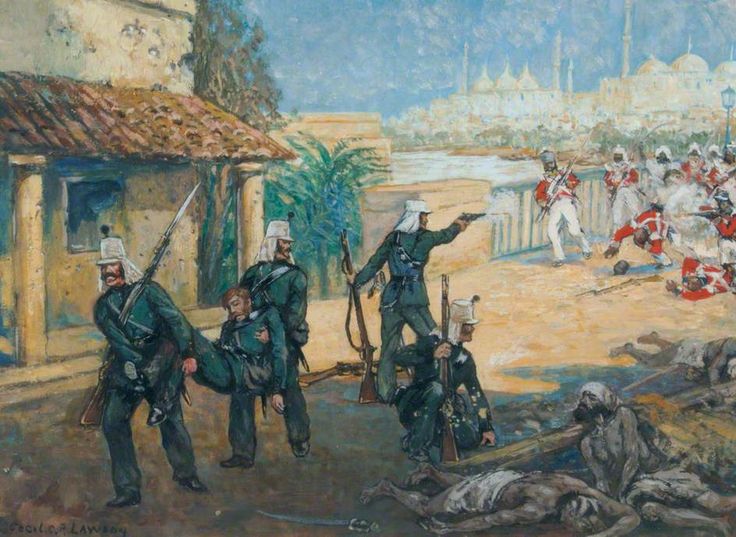
On the 11th of March, the work of the Rifle Brigade was as complicated as harassing. One of the difficulties of Lucknow was its layout, being a maze of gardens, orchards, narrow streets and closely packed houses.
“They skirmished through these as well as they could, each captain acting in a measure independently, and handling his company as he thought best. The streets were so intricate and the continuity of the Battalions so broken that no other system was possible. The Riflemen worked their way through these obstructions and reached the mosque on the Old Cantonment road, which commands the approach to the Iron bridge. This bridge, they were ordered not to cross. But, leaving the mosque in charge of other troops, they proceeded to fight their way to the Iron and Stone bridges. At one place, the skirmishers came to a high wall, and dividing, passed some to the right and some to the left. And coming to the other side, they found themselves in a perfect labyrinth of streets, lanes and gardens. The enemy retreated before them, hiding among the buildings and enclosures, and was driven across the bridges. Major Bourchier’s company of the 3rd Battalion succeeded in getting a commanding position and killed some fifty of the enemy. The camp of the rebel 5th Irregular Horse was surprised, and two guns and the standard of that regiment were captured by the Riflemen. As the 3rd Battalion were passing through the narrow street of a village which had been set on fire, they were blocked by one of the captured guns in their front sticking fast or being overturned, and had some difficulty in escaping the flames.”
The objectives were the suburbs in the vicinity of the two bridges – the Stone Bridge and the Iron Bridge and shortly after daylight, the force under Sir James Outram, split into two columns, began working their way towards the latter. After some stern fighting, the 23rd had made it up to the Iron Bridge and, as things go, the insurgents, at this point, were not having any of it and decided to push back. Captain Wilmot, who was leading his men in a mad dash towards the bridge, managed to get to the far end of the street leading to it before realising he was only accompanied by four men, hardly enough for the fight that was heading their way. The only sensible thing to do was retreat. Beside him, one of his men (Private George Bowles) was shot through both legs; Private Hawkes, wounded himself, and Corporal Nash lifted up the man and carried him through a hail of bullets back across the bridge, while Wilmot, in the meantime, stood his ground and then, with measured paces, continued to cover their retreat with his revolver and the men’s rifles. For their act of gallantry, all three men were awarded the Victoria Cross.
Private David Hawkes
Of the three recipients, very little is known of David Hawkes. Born in 1822, in Witham, Essex, he was the son of William Hawkes, a labourer and his wife, Sarah (née Joice). At some point in his young life, David enlisted in the 23rd Regiment. What might have been the story of David Hawkes was sadly cut short on the 14th of August 1858 in Faizabad, when he was killed in action. His body was never recovered from the field, and his final resting place is thus lost.
Of the three, he never knew he had been gazetted for the Victoria Cross, which was not announced until the 24th of December. To quote victoriacross.org.uk:
“Many of the Victoria Crosses awarded during the Indian Mutiny were conferred under the second proviso of the Seventh Clause of the 1856 Warrant which gave GOC India the power to confer the VC, subject to confirmation by Queen Victoria. In five cases where GOC India had conferred the VC, and was awaiting confirmation from the Queen, all had died before the VC could be given to the recipient. And all had died before the publication of the award in the London Gazette. David Hawkes was one of these recipients, having died on 14th August 1858, and his award of the VC being announced in the London Gazette of 24 December 1858.”
The question now was what to do with his medal – in this case, it was sent to his father, William, through the post and was received on 10 February 1859.
Corporal William Nash
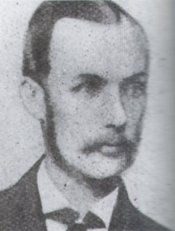
Born in 1824 in Newcastle, Co. Limerick, Ireland, in most likely humble circumstances, in 1838, at just age 14, William Nash enlisted at Portsmouth in the Rifle Brigade. A year later, he was a bugler and by 1841, a private. Things were on the up for Nash, for by 1845, he had made corporal and three years later sergeant. By 1855, he was Colour Sergeant William Nash, but things seemed to have gone a bit wrong on 9 November 1857, for he was reduced to the rank of private. However, 1858 started on a better note – on 22 January, he was once again a corporal.
Nash did not leave an account of himself regarding the Victoria Cross, and his career continued to be something of a mixed bag. On 1 April 1858, he was once again serving as a sergeant but on 13 September 1860, he was dramatically reduced to private and began to work his way upwards again – corporal in February 1863 and sergeant again by June; yet one month later, he was once again a private – a year later, on 24 March 1864, he was discharged from the army as unfit for further service. In all, he had served 26 years in the Rifle Brigade – in Bermuda, a full nine years in North America, and five in India. He died on 6 April 1875 in London and lies buried in an unmarked grave at St John’s Church in Hackney. His VC had been presented to him in 1859 in India, but the location of his medal is unknown.
Captain Henry Wilmot
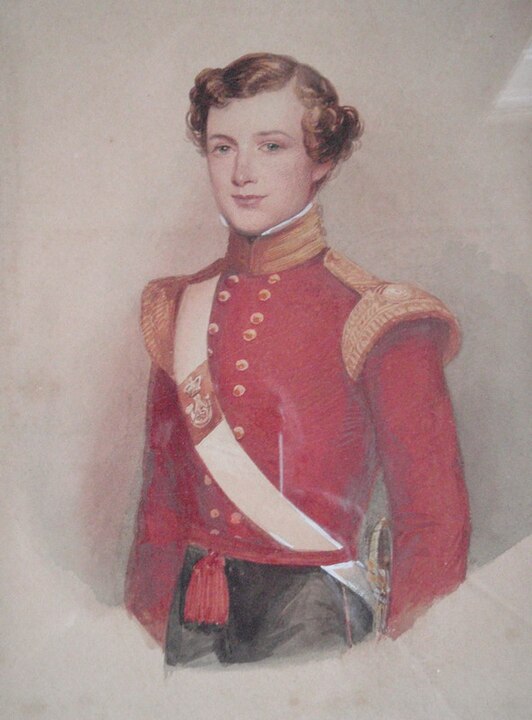
Born in 1831 at Chaddesden Hall, near Derby, the life of Henry Wilmot could not have been more different to that of Nash and Hawkes. His father was Sir Henry Sacheverell Wilmot (4th Baronet), a naval officer who had seen service in North America, the East Indies and South America until he was invalided out in 1826 and would remain on half-pay. The same year he married Elizabeth, the daughter of Edward Miller Mundy of Shipley Hall, Derby. The baronet would eventually be a magistrate for the counties of Derby and Nottingham, a position he held until his death in 1872.
At the age of 12, he was sent to Rugby School; yet it appeared the army was an appealing career for a young, well-educated man of means. In 1849, he was commissioned by purchase as an ensign to the HM’s 43rd Regiment of Foot.
43d Foot, Ensign Charles Carew de Morel to be Lieutenant, by purchase, vice Denniss, who
retires. Dated 29th May 1849.
Henry Wilmot, Gent, to be Ensign, by purchase, vice de Morel. Dated 29th May 1849. (The London Gazette, 29 May 1849, 20982, p. 1763)
Since it seems that there was money to be had, he purchased his next step, to lieutenant in 1851, and upon another vacancy opening up, he purchased his step to captain, as announced in the Gazette, on 1st May, 1855. This was quite short-lived as he transferred to the Rifle Brigade on 10 August 1855 with the same rank. While all of this was going on, Henry Wilmot was serving in the Crimea, where he remained between 1854 and 1856.
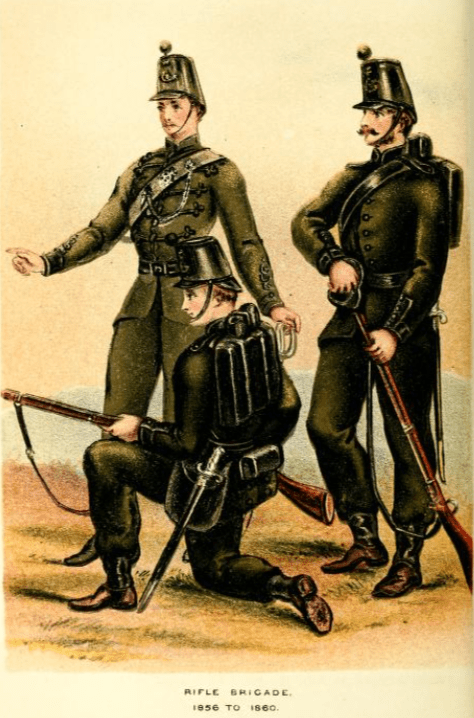
In 1857, with India in the grips of mutiny, the 2nd and 3rd Battalions were ordered to set sail. Although the three divisions of the 2nd Battalion set sail in August, the first ship would not arrive until November. Within the first week, the Rifles had begun leaving Calcutta, on their way to Allahabad. Then things became a little more complicated.
“Here, the detachment under Lieutenant-Colonel Fyers, which had sailed in the ‘ United Kingdom,’ joined them; and the whole started by rail at 8.30 on the 23rd and arrived at Lohunga at 12.30. Here they again divided; Colonel Woodford’s detachment proceeding by bullock-carts and Colonel Fyers’ by route march. Woodford’s detachment started about five, and after delays by breakdown of waggons and restive oxen, arrived at Futtehpore at 4.45 on the 24th. Starting again at eight, they met a Sikh on the 25th bearing a message from General Windham urging them to push on, as they would be wanted. Making all speed, therefore, they reached Cawnpore at 6.45 p.m. and took up their quarters in the Theatre for the night, being warned to go to camp at four a.m. on the following morning.
On that morning (the 26th), they paraded at 2.30, and shortly afterwards marched to General Windham’s camp, which was formed near the bridge, on the road from Cawnpore to Calpee, over the Ganges canal.
They reached it about seven, and, no breakfast being provided, they received a dry biscuit and a ration of rum. Hence, they moved out to attack the Gwalior contingent, which was posted in great force on the Pandoo Nuddee river. They advanced, the three companies of Riflemen in front. On approaching the enemy’s position, the mutineers at once opened fire at about 9.30. ‘The battle on the part of the British began with the companies of the Rifle Brigade. These admirable troops at once advanced in skirmishing order on the right of the road. The country was a good deal encumbered with high-standing corn, topes of trees, walls &c. Some of the Riflemen got into ruined houses, and having got the range, picked off the enemy’s gunners. The Gwalior contingent, however, held their position — a strong one, on the right bank of the Pandoo Nuddee — for some time. But at last the men advanced with a rush, and crossing the almost dry bed of the river, drove them back. The Riflemen pursued them for some miles. One man only (Wolfe) was killed in this day’s fight: he was shot through the head. At a little before twelve, the fight was over, and the Riflemen returned towards their camp. After they had retired some distance, the mutineers pursued, and they were halted and deployed. During this halt, a ration of rum was served out to the men. Resuming their march, the Riflemen returned to Cawnpore and pitched their camp near the city across the Calpee road and close to some brick-kilns. They arrived at this camp about four p.m.“
The Gwalior Contingent finally did attack Cawnpore and made a fool of Brigadier Windham on the 28th of November, and he would write in despatches:
“On the left advance, Colonel Walpole, with the Rifles, supported by Captain Greene’s battery and part of the 82nd Regiment, achieved a complete victory and captured two eighteen-pounder guns. The glory of this well-contested fight belongs entirely to the above-mentioned companies and artillery. It was owing to the gallantry of the men and officers, under the able leading of Colonel Walpole and of my lamented relative Lieutenant-Colonel Woodford, of the Rifle Brigade (who I deeply regret to say was killed), and of Lieutenant-Colonel Watson, 82nd, and of Captain Greene, R.A., that this hard-contested fight was won and brought to so profitable an end. I had nothing to do with it beyond sending them supports, and at the end of bringing some up myself. I repeat that the credit is entirely due to the abovementioned officers and men.”
What the Rifles did after the Battle for Cawnpore under Sir Colin Campbell in the meantime is a story in itself – but there was plenty of work for the Rifle Brigade around Cawnpore for the next months, right up to the time Campbell decided to take Lucknow.
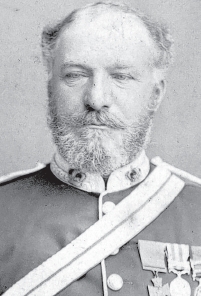
As for Captain Wilmot, he would see the mutiny from a different perspective as well, as Deputy Judge Advocate General to the Oudh Field Force – he managed to get through India unscathed, receiving his VC at a ceremony in India in 1859. In 1860, would set foot in China as Judge Advocate General to the Forces for the 2nd China War, after which he returned to England and in 1862, he retired from the regular army but was hardly done with soldiering. His father died in 1872, and Wilmot, now the 5th Baronet, having inherited the title of 5th Baronet Wilmot, of Chaddesden, co. Derby, in lieu of an elder brother who died in 1861, he continued on with the Derbyshire Rifle Volunteers in what is a long list of promotions and two prestigious awards – CB (1881) and KCB (1897).
1861 Captain 15th Derbys Rifle Volunteer Corps;
1869-85 MP for South Derbyshire;
1881 Lieutenant Colonel, 1st Derbys Rifle Volunteer Corps;
On 14 December 1881, he resigned as Colonel Commandant
On 11 July 1888, he was appointed honorary Colonel of the 1st Volunteer Battalion Sherwood Foresters (Derbyshire Regt).
On 9 June 1895, he resigned as Brigadier Commander and took up service as Alderman and Chairman of the county Council; his final army rank was colonel. He had found time to marry in 1862, Charlotte Cecilia Pare (daughter of Reverend Frederick Harry Pare and Geraldine FitzGerald-de Ros). The marriage was childless, and Lady Charlotte died in 1891, at just 58. Her obituary appeared in the Derbyshire Times and Chichester Herald on 9 May 1891 – her life had been as busy as her husband’s would continue to be:
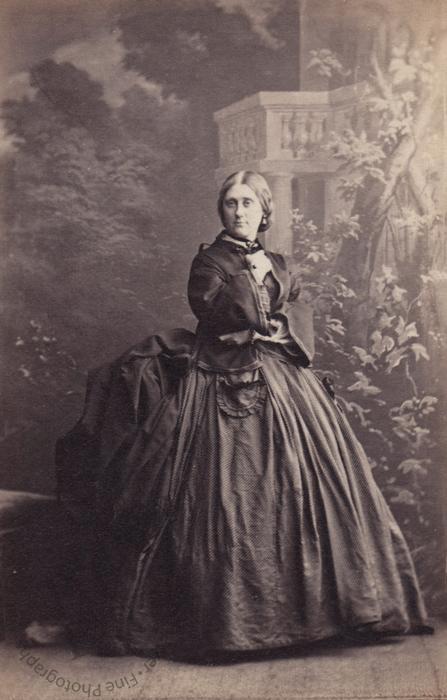
‘In Derbyshire, Lady Wilmot’s death will occasion the sincerest sorrow. She was in the truest sense the helpmeet of her husband, and entered fully with him into all the social, military, and political movements of the county in which he was interested as a member of Parliament, and a leading magistrate. Very early in the history of the Primrose League, she took up the movement in Derbyshire, and the energetic support she gave to it was rewarded by a large measure of success, the “Wilmot” habitation having led the way to the formation of many others in the county. In Chaddesden, she will long be remembered as the kind friend of the villagers and the warm-hearted supporter of the Church and schools. The intelligence of her death in Derbyshire has been received with the sincerest expressions of sympathy with her husband and relatives in their bereavement, and that sentiment will be re-echoed by all who knew her.’
On the 7th of April, 1901, Colonel Sir Henry Wilmot died at the Hotel Metropole in Bournemouth of pneumonia.
Some, too, who, gentle-hearted even in strife,
Seeing their fellow or their friend go down,
Saved his, at peril of their own dear life,
And won the Civic Crown.
Well done for them; and, fair Isle, well for thee!
While that thy bosom beareth sons like those,
“The little gem set in the silver sea”
Shall never fear her foes.
– Anonymous
(from “The First Distribution of the Victoria Cross”)
Sources:
Cope, William. History of the Rifle Brigade. London: Chatto & Windus, 1877.
Forbes-Mitchell, William. Reminiscences of the Great Mutiny. London: Macmillan & Co., 1894.
Forrest, G. W., ed. Selections from the Letters, Despatches and Other State Papers 1857-58. Vol. 3. Calcutta: Military Department Press, 1902.
Gordon-Alexander, W. Recollections of a Highland Subaltern. London: Edward Arnold, 1898.
Michell, A. T., rev. Rugby School Register. Vol. 2, From August 1842 to January 1874. Rugby: A.J. Lawrence, 1902.
Munro, Surgeon-General. Records of Service and Campaigning in Many Lands. Vol. 2. London: Hurst & Blackett Ltd., 1887.
Munro, Surgeon-General. Reminiscences of Service with the 93rd Highlanders. London: Hurst & Blackett Ltd., 1883.
Lieutenant-General Sir James Outram’s Campaign in India, Comprising General Orders and Despatches. London: Smith, Elder & Co., 1860.
Links:
https://vcgca.org/
https://www.victoriacross.org.uk/
https://www.victoriacross.org.uk/
https://en.wikisource.org/wiki/A_Naval_Biographical_Dictionary/Wilmot,_Henry_Sacheverell
http://www.paulfrecker.com/?page=LibraryDetails&itemid=7549
https://www.thepeerage.com/p61183.htm#i611826
 Mutiny Reflections