Proclamation by the Right Hon’ble the Governor-General of India
To all the Chiefs, Landholders, and People of the Province of Oudh.
In the month of January last the army of the British Government, under the command of Sir Colin Campbell, rescued the city of Lucknow, and the garrison which had so long defended it, from the tyranny of the rebels. It then became the duty of the Governor-General to consider in what manner the Province of Oudh should henceforth be governed.
The Governor-General now announces to the Chiefs, the Landholders, and the People of Oudh, the principles by which the Government of Her Majesty the Queen of England will be guided in the disposal of their country.
1. The Proprietary Right in the Soil of the Province.
The right of proprietary in the soil of the Province of Oudh is confiscated to the British Government, which will dispose of that right in such manner as to it may seem fitting.
2. Exceptions to the General Rule of Confiscation.
To those among the Chiefs, Taluqdars, and Landholders of Oudh, who at once, or within twenty-one days after the issue of this Proclamation, shall plainly show their loyalty by coming in, and making their submission to the Chief Commissioner of Oudh, at his headquarters in Lucknow, the Governor-General promises that their lives shall be spared, provided that they are not already marked out by special crimes for exemplary punishment.
But with regard to the property in land of such persons, the Governor-General reserves to himself entire freedom of action. In many cases, it will be restored in whole or in part, but in some cases it may be wholly confiscated. The Governor-General will decide according to the conduct of each individual, and the position which he has held in the rebel army, or in the rebel Government.
3. To the Mass of the People.
To all others, besides the Chiefs, Taluqdars, and Landholders, in Oudh, who shall make immediate submission to the Chief Commissioner, the Governor-General promises protection of life, and a free pardon for rebellion, provided that their hands are not stained with English blood, murderously shed.
4. Treatment of the Rebel Army.
The Governor-General further notifies to the people of Oudh, that whenever the rebel army, which still keeps together under its worthless leaders, shall have dispersed, and shall have delivered up its guns, the Governor-General will be ready to consider the cases of those who have been compelled by that army to join its ranks, and will extend to them a free pardon for the rebellion, upon their submission.
5. A Warning.
But the Governor-General directs all to understand, that the British Army is now entering Oudh, not only to drive out the rebels, but also to destroy them. Therefore, all who are in arms against the Government, and who do not at once submit, must expect the utmost severity of war. Their blood will be upon their own heads.
6. A Final Chance.
Nevertheless, the Governor-General is willing to hold out one last offer of mercy even to those who have so long resisted the British power. If, within fifteen days from the date of this Proclamation, they shall lay down their arms, and shall deliver up the rebel leaders against whom special orders will be given, they shall, on making their submission as above, receive the promise of the Governor-General that their lives shall be spared, provided that they are not already marked out for special punishment.
Given under the hand and seal of the Governor-General, at Allahabad, this fifteenth day of March, in the year of our Lord one thousand eight hundred and fifty-eight.
CANNING.
It is no wonder that when the Proclamation was issued in March 1858, just after the fall of Lucknow, it caused more than a stir in India and, above all, in Parliament back in England. The only man who seemed to be convinced of the just nature of it was Lord Canning. McLeod Innes, in his book, “The Sepoy Revolt – a Critical Narrative,” had this to say:
“By it all the chiefs, except some half dozen men of no importance, were declared to have been guilty of rebellion and of waging war against the Queen, and to have consequently forfeited all their proprietary rights. The chiefs at once realized that their position was desperate, and they rose en masse in active rebellion, which they certainly had not done before.
It was a singular act on Lord Canning’s part, because he seemed to stand almost alone as its author, and alone in his insistence on it. He was strenuously opposed by Outram, who prophesied of it precisely what happened. It was condemned by every authority and every class in India. It raised a storm of surprise and indignation in England and caused the severest crisis in the fate of the English Ministry. Its policy was defended with his utmost ability by Lord Canning; but, however just and sound theoretically, results showed that it was practically a blunder, and led to the very widespread increase which has been mentioned in the hostility of the country.”
Above all, it left the talukdars with nothing to lose, except their lives, forcing them further into desperate, last-ditch resistance. If Canning had believed his proclamation would stamp out the fire, he had actually just added another dose of fuel.
One man, among many, would argue the case for the talukdars, and that man was Sir James Outram. He protested vigorously against the proclamation, declaring it overly harsh and uncalled for; convinced that the summary confiscation of land would render his task of bringing wavering talukdars over to the British side by strategic incitements of favours, practically hopeless. Talukdars who had been unfairly treated in the first round of settlements in 1856 would hardly be inclined to take up any cause now but their own. He quickly drew up a list of men he believed should be exempt altogether from the proclamation –
- Drigbijaye Singh, Raja of Bulrampore.
- Kushal Singh, Talookdar of Padnaha.
- Hurdeo Buksh, of Katriya.
- Kashi Pershad, Talukdar of Sissendi.
- Zubr Singh, Raja of Gopal Kheir.
- Chundi Lal, Talookdar of Purwa.
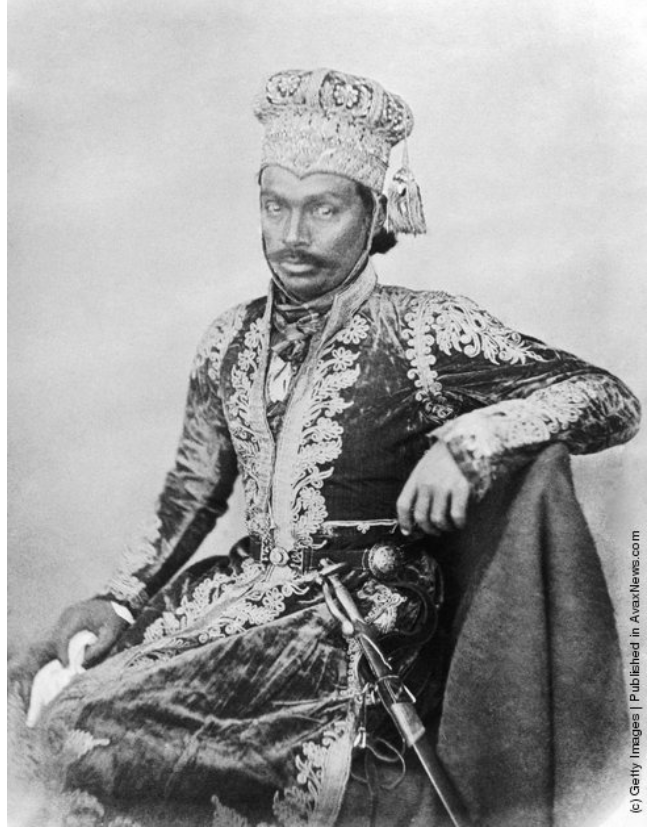
Drigbijaye Singh accepted the terms, surrendered, and actively assisted British forces. As a reward, he was not only restored but later granted more territory than he originally held. The Maharaja of Balrampur became a pillar of loyalty in post-1858 Oudh.
Kushal Singh (Padnaha) & Hurdeo Baksh (Katriya): They also surrendered under these terms and were eventually restored to a significant portion of their estates after demonstrating loyalty.
Kashi Pershad (Sissendi), Zubr Singh (Gopal Kheir), & Chundi Lal (Purwa): Their cases were more complicated. They entered into negotiations or made initial submissions, but distrust ran deep. They were hesitant, fearing British betrayal or the loss of their status. Their surrender was less decisive, and their eventual restoration was slower and less complete. In some cases, parts of their lands were given to others as rewards.
Outram’s list included many others, but only a few names are of particular importance:
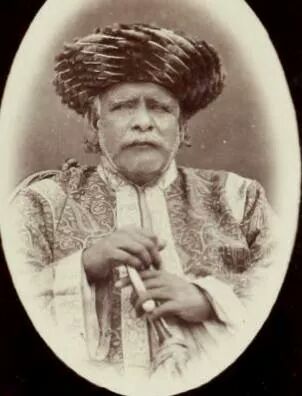
Raja Hanwant Singh of Kalakankar: A very important and powerful Talukdar. Outram actively negotiated with him, and the Raja eventually surrendered. He became a classic example of the “settlement” policy, being restored to a substantial portion of his estate and becoming a loyal supporter.
Raja Lal Madho Singh of Majhora: Another major landholder who was seen as potentially detachable from the rebel cause. He was offered terms to surrender.
The Raja of Churda (or perhaps Charda): This chief’s territory was strategically located, and Outram was hoping to avoid any fights with him.
Beni Madho Singh (or Bani Madho), Rana of Shankarpur: A formidable rebel military leader, Outram and Canning specifically hoped to separate him from the Begum Hazrat Mahal. Extraordinary terms were hinted at—possibly even the restoration of all his lands—if he would abandon the rebel court in Lucknow. He ultimately refused, choosing to fight on.
Various Chiefs of the Baiswara Region: The fertile Baiswara region south of the Gomti River was a rebel stronghold. Outram’s list included several Baiswara chieftains whose submission would open up this area.
 Mutiny Reflections