Major General Dighton Probyn and the Royals
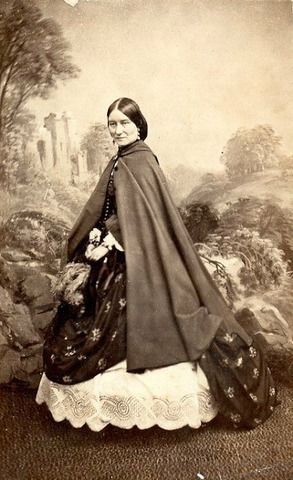
Now 37 years old, Probyn was promoted to Major General in 1870 and ADC to Lord Mayo, Viceroy to India. In this capacity, he accompanied Prince Alfred, Queen Victoria’s second son, on his royal tour of India. In 1872, Probyn returned to England to take up the position of Equerry to the Prince of Wales – the rest of his life would now be in the service of the royal household. Probyn accompanied the Prince of Wales to India in 1875 for his 17-week tour and on his return to England, Probyn was rewarded with a K.C.B., a K.C.S.I and was advanced to the rank of lieutenant general. Two years later, with the Queen’s approval, Probyn was appointed Comptroller and Treasurer of the Prince of Wales’ Household. He also found himself increasingly relied upon by the Queen herself for whom he acted as adviser on Eastern affairs and military matters. Although Probyn did find time to marry Laetitia Maria in 1872, a first cousin, the daughter of Thomas Robarts Thellusson and his wife Maria (née Macnaghten), the marriage produced no children. Probyn’s devotion to Alexandra, Princess of Wales and her disastrous spending would continue to be his main concern, but he would refer to her as “The Blessed Lady.” In 1881, Probyn was made a full general. It was with Probyn’s discreet help by allegedly tipping off Lord Arthur Somerset (who also happened to be the Prince’s Master of the Horse) to flee the country and avoid prosecution in the Cleveland Street rent boy scandal. He also served as a messenger between the Prince of Wales and Prime Minister Lord Salisbury. In 1896 he was among the first recipients of the Grand Cross the Royal Victorian Order.
When Queen Victoria died in 1901, Probyn asked for his retirement from services, hoping the new King Edward would replace his mother’s staff with ones of his own – but Probyn had proved himself so adept at handling his finances in the past, he was made Keeper of the Privy Purse and member of the Privy Council. His wife had died in 1900 in Sandringham, an event which was commemorated as follows:
FUNERAL OF LADY PROBYN
The funeral of late Lady Probyn, wife of Gen. Sir Dighton Probyn, comptroller and treasurer to the Prince of Wales, took place on Saturday. The first part of the service was at Sandringham, the Prince and Princess of Wales and other members of the Royal Family being present. Gen. Sir Dighton Probyn subsequently accompanied the remains to St. Pancras, where they were met by a Queen’s messenger with a beautiful wreath from Her Majesty, bearing the inscription, “A mark of regard, Victoria, R.I.” The internment took place at Kensal Green Cemetery, Canon Hervey, chaplain to the Prince of Wales, officiating. Among the numerous floral tributes were wreaths from the Prince and Princess of Wales, and the Duke and Duchess of York. The coffin, which was of unpolished oak with brass mountings, bore the inscription, Letitia Probyn, beloved wife of Gen. Sir Dighton Probyn, died at Sandringham, January 17th, 1900.”
As such Lady Probyn disappears and Sir Dighton would never remarry.
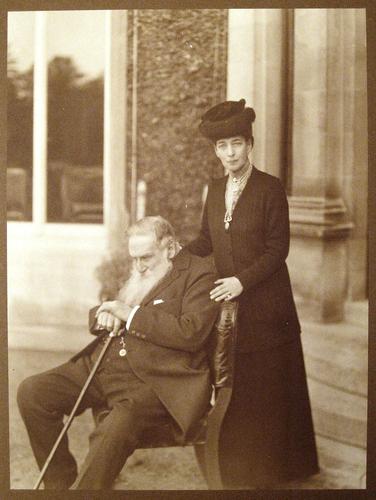
The scandalous finances of the Prince and Princess of Wales were brought under some control with Probyn’s careful management and when the prince became king in 1901, it was thanks to Probyn that his debts were all paid. He was not above a little extravagance of his own and when given control of the Sandringham gardens, created, “costly rock gardens, complete with rustic wooden shelters, all dedicated with respectful adoration to The Beloved Lady.” There was no romance between Probyn and the Queen but an honest, true-hearted affection, and he referred to her rarely in some correspondence which does survive with a friend, Major W.R. Birdwood stating, “Poor dear thing, she is indeed good to me but I have been with her now for over 50 years – just 51 years – and she has never on one single occasion said one single cross or unkind word to me during this time.”
In 1902, in the Coronation Honours List he was made Knight Grand Cross of the Bath (Civil Division) and the following year, awarded the new Imperial Service Order. 1904 saw him made Colonel of Probyn’s Horse and in 1909, was created Knight Commander of the Bath (Military Division.) He once again hoped for retirement when King Edward VII died in 1910. He was 77 years old but age did not relieve him of his duties to now Queen Alexandra who trusted no one else with her finances, and he was further entrusted with the monetary welfare of not just her unmarried daughter Victoria but Charlotte Knollys.
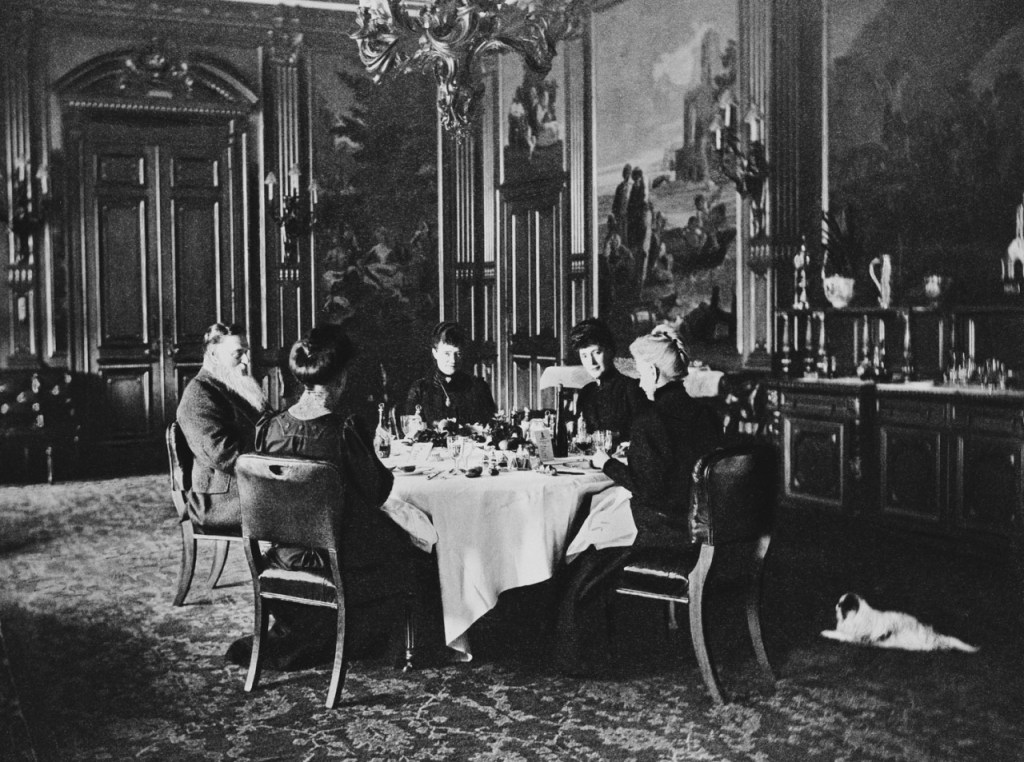
In 1911, Probyn was given the unique tribute of being advanced to Knight Grand Cross of the Order of the Bath (Military Division) thus becoming the only non-Royal to hold the highest grade of the Order in both the civil and military divisions. Illness the same year nearly cost him his life, but if stories are to be held as true, King George V, in a telegram from the Delhi Darbar told him, “Probyn’s Horse was the finest regiment on Parade,” aiding Probyn’s will to live. He was, however, no longer the tall, straight-backed man in his portraits. Plagued increasingly by heart problems, and occasional seizures, gout had contracted the muscles of his neck, so he could never lift his head again. he did retain his sense of humour. It was a judgement, he said, on him for having said he would not give a rap for any man who would not look him in the eye, and now all he could do was to see the holes in women’s stockings! In the intervening years, Probyn, now in his 80s, still grappled with Alexandra’s purse which was again thrown into a flurry of expenditure as she could not resist indulging in charitable causes during The Great War. “The Blessed Lady’s generosity knows no bounds, ” he wrote in 1915, “hundreds of thousands of pounds she is spending on all sorts of war charities.” While he was fighting a losing battle on that front, he did manage to convince her to destroy some of her old horses, not only for financial reasons but with so many Sandringham men off at war, it was unreasonable to keep them. In 1915 he gave an engraved wristwatch to Captain Frank Beck, who led the Sandringham Volunteers in the First World War. Beck was killed during the Gallipoli Campaign and the watch was bought from a Turkish officer after the war and returned to Beck’s family in 1922.
Probyn spent his final, declining years at Sandringham, well looked after. He died in Queen Victoria’s room at Sandringham on 20 June 1924 at the age of 91. According to his valet, he had spent the preceding days, talking proudly of his old regiment. Probyn’s coffin was adorned with a cross of flowers and a note from Queen Alexandra,
“For my beloved General Probyn, with thanks for all he has been to me all these years – 52 years. We shall miss him so much, but he will draw us up to Heaven, where he is sure to go. God bless. From his devoted Alexandra. “ He was buried at Kensal Green Cemetery.
In June 1925, a year after his death, a service at Sandringham Church was attended by members of the Royal Family, the Royal Household and the estate’s residents, for the unveiling of a stained glass window. The window features the figure of Saint George and is dedicated to Sir Dighton Probyn. A memorial plaque adjacent to it is inscribed with the words,
“Thou wast the most courteous knight that
ever bare shield, the truest friend
that ever betrode horse, and the kindest
man that ever struck with sword.
This window was completed by them
who were proud to share his friendship.”
Curiously, for all his accomplishments, Dighton Probyn was omitted from the Dictionary of National Biography. An Iris iberica hybrid was named ‘Sir Dighton Probyn’ in 1909 by Professor M. Foster.
The Regiment
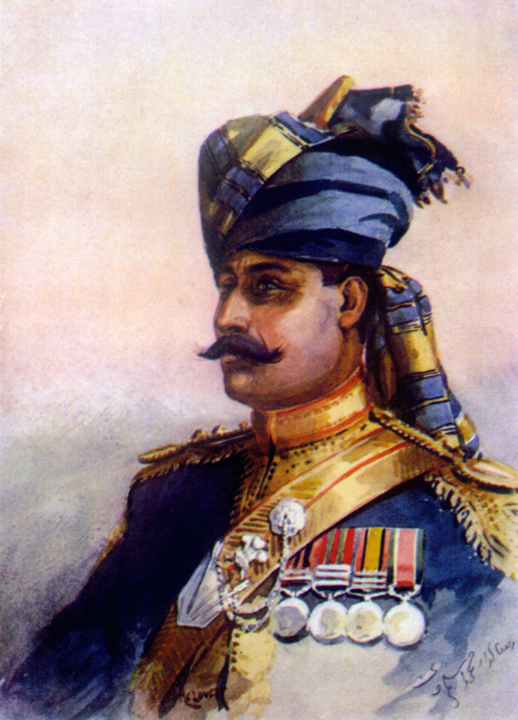
In 1904, Probyn’s Horse became 11th Prince of Wales’s Own Lancers (Probyn’s Horse) and after partition, in 1947 it was assigned to the Army of Pakistan as Probyn’s Horse (5th King Edward VII’s Own Lancers). In 1956, when Pakistan became a republic, Probyn’s name only remains on its badge.
1857 – 1st Sikh Irregular Cavalry
- 1861 – 11th Regiment of Bengal Cavalry
- 1874 – 11th Bengal Lancers
- 1903 – 11th Prince of Wales’s Own Lancers, Probyn’s Horse
- 1906 – 11th King Edward’s Own Lancers (Probyn’s Horse)
- 1921 – 11th/12th Probyn’s Horse (amalgamation)
- 1922 – 5th King Edward’s Own Probyn’s Horse
- 1927 – Probyn’s Horse (5th King Edward’s Own Lancers)
- 1937 Probyn’s Horse (5th King Edward VII’s Own Lancers)
- 1956 – 5 Horse
Battle Honours:
Lucknow, Taku Forts, Pekin 1860, Abyssinia, Ali Masjid, Peiwar Kotal, Charasiah, Kabul 1879, Afghanistan 1878–80, Chitral, Malakand, Punjab Frontier, Mesopotamia 1915-18, Meiktila, Capture of Meiktila, Defence of Meiktila, Taungtha, Rangoon Road, Pyawbwe, Pyinmana, Toungoo, Pegu 1945, Burma 1942–45, Khem Karan 1965.
Sources:
Armstrong, Emma. “‘The Most Dashing Cavalry Officer in the Army’: A Portrait of Colonel Dighton Macnaghten Probyn, VC.” Journal of the Society for Army Historical Research 79, no. 318 (2001): 101–7. http://www.jstor.org/stable/44230685.
Birdwood, Vere. “General the Rt. Hon. Sir Dighton Probyn V.C., G.C.B., G.C.S.I., G.C.V.O.” Journal of the Society for Army Historical Research 55, no. 221 (1977): 32–34. http://www.jstor.org/stable/44223170.
Blomfield, David, ed. Lahore to Lucknow: The Indian Mutiny Journal of Arthur Moffatt Lang. London: Leo Cooper, 1992.
Roberts, Fred. Letters Written During the Indian Mutiny. Preface by Countess Roberts. London: Macmillan & Co., Ltd., 1924.
Roberts, Frederick Sleigh. Forty-One Years in India: From Subaltern to Commander-in-Chief. 2 vols. London: Macmillan & Co., Ltd., 1901.
Verney, Edmund Hope. The Devil’s Wind: The Story of the Naval Brigade at Lucknow. London: Hutchinson & Co., 1956.
Links:
https://www.noonans.co.uk/auctions/archive/lot-archive/results/115127/
https://henrypoole.com/individual/general-right-hon-sir-dighton-probyn/
www.elgar.org/6cctree3.pdf
https://www.britishempire.co.uk/forces/armyuniforms/indiancavalry/11blprobynx2.htm
https://www.britishempire.co.uk/forces/armyuniforms/indiancavalry/11thbl1863.htm
https://vcgca.org/our-people/profile/983/Dighton-MacNaughton-PROBYN
 Mutiny Reflections
Impressive
LikeLiked by 1 person