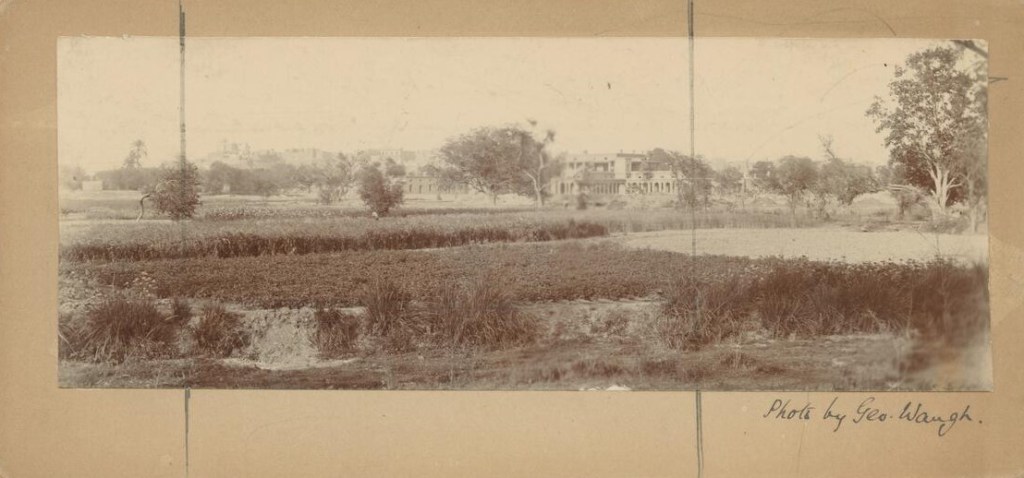
9th Regiment Light Cavalry
Raised in 1825, fought at Bhurtpore, Meeanee and Hyderabad.
Granted an honourary standard and extra Jemadar for the the two latter.
Officers of the regiment present at Sialkote:
Lieutenant-Colonel Lorne Campbell
Captains Baker, Wylly and Balmain
Lieutenants Bushby, Saunders, Dixon, Barlow, Lane, Montgomerie, Cantfield, Wells and Prinsep
Surgeon Butler
Veterinary Surgeon Gerrard
Riding Master Bradshaw
46th Regiment Bengal Native Infantry – Marrerroo ke Becan Pultan
Raised in 1803 as the 2nd Battalion, 23rd Regiment of Bengal Native Infantry
In 1824 the 2nd Battalion became 46th Regiment of Bengal Native Infantry under Major G Birch
Battle Honours – Assam, Punjab, Chillianwallah, Gujerat
Brevet-Colonel Farquharson in command
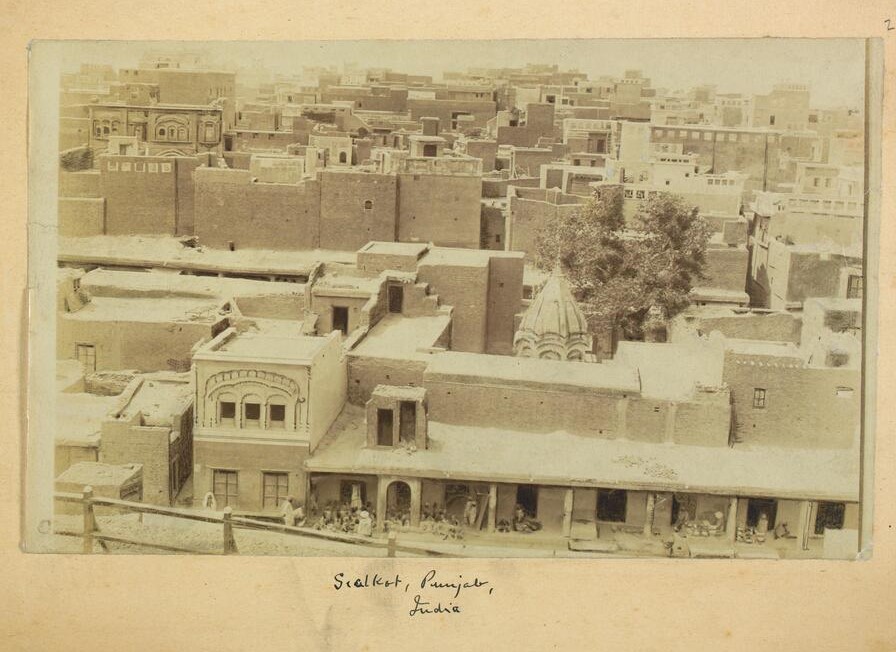
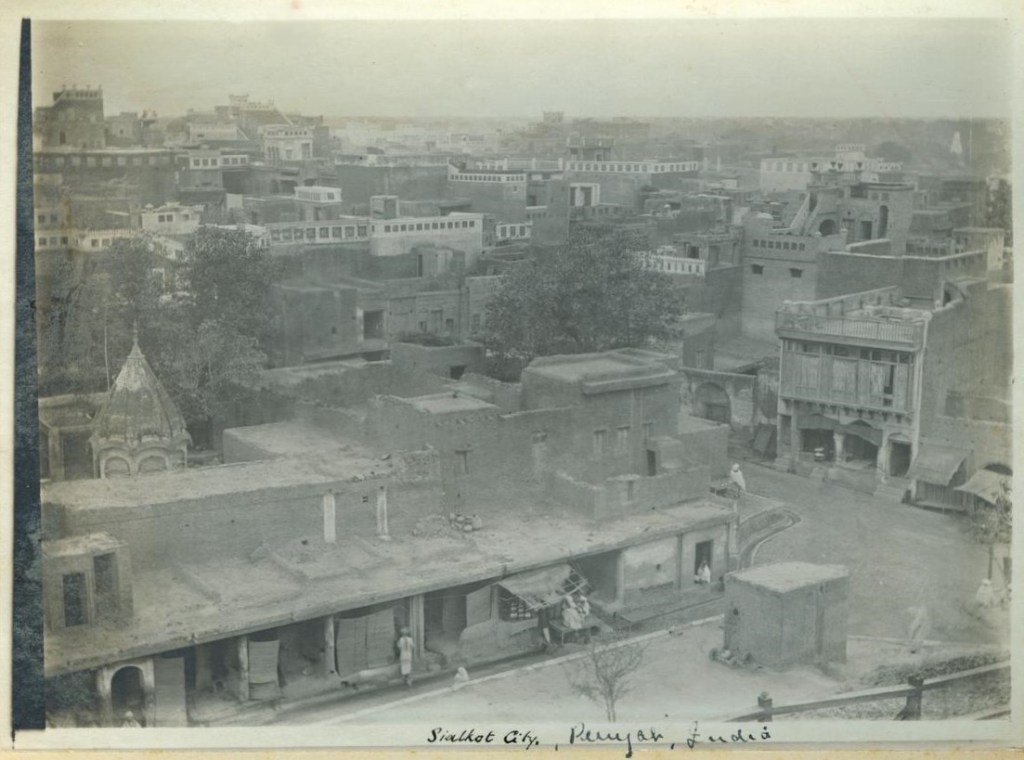
Sialkote before the Mutiny
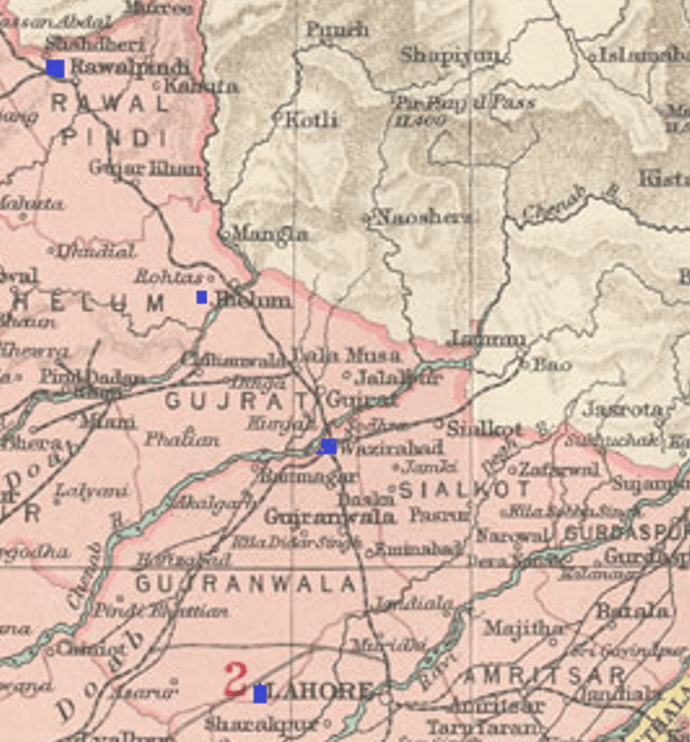
The Sialkote District was one of the six districts in the Rawalpindi Division, bounded on the north-east by the Jammu Territory of the Maharaja of Jammu and Kashmir, and on the north-west by the Malkani, Tani and Chenab that separated from the Gujrat district. The headquarters of the district was at a station of the same name, Sialkote, 72 miles from Lahore. In 1857, the station had a population of 20’000.
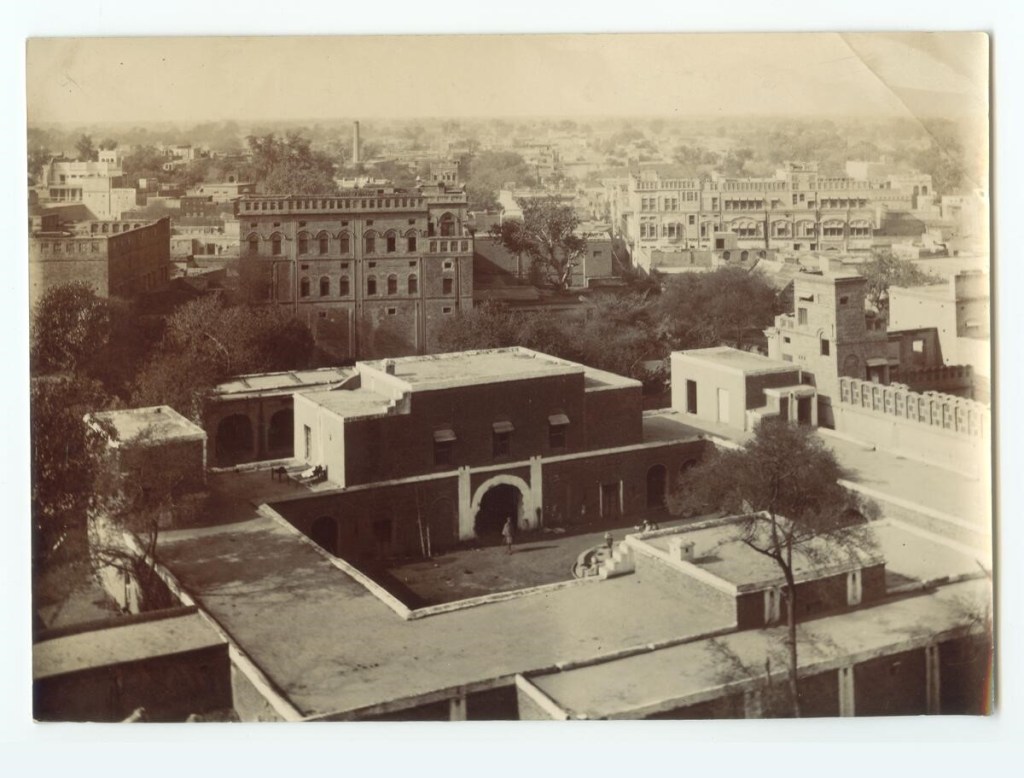
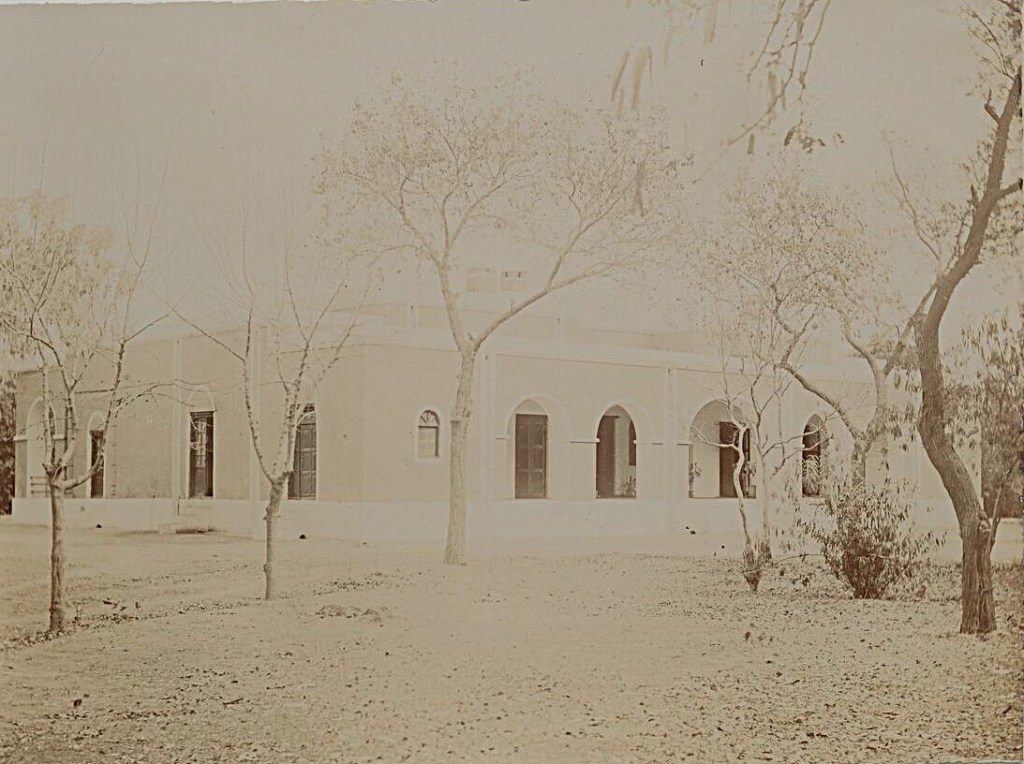
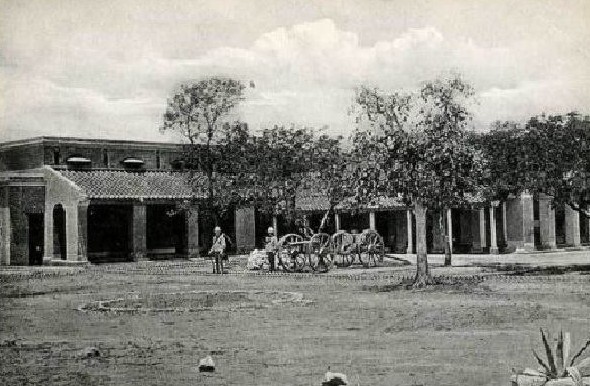
Sialkote was a remote, but comfortable station. The cantonments had been suitably designed, with airy barracks; the houses of the officers and civilians alike were comodious and set in large gardens. There was a chuch and a chapel; the native cavalry lines were to the west of the station (south of and close to the convent), while the lines of the native regiments were between the British Artillery and Infantry Barracks.
The garrison consisted of one troop of Horse Artillery, commanded by Colonel Dawes, one battery of Field Artillery – which consisted of a number of Indian troops – commanded by Captain Bourchier; the 52nd Light Infantry, under Colonel Campbell; the 9th Bengal Cavalry which had been stationed at Sialkote since March 1855 and now commanded by Lieutenant-Colonel Archibald Lorne Campbell who had take up his posting with the regiment 6 months before the outbreak of the mutiny; the 35th Native Infantry under Major Drake; and the 46th Native Infantry, commanded by Colonel Farquharson. There was also a musketry depot, consisting of 27 Europeans and 165 Indians. – this was one of the depots that was instructing troops in the use of the new Enfield rifle. The station commander was Brigadier-General Frederic Brind of the Bengal Horse Artillery His younger brother was Major James Brind, then commanding a battery at Jallandar.
Brind had been against setting up the training depot in Sialkote, aware of the rumours surrounding the cartridges and wary of having sepoys of different regiments mixing at his station .He had further been told that certain “ill-diposed persons” disguised as fakirs had been making the rounds, sowing disaffection at any station that happened to have just such a training depot. As such, Brind instructed the Cantonment Joint Magistrate and Henry Monckton, Deputy Commissioner of Sialkote, to keep an eye for just such troublemakers.
Monckton elicited the help of Ranjit Singh, Ressaldar of the Mounted Police, requesting him to procure “secret information.” At the request Singh looked confused and claimed he had heard nothing about the cartridges, it was in his estimation, nothing but a impudence on the part of the sepoys. Monckton was first surprised and then suspicious of Singh’s behaviour – his “affected ignorance and the forced manner and subsequently pretended to treat the matter so lightly…”
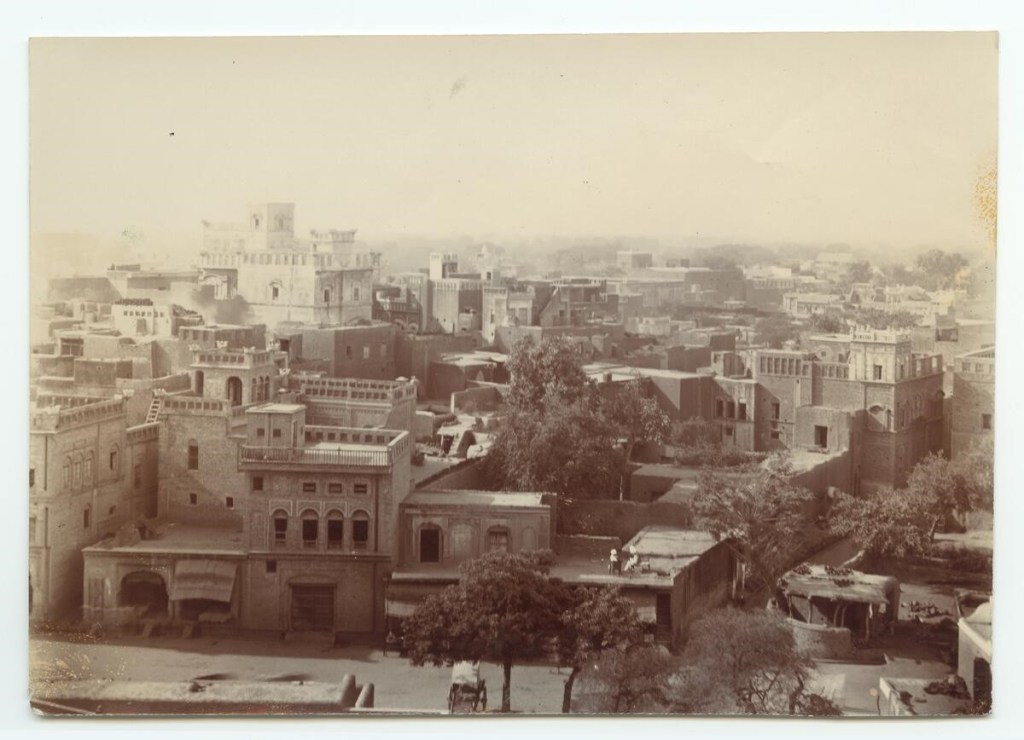
The news of the mutiny reached Sialkote on the 12th of May – in Brind’s estimation, if things could go so wrong in Meerut, with 2 European corps and a sizeable artillery stationed there, it boded ill for the times ahead. For now, however, Sialkote was quiet. The news of the Delhi massacre and the proposed disarming of the sepoys at Mian Mir reached Sialkote at 1 o’clock in the morning the next day. Monckton, sufficiently alarmed, elicited the help of Colonel Younghusband to convince the Brigadier that some arrangements needed to be made to protect the artillery. Brind eventually agreed, and a portion of the artillery troops was exchanged with those of the 52nd while the guns were brought to the infantry barracks.
Ill health had forced Monckton to seek out a leave of absence – had the news from Mian Mir come a day later, he would have been on his way to the hills. As it was, on the 13th of May, he put the leave papers to one side and went to work.
He formed a levy who he prudently disguised as a town guard “and then as the men had been collected, to select such as would be fit for permanent military service and impart to them some simple training.” As their commander, he appointed Lieutenant M.I. White of the 26th Light Infantry, a gifted linguist who had also spent a considerable time in the Punjab. The post of adjutant was declined by Lieutenant Davidson, who handed it over to Lieutenant Stewart. Stewart showed more interest than Davidson and would take over command of the levy when White left for the Moveable Column.
Monckton armed his levy with the spare arms of the leave men of the native regiments, and he received a large supply of ammunition from the cantonments. They were organised and equipped, and had the 9th of July only come a little later, they would have completed their musketry drill.
While this body of troops was being raised, Monckton called in the burkundazes (armed watchmen) from the surrounding villages to come to Sialkote – he was wise enough to leave a strong additional guard at each tehsil (administrative division) to quell any local disturbances and sent the police to guard the villages the watchmen had left behind. He then took to drilling and organising the burkundazes into one unit and stationed them at the jail and the treasury and as pickets on the road between the cantonment and the city. Unfortunately, Monckton was less inclined to trust the very police he had just sent out – in his mind, they were scarcely trained, and their numbers contained too many men from Bengal for his comfort.
As for the river, there was fortunately only a small extent that needed to be guarded. Monckton intially placed all the boats of the zamindars “in security” and then, when extra guards were in place, ordered the boats pushed out mid-stream. He closed all the ferries except the main one and eventually ordered all the boats sent away from Sialkote. He then restricted communication with the right bank of the Chenab to the Wazirabad Bridge of Boats.
Like Monckton, Brind too had reasons to be wary, for the 20th of May brought worse news – the formation of the Moveable Column. As such, orders were received to dispatch HM’s 52nd, the European Artillery, the 35th NI and the left wing of the 9th Bengal Light Cavalry to Waziribad to join Brigadier Neville Chamberlain. Brind protested against the removal of the 52nd, stating he wished to retain 250 men in Sialkote – the answer that came shocked Brind. He could retain the Europeans if he disarmed the remaining native troops.
“But to the last, he shared in the belief (almost glorious) in the honour of the sepoy…” and refused.
When the Sialkote Brigade departed on the 25th of May, consisting of the HM’s 52nd, Colonel Dawes’ Troop of Horse Artillery, No. 17 Battery, the left wing of the 9th Cavalry and the 35th NI, all that remained in the station was the right wing of the 9th consisting of 9 British officers, two British NCOs, 3 Indian officers, 18 Indian NCO’s, and 220 rank-and-file sowars. The cantonment further housed 916 sepoys and officers of the 46th Bengal Native Infantry. Brind had had 5 days in which to disarm the troops before the Europeans left- but he was not to be moved. The only men of the 52nd left to him were ill in the cantonment hospital. Unfortunately, in the annals of history, Brind has been handed much unwarranted criticism for not disarming the troops when he had a chance. However, at this juncture, it is important to understand his situation.
At Lahore and Peshawar, it was indeed prudent to disarm the troops as a conspiracy was a foot. However, there was no signs of any outright conspiracy at Sialkote, there were no acts of incendiarism, and the sepoys had not shown any open signs of disaffection. Only one seditious letter was found at the musketry depot but this was back in February. The problem with the roaming fakirs had been addressed and none of the men had made a fuss about the cartridges. At this juncture, had Brind ordered the disarming of the Indian troops at Sialkote the 52nd would not have been able to join the Moveable Column as they would have been needed to watch over the disarmed regiments; if the 52nd disarmed the regiments and then left, Brind would have had to deal with over 1000 disgruntled and disgraced sepoys who would most likely have furnished themselves with local weapons and wreaked their fury at their demeaned situation on the remaining Europeans. Had this been the case, then no one would have survived. As it is, from the 20th of May until the 9th July, Brind held Sialkote together by showing faith in the very men he felt might one day cut his throat. However, without evidence to that effect, Brind was justified in believing the men would remain true to their salt.
With the able-bodied European troops gone, it was soon clear on whose side the remaining Indian troops were on. They made no secret of their sympathy for the mutineers, but still, they held their calm. “In fact, the sepoy did not find it worth his while, as at Jullundur, to test by insolence and incendiarism the temper of the authorities, for he was already master of the situation.” An uneasy peace settled on Sialkote; the band still played in the evening as usual, and the Europeans rode out. As for sending away the women and children, the families of the soldiers were ordered under escort to Lahore, but most of the wives of the officers refused to leave. George Bourchier of the Bengal Artillery was approached by a “local nobleman”Punjabi of wealth,” to whom he had once been of service, who expressed his desire to protect Bourchier’s wife and children on their journey to Lahore “after the massacres at Delhi and Meerut it was a terribly anxious undertaking, but I resolved implicitly to trust him, and nobly he fulfilled his promise. To add to our troubles, the two children were suffering, the one from cramp, the other from ophthalmia; but Providence, whose protecting hand had been so marked in our favour during this eventful year, brought them safely through their journey to Lahore, where the open doors and warm hearts of my friends Mr. and Mrs. Montgomery, were open to receive them.”
Only three American missionaries and their families left during the night of the 11th of June seeking safety in Lahore, which they reached on the 13th. No one else followed them. Meanwhile. Brind ordered the remaining 40 men with the ladies and children to rendezvous at the military prison in case of an outbreak but this was swiftly changed to the fort. The old building had belonged to Raja Tej Singh and was hardly in a state of admirable defence, was scantily provisioned and as such it was a peculiar choice – the only gate leading into it was one of the streets of the city itself.
Private intelligence of the mutiny at Jhelum, barely 30 miles away, and the desperate fight of the 14th BNI reached Mr. Monckton on the 8th of July. In all confidence, so as not to panic the station, Monckton informed Brind. At the same time, an exaggerated report reached the lines of the Indian troops, stating that the sepoys at Jhelum were victorious. By a very unlucky coincidence, a trooper of the 9th Cavalry had, on that day, returned to Sialkote on leave from the left wing and reported to his comrades that the Moveable Column was moving up; they were in Amritsar and would soon be in Sialkote to disarm everyone. This would then be surmounted by a rather strange letter from Delhi, delivered to the lines by foot messenger. We shall return to this momentarily.
As it was, the 8th of July passed off quietly. The officers and civilians, so few in number, had taken to living in small groups some weeks earlier, families banded together in houses they felt would be strongest. It is perhaps these arrangements that saved their lives.
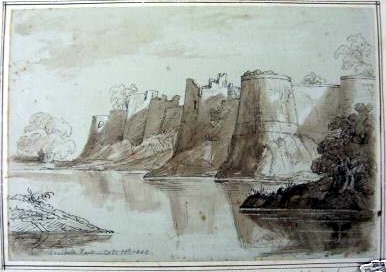
The mutiny in Sealkote started in the early hours of the 9th of July. Unlike other stations, it was 4 o’clock in the morning when the sounds of shouting broke the silence.
Narrative of a Cavalry Officer (Left wing, 9th Cavalry)
“On the morning of the 9th, I was fast asleep in my house at Sealkote when I was awoke by a woman running in screaming. This was the wife of our sergeant major, who was followed shortly by her husband with a wound in his forehead. He said he had five or six shots fired at him by our men. By the time I had dressed and got my pistols and sword on, the havildar-major came and said that early in the morning the Mussulmans of the 1st troop began saddling their horses and as there was no parade ordered, he asked them what they were doing, when they told him to mind his own business.
I rode to the Brigadier’s, and in a short time, he came out with Chambers, the joint magistrate. Balmain just then rode up and said that when he went down to the lines, the Hindoos told him to go and remain in his house or he would certainly be killed. We heard, too, that some of our men had ridden to the 46th Native Infantry lines to raise them, and we knew it was all up with Sealkote, for so many instances have occurred of cavalry riding down to the infantry lines and the latter invariably joining them.”
In order the join the various events together, we will proceed through different narratives.
The Letter from Delhi
Shouts and yells were soon heard from the 46th parade ground. The officers, woken by the noise, quickly mounted their horses and made off towards their men, who they found in open mutiny.
An officer of the 46th NI, on galloping down to the lines, met with the pay-havildar and asked him what racket was about – the havildar replied that four troops of the 9th had just ridden through the lines, shouting as they went, that the letter had arrived from Delhi – “and,” added the havildar, “what can we do?” While the officer might well have been mystified by the letter, another officer, in his flight would be told a king’s messenger had passed through the day before the mutiny; while the men of the 35th who saved their officer’s life, in this case, Colonel Farquharson, told him the names of the 35th and the 46th had been “down in the King of Delhi’s book as pledging to join the mutiny,” as far back as January. The letter was missive, sent to remind them of their vow.
The Mutiny Begins
As such, with or without the news from Jhelum, the sepoys and sowars of Sialkote had made their plans. On the night of the 8th, unbeknownst to their officers, the cavalry had set up pickets, mounted and armed, on every road by which the Europeans could flee, taking particular care to place singular importance on the road leading to the fort. As soon as the outbreak began, the main picket, which Brind had set up on the southwest of the cantonment – to give the impression he expected trouble to come from without – marched off without orders and returned to their lines.
Brigadier Brind, in the meantime, who, along with Captain Balmain of the 9th, was in the house of Captain Chambers. the cantoment magistrate. They had been sleeping here the past weeks and keeping nightly watches in turn. Balmain had just been relieved by Chambers and went over to his own house to catch a few hours of sleep – he had barely thrown himself on his bed when a trooper of the 9th rushed into his room to tell his officer that the men were mounting and “mischief would come.” Balmain jumped up and rode back to Chamber’s house to rouse the Brigadier. He then galloped down to his own lines to find the chaos was complete. The men were already mounted, and one troop had already left to break open the jail. In the midst of this, some of his men offered to hide him in the lines, swearing to protect him with their lives. Balmain refused with all courtesy and rushed back to find Brind.
Brind, as if reluctant to leave his post, was still in the house, making some final arrangements. As he turned out of the compound gate, a body of troopers could be seen riding down the road which led to the fort, each with a pistol in his hand – all, except three, fired but missed. The three troopers who had reserved their fire now wheeled around and shot the Brigadier Brind in the back. They then attempted to cut him down as he rode off on his horse.
“Brigadier Brind, Balmain, Chambers and I rode out of the compound, and then we perceived a large body of our men posted to cut us off from the fort in the city, who immediately they saw us, commenced chasing and firing at us. We, first of all, made straight for the cantonments to bring them after us, and on then on a sudden, we turned off to the right and rode for a bridge which was between the cantonments and the city. By this manoeuvre, I found myself leading and being mounted on a good horse; I could have gone off without coming into collision with the rascals again.”
As I was nearing the bridge, Balmain, who was close behind me, called out, “Stop and make a stand, or the Brigadier is lost!”
We both turned on the bridge, and I then saw the Brigadier trying to get across a nullah with several men after him. The foremost of them, who was a little in advance of the others, as he saw me stop, turned from following the Brigadier and came at us. I had just time to draw and cock my pistol when he came on me at full gallop, with carbine levelled. I could have almost touched him when he fired, and the bullet whizzed past me. At the same moment, I fired, but owing to the pace he was coming, I missed. I was perfectly cool and made up my mind not to fire until he had done so. If I had used my sword instead of my pistol, I must have killed him.
All this did not take half a minute, but it gave time for the Brigadier to cross the nullah, and we rode on to the fort without interruption. It was not till we got there that I discovered the Brigadier had been wounded badly, and it was with great difficulty he got along, but he bore up bravely; he has since, I am sorry to say, died of his wounds.
I thought it best to trust my horse, so I rode on to Goojeranwallah, a distance of thirty miles, where I arrived at about 9 a.m., more dead than alive. My horse could hardly walk in the last five miles and once dropped with me. In an hour or two more, two infantry officers came in who had made a long detour across the country. This was the account they gave: Four of our men rode down to their lines and began exciting the men to mutiny; most of the officers were at parade at the time. The men asked permission to get to their arms to keep our troopers off; as soon as they obtained them, they rushed to their lines instead of to the places where the arms are usually kept, and then came out and began firing at their officers. Those that were mounted made off at once. The whole business was evidently preconcerted, although we were quite unprepared for it” (Narrative of a Cavalry Officer)
On the parade ground of the 46th, the officers, Adjutant Le Gallais and Lieutenant Smith, were told by some of the better-deposed sepoys to fly – “Jao sahib, jao, runj ootha hai!” (“Go, sir, go, grief has come”) they implored. Le Gallais did not need a second invitation and rode off in the opposite direction of the fort as that road was no longer open. Smith needed a little more encouragement – one of the sepoys grabbed the bridle of his horse and led him off the parade ground, where he once again begged him to fly. Smith followed Le Gallais – a few stray shots followed them as they rode past the lines, but unhurt, they reached Gujranwallah. Lieutenant Prinsep, after running the gauntlet of six or seven sepoys, escaped to the fort with a shot in his arms.
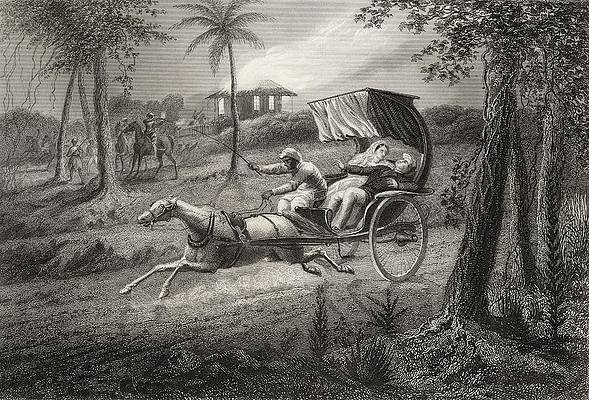
Neither Smith nor Le Gallais met with any hostility on their ride to Gujranwallah. They received the “kindest treatment from the villagers along the road, who fed them and even offered them money.” Le Gallais ‘wife, who left Sialkote in her husband’s wake with other civilians, found herself “ill and faint from the extreme heat and the shaking of the buggy” that when she felt she could proceed no further, the villagers procured for her a covered charpoy and men to carry her the rest of the way to Goojeranwallah.
As for Captain William Louis Mosheim, Bishop of the 46th, things could have gone better. As he drove his wife and children to the fort, a trooper overtook their carriage. Bishop, hoping to divert attention away from his family, sprang off the box and plummeted into a ditch that surrounded the fort – the water was too shallow to cover him, and within moments, he was wounded and cut down. Mrs Bishop managed to save her children by driving around to the fort gateway. As for Bishop, his case was hopeless. Catapin Balmain, who was with Brind on the rampart, saw the attack – he seized a musket and fired a few shots at the trooper, but he was too far away, and the trooper too intent on killing Bishop. The sowar only rode off when he was sure there were only mangled, lifeless remains.
In the civil lines, too, there were problems.
Reverend W. Boyle, who had but lately been ordered to join the Moveable Column, had been settling his affairs for his departure on the 9th. He was to have taken with him the Reverend Hunter, his wife and baby who should have travelled with him as far as Goojeranwallah.
Boyle was persuaded, after dining with Monckton, as it was, to not return to his house. He remonstrated, saying he still had much to do, but both Monckton and Jones, of the treasury, insisted. They could not tell him why, Brind had sworn them to secrecy. Alarmed, Boyle stayed, and his plans for an early start were shelved. He sent word to Hunter. In his turn, the Reverend Hunter packed up his family and made off into the civil lines to stay the night with another civilian named Raikes.
As on every other night, the men kept watch in turn. Boyle was relieved at three a.m. by Mr. M’Mahon. He had barely closed his eyes when an hour later, Mr. M’Mahon roused him with a shout, “Get up, it is all up, the row has begun. Let us shut up ourselves here (or make for) Inglis house!” The idea was preposterous, considering the Inglis house was a mile and a half from the cantonments and two from the fort. Instead, Boyle ran down with Monckton to Raike’s house to warn Hunter to be off. Jones and M’Mahon had managed to gather together the Punjabi levies, and they all made their way to the fort.
As for Reverend Thomas Hunter, who had arrived in Sialkote at the beginning of the year to set up the Scottish mission, he must have left things too late. With his wife Jane and baby son, he first attempted to escape to Wazirabad, but finding the road impassable, he turned and made for the fort. When passing the jail, they were killed. The Hunter’s bodies were found by Boyle and Monckton on an embankment near the courts.
Meanwhile, Boyle had managed to outrun Monckton and found himself in the garden of Raikes’ house. He quickly looked through the house but finding it empty, ran out into the garden where he found himself alone. He hid behind the trees, only “peeping out to see how near the wretches came; after staying and occasionally moving and again hiding, I made up my mind to take to my heels across the plain. How I got to the fort, I hardly know even now, but I did overtake Jones and the guard, more dead than alive. It was truly a run for dear life…I was less than a quarter of a mile from the troopers, riding hither and thither I saw them, and if they had seen me, I should have been a dead man.”
As for Dr. Graham, the superintendent surgeon, he attempted to escape with his daughter across the cantonments to the fort. Unfortunately, some troopers who it would appear were on the watch for him, cut him off and then shot him dead. His daughter was allowed to proceed unmolested.
As to why Boyle was able to run past Jones takes a little explaining.
The party in Monckton’s house had been guarded by 35 of the new levies and a little over 30 mounted police. When M’Mahon raised the alarm, he told Jones and Stewart that there was a row in the goal. There was no saving that situation – it had been fairly run over by the mutinous cavalry and a party of native infantry, so Jones, McMahon and Stewart decided they would proceed to the fort. They walked off slowly at the head of the new recruits, making sure they kept together. They then made them stop and load “and see that they did it well, as it was the first time many of them had put a cartridge in a musket…” They continued at this slow pace across the plain until a few sowars rode up, calling on the levies to come with them. Hesitant, some of the levies moved to follow the sowars, but the civilians.
“…told them they were mutineers who want to take away bread from them and patting them one or two of them on the back, told them that this was a time we were going to be brothers. They then marched on as pluckily as possible, laughing and joking with us, though we felt in anything but laughing humour.”
Twice more, they saw bodies of cavalry moving about close to them – M’Mahon made the levies face round to them, saying that Punjabis should not be “alarmed at the sight of such cowards. They showed so bold a front that the wretches went off though they might have with ease cut us all up.” All the while, their horses were being led behind them as the civilians felt it would not be prudent to ride in case they discourage the levies. It is little wonder then that Boyle, running like the devil was on his heels, could pass Jones and dash up the rampart into the safety of the fort.
We return now to the doings of the 9th Cavalry.
Dr Butler, of the 9th, had prudently decided his family would reside with that of Lieutenant Saunders, the quartermaster of the troop – the two men had previously arranged that the carriages were to remain at the ready and at the first sign of trouble, both their families would be taken to the fort. To save time, anything of value and necessity was packed before and stowed away in the carriages.
The alarm came with Butler’s servant rushing into his bedroom at 4.30 am, screaming, “Sahib, sahib! Jildee! Utho sowar log bundook chalata, aur pultun bigra hai! (Quickly! Quickly, the sowars are firing carbines, and the regiment has become disaffected/ corrupted!”)
Before putting their families into the waiting carriages, Lieutenant Saunders mounted his horse and rode down to the cavalry mess house, only 300 yards away, where he met three sowars. He asked them what was happening in the lines, but they merely replied, “Bhag jao” (Clear off!) and rode on. Butler watched the proceedings from the verandah. The same three sowars arrived at the gate of the compound but after a short discussion, turned their horse’s heads and went off in the opposite direction. Meanwhile, three parties of sowars were riding off in the direction of the 46th lines, and others appeared to be patrolling the roads. It was five in the morning, but Butler and the others had yet to move off.
He suddenly heard a pistol shot to the far left, and one of his servants said the doctor’s buggy was approaching. Butler looked in that direction and saw Miss Graham coming along apparently alone, “screaming and crying most piteously.” As he helped her alight, Butler realised the shot he had heard had ended Graham’s life. The sowar, she said, had passed on her side of the carriage, gone around to the other side and shot her father. His body was still in the buggy. She further told Butler the sowars were holding the bridge along the road to the fort. After stowing her father’s body on the veranda, Butler now considered what to do.
News now came from the veterinary surgeon, Mr. Gerrard, who rode into the compound. He was “in good spirits” and told Butler he thought only a few of the troopers of the 9th were causing a row, and the brigadier had ridden with his buggy past the lot and into the fort. The first statement, Butler knew was untrue – he could see “…the sowars riding hither and thither, passing the compound and taking no notice of us; frequent pistol shots were heard.” As for the second, Butler had been given the impression that in case of an outbreak, a picquet of irregular cavalry was to “move up and protect us in escaping to the fort,” and for them, Butler proposed to wait. As such, he had left one of the compound gates open – the other was fastened shut.
“A sowar now rode in front of our compound, entered and came opposite the door, carbine in hand, pointed it to the servants and directed them at the peril of their lives, not to remain in that compound, and desired the coachman to take the carriage to the lines.”
Prudently, Butler and the others had listened to the servants – before the sowar saw them, they had taken their advice and gone back inside the house. Butler and the two other men – Gerrard and Saunders – were only armed with revolvers but they were “determined upon defending our lives to the last.” It was an interesting sentiment, considering they had 13 women and children to defend.
Hardly 10 minutes later after the arrival of the sowar, sepoys of the 46th appeared, brought up by the sound of a bugle. The ladies quickly retreated into the bathing room but Miss Graham fussed and was refusing to stay there. Meanwhile, the men of the 46th smashed down the doors and came into the house, “firing as they came along the corridors and into the rooms.” The three men stood outside the bathroom door.
“On one making his appearance in the bathing room, I pointed my revolver at him, this was not a sepoy, but apparently, one of the servants pointing out where we were, for on seeing my pistol and hearing it snap, he cried out, “Sahib log wahaen haim, hum naheen jahye, marna ko moostaid hain.” (The sahibs are there, we are not going, we are ready to die/kill). Behind Butler, the families and Miss Graham were retreating out the other bathing room door into the inner courtyard (zenan compound) and into a storage room. Miss Graham took one look at the godown and ran off to hide herself in the garden.
“We all made good our retreat into the godown before the wretches again made their appearance; they were keeping a constant fire in the rooms and breaking open doors, they burst into the zenan compound and fired at the door. Mr Gerrard, standing by my side in front aimed and fired, but missed his object, a sepoy of the 46th with a most fiend-like expression I ever saw…” The man turned and left – Butler presumed it was to get his compatriots but he did not come back. Outside they could hear the sepoys calling out to the chowkidar (watchman) to point out where the feringi were – he assured them they had all left.
In this state of anxiety, the party in the godown waited. Around 11 in the morning, the chowkidar came to the door and begged them to keep quiet – the sepoys had left the house but the sowars were “frequently coming into the compound to know what had become of us; that now the house was being looted. The yell that ever and anon arose, and the crashing noise caused by the plunderers breaking open the wardrobes, almirahs and chests kept us in a constant state of alarm as we could hear the troopers riding about; the chowkidar said our only security was in keeping quiet…” This was easier said than done as 8 of the party were children.
The chowkidar snuck in some chappatis, a little stale bread and a pitcher of water and once again entreated the to keep silent. Butler smashed a window pane in one of the small windows to get some fresh air into the small room – but there was nothing he could do about the rising heat but with the help of the other men, he boke open the wall into the adjoining room so at least they were no longer so cramped. Just as they scrambled into the second room, there was the sound of an explosion.
“…when the magazine exploded, we thought, such was the shock we felt, they had mined the wall and were going to blow it in; when the second magazine was blown up, there was so much noise and riding about, that we imagined the mutineers had brought the cannon to bear upon the place to induce us to come to be massacred. The suspense and anxiety was awful; it then occurred to us, that the mutineers had blown up the magazine; soon after this someone looked into the grating of our godown and ran off yelling; we felt sure now that our fate was doomed, supposing that the person would go and bring others; our door was occasionally battered, and then a savage-looking man gave it a tremendous blow, but not succeeding he looked through the grating. I took a steady aim with my revolver and fired, he fell back and groaned, but never spoke more, he was dead before we left.”
The chowkidar returned bringing more water and some fruit. He promised to tell them when the troopers were gone and when it would be safe to leave. Needless to say, after Butler shot the man at the window, no one else ventured to the godown. In the meantime, Butler and his wife discussed whether or not to let the wetnurse take their baby away – with the help of the chowkidar, the woman said she could hide the baby until it was dark enough to take the child to her village. At least thought Butler, “We might all perish and this little one would be saved.” The wetnurse took the baby away. By seven in the evening, the chowkidar came back and gave them the all-clear.
“…we came out and walked to the fort, distant about one and quarter mile, where we were received by hearty congratulations of many kind friends for our death had been reported.” The Butlers would be reunited with their baby who had been kept safe by the faithful wetnurse.
Miss Graham was found hiding in the garden, but it was her luck that the sowar who spotted her was not of the murdering disposition. He brought her, “shrieking to the cavalry guard, she found there Colonel and Mrs. Lome Campbell surrounded by a few faithful troopers who escorted them safely to the fort.”
Colonel Lorne Campbell was not the only one saved by his men.
Colonel Farquharson and Captain Caulfield of the 46th N. I., along with the sergeant-major and his wife, were rescued by some of their own men and concealed in their lines. Lieutenant Busby was last seen being taken away by the sowars of the 9th, but they eventually released him without any harm, and he turned up with the Moveable Column. A similar offer was made to Colonel Campbell – he was offered Rs 2000.- if he would lead his regiment to Philour, while Farquharson was promised a salary and leave in the hills in the hot weather if he would remain with his regiment. No such offer was made to Dr. J. Graham, medical storekeeper, who was killed in his carriage next to his wife and Mrs. Grey – the deed done, the ladies were allowed to proceed to the fort unmolested.
The patients in the Artillery Hospital, the sick soldiers and those left on guard, upon hearing the row, quickly gathered together in the mortuary and fortified themselves – as parties of mutineers approached, “proofs which they had no wish to challenge further, that a warm reception awaited them,” and they were left alone. Among the men in the morgue was Mrs. M’Ansh (the wife of the 52nd’s doctor, who was away with the Moveable Column), who had packed up her children with all haste and, with them in tow, had run to the Artillery Hospital, thus securing her escape.
“An anecdote of an honest man and gallant soldier must not be omitted. Private Songhurst of the 52nd, who, as servant to Colonel Campbell, had been left in charge of baggage, was living with his family in a small house in the Colonel’s compound. On the morning of the 9th of July he put on his ccoutrements, loaded his firelock, and putting as many extra cartridges about him as he could, fixed his bayonet and marched his family for about a mile and a half down to the Fort, passing several sowars of the 9th Light Cavalry who were stationed in order to catch people as they should pass, but who did not seem to like his look. Songhurst got his family down to the Fort in safety, and was going out again, when he was asked where he was going; the reply was, ” Back again to take care of the Colonel’s property,” which of course was not allowed, -but the intention showed the man.” (Historical Records of the 52nd)
At the Roman Catholic convent, another drama was playing out. In a letter to her superior at Lyon, one of the sisters wrote a detailed account; albeit, not necessarily an accurate one.
Very Dear and Good Mother
On the 8th of the present month, the native soldiers heard they were to be disarmed the following day. They became furious, and secretly planned a revolt. They carried their plans into execution at an early hour on the following morning. We were immediately apprised of it, and I hastened to awake our poor children, and all of us, half-clad, prayed for shelter at a Hindoo habitation. Some vehicles had been prepared for us to escape, when the servants desired us to conceal ourselves, as the sepoys were coming into the garden. We returned to our hiding place; the soldiers arrived; they took away our carriages, and a shot was fired into the house where we were concealed. The ball passed close to where our chaplain was sitting, and slightly wounded a child in the leg.. At the same moment three soldiers, well armed, presented themselves at the door. The good father, holding the holy sacrament, which he never quitted, advanced to meet them. Several of us accompanied him. ” We have orders to kill you,” said the sepoys; ” but we will spare you if you give us money. Go out, all, that we may see there are no men concealed here.” Having searched and found nothing, one of the soldiers raised his sabre over the chaplain and cried out :
” You shall die.”
“Mercy, in the name of God! ” exclaimed I, “I will open every press to shew you that there is no
money concealed here.” He followed me, and having satisfied f that there was no money, the soldiers went away.
We then broke a hole in the wall of our garden, and fled into the jungle. We had scarcely escaped when thirty more sepoys entered the house, but the Almighty preserved us from this danger. We were crossing the country, when a faithful servant brought us to a house where several Europeans had taken refuge. We breathed freely there for a moment, but the government treasure was deposited there, and the house was soon attacked by the mutinous sepoys. We believed that our last hour was at hand, but the savages were too much occupied with pillage to notice us, and the Europeans escaped. At this moment a Catholic soldier offered to guide us to the fort, where we arrived at twelve o’clock. We do not know how long we shall remain in the fort. The English officers have treated us with the greatest kindness and attention, and have supplied us with provisions both for ourselves and our pupils. We trust we shall one day make our way to Bombay, but that will depend on the orders we receive from the government.
The Destruction of Sialkote
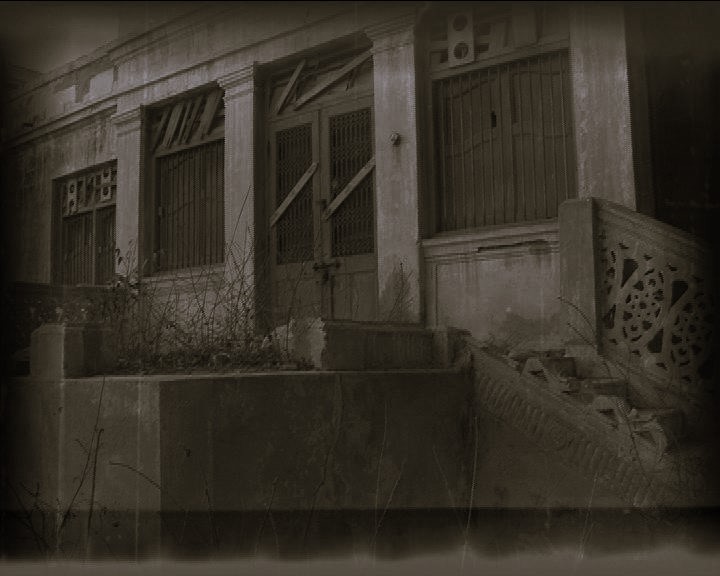
With the morning over and their now beyond any doubt, the mutineers spent the rest of the day rifling through private residences and mess houses, looting whatever property they could carry away. “Very little that was of any value, and at all portable, escaped them; and wherever they bore any especial malice to the owner of a house, they committed the most wanton injury.” The kutcherry was completely destroyed by the recently liberated prisoners from the local jail,
“Tearing doors and windows off the hinges, and piling them, with all the tables and chairs, the books, papers, and everything combustible, in the centre room, they set fire to the whole; and as the sheeted smoke, with flashes of light intermingled, rose up, there rose up, too, the yells and shouts of the infuriated convicts, revelling as they watched the destruction of this scene of their shame; and little remained but the bare charred walls to show where that handsome kutcherry had stood.”
Neither the house of the Deputy Commissioner nor that of Reverend Boyle escaped – in Boyle’s case, he found,
“…the walls and rooms are uninjured, but. such a scene as met my eye !—windows broken, furniture toppled over and damaged, papers torn and scattered about, books in all directions, but not a stitch of clothing to be found; yet we have suffered less than others, for in some houses not even a scrap of furniture was left, or anything that was not literally smashed to pieces, and the houses ruined; and why they suffered ours to escape differently If know not.”
To complete his misery at the scene, he found the communion plate, along with his own, had been stolen, and he could not even salvage a steel fork from the ruins. Even his dog, Charlie, was gone, and his son’s pony was missing. However, unlike at other stations, the churches of Sialkote escaped destruction save a few benches torn up from the floor and thrown in the garden.
As it was, the 52nd lost nearly all of their property they had left behind in Sialkote when ordered to march with the Moveable Column – the mess-plate and stock was plundered while their barracks were stripped bare of every stick of furniture.
The mutineers blew up both magazines, took Rs 14’000 from the treasury, and when they had finished ruining the houses, left in the buggies and carriages they had taken.
“Having secured all the property they could carry away, not forgetting the old signal-gun — an act which reflects as much credit on their forethought as the use of it afterwards did on their artillery practice — the mutineers started, about four o’clock in the afternoon, towards Hosheyarpore, carrying with them crowds of camp-followers and servants, expecting to be overtaken by a large body of their brethren from the 1 4 th N. L, who, they were led to believe, had escaped, and were moving down in force to join them.”
However, the work of destruction was hardly over. The departure of the mutineers left Sialkote open to the Gujars, who poured in and pillaged until dark.

The Casualties
The casualties at Sialkote were remarkably few.
Brigadier Frederic Brind was shot in the back and died in the fort on the morning of the 10th of July.
Captain William Louis Mosheim-Bishop of the 46th. Killed by a sowar outside the fort. He was 29 years old.
Dr. James Graham, the Superintending Surgeon, was shot while fleeing in his buggy. His daughter Sarah remained unhurt. He had previously served in the Gwalior campaign and the First Sikh War.
Dr. Graham, Medical Storekeeper- shot in his carriage; however, his wife and the wife of Lieutenant Gray remained unhurt. One of his children was grazed by a musket ball.
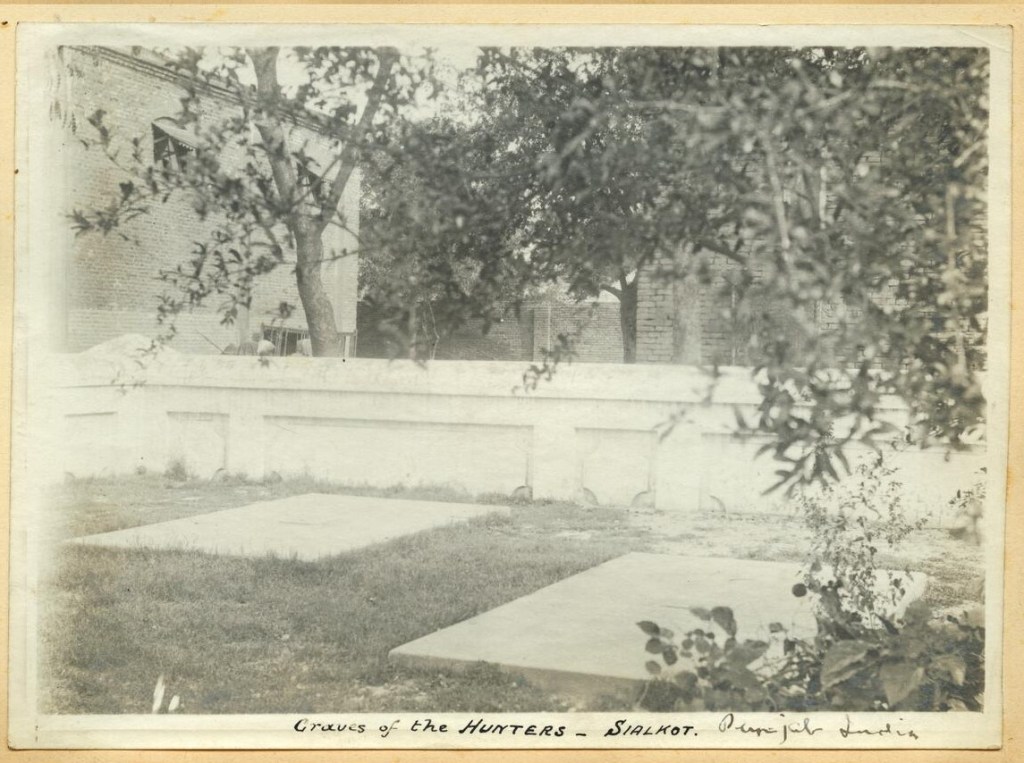
The Reverend Thomas Hunter, his wife Jane and infant son – killed as they escaped to the fort. It is unclear who was responsible for this. The new levies that had been sent to guard the jail ran off at the first sign of trouble; the 250 prisoners were set loose by the mutineers; however, it would appear the Hunters were killed by the goal guard or by servants attached to the jail.
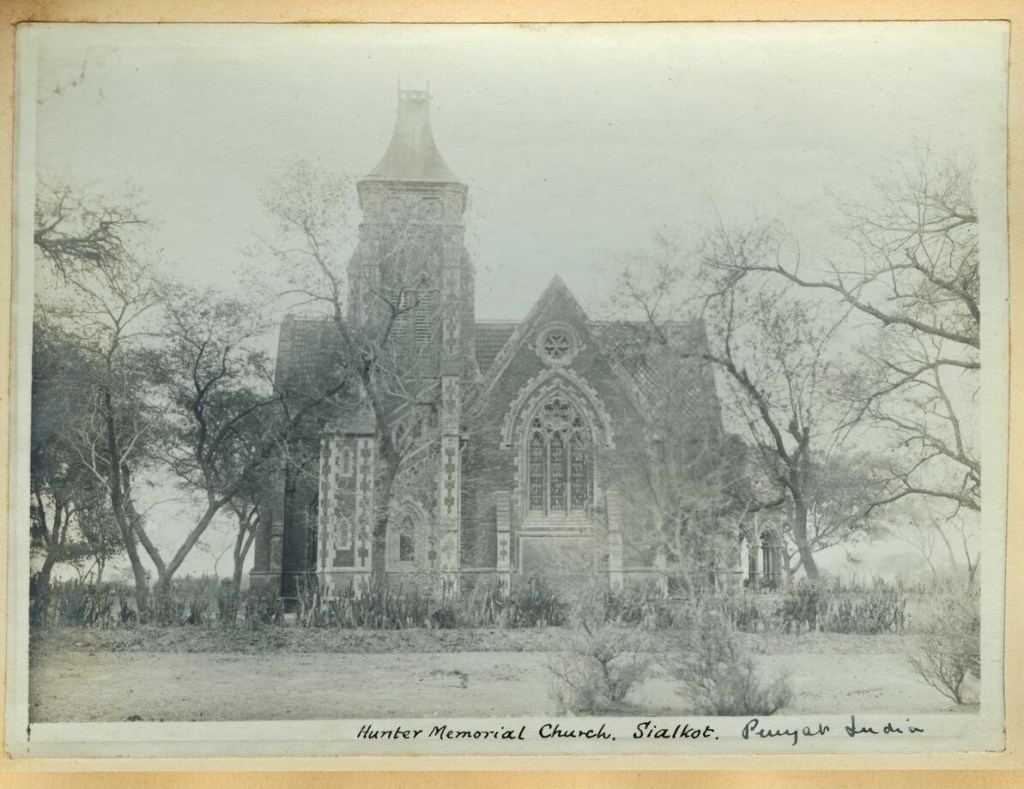
As the reverend’s face was scorched with powder, it would appear the pistol was held right up this head. The same bullet passed then through his wife’s neck, however, it was ascertained she was killed with a sword or a bayonet, and her baby likewise. She was found holding the baby in her arms. The Hunters had only arrived in Sialkote in January 1857 from the Church of Scotland Mission, and he was the first Scottish missionary in the Punjab. They lived near the Brigade Parade Ground, facing the Trinity Church. His successors would not arrive in Sialkote until 1860. Hunter’s Church was built and named after the slain reverend and still stands today.
The last casualty of Sialkote was a child. “One fine little boy of Dr Butler’s never recovered the fright, after lingering for a short time in a distressing state of nervous excitement, he died at Lahore.”
Sources:
Bourchier, George. Eight Months’ Campaign against the Bengal Sepoy Army, during the Mutiny of 1857. London: Smith, Elder and Co., 1858.
Cave-Browne, J. The Punjab and Delhi in 1857. Vol. 2. Edinburgh: William Blackwood and Sons, 1861.
Chick, Noah Alfred. Annals of the Indian Rebellion. Calcutta: Sanders, Cones, and Co., 1859.
Cooper, Frederick. The Crisis in the Punjab: From the 10th of May until the Fall of Delhi. London: Smith, Elder and Co., 1858.
Dodd, George. The History of the Indian Revolt and of the Expeditions to Persia, China, and Japan, 1856–7–8. London: W. & R. Chambers, 1859.
Gimlette, G. H. D. A Postscript to the Records of the Indian Mutiny. London: H. F. & G. Witherby, 1927.
Kaye, John William. A History of the Sepoy War in India, 1857–1858. Vol. 2. London: W. H. Allen & Co., 1880.
Moorsom, W. S., ed. Historical Record of the Fifty-Second Regiment (Oxfordshire Light Infantry) from the Year 1755 to the Year 1858. London: Richard Bentley, 1860.
Owen, William. Memorials of Christian Martyrs, and Others, Who Have Perished in the Indian Rebellion. London: Simpkin, Marshall, and Co., 1859.
Papers Relating to the Mutiny in the Punjab in 1857. London: Printed by Order of the House of Commons, 1859.
Punjab Government. Mutiny Reports: Reports on Events in the Cis-Sutlej Division. Vol. 8, Part 1 of Selections from the Punjab Government Records. Lahore: Punjab Government Press, 1911.
Links:
Fibis
https://digitallibrary.usc.edu/asset-management/2A3BF1OL0UB
 Mutiny Reflections