Then the Mutiny Happened
“It was, I think, just a week after I spoke to them that the Mutiny broke out at Meerut, and for months afterwards there was no direct postal communication with Calcutta. General Anson, therefore, gave Hodson a staff appointment on his own responsibility, and he soon justified the selection, for it is doubtful if there was another man in the whole army who could have supplied his place.” (Mr Sloggett’s letter to the Rev. G. H. Hodson, 1882.)
As events showed, Hodson marched down from Dagshai on the behest of Anson, who was collecting men for the Delhi Field Force as Anson’s Quartermaster General. He empowered Hodson to raise 1000 irregular horse and placed him at the head of the Intelligence Department. He further sent him to Karnal to restore communications between that place and Meerut.
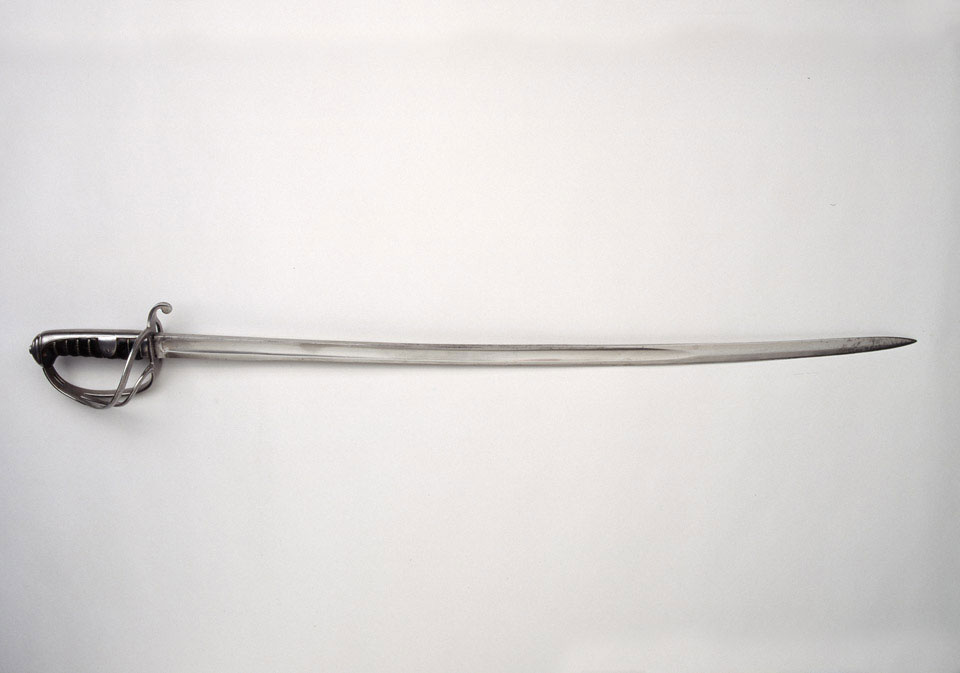
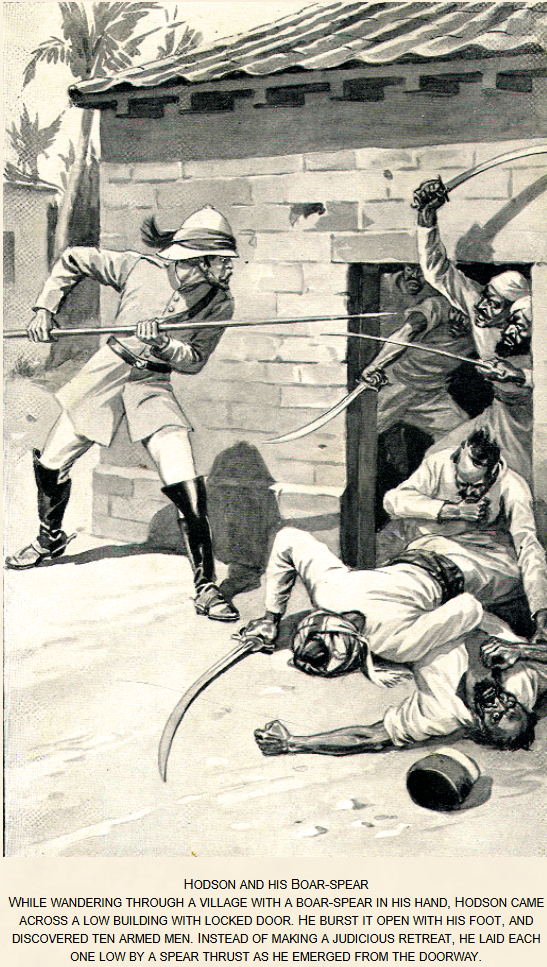
As such, it was Hodson who rode the 250 miles in the searing heat of May, and it would be Hodson who would organise spies for the Delhi Ridge. Whatever grudge the government bore him, he was still a man of duty, and when there was a battle to be fought, William Hodson was never far behind. An excellent swordsman and an intrepid cavalryman, although Hugh Gough thought he was something of an “ugly rider”, Hodson threw himself with such spirit into every battle he could, leaving some of the men thinking he was quite mad and leading Surgeon Edward Hare to remark that he “was only fit to lead Italian banditti.” Lieutenant Fairweather of the 44th remarked,
“It was beautiful to see him riding a little in front and the centre of his troops, and to see how quietly he controlled their eagerness to press on by motioning them back, first on the right, then on the left, by a mere wave of his hand, as he passed the hog-spear (the weapon he always used) from one hand to the other while he rolled up his sleeves…” then when it came time to charge, Hodson would shout, “Come along, lads, the fun’s begun!” Waving his spear in the air, he would then let loose a stream of abuse and mockery on his opponents in English and their own language. One officer later wrote,
“I fancy I see him now, laughing, parrying most fearful blows, as calmly as if he were brushing off flies, calling out all the time, ‘Why, try again now!’ and ‘What’s that? Do you call yourself a swordsman?”
Hodson was a superb linguist, a talent which served him well not just in the fearful provinces in the Punjab but now before Delhi – he could communicate with his spies in their own tongue, never having to fall back on an interpreter and, above all, endearing him to his men.
“I am to raise as many men as I please; 2000 if I can get them. The worst of it is, then, being in a part of the country I do not know and the necessity of finding men who can be trusted. Mr Montgomery (judicial commissioner for in the Punjab) is aiding me wonderfully. He called upon some of my old friends among the Sirdars to raise men for me. Shumshere Singh is raising one troop; Tej Singh ditto; Emaumoodeen ditto; Mr Montgomery himself one or two ditto. All these will be ready in about three weeks. I am to remain Assistant Quartermaster-General, attached to the Commander-in-Chief. This allows me free access to him at any time and to other people in authority, which gives me power for good. The Intelligence Department is mine exclusively, and I have for this line Sir Henry’s old friend, the one-eyed Moulvie, Rujub Alee, so I shall get the best news in the country.”
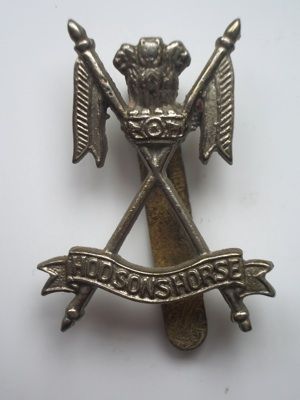
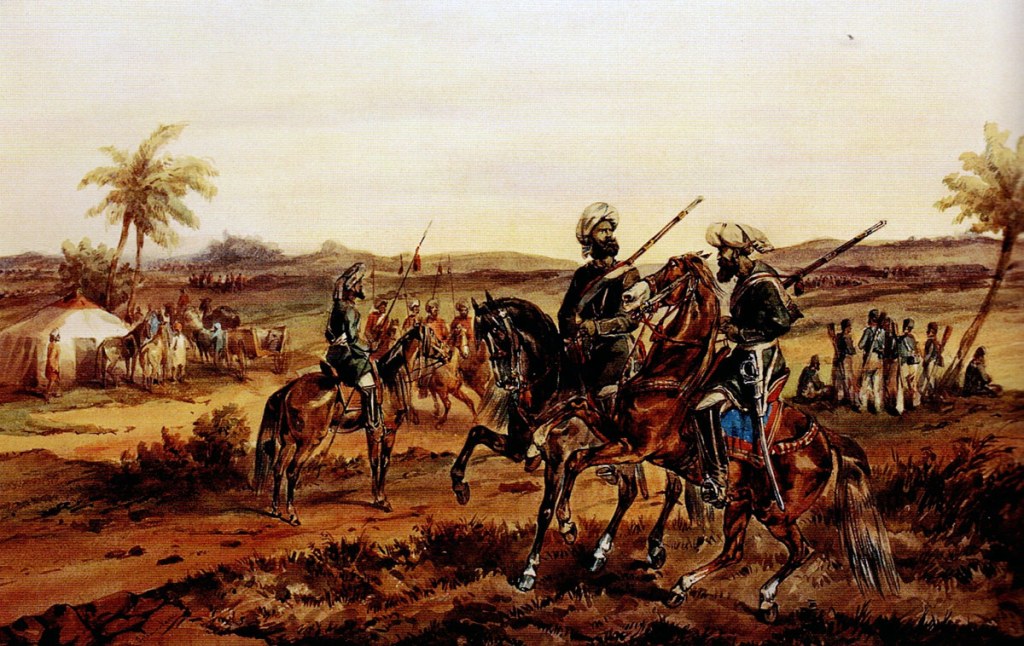
To Hodson’s peculiar merits as a leader of irregular horse Brigadier (afterwards Sir J.) Hope Grant, G.C.B., himself a successful leader of cavalry, paid the following tribute in his diary of the siege: “After Major Daly had been badly wounded Hodson was replaced in command. He was a dashing, clear-headed, energetic officer; no man understood or could lead an irregular regiment better, and at such a time, his services in the field could not be dispensed with.”
” He is scarcely out of the saddle day or night,” wrote another officer, “for not only has he to lead his regiment and keep the country clear, but being Intelligence officer, he is always on the move to gain news of the progress of affairs and acts and intentions of the enemy. Even when he might take rest, he will not, but will go and help work at the batteries, and expose himself constantly, in order to relieve some fainting gunner or wounded man.”
When the stress of work in camp fell so hard upon our wearied soldiers that the officers had to dispense with the customary salute,“ said another officer, ” that Hodson never passed down the lines without every man rendering to him that mark of respect. The soldiers loved him as their own.’ There goes that ‘ere Hodson,’ said a drunken soldier, as he cantered down the lines; ” he’s sure to be in everything: he’ll get shot, I know he will, and I’d a deal rather be shot myself: we can’t do without him.“
Hodson was a man coming into his own.
Command of the fledgling Hodson’s Horse had been given, albeit temporarily, to Lieutenant C.T.M. McDowell as Hodson was once again commanding the Guides who had lost both Henry Daly and Neville Chamberlain to injury. He hoped to lead the Guides in victory through the gates of Delhi — but before he could do so, there was the month of August to contend with. Nor would Hodson be freed of controversy.
Sources:
Hodson, Rev. George H., ed. Twelve Years of a Soldier’s Life in India: Being Extracts from the Letters of the Late Major W. S. R. Hodson, B.A. London: John W. Parker and Son, 1859.
Knollys, Henry. Incidents of the Sepoy War, 1857-58: Compiled from the Private Journals of General Sir Hope Grant. London: William Blackwood and Sons, 1873.
Trotter, Captain Lionel J. A Leader of Light Horse: Life of Hodson of Hodson’s Horse. London: William Blackwood and Sons, 1901.
 Mutiny Reflections