The final toll on the Field Force was immense. From the commencement of operations until the 20th of September it was listed as follows:
Killed, Wounded and Missing, Europeans
Prior to the 8th of September, 2’136 officers and men were killed, wounded or missing
From the 8th of September to the 14th of September, 327 officers and men were killed, wounded or missing
On the 14th of September, a total of 1’170 officers and men were killed, wounded or missing
Between the 15th and the 20th of September 177 officers and men were killed, wounded or missing
Returns for the Indians serving on the Ridge and in the operations in the city from the 30th of May to the 20th of September:
14 Native officers were killed and 49 wounded
99 NCOs were killed, 207 wounded and 1 missing
1075 rank and file were wounded, and 368 killed
This list does not include the camp-followers and other civilians attached to the Delhi Force and there are no returns available for them. Their toll in dead and wounded remains unknown.
15th September
1st BTN 8th Foot
Corporal James Turner – killed in action
52nd Foot
Privates
Crew, John – killed in action
Clune, James – killed in action
1/60th of Foot
Privates
Eagan, John – died of wounds
Gibbs, George – slightly wounded
61st Foot
Sergeant William Shiells – severely wounded, musket ball to the neck
Corporals
Carter, Edwin – severely wounded in the elbow joint by a shell splinter. The wound did not heal for five months, and a large piece of bone “came away.” On the 5th of September 1858, the wound was declared healed, but the forearm remained in a “semi-bent position”, and he had lost all movement in the elbow. Carter was sent on modified duty on October 1858.
Dooling, Patrick – killed in action
Privates
Finn, Michael – killed in action
Harte, James – severely wounded musket ball in the leg
Jones, Charles – killed in action
Lodge, James – killed in action
Southern, Charles – severely wounded in eye and wrist, musket ball
Waite, George – killed in action
Drummer Robert Vauston – slightly wounded, musket ball in the arm
75th Foot
Privates
Coughlan, James – killed in action
Ferns, Timothy – killed in action
Kenny, Patrick – killed in action
Lambert, Michael – killed in action
Meer, Peter – killed in action
Preece, John – klled in action
Sullivan, Daniel – shot in the chest, died of wounds
1st Bengal European Fusiliers
Privates
Campbell, Daniel – dangerously wounded, died of wounds 3rd November
Neill, Timothy – killed in action
Page, John – mortally wounded, died the same day
2nd Bengal European Fusiliers
Sergeant Maurice Brady – wounded in leg
Privates
Curtis, John – wounded in arm
Driscoll, Daniel – killed in action
Harford, Christopher – killed in action
Morgan, Joseph – died of wounds
Bengal Field Artillery
Corporal John Carroll – killed in action
Gunner Patrick Dee – severely burnt on body

16th September
52nd Foot
Corporal Herbert Taylor – died of dysentery
Privates
Balls, Robert – died of febris
Fitzgerald, Jeremiah – slightly wounded in the right arm
Franklin, Robert – severely wounded in the right thigh
Pentleton, Alexander – died of cholera
Penrose, Edward -killed in action
Smith, John – died of febris
Willoughby, Thomas -wounded
1/60th Foot
Bugler Michael Lynch – killed in action
Privates
Dixon, William – severely wounded
Slater, Charles – severely wounded
61st Foot
Privates
Carter, Edward – killed in action
Cummins, Martin – killed in action
Jones, Charles – killed in action
McDonald, James – severely wounded in shoulder
Strecks, George – severely wounded in arm
Thompson, Thomas – slightly wounded in leg
75th Foot
McKee, James shot in chest ,died of wounds
Miller ,Thomas – killed in action
2nd Bengal European Fusiliers
Private William Williamson – killed in action
4th Punjab Infantry
Lieutenant R.P. Homfray – 17th BNI attached to 4th Punjab Infantry, killed. Lieutenant Homfray was accidentally shot by one of his own men.
17th September
52nd Foot
Bates, William -died of febris
Kinton, Richard, died of dysentery
Lennan, William – died of hepatitis
Massey, William – died of dysentery
Moore, John – died of cholera
Stoner, Robert – severely wounded in the left shoulder
1/60th
Ensign Everard Aloysius Lisle Phillipps – killed in action at Bank House, Delhi – 17th September 1857 Aged 22. Buried at Rajpura Cemetery, Delhi – “E.A.L. Phillips Esqr. Ens. H.M. 60th Rifles killed at the siege of Delhi. 17th Sept. 1857, aged 21 yrs. R.I.P. erected by his brother officer H. Le C.M.
Privates
Bumstead, George – dangerously wounded, died of wounds
Chappell, Samuel -severely wounded
Hindle, Edwin – severely wounded
Kelly, Edward (2886) – killed in action
61st Foot
Private William Linton- slightly wounded in head
1st Bengal European Fusiliers
Private Peter Gibbons – killed in action
Bengal Field Artillery
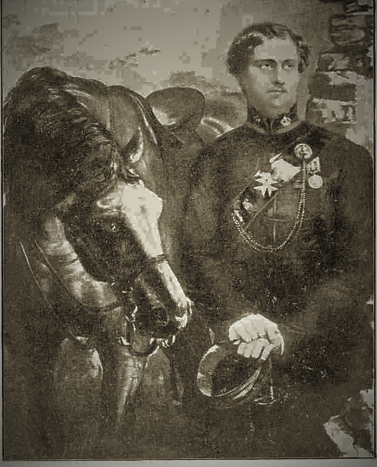
Lieutenant Minto Elliott – severely wounded. Son of E. E. Elliot (d. 1872). b. 1833. He attended Addiscombe from 1851 to 1853. He married Amelia (d. 1871), the daughter of late G. Martin, in 1857. Major Charles Ried wanted to nominate Elliott for the VC, but Wilson rejected Reid’s recommendation as it was written in pencil. By the time the report was finally acknowledged, too many years had passed, and no more VCs were being given to mutiny veterans. Elliott served in the Hazara campaign in 1868 and the Egyptian War in 1882. He retired on a pension in 1887 and died, aged 75, in 1909, having attained the rank of Major-General.
Corporal George Raeburn – slightly wounded in the side
Gunners
Fletcher, James – slightly wounded in ankle by shell splinter
McCarroll, Peter l – slightly wounded 2nd Aug, severely burnt 17th Sept
Raeburn, George – slightly wounded in side
18th September
1st BTN 8th Foot
Corporals
Cox, George – killed in action
Smith, John – severely wounded in right arm
52nd Foot
Privates
Cox, William – slightly wounded; little finger of the left hand amputated
Dawson, John – slightly wounded
1/60th of Foot
Privates
Drewitt, John – killed in action
McSweeney, Edward – killed in action
61st Foot
Private James Crotty – severely wounded in hand
75th Foot
Lieutenant Edward Villiers Briscoe – killed in action at Delhi – 18th September 1857
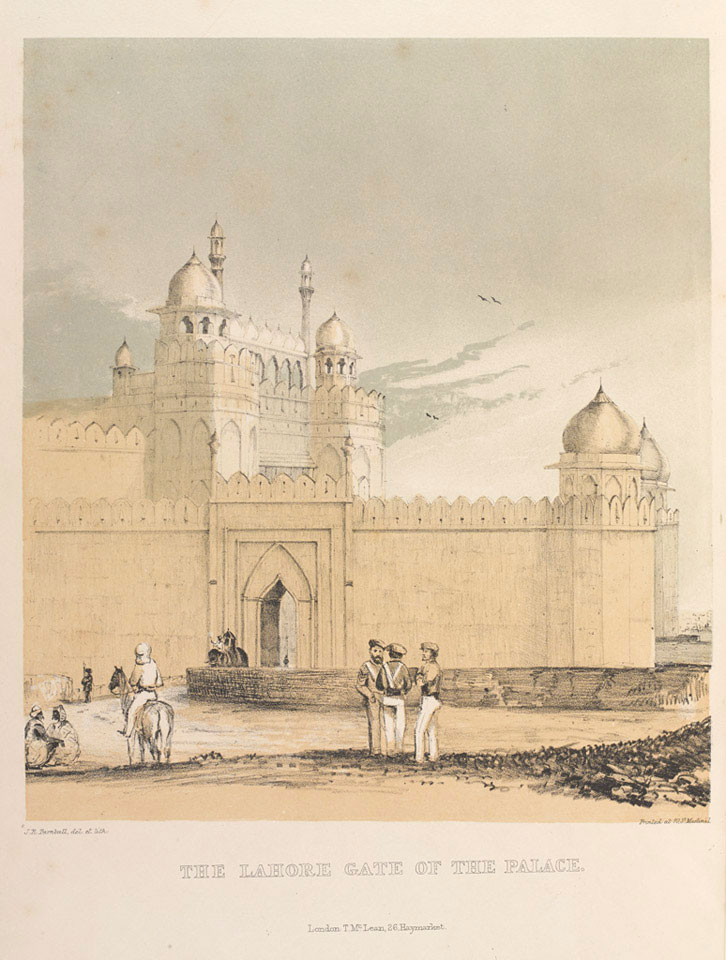
Killed in the attack on Lahore Gate. He was the last officer of the regiment to be killed during the campaign. Third son of the late Capt. Henry Briscoe, RE.
Drummer William P. Foley – wounded in right knee
Privates
Bradley, William – severely wounded in chin and chest
Carr, William severely wounded in abdomen
Corbett, Samuel – slightly wounded
Galway, John – severely wounded in left foot
Griffin, Patrick – severely wounded, left arm amputated
Keegan, James – severely wounded in right thigh
Landy, Timothy – slightly wounded
McDonald, Patrick – killed in action
O’Dea, Brien – slightly wounded
Orris, John – severely wounded in arm by grapeshot
1st Bengal European Fusiliers
Privates
Connolly, James – slightly wounded
Dawson, Michael – slightly wounded
Monaghan, Thomas – slightly wounded
Rutherford, Hugh – slightly wounded by a bayonet
Watson, Augustus – killed in action
2nd Bengal European Fusiliers
Private William French – died of wounds
Bengal Horse Artillery
3rd Brigade, 3rd Troop
Gunner Edward McKenna – slightly wounded
Bengal Field Artillery
Gunner Cornelius Ahern – killed in action
19th and 20th September
52nd Foot
Sergeant William Rogers died of diarrhoea at Kussowlie, Sept. 20th
Bugler John McCormick – died of diarrhoea
Private Joseph Plunkett – died of febris
1/60th Foot
Private Jeremiah Dowling – severely wounded
61st Foot
Privates
Cunnane, Peter – killed in action
Downey, Thomas – slightly wounded in ear
Fitzpatrick, John – severely wounded in thigh
Foley, Edward – slightly wounded in head by shell splinter
Gilroy, Michael – killed in action
Kirwin, Michael – killed in action
Smith, Simpson – killed in action
2nd Bengal European Fusiliers
Sergeant John Osbourne – killed in action
Drummer James Howse – died at Delhi
Private Joseph Sare – died on the September 20th
Bengal Horse Artillery
3rd Brigade 1st Troop
Gunner John Brodnett – slightly wounded
3rd Brigade 3rd Troop
Gunner Michael Gartland – dangerously wounded, died of wounds
Unposted Recruits
Thomas Pennington – slightly wounded in leg
21st and 22nd September
1st BTN 8th Foot
Corporals
Davis, George – slightly wounded, 22nd September
Ireton, John – died of wounds on 22nd September
Moran, James – killed in action on 21st September
Walsh, William – dangerously wounded, died of wounds 21st September
61st Foot
Privates
Moran, James – killed in action – 21st September
Walsh, William – killed in action – 21st September
Burke, John – killed in action – 22nd September
Ireton, John -killed in action – 22nd September
75th Foot
Privates
Bourke, William – severely wounded in abdomen, 21st September
Firman, Elias – severely wounded in chest and shoulder, 21st September
2nd Bengal European Fusiliers
Corporals
Irwin, Robert – died of wounds 21st September
Wilson, William – wounded in cheek 9th July, killed in action 21st September
Privates
Byrne, James – wounded
Clarke, John – killed in action 22nd of September
Duggan, James – killed in action, 22nd of September
36th BNI
Lieutenant Arthur Wellesley Craigie – dangerously wounded 22nd of September
Attended Addiscombe from 1851 to 1853, together with Minto Elliott.
He was attached to the Guides Cavalry after his regiment mutinied in Jalandhar. He was the youngest son of George Clark Craigie Esqr. of Dumbarnie, Perthshire, Scotland. Craigie was wounded again at Narnaul on the 14th November and died on the 30th November 1857 in Delhi, aged 24. A monument was erected to him by his brother at the Kashmir Gate Cemetery in Delhi.
Bengal Horse Artillery
3rd Brigade 1st Troop
Staff Sergeant Patrick Roddy – slightly wounded 22nd September
Corporal George Gallerday – slightly wounded 21st September
Bengal Field Artillery
Bombardiers
Corrigan, John – killed in action, 22nd of September
Landers, Michael – dangerously wounded 21st of September, died 27th of September
Mahoney, Charles – killed 22nd of September
Sources:
Blomfield, David, ed. Lahore to Lucknow: The Indian Mutiny Journal of Arthur Moffatt Lang. London: Leo Cooper, 1992.
De Rhe-Philipe, George William, comp. Inscriptions on Christian Tombs or Monuments in the Punjab, the North-West Frontier Province, Kashmir and Afghanistan. Part II: Biographical Notices. Lahore: Government Press, 1912.
Forrest, George W., ed. Selections from the Letters, Despatches and Other State Papers Preserved in the Military Department of the Government of India, 1857–58. Vol. 1. Calcutta: Military Department Press, 1893.
Reid, Sir Charles. Extracts from Letters and Notes Written During the Siege of Delhi in 1857. London: Henry S. King & Co., 1858.
Tavender, I. T. The Casualty Roll for the Indian Mutiny, 1857-1859. London: J. B. Hayward & Son, 1983.
Vibart, Colonel H. M. Addiscombe: Its Heroes and Men of Note. Westminster: Archibald Constable and Co., 1894.
Links:
Edmundian Association. “Everard Aloysius Lisle Phillipps VC.” Accessed May 24, 2026. http://www.edmundianassociation.org.uk/old/133.pdf.
 Mutiny Reflections
A sobering list! I was struck by the comment: “Wilson rejected Reid’s recommendation as it was written in pencil.” Words fail me ! 🙄
LikeLiked by 1 person
Wilson was a stickler for rules. He insisted the men do not fight in their shirt sleeves, demanding they wear uniforms no matter how tattered. He wrote maddening reports constantly and wavered so severely in his opinions, Nicholson wanted to depose him, through mutiny and on his deathbed, threatened to shoot him. Reid was writing his reports under fire, crouched behind crumbling walls while Wilson rarely showed his face outside. When Reid finally managed to submit the recommendation, according to Wilson’s standards, the report somehow got lost. People forget this is the same Wilson who hid behind protocol during the Meerut uprising in May, basically tossing the blame on Hewitt who was old and Smith who was hated.
LikeLiked by 1 person
I suppose history is littered with such men! Hindsight is, of course, an exact science but it does make you wonder if Wilson had been a little more dynamic in May whether events would have unfolded the way they did.
Astonished at the order to fight in uniform during a Delhi summer! I recall hearing somewhere that some regiments had to fight wearing their leather neck stocks! Is that true or just urban legend?
LikeLiked by 1 person
The leather stocks are true. However were not in use in India due to the problems with the leather being cow and objectional to the sepoys. There was a mutiny in Vellore in the early 19th century because of uniform issues. During the summer there were white uniforms issued but highly impractical for a siege, white shows up wonderfully in the dark so men were dying their uniforms khaki. The Sirmoor Gurkhas wore their green uniforms until they fell apart. Wilson was very well connected and had influential friends to back him up. It is unfortunate that the men who really did run the siege and taking of Delhi never received even half the credit they deserved. What I have read of Wilson, even in his own letters, he strikes me as someone who prioritised whining and whinging.
LikeLiked by 1 person
Once again, I must thank you for your prompt and extremely interesting reply!!! 🙏🤗
LikeLiked by 1 person