Presidencies and Provinces – Madras, Bombay and Bengal
Madras and the Coast
The Madras Presidency was established in 1640 with its winter capital at Madras and summer capital at Ootacamund.
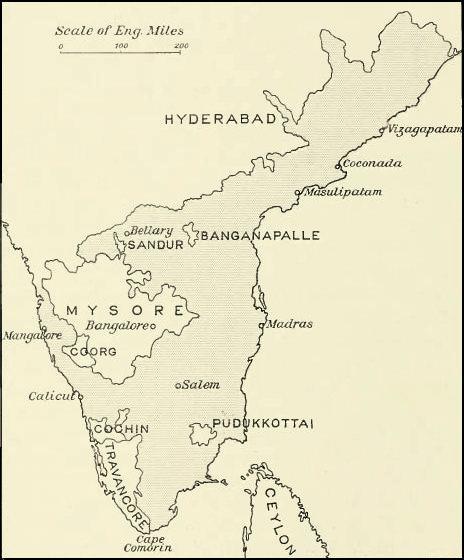
At its height, the Presidency engulfed most of southern India, including today’s states of Tamil Nadu and parts of Andhra Pradesh, Kerala, Karnataka, Telangana, Odisha and the union territory of Lakshadweep. The coastal regions and northern parts of Sri Lanka (then called Ceylon) also belonged to the Madras Presidency from 1793 to 1798, after which it was created a Crown Colony. The Madras Presidency was neighboured on the northwest by the Kingdom of Mysore, to the southwest by the Kingdom of Cochin, and to the north by the Kingdom of Hyderabad. Some parts were also bordered by the Bombay Presidency and the Central Provinces and Berar (today called Madhya Pradesh). Although the British held most of the territory in this area of India, the Portuguese and the French still had some say.
The Many-Varied Colonisers
Portuguese India
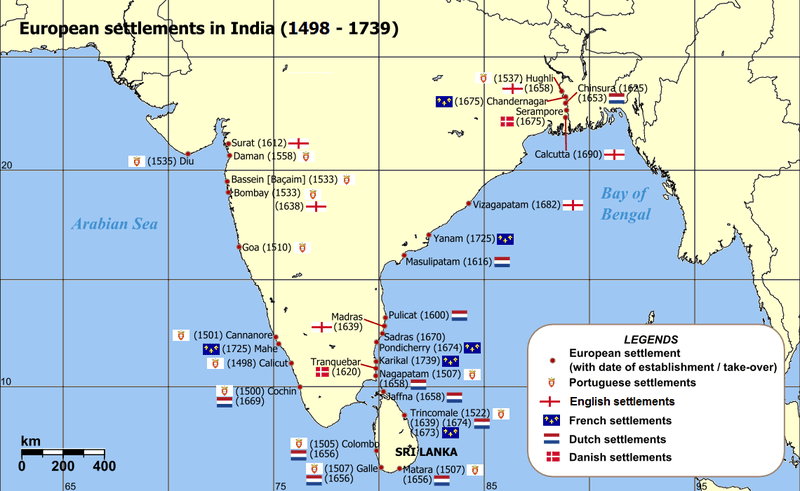
The Portuguese had been among the first traders in India, having established their territories six years after the discovery of a sea route to the Indian subcontinent. What had once been a vast Portuguese Indian dominion would dwindle through the years until it only consisted of several isolated areas with the territory of Goa housing the capital – a fairly large tract of land in the middle of the west coast. The island of Daman, the separated territories of Dadra and Nagar Haveli – north of Bombay, and the island of Diu off the southern coast of Gujarat completed their dominion. The total area of Portuguese India amounted to 4,193 sq km, with the majority of it consisting of Goa. It is interesting to note, that for judicial purposes, the Portuguese province of Goa included Macau in China and Timor in the Malay Archipelago.
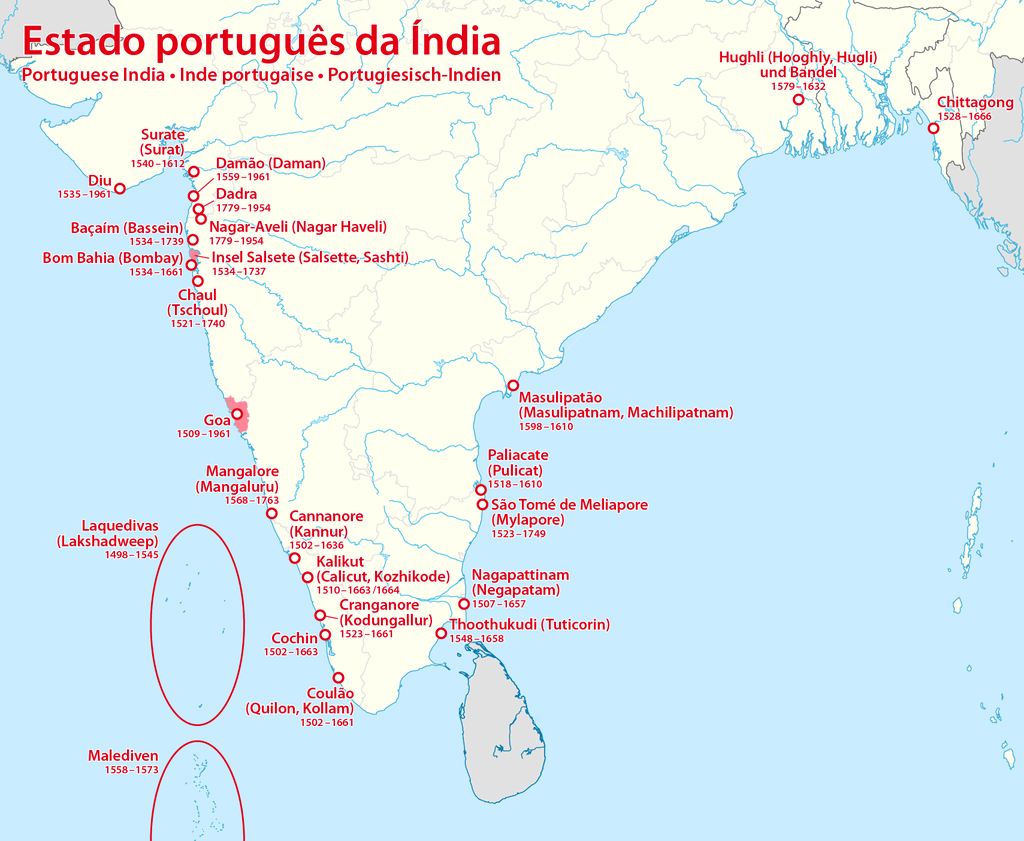
After Indian Independence from Britain in 1947, things looked a little different. In 1954, an organisation called “The United Front of Goans” took control of the enclaves of Darda and Nagar Haveli. Peaceful protests against Portuguese rule were violently suppressed, and India broke off diplomatic ties with Portugal and then proceeded to impose an economic embargo against the territories of Portuguese Goa. Between 1955 and 1961, the subject of decolonisation remained in a stalemate with neither side ceding to the demands of the other. The Portuguese, in the meantime, had established an airline, Transportes Aéreos da Índia Portuguesa, and airports at Goa, Daman and Diu to facilitate the transport of goods and people between the enclaves.
In 1961, India invaded Goa and Daman and was met with a stiff fight from the Portuguese, who had been ordered to defeat the Indians or die trying. It was suicidal at best – the Portuguese were poorly equipped and only had a force of 3300 fighting men against the combined naval, air and land forces of the Indian army, consisting of 30’000. On 19 December, 1961, the Governor of Portuguese India signed the Instrument of Surrender and at the stroke of midnight, 450 years of Portuguese rule in India came to an end.
French India
Similar to the Portuguese, the French would witness a rise and fall in their dominions of India. Known as Établissements français dans l’Inde, the total area by 1950 would measure 510 square kilometres, the majority of which, some 293 sq km, belonged to Pondichery alone. The colony comprised 5 separate enclaves which had started as factories of the French East India Company – Pondichery, Karikal, Yanaon on the Coromandel Coast, Mahe on the Malabar Coast and Chandenagor in Bengal. Until 1816 the French had also possessed several small trading stations within other towns, but as the British refused to acknowledge any French claims to these, they were never reoccupied.
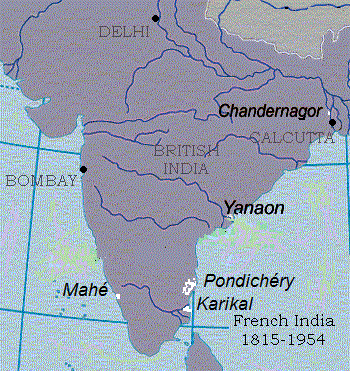
Like the Portuguese, the French would continue to possess their territories in India well into the 20th century. The towns of Machilipatnam, Kozhikode and Surat were ceded to India in October 1947, while the remaining areas were allowed by election in 1948 to choose their own future. Governance of Chandernagore was ceded to India in 1950 and merged into the State of West Bengal in 1954. By November 1954, the four enclaves of Pondichéry, Yanam, Mahe, and Karikal were de facto transferred to the Indian Union and became known as the Union Territory of Puducherry. However, the union of French India with the rest of the subcontinent did not take place until 1962 when the French parliament, following a treaty with India, handed them over.
Others Colonisers
It must be remembered that although the French and Portuguese were the largest rivals at one point to the British, India wasby no means spared by the traders from other nations. The largest of these were the Danes while the Dutch made a brief appearance from 1605 to 1825.
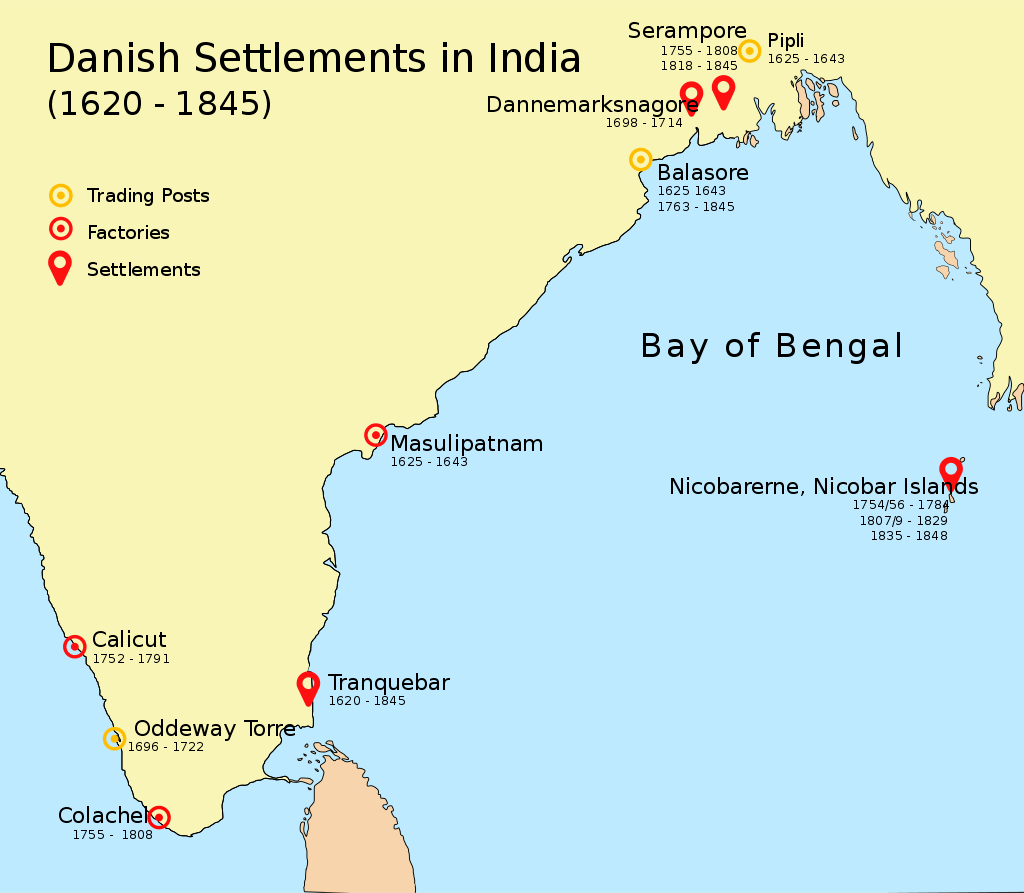
The Nicobar Islands would also be briefly colonised by the Austrians.
We now turn our attention to Bombay.
 Mutiny Reflections
