Mrs. Mawe’s Narrative of Her Escape from Nowgong
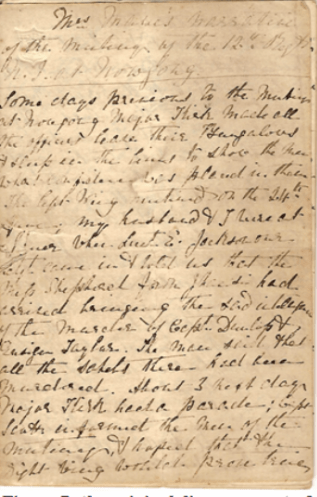
The author incorrectly spells the name as Mabe. The narrative presented on that site has some errors, thus this author chose to use the one in Chick.
“Some days previous to the mutiny at Nowgong, Major Kirke made all the officers leave their Bungalows and sleep in the lines, to show the men what confidence was placed in them.
“The left-wing mutinied on the 24th June (I think), my husband and I were at dinner when Lieut. E. Jackson, our adjutant, came in and told us that the mess shepherd from Jhansi had arrived, bringing the sad intelligence of the murder of Capt. Dunlop and Ensign Taylor. The man said that all the sahebs there had been murdered.
“About 3 p.m. next day, Major Kirke had a parade; Capt. Scott, the Quarter Master, informed the men of the mutiny and hoped that the right wing would prove true. The regimental colours were placed in front, and he told the men that all those who intended to be faithful to the service were to come towards the colours. The sepoys all moved forward, but silently. We were looking at them from our window (I cannot tell why, but from the first, my poor husband and I doubted the men). The officers were quite pleased and said that the right wing would stand fast.
The native officers came afterwards to Major Kirke and told him the right wing wished to volunteer. The next day, he sent the Adjutant to ask them if they were of the same mind; still, they said yes. On the evening of the 7th June, Dr Mawe said to me that he feared the men would break out soon and be set on or joined by the 14th Irregulars (Skinner’s corps, who had become most insolent). My husband was the only doctor at Nowgong and had medical charge of the cavalry and artillery.
At about 5 p.m., Dr Mawe went in our buggy to the mess house, where he knew he would find the Major, to try and shake his confidence in the men and to ask him to move to Saugor or some other place where there were troops. I little thought then that he would never cross his own threshold again. I dressed my little girl and sent her out with the bearer. The wing was paraded as usual, to march off the guards, by the serjeant major. I was dressing when my ayah, who was standing by the window, exclaimed ‘oh, what is the matter, the serjeant major is running away.” I instantly looked out and saw Lucas, with his sword raised over his head, coming towards the bungalow; he saw me at the window and called out —“Mrs Mawe, fly, the men have mutinied.”
I felt paralysed, both husband and child out, and both at their mercy. I rushed out into the road to try if I could see either of them. I desired our punkah bearers to go and look for the child, but they would not stir, neither would our khidmutgar, who was standing at the door. I heard shots fired and feared Dr Mawe was at the hospital and would be killed. No one would stir, but for me, I was standing in the road, crying. When I saw him driving furiously from the mess house and waving his whip, I ran to him and saw our bearer bringing our little child in the rear of the lines. I snatched her from him, got into the buggy, and drove back to the Mess House, where all the officers had assembled.
According to Mrs Mawe, some eighty sepoys turned up at the Mess House, expressing their fidelity, which might have sounded dubious to her, as not far off lay the body of the havildar major that had been shot on the parade ground. Shortly after, the officers decided it was time to abandon Nowgong.
” We were first off in our buggy; the band master’s buggy was broken at starting, so he, his wife and baby were put into the camel carriage (Major Kirke). We were told to go towards Chuttupore, but instead of going the direct road, Dr Mawe went by a road round a hill, which Capt. Scott had gone a few days previously, while escorting four artillerymen there who had used seditious language, I believe; and during the night, we were constantly alarmed lest the cavalry should follow us. We saw fire after fire as our bungalows burned; several sepoys left us during the night. I do not know how many left Nowgong; there were besides the eight officers, the bandmaster, sergeant major, several of the band and their families, the brigade major’s wife, and an old artilleryman.”
The next morning, they arrived in Chhatarpur, where they were ensconced in a serai, and as we have seen, Scot and Townsend went back to Nowgong to try and retrieve some property, while Major Kirke headed off to Lugasi and the remaining party to Mahoba. On the 17th, they should have set off towards Kalingar, but at daybreak, “…we were fired upon by matchlock men, and had to fly, the (faithful) sepoys all made off, except ten or twelve. Lieut. Townsend was shot dead. After we left, I saw the subadar, who was shot in the stomach, on horseback. We hoped to reach Muhobah again, and after a weary walk of ten miles, we arrived; but alas! the people had risen, and we had to proceed. Dr Mawe and I carried our child alternately. Mrs Smalley died near this place from sunstroke. We had no food; I felt quite exhausted; one of the officers kindly lent me his horse, and Dr Mawe was lent another.”
By now, everyone was suffering from various degrees of exhaustion. Major Kirke died on the road between Mahoba and Kabrai and was duly buried by his men; however, the bodies of the sergeant-major and some of the bandsmen’s wives were left where they lay. At Mahoba, a sergeant and the Kirchoffs appeared while the sepoys and many of the bandsmen disappeared. Once again, the party, which now consisted of Captain Ewart, Captain Scot, Lieutenants E. Jackson and James Barber, Ensigns Remington and Franks, Dr Mawe, Henry Kirke, Mr Smalley and two children, and the Kirchoffs.
Gratefully, Mrs Mawe handed over her daughter, Lottie, to Captain Scot, who settled the child on his horse, while Mrs Mawe and her husband continued onwards astride Lieutenant Thompson’s horse. Soon after sunrise, a band of villagers, intent on plunder, attacked the party with sticks and spears – Scot’s horse was struck, causing the animal to bolt, Franks and Remington dashed after him, and the Mawes were left behind.
They rode on for several miles, keeping away from villages and finally arrived at a river. By now, Dr Mawe was suffering from violent cramps. His wife desperately tried to hold him on the horse. She moved the animal over to a steep nullah, at the bottom of which was a pool of muddy water. Dismounting the horse, she tried to fill a cap with water and dribble the liquid in her husband’s mouth, which revived him enough to keep him in his senses.
The horses were getting water, and I was bathing my neck. As I had no stockings, my feet were dreadfully scorched and blistered, my shoes being much torn. When two lattiwallas were seen on the hill over the nullah, they told us to go away; we were all frightened and mounted immediately and rode off. Sergeant K. was holding our horse while Dr Mawe put me up and mounted. I think he must have got suddenly faint, for I fell and he over me on the road just as we were riding off. Sometime before, poor Mr Barber and Dr Mawe said they could not live many hours. My poor husband felt he was dying before he reached the nullah and told me his wishes about the children and myself, and we took leave of each other. I felt as if my brain was burnt; the relief of tears was denied me.”
When the Mawes fell off their horse for the final time, the sergeant let go of the animal, which bolted, cutting off the last chance the Mawes had of escape. They sat on the ground, quite somberly waiting to die; Mrs Mawe was certain by now, if the sun did not do its work, the next band of plunderers would. Her husband, in the meantime, was fading fast. Mrs Mawe tried again to alleviate his thirst by bringing water to him in her dress and the cap, but as she went down to the puddle, two villagers showed up on the crest of the nullah. They came down and, without a word, robbed the prostrate doctor of his last 80 rupees, which he had hidden about his waist, and his gold pocket watch. They then turned their attention to the luckless lady and pulled her guard ring off her finger. Fortunately, she had had the sense to hide her wedding ring by twisting it up in her hair.
By the time she had soaked part of her dress and the cap and returned to her husband, Mrs Mawe realised all her efforts were in vain. …my beloved’s eyes were fixed, and though I called and tried to restore him and poured water into his mouth, it only rattled in his throat; he never spoke to me again. I held him in my arms till he sank gradually down. I felt frantic but could not cry; I knew the being I had idolized nearly fifteen years was gone, and I was alone; so I bound his head and face in my dress, for there was no earth to bury him. This thought wrings my heart day and night.
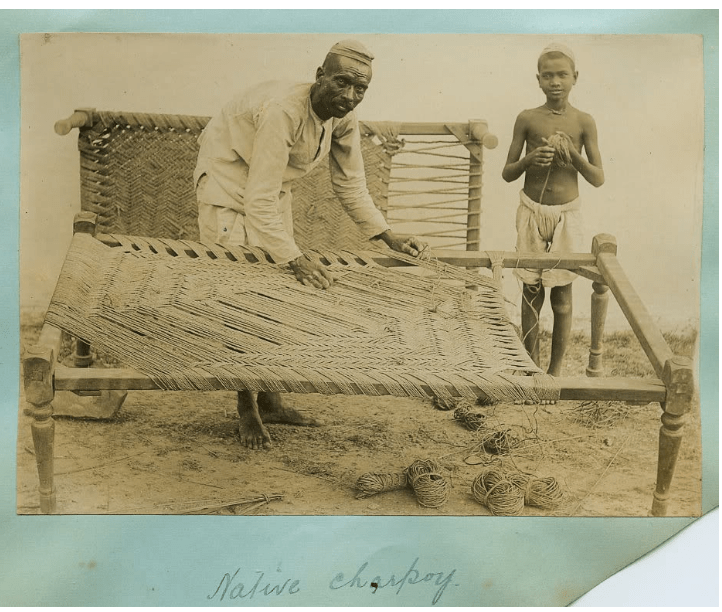
With dreadful pain in her hands and feet, the distraught Mrs Mawe went further down the nulla and sat down by the water on a stone, still hoping that she would be able to find her daughter. After bathing her hands and feet for a time, she returned to her husband’s body, to find the villagers had overlooked Lottie’s watch, chain and seal – these she now took and tied them to a string in her petticoat under her jacket; she then returned to the water. An hour later, 30 villagers turned up – this time, they roughly grabbed Mrs Mawe and stripped her of her jacket and outer clothes. They found the watch, chain and seal and took it, but still appeared disappointed she had no money on her. However, despite their behaviour, they seemed disinclined to kill Mrs Mawe. Instead, they dragged her off to their village of Manipore, …one and a half miles distant, mocking me all the way, and wondering to whom I was to belong, they had sent on some of their party, and when we arrived, the whole village was out to look at me, men and women. I asked for a charpoy and laid down outside a door. I asked them for some milk, as dozens of cows passed, but they refused; at last, when night came, and the village was quiet, an old woman brought me a leaf full of dall and rice, but my throat was so parched I could not eat; she brought me a small earthen vessel with some drink, which she told me was made from bhang.
The next morning, some of the men told Mrs Mawe she would be sent to Banda – she refused, and demanded to be sent to Allahabad, but after an hour, when the nawab of the erstwhile place sent a palki for her, Mrs Mawe realised her remonstrations were useless. Furthermore, her escort told her that three sahibs and a little child were already in Banda, who she now hoped would be her little daughter. To her delight, it turned out to be Lottie. In Scot’s narrative, he poignantly recalls that as soon as her mother arrived, Lottie shrank away at the sight of Scot, refusing to come near him. One can only wonder what she remembered of her ordeal later in life.
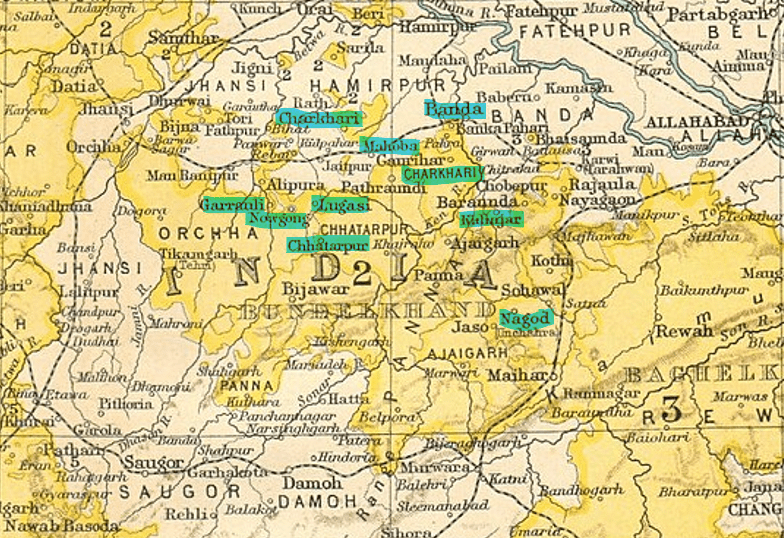
For Mrs Mawe, the stay in Banda was a relief, but it was hardly a pleasurable time. “I suffered dreadfully all the time I was at Banda from my feet. I sent for simple ointment to the native doctor, and he sent me mercurial instead, which nearly set me mad. I am partly a cripple even now. God knows what agony I endured.
Eventually, the party moved on towards Mirzapore. Her last lines, though tinged with hope, are wistfully sad. All our property is gone, my watch, chain, rings, some presents from the ladies of the 52nd (with which corps we were nearly eight years, and my poor husband was with it at Mooltan), and my husband’s medal and clasps for Mooltan and Guzerat. Were it possible, I wish to get another for my son to keep. He will be twelve years old in January; he was born in camp at Subzulkote, when we were coming from Sukkur during the Sutlej campaign with Sir Charles Napier’s force. I have four little girls at school in Dublin, also, and hope with God’s blessing to get them home soon to see them.
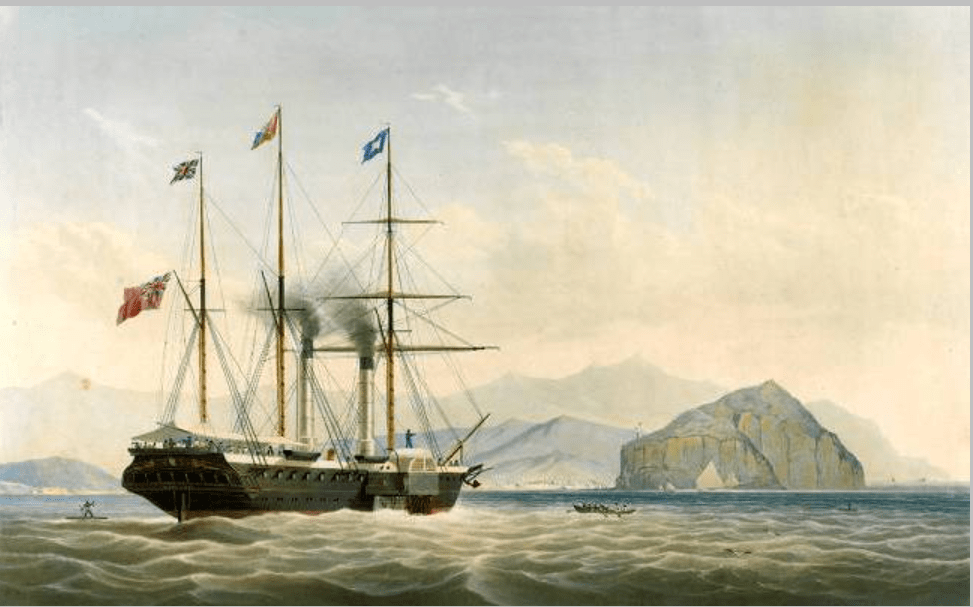
Mrs Mawe eventually reached Calcutta. She gave birth to her son, Thomas, in September at No.36, Fort Street. On the 28th of October, she embarked on the P&O ship Bentinck and sailed to Southampton. Her life in India was over. She would receive a widow’s pension of £60 and for each of her children £5, 15s and 6d per annum. She never remarried and died in 1884 in Dublin.
Sources:
Chick, Noah Alfred, comp. Annals of the Indian Rebellion, 1857–58. Calcutta: Sanders, Cones and Co., 1859.
The Indian News and Chronicle of Eastern Affairs. “Births, Marriages, and Deaths.” No. 341 (July 3, 1857): 630.
Scot, P. G. Personal Narrative of the Escape from Nowgong to Banda and Nagode. Edinburgh: Thomas Constable, 1857.
Links:
https://www.family-maw.co.uk/getperson.php?personID=I21409&tree=Maw
 Mutiny Reflections