To Meerut
In the previous post, we made the acquaintance, albeit briefly, of the curiously named zamindar of Harchandpur, Franz Gottlieb Cohen. An Urdu poet who wrote under the pen name of Farasu, Cohen was born in 1777 as the son of John Augustine Cohen, then in the service of the small state of Sardhana, near Delhi, which at the time of Farasu’s birth was ruled by the Begum Samru. Although the estate of the Begum was annexed by the British upon her death, Franz Cohen continued on as a tehsildar under the new rulers, living in his large haveli in Harchandpur, some six kilometres from Baghpat.
He was of mixed descent, and his father had chosen India as his home. As was common at the time, he had taken an Indian wife (or, as was the case with other Europeans, several) and had “gone native” – by Victorian standards, this was not meant as a compliment. However, it was men like Franz Cohen and his father before him who had been the bridge between the worlds, emissaries of different cultures with a profound understanding of both – a bridge, which, sadly, by 1857, had already begun to disappear. Being mixed race was considered a blight rather than an advantage, and people were forever stuck in a quandary in the latter part of the 19th century of denying their family and past. Many succeeded – Lord Frederick Robert’s half-brother James, who neither spoke nor wrote in English, would be cut off by his father when he sided with the rebels in 1857, a fact Lord Roberts would be very careful not to mention. Reverend Rotton of Meerut had a whole barrelful of relatives in Lucknow, the patriarch of whom was Felix Rotton, who curiously named all 13 of his sons starting with “J” and they too fought against the Residency, being, as one account put it, “thoroughly Indian in habits and customs…” Families like the Metcalfes and the Skinners were respected through their long-standing reputations, and their names carried weight even though, to some extent, they too would have been scorned in certain societies. Whether it would have been in the interest of the zamindar of Harchandpur to throw in his lot with the mutineers or not is a tale which has not been investigated; however, as it stood in May 1857, it was lucky for the fugitives of Delhi that he hadn’t. Located 32 kilometres from Delhi and 12 kilometres from Baghpat, it became the stopping point for parties of Delhi fugitives, the first of which was that of Lieutenant Vibart.
On, on we walked
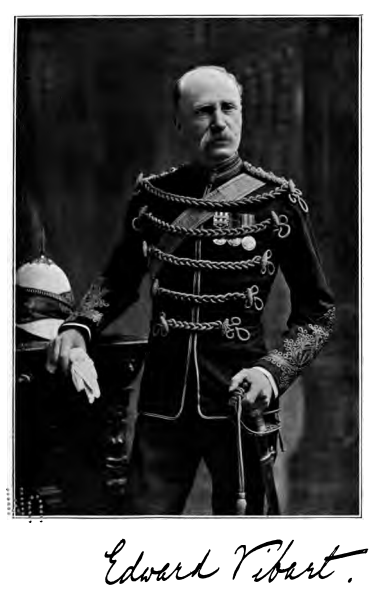
Having escaped the slaughter at the Main Guard and proceeded then with some haste to Metcalfe House, where Lieutenant Vibart and nine others were fed and sheltered by Metcalfe’s servants. It was decided, after taking a rest, to proceed to Meerut.
It was not an easy journey by any means. They had no horses and no carriages, and encumbered as they were with the wounded Mrs Forrest and her daughters, the men could not hedge their bets and just make a run for it. Each man took charge of a lady – the youngest Miss Forrest, only nine years old, was given over to 19-year-old Edward Vibart.
Crossing the river Jumna that flowed past Metcalfe House, they struggled their way through a swampy marsh on either side – being the dry season, the river was confined to a few channels in the middle while the banks were nothing but an oozing morass of sticky mud. Barely a half hour from Metcalfe House, they were suddenly surprised by a bright streak of fire shooting up in the air behind them. Turning around, they saw the magnificent villa, which housed one of the finest libraries in India – containing some 20’000 books and home to hundreds of artefacts, including memorabilia of Napoleon -was in flames, set alight by looters. Although it would be rebuilt, the priceless collections were irretrievably lost.
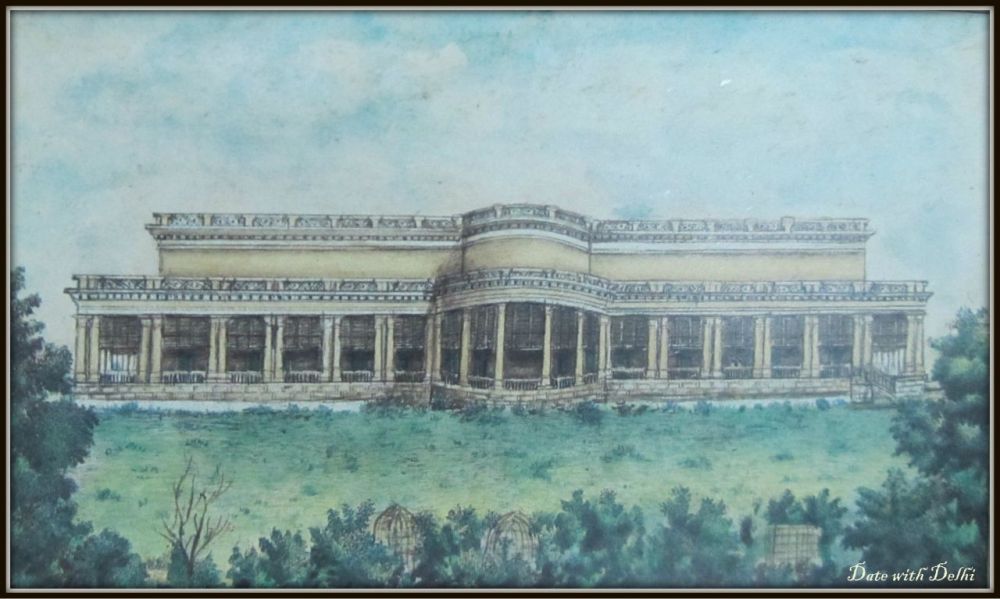
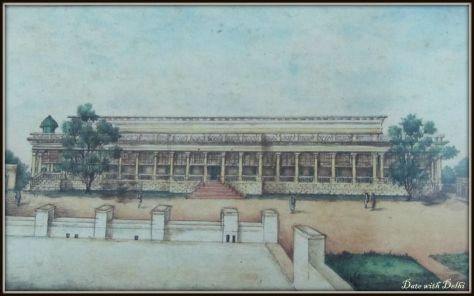
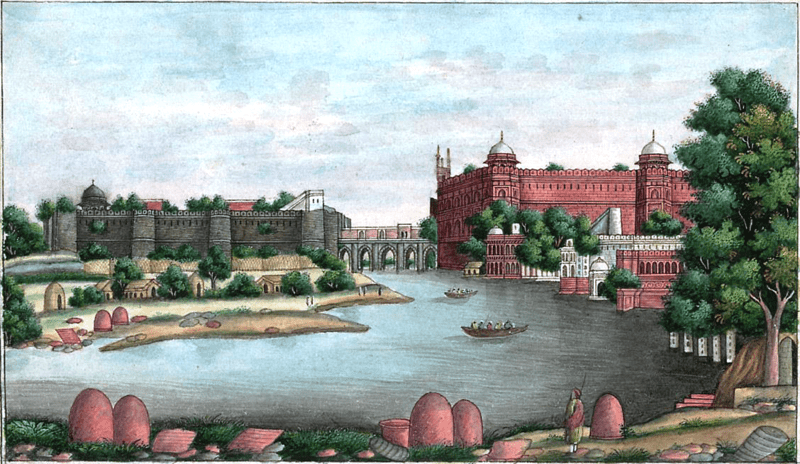
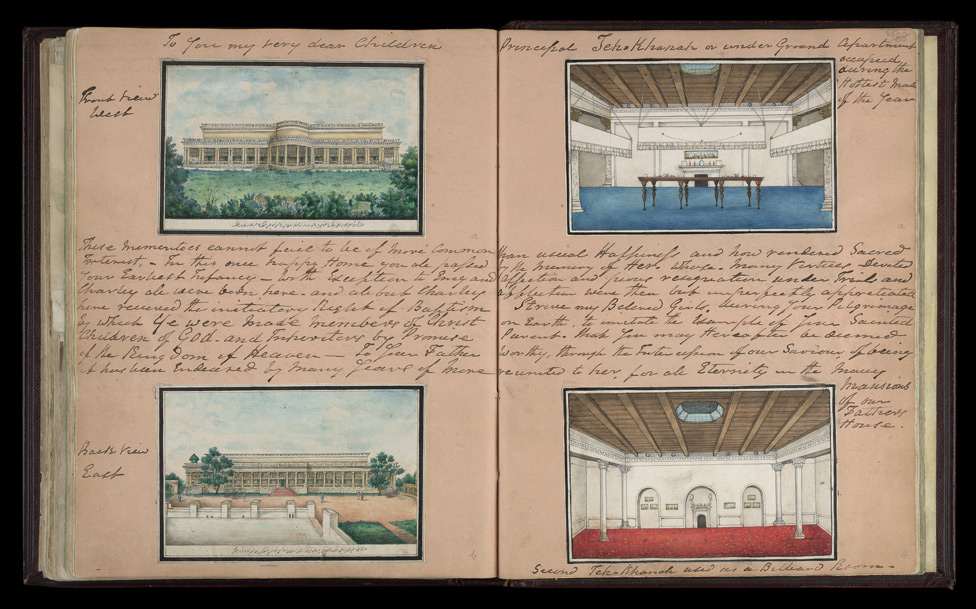
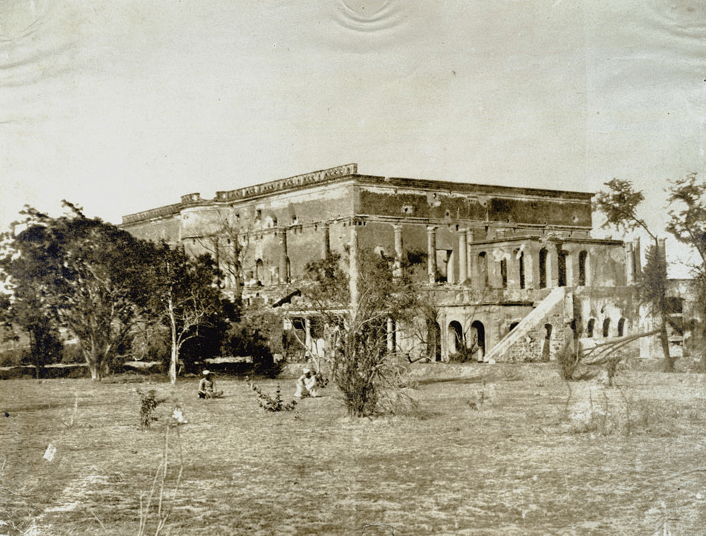
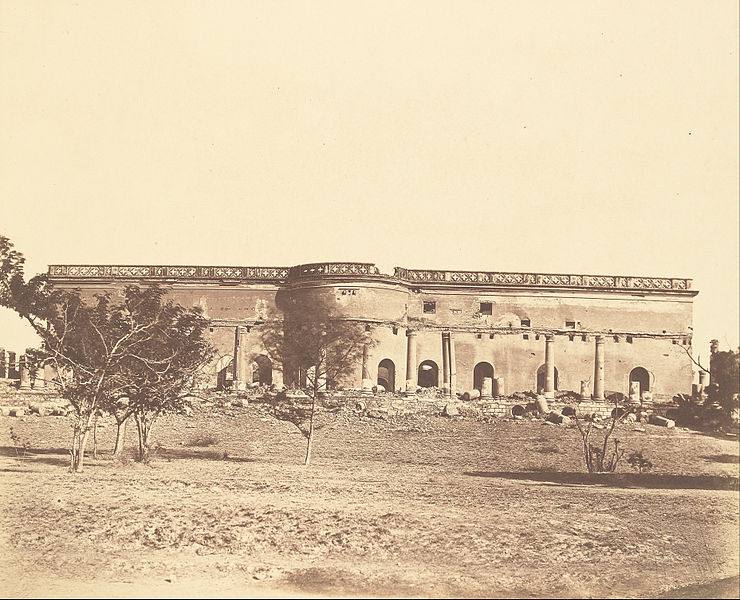
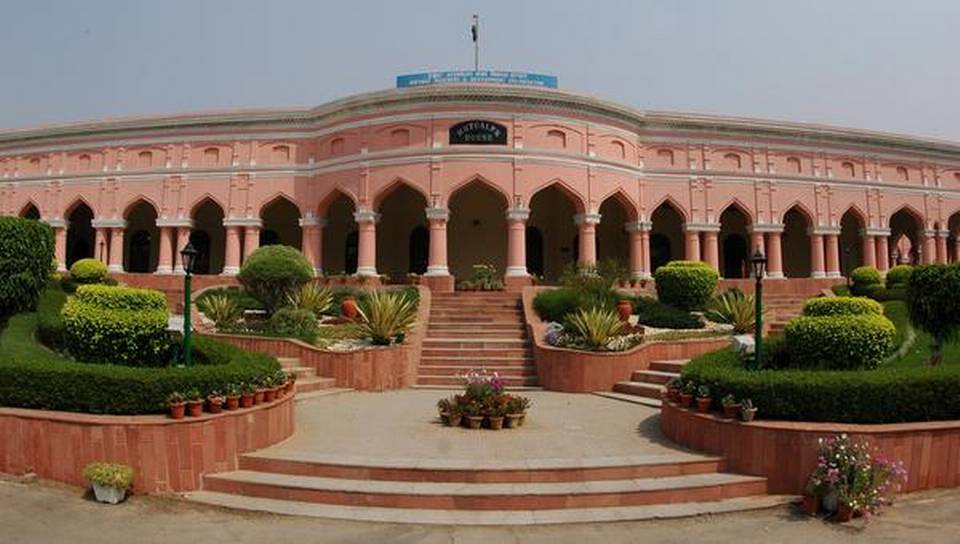
The fire gave the party the necessary encouragement to keep moving – the question was, which way? Having crossed the Jumna, if they turned right, they would be back in Delhi, and turning left, they would have to ford a canal, but this one would be impassable for the ladies unless they crossed it at its narrowest point – and that was deemed too close to the very cantonments they were trying to get away from.
Shouts in the distance helped them make up their minds – they ran off towards the canal.
“At this juncture, and whilst we were still in doubt as to what course to pursue, a great shouting was heard a short distance to our right, which made us set off again in the direction of the canal as fast as our legs could carry us.”
Sending Lieutenant Salkeld’s orderly to reconnoitre the area closest to the canal, they lay themselves down on the bare ground.
“Sleep, I need hardly say, was out of question. Yonder lay the cantonments, scarcely half a mile away, enveloped in flames and smoke and casting a lurid glare on the surrounding landscape. It was an awful sight and made us shudder as we looked on. The noise of firing at intervals still continued, and the midnight breeze every now and again bore back to our ears the frantic yells and shouts of the mutinous soldiery as, joined by the scum of the populace, they carried on their work of pillage and destruction. It was a sight never to be effaced from memory, and our feelings can better be imagined than described as, lying there on the sandy bed of the river, weary, dispirited, and bereft of all hope of succour, we awaited with anxious and throbbing hearts for the messenger’s return.”
Not that they waited too long for him to come back. After an hour, and under a bright moon, and with no sign of the orderly, they decided to press on – approaching the canal, they found it was unguarded, and although deep, they could get across undetected. With the idea to put at least three miles between themselves and the burning city, they pressed on.
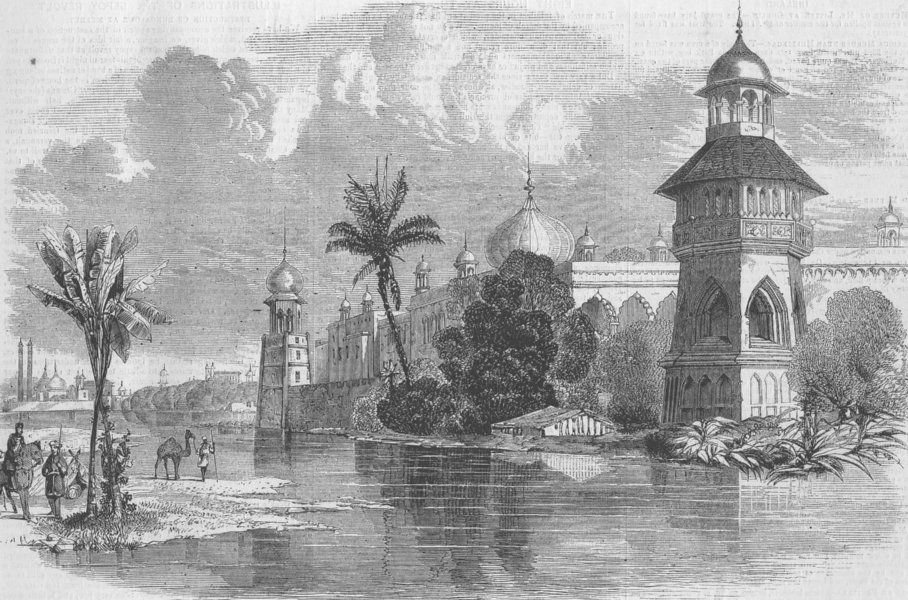
By daylight, they had reached a tributary of the Jumna, and crossing this, they finally sat themselves down under some tamarisk trees. Tired, wet and utterly miserable, the party tried to rest. As Vibart later recalled,
“I shall never forget the blank look of despair depicted on every face when, as the morning advanced, the utter helplessness of our position forced itself upon us. There sat the poor Misses Forrest, their dishevelled hair hanging down their backs, without a particle of covering for their heads. There lay their unfortunate mother, her head resting in the lap of one of her daughters, and, though suffering excruciating pain from the gunshot wound in her shoulder, yet never uttering a word of murmur or complaint. Mrs Fraser sat close by, bewailing the untimely end of her little babe, who, she imagined, together with her sister, had perished in the Main Guard, both having been lost sight of in the panic and confusion which ensued when the firing commenced...The rest of our party lay all about, under the best shelter we could find, keeping a sharp look-out on all sides to see that we were not surprised — all except poor Forrest, who was lying some distance apart, in a more or less prostrate condition, having been much hurt from the recoil of a howitzer during the defence of the Magazine, being struck in the hand by a musket ball.“
The ladies had providentially taken some bread and meat from Metcalfe House – scant provisions but better than nothing at all – these had been soaked by the in the river but were deemed edible once they had dried out some in the sun. “..we each took a mouthful – without exception, the saddest meal I have ever made…” Spotted in their hiding place by a villager, the party decided it was time to move on. Mr Forrest caused them some consternation as he had vanished from sight. Wounded, shell-shocked from the explosion at the Magazine and exhausted, Forrest’s mind was understandably deranged. When they did find him, he refused to go with the party. When Vibart finally persuaded the man to get up, he did so with great reluctance and continually lagged behind.
Not that they got very far. The sun was at its hottest and they had no water or anything to cover their heads. In desperation, the ladies draped their skirts over themselves like impromptu shades, but after only a few miles it was useless to carry on. Salkeld and Watson volunteered to go look for water and the party hid themselves as best they could under some sparse bushes.
“All of a sudden we heard a tremendous yell, and, looking up, perceived them (Salkeld and Watson) both running back, chased by a number of half-naked villagers armed with spears and lathies (long staves bound with iron).” Jumping up, the party crowded together, expecting the worst. It was a false alarm – terrifying as the villagers might have seemed at first, …“Presently several others came up…who seemed civil and offered to conduct us to their village, where they informed us there were some more sahib-logue, who they had found wandering about in the morning.”
The men were having nothing of it. Believing it to be a ruse, they asked the villagers to send them some proof of the other Englishmen; they did allow themselves to be led to a grove of trees where at least they would be somewhat out of the sun. Other villagers brought them milk and chapattis all of which was gratefully accepted.
In the distance, they suddenly saw the wandering sahib log that the villagers had found – it was Colonel Knyvett of the 38th, closely followed by Lieutenant Gambier and Mr Marshall, a European merchant of Delhi, who, to their surprise, was carrying a musket with a fixed bayonet. Why Knyvett and Gambier had thought it prudent to leave Peile alone as they made their escape, no one has explained. They had met up with Marshall and the three of them had spent the night wandering aimlessly around the countryside until the villagers had kindly taken them in.
The rest of the day was spent playing a wicked game of hide and seek with marauding bands of sepoys who were determined to exterminate any European they found. Some of the villagers escorted them for a few miles, even carrying them over on their backs through a river, but it was the last thing they would do for the fugitives. Refusing to lead them the Meerut, they took the few rupees the party had to offer in payment and melted into the twilight, leaving Vibart and the other 12 to stumble along in the growing darkness.
Unable to move any further, they laid down on the banks of the river – and from sheer exhaustion, fell asleep. It was only short slumber and before the night was over, the party moved on. By dawn, it was useless to avoid discovery – villagers were moving about in all directions, and Vibart sensibly decided it was best to approach “some harmless-looking individuals tending cattle…venturing to offer them our last remaining rupee…asked them to go to the nearest village and buy us some food.” With the dal and chapattis that were forthcoming, a large crowd now gathered around the famished fugitives, many of them loudly commiserating with their plight. They did not get any other help from these villagers – the local holy man after holding council, “intimated that it was not safe for us to remain…and we must take our departure. An arid plain lay in front, with not a tree in sight; even if we eluded our remorseless pursuers, death from sunstroke was inevitable. Deaf to all entreaties (they)...commenced to hustle us in the rudest manner.”
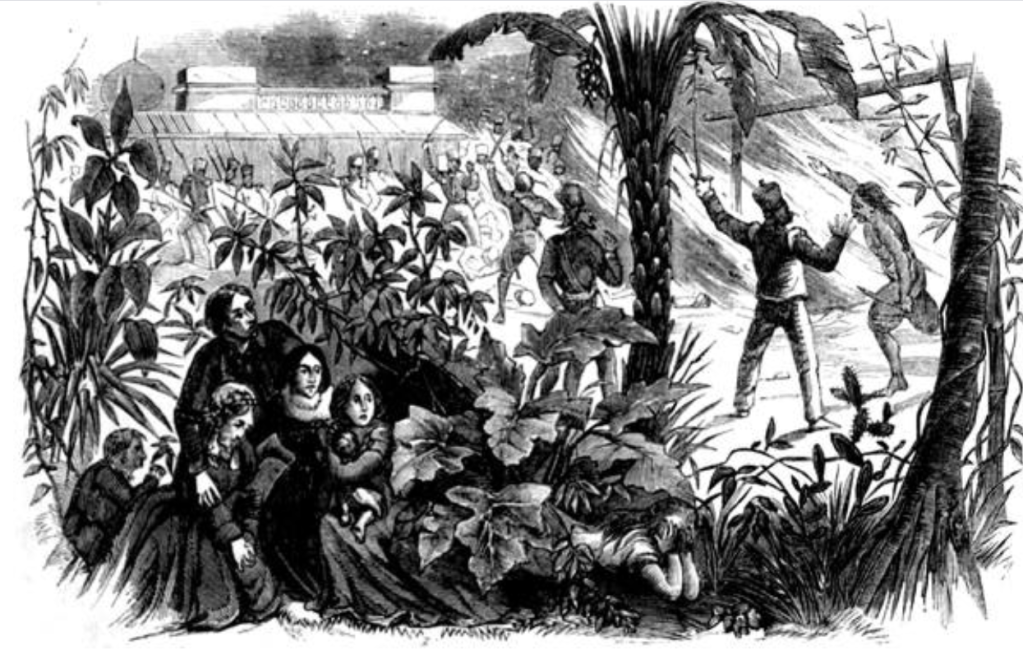
“So they turned us out, and we wandered forth, little caring where we went or what became of us…As we issued from the friendly trees into the burning plain beyond, we were nearly blinded by the scorching wind, which blew volumes of dust into our faces and almost suffocated us at every step. On, on we walked, the sun blazing down on our uncovered heads, without hope, without an object.”
It was not long before they were surrounded by a band of Gujjars – semi-nomadic pastoral herder tribes who had roamed the plains of India for centuries, – though this may sound idyllic) – the Gujjars were better known in 1857 for their very active participation in looting, plundering, burning and killing. In the countryside they were feared not just by fleeing Europeans but by Indian villagers alike.
Vibart’s encounter with them was no different, and they soon found themselves surrounded by “fierce looking men, armed with spears and bludgeons…their numbers increased rapidly, and in whichever direction we looked, we observed others running toward us….they gave a fearful shout and rushed upon us with demonical gestures. We stood back to back, and made a vain attempt to beat them off; but, being ten to one, we were soon overpowered.” Someone, in the ensuing scuffle, had the presence of mind to shout at Colonel Knyvett not to fire, who was levelling his gun at “point-blank at the head of one of the wretches as he stood whooping and yelling…” Had he done so, there is little doubt Vibart would not have been writing his account.
Allowing themselves to be disarmed, the Gujjars set to work stripping the party of anything and everything – studs, rings, watches, and clothing. One of the ladies had her clothes torn off her back, and Vibart lost his inner vest and the cloth around his head was snatched away. Then they were told to go as the Gujjars settled themselves down to quarrel over the spoils.
They resumed the wanderings, though this was not without its adventures, quickly set upon by the next band of Gujjars who satisfied themselves with snatching off the gilt buttons from the colonel’s frock coat, which had been overlooked by the compatriots. As if it was not enough for one day of endurance, when the party finally found some relative safety in a police station, they received the horrifying news from the sneering policemen that Meerut was in flames and not one European had survived. The policemen, although they provided the fugitives with some charpoys to lie down on, it was not long before they too “insisted on search each individual of the party, including the ladies, as nothing would dissuade them from the belief we had money and valuables concealed about our persons.”
Not caring anymore what became of them, they allowed themselves – after very little coaxing – to be led away by an assembly of villagers, professing in no uncertain terms, they would be safe in their village. For the first time since leaving Delhi, they were treated civilly, Mrs. Forrest’s wound was treated by a doctor (who, after clearing the wound of all debris, poured boiling ghee through it to cauterise it. The method worked and Mrs. Forrest’s arm was not subjected to amputation), and they slept in a hut. All except Mr. Forrest who shook Vibart awake, “his hair standing erect, his eyes starting out of their sockets, and wearing such an expression of anguish on his face.”Get up, for God’s sake!” he said, “they are going to cut our throats!” …The poor man’s mind was evidently unhinged…and it was the greatest difficulty we succeeded in quieting him; but not before he had well-nigh terrified the poor ladies out of their wits by going about and asking every native he met, “Khoon kub chullega?” literally, “When will the blood be spilt?” The next day, Forrest disappeared. He would be found a day later insensible in a ditch – the villagers carried him back.
The villagers also found 2 sergeants’ wives carrying babies in their arms, who had been wandering aimlessly around the countryside since the 11th of May, “not knowing what had become of the husbands, and having been robbed of all they possessed, except the clothes on their backs.”
With some difficulty they persuaded a messenger to go off the Meerut and Gambier wrote a short note in French imploring anyone in Meerut to send them aid. There was no guarantee the messenger would make it.
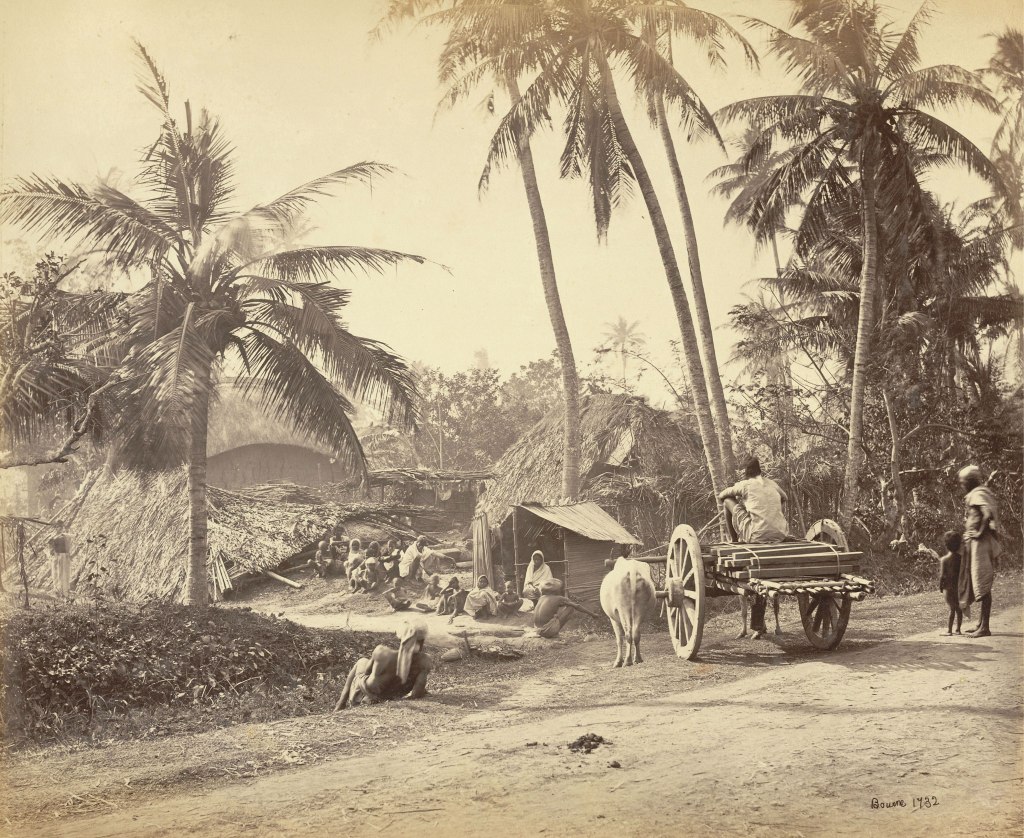
It was now the 15th of May and the village they were in, Khekra, was still a full 30 miles away from Meerut. Bands of sepoys were still roving around the countryside, and their position was becoming precarious – a close call in the middle of the night had them hurried out to an enclosed garden, where once again, they remained in the open, the scanty trees doing little to shelter them from the heat. Only after this fearful day had passed did a messenger arrive from Harchandpur with a note from one Mr Cohen, who, ” hearing of our miserable plight…expressed his sympathy and begged us to take shelter with him.” The walled town and a friendly overture, merely 5 miles away, certainly seemed like a better proposition than spending any more time scuttling around the barren countryside and, at this point, endangering the lives of the villagers who had done everything they could to protect them. The villagers could not move them on fast enough, so they provided them with a cart and, by daybreak, set them on their way.
Delhi meets Meerut
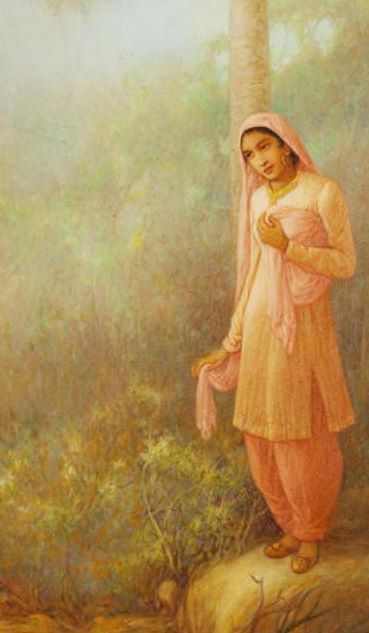
At daybreak on the 17th of May, the party set off, reaching Harchandpur and the Cohen Haveli shortly after 8am. They were greeted cordially and with much kindness by the old man himself and two of his grandsons. “The old man himself had lived here all his life – so long in fact, that he had almost forgotten his own language, and had become thoroughly native in all his habits…” but his grandsons “lived more in European fashion.” They provided them with hot tea, baths and clean clothes; even the ladies were provided for, dressed in “clean koortas and snowy white chuddahs of fine nankeen…we could scarcely recognise them as the poor forlorn creatures of yesterday.”
Colonel Knyvett and Mr Forrest remained shut in a private room with Mr Cohen for the rest of the day, though Knyvett, for some reason known only to him, took the time to write a demi-official addressed to Lieutenant and Adjutant Gambier, late 38th Light Infantry, requesting his immediate attendance, even though Gambier was in the next room. No longer fleeing for his life, Knyvett reverted to the self-important old colonel that he had been when he had had a regiment to command. Forrest completely forgot his companions and remained hidden in Cohen’s private apartment, smoking a hookah and fanned by a punkah, “rendered physically incapable of any exertion for the time being.”
Even his long-suffering wife and daughters were forgotten.
They were to start for Meerut the next day, and with light hearts, they sat down to dinner, taking no little liberty with the bottle of fine Cognac their thoughtful host provided. What they did not expect was what happened next.“..all of a sudden, a tremendous shout was raised without…such a terrible commotion among the townspeople…Our ignorance was not of long duration for soon there arose a cry amongst the excited multitude… filled us with terror and dismay…”Badsha Delhi ka fouj! They shouted, “Badshah Delhi ka fouj aya!” (“The King’s troops, the King of Delhi’s troops have come! “).
Forty troopers, dressed in French-grey uniforms of the 3rd Cavalry, had drawn up just outside the gates of the town and were demanding entrance. Worse news the fugitives could not have had – curiously, they quickly changed back into their old clothes (even Vibart admits he could say “how far this exchange was likely to benefit us I know not…”) They hid themselves as best they could while old Mr. Cohen seated himself in the doorway, gun in hand, determined to sell his life dearly for the sake of his guests.
It was with no measure of surprise when 2 Europeans rode up to the haveli – it was Gough and Mackenzie, who had ridden up from Meerut with the 25 troops they had left. Gambier’s note had reached Meerut and had been brought to General Hewitt, who dismissed the whole venture as impossible and, tossing the note aside, let it fall under the mess table. It was Mackenzie who picked it up and persuaded Hewitt to at least let him try to bring in the party. Hewitt claimed Mackenzie was too young for the venture, and besides, the party was too close to Delhi; nothing would come of it, but Mackenzie insisted, and on the 17th, he rode out to find the fugitives. On their way out of Meerut, they met Lieutenant Gough – not one to shirk his duty and certainly more than a little disgusted with the inactive, practically cowardly behaviour of his commanders, he quickly volunteered to join Mackenzie on what could very well have proved to be their last outing.
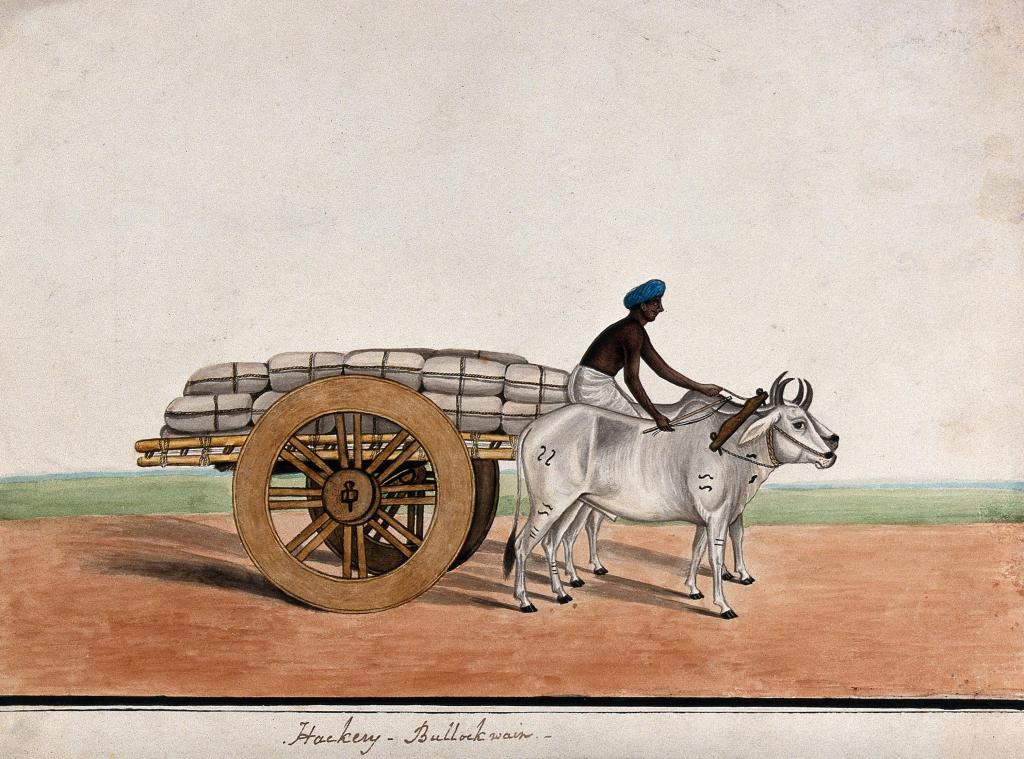
Mr Cohen provided them with two hackeries for their journey the next day, plus enough provisions to see them safely on their way. Leaving before daybreak the next day, the party reached the outskirts of Meerut at 10 o’clock the same night. Even though they had changed bullocks every nine miles, pressing fresh ones into service, it can still be considered as hasty a journey as can be done by such a mode of transport.
The party that reached Meerut that night consisted of:
Colonel Knyvett, 38th Regiment N.I.
Lieutenant Salkeld, Bengal Engineers (he would die of wounds in September, during the assault on Delhi)
Lieutenant Wilson, Bengal Artillery
Lieutenant Montague M. Proctor, 38th NI
Lieutenant Henry Gambier, 38th NI (died of wounds in September, during the assault on Delhi)
Captain George Forrest of the Bengal Veteran Establishment (later given a VC for his part in defending the Delhi Magazine. He was 57 years old at the time of the mutiny and deemed too old for regular service. Following his experiences on the flight from Delhi, he never altogether recovered his health and died in 1859 in Dehra Dun, undoubtedly caused by the hardships he had suffered. His son, also named George, would write “A History of the Indian Mutiny” in honour of his father.
Ann Forrest and 3 daughters, the family of Captain Forrest. Annie Forrest was the sweetheart of Lieutenant Gambier, but unfortunately, their romance was short-lived.
Lieutenant Edward Vibart, 54th N.I. He would serve at Delhi and then later under Sir Colin Campbell. He would remain in Meerut until July – shortly before departing, he would learn of his family’s death in Cawnpore.
Mrs Fraser – widow of Captain Edward Fraser, who had commanded the Bengal Sappers and Miners. Although he successfully marched his men down from Roorkee to Meerut, they were seized with panic on the 16th of May when one man of the ranks shot and killed Fraser, causing 50 of them to flee, fearing retribution. It was a botched affair. When cornered by Mackenzie and his men, only two were taken prisoner; the rest were killed after a desperate fight. Mackenzie let the 2 of them go back to their regiment, where they served with loyalty.
Mr. Marshall
and the two sergeants’ wives with their babies, who, in all accounts, remain nameless.
Others who escaped to Meerut
Over the next days and weeks, more fugitives from Delhi would arrive in Meerut. Lieutenant Osborn, having escaped from the Main Guard, had run off into the countryside, following Lieutenant Willoughby and three others. On account of the wound in his thigh, Osborn was unable to keep up and, after 12 miles, was left to fend for himself in a ravine, while the others promised to send aid.
Unfortunately, Willoughby, Ensign Angelo, Lieutenant Hyslop and Lieutenant Addington were killed in a village not far off, following an altercation with the inhabitants, in which one of the officers, allegedly Willoughby, shot dead the headman. (The incident was investigated by R.A.W. Dunlop, who found that the four men had refused to give up their arms when asked to give the headman a gift, and Willoughby instead shot the man. This did not go down very well, and all four were killed by the enraged villagers. Perhaps to placate a grieving mother, Charles, the brother of 27-year-old Lieutenant Hiley Robert Addington, wrote that the young man had drowned while crossing a river, apparently having been told this by a merchant in Delhi.
Gujjars did, however, catch up with the wounded Lieutenant Osborn, and after stripping him of all his clothes except his pith helmet, they left him for dead. Only the kindness of an old Indian woman, who fed him for three days, until she could convince some men from her village to carry Osborn on a charpoy to Meerut. He arrived there in the morning at almost the same time as when Vibart and his party left Harchandpur. Although Osborn recovered sufficiently from his injuries to march from Delhi to Fattehgarh with Colonel Seaton, he finally left the service in December of 1857 on account of his worsening health. He died in Brussels in 1898.
Captain T.W. Holland only managed to get 3 miles from Delhi cantonments when he was attacked by men of the 3rd Cavalry. Wounded and left for dead, he was found the next day by Ahir villagers, who took him to their zamindar, Man Singh. Seeing it was useless to keep Holland so close to Delhi, he arranged for him to be hidden in a remote village surrounded by marshes and hardly likely to be visited by sepoys. Unlike others, Holland only found kindness in his wanderings, and although they ran monumental risks keeping him, the villagers did everything they could to save his life. Sent back to Man Singh when it became evident his hiding place had been discovered, he was hidden for a further 6 days in Man Singh’s village, even though the zamindar himself was not there. Eventually reaching Kehkra, he was speedily dispatched to the care of Franz Cohen in Harchandpur. Letting Holland rest, Cohen arranged for him to be forwarded to Meerut, sending him on the road on a pony and guarded by men in Cohen’s service. Captain Holland eventually reached Meerut on the 27th of May.
Conductor John Buckley, who also survived the explosion at the Magazine, eventually made it to Meerut with Lieutenant Raynor and his family, whom he met by chance on the 12th of May. Although it took them 12 days to walk to Meerut, rambling as it were through villages and suffering themselves to be robbed on more than one occasion and in the case of Buckley threatened with beheading four different times, Lieutenant Raynor believed had it not been for Buckley offering to sacrifice his life, begging that the ladies be spared from insult and the way “his cool and gallant conduct disarmed their oppressors”, they should never have made it to Meerut. Buckley remained only 6 days in hospital before volunteering to join the force marching to Delhi. After a further three days in hospital, he again volunteered and was accepted – unfortunately for Buckley, the rigours of the journey proved too much for him, and he was sent back to Meerut on the 17th of June, against his will, suffering from the effects of sunstroke.
Interestingly enough, three officers appear to have missed the uprising in Delhi altogether – Captain Russell, Lieutenant Anderson and Ensign Wheatley who were out shooting on the 11th of May and in consequence, made for Meerut instead of returning to Delhi.
The four children of Captain Wallace were spirited out of Delhi by their quick thinking khansama who managed to smuggle them to Meerut. Of their subsequent fate and that of their faithful servant, nor of their escape I have not as yet been able to find out, but it would be tale worth telling.
Not everyone went to Meerut or to Karnal, for that matter.
Mrs Leeson remained in Delhi after the murder of her children and family at the Delhi College. She remained hidden in the city by Afghans who later handed her over to the British forces on the Ridge. She was reunited with her husband eventually, who had seen his own version of events unfold in Agra. They returned to the college searching for the bones of their children, but never found them.
Mrs Aldwell, too, remained in Delhi with her children. They had been taken prisoner by the King’s guard along with 50 or so other people taken captive between the 11th and the 13th of May. However, she managed to convince the guard that she and her children were in fact Kashmiri Muslims – and reciting the Mahomedan confession of faith, which she had cleverly taught to her children as well, she was able to save their lives. Remaining in Delhi under house arrest and keeping up appearances as Muslims, they remained in Delhi until it was taken by the British in September.
Mr Brown Converts
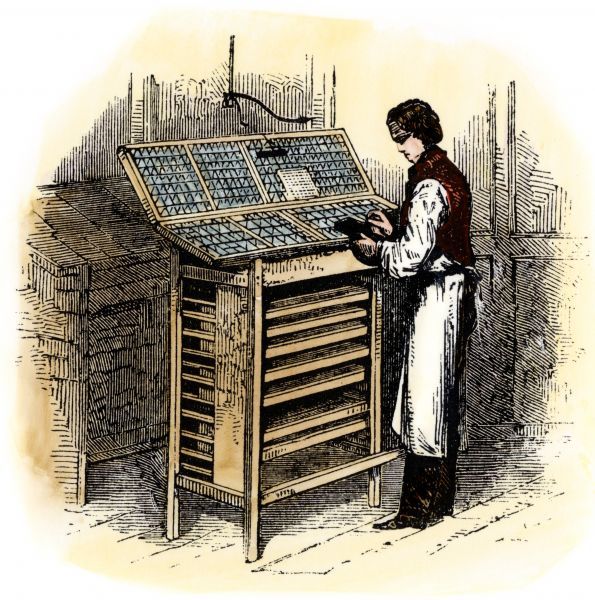
Mr Brown of the Delhi Gazette had been at his post in the newspaper office when the mutineers arrived in Delhi. He and his fellow compositors had had the winsome idea to print a special issue, having been told by the men at the Telegraph Office that the mutineers were on their way. However, events overtook them, and in the ensuing attack, which left most of the Christian compositors dead and the local ones fleeing for their lives, Mr Brown and three of the remaining compositors managed to effect their escape, having previously hidden in the tyekhanna beneath the building. This, fortunately, had a gate which led straight to the river and to the road connected to Metcalfe House. Having thus succeeded in getting away from the press, the men hid for a time in Metcalfe’s garden and, under cover of night, went back to the river and climbed into the gumlahs used by dhobis (washermen) to boil clothes.
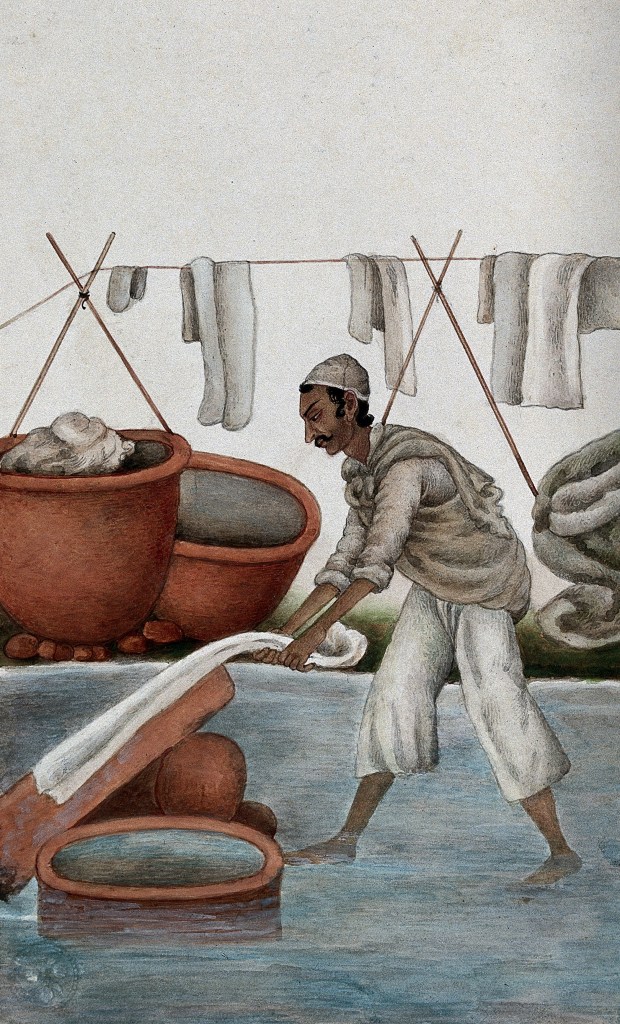
Too afraid to move, they remained there until Wednesday, when, driven by hunger – having sustained themselves by drinking water for two days – they finally decided to swim across the river to the open countryside beyond. As if on command, a party of Gujjars was waiting for the little party and promptly stripped them of their clothes and whatever money they had concealed on them. Thus denuded (though the Gujjars, on second thought, had thrown each man a small piece of cloth), they despondently went back across the river to the gumlahs. Unable to resist his pangs of hunger any longer, Brown left his companions at dusk and returned to the city via the same gate they had initially escaped through.
He made his way to his own house, which by now was occupied by strangers. These had no problem recognising Brown as a feringhee and promptly chased him down the road. Unable to run further, he was quickly surrounded by a hostile crowd – but Brown had not lost his wits as yet and quickly recognised 2 men who were relations of the compositors as well as his friend. Appealing to their better natures, Brown was spirited off to a house close to Kashmir Gate, where he was given over to the Daroga (police official) manning the place.
Half an hour later, when the ruckus had died down, the official sent in two men to escort Brown to a place some distance away so he might effect his escape. Again, things did not quite go to plan. Spotted by a sepoy who recognised Brown as a foreigner quarely placed his gun at Brown’s chest, and Brown now, in Bengali, “gave an oath on the cow and Kalee and was not harmed,” claiming to be a petty merchant from Calcutta, lately arrived in Delhi. The performance was convincing enough, and the sepoy let him pass while his two companions declared likewise; since the sepoy hadn’t killed him, they wouldn’t either and left Brown on his own, close to the remains of the Magazine.
Again, Brown had a little luck thrown his way. Faint with hunger, he threw himself at the mercy of one of the Muslim apprentices of the Press he happened to meet and asked the apprentice to save him for the night. The apprentice took Brown to a nearby mosque, where he informed the Cazee that Brown, under order of the king, was to convert to Islam at once, and no one was to harm him! The Cazee “bathed me and made me repeat the Kulma, and the apprentice brought me bread and water; a pajama and a koortee. Not the least attempt was made to circumcise me, had there been, I was so weak I could not have resisted; I was named Shiak Abdoola.” The apprentice then slept at the mosque with Brown, who, having eaten, could at least rest with some peace.
The next day, it became clear he could not stay in the mosque – a crowd had gathered, not believing his conversion was real and calling for his head. He managed by some chance to make his way through the crowd, and once on the street, he begged the help of Jemadar pressman he knew.
The Jemadar could only advise Brown to make his way to Calcutta – not very helpful as such but the man was in no position to protect him. Seeing that staying in Delhi was becoming impossible, Brown returned to the gumlahs by the river, only to find his three companions were still there, walking about.
They agreed to make their way to the Meerut road, via the Bridge of Boats, walking at some distance from one another so as not to appear so conspicuous. Brown made it across and waited for his companions but they never showed up.
Thinking they might either have been arrested or murdered, he struck out on his own towards Gazeeudeenagar and straight into the next band of Gujjars. Following the same pattern, they stripped Brown of all of his clothes and sent him on his way, stark naked. He reached his destination at dusk. Presenting himself at the door of the Jemadar of the place as a Muslim recently robbed of everything, he was given food and allowed to sleep on the floor. The next day, he turned him out. Brown made his way to Bulandshahr, where he met with the head clerk, an Anglo-Indian named James Lambert Jones. Although the clerk eventually believed Brown’s story, the magistrate did not, and he was sent away. The clerk gave him two annas and a piece of cloth – and Brown now was forced to beg his way to Agra.
Fortunately, once in Agra, he found employment at the Orphan Press, run by Mr Longden. This worked out well for Brown until Longden decided to go to the Agra Fort, leaving Brown and the compositors to guard the establishment, and feeling they were numerically superior, they remained. Of course, this did not turn out very well, and when the fight came, Brown was forced to flee to a mosque. Found by his servant, here he was kept hidden and fed until finally, after three days, he was disguised as a Muslim. Now, he could not approach the Fort – as a Muslim, he was sure to be shot by the sentries, and as a Christian, the Muslims would have killed him. So Brown left Agra and made his way to Cawnpore.
On the 18th of July, he was taken prisoner by a soldier of the 64th Queens who took him for a sepoy, but instead of shooting him outright, he brought Brown to his officer. Speaking English as he did, Brown was able to convince the officer of his identity, and shortly after, he was sent to report himself to General Havelock. Havelock did not want much from Brown, only inquiring about the state of the roads, and then sent him off with two rupees, ordering him to stay in the camp. Brown spent the rest of the mutiny tailing along with Havelock’s forces, finally being sent off with the sick and wounded to Allahabad.
The Painter and the Railway Men
Mr Roods, the painter and his companions, J. Michel, Resident Engineer, E.I. Railway, A.H. Spencer and Mr Cummings, also railway men, had been staying together at a house some two miles south of Delhi. They did hear reports of the arrival of the mutineers, but only at half past one did they make any sort of move, gathering up a few things and then taking a leisurely walk towards the house of their friend Mr Taylor, only to find he had already left. Possibly walking a little more quickly now, they managed to catch up to Mr Taylor and made themselves comfortable at a traveller’s bungalow where they settled down to dinner.
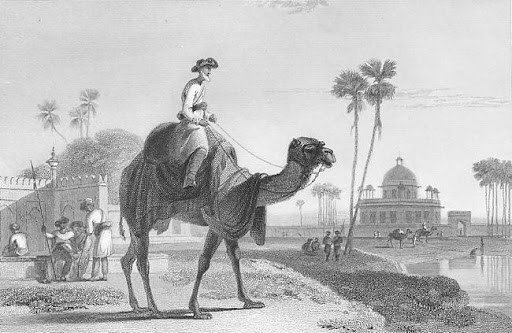
What followed was a series of incidents in which they were joined by Mr Benn – also fleeing from Delhi – and helped by the Raja of Bullubghar, who hid them in his fort for 5 days and then sent them on with an escort, on camels. Stopped outside a village brimming with hostile occupants, but the camels proved to be less than trustworthy, throwing off their riders at the first opportunity and then roaring in that particular camel way and trying to bite the men. Abandoning the reluctant beasts, Spencer and Cummings bolted off in the darkness, followed by Taylor and Roods, who could not keep up and soon lost sight of their companions. Only Michel had managed to control his camel, but he was nowhere to be seen. Mr Benn was killed in the village.
At dawn, they were finally overtaken by the villagers who had chased them through the night – it was Roods who bore the brunt of it, with Taylor managing to disappear, leaving the painter to face the wrath of the villagers on his own. They promptly beat him severely and then stole what they could find, leaving Roods for dead with cuts on his arms and head. Battered as he was, Roods picked himself up and staggered off, only to be robbed again, this time of his waistcoat and at the next of his shirt. When two more villagers came up, Roods told them from the start he really had nothing left to steal, but they were not interested – instead, they gave him some water and took him to their village, where, to his surprise, Spencer and Cumming were hiding, unhurt. Mr Michel too was nearby and finally reunited, the four men made their way to Gurgaon, where they remained until the mutiny at Muttra, and then they journeyed on to Agra, arriving there on the 26th of June. Although Roods does not mention what happened to Mr Taylor, it was later ascertained that he had been murdered by the same villagers who had beaten Roods.
And so this chapter ends – the final escapes shall be related in the next chapter, those that fled to Karnal.
Sources:
David, Saul. The Indian Mutiny: 1857. London: Penguin Books, 2003.
Mackenzie, A.R.D. Mutiny Memoirs, being Personal Reminiscences of the Great Sepoy Revolt of 1857 Allahabad: Pioneer Press, 1892
Spilsbury, Julian. The Indian Mutiny. Weidenfeld & Nicolson, 2007
Vibart, Edward. The Sepoy Mutiny as Seen by a Subaltern from Delhi to Lucknow. London: Smith, Elder & Co., 1898
 Mutiny Reflections