
I did not intend to write about Afghanistan, ever. It is a complicated and monumentally difficult country to decipher, so much so that it is doubtful that anyone on the planet truly understands it. It also has little relevance to 1857 – the disastrous retreat from Kabul was an obscure factor leading up to the events of that year, insofar as the British showed themselves in front of the people they had conquered, that they were neither omnipotent nor undefeatable. It was a blow to national pride and certainly made the Indians look at them with a little less awe, but it was not a deciding factor. That there were people who lived through the Mutiny who were directly involved in the Retreat from Kabul goes without saying – Dr Brydon was the “last man alive” after that miserable affair, and he ended up in Lucknow. Many people in 1857 had relatives who were directly or indirectly involved in the Kabul fiasco. A mere 15 years had passed between the retreat from Kabul and the 1857 mutiny, so it was still a living memory. However, that is as far as it goes. Their stories will be mentioned elsewhere, but are outside the scope of this article.
So why am I writing this at all when it is not directly Mutiny-related?
Recent events unfolding in the world have led to the old sobriquet “Graveyard of Empires” being thrown into the air like it is an explanation for everything that is happening in Afghanistan today. Most articles that quote those words don’t go further back than the Kabul Retreat, when in fact, Afghanistan has been the graveyard for more than just one empire.
As I have already mentioned, Afghanistan is a difficult subject. There has been some form of population or other for around 100’000 years -right back to the Old Stone Age. There is evidence of Neolithic and Bronze Age sites and definite links to the Indus Valley Civilisation. However, for the sake of time and your patience, it is not necessary to start so far back.
The fun started with the Greeks in the 6th Century BCE when the Achaemenian ruler, Cyrus II, decided he wanted to set up camp in the area and establish his authority over it. Darius, I had the same idea, and he furthered the empire through the provinces of Aria (the Herat region), Bactria (Balkh), Sattagydia (modern-day Ghazni to the Indus River), Arachosia (now called Kandahar) and Drangiana (Sistan). This worked out reasonably well until 327 BC, when Alexander the Great, on his way to India, stopped by and conquered the provinces and overthrew the Achaemenids.
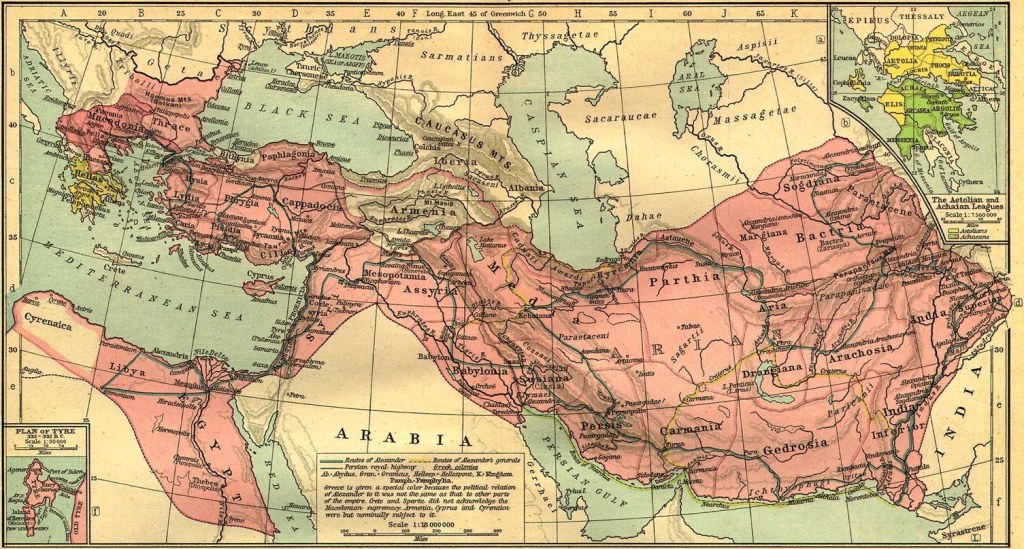
Alexander the Great did not live forever, and upon his death in 323 BC, the eastern provinces were passed onto the Seleucid Dynasty – an empire that at one point spanned from Thrace in Europe to the borders of India. It was founded on what was left of Alexander’s Macedonian Empire and was founded by Seleucus I Nicator, who was one of Alexander’s leading generals. He became Governor of Babylonia in 321, and he ruled over the provinces in Afghanistan from his seat in Babylon.
The Mauryan Empire
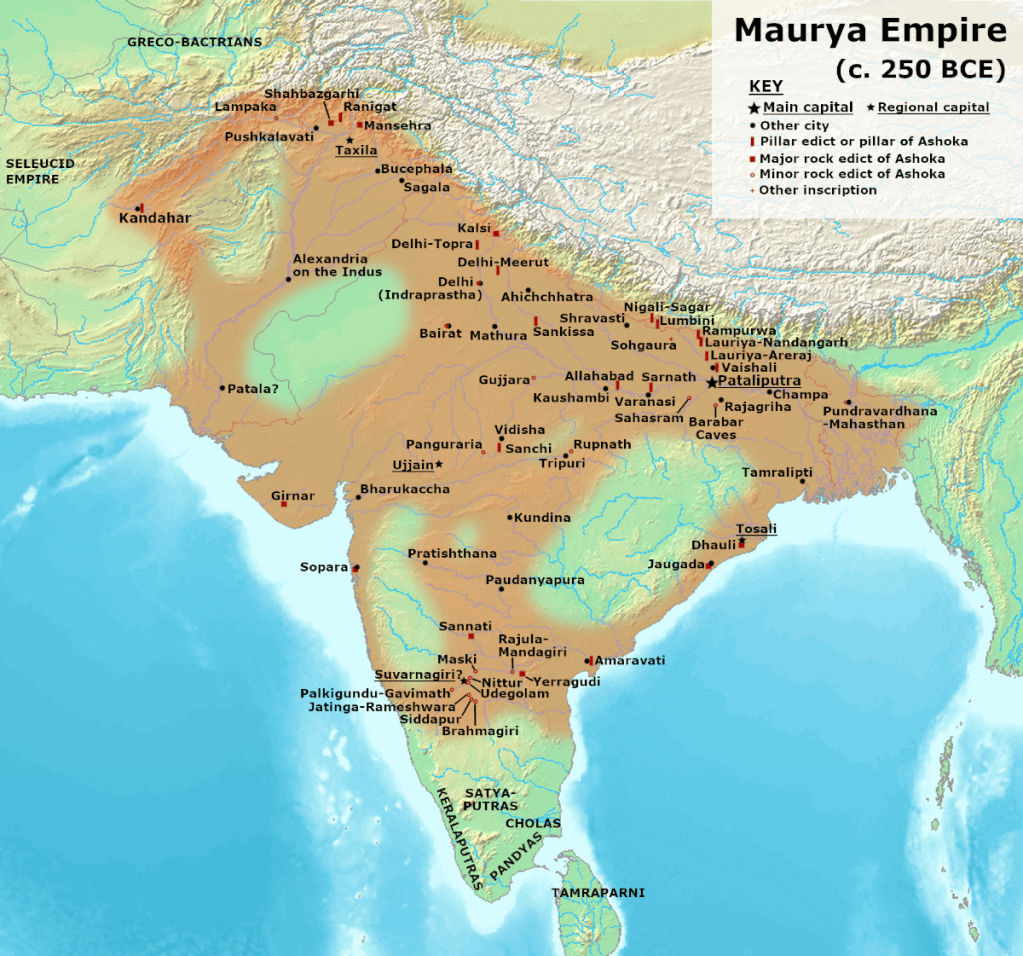
In 304 BC, the Mauryan Empire raised its head, and a part of the territory to the south of the Hindu Kush was ceded to them after they had been defeated by the Seleucids in 305 BC. The Mauryans came from Northern India. Now there were 2 dynasties in Afghanistan, still amicable with each other and friendly enough as neighbours.
In 250 BC the Greco-Bactrian governor, Diodotus, declared the area of Amu Darya independent of everyone. By 180 BCE Greco-Bactrian conquerors were moving swiftly south and by 180 BCE had established their rule in Kabul and in the Punjab. Now the Parthians who originated in Eastern Iran decided they had had enough of the Seleucids and took control of Sistan and Kandahar.
Afghanistan was divided up into portions, but it wasn’t going to stay that way.
The Kushans
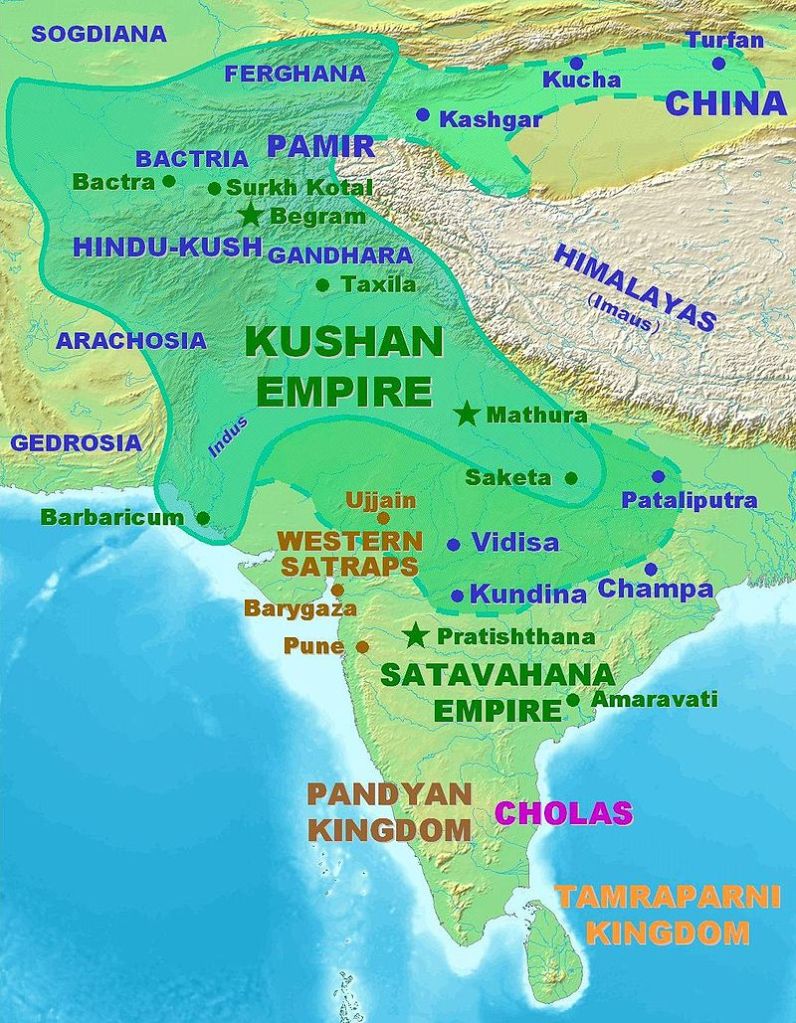
Around 135 BC, five Central Asian nomadic tribes called the Yuezhi managed to wrestle Bactria from the Bactrian Greeks. They then went ahead, under a united flag of the five tribes, conquering the rest of Afghanistan and establishing the Kushan Empire. They did not stop with Afghanistan; by the 2nd Century BC, under King Kanishka, the empire stretched from Mathura in north-central India, way past Bactria and right up to the frontiers of China. They were not lawless barbarians either. Patrons of the arts and of religion, they facilitated the exchange of ideas and goods along the Silk Road, part of which passed through Afghanistan. The Indian pilgrims, who used the road, introduced Buddhism to China, and some of the world’s largest Buddha figures, carved into a cliff at Bamiyan in the central mountains of Afghanistan, were built during this period. (Unfortunately, the figures were destroyed in 2001.
Sadly, all good things must come to an end. Although the Kushans did continue to rule over some provinces of Afghanistan for some centuries to come, by 241 AD, the Persian Sasanids established their control over parts of the country. In 400 AD, even this started to look shaky when the next batch of Central Asian nomads, ruled by the Hephthalites, took control. This, however, was short-lived – by 567 AD, a coalition of Sasanids and Western Turks gave them the boot.
Things could have been peaceful enough, but the Islamic armies defeated the Sasanids in 642 AD at the Battle of Nahavand (in Iran) and started their advance into Afghanistan. They were not welcomed – cities initially submitted but then rose in revolt. However, in the 9th and 10th centuries, there were numerous local Islamic dynasties in Afghanistan, the earliest being the Tahirids of Khorasan, who were then succeeded in 867-869 AD by a local dynasty from Sistan, called the Saffarids. The Samanids, who ruled from Bukhara, managed to consolidate the northern princes who became their feudatories – for a little while at least, Afghanistan was peaceful, and from 827-999 AD, Bukhara, Samarkand and Balkh enjoyed their golden age.
It was not to last.
In the middle of the 10th Century, a freed Turkish slave named Alptigin seized Ghazna. Upon his death, another former slave, Subüktigin, took over, and he extended his territory to include Kabul and the Indus. His son, Mahmud of Ghazna, came to the throne, conquered the Punjab and Multan and carried out raids far into India. It wasn’t all bad for Ghazna and for the second capital of Bust (modern day Lashkar Gah) – they became a wonderfully prosperous city, and the city a marvel of the age.
In 1150, the empire built by former slaves was on the wane, and Ala al-Din Husayn of Ghur, who came down from the mountains of central Afghanistan, sacked Ghazna and forced the very last Ghaznavid to flee to India. His nephew invaded India in 1175, and after his death in 1206, Qutb al Din Aibak, his general, became Sultan of Delhi.
Here Come the Mongols
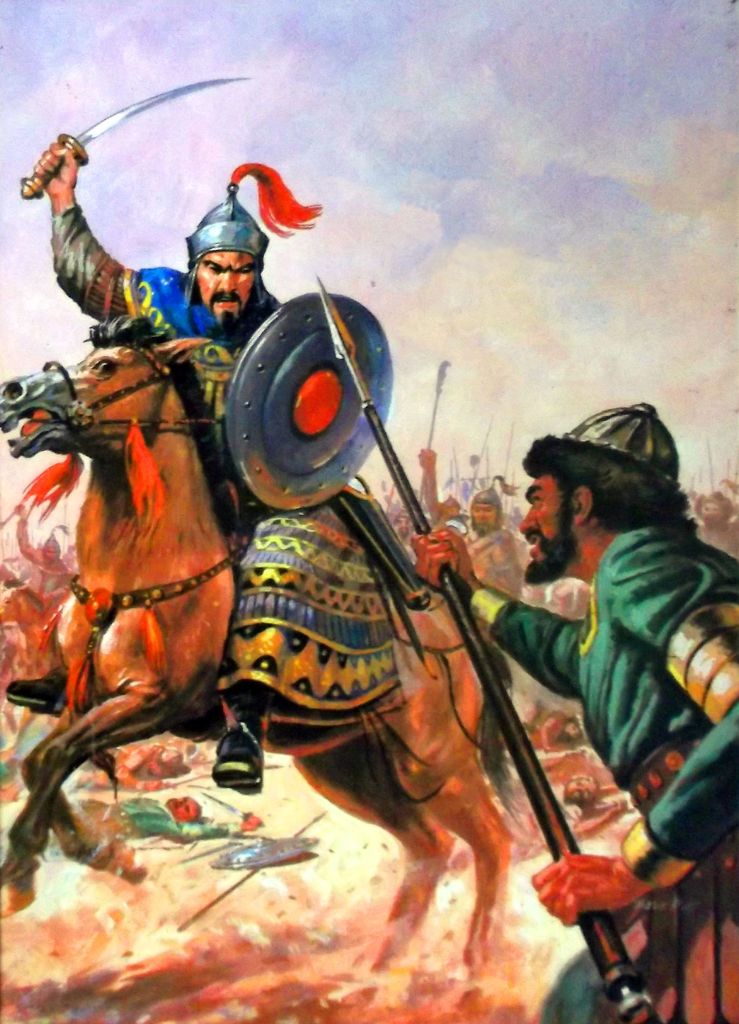
Genghis Khan invaded the eastern area of Ala al-Din’s empire in 1219. Ala al-Din didn’t have the stomach for a fight, so he quickly scarpered to an island in the Caspian Sea, where he died in 1220, leaving things to his son, Jalal al-Din Mingburnu. Jalal was made of sterner stuff than his father and rallied the Afghan mountain peoples at Parwan near Kabul and took on the Mongols, giving them a sound thrashing. Genghis, who was at Herat at the time, was not one to take defeat lightly, so in turn he laid siege to Bamiyan. Unfortunately for the city, Genghis’ grandson was killed there, and in his fury, Genghis razed the city to the ground, killing everyone inside. Jalal al-Din, in the meantime, was back at Ghazna, but he could not withstand the rampaging Mongols, and he fell back towards the Indus, where he made his last stand in 1221.
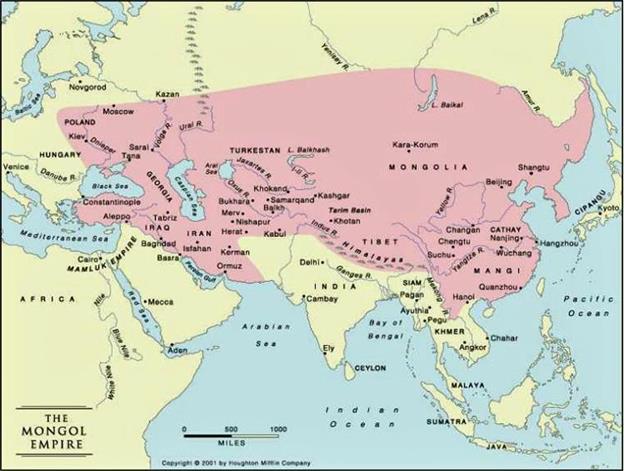
However, like Alexander the Great, Genghis Khan only lives forever in memory and history and by 1227, he was dead, and his vast empire fell to bits. In Afghanistan, local chiefs started to establish their own independent principalities while others continued to recognise the Mongol princes as their leaders. This would continue until the 14th century, with Timur (Tamerlane), when he came in and conquered most of Afghanistan.
The Timurid Dynasty
Timur or Tamerlane was one of the last great nomadic conquerors on the Eurasian Steppe. Born in what is now modern-day Uzbekistan, and of both Turkic and Mongol descent, he shared a common ancestor with Genghis Khan. He founded the Timurid Empire in Afghanistan, Iran and Central Asia and was, as the name suggests, its first ruler. In battle, Timur went undefeated and is widely regarded as one of the greatest military leaders and tacticians in history. In his free time, he was a great patron of the arts and architecture.
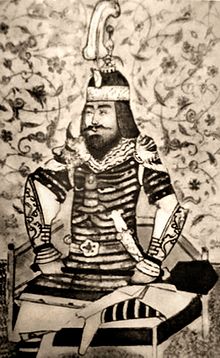
Tamerlane was a conqueror of some consequence – in 1370, he gained control of the western Chagatai Khanate, from whence he organised his campaigns and swiftly led military campaigns across the West, South and Central Asia, the Caucasus, and Southern Russia. He then defeated the Mamluks of Egypt and Syria, thus establishing himself as the most powerful ruler in the Muslim world, which included the emerging Ottoman Empire and the Delhi Sultanate, which by now was in decline.
However, as empires go, it wasn’t a lasting legacy, and shortly after his death, the Timurid Empire itself began to collapse.
Timur’s successors were patrons of the arts and learning – under their rule their capital, Herat was turned into a fine and cultured city, with many beautiful buildings. Their rule spelled a moment of peace and prosperity for Afghanistan.
Of course, someone had to come along and put a stop to all of that.
The Early 16th Century
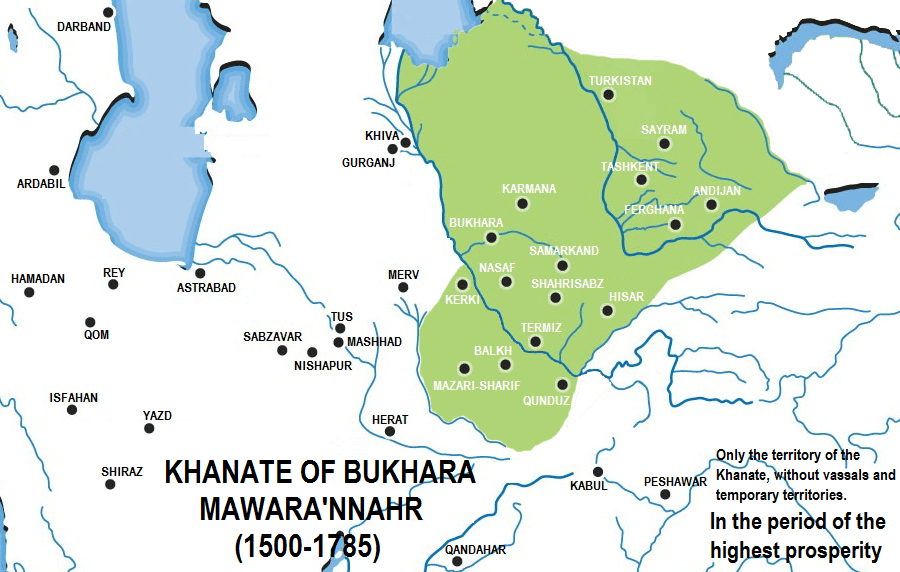
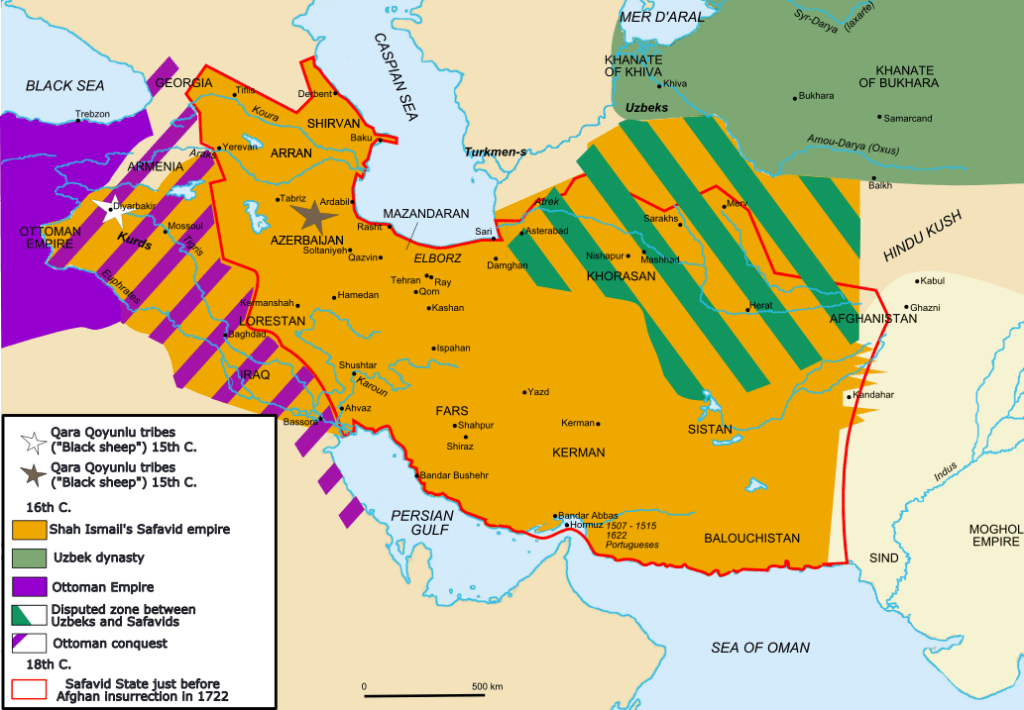
In Central Asia, a new power was on the rise, and under Muhammad Shaybani, the city of Herat was conquered by the Turkic Uzbeks. Shaybani chased the Timurids from their capital, Samarkand, by 1500. He fought successful campaigns against the Timurid leader Babur (more on him later). In 1505, he recaptured Samarkand, and in 1507 also took Herat. Shaybani conquered Bukhara in 1506 and established the Shaybanid Dynasty of the Khanate of Bukhara. Not satisfied with his conquests, he turned his attention to the land of the Kazakh Khanate, pillaging on the way. However, in 1510, he met the Safavid Shah, Ismail.
In 1510, the Safavid Shah, Ismail I besieged Shaybani and killed him, turning his skull into a jewelled drinking goblet. The Safavids ruled from 1501 to 1722 (and briefly from 1729 to 1736) – at the pinnacle of their power, they controlled all of Iran, Azerbaijan, Bahrain, Armenia, eastern Georgia, parts of the northern Caucasus, Iraq, Kuwait and parts of Afghanistan, Turkey, Syria, Turkmenistan and Uzbekistan.
But in Kabul, Babur, a descendant of both Genghis Khan and Timur, declared Kabul an independent principality and made it his capital. He then captured Kandahar in 1522, and went off to harangue Ibrahim, the last of the Lodi Afghan kings in India, defeating him in 1526, sacked the city and established the Mughal Empire. This vast empire included all of eastern Afghanistan south of the Hindu Kush, with its capital in Agra.
The Gunpowder Empires -the Ottoman, Safavid and Mughal – flourished from the 16th to the 18th century. They were amongst the strongest and economically sound empires of the time, which saw the rise of commercial expansion and cultural patronage. Their political and legal institutions were more centralised than ever before. Their regions sustained a significant increase not just in population but in per capita income, while they were also technologically sound, keeping abreast with modern innovations. They stretched from Central Europe and North Africa in the west and spread as far as Myanmar.
For the next 200 years, Afghanistan was split between the Mughals of India and the Safavids of Persia – the Mughals holding Kabul north of the southern foothills of the Hindu Kush and the Safavids Herat and Farah. No one could hold onto Kandahar.
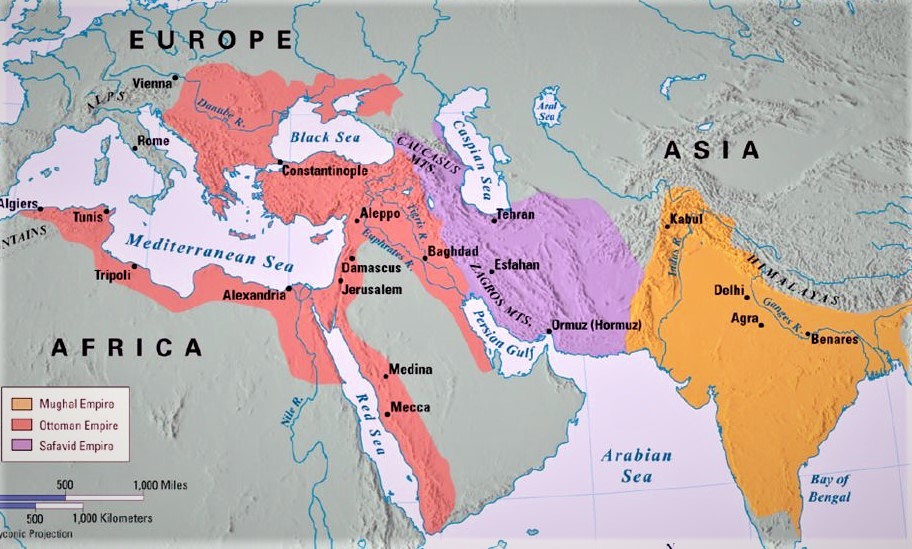
However, as it is with all great empires, someone was bound to be unhappy, and this time, it was the people of Afghanistan. Periodic attempts were made in Afghanistan to gain independence. In 1709, Mir Vays Khan, a leader of the Hotaki Ghilzay tribe, successfully ousted Gorgin Khan, the Persian governor of Kandahar.
The Hotakis
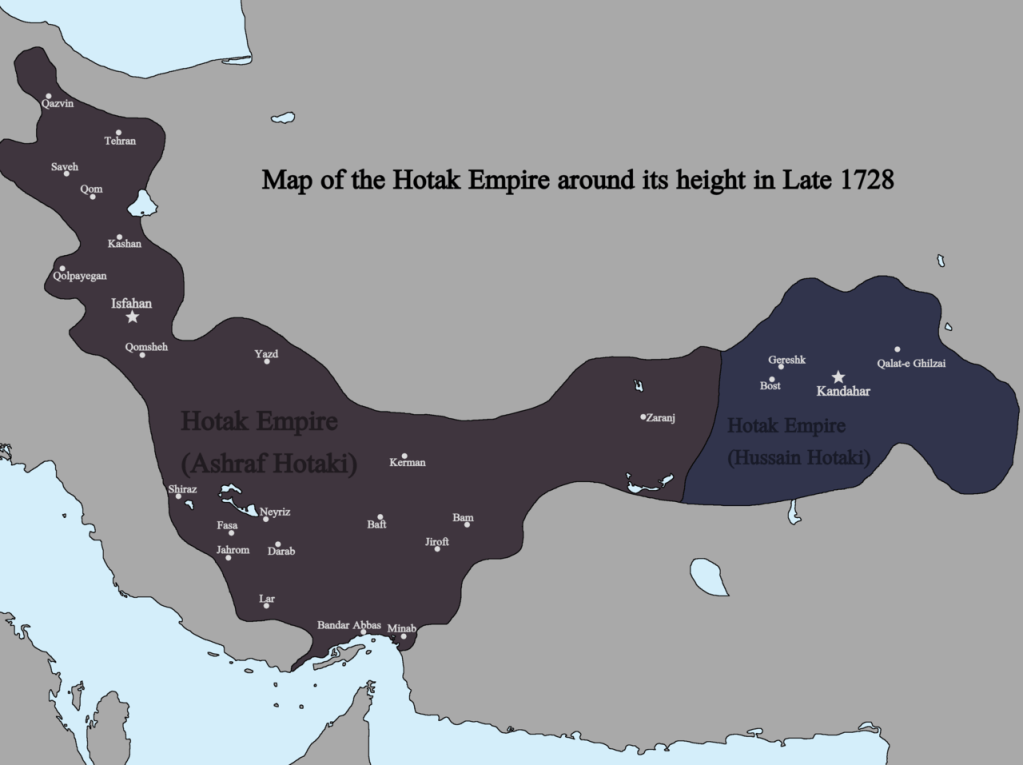
Mirs Vays Khan ruled Kandahar until 1715, when he died. In 1716, Abdalis Durrani of Herat decided Mirs Vays Khan had had a point, and he took up arms against the Persians, successfully liberating the province. Mahmud, the son and successor of Mirs Vays Khan, did not stop there – holding Kandahar was just the start. In 1722, he led 20’000 men against Esfahan, breaking the Safavid government, which surrendered after a six-month siege.
Following Mahmud’s death in 1725, Ashraf took the reins and successfully withstood the onslaughts of the Russians to the north and Ottoman Turks to the west. However, his star was but brief – a brigand chief, named Nadr Qoli Beg, defeated Shah Ashraf at Damghan in 1729, driving them not only from Persia, but taking Herat in 1732 after a desperate siege. Shah Ashraf was murdered during the retreat from Damghan.
Nadir Shah,the Durrani Dynasty and the Last Great Afghan Empire
After his success at Herat, Nadr Qoli Beg elected himself Shah of Persia and took the name Nadir Shah in 1736. By 1728, even Kandahar could no longer withstand the new force, and he took the city with a force of 80’000 men. He then swiftly moved on to capture Ghazna and Kabul, and then turned his attentions to the Mughal capital of Delhi in 1739 after the Battle of Karnal, in which he defeated the Mughals under the leadership of Muhammad Shah.
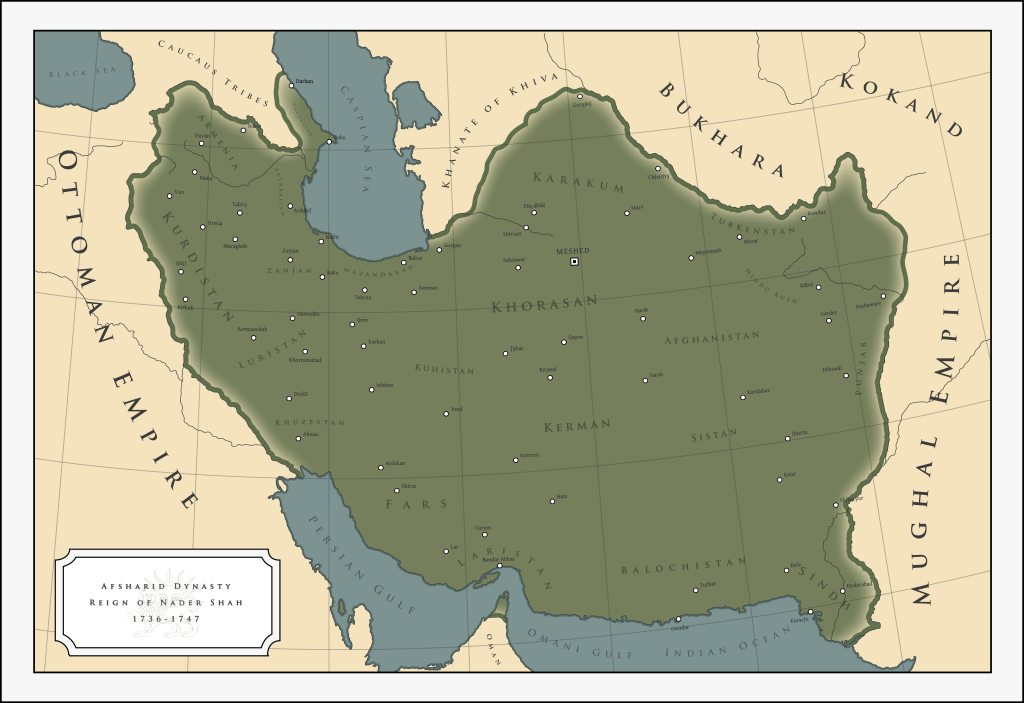
The Mughal Empire had been weakened by three decades of ruinous wars of succession. The Marathas were on the move and had captured territory in Central and Northern India. Many Mughal nobles decided to set out on their own and founded independent states. The Mughal ruler, Muhammad Shah, was no longer capable of stopping the disintegration of the empire, nor could he effectively defend it in Afghanistan, where tribal uprisings by the Pashtuns on the Northern Frontier were ever-increasing. His own court was corrupt and weak, even though his capital, Delhi, was swimming in wealth. Nadir Shah was very interested in the prosperity of India and was very much attracted to the affluence and splendour of Delhi. He asked Muhammad Shah to close the Mughal frontiers so the Afghan rebels he himself was fighting against could no longer find refuge in Kabul. Muhammad Shah agreed but essentially did nothing. It was the excuse he was looking for, and in 1738, Nadir Shah marched on the Mughals.
It wasn’t so much an invasion as an all-out rout. He defeated his Afghan rivals, overran Kabul and then met the Mughals in the Punjab at the Battle of Karnal. Muhammad Shah surrendered and, together with the Nadir Shah, he returned to Delhi.
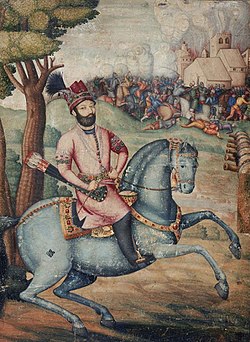
Nadir Shah was a ruthless conqueror and sacked Delhi for several days, making off with approximately 120 billion dollars worth of plunder. It took 20’000 mules and 20’000 camels to carry everything back to Persia. He also fined the people of Delhi 20 million rupees and slaughtered 30’000 of them, taking another 10’000 women and children as slaves, a fact borne out by the representative of the Dutch East India Company in Delhi. Muhammad Shah was forced to beg for mercy; eventually, Nadir Shah relented, and the killing stopped. Muhammad Shah also handed over the keys to the treasury and lost not just the Peacock Throne, but the Kohinoor and the Darya-i-Noor diamonds.
As a result of the plunder, Nadir Shah was able to stop all taxation in Persia for three years and he was able to turn his attentions to the Ottoman Empire. However, in 1747, he was assassinated in Iran -and that was the end of his empire. However, it signalled the rise of the Last Great Afghan Empire.
The Durrani Empire
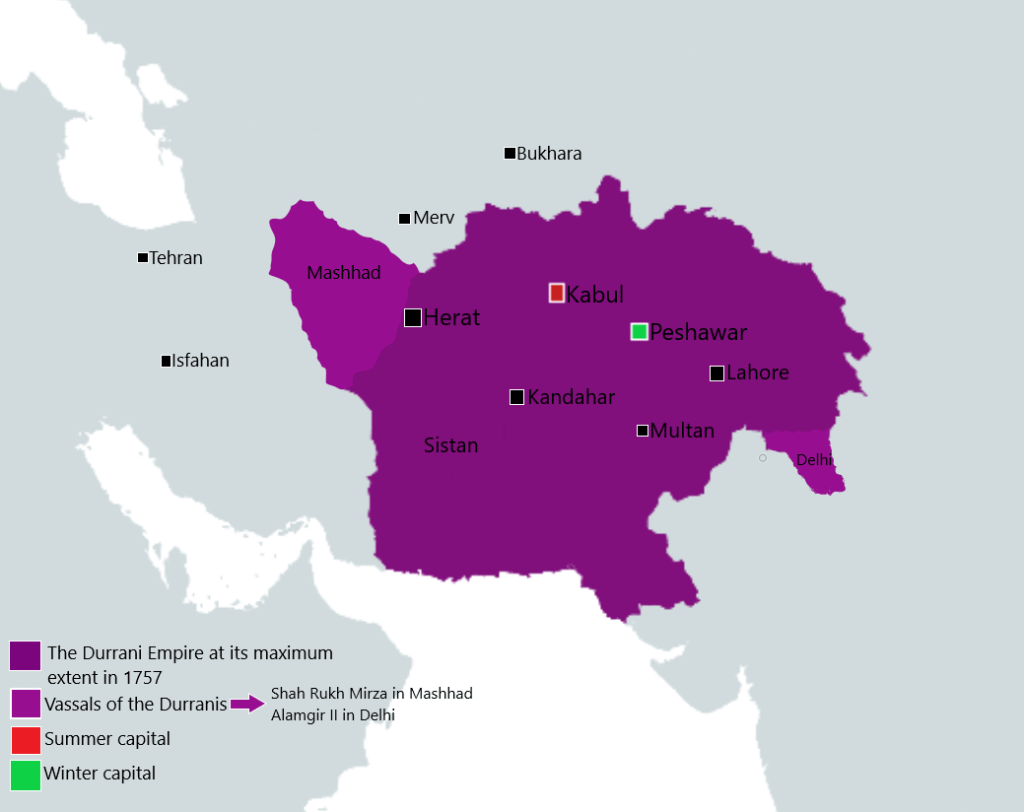
At its height, the Durrani Empire, also called the Sadozai Kingdom or the Afghan Empire, ruled over Afghanistan and Pakistan, north-eastern and south-eastern Iran, eastern Turkmenistan and north-western India. With only the Ottoman Empire to match it, the Durrani Empire was the greatest Muslim empire in the second half of the 18th century.
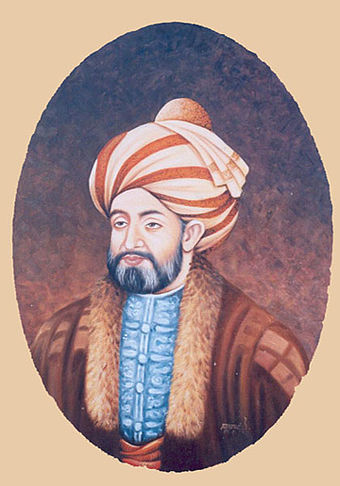
Founded and built by Ahmad Shah Abdali, the son of Muhammad Zaman Khan Abdali (Chieftain of the Abdalis). He succeeded in uniting his tribe, and after Nadir Shah’s death, he became the King of Afghanistan by taking Kandahar, Ghazni, Kabul and Peshawar all in the same year, 1747. He then changed his tribal name from Abdali to Durrani and was known as Ahmad Shah Durrani. By 1749, the Mughal Empire gave over much of north-western India to the Afghans, thus expanding its territory further. Ahmad Shah then set out to conquer Mashhad, then ruled by Shahrokh Shah, who wisely acknowledged Ahmad Shah as his sovereign. He would then send an army to pacify the areas north of the Hindu Kush, during which time, one tribe after another began joining his cause. With a formidable force, Ahmad Shah then invaded India, no less than 4 times, during which he gained control of Kashmir and the Punjab. In 1757, he sacked Delhi but let the Mughal ruler, Alamgir II to remain on the throne, as long as he acknowledged that Ahmad Shah reigned over the regions south of the Indus.
Ahmad Shah Durrani died in 1772, and his son Timur Shah Durrani became the next in line. Timur Shah was but nominally recognised by the tribal chieftains, and he would spend most of his time quelling various uprisings. In 1776, he shifted his capital from Kandahar to Kabul. His fifth son, Zaman, seized the throne after his father’s death in 1793, with the help of Sardar Payenda Khan, a chief of the Barakzai. Zaman decided then to turn his attention to India. The British, who by this time had a foothold in India themselves, were rather alarmed by this development and called on the help of Fath Ali Shah of Persia to distract the over-zealous Zaman. The Shah, however, decided it was time for an excursion of his own and by providing money and men to Mahmud, governor of Herat and Zaman’s half-brother, and thus provisioned Mahmud advanced on Kandahar. Mahmud wasn’t going to stop there and now set his sights on Kabul. It was now Zaman’s turn to be alarmed, and he broke off his India campaign and rushed back to Afghanistan.
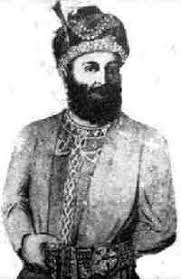
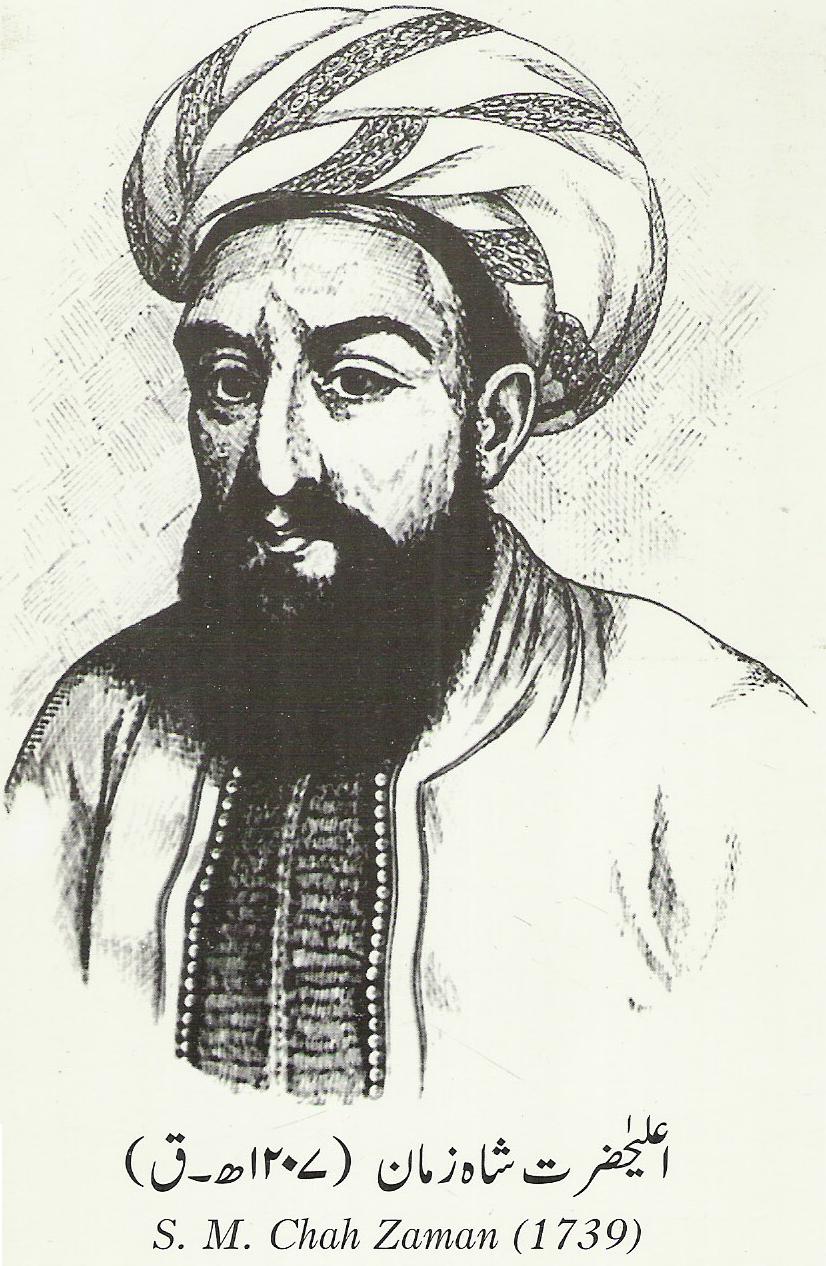
Unfortunately, he wasn’t very lucky. He was handed over to his brother in 1800, who had him blinded and imprisoned. But the slow demise of the Durrani Empire had already started in 1798 when Zaman Shah had nominated a Sikh, Ranjit Singh, as governor of Lahore.
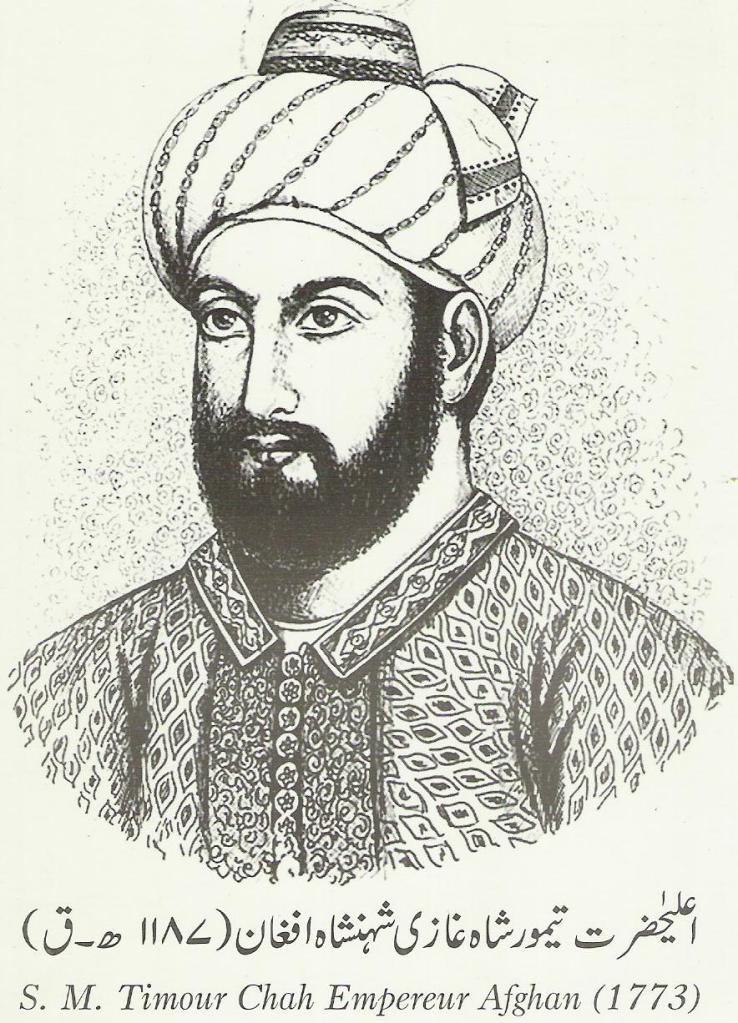
Shah Mahmud, however, was not so much into ruling and left much of it to his vizir, Fath Khan. The chiefs of the tribes, all with grievances against this new ruler, now joined forces and invited another of Zaman’s brothers, Shah Shuja, to Kabul. It was a quick coup, with Shah Shuja taking Kabul and Mahmud being forced to sue for peace. Shah Shuja was declared king in 1803. It was not an easy time – the chiefs themselves were powerful and rather unruly, the Sikhs were eying Afghanistan and encroaching from the east, while the Persians were sneaking in from the west. All that was missing in this rather disturbing soup was Napoleon I. He couldn’t help himself either and proposed to Alexander I of Russia that if they combined forces, they could invade India. Once again, the British found the situation rather alarming and, a mission, headed by Mountstuart Elphinstone, rushed to Peshawar to meet Shah Shuja. The idea was to have a mutual defence treaty to meet the French-Russian threat, in which Shah Shuja would oppose the passage of foreign troops through his dominion. The French-Russian coalition never materialised, but while in Peshawar, Shah Shuja received alarming news of his own – Mahmud and his wily vizier Fath Khan had occupied Kabul. Shah Shuja was too late to do anything; his troops were routed, and he was forced to withdraw from Afghanistan. Shah Shuja found asylum with the British in Ludhiana in 1815. Mahmud Shah now ruled over Afghanistan, but he made a fatal mistake – he alienated the Barakzai, who had helped him come to power. Not that he stayed there terribly long. Mahmud kept his place until 1818, when he was ousted by his brother, Sultan Ali Shah, who managed to hold on until 1819, but all in vain, his brother Ayub Shah ousted him the same year. Under Ayub Shah Durrani, the empire lost control of Kashmir, which became part of the Sikh Empire following the Battle of Shopian in 1819. Ayub Shah was presumably killed in 1823 as the last ruler of the Durrani Empire.
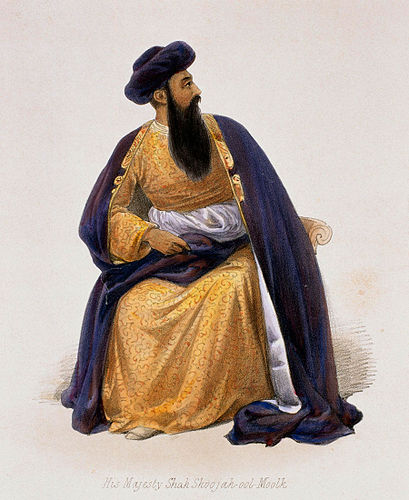
The fall of the Durrani Empire finally came in 1823 amid the endless squabbling of the sons of Timur Shah. The Afghan Empire ceased to exist as a single nation state and dissolved into a fragmented collection of smaller chieftainships. Stepping into the fray, the Barakzai dynasty found its niche and in 1837, Dost Mohammad Khan, brother of the blinded Fateh Khan gained power. This is possibly where meddling in Afghanistan became a popular repast for foreign nations.
The British decided to give their first shot at it in 1839, when they invaded Afghanistan to oust Dost Mohammad and replace Shah Shuja Durrani on the throne. The resulting First Anglo-Afghan War caused rebellion across the country, with Dost Mohammad being forced to surrender and sent to India in exile.
By 1841, the Afghans had had about as much as they could stomach from Shah Shuja, who was not particularly popular even if he was the “rightful ruler.” The British, holed up in Kabul under the command of Major General Sir William Elphinstone, were beset upon by the furious population. Elphinstone, striking a deal with the son of the Dost, agreed to withdraw to the British garrison in Jalalabad, some 140 kilometres away. It was the 6th of January and bitterly cold. The column was almost immediately beset upon by Afghan tribesmen who took shots at them as they struggled through the snows of the Hindu Kush. Many died of exposure and starvation, and others were killed during the fighting. In total, the British lost 4’500 troops and 12000 civilians, mostly comprising the families of British and Indian soldiers, workmen, servants and camp followers. Her Majesty’s 44th Foot made their last stand at Gandamak on the 13th of January. Over 100 British prisoners and civilian hostages were later released.
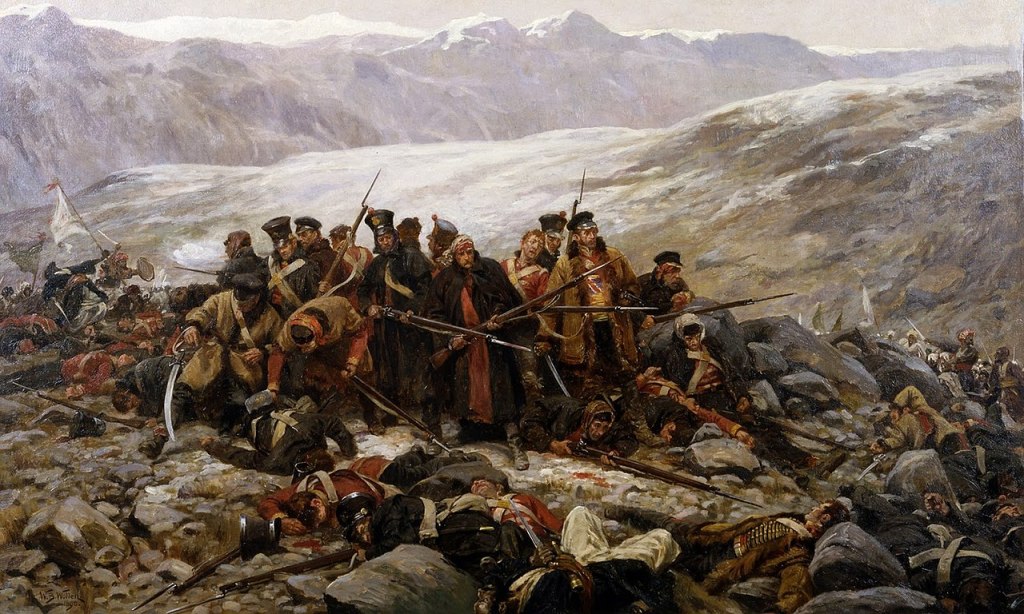
In the words of Patrick Macrory, who wrote “ Retreat from Kabul”, states:
“The war was Britain’s folly. At the height of its power in India, Britain sought to create stability in the subcontinent- and prevent Russian and Persian encroachments – by removing a colourful and popular leader from the Afghan throne and replacing him with the unpopular, though legitimate king. The experiment ended with a British resident in Kabul butchered by an angry mob, a British envoy shot by an Afghan leader during a discussion – his dismembered corpse hung in the Kabul bazaar- and the ill-fated retreat of the British, which resulted in the death of 16’000 people. “
Only Assistant Surgeon William Brydon and a few sepoys reached Jalalabad. Some 2000 Indians who were on the retreat, many maimed by frostbite, were returned to Kabul, where they existed by begging or were sold into slavery. Some managed to return to India after the Second British invasion, some months later, but others chose to remain in Afghanistan.
It was this retreat that shook the confidence of the Indians in their British rulers, that set a small stone rolling which collected more dissatisfaction on the way and ended up starting a mutiny in 1857.
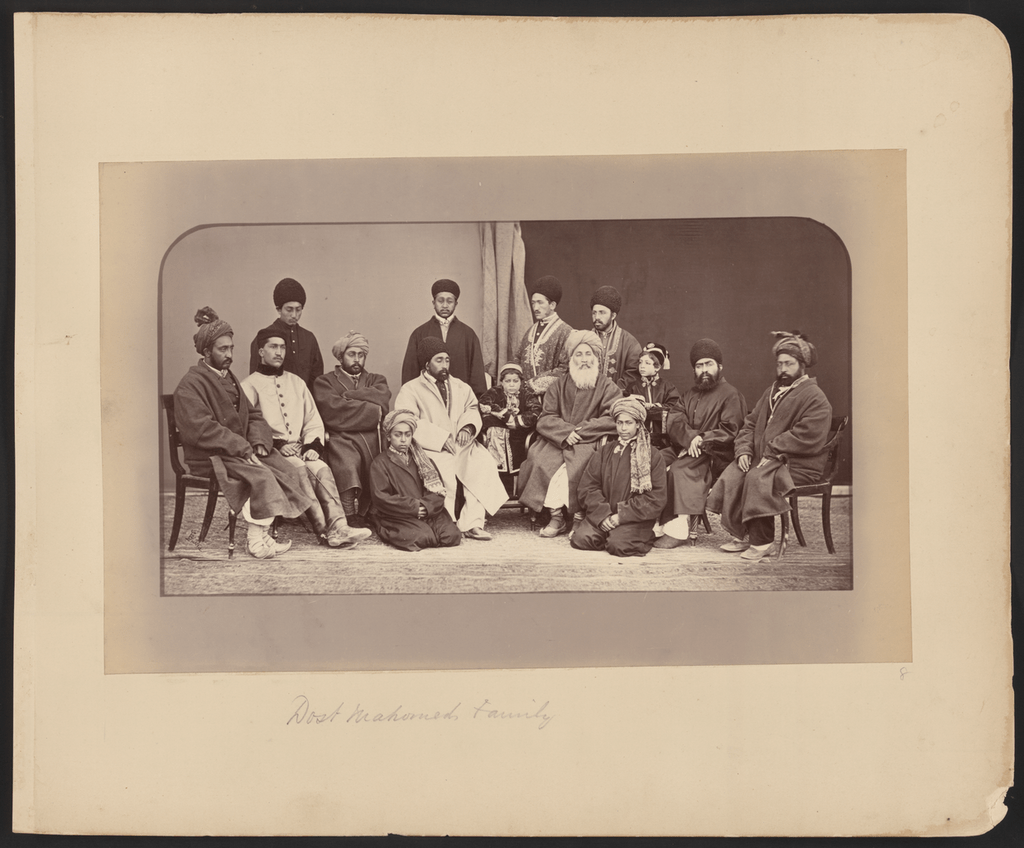
Dost Mohammad Khan returned from exile and now took power in Afghanistan; his reign, though popular, was anything but peaceful. During a very short time, the British government resolved to abandon any attempts at intervening in the internal affairs of Afghanistan. The Dost, however, could not help himself and allied himself with the Sikhs, but they were subsequently defeated at the Battle of Gujrat in 1840, which gave the Dost a moment’s pause, pulling his troops back to Afghanistan. In 1850, he conquered Balkh, and in 1854, he captured Kandahar.
In 1855, he signed an offensive and defensive alliance with the British government, reversing his former policy of open hostility. In 1857, he declared war on Persia together with the British. In the same year, in July, a treaty was signed for the control of Herat province, which was now placed under the rule of a Barakzai prince. During the Mutiny, he did not support the rebels in India and kept himself well out of it. He ruled Afghanistan for 40 years, and upon his death, his son Sher Ali Khan took the throne.
In 1878-1880, the British invaded Afghanistan again, in the Second Anglo-Afghan War. The war was started after Emir Sher Ali Khan decided to strengthen ties with Russia. Sher Ali was forced the flee, and after his death, his son Mohammad Yaqub Khan signed the Treaty of Gandamak, which gave Britain control over Afghan foreign affairs. When he abdicated, Abd Al-Rahman, the cousin of Sher Ali, became emir.
In 1919, Emir Amanullah Khan declared independence from Britain, prompting the British to embark on the Third Anglo-Afghan War, in which Afghan troops crossed over the border into British territory in British India. This ended with the Treaty of Rawalpindi, which left the British and the Afghans on reasonably friendly terms.
One could continue with this litany and end up where we are today. But I find it is best to leave it here. What happened in Afghanistan after the third war with the British is a story of more bloodshed, more meddling by the British, further meddling by the Russians, a rather large slice of meddling by the Americans with Operation Cyclone in 1979, and culminating in the Russians crossing over into Afghanistan in the same year to stabilize yet another shaky regime and bolster a communist government against the mujahideen. The mujahideen are, in turn, armed by the Americans and supported by a whole host of other nations. By 1989, when the Soviets withdrew from Afghanistan, 1.5 million Afghans had been killed, and 25’000 Soviet troops were dead after 10 years of occupation.
A graveyard of empires indeed.
List of Pashtun Empires and Dynasties
I have only given a brief outline of some of the major ruling powers in Afghanistan and the rather turbulent history of a nation that has been at war since time immemorial. The following list is incomplete, but it includes many that I will not suffer you to read about.
The Pashtuns, also known as ethnic Afghans are of eastern Iranian decent and are native to Afghanistan and Pakistan. As a result of migration and the multitude of conquests over the centuries, many communities through out the region claim Pashtun ancestry.
- Khaliji Dynasty – 1290-1320, a Turko-Afghan dynasty, once rulers of the Delhi Sultante
- Lodi Dynasty – 1451-1526, founded by Bahlul Khan Lodi of the Lodi tribe. Their capital was in Delhi and was the last dynasty to rule the Delhi Sultanate.
- Sur Empire – 1540-1556. Belonging to the Sur tribe of the Ghilzai confederation, they ousted the Mughals from north India and controlled areas in eastern Afghanistan, Pakistan, north India and all the way to Bengal. The Mughals in turn ousted them after 16 years, in 1557.
- Hotaki Dynasty – 1709-1738. Their founder, Mir Wais Hotak hailed from Kandahar and was a tribal chief of the Ghilzai Pasthuns. They ruled over Afghanistan and most of Persia before being overthrown by the Afsharids of Persia, led by Nadir Shah.
- Durrani Empire – 1747- 1826. Only second in size to the Ottoman Empire at its peak, this formidable empire ruled over all of Afghanistan, most of Pakistan, some of India, including Kashmir, northeastern Iran and eastern Turkmenistan.
- Barakzai Dynasty – 1826-1973
Sources:
“Retreat from Kabul” – Patrick Macrory, 2002
https://www.britannica.com/place/Afghanistan/Historical-beginnings-to-the-7th-century-ce
https://www.thecairoreview.com/timelines/afghanistan-since-1700/
https://www.britannica.com/place/Afghanistan/The-first-Muslim-dynasties
https://info.publicintelligence.net/DIA-AfghanHistory.pdf
https://www.nationsonline.org/oneworld/History/Afghanistan-history.htm
 Mutiny Reflections
I wonder whether a 3rd millennium history blog would condense the post-Mongol history of Afghanistan into a few ebbs and flows like we reduce the Alexandrine-to-Mongol period? And would that be as insightful?
LikeLike
It probably would. And yet I don’t t think there is any history of Afghanistan has ever been completely insightful.
LikeLiked by 1 person
Long but fascinating post. Thank you!
LikeLike
I am glad you liked it! It is terribly long, I know, I tried to condense the history of a country into something reasonable to read. I did skip a few empires and dynasties – otherwise I could just change the name of my blog to Reflections of Afghanistan!
LikeLike
So far it has been an impressive contribution of thorough and informative historical research.
LikeLiked by 1 person
It is clear that there has been centuries of history in Afghanistan. I could write for years and probably only scratch the surface as I have done here! I hope you enjoy the read!
LikeLiked by 1 person
many thanks yes I did
LikeLike
Reblogged this on Muunyayo and commented:
#empire #collapsetarianism #Pashtuns #Afghans #Kabul
LikeLiked by 1 person
Thank you for reblogging my post! It is very kind of you!
LikeLike