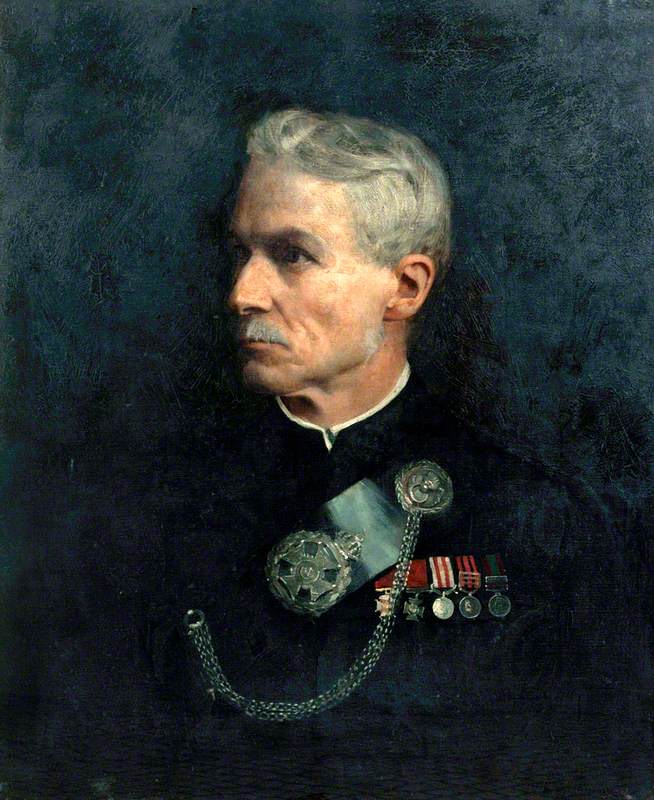
Born in Monghyr, Bihar, on 29 October 1825, the third son of Dr John Tytler of the EICo Medical Service, he spent his formative years in India. His father had been in India since 1813, having sailed out with his mother to join an older brother, Robert, also a surgeon, and his sister, Margaret. John had qualified as an assistant surgeon and had obtained a position with the EICo – his first posting, in 1814, was in Patna. He married shortly after in 1818 to his first cousin, Anne Gilles, who happened to be in India at the time. There was certainly no lack of family connections – the Gilles family was related to Lord Gilles, a cousin of Sir Alexander Burnes (Bokhara Burnes), the ill-fated envoy murdered in Kabul in 1841.
In 1825, Dr Tytler was attached as surgeon to the 20th BNI and in 1826, found himself in Barrackpore, before taking the post of garrison surgeon in Chunar. In 1827, he was made the presidency surgeon and took up a permanent residence in Calcutta. He was fluent in Arabic, which took him 14 years to master and taught himself not only Sanskrit, but Hindi, Persian and Bengali, the knowledge of which he put into good use translating texts on Udani medicine and mathematics, works which Tytler eventually brought to print.
In 1829, Dr John Tytler turned his attention to the Asiatic Society, becoming joint curator and, for several years, lecturing in mathematics at the Presidency College in Calcutta. A determined Orientalist, John Tytler continuously saw himself clashing with Anglicists, who were opposed to allowing Indian students to study in the vernacular languages – finally, with his view that studies should be conducted in Persian, Arabic and Sanskrit, were so widely opposed, John Tytler found himself out of a job and on the boat back home. In 1835, he moved his family back to London and two years later, while residing in Jersey, Dr John Tytler died.
Some of his works, published during his colourful life, included:
A short anatomical description of the heart, translated into Arabic (Calcutta, 1828)
Hooper, Robert (1830). The Anatomist’s Vade-mecum, by Dr Robert Hooper, Translated Into Arabic by John Tytler. Education Press.
Edition of the Arabic version by Hunayn ibn Ishaq of the Aphorisms of Hippocrates (Calcutta, 1832)
Translation of the Book of Common Prayer into Arabic, with William Hodge Mill (1837)
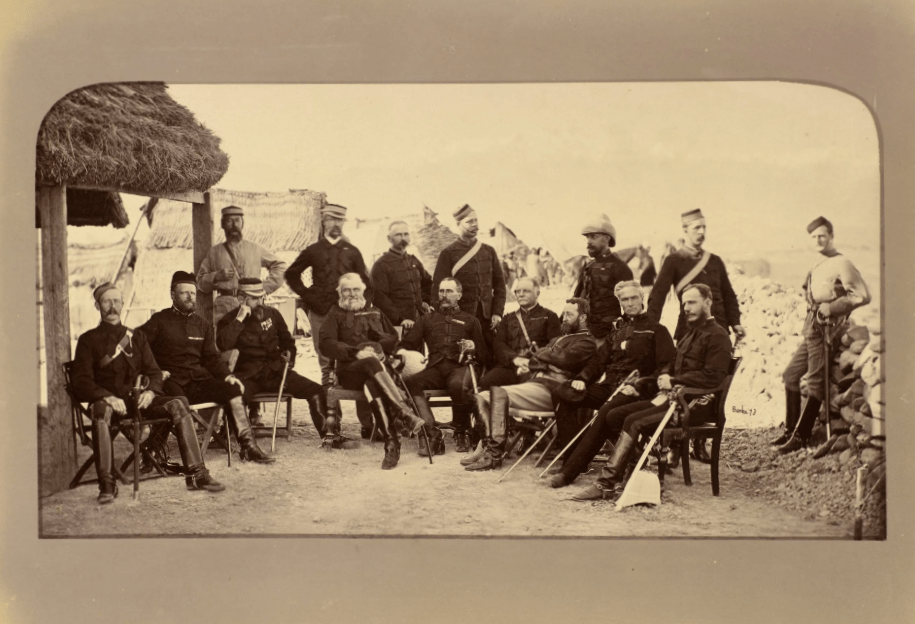
1. Deputy Surgeon-General J. Gibbons; 2. unidentified; 3. Major John Slade; 4 unidentified; 5. unidentified; 6. Brigadier General John Doran; 7. unidentified.
Front row sitting, left to right:
1. Lieutenant Gilbert Hamilton; 2. unidentified; 3. Colonel Charles Macgregor; 4. Lieutenant General Sir Samuel Browne (1824-1901) VC (Commander of the Peshawar Valley Field Force); 5. Brigadier-General Frederick Ernest Appleyard (1829-1911); 6. Brigadier-General Sir Herbert Macpherson (1827-86) VC; 7. Brigadier-General Charles Gough VC; 8. Brigadier-General John Adams Tytler (1825-80); 9. unidentified.
https://www.rct.uk/collection/2501356/general-sir-samuel-browne-and-staff-pesahawar-valley-field-force
https://www.antique-swords.co.uk/interesting-swords-from-2nd-anglo-afghan-war-photos
Of his seven children, five survived to adulthood, but only his third son, John Adam, pursued a military career. Recommended by his father’s old friend, General Sir Jeremiah Bryant (an EICo director), John obtained a cadetship in the Bengal Infantry in 1844, to the 66th BNI, which became the 66th or Goorkha Regiment in 1850. His first active service would be under Sir Colin Campbell on the Peshawar Front in 1851. He was appointed adjutant to the 66th in 1853.
Unlike many officers of the time serving in the Bengal Army, Tytler was satisfied serving with the Gurkhas. He would remain with them throughout his career and would become the first Victoria Cross recipient of a Gurkha regiment. A dashing officer, Tytler was known for his ‘lead from the front’ attitude – he was well liked by his men and, above all, he displayed complete trust in his regiment. Like Gepp, Tytler entertained a certain disdain for the rebels and for the Bengal army, something which we have seen in Gepp’s letters home; it is likely, then, at Churpura, Tytler’s confidence in his men gave him the impetus to charge the guns.
Tytler dashed ahead of everyone, including Gepp, alone, and on horseback straight up to the guns, where he steadfastly remained, fighting in desperate hand-to-hand combat until his comrades came up. It was fortunate for Tytler they came up when they did – he had been shot in the left arm, a spear had been thrust at his chest, and a ball narrowly missed smashing his right arm, only tearing through the sleeve of his coat. Captain C.C.G. Ross noted the incident in his official despatch to Captain Brownlow, Major of the Kumaon Field Force, and Lieutenant John Adam Tytler was recommended for the Victoria Cross. He received his medal in a ceremony in India the same year and married Adelaide Anne (née Ross, daughter of Lt. Col. Hugh Ross, Bengal Infantry and sister of Captain Campbell Claye Grant Ross) in June 1858 in Naini Tal. Together, they would have five daughters.
Following Churpura and his recovery from injury, Tytler joined the Oudh and Rohilkhand Campaign and, in 1859, was promoted to captain. By 1862, he was second in command of the 3rd Gurkha Regiment and in 1863, Tytler took command of the 4th Gurkha Regiment (raised in 1857 from men of the 1st) and remained with them for the next 17 years…” under him the Regiment earned a reputation for being one of the smartest and most accurate regiments in the Indian Army.” They would fight their way through the Ambala Expedition, the 1868 Hazara Expedition under Sir Alfred Wilde, the Lushai Expedition and in the 2nd Afghan War. Tytler would be mentioned twice in Despatches, and for his service during the Looshai Campaign, Tytler was appointed CB in 1872. During the 2nd Afghan War, now a brigadier-general, he commanded the 2nd Brigade, 1st Division Peshawur Valley Field Force on the North West Frontier under General Sir Sam Browne, instrumental in leading raids against dissolute Afridi tribes.
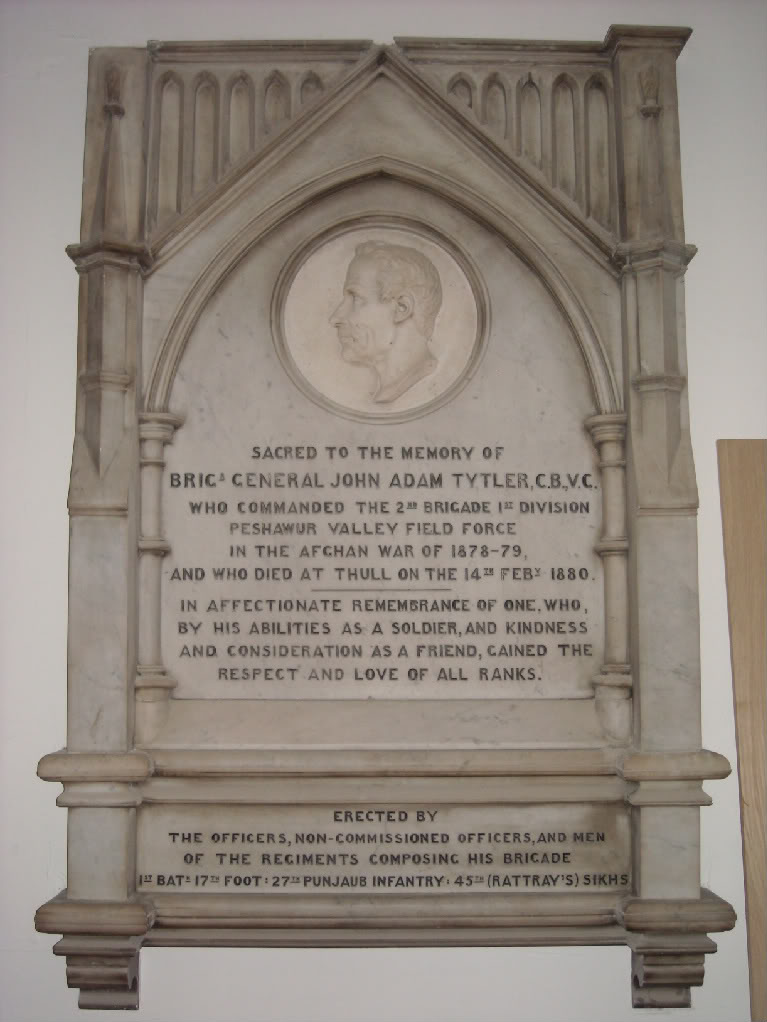
Although the constant campaigning was taking a toll on Tytler’s health, he continued to put himself up for service. Following sick leave in 1879, he returned to India for his final and very successful expedition against the Zaimusht tribe, and shortly before his death, Tytler received a personal message of thanks from the Viceroy himself. A soldier to the very end, Brigadier John Tytler died on campaign of pneumonia, on 14 February 1880 in Thal, Kurrum Valley, on the North West Frontier Province (now Pakistan); he lies buried at Kohat Cemetery. He was 54 years old.
Sources:
Dodwell, Messrs., and Miles, Messrs. Alphabetical List of the Medical Officers of the Indian Army 1764-1838. London: Longman, Orme, Brown & Co., 1839.
Great Britain. Parliament. Further Papers (No. 7), Relative to the Mutinies in the East Indies. London: Harrison & Sons, 1857.
Hodson, V. C. P. List of the Officers of the Bengal Army 1758-1834, Part III. London: Phillimore & Co., 1946.
Holmes, T. R. E. A History of the Indian Mutiny. London: W.H. Allen & Co., 1891.
Kaye, John William. A History of the Sepoy War in India 1857-1858. Vol. 3. London: Longmans, Green & Co., 1896.
Malleson, G. B. History of the Indian Mutiny 1857-1858, Commencing from the close of the Second Volume of Sir John Kaye’s History of the Sepoy War. Vol. 1. London: W.H. Allen & Co., 1878.
Petrie, Francis Loraine. The 1st King George’s Own Gurkha Rifles, the Malaun Regiment. London: Royal United Service Institution, 1925.
Links:
https://thegurkhamuseum.co.uk/john-tytler/
https://swetenham.org/familygroup.php?familyID=F51117&tree=1
https://www.thestatesman.com/opinion/the-passionate-scientist-with-a-rebellious-mind-1503348456.html
https://johnrogers.com.au/pocklington/familytree2/gp684.html
https://historyofadderbury.co.uk/henry-gepp-the-importance-of-the-pre-adderbury-years
 Mutiny Reflections