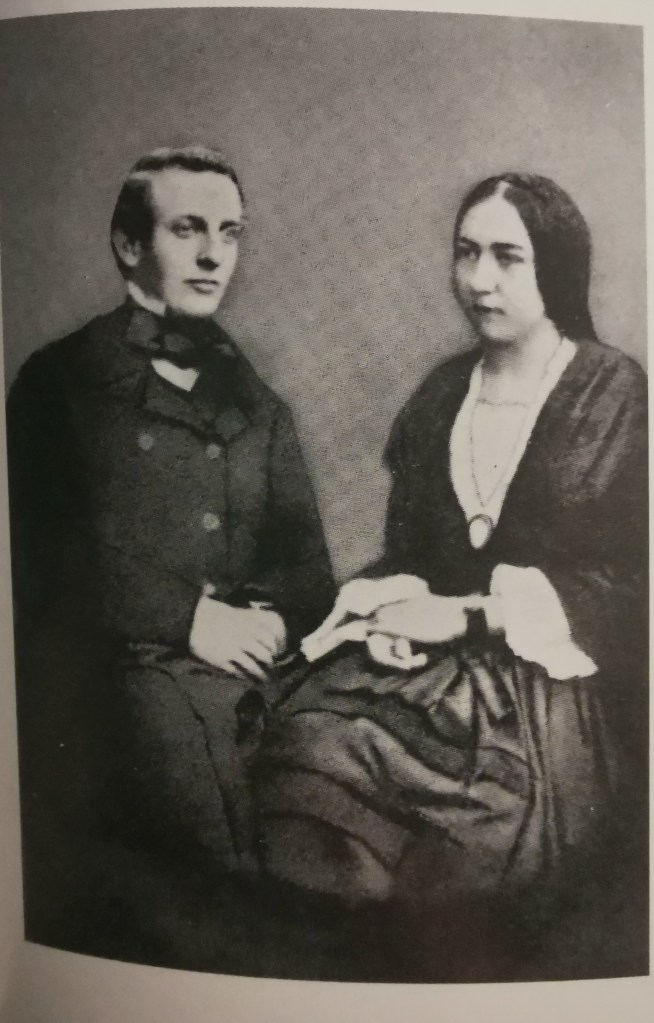
At the age of 23, Kate Bartrum was settling down to life in India, so distant from her native Somerset. Her infant son Bobbie was doing well and her husband, Robert had secured for himself a post of Assistant Surgeon to the 3rd Oudh Irregular Infantry.
In September 1856 the happy little family made their way to Gonda, expecting a quiet and circumstances permitting an uneventful life. Kate loved her husband and her son deeply and completely, her world was them. For Robert she had travelled over those endless seas; his life hers.
Letters from India
On the 22nd of May, the peaceful solitude of Gonda was shattered by the news of the massacres in Meerut and Delhi, followed shortly after by the murder of Brigadier Handscombe by the men of the 71s BNI in Lucknow. In Gonda it was decided that the only defendable position was the Treasury and as such a wall was built surrounding it and provisions made for defence if needed.
Gonda, May 29, 1857.
“My dearest Father,
“Your letters of the 25th of last month have just reached in time for me to answer them by the mail, which leaves tomorrow. It is seldom that I defer writing until so late, but the past fortnight has been one of such intense anxiety and trouble to everyone, that we have been unable to think of anything but our own fears and terror. I think we have all become fearfully nervous; every unusual sound makes one start; for who can trust these natives now, when they seem to be thirsting for European blood?
” We feel great confidence in the steadiness of our own regiment; but should they be corrupted by communication with other discontented parties, why, no one can answer for them. You will read in the papers the fearful accounts of the massacres at Meerut and Delhi: we knew Colonel J. Finnis, who was killed at Meerut; and all the 88th N.I., the regiment which was stationed at this place, when we came here, were at Delhi.
” I cannot describe to you what our feelings have been lately — only ten Europeans in the place, completely at the mercy of the natives: what could we do if they chose to rise? Many were the plans suggested of fortifying ourselves in one house, but this would give rise to suspicion, and the natives would think we were afraid of them; and even I don’t feel afraid of the cowards, only one does not like the idea of being murdered with those who are dearest to you. Then they talked of sending Mrs. Clark and myself, with our children, down the river in a native boat to Calcutta, which we strongly opposed; for it would be better to die with our husbands than leave them alone; but our precautions would have been unnecessary for, God has disposed the hearts of this people to be favourable towards us, and now we do not feel so much cause for alarm.
We have had no news from Delhi, since last I wrote, the natives having taken possession of the roads, and cut off all communication with that place, so that the fate of those remaining there is wrapped in mystery. Our European regiments from Simla and Umballa must be there now; but you know the distance is so great, and the English cannot travel in this weather like natives, so that there has been great delay in reaching Delhi; but they will not be slow in avenging the blood of our brothers and sisters; and soon all that remains of this ancient Indian capital will be one vast tomb.
“The news received today, the 29th, from Agra, the nearest station to Delhi, was that the firing of artillery was heard, so that our troops must have reached, but this is all we can yet learn.
“The next station to us, Fyzabad, is in rather an anxious state. One regiment shews signs of discontent, and our regiment is warned to be ready at any moment to start thither; however, I trust there will be no necessity for this. If signal vengeance is taken on the mutineers it is hoped others will be intimidated, and quietness be once more restored to our land; but we can never feel confidence in these native regiments again, and of course European troops will have to be stationed in every large city. Lucknow has been well fortified by our wise Commissioner, Sir H. Lawrence. There are many poor ladies and children shut up in the Residency.
” You may imagine how I have longed to be at home, once more in England, with my husband and child in safety; but well may I say, ‘ The Lord hath been a tower of defence in the day of trouble, for when no arm of flesh could save us, He alone has proved our shelter amidst the storm.
“During this time I have been troubled too about my babe, for the intense heat which we have been enduring seems at times almost to overpower his little strength; but the rains will soon be commencing, and then I hope we shall have the weather rather cooler and more endurable than this.
“Baby is such a precocious little fellow, and learns almost too quickly. When I tell him he is naughty, he runs into the corner by himself: he becomes more amusing every day, and makes one forget all troubles with his little bright face.
“But I must finish this. Give my love to all. I cannot write much this time, and at the present moment the heat is so overpowering that it makes even writing difficult. ”
With very much kind love to yourself,
“Believe me, my dearest father,
“Your ever affectionate daughter,
“Katherine M. B.”
In a letter to her sister, Kate was less stoic.
Gonda, May 30, 1857.
My dearest E.,
Nothing must prevent my writing to you, though I do not feel as if I could say much; I have been so terror-struck at all the fearful and heartrending scenes that have lately been transacted in this unhappy country that I have scarcely spirits even to write home; but I trust all these disturbances will soon be at an end, and that such an example will be made of the mutineers that the natives will be intimidated from ever committing such fearful massacres again. We have had such a heartrending time since last I wrote my home letters. I know I was never very brave, but how could I help feeling frightened at the tales of bloodshed and horror which the papers have been bringing us almost daily. All the time we were in that dreadful suspense, when each morning brought news which made the stoutest heart tremble, and we did not know when our turn might come. I cannot tell you how I felt; I could neither sleep, eat, talk, or do anything but look to my husband for protection against foes which I fancied near at hand.
I used to sit and cry over baby, thinking it might soon be snatched from my arms and murdered before my very eyes. But, God be thanked, we are yet spared — the living to praise Him. How I longed to be at home with you all. I sometimes feared I should never see you again on earth; but we are gaining more courage and putting away these sad thoughts now, for I trust all will soon be at peace: but alas ! for the widows and orphans who are mourning the loss of many a loved one. That Mrs. G. you spoke of was at Delhi; her husband was murdered, and no one knows what has become of her and her children. But what fearful tales we shall soon hear: I hope not one stone of Delhi will be left standing. The Commander- in-Chief has been very slow in reaching there; everyone is incensed against him; but we shall see how he will act in regard to the mutineers. I can talk of nothing but this, and you will not be much surprised.
“Thank J. B. for the Missionary Intelligencer; it is quite a treat to me to read anything of this kind in India, where one seldom meets with a Missionary. I fear we shall never get one at Gonda.
“Dear baby is very well; the merriest little fellow you ever saw.
” Your affectionate sister,
” K. M. B
Flight from Gonda
June brought more terrible news – Moradabad had risen and regiments were being disarmed in Lahore. Yet the station persevered fortifying the Treasury, though with little hope of it providing any protection in the event and for fear of provoking the troops into an uprising, the fortifications proceeded at a most secretive pace- to show panic, the officers felt would have signed their own death warrant.
On the 6th of June, the family of Edgar Clark – which comprised of his pregnant wife Elizabeth and little son Matthew Edgar aged 1 year – took to sleeping at the Bartrum’s bungalow. Kate writes
“Sunday, the 7th, was a day of great disturbance; news of the massacres at Saharunpore and Seetapore came in, giving an account of the wholesale slaughter of the European inhabitants. We were now alarmed, and not without cause; for though of our own regi- ment we felt tolerably confident, we knew not what effect the bad example of other corps might have on our men.
For many nights we had scarcely dared to close our eyes. I kept a sword under my pillow, and dear R. had his pistol loaded ready to start up at the slightest sound, though small would have been our chance of escape had we been attacked: a little hand of a dozen Europeans against a whole regiment of Sepoys. My husband always consoled me with the promise that should things come to the worst he would destroy me with his own hand rather than let me fall into the power of those brutal Sepoys. Never can I forget that time: how I clung to him for help and protection at this fearful time, though we both felt that “the Lord alone was a strong tower of defence against the enemy.” We used to look at our unconscious babe, laughing in happy innocence, and then at each other, neither willing to express the sad thoughts that were uppermost in the minds of both.“
At 4pm the same day a messenger arrived from Secrora, stating that Sir Henry Lawrence desired all the women and children from the outstations be sent without delay to Lucknow where they would be secure. It further intimated that the ladies of Secrora were starting that same evening and Mrs. Bartrum and Mrs. Clarke were advised to join them. It was a terrible blow for poor Kate.
“Often had I contemplated death with my husband, but not separation from him; and under such terrible circumstances too, when his cheerful spirit and loved companionship were more than ever needed to raise my drooping courage at the prospect of dangers and distresses little anticipated by anyone. Most earnestly did I plead that I might be allowed to remain with him; but he convinced me that were it only for my baby’s sake I ought to go into Lucknow, and we should then both of us have more chance of escaping with our lives than by remaining at Gonda. God alone knows how bitter was the struggle to feel that it was my duty to leave him: but how little did I then think that we were to meet no more on earth. I put together a few things for baby, and took one last look round the house which had been to me such a happy home, that the thought of sorrow reaching me there had seldom crossed my mind.”
She would never return to Gonda.
The Journey to Lucknow
“At six in the evening, Mrs. Clark, myself and our two children started on elephants ; Mr. Clark and my husband accompanying us as far as Secrora, sixteen miles distant, where we were to join the other ladies, and proceed together to Lucknow. We took a circuitous route in order to avoid coming in contact with the Sowars, who had been turned out of the station that morning. A native went before to show us the way, and great was my fear lest he should lead us into some village where we might be surrounded by mutinous sepoys. We reached Secrora at 11 p.m., and found to our dismay that the party had left the station two hours previously, so that our only chance was to journey on until we over- took them. We stayed for half-an-hour at Mr. Wingfield’s, where we had some tea and milk for the children, and then bid farewell to our husbands. They put us on our elephants, and well do I remember dear Robert’s cheerful,
“Good bye dear Kate, keep up your spirits, we shall soon meet again, and take care of my little darling.”
I begged him to go on with us, but he could not leave the regiment, though his heart ached at giving his wife and child into the guard of sepoys in whom he could feel but little confidence. Mr. Hale gave me a large wrapper to make a more comfortable seat on the elephant; and I took baby in my arms, gave my husband a last tearful look, and thus we commenced our midnight journey, casting all our care upon Him who never slumbereth or sleepeth.”
The misery of the night is best described by Kate.
“Our spirits were by no means cheered at hearing the threatening language of our escort during the whole of that fearful night, and feeling our own perilous position — two helpless women and two little children, entirely in the power of these men; but God in His infinite wisdom softened their hearts towards us. Sometimes they made our elephant stand still whilst they lay upon the ground laughing and talking; but whenever I asked them for water for baby to drink, they would give it me. Once when they were loading their guns, I asked them what they were going to do. ” Oh,” they said, ” there are so many bad people about, we are going to fight for you.” And so we journeyed on throughout that weary night with hearts fearful and trembling.“
At 8 o’clock the next morning the little party overtook the 5 Secrora ladies and their escort of 4 officers who had preceded them- they were on the other side of the river which the Gonda ladies now crossed over. At the village of Ramnagar, they were able to stop at the house of the thanadar to procure a little food and bathe the children. Too hot and too dangerous to proceed by daylight, the party resumed their journey at 4 pm. Not that travelling at night proved to be any better.
“..we mounted our elephants again and proceeded on our journey, and the terror of that night cannot be described, and never will be effaced from my memory. We constantly met with parties who threatened to intercept our progress, and they were only prevented from doing so by the skilful management of Captain H. Forbes, who dissuaded them from their purpose. It was indeed to his coolness and bravery, that, under the protecting hand of God, we owed our safe arrival in Lucknow. That we ever reached the place was little short of a miracle: we arrived there June 9th, having had to flee from our own escort, weary and exhausted with hot winds, dust, and scorching sun, and worn out with fatigue, in addition to the anxiety we felt as to the ate of those dearest to us, whom we had left behind. When we entered the Residency, it presented a scene of the utmost confusion, so that I could scarcely recognise it to be the same place I had seen a year before.”
In the Residency
The ladies who had arrived from Gonda were quickly separated – in Kate and Elizabeth’s case, by rank. Being the wife of the Assistant Commissioner, Elizabeth Clark found accommodation waiting for her in Residency while Kate was shown to a small, stifling room in the Begum Kothi which she was obliged to share with 7 other women and their children.

“I was then left for the first time to take care of myself, separated from dear Robert, and ignorant of what had become of him. In addition to this, I was entirely without servants, and thrown amongst a crowd of strangers, too much taken up with their own trials and anxieties to heed another. But this was but the beginning of troubles, and we felt that we must set ourselves with brave hearts and ready hands to encounter the miseries and discomforts consequent upon our situation. Many set to work with cheerfulness and energy to render our uncomfortable room more habitable, and on that first night we slept, fifteen in one room, packed closely together, so that each might feel the benefit of the punkah, which Mrs. Boileau with her usual energy and forethought had managed to have put up during the day. We had to endure intense heat (for this was the hottest part of the year), mosquitoes and flies in swarms. How great a change after the comforts of our own homes! and, at the same time, how great was our anxiety concerning the fate of our husbands ! for as yet we had had no news of them.”
On the 11th of June word did come from Gonda. A servant of Kate’s arrived in the Residency bringing to her a bundle of clothes she had forgotten to take with her on the elephant. “He told me he had left his master well, and the regiment was quiet; this was an immense relief to my anxiety.” The next day, she received a letter from Robert himself.
Gonda, June 9, 1857
“My dearest K.,
” I trust that the Almighty has given you a safe refuge.
Having passed the night at Secrora, we rode over here this morning. Matters here are much the same as when you left; a general feeling of security exists, but we are making preparations for an endeavour to escape if matters come to the worst. Oh ! that I may be spared to see you and my sweet little boy, but having done our best we must rest our hope on Him who alone is able to save. This I trust I devoutly do. Do not, therefore, be anxious, but let us at this season ask for the grace of God in a repentant spirit. I am not fit to die; but do, my dearest wife, as you love me, pray that a new heart may be given me, and that if anything happens, we may meet at that throne of grace where there is no more mourning or sorrow.
” E. C. is a good companion in these trying times; his spirit is that of perfect dependence
upon the Almighty. I trust that grace may be given us both to support this spirit, and
that if we do not incur danger the effect may not pass from us; hut that I may be a more
fitting companion to you in the road that leads to life. You must not mind the discomforts about you; only do not be too anxious, and so become ill, as our little baby will suffer for it. We hope to reach Bulrampore, if there is any disturbance; and I trust if such is the case we may get some previous notice of it. I have nothing more to add, my beloved wife, but to ask you to pray for me, as does for you,
” Your attached husband.”
On the 14th of June she received another letter from her dear husband stating he had arrived safely in Balrampur. There would be no more letters. Communication was cut off between Lucknow and the other stations and Kate would now have to spend the next months without even a word for comfort from the one she loved the best.
Mrs. Clark, heavily pregnant and in as much need of solace as Kate herself, chose to shift her quarters to the Begum Kothi…“she would rather he with me than anyone else, though she has had many more comforts where she has been than she can have in our crowded room. Her little boy is beginning to look very sickly; he was always an extremely delicate child; and this intense heat, the crowded room, and want of fresh air, are felt even by the strongest. My own little darling is still fat and bonnie; I am rejoicing over him with trembling, for I cannot but fear what effect this close confinement may have on him. I have laid in a small store of candles and soap; the servants say that we shall soon be shut up, and shall not be able to get supplies of any kind.”
After the last of the servants deserted them on the 27th of June, just preceding the affair at Chinhat, Kate found herself in a completely new situation.
“In one way it was almost a blessing to have no servants, because it gave us so much occupation that we had less time to dwell upon our troubles and anxieties concerning those absent from us; and many a smile was drawn forth at the very absence of the comforts and even the necessaries of life.
But it is time to give a description of our daily mode of life. We were up as soon as it was light, having opened our eyes upon a large whitewashed room, containing seven charpoys (by which I mean native bedsteads), one long table, three chairs — for few of us were possessed of such things, and some boxes and bundles scattered about the room. Our first occupation was washing and dressing our children and setting things to rights, for this was our sitting as well as sleeping apartment; then breakfast was to be thought of, and- this appeared when it suited our attendant to bring it, and then it looked so uninviting that hunger alone made it palatable.
The rest of the day was employed in various domestic matters, and in endeavouring to keep ourselves cool, but the heat was most intense and many were beginning to suffer greatly from its effects. In the evening when the work of the day was over and our little ones were asleep, we used to gather round a chair, which formed our tea- table, sitting on the bedside, and drinking our tea (not the strongest in the world) by the light of a candle which was stuck in a bottle, that being our only candlestick, and then we talked together of bygone days, of happy homes in England where our childhood had been spent, bringing from memory’s stores tales to cheer the passing hour, and thinking of loved ones far away: of the father that knew not as yet that his child was a captive in a foreign land: of the bright band of sisters and brothers who formed the household circle: but most of all of the husband fleeing perhaps for his life, whose heart was with his wife and child in their captivity, and who might even then be coming to their rescue — and many were the prayers sent up to heaven that such might be the case.”
The Dying and the Dead
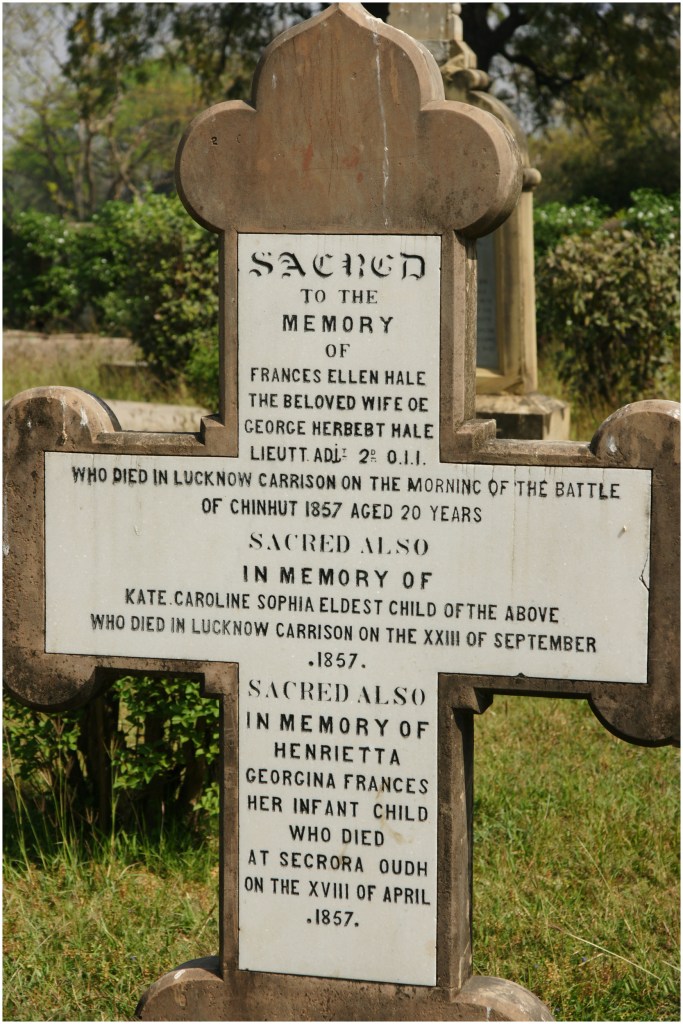
The first woman to die of the party who had come in with Kate Bartrum was Mrs. Hale
June 29th. — A sudden blow has fallen upon us: the first of our little band has been taken away. Poor Mrs. Hale died today. She was taken ill at three o’clock in the afternoon with cholera, and though everything was done for her by the medical men and those around which skill and kindness could suggest, it was all in vain; at 6 p.m. all pain left her, and we saw that she was rapidly sinking; the dews of death began to gather on her brow and she soon became unconscious. Mr. Harris, the chaplain, came and read some of the Visitation Service, and then as we stood beside her watching her gentle breathing, her spirit passed away to the God who gave it. It was the first time I had ever seen death in any shape, and great was the shock when the first was taken from among us, though we could not but feel that poor Mrs. H. was much to be envied in being spared all the sufferings of that terrible siege. At eight that evening she was laid in her coffin. I took her little Katie and put her to sleep. Poor little lamb, how unconscious was she of her sad loss: a motherless babe amongst strangers and her father so far away. But her Heavenly Father took care of her, and she found a home and kind friends with Major and Mrs. Marriott, but notwithstanding all their care, her strength and health, like that of the other children, gradually faded away and she died, just before General Havelock entered Lucknow.“
Following the Battle of Chinhat, the Siege of Lucknow began in earnest. Added now to the discomfort was for Kate, shut up as she was with the other women in the Begum Kothi, the dismal rations.
July 1st . — From this day rations were served out to us: attar, or flour, which we made into chupatties; rice; dall, or peas; salt and meat. This would have been quite sufficient for our wants had we been able to get it properly cooked, but the natives who under- took to prepare it for us would only do so on the condition that all our rations were cooked together. These, consisting of the meat, peas, attar, rice, and sea biscuits, were put together into a saucepan with some water and made into a stew; ‘but as the saucepan was of copper and could not be relined during the siege, the food when it was turned out was often perfectly green — hunger alone could make it enjoyable. But it was the children who suffered most; they could not eat such food as this, and we had none else to give them. My own little baby! could papa have seen you now, how would his heart have ached. The nights were more wearisome than the days, for the heat was so intense that the children could not sleep, and we could seldom find a coolie to pull the punkah. Often we sat up fanning the poor little things ourselves that they might obtain rest.”
Coupled with the poor food, the restless children, the heat and the general misery, the constant shelling in the first few days of the siege prevented the ladies from going outside to even get a breath of fresh air. Their room became their prison of sorts; a shelter against a world that in their estimation could end at any moment, far away from all the ones they loved.
Kate took a moment to stand at the door of the house with her son in her arms. As she looked out into the courtyard she saw a little girl who had been allowed rather imprudently to play out of doors, shot in the head by roundshot – Kate fainted from the shock and the memory of the child’s death grew to haunt her.
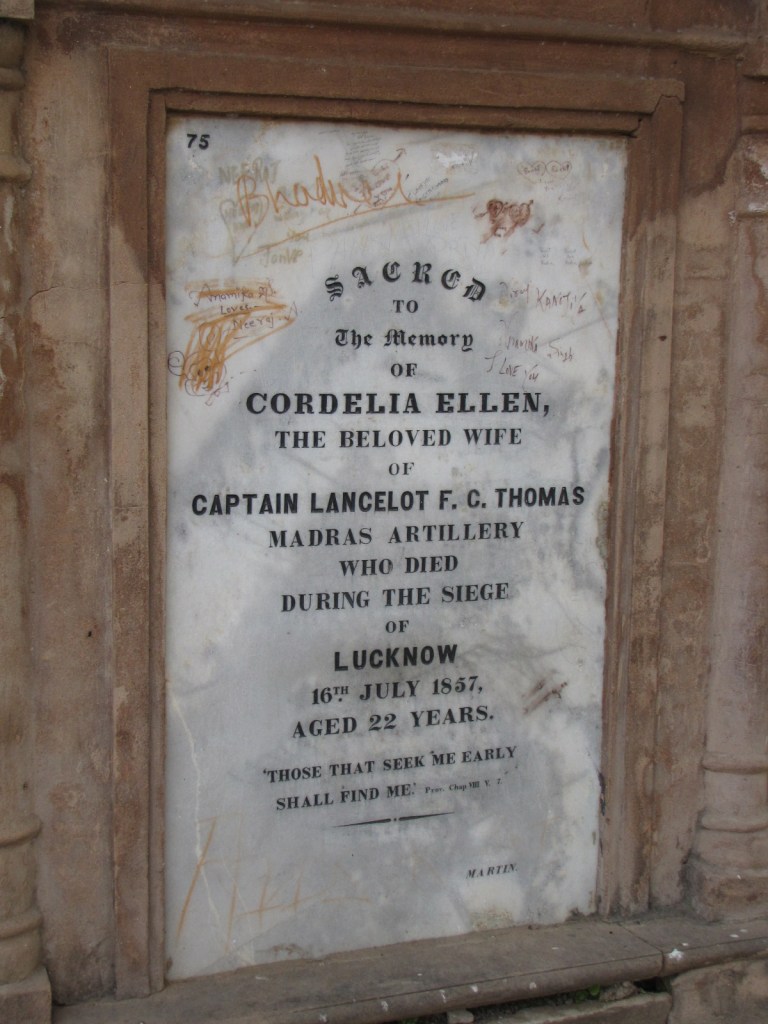
To add to their distress, another woman fell ill in the Begum Kothi, the wife of Captain Thomas of the Madras Artillery – when she succumbed to smallpox on the 16th of July, Kate could barely hide her terror, lest her son fall ill. “I tremble for my poor baby, as there is every chance of his taking it. Our troubles and anxieties are daily increasing and at times seem overwhelming. ‘The Lord sitteth above the waterflood.'” Captain Thomas was left in his inconsolable grief to fight on in Lucknow without his beloved wife.

On the 20th of July, Mrs. Clark was confined – in a room filled with nine women and their children, it was hardly a fitting place to give birth, but there was nothing for it.
July 29. — What a sad week has the past one been. Poor Mrs. Clark is gradually sinking, and her babe is dying. Her mind is constantly wandering, and she tells me to sit beside her, for she has much to say to me. I have been listening to her during the night; she frequently exclaims, ” Lighten my darkness I beseech Thee, Lord,” and many such beautiful expressions. She takes no notice of her children, both of whom are daily getting weaker from want of proper nourishment.
July 30. — Mrs. Clark seemed easier this morning: we fancied she was better, but it was not really so. She told me she wanted to sit up, and asked me to bring her boxes and pack them up as she was going on a long journey and must have everything prepared. I did what she wished, sorted her things and put them back in the boxes. ” Thank you,” she said, ” now I am quite ready: the doolie is here, but the bearers have not come.” Yes, she was ready to depart and the angels were waiting to carry her to her bright home above. I gave her some arrowroot, and from that time she never spoke again but seemed to be quietly dosing all day. In the evening we saw that she was rapidly sinking: Mr. Harris came and read some of the Visitation prayers and baptized the little babe; there was no one to ask what it should be named, and we called it after its mother. Oh! it was a mournful scene: that poor young thing and her child dying far away from all she loved. She was one of those gentle beings who could not struggle through hardships and trials such as we then had to endure, one of
” Those holy ones and weakly,
Who the cross of suffering bore,
Folded their pale hands so meekly,
Spake with us on earth no more.”
Truly we had enough to make our hearts sad as one after another of our companions were gathered home. She was unconscious for some hours before she died, and about midnight her spirit gently passed away to “that land where the inhabitant shall no more say I am sick.” Now we have two motherless children left to our care.”
On the 30th of July Mrs. Clark was buried – she received no headstone in the residency cemetery and was most likely buried in a communal grave. A memorial plaque to her and her children would later be placed in Christ Church, Lucknow bearing the following inscription:
“In affectionate memory of Elizabeth Clark, aged 26 years, Matthew Edgar, aged 1 year and 9 months, Elizabeth, 10 days, his children, all of whole died during the siege of the Lucknow Residency in that year of sorrow, 1857.
This tablet is erected by Captain Edgar Clark, Bengal Staff Corps.
The Lord have and the Lord hath taken away.”
The infant Elizabeth died on the 2nd of August and her brother, Matthew Edgar, notwithstanding the tender care given to him by Mrs. Pitt, gradually sank from exhaustion and died barely 2 weels after his mother.
The list continued its harrowing course. Mrs. Kendall, the wife of the assistant surgeon of Secrora, lost her baby on the 8th August, a “such a sweet little thing that it was petted and loved by all in the room. I helped the poor mother to wash and dress it, and Captain Greydon sent us a little box, in which we laid it: there were now only three of us left, and we looked at each other, as much as to say: “Who will be the next to go?’ I felt as if I should go out of my mind if we stayed in that room any longer, so arrangements were made for us to go to Mrs. Ommaney’s house and share a room with Mrs. Greene, and here we were much more comfortable: all around were kind and did what they could to assist us.”
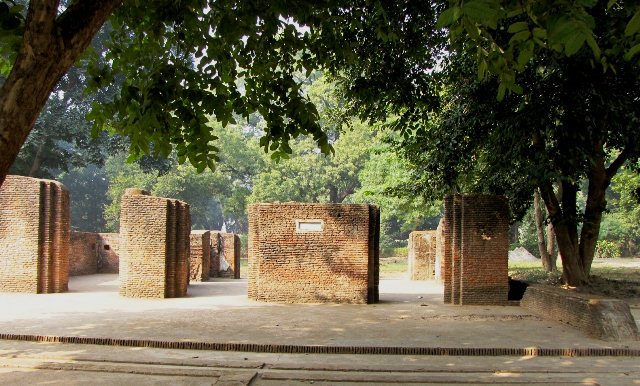
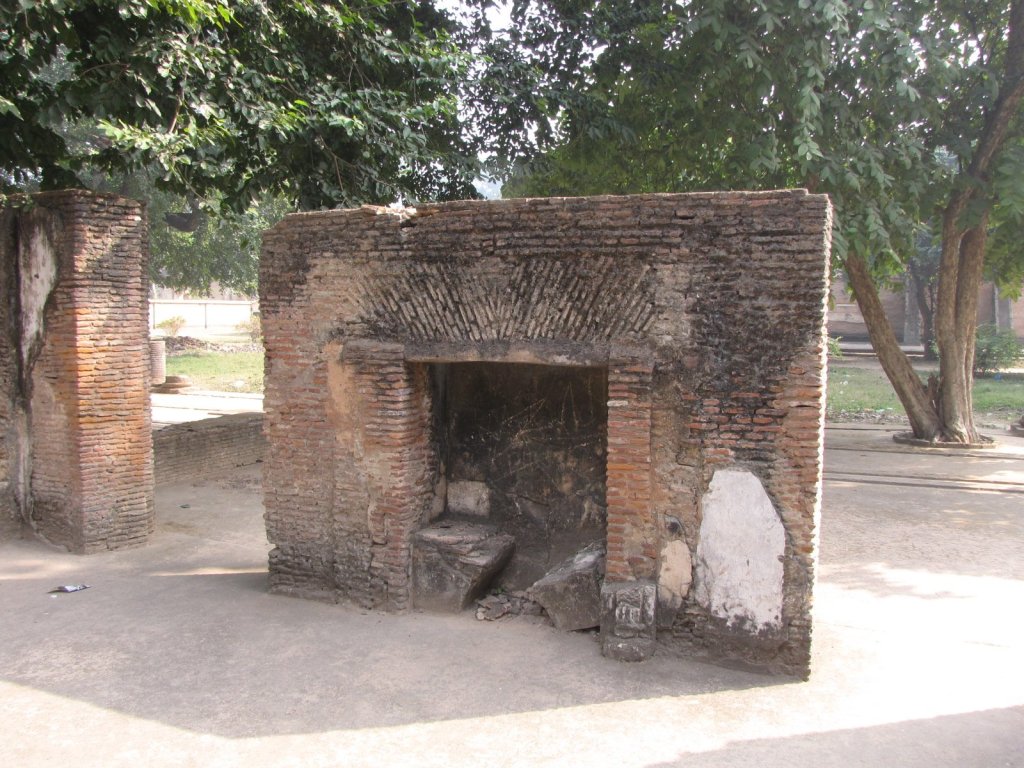
At the Ommanney’s House, although Kate and her little son faired better – he was recovering from a bout of cholera – the fresher air and change of routine had a good effect on both of them, Mrs. Kendall continued weak and unwell, the loss of her child had taken away her spirit. Kate took up the lionshare of the work allotted to them, rising at first light to look for firewood, boil water for breakfast, tend to her baby and wash clothes. Her days thus occupied gave her but little time for thought but in one passage she notes,
“I have seldom time to do any needlework, because when baby wakes I have to nurse him again and amuse him, and talk to him about Papa. When I ask him where his Papa is, he always points up to heaven. It is so strange, and I cannot bear to see him do it. Oh, this long and weary time since I heard from dear R.; what may not have happened.”
As if misery was not in abundance, one of the officers who had accompanied them from Secrora took his own life on the 19th of August, leaving behind his wife and child. Suicide was not a subject that was much spoken of and most likely happened more during the siege than the various writers are willing to admit. I am still working on identifying this particular officer and shall update this when I have completed by research.
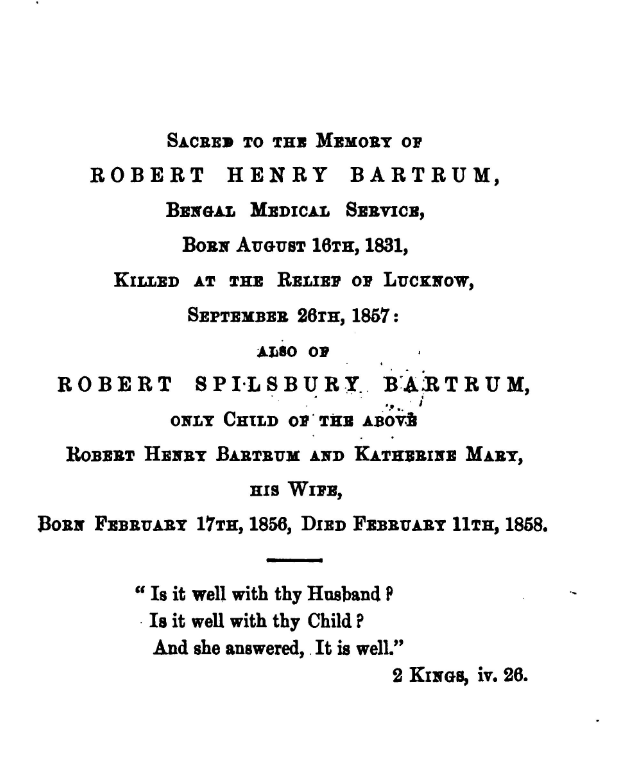
The first Relief of Lucknow took place on the 25th of September. After intense fighting they had broken through the rebel lines and entered the Residency with considerable loss of life. Unbeknownest to Kate, one of the dead was her husband Robert.
September 23. — Such joyful news ! A letter is come from Sir J. Outram, in which he says we shall be relieved in a few days: everyone is wild with excitement and joy. Can it be really true? Is relief coming at last? And oh ! more than all, will dear Robert come up? and shall we meet once more after these weary months of separation? Distant heavy firing has been heard all day.
September 24. — The excitement in the garrison is intense at the thought of being re- lieved ; we can do nothing but listen for the distant guns.
September 25. — Firing heard in the city all day, and at six in the evening the relieving force entered the Residency, and at that moment the noise, confusion, and cheering, were almost overwhelming. My first thought was of my husband, whether he had accompanied the reinforcement, and I was not long left in suspense, for the first officer I spoke to told me he was come up with them, and that they had shared the same doolie on the previous night. My first impulse was to thank God that he had come; and then I ran out with baby amongst the crowd to see if I could find him, and walked up and down the road to the Bailie guard gate, watching the face of everyone that came in ; but I looked in vain for the one that I wanted to see, and then I was told that my husband was with the heavy artillery and would not be in till the next morning, so I went back to my own room. I could not sleep that night for joy at the thought of seeing him so soon, and how thankful I was that our Heavenly Father had spared us to meet again. The joy was almost too great, after four such weary months of separation, and I could hush my child to sleep with a glad and happy heart — a feeling I had not experienced for many a long night.
September 26. — Was up with the daylight, and dressed myself and baby in the one clean dress which I had kept for him throughout the siege until his papa should come. I took him out and met Mr. Freeling who told me that dear Robert was just coming in, that they had been sharing the same tent on the march, and that he was in high spirits at the thought of meeting his wife and child again. I waited, expecting to see him, but he did not come, so I gave baby his breakfast and sat at the door to watch for him again full of happiness. I felt he was so near me that at any moment we might be together again: and here I watched for him nearly all day. In the evening I took baby up to the top of the Residency, to look down the road, but I could not see him coming and returned back to my room disappointed.
September 27. — Still watching for my husband, and still he came not, and my heart was growing very sick with anxiety. This afternoon Dr. Darby came to me: he looked so kindly and so sadly in my face, and I said to him ” How strange it is my husband is not come in !” ” Yes,” he said, ” it is strange!” and turned round and went out of the room. Then the thought struck me: Something has happened which they do not like to tell me! But this was agony too great almost to endure, to hear that he had been struck down at our very gates. Of this first hour of bitter woe I cannot speak. . . . My poor little fatherless boy! who is to care for us now, baby?“
In her first moments of unendurable grief, Kate was comforted by her friend Mrs. Polehampton whose own husband the Reverend Polehampton had died in the first months of the siege. Kate felt that “God had forgotten to be gracious… It made one almost question why this fearful blow had fallen upon me, when I had such trust and confidence that my Heavenly Father would protect him and “cover his head in the day of battle” that I never anticipated such a heavy stroke. Truly may I say, ” All Thy waves and Thy storms have gone over me.” And now from all my sorrow I must rouse myself for baby’s sake. Poor little fellow, how often had I said to him, ” Papa is come: now baby will get quite well.” He could not understand why I was so sad, and would clasp his little arms round my neck and kiss away my tears. Now he was doubly dear to me: all I had left to make life endurable.”
The next day, 2 of Robert’s servants came in, confirming to Kate the terrible news that he husband was indeed dead. “They brought in his horse, my own black horse that I had had so many happy rides upon; he had carried my husband safely down the country, when he escaped from Gonda and had come up with him again to Lucknow. Oh! it was so sad to see him come in without his master. The servants brought in a few things belonging to him: his sword, pistol, and instrument case had all been taken from him.“
Kindly Dr. Darby, himself suffering from the horrible loss of his family at Cawnpore, did his best to give Kate som solace. He brought Dr. Bradshaw of the 90th to see her, who had been with Robert when he fell.
“It made me almost forget my own sorrow to hear him spoken of in such high terms of praise. His was a glorious death: coming to the rescue of his wife and child, he fell at his post doing his duty. Dr. B. told me that as he was going across the courtyard with my husband, he said to him, “Bartrum, you are exposing yourself too much !” ” Oh,” he answered, ” there is no danger;” when he was immediately struck in the temple and fell across his companion, saying, ” It is all up with me,” and died instantly. They laid him in a
doolie, but whether he was ever brought into the Residency, which is not probable, or buried in the courtyard, or never buried at all, I could not ascertain; but “he had fought the good fight, he had finished his course, and I know that he shall rise again at the last day.” I ought not to grieve so much at the manner of his death: he suffered no pain, he was not left in the hands of his enemies as many another good and brave man has been. I try to forget it; to think of him only as rejoicing in the presence of his God: he was faithful unto death, and I feel a perfect assurance that he has received that crown of life which the Lord has promised to those that love Him. And now I have only my baby to live for: may God in mercy spare him to me, for
” When I look into his eyes, and stroke his thoughtful brow,
I dare not think what I should feel were I to lose him now.”
Robert’s body was never found.
The rest of the siege, which ended in November with the final relief orchestrated by Sir Colin Campbell and led to the hasty evacuation of the women and children from the garrison, held little interest for Kate.
September 30 to November 6. — Nothing but work, constant work. The relief which came in was no relief only a reinforcement ; but it saved us from destruction, since our own
garrison were becoming so few in number that it greatly increased our danger and anxiety. Now, however, there are so many to feed that famine as well as war and pestilence stare us in the face: we have had little enough hitherto, and now we shall be worse off. There is one great comfort, the weather begins to get colder and there is much less sickness amongst the garrison: even darling baby looks better. But I am not inclined to look on the bright side of anything now, all looks so dark and there is no sweet hope now of meeting my husband whenever relief may come: indeed for myself I care but little whether we are relieved or not, but for baby; I want to take him to England, where * he will be loved and cared for his father’s sake: my sweet little companion in all my trouble, what should I do without him?“
As for the other ladies from Secrora, Mrs. Boileau would bury her little daughter Georgina,”Ina” Emma aged but 2 years, in September. The child had been suffering from ulcerated sores over her entire body and diarrhoea since the early part of the month. On September 12, her sister-in-law had come from another house in the Residency compound to comfort her, but the only person Mrs. Boileau wanted to see was her husband, “the only one who could comfort is, alas, I know not where.” But, as she continued in pain, ‘Oh, George, darling, thank God you are spared the agony that I have gone through during the past two days.’ Ina died at five o’clock in the morning on the following day.
‘I cannot write it, but I thank a merciful God who softened the blow, and took her gently, quietly, while she slept….poor Brandram feels it deeply, more so than Anna…Oh dear, I am weary, weary.”
As Katherine Harris wrote, “Poor little Ina Boileau died in the night; she was so very ill all yesterday, we knew she could not live; her poor mother, who had been watching her all night, had fallen asleep quite exhausted, and when she awoke she found the poor child quite cold in her arms; her cry of anguish woke us all; poor creature! she is distracted, and reproaches herself with having gone to sleep; but of course she could not help it, and she would not allow anyone else to watch with her.”
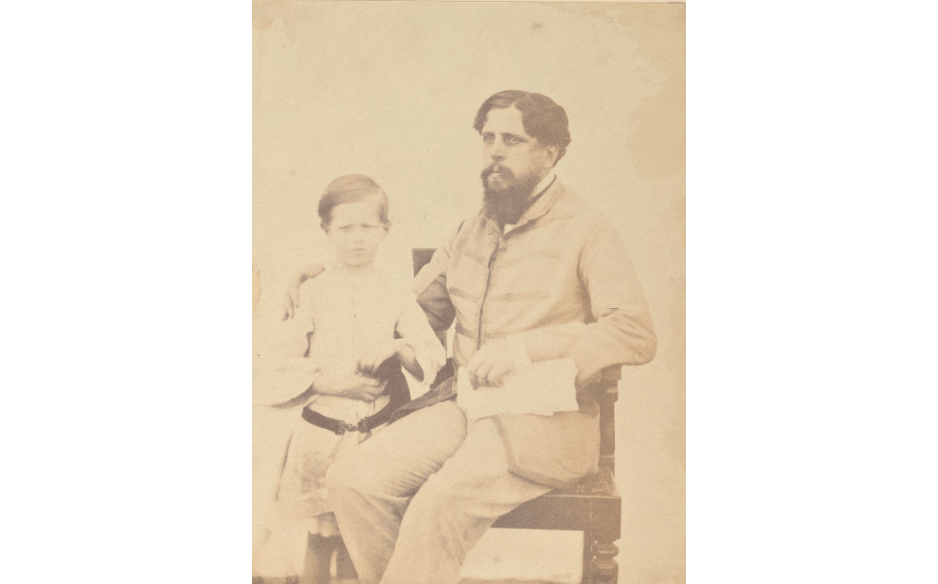
Sadly Georgina’s grave has been so badly damaged that barely a trace remains. The inscription should have read: “Sacred to the memory of Georgina Emma, child of Major and Mrs. G. W. Boileau, who died on the 13th September 1857 in the Garrison of Lucknow, aged two years and six days.”
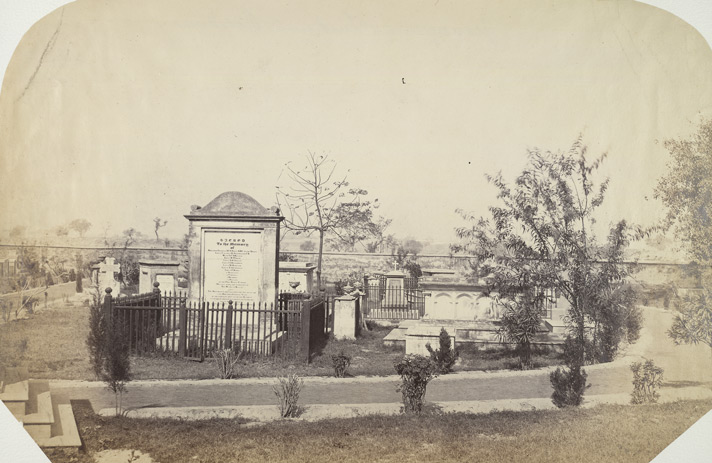
The Long Farewell
For Kate Bartrum, the siege ended without much fanfare. She joined the exodus of the women and children, first to the Dilkusha, to Secundra Bagh and then onto Cawnpore. She had nothing to carry except her son and a small bag which she filled with a few old clothes. On the 19th of November she wrote
“And now we must bid farewell to our little room, the scene of so much suffering and sorrow ; and before night I shall pass the spot where my husband was killed, and where, perhaps, he has found a grave. Yesterday all the sick and wounded were removed to Dil Koosha, and Dr. Darby amongst them. How much I should like to see him again.” Dr. Darby died, unable to keep his last promise to Kate, to escort her safely to Calcutta.
The Morning Chronicle of the 29th of March 1858 carried the following obituary for Dr. Darby:
“At Cawnpore, killed in July last, aged 19, Mary Anne, wife of Edmund Darby, M.D., 10th Oudh Irregular Infantry and daughter of John Jackson, Esq., formerly of the East India Company’s China Establishment. Her infant was killed at the same time.
At Lucknow, aged 24, Edmund Darby, M.D., 10th Oudh Irregular Infantry, eldest son odd Sydney Hudson Darby, Esq., of Tienga, Bandorah River, Australia. He was wounded by a shell and died shortly after, in November last.” He had been injured on the 27th of October and the wounds proved fatal.
Kate would find a few more traces of her husband on her journey from Lucknow.
“November 23. — How changed the scene from this day three years ago, when all looked so bright and fair; now I am alone, and there are few in this strange land to care for me: but the God of the widow and the fatherless will not forsake me. We found a number of letters today, many from dear Robert, written during our captivity, and many English letters also; but it makes my heart sad to read them. His p.oor mother does not know that she has lost her son; she still trusts that he has been ” shielded in the day of battle.” I know how all their loving hearts will feel for me when they shall hear of my sad bereavement. One of our old servants, a Kitmutgar, who had lived with us at Gonda, came to me today; he wanted me to take him into my service again. I should like to have done so, but could not turn away the man who was then serving me. Some boxes belonging to dear Robert were brought to me from the Alum Bagh, but nearly everything had been taken from them excepting his uniform and his Bible.”
Robert’s death had left Kate a tired and sad woman, desperate now to reach Calcutta and go home. Her journey took her across India, to all the places she had visited in happier times and she still continued receiving news about her husband.
January 13. — Arrived at Benares and remained there the whole day. Here I met Dr. Jones, whom I had not seen since we were stationed at Dinapore two years before. He had been with dear Robert at Benares, and told me how ill he had been and how greatly his illness had been increased by anxiety on my account.” At Dinapore, every spot reminded her of better days, “when we were stationed at this place for seven months, when everything shone so brightly around me. Here my darling child was born.” It was a long goodbye.
When Kate arrived in Calcutta, arrangements were made for her speedy departure back to England and a passage was booked for her and Bobbie on the Himalaya on the 12th of February. Her son was ailing – the doctor had told Kate a long sea voyage would restore his health, and thus, Kate opted for the longer route around the Cape, a journey of 4 months. Little did she realise she would leave India alone. Her last days in India make for terrible reading.
February 8. — We have begun to pack up for the voyage. Mrs. Fayrer and Mrs. Inglis called. They were grieved to see my little darling looking so unwell: he seems very weak, but I take him out every evening for a drive, and he is so quiet I do not think he is in pain.
February 9. — We are to sail tomorrow and are almost ready, but there is so much to be done at the last, and so many kind friends to see to bid farewell to. Lady Canning came to see us all today.
February 10. — We had sent all our things on board, and then heard that we were not to sail until the 12th. I went on board in the evening with baby.
February 11. — My dear child seemed so weak this morning, and I could not get him to take any food. Mrs Polehampton told me that Dr. Goodeve thought my baby very ill. I knew what she meant; but I cannot spare him, and I don’t think God will take my little lamb when I have nothing left. He slept nearly all day and was so quite; he did not appear to be suffering.
In the evening I laid him on the bed and he seemed to be sleeping comfortably. At one a.m. he began to get restless, but when I spoke to him he looked up and smiled; then I walked about with him till he began to struggle, and I was frightened and called Mrs. Polehampton. She told me to lay him in my lap: he was gasping for breath, when I turned away my head, for I could not see my child die. She said, ” Look, how bright his eyes are growing !” and ” now his eyes grew bright and brighter still, too bright for ours to look upon. — suffused with many tears and closed without a cloud,” and so “the Lord called the child.”
Mrs. Polehampton took him in her arms, and when he was dressed in his little night dress and laid upon the bed, he looked so perfectly happy, that for him I could not mourn, and of myself I dared not think. ” So He giveth His beloved sleep.” When the morning came, we gathered some orange blossoms and placed them round him, who was “no longer babe but angel;” and when his little coffin came we laid him in it, there to sleep until the morning of the resurrection. During the day, I had his likeness taken, as he lay in .the peaceful slumber of death, his little hand enclosing a sweet white rosebud and a lock of his mother’s hair; and as I sat beside him and gazed upon his happy countenance, I could not weep for my little lamb, safely in-gathered into that fold where he ” shall hunger no more, neither thirst any more.” For two short years had he been mine, the object of unceasing care, and then he closed his eyes forever on this weary world of sin and sorrow.”
At 5pm, Dr. Fayrer came and fastened down the lid on little Bobbie’s coffin, “when I had given him his last kiss, and bidden him ” Good night” for evermore, though not good night to baby; for “there shall be no night there.” With Mrs. Polehampton at her side, Kate Bartrum followed the little coffin as it was taken down to the mourning coach to the cemetery where Captain Boileau and Dr. Fayrer carried it to the grave.
“Now I could realise that he was gone from me for evermore, when I went back and found no joyous baby welcome, no little arms to clasp my neck; but there lay the dress he last had worn, the little hat and shoes, and the toys about the room; but where was baby? “All Thy waves and Thy storms have gone over me.”
February 12. — Sailed from Calcutta and bade farewell to the land where all I best loved had found a resting place. ” And now, Lord, what is my hope? Truly my hope is even in Thee.”
Kate sailed to England, widowed and childless. She remained for some time with her parents at Bath and would eventually remarry. She would have 3 more children but her life was never destined for happiness. At the age of 36, Kate Bartum died of tuberculosis.
Sources:
Bartrum, Katherine Mary. A Widow’s Reminiscences of the Siege of Lucknow. London: James Nisbet and Co., 1858.
Blunt, E. A. H. List of Inscriptions on Christian Tombs and Tablets of Historical Interest in the United Provinces of Agra and Oudh. Allahabad: Government Press, 1911.
Germon, R. C. A Lady’s Diary During the Siege of Lucknow. London: Waterlow and Sons, 1870.
Harris, Mrs. (James Parker). A Lady’s Diary of the Siege of Lucknow. London: John Murray, 1858.
Inglis, Julia Selina (The Honourable Lady). The Siege of Lucknow: A Diary. London: James R. Osgood, McIlvaine & Co., 1892.
Rees, L. E. Ruutz. A Personal Narrative of the Siege of Lucknow. London: Longman, Brown, Green, Longmans, & Roberts, 1858.
Robinson, Jane. Angels of Albion: Women of the Indian Mutiny. London: Viking, 1996.
 Mutiny Reflections