Although Lucknow was declared taken in March 1858, the mutiny was hardly over. Many rebels had escaped the battered city and made their way into the surrounding provinces, lighting new fires as they went and enflaming old ones with renewed vigour. It was not helped by Lord Canning’s ill-timed proclamation. Oudh had already undergone a massive land settlement following annexation in 1856, and was one of the key reasons for revolt in the province. What Canning did now fermented a long- standing distrust of the British and prolonged an already lengthy war.
The Land Settlements – What Happened Before 1857
The British had an idea that moving away from the Talukdari system that existed, not only in Oudh but through most of India, would impart a semblance of fair governance. The problem was that they did not take into consideration the very nature of the system in existence, nor could they resist using it to fuel their own greed. Although there were many points to consider, the main ones were as follows:
- Direct Settlement with Villagers: The British aimed to establish direct revenue agreements with village communities and individual cultivators, bypassing any and all traditional intermediaries.
- Removal of Talukdars: The policy simply assumed that Talukdars were “interlopers” who had established their claims through force and fraud. As a result, Talukdari holdings plummeted from 67% of villages under the Nawabs to just 38% under this settlement.
- Assumption of “Illegitimate” Ownership: British officials believed Talukdars were not the rightful owners but recent impositions on the land. By removing them, the British hoped to restore what they viewed as the “original” village proprietors. For this, they opened a whole other kettle of fish as they set themselves the task of conducting “summary” land surveys in an attempt to establish who was the original owner of the land. This led to claims, counter-claims, counter-counter claims, illogical boundaries and tied up the system in petitions and endless wrangling.
- Increased Revenue Demands: The stated goal was to protect peasants from exploitation, but the settlement often increased the actual revenue burden, and it also threw many of the talukdars and their dependents into a state of poverty. While they may not have had great monetary assets to begin with, and their wealth was purely of a hereditary nature, losing their estates resulted in not only a loss of face and prestige but a significant loss of income. In some of the “settled” districts, the revenue demand rose from 30% to as much as 70% of gross assets, leaving, in reality, only one winner – the EICo.
This, of course, led to another brainchild of the EICo – Revenue Settlement. The British attempted to dismantle the Talukdari system in favour of direct settlement with village communities. Under the old system, Nawabs and Talukdars managed their vast estates, maintained law and order and held significant judicial powers within their territories. In 1856, the EICo effectively stripped them of all these roles, in favour of dispossession, decentralisation and a complete loss of judicial authority; private armies were disbanded and local courts disallowed. These measures left the villagers, whom the British thought they were protecting, in effect, defenceless and bewildered by the mountains of red tape the British unleashed on them, unable to comprehend a system that was not only foreign, but downright alien. They were also to pay their taxes directly to the British without the talukdars receiving their cut, something that was utterly unheard of and viewed with obvious horror. The British, we must remember, were not doing this from the goodness of their hearts, but to increase the size of their own pockets. Revenue estimates were often based on over-inflated figures, leaving the peasants worse off than before. Whereas a village, in the past, for example, suffering from drought, could apply to their talukdar for relief and consideration, the British left little room in their new management for just such emergencies. Small proprietors, now directly responsible for heavy revenue demands without the traditional “protection” or credit lines of the Talukdars, faced unjustifiable hardship. As for the talukdars themselves, having lost their power, their armies and in many cases their forts, which were razed to the ground, they had to undergo an equally humiliating assessment – estates that were in debt faced severe consequences, ultimately leading to their confiscation and the very loss of the talukdar’s land rights and authority.
It is no wonder, then, in 1857, Oudh was the scene of a popular revolt – the entire population had a grudge against the British.
However, even the greediest of companies will eventually realise that some compromise must be reached, as in the case of the EICo, if they are going to keep their very heads on their shoulders. As such, in 1857, a cry went up to pacify the talukdars, nawabs, zamindars and just about everyone else of influence, by any means possible. It was thought to be good policy to pacify ruffled feathers by issuing promises, and most of these were directed at Oudh.
During the Siege of Lucknow, Sir James Outram had tried to motivate the landowners, talukdars and petty Rajas of Oudh to side with the British, and as late as September 1857, it would appear Canning agreed with him. He authorised Outram to
“…promise to any Landed Proprietor who deserves well of the Government and who has suffered by the summary settlement, that his case shall be heard anew and that he shall certainly not be worse off than he was before our rule.” As such, a proclamation was issued to this effect, and some landowners were even singled out for special treatment. Man Singh, who had proved himself a reluctant rebel but an even more distant friend, was sent several letters, each asking him to continue showing “effective proof” of his fidelity to the Government to secure the restoration of his estates. Other talukdars received similar letters. However, Canning refused to offer a “general reversal of the settlement” as it would undermine the British position in cases where the settlements had indeed been just. By the end of 1857, however, things were not looking any better. The people of Oudh continued to exhibit universal hostility, and James Outram, now Chief Commissioner of the province, was more than eager to win over the talukdars to their previous state of merely disgruntled instead of downright murderous. In January 1858, he suggested to Canning that the talukdars be promised their original land holdings in full, whether they had been a part of the rebellion or not, provided they now cooperated with the British.
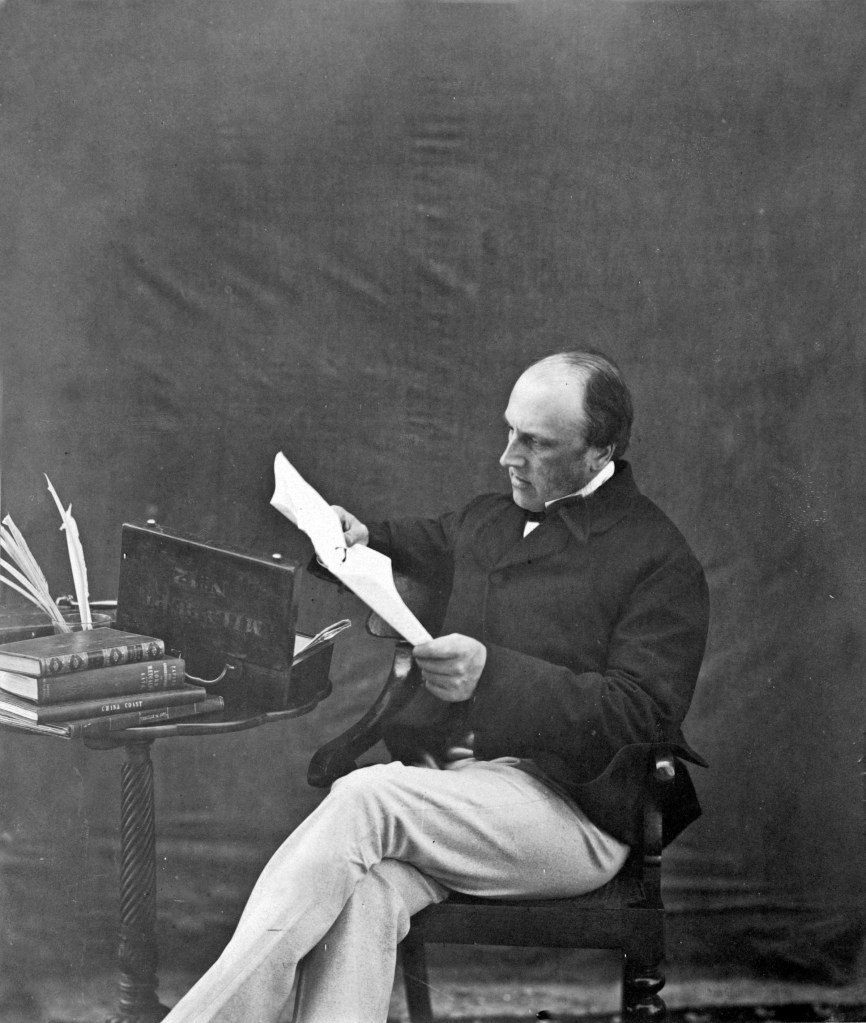
“I see no prospect of restoring tranquillity, except by having recourse for the next few years to the old Talukdari system.” He further maintained that the village proprietors simply did not carry enough weight or, for that matter, influence to be of much use in the current crisis. Unfortunately, while Sir James Outram was right, Lord Canning decided to follow a different path altogether. His proclamation was designed with very little thought, and its repercussions would further the waves of dissent.
 Mutiny Reflections