How the East India Company got to where it was in 1857
The English East India Company
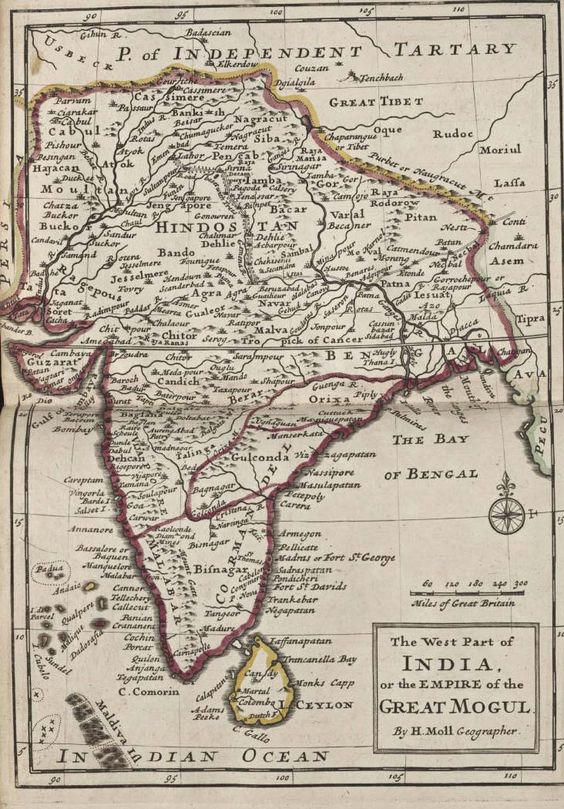
The English East India Company (EICo), which was originally named the Governor and Company of Merchants of London Trading into the East Indies but was more commonly known as the “John” Company (or simply, “The Company”), was founded by Royal Charter signed by Elizabeth I. This charter gave the traders the monopoly on all trade with any country that was east of the Cape of Good Hope and west of the Straits of Magellan. In 1601, the first ships set off to the East Indies (Indonesia), carrying letters of introduction signed by the Queen, to formally set up trading partnerships in the region. In 1608, the first EICo ships docked at Surat, in Gujarat, India. They set up their first trading post (also called “factories”) in Masulipatam in 1611, while a more permanent post was set up at Surat in 1612, having been given the grant of rights by the Mughal emperor, Jahangir.
The British did not come with a conquering army in tow, and the earliest posts were set up with the consent of the Mughal emperors, the Maratha empire and the local rulers themselves. And they were not alone; the Portuguese, the Danes, the Dutch and the French were busily setting themselves up in India as well.
By 1857, the British had been in India, in some form or the other, for 245 years.
(For an entertaining and in-depth look at the establishment of John Company, I can only recommend you read: /http://www.teatoastandtravel.com/the-john-company/)
I will now give you a brief time line of the company expansion into India.
1611 – factory in Masulipatam
1615 – King James I sends Thomas Roe to India with instructions to meet Emperor Jahangir and arrange a commercial treaty. The visit was very successful – the British are given exclusive rights to live and establish factories not only in Surat but in other areas, while the emperor would be regaled with goods and rarities from Europe.
“Upon which assurance of your royal love I have given my general command to all the kingdoms and ports of my dominions to receive all the merchants of the English nation as the subjects of my friend; that in what place soever they choose to live, they may have free liberty without any restraint; and at what port soever they shall arrive, that neither Portugal nor any other shall dare to molest their quiet; and in what city soever they shall have residence, I have commanded all my governors and captains to give them freedom answerable to their own desires; to sell, buy, and to transport into their country at their pleasure. For confirmation of our love and friendship, I desire your Majesty to command your merchants to bring in their ships of all sorts of rarities and rich goods fit for my palace; and that you be pleased to send me your royal letters by every opportunity, that I may rejoice in your health and prosperous affairs; that our friendship may be interchanged and eternal. — Nuruddin Salim Jahangir, Letter to James I.
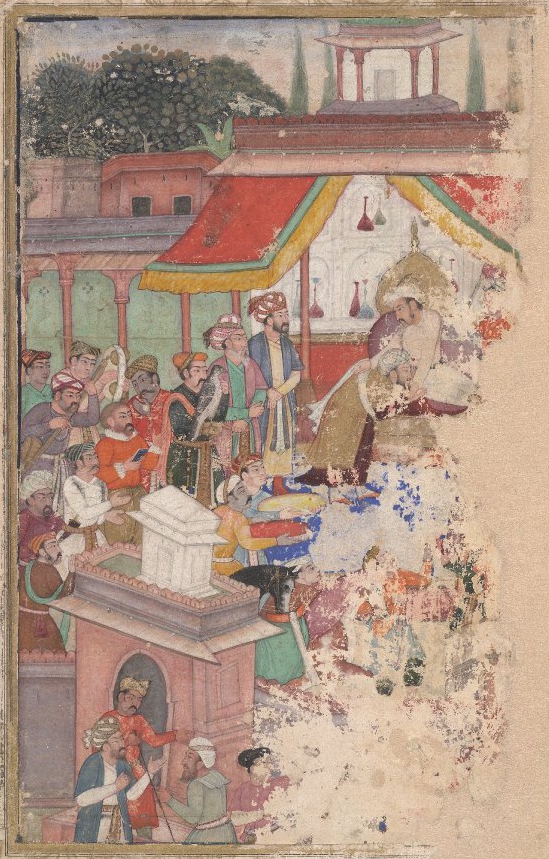
watched by Sir Thomas Roe, ambassador to the royal court of Jahangir
at Agra.
1634 – the EICo is invited to trade in Bengal by th Mughal Emperor Shah Jahan
1639 – establishment of Fort St. George in Madras as a trading center
1657 – Oliver Cromwell renews the EICo charter
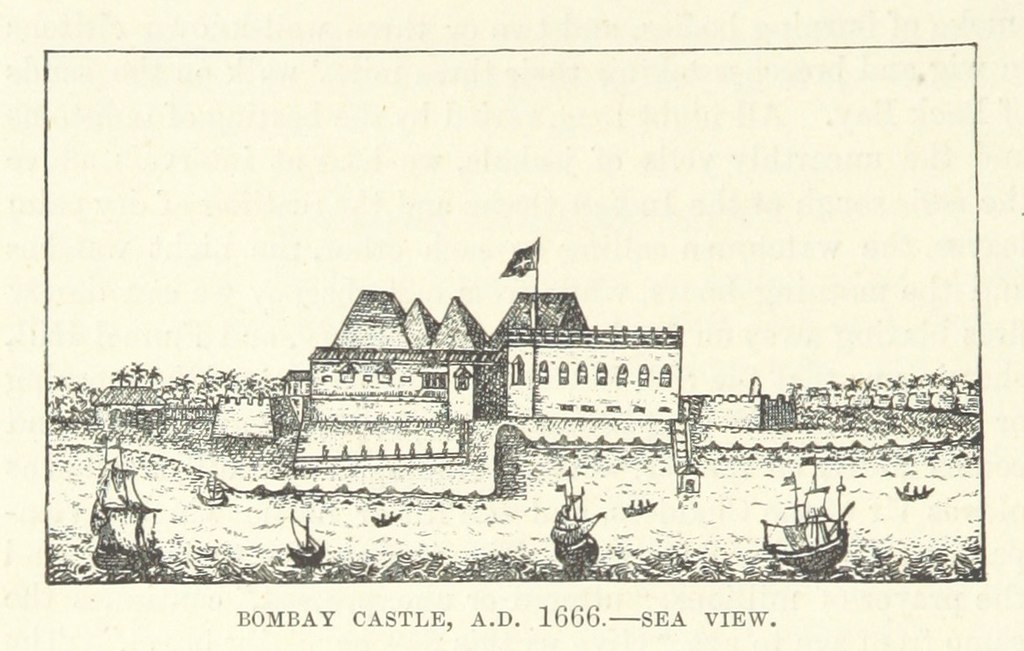
1668 – Bombay is turned over to the EICo as a gift from King Charles II, who had been given the territory by the Portuguese as part of his wife’s dowry. The EICo take control of Bombay Castle and sets up their trading post.
1670 – King Charles II sanctions the EICo’s right to expand their territory autonomously, mint money, command fortresses, make laws, form alliances, keep troops and above all, protect their assets. This was granted through a series of 5 acts, greatly expanding the power of the EICo.
By 1674, the EICo has 23 factories and 90 employees in India.
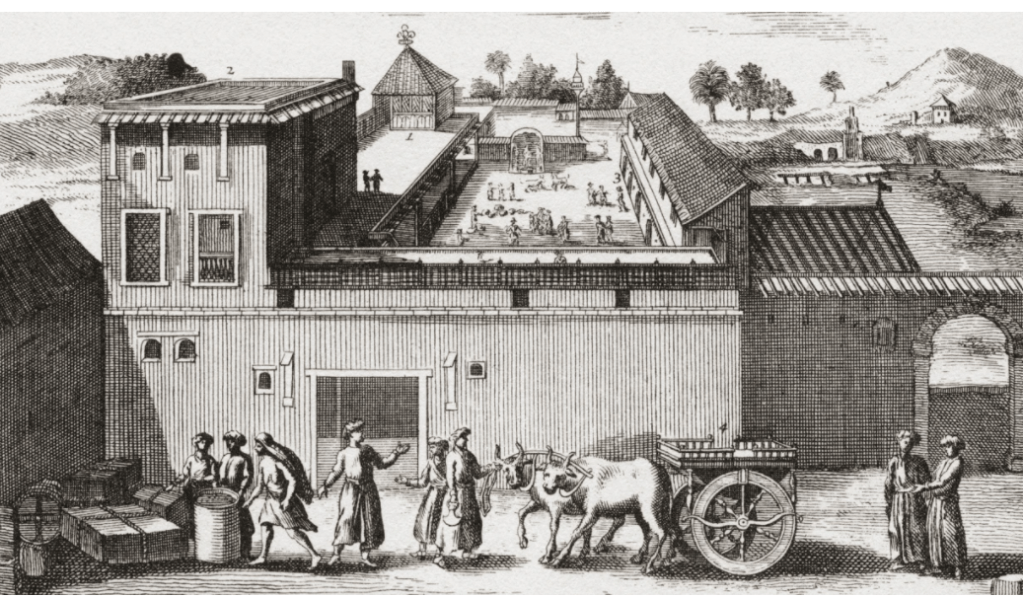
1690 – the EICo establish their trading post in Calcutta
1694 – a parliamentary act is passed which allows any English company to trade in India
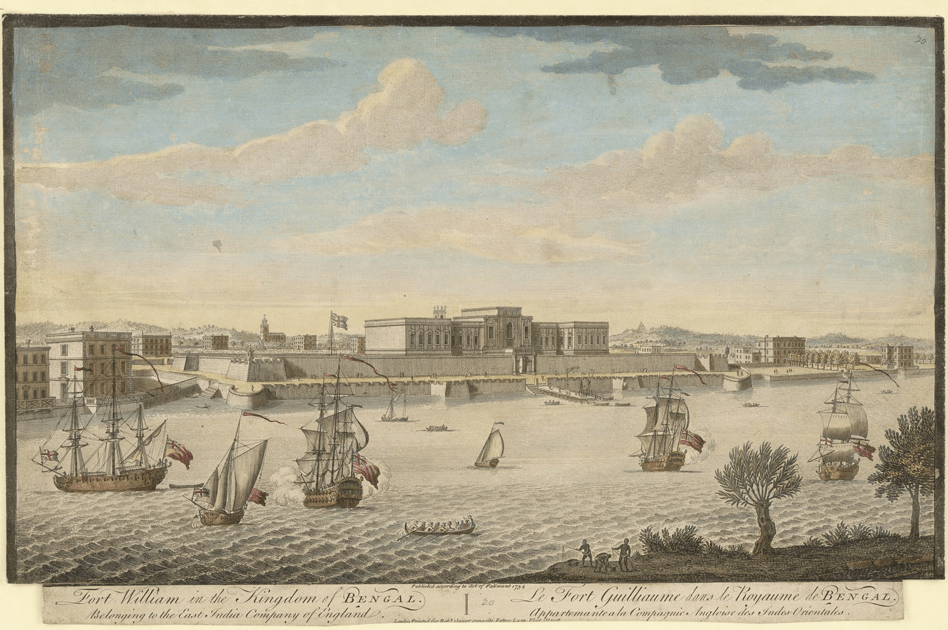
1696 – Fort William is built in Calcutta
1717 – Emperor Farrukhsiyar (Shahid-i-Mazium, the 10th Mughal emperor) issues a farman – basically an irrevocable royal decree – that allows the EICo to trade freely in Bengal without duty, with a stipulation that they pay a yearly fee of 3000 rupees. He further gave them the right to issue a dastak (trade permit), which thus waived customs duties for personal goods. The EICo used the dastak in their turn, however, to trade without paying taxes at all, while other local merchants with dastaks were paying 40% in revenue tax. The rampant abuse of dastak led to the impoverishment of Bengal, while the EICo officials liberally lined their own pockets, and in turn, any Indian products sold in foreign markets buffered the coffers of the British government.
1742 – continuous squabbles with France led the British government, eager to protect their growing monopoly, to enact an exclusive license for the EICo for trade in India
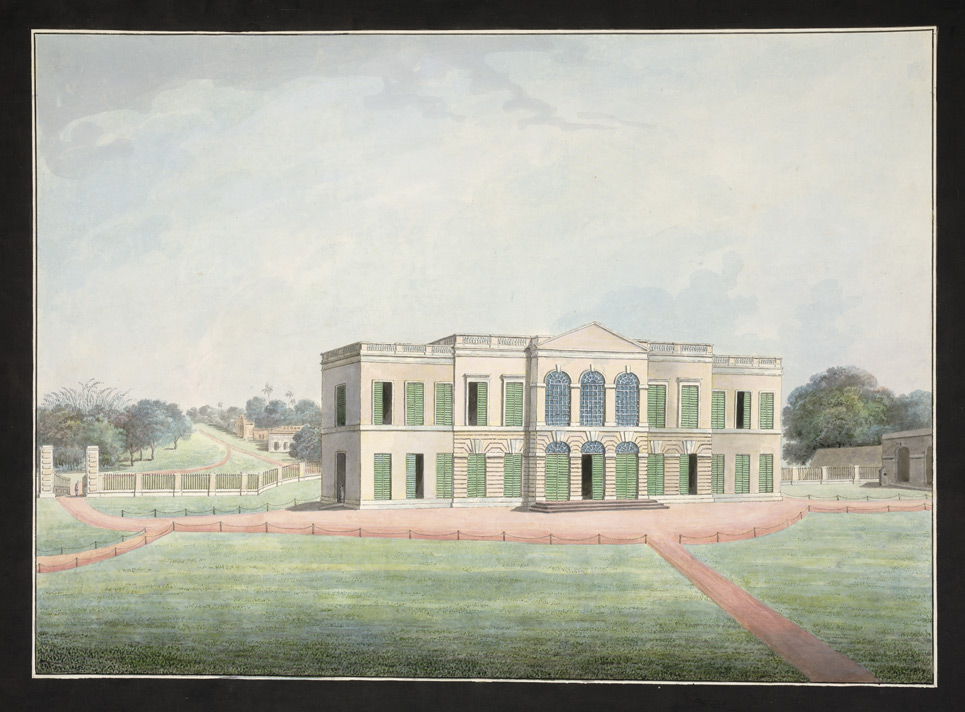
1756 – the Nawab of Bengal, Siraj ud Dualah attacks the English factories at Kasimbazar and takes over Fort William. He takes a number of prisoners and 123 of them die in a cell in an event which becomes known as the Black Hole Massacre.
Colonel Robert Clive and Admiral Charles Watson move their forces from Madras to recapture Calcutta; they decide to take a poke at the French as well and capture the French fort of Chandannagar.
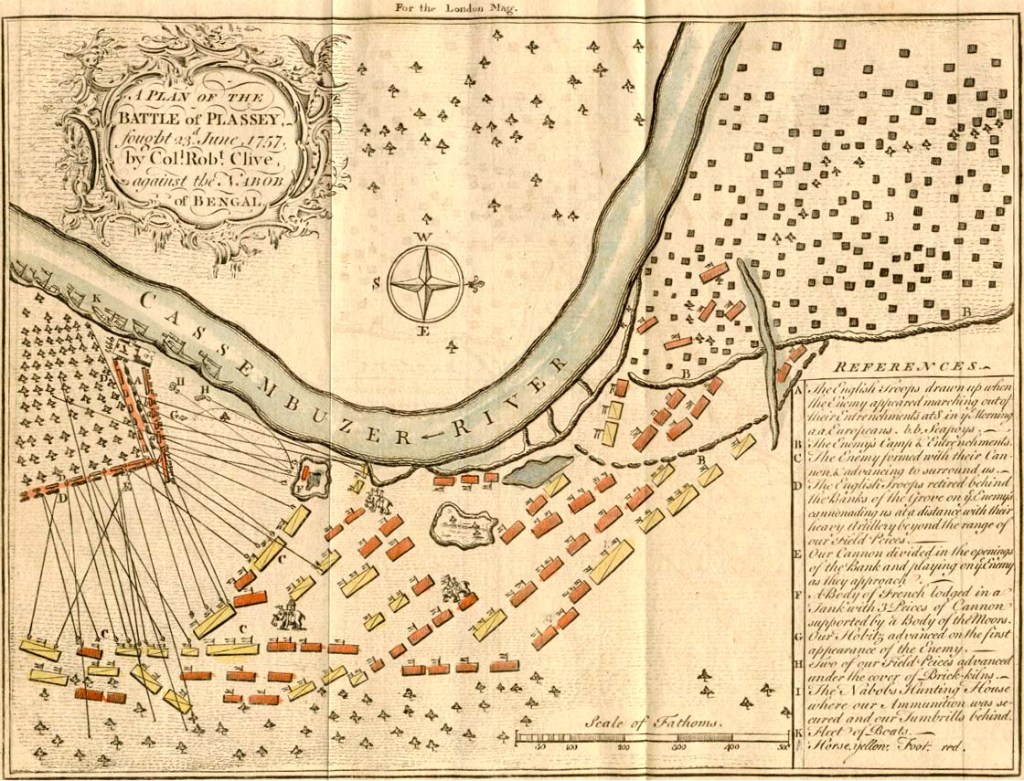
1757 – 23rd of June: Battle of Plassey. Vastly outnumbered, the British forces led by Robert Clive form a conspiracy with the several rivals of the Nawab and his French allies. Among those was Syed Mir Jafar Ali Khan Bahadur, a military general who was in the pay of the Nawab but chose to betray him instead. While Clive met the Nawab on the field at Plassey (Palashi) with a force of only 3000 men, they defeated the Nawabs’ army of 50’000. The singular defeat was caused in part by the Nawab leaving the field early and the conspirators holding their forces back, while the French themselves sent but a token force.
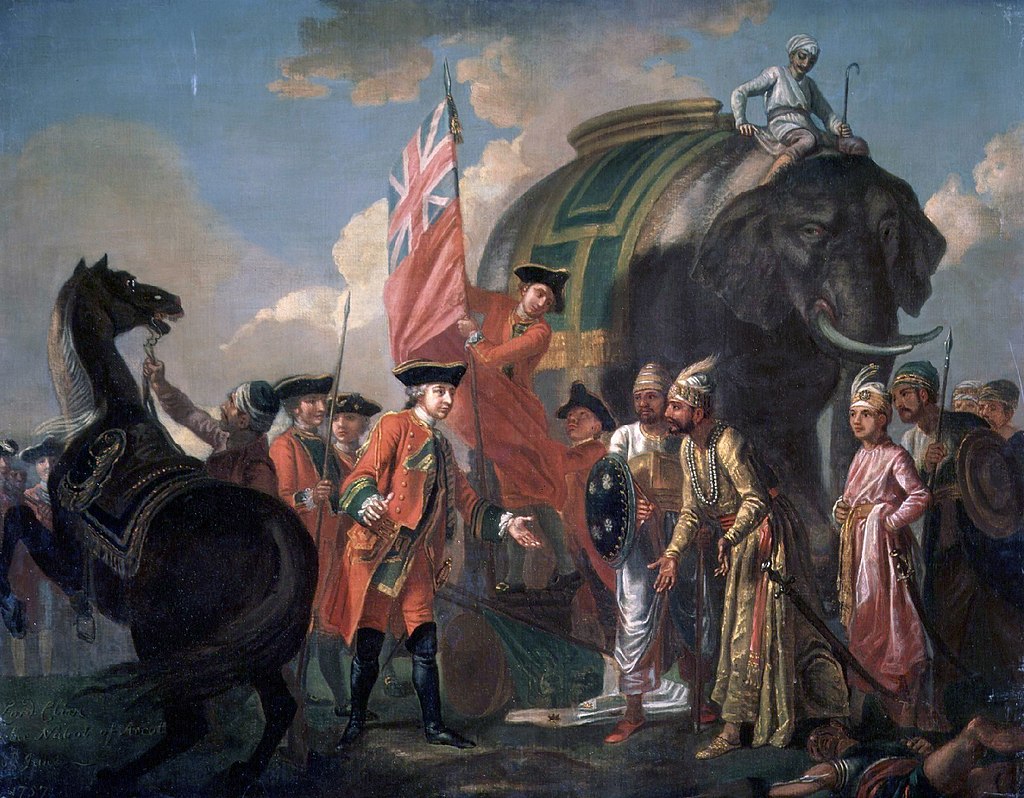
Defeated, the Nawab flees northwards but he is eventually captured and murdered by Mir Jafar’s son. Mir Jafar becomes the first dependent Nawab of Bengal of the EICo, placed on the throne by Clive.
In turn, Clive consolidated the practice of using dastak for virtually all goods in Bengal.
The Battle of Buxar
It did not take Mir Jafar long to figure out that the EICo was not all it seemed. Realising his position was symbolic at best and nothing more than a mere puppet show at worst, he decided to throw his lot in with the Dutch.
The Dutch were more than willing to help but were soundly thrashed by the EICo army at the Battle of Chinsurah in 1759. Mir Jafar was forced to abdicate in favour of his son-in-law, Mir Quasim.
What initially looked like a promising relationship soon went sour. An independent and thoroughly capable leader, Mir Quasim also realised to have any rule at all, he needed a full treasury; with the EICo blatantly abusing the farman and the dastak, Mir Quasim now abolished the duty for Indian traders, placing them on the same footing as the EICo. He also tried to levy import and export taxes on EICo goods – the same 9% imposed on all foreign traders. Losing the right of dastak rankled the company and they saw themselves suddenly losing their rights to shake the pagoda tree – they continued to refuse to pay taxes.
Seeing that the Company was not going to listen to reason, Mir Quasim decided he had enough of the English and their company. His forces invaded the EICo offices at Patna in 1763, killing several English officials and the Resident. He then formed an alliance s Shuja-ud-Duala, Naab of Awadh and the Mughal Emperor Shah Alam II, the armies met in battle on the 22nd of October, 1764 at the Buxar.
Unfortunately, things did not go well for Mir Quasim or his compatriots. To do justice to the Battle of Buxar, I would like to direct you to this most gripping account:
/https://www.raksha-anirveda.com/the-battle-of-buxar-a-tale-of-military-indiscipline/
What might be the most decisive victory an army could have gained, spelt disaster for Bengal, Bihar and Odisha. With the combined army defeated, Mir Quasim was thrown out of the camp by Shuja-ud-Daula and would eventually die in abject poverty near Delhi in 1777.
As for the EICo, it was time for another treaty.
The Treaty of Allahabad
The Treaty of Allahabad was in effect, two treaties. One with the Nawab of Awadh and the other with the Mughal Emperor.
Signed on the 12th of August 1765, between Emperor Shah Alam II and Robert Clive, the Treaty of Allahabad granted the EICo Diwani rights – in other words, they could now collect taxes on behalf of the Emperor from the combined province of Bengal, Bihar and Orissa in lieu of the annual tribute of 26 lakhs they should have paid to the Emperor. The Emperor, in turn, was granted the province of Benares – provided he paid revenue to the EICo. He would further have to live in Allahabad, under the protection of the company.
In the treaty signed with the Nawab of Awadh, Awadh was given back to Nawab Shuja-ud-Dualah, but he had to put up with the loss of Kara and Allahabad, which were given to the Mughal Emperor; he also had to pay the EICo 50 lakhs as “war indemnity.” However, the company promised support to the Nawab in case he was attacked – provided he paid them for their services. He was further forced to hand over his estates to Balwant Singh, the zamindar of Benares.
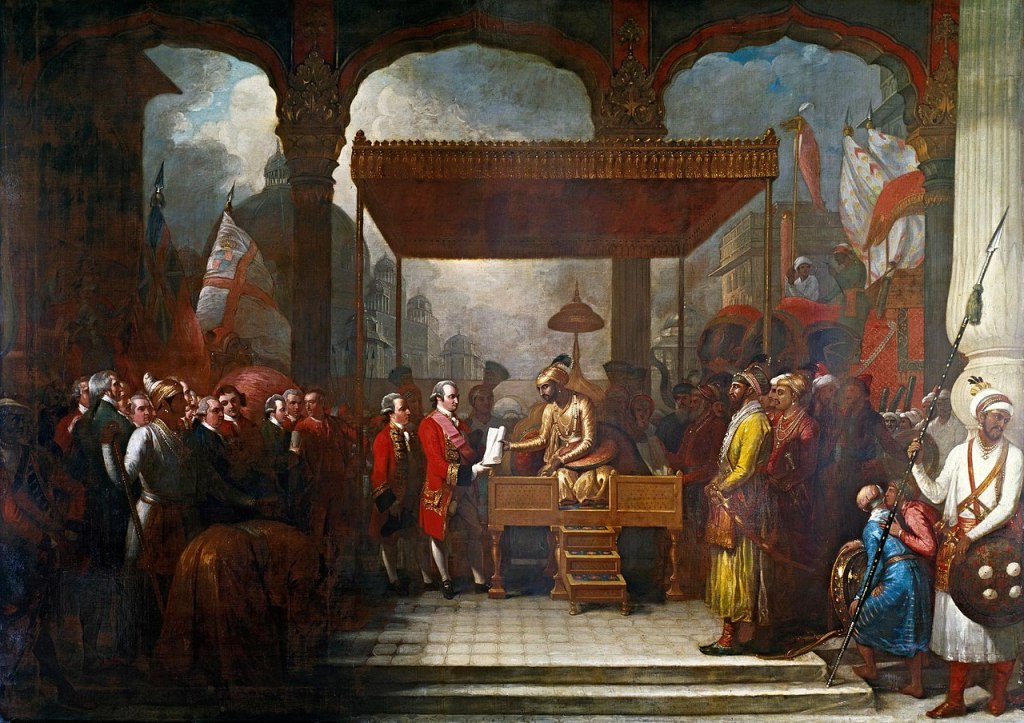
So what did this all mean?
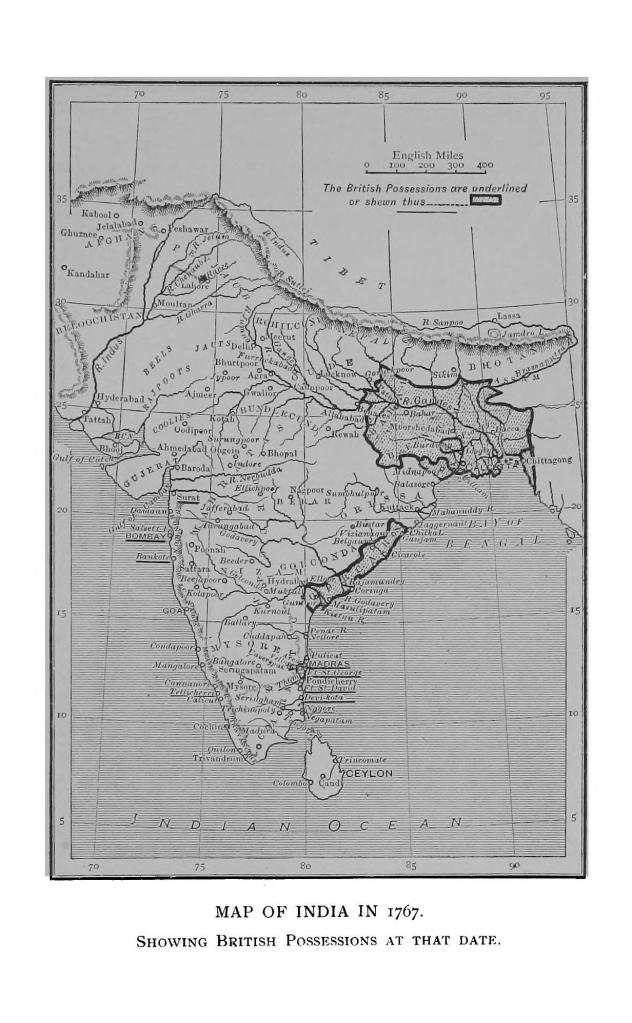
The EICo now had access to nearly 40’000 square kilometres of fertile, taxable land. They could further collect the tax directly instead of the 26 lakh tribute to the Emperor. The Nawab of Awadh was promised money to run his court and his scaled-down army; while the Nawab of Bengal could only keep his judicial functions, the EICo had complete control over the revenue they collected.
With this dual system of government in place, it solidified the EICo’s control over Bengal, Bihar and Orissa, making them the de facto rulers. They had secured themselves a free pass.
This humiliating treaty can be read in full:
‘Copy of the new agreement or treaty entered into between the Nabob Najim al Dowlah, the Nabob Sujah al Dowlah, THE EMPEROR SHAH ALLUM, and Lord Clive and the Secret Committee of Calcutta; upon the latter’s revoking of all former treaties and new modelling the affairs of the Company, by affirming the Dewannee. dated the 16th August 1765.
(Sealed and approved by THE EMPEROR.)
Whereas the Right Honourable Robert Lord Clive, baron Clive of Plassey, Companion on the most Honourable Order of the Bath, Major General and Commander of the Forces, President of the council and Governor of Fort-William, and of all the settlements belonging to the united Company of Merchants of England trading to the East Indies in the provinces of Bengal, Behar, and Orissa ; and John Carnac Esquire, Brigadier General, Colonel in the service of the said Company, and commanding officer of their forces upon the Bengal establishment, are invested with full and ample powers, on the behalf of his Excellency the Nabob Najim al Dowlah, Subahdar of Bengal, Bahar, and Orissa, and likewise on behalf of the united Company of Merchants of England trading to the East Indies, to negotiate, settle, and finally to conclude a firm and lasting peace with his Highness the Nabob Sujah al Dowlah, Vizier of the Empire : Be it known to all those to whom it may or shall in any manner belong, that the above-named plenipotentiaries have agreed upon the following articles with his Highness.
1st. A perpetual and universal peace, sincere friendship, and firm union shall be established between his Highness Sujah al Dowlah and his heirs, on the one part, and his Excellency Najim al Dowlah, and the English East India Company, on the other, so that the said contracting powers shall give their greatest attention to maintain between themselves, their dominions, and their subjects, this reciprocal friendship, without permitting, on either side, any kind of hostilities to be committed from henceforth for any cause, or under any pretence whatsoever; and every thing shall be carefully avoided, which might hereafter prejudice the union now happily established.
2d. In case the dominions of his Highness Sujah al Dowlah shall at any time hereafter by attacked, his Excellency Najim al Dowlah and the English Company, shall assist him with a part or the whole of their forces, according to the exigency of his affairs, and so far as may be consistent with their own security ; and if the dominions of his Excellency Najim al Dowlah, or the English Company, shall be attaked, his Highness shall in like maner assist them ith a part or the whole of his forces ; in the case of the English Company’s forces being employed in his Highness’s service, the extraordinary expence of the same is to be defrayed by him.
3d. His Highness solemnly engages never to entertain Coffim Aly khawn, the late Subahdar of Bengal, &c. Sumroo the assassin of the English, nor any of the European deserters within his dominions, nor to give the least countenance, support, or protection to them : he likewise solemnly engages to deliver up to the English whatever Europeans may in future desert from this into his country.
4th. The King, Shah Allum, shall remain in full possession of Cora, and such part of the province of Illahabad as he now possesses, which are ceded to his Majesty as a royal demesne for the support of his dignity and expences.
5th. His Highness Sujah al Dowlah engaged, in the most solemn manner, to continue Bulwant Sing in the Zemindaries of Banaras, Ghazipoew, and all those districts he possessed at the time he came over to the late Nabob Jaffier Ally Khawn and the English, on condition of his paying the same revenue as heretofore.
6th. In consideration of the great expense incurred by the English Company in carrying on the late war, his Highness agrees to pay them (fifty) 50 lacks of rupees, in the following manner, viz. (twelve) 12 lacks in money, and a deposit of jewels, to the amount of eight lacks, upon the signing of this treaty ; (five) 5 lacks one month after, and the remaining (twenty-five) 25 lacks by monthly payments, so as that the whole may be discharged in (thirteen) 13 months from the date hereof.
7th. It being firmly resolved to restore his Highness the country of Banaras, and the other districts now rented by Bulwant Sing, notwithstanding the grant of the same from THE KING to the English Company; it is therefore agreed that they shall be ceded to His Highness in manner following, viz. They shall remain in the hands of the English Company with their revenues, till the expiration of the agreement between the Rajah Bulwant Sing and the Company, being on the 27th of November next; after which his Highness shall enter into possession, th fort of Chunar excepted, which is not to be evacuated until the 6th article of this treaty be fully complied with.
8th. his Highness shall allow the English Company to carry on trade, duty free, throughout the whole of his dominions.
9th. All the relations and subjects of his Highness, who in any manner assissted the English during the course of the late war, shall be forgiven, and no ways molested for the same.
10th. As soon as this treaty is executed, the English forces shall be withdrawn from the dominions of his Highness, excepting such as may be necessary for the garrison of Chunar, or for the defence and protection of THE KING in the city of Illahabad, if his Majesty should require a force for that purpose.
11th. his Highness the Nabob Sujah al Dowlah, his Excellency the Nabob Najim al Dowlah, and the English Company, promise to observe sincerely all the articles contained and settled in the present treaty ; and they will not suffer the same to be infringed, directly or indirectly, by their respective subjects ; and the said contracting powers generally and reciprocally guarantee to each other all the stipulations of the present treaty.
CLIVE, JOHN CARNAC, SUJAH AL DOWLAH’s Seal and Ratification, MIRZA COSSIM KHAWN, RAJAH SHETTABROY, MEER MASHA ALLAH,
Signed, sealed, and solemnly sworn to, according to their respective faiths, by the contracting parties at Illahabad, this 16th day of August, in the year of our Lord 1765, in the presence of us,—- EDMUND MASKELYNE, ARCHIB. SWINTON, GEORGE VANSITTART.
Fort-William, September 30th 1765. A true Copy. ALEXANDER CAMPBELL
 Mutiny Reflections