Desperate Times Call for Desperate Measures
The Battle of Badli-ki-Serai on the 8th of June had opened the position of Adjutant General to the Army before Delhi when Colonel Chester was killed. Sir John Lawrence ordered Neville Bowles Chamberlain to relinquish command of the Moveable Column and take Cheste’s place. He then ordered John Nicholson to take command. On the 14th of June, Nicholson left Peshawar for the last time. He would meet the column at Rawalpindi.
The Guides had already been detached and sent to Delhi under Daly; other troops, too, had been detached and sent off to other points of danger in the Punjab or rushed off to Delhi. The gaps they left behind were filled by the Sialkote Brigade – HM’s 52nd, Dawe’s troop of Horse Artillery and Bourchier’s Light Field Battery, the left wing of the 9th Bengal Cavalry and the sepoys of the 35th BNI. Brind had intially been ordered to send the 46th BNI – but feeling the 35th was the less trustworthy of the two, he had received permission to keep the 46th at Sialkote. They joined the remainder of the column at Wazirabad on the 27th of May. Chamberlain quickly organised his force, and on the 28th of May, they marched for Lahore, arriving on the banks of the Ravi River on the 1st of June. Accompanying Chamberlain as his staff officer was Lieutenant Frederick Roberts.
On the 8th of June, a spy woke Roberts and informed him the 35th BNI intended to mutiny in the morning, some of them had already loaded their muskets in preparation for a dawn outbreak. Roberts ran over to awaken Chamberlain.
“I awoke the Brigadier, who directed me to go at once to the British officers of the regiment, tell them what we had heard, and that he would be with them shortly. As soon as the Brigadier arrived, the men were ordered to fall in, and on their arms being examined, two of them were found to have been loaded. The sepoys to whom the muskets belonged were made prisoners, and I was ordered to see them lodged in the police station.”
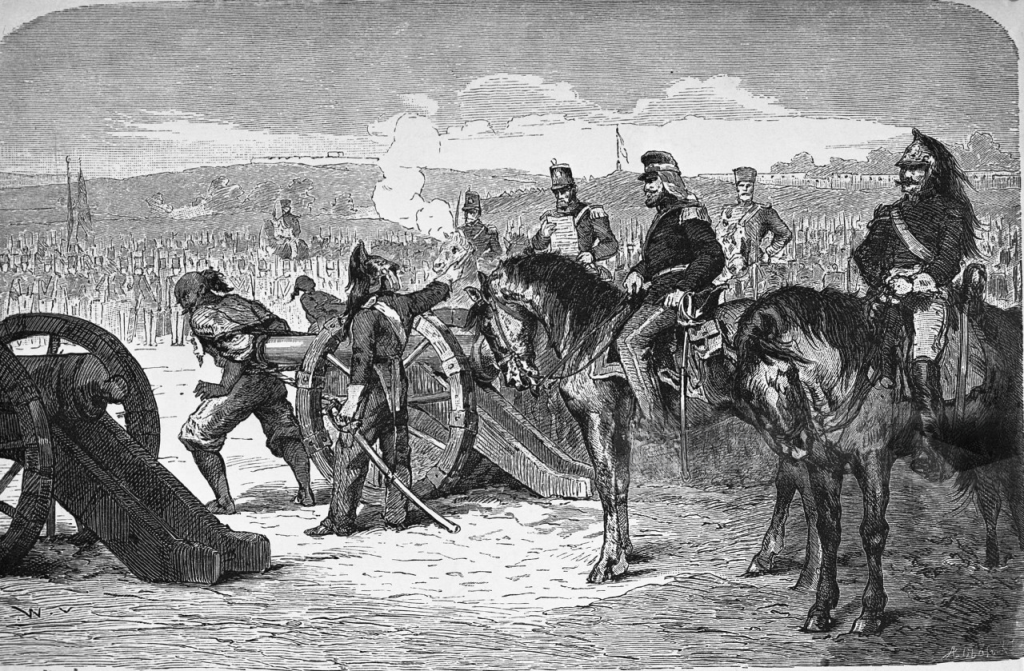
Wasting no time, Chamberlain ordered the two men tried by drum-head court martial, composed solely of native officers. Inevitably, the two men were found guilty and sentenced to be blown away from guns in the presence of the whole regiment, and it was Bourchier’s guns that would do it.
“The execution was a terrible one. Having been directed to carry it out in my battery, I was close to the wretches and could watch every feature; they showed the most perfect apathy: one man merely saying that he had some money in the hands of the non-commissioned officer of his company; the other never uttered a word. This was the first tragedy of the kind carried out and must have struck awe and terror into the minds of all who witnessed it.”
Chamberlain then addressed the horrified men of the 35th BNI.
“Those men have been blown from guns, and not hung, because they were Brahmins, and I wish to save them from the pollution of the hangman’s [sweeper’s] touch, and thus prove to you that the British Government does not wish to injure your caste and religion. I call upon you to remember that each one of you has sworn to be obedient and faithful to your salt. Fulfil this sacred oath, and not a hair of your head shall be hurt. God forbid that I should have to take the life of another soldier, but, like you, I have sworn to be faithful and do my duty, and I will fulfil my vow by blowing away every man guilty of sedition and mutiny, as I have done today. Listen to no evil counsel, but do your duty as good soldiers.“
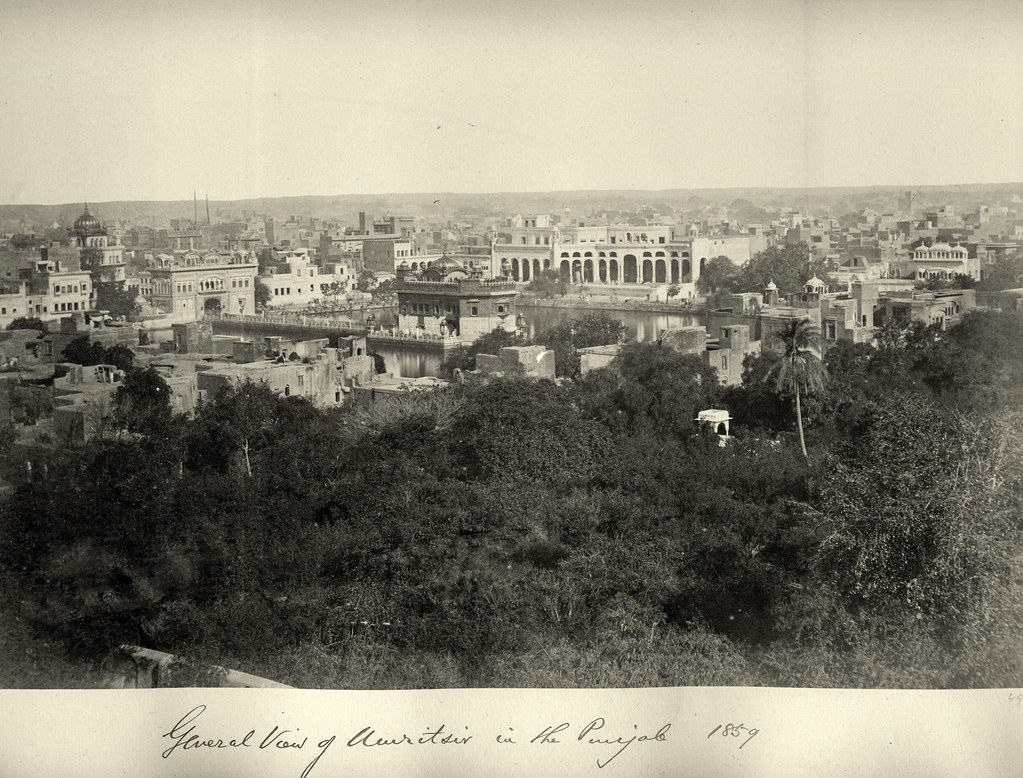
Deeming it expedient that the Moveable Column should be seen the length and breadth of the Punjab, on the 10th of June Chamberlain gathered his force and marched to Amritsar, arriving on the morning of the 11th. That very evening, a fakir was found tampering with Coke’s Punjabis – he was hung, not just in front of the troops, but in the “presence of nearly the whole population of Amritsar, who crowded out to witness the execution.” If nothing else, Chamberlain was a man true to his word.
Furious with Johnstone’s inaction at Jalandar, Sir John Lawnrence wrote to Chamberlain,
“My dear Chamberlain, — This mutiny at Jullundar is very unfortunate, and still more unfortunate is the fact that General J. did not crush the rascals, but enabled them to go off as a military body, I much fear that they will go down the road to Umballah, cutting off the communication and destroying our material. I have proposed that the General should follow them; even if he does not overtake them, the move will reassure the country and tend to do good. Brigadier Cotton has got the Sikhs and other Punjabis of the Peshawur regiments together and is raising a battalion. I propose to do the same and will suggest that the General do this also at Lahore. I have already recommended that he should get the Punjaubee corps of the line together and call in those on furlough. It seems to me that we must arrange for the whole of the regular native army, with few exceptions, being against us. I would also raise a regiment in the Jullundar under Lake’s auspices. We shall then have at —
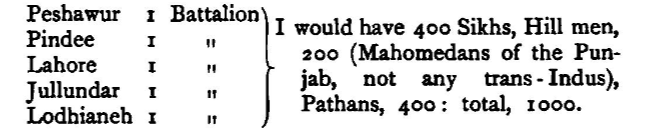
With these and all our Punjab regiments with their extra companies, we shall have an ample force to hold our own if the Punjab Force only remain loyal. I have told Richard to go on raising horsemen to any extent. — Yours sincerely, John Lawrence.
Meanwhile, in Multan, Neville Chamberlain’s brother, Major Crawford Chamberlain, with the 2nd Punjab Corps, successfully disarmed the 62nd and the 69th BNI on the 10th of June on Sir John Lawrence’s behest.
Nicholson Takes Over the Column
Nevile Chamberlain received the news of Chester’s death at Badli-ki-Serai with mixed feelings. He was not inclined to take up office work, but he wanted to take part in the Siege of Delhi. He accepted the offer to replace Chester as Adjutant-General. In a letter to his brother on the 19th of June, he wrote,
“My dear Crawford, Nicholson is to be at Lahore today on his way to relieve me of the command of the movable column, and as soon as he joins, I shall start for Delhi, having been appointed by Gen. Reed to officiate as Adjt-Gen. of the army. I do not desire the permanent appointment, but as the authorities think I could now be useful as head of the Staff, I am, of course, ready and willing to obey the summons. I prefer the frontier command to any other appointment, and if they will do things my way, I will, in six years, promise them peace from Cashmere to Sonde. I have been at Phillour and Ferozepore arranging about the defence of those places and seeing to the transport of military stores for the army before Delhi. 1 found it necessary to detain a small European detachment here, for the revolt of the native troops has unsettled men’s minds, and the idea was beginning to gain ground that our power was shaken. The movable column is at Khutapore. Fortunately, up to this time, we have been able to maintain the bridges across the Beas and Sudej, and both rivers are unusually low — indeed, the Sutlej was falling rapidly…Did I tell you that I received full authority to do whatever I thought proper in this part of the country, with the promise of full support? It was the only possible way for me to be able to be of any real use, for nothing can be worse than divided authority. I am sorry the Chief Commissioner has not coincided with me as to disarming the remaining corps in this neighbourhood. Once all the corps going towards Delhi have passed on, and the movable column has returned to Lahore, there will be nothing to prevent the native corps from marching off with colours flying and drums beating.”
On this ominous note, Chamberlain took his leave of the Moveable Column. He arrived in Delhi on the 24th of June. In the meantime, another departure took place – this time, the 1st Infantry of the Punjab Irregular Force (Coke’s Rifles) left for Delhi, leaving Nicholson, once again, with a depleted force.
However, Nicholson was not a man to wait. He quickly reorganised the Column and prepared them for their first march. On the morning of the 25th of June, they found themselves under the walls of the Fort of Phillour. He had with him the 33rd BNI, who had been ordered to proceed by forced march to Philllour from their station, Hooshiarpore. Little did they know, it was their last march. Until they arrived in Phillour, both the 33rd and the 35th believed they were following their commanders to Delhi.
Two of Nicholson’s staff officers, Captain Farrington and Lieutenant Roberts, were sent ahead to Phillour to examine the ground that came within range of the fort’s guns. they also examined the Bridge of Boats and were ordered to collect wagons as if making preparations for the troops to cross the river. During the night, Nicholson himself rode ahead of the Column to see the grounds in front of the fort for himself. Proclaiming these too small for his purpose, he fell back on the regular camping ground. Meanwhile, Mr. Ricketts, magistrate of Ludhiana, instructed the police under his command to double their guard on the bridge of boats. They were told that should there be any sound of firing from Nicholson’s camp, they were to immediately cut the boats loose.
Early in the morning on the 25th, the head of the column marched up to the spot where Nicholson had prepared his trap. The artillery, with HM’s 52nd on either flank, was drawn up on the right side of the road, unlimbered. Nicholson told Bourchier, as he leaned over one of his guns,
“If they bolt, you follow as hard as you can; the bridge will have been destroyed, and we shall have a second Sobraon on a small scale.”
Within a few moments, up came the 35th BNI.
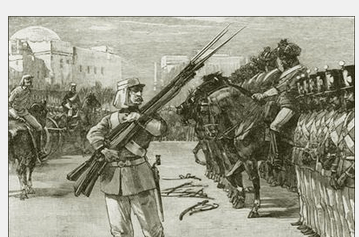
They were ordered to turn to the left and pass around the rear of the serai that lay in the corder of the camping ground – then, they wheeled again to their right and formed a close column only to find themselves staring at Bourchier’s guns. Their commander, Colonel Younghusband, was told by Nicholson that his men “must give up their arms.” The order was given, and the crestfallen 35th obeyed without a murmur. The arms were promptly gathered up and taken into the fort by the wagons organised by the staff officers the day before. Colonel Younghusband, who had served with the 35th for thirty-three years, was heard to mutter, “Thank God,” when the order was given.
The 33rd came up next. They had fallen behind, tired from their forced march from Hoshiarpore – when they finally arrived, the 35th had already been marched off, and they were left alone on the field, facing Bourchier’s guns. When their commander, Colonel Sandeman, received the order to disarm his men, he exclaimed, “What, disarm my regiment? I will answer with my life for the loyalty of every man!” The order was repeated, and Sandeman burst into tears. He had served with the 33rd for thirty-two years and had commanded them through the Sutlej Campaign. Like the 35th, the 33rd obeyed without any protests. In one fell swoop, Nicholson had disarmed 1500 men without a single shot fired.
“Among the many native spectators of that morning’s work was an old Sikh colonel who had fought against us at Gujarat. “You have drawn the fangs of 1,500 snakes,” he remarked to Captain Farrington. “Truly, your ikbal [good fortune] is great.”
The 9th Cavalry was left in line; being in communication with their comrades in Sialkote, Nicholson decided it was prudent to deal with them later.
Nicholson gave the disarmed regiments a stern warning – any attempt to flee would be punished by death; the river crossings were being watched, and escape was impossible. As it was, eight men of the 35th tried their luck. To their misery, they were caught, tried by drumhead court martial and summarily executed.
The 33rd BNI was then left disarmed at Jalandhar.
The 33rd Regiment of Bengal Infantry Hilliard Ka Pultan
1798 raised as 2nd Btn 16th Regiment of Bengal Native Infantry following 1796 reorganisation when previous 16th became 2nd Btn 7th Regt
1824 2nd Battalion became the 33rd Regiment of Bengal Native Infantry under Major J Hay
Battle Honours: Laswaree, Bhurtpore, Cabool 1842
The 33rd did not mutiny in 1857, and as a result, in 1861 were raised to the position of 4th most senior regiment in the Bengal Army and became the 4th Bengal Regiment of Bengal Native Infantry. They would win awarded subsequent Battle Honours: Afghanistan 1879-80 and Burma 1885-87. At Indian Independence in 1947, the regiment was still alive and well and was allocated to India and renamed the Rajput Regiment. They had been disarmed simply because Nicholson could not take the chance of leaving a regiment in his rear that might or might not rise, a gamble he was not willing to take.
It was, however, a sad ending for the 35th.
The 35th Regiment of Bengal Infantry – Noke ka Pultan
1798 raised as 2nd Btn 17th Regiment of Bengal Native Infantry following 1796 reorganisation when previous 17th became 2nd Btn 12th Regt
1824 2nd Battalion became the 35th Regiment of Bengal Native Infantry under Major R W Baldock
1834 renamed 35th Bengal Native Light Infantry
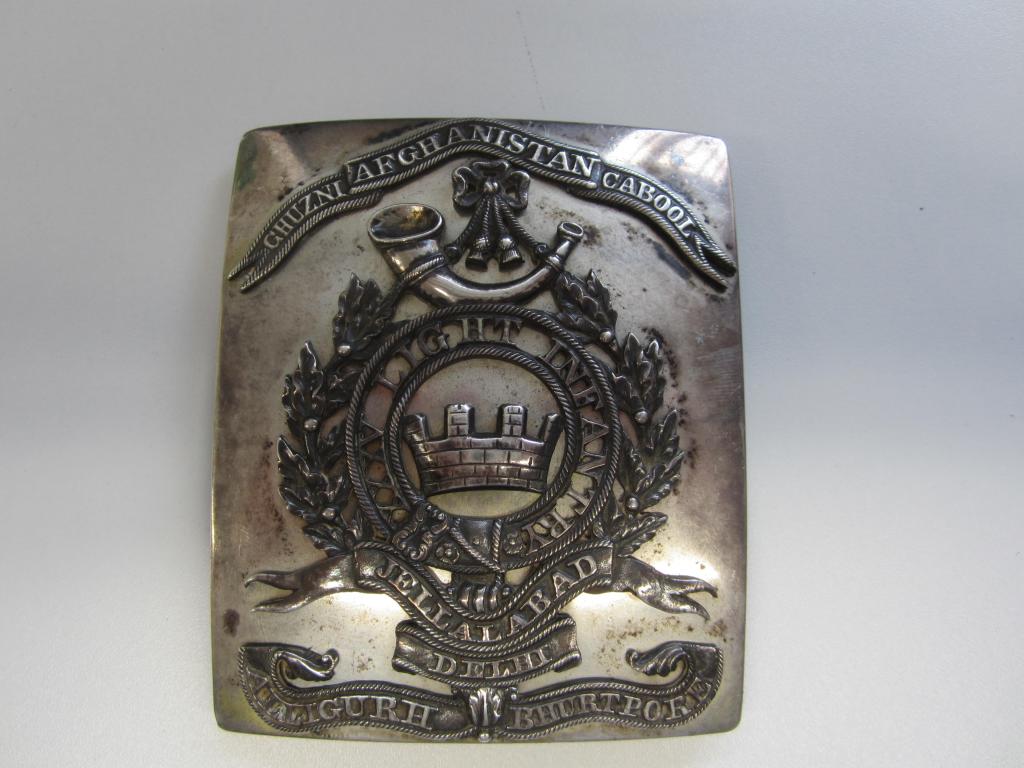
Battle Honours: Allygarh, Dehlee, Bhurtpore, Afghanistan, Ghaznee, Jellalabad, Cabul (1842)
In 1838, they had been part of the force sent into Afghanistan – they occupied Kandahar in April 1839 and then stormed Ghazni in August of the same year. On General Sale’s retreat from Kabul, which ended in Jellallabad on the 13th of November 1841, his force consisted of two infantry units, 700 men of the British regular 13th Light Infantry and 600 of the 35th NI. The 35th would end up being the only Bengal Infantry Regiment to receive the battle honour Jellallabad for their part in the siege, which lasted 155 days. The honour was inscribed over the mural crown on their Colours. They also carried an honourary Colour inscribed with “Lake and Victory” for their part in the 2nd Mahrata War. Unfortunately, the 35th had been implicated in seditious behaviour during their time in Sialkot and were openly in communication with the mutineers at Delhi.
Disarming the 59th Regiment
The work done, the Column, with the two disarmed regiments still in tow, now boarded boats on the 28th of June – the river had risen, and the Bridge of Boats had been washed away – on the 5th of July, they were back in Amritsar, first dropping off the 33rd BNI at Jalandhar. The 35th, on the other hand, was left encamped halfway between Amritsar and the banks of the Beeas.
On the 8th of July, the first tidings reached Amritsar of the mutiny in Jhelum. Nicholson waited for a favourable report from Jhelum, hoping the mutineers had been defeated, but the news did not come. Not able to leave anything to chance, he decided to disarm the 59th BNI at Amritsar. On the morning of the 9th, following a punishment parade held on a plain between the city and the fort of Govindgarh to blow from a gun one rebel, the 59th was ordered to lay down their arms.
The 59th had not shown any signs of mutiny and were, by right, a loyal regiment, and Nicholson took the decision with great reluctance. In his official dispatch, he wrote,
“I feel bound, however, to place on record my belief that, both in conduct and feeling, this regiment was quite an exceptional one at the present crisis. It has neither committed itself in any way nor do I believe that, up to the day they were disarmed, it any intention of committing itself, and I may deeply regret that, even as a precautionary measure, it should have been my duty to disarm it. I beg very strongly to recommend this corps, both as regards officers and men, to the favourable consideration of Government.“
He must have felt worse when, after the disarming, the men of the 59th went straight to their bells of arms and of their own accord made over several hundred muskets belonging to sick and absent comrades. The 59th would not fight in 1857, remaining disarmed. In 1861, they would subsequently become the 8th Bengal Native Infantry Regiment. In 1947, they became the 4th Battalion – the Rajput Regiment – and in 1956, were amalgamated into the Punjab Regment, one of the oldest infantry regiments in India.
Around dawn on the 10th of July, two messages arrived in Amritsar, one from Robert Montgomery at Lahore and the other from an exhausted young bandsman of the 46th BNI who had ridden through the night the full 80 miles from Sialkote. Both, however, said the same thing. Montgomery wrote of the uprising at Sialkote, but M’Dougal, the bandsman, came with the proof. He had with him a hurried letter from M’Mahon, the civil officer at Sialkote, and it read in point,
“The troops here are in open mutiny; jail broke. Brigadier wounded. Bishop killed. Many have escaped to the fort. Bring the moveable column at once if possible. 6 1/2 am, July 9.
Within hours of receiving the message, Nicholson first disarmed the left wing of the 9th Bengal Light Cavalry. “…their commandant was taking a roll-call of his men in ‘Hindustani dress ‘— that is, without arms or uniform. Before them drew up into line a company of the 52nd Foot, with rifles loaded and bayonets fixed. Major Baker explained to his troopers the circumstances which compelled the general to disarm them. A party from each troop was then ordered to collect the arms left piled as usual outside the tents. In the marching orders issued that afternoon, the horses of the 9th Cavalry,’ were to accompany the column; the disarmed and dismounted troopers being left behind under guard of a company of the 52nd, and three of Bourchier’s gun.”
The same day, Nicholson marched out of Amritsar in the direction of Gurdaspur. The Sialkote mutineers were reportedly marching on that station, possibly in the hope of raising the irregulars stationed there and making a junction with the 4th BNI detachments from Kangra and Nurpur. Along the way, they hoped perhaps to meet the 46th BNI from Jhelum – instead, on the 12th of July, they would find John Nicholson and the Moveable Column at Trimmu Ghat.
 Mutiny Reflections