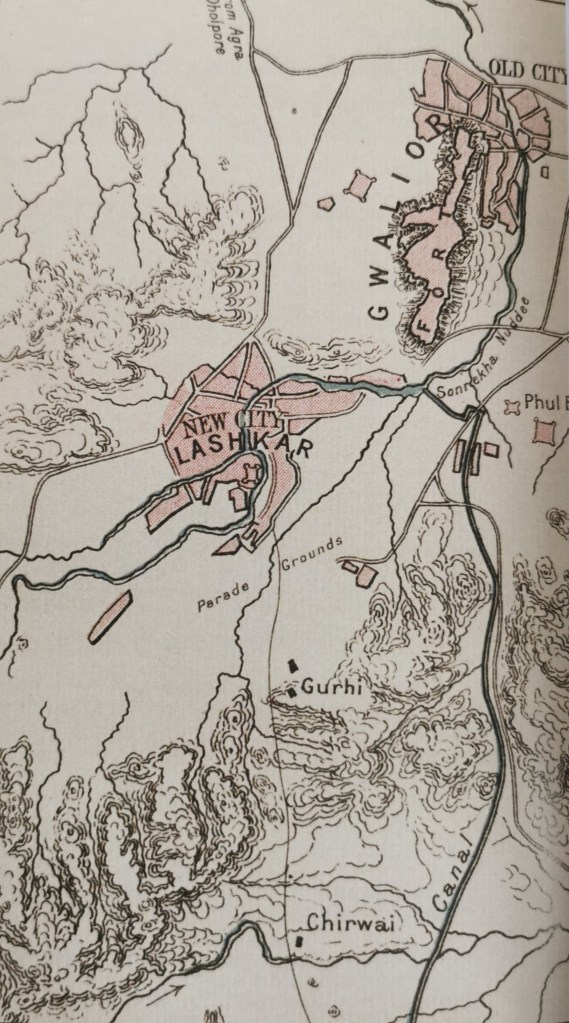
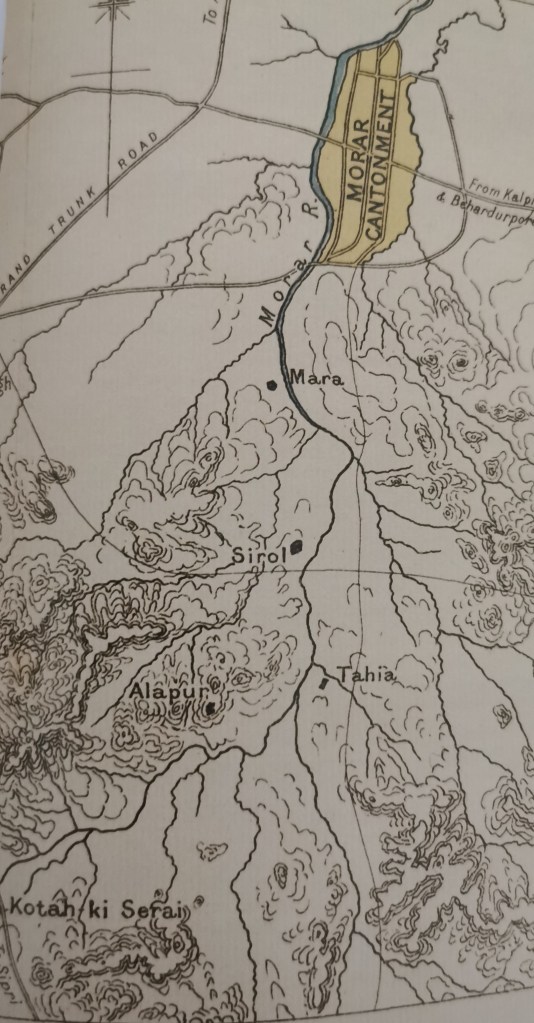
Kotah-ki-Serai, 17 June 1858 The 8th Hussars
Elected by the Regiment
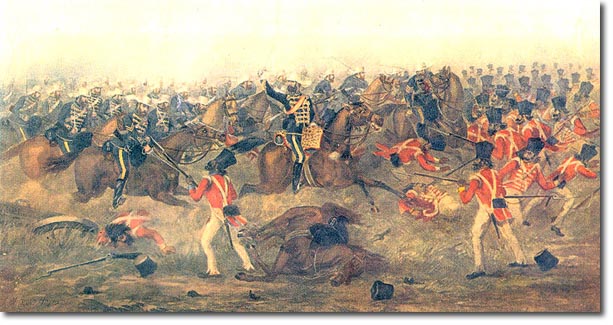
“Selected for the Victoria Cross by their comrades in the gallant charge made by a squadron of the Regiment at Gwalior, on the 17th June 1858, when, supported by a division of the Bombay Horse Artillery, and Her Majesty’s 95th Regiment, they routed the enemy, who were advancing against Brigadier Smith’s position, charged through the rebel camp into two batteries, capturing and bringing into their camp two of the enemy’s guns, under a heavy and covering fire from the Fort and Town.” (Field Force Orders by Major-General Sir Hugh Henry Rose GCB, Commanding Central India Field Force, dated Camp Gwalior, 28th June 1858 ).
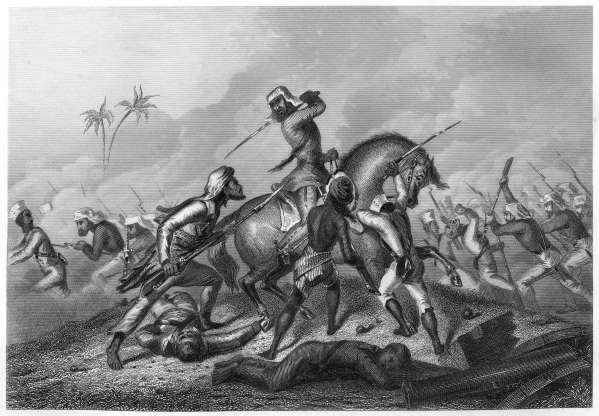
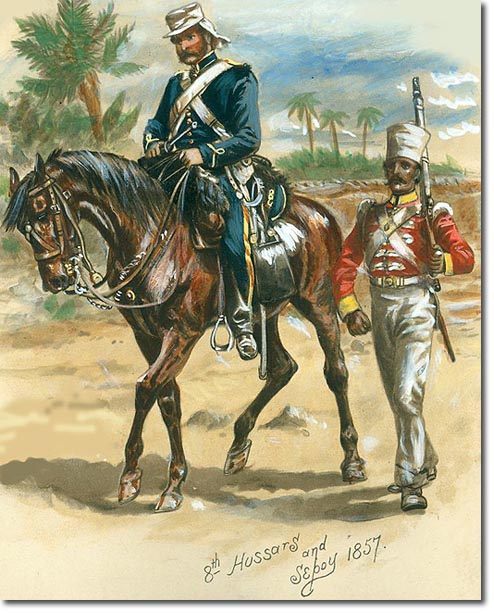
It was a charge, the like of which no one had seen before in this campaign. The 8th Hussars, who had so valiantly fought their way through Crimea, had felt sidelined at Kalpi, where Sir Hugh Rose had been forced not to use their services. Now, even if this was a forlorn hope to take on so many rebels, it would at least save, as Mrs Duberly saw it, their good name as cavalrymen. Led by Captain Heneage, they charged straight at the assembled rebels on the field at Kotah-ki-Serai and let loose a hell of horses and sabres. Their foe was not a disorganised rabble: it was the remnants of the once mighty Gwalior Contingent and disciplined men of mutinied Bengal Native Infantry. Thundering down towards the rebel cavalry, the Hussars impetuously threw themselves forward, changing the course of the battle for Gwalior – its success pushed the rebels back towards the Lashkar, where Sir Hugh Rose and the Rajputana Field Brigade would meet them the next day and put an end to their aspirations of a new rule.
“The charge of the Eighth was the last effort of Smith’s force. In his report, he stated: “Upon the return of the squadron, the officers and men were so completely exhausted and prostrated from heat, fatigue, and great exertion, that they could scarcely sit in their saddles, and were, for the moment, incapable of further exertion.” After the charge, Captain Heneage was overcome by the sun and passed out; Lieutenant Reilly died soon after from exhaustion.
Sir Hugh Rose determined that the squadron of 98 sabres was to be awarded four Victoria Crosses, and the recipients were to be chosen by the regiment itself. The four men thus chosen were Captain Clement Walker Heneage, Sergeant Joseph Ward, Farrier George Hollis and Private John Pearson.
Captain Clement Walker Heneage
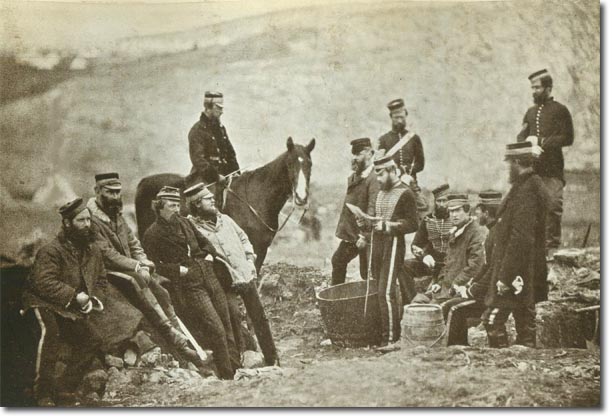
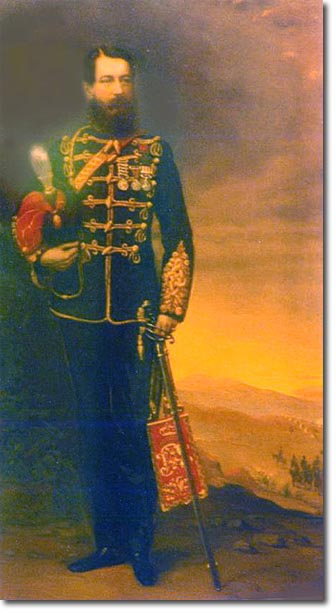
Clement Walker Heneage was educated at Eton and Christ Church, the son of George Heneage, MP for Devizes, and his wife Harriet (née Webber). Born in 1831, Clement was commissioned as a cornet in the 8th Hussars in 1851, promoted to lieutenant in 1854, captain in 1855, and, following the Gwalior Campaign, received his brevet majority in 1858.
Not a man to mince his words, Heneage had ridden in the Charge of the Light Brigade at Balaclava and had no doubt who was to blame for the fiasco. Writing after the war, Heneage observed, “It is wonderful to observe the way that fool the ‘British public’ kicks a man directly he is down, as in the instance of unlucky Lucan. I always hated him, and so did the whole Cavalry Division, but for heaven’s sake let a man have fair play – here is this unfortunate man catching it over the head and ears, merely because he obeyed an order given by the thick-headed Raglan through his still more stupid Q.M. General Airey, who is about the worst of the whole headquarters staff”. Heneage was also present at the Battles of Alma, Inkerman and Tchernaya, the action at Mackenzie’s Farm, the siege of Sevastopol and the Kenteh Expedition.
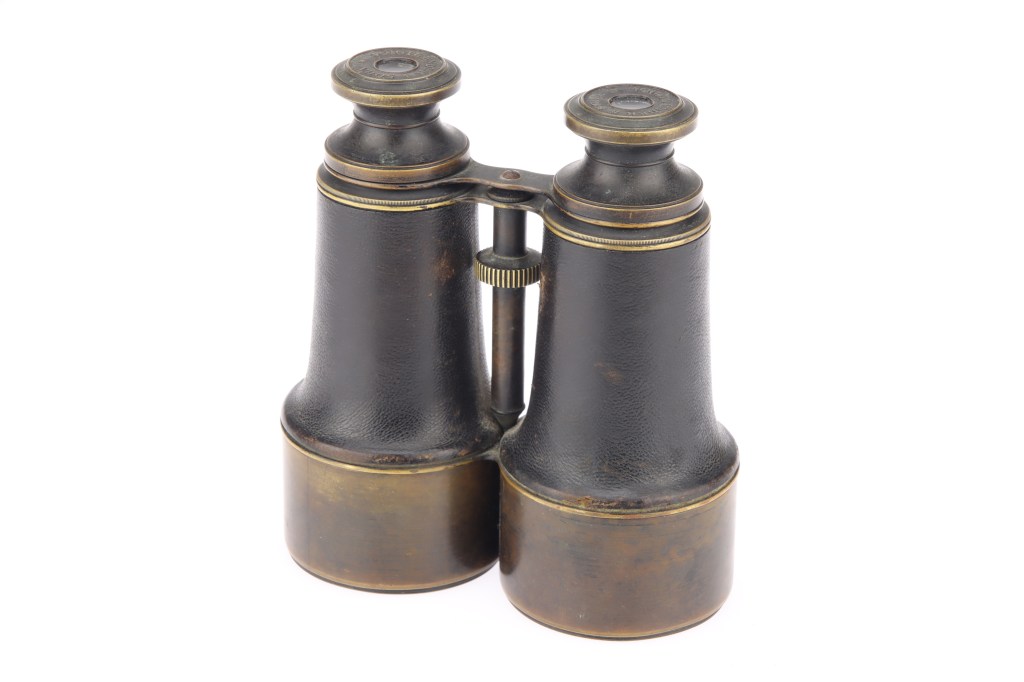
engraved ‘Major Heneage VIII Hussars’ sold by Flint’s Auctions in 2023 for a sum of £475
Unfortunately, the auction house is spectacularly wrong when describing Heneage’s VC exploits.
In 1860, Heneage was promoted to full major by purchase and remained in India, only briefly returning home in 1861. The 8th Hussars remained in India and continued their mutiny experiences under Brigadier General Robert Napier as he chased Tantia Tope through Rajputana and beyond, incessantly engaged against the rebels until May 1859 before returning to Nusseerabad. In 1861, they were transferred to Meerut. The 8th Hussars gave volunteers to three regiments – 133 to the 19th Hussars, 54 to the 20th Hussars, and 6 to the Queen’s Bays. Before leaving for home, the saddlery was given over with the horses to the 5th Lancers. The Headquarters embarked at Calcutta on the 9th of January, 1864, landing at Portsmouth four months later with the rest of the regiment following. Their India duties were over.
Heneage married in 1865 to Henrietta Letitia Victoria Vivian, daughter of J.H. Vivian, MP for Swansea. Two of their sons, Godfrey Clement and Algernon, would make names for themselves, with Godfrey becoming a major in the Grenadier Guards and earning his DSO in WWI. Algernon chose the Royal Navy and finished his career as a rear admiral.
Heneage sold his commission on 20 July 1869 and retired. He had been left his father’s estates and thus could devote the rest of his life to the pursuits of a country gentleman and as High Sheriff of Wiltshire. He died on 9 December 1901 and was buried in the family vault at St Swithun’s Church, Compton Bassett, Wiltshire. His medals form part of the Lord Michael Ashcroft collection.
Medal entitlement of Captain Clement Heneage, 8th ( King’s Royal Irish ) Hussars:
- Victoria Cross
- Crimea Medal ( 1854 – 1856 )
- 4 clasps: “Alma” – “Balaclava” – “Inkermann” – “Sebastopol”
- Turkish Crimea Medal ( 1855 )
- Indian Mutiny Medal ( 1857 – 1858 ) 1 clasp: “Central India”
Sergeant Joseph Ward
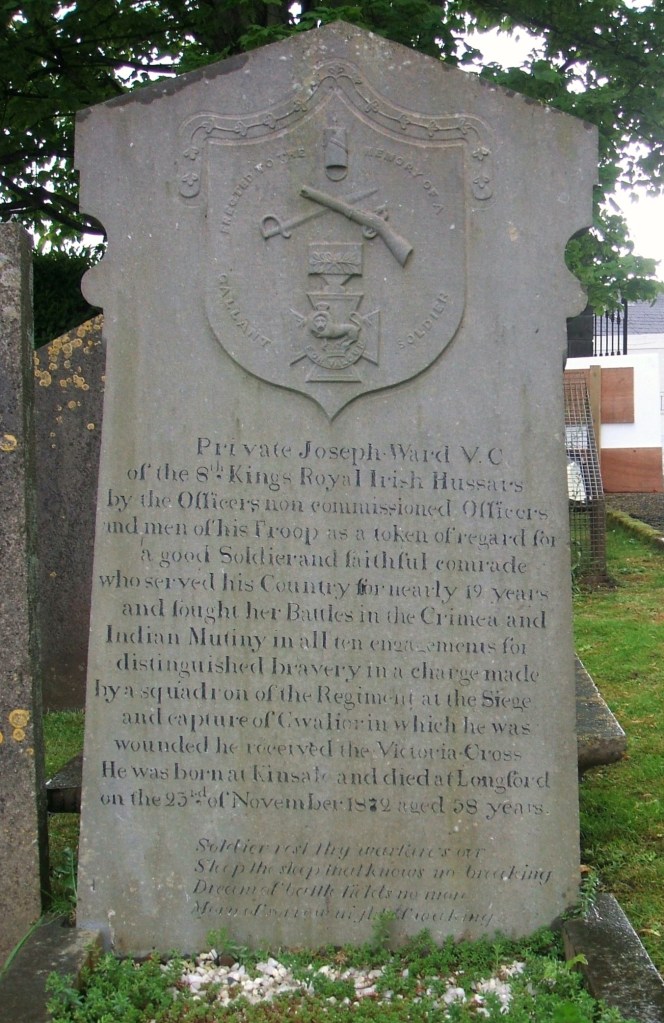
of the 8th King’s Royal Irish Hussars
by the Officers non-commissioned Officers
and men of his Troop as a token of regard for
a good Soldier and faithful comrade
who served his country for nearly 19 years
and fought her Battles in the Crimea
and India Mutiny in all ten engagements for
distinguished bravery in a charge made
by a squadron of the Regiment at the Siege
and capture of Gwalior in which he was
wounded he received the Victoria Cross.
He was born at Kinsale and died at Longford
on the 23rd of November 1872 aged 58 years
Born at Kinsale, County Cork in Ireland in 1832, Joseph Ward enlisted in the 8th Hussars in London on 27th November 1854, giving his profession at the time as a Clerk. He joined the regiment in Crimea in July 1855. Promoted to corporal in December, the same year, a mere two weeks later, he was appointed Probationary Orderly Room Clerk. For his Crimea services, on his medal, he was awarded a clasp for Sebastopol. Ward was injured during the charge at Kotah-ki-Serai, but he continued on with the Hussars for the remainder of the campaign under Brigadier-General Napier. In May 1858, he had attained the rank of sergeant.
Ward’s career, however, did not take a turn for the better. Court-martialled in 1862 for an unknown offence, he was reduced to the ranks, but it did not dissuade him from re-engaging in the 8th Hussars in 1866 for a further 12 years of service. Unfortunately, for every step forward, Ward took a step back. On 8 June 1866 he was promoted to the rank of corporal but would be confined for two days from 17 to 19 June the same year, and once again faced a court martial on 20 June, which saw him reduced to the rank of private again, a rank which he retained until he finally left the service. He died on 23 November 1872, at Longford, Ireland. Unmarried, his next of kin was his father, Thomas Ward, who at the time was living in Barracks, Norfolk. Joseph Ward left no will and only had £13/5s/7d in his credit at the time of his death. It would appear his VC is held privately; what became of his other medals is unknown.
Medal entitlement of Sergeant Joseph Ward, 8th King’s Royal Irish Hussars:
- Crimea Medal (1854-56) with clasp “Sebastopol”;
- Turkish Crimea Medal 1854-55
- Indian Mutiny Medal 1857-58 with clasp “Central India”
The quotation on his headstone is a verse from a poem by Sir Walter Scott entitled, “Soldier, Rest! Thy Warfare O’Er” and reads thus:
Soldier, rest! thy warfare o’er,
Dream of fighting fields no more:
Sleep the sleep that knows not breaking,
Morn of toil, nor night of waking.
Private John Pearson
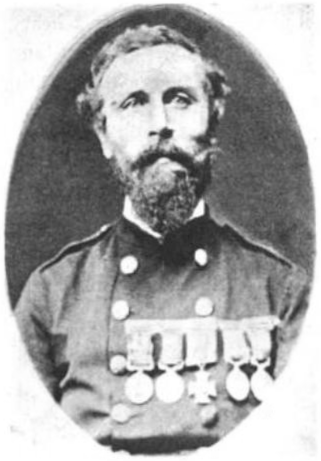
John Pearson was born on 19 January 1825 in Leeds, Yorkshire, England, the son of Stephen Pearson, a gardener and his wife, Elizabeth( née Darley). John enlisted in the 8th Hussars in 1844, stating his profession as a gardener. Unlike his compatriots who won the VC, John Pearson was a married man, having taken Selina Smart to be his wife on 6 April 1851, listing his residence as living in Barracks in Trowbridge, Wiltshire. When he left to serve in Crimea, she remained in England with their son, also named John, who was born on 18 September 1854.
John Pearson served with Heneage at the Charge of the Light Brigade at Balaclava and the siege of Sebastopol.
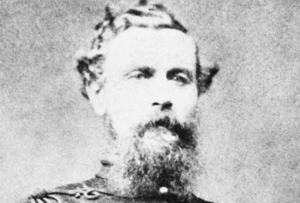
Although Kotah-ki-Serai saw Hollis wounded in the right shoulder, it appears he continued on with the regiment under Napier; in 1859, he was promoted to corporal. He then changed to the 19th Hussars as a private on 1 November 1863 and was promoted to corporal one month later. Pearson continued to serve in India, his wife having joined him; at least two of his children were born in Meerut between 1861 and 1867; one son, Stephen Edward, aged four, died of cholera in Meerut in 1861. Hollis was invalided home in 1867, as unfit for further service and was discharged at Netley Military Hospital, Hants., His conduct at the time was described as exemplary, and when promoted to Sergeant, he held four Good Conduct badges. For a time, the family lived in Halifax, Yorkshire, where John earned a living as a watchman, but sometime after 1881, they emigrated to Canada and Hollis became a farmer. He died, with the final rank of sergeant, on 18 Apr 1892 near Lion’s Head, Bruce Peninsula, Ontario, Canada and lies buried at Eastnor Township Cemetery, Ontario. In November 2004, Pearson’s medals, including his VC, were auctioned in London by Morton & Eden. They fetched £78,000 and are today a part of the Lord Ashcroft Collection.
Medal entitlement of Private John Pearson, 8th King’s Royal Irish Hussars:
- Victoria Cross
- Crimea Medal ( 1854-56 ) 2 clasps: “Balaclava” and “Sebastopol”
- Turkish Crimea Medal ( 1855-56 )
- India Mutiny Medal (1857-58) 1 clasp: Central India
- Long Service & Good Conduct Medal
- Meritorious Service Medal ( MSM )
Farrier George Hollis
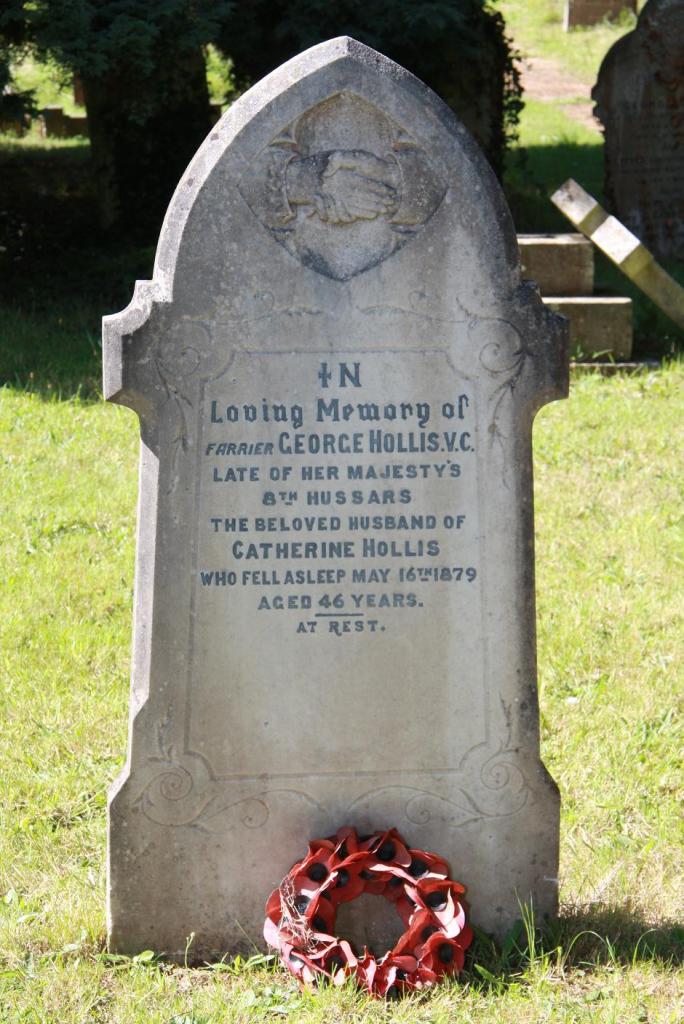
Loving Memory of
Farrier George Hollis V.C.
Late of Her Majesty’s
8th Hussars
The beloved husband of
Catherine Hollis
who fell asleep May16th 1879
Aged 46 years
At Rest
Born in Chipping Sodbury, Gloucestershire, most likely in September or October 1833, George Hollis was the son of a servant named Edward Hollis and his wife Ruth. George enlisted in the 8th Hussars on 28 April 1854, giving his trade as a smith; he was described as s aged 20 years, 6 months, 5 feet 7 inches tall with brown hair, hazel eyes and a fresh complexion. He joined the regiment in Crimea in September 1855, arriving too late to qualify for the Crimea medal.
Two days later, Hollis was shot, an injury which required the amputation of the middle and ring finger of his right hand, thus ending his career. It was stated most clearly that the wound was “received in action with the enemy. Not the result of vice or intemperance.” Only aged 26, on 1 November 1859, Hollis received his medical discharge from Chatham Invalid Depot in Kent; his character was noted as good, and he had one badge for Good Conduct.
He moved to Exeter and took up work with Sanders and Snow, wine merchants of Gandy Street. “There is an advert in the Flying Post during 1860 for four dwelling houses known as Casley’s Court, Cowick Street, where a Hollis is mentioned as a tenant; it is not certain that this is George, but it is known he lived in Cowick Street.” He died on 16 May 1879 at home after a brief illness. His death certificate notes his occupation as Pensioner and he died of a “congestion of the lungs in the presence of his sister, Mrs Eliza Burnett.” It is unknown where his Victoria Cross or his Indian Mutiny Medal with the clasp for Central India are located.
The Curious Case of the 8th Hussar VCs
Heneage, Ward and Pearson were invested with the Victoria Cross in India on 18 June 1859 by Lieutenant General Sir H. Somerset, in a ceremony held in Bombay. Hollis, who was already back in England at the time, received his from Queen Victoria on 9 November 1860 at Home Park, Windsor.
Curiously, it was claimed Hollis lost his VC, and it was found in 1994 at the Curragh race course as the Hussars were based in Curragh between 1869 and 1875. However, this could hardly be the case as Hollis was no longer serving with the Hussars, having received his discharge in 1859. It is thus possible it belonged to Joseph Ward as stated in the article below, but Ward was by no means a farrier sergeant, which is possibly where the confusion arose.
The Curragh Connection
My visitor had a story to tell. He had been out for a Sunday afternoon walk on the Curragh plains near to a veterinary surgeons house, when he noticed something on the edge of a hoof-print in the soft ground. On picking it up, and cleaning off the mud he saw that it was an old army-type medal. At home he washed it in warm water, and the cross shape became clear. He wanted to know if it was of any interest or value.
The medal was very easy to identify as a Victoria cross without a cross bar or ribbon and slightly hollowed in its centre by some blow. The first question was if it was genuine.
I contacted the British Embassy, and the military attaché gave me the address of Hanthingys in London where the medals have always been made. They could verify it and give details of its age upon examination. It turned out to be of very early vintage and was one of the 1850’s Indian Mutiny era. The next step was to visit the V.C. and G.C. Association offices, where records of awards are retained. V.C.’s had been fairly generously awarded at that time, but the location of most are known. Four medals were
awarded to the 8th Royal Irish Hussars on one day for an outstanding charge which decided the outcome of an important battle, not to individuals. It was decided who was to get the award by drawing lots. Three of the crosses were accounted for; the other had been held by a Sgt. Ward. He returned to Ireland and served for a time on the Curragh! He was reduced to the ranks for drunkenness and sent to a militia in Cavan, where he died, age 45, and is buried.
The house near which the cross was found had been a public house at the time, and since soldiers then wore their medals at all times, it may have been lost on a dark and unsteady journey back to barracks of a winter’s night. The agent in Ireland for the British Cavalry museum contacted me and came to view the medal. He had served in the 8th Hussars in Korea. They offered to buy it since they did not have a V.C. in their collection, but its owner did not accept their offer.
Some months went by, and one afternoon the T.V. programme “Live at Three” was reporting on an antiques fair being held in Dublin. At the end of the show the most unusual item was unveiled from under a top hat, and there in lone splendour was the Victoria Cross of farrier Sergeant Ward. It had been sold for over £5,000. (http://www.curragh.info/archives/ACurraghVC.pdf)
Sources:
Campaigning Experiences in Rajpootana and Central India during the Suppression of the Mutiny, 1857-58 – Mrs. Henry Duberly (London: Smith, Elder & Co., 1859)
Selections of Letters, Despatches and other State Papers Preserved in the Military Department of the Government of India 1857-58, Vol IV – edited by George W. Forrest (Calcutta: Superintendent Government Printing India, 1912)
Historical Record of the 14th (King’s) Hussars from 1715 to 1900 – Col. Henry Blackburne Hamilton (London: Longmans, Green & Co., 1901)
https://www.memorialstovalour.co.uk
https://victoriacrossonline.co.uk
https://vcgca.org
https://www.flintsauctions.com/auction/lot/396-an-early-pair-of-voigtlander-binoculars/?lot=22624&sd=1
https://www.exetermemories.co.uk/em/_people/hollis.php
https://web.archive.org/web/20070728023302/http://www.eastbournemuseums.co.uk/documents/QRIH/QRIHVictoriaCrosses.pdf
https://web.archive.org/web/20130927090821/http://www.halifaxcourier.co.uk/news/nostalgia/victoria-cross-daredevil-who-helped-crush-indian-mutiny-1-4053316
https://www.britishempire.co.uk/forces/armyuniforms/britishcavalry/8thhussars1857.htm
https://www.flickr.com/photos/23885771@N03/14191072563
 Mutiny Reflections