Rahatgarh
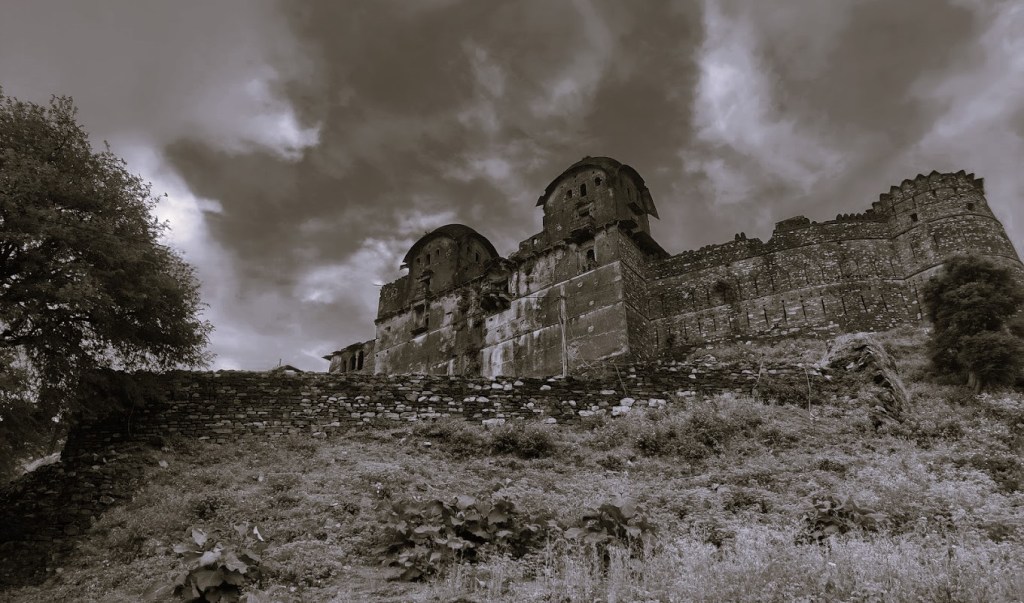
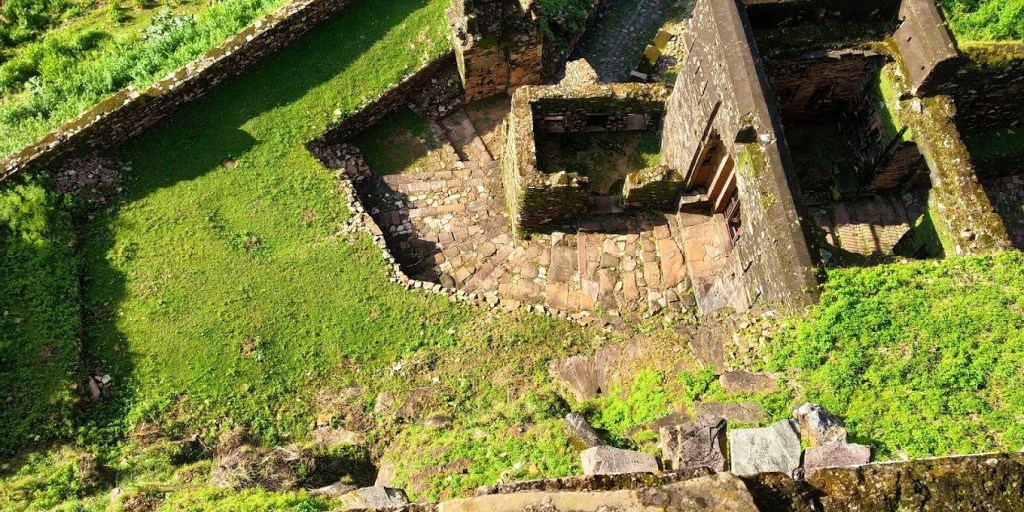
Constructed by Sultan Muhamad Khan of the Bhopal Dynasty in the 17th century, the fortress of Rahatgarh stands on a much older site, dating back to the Paramara Dynasty some 400 years earlier. Under the Maratha Confederacy, it was improved and fortified. Considered impregnable, from its lofty heights, it commands the surrounding country and the road from Bhopal and Western India to Sagar. Although much of the structure today is in ruins, in 1857, it presented quite a sight.
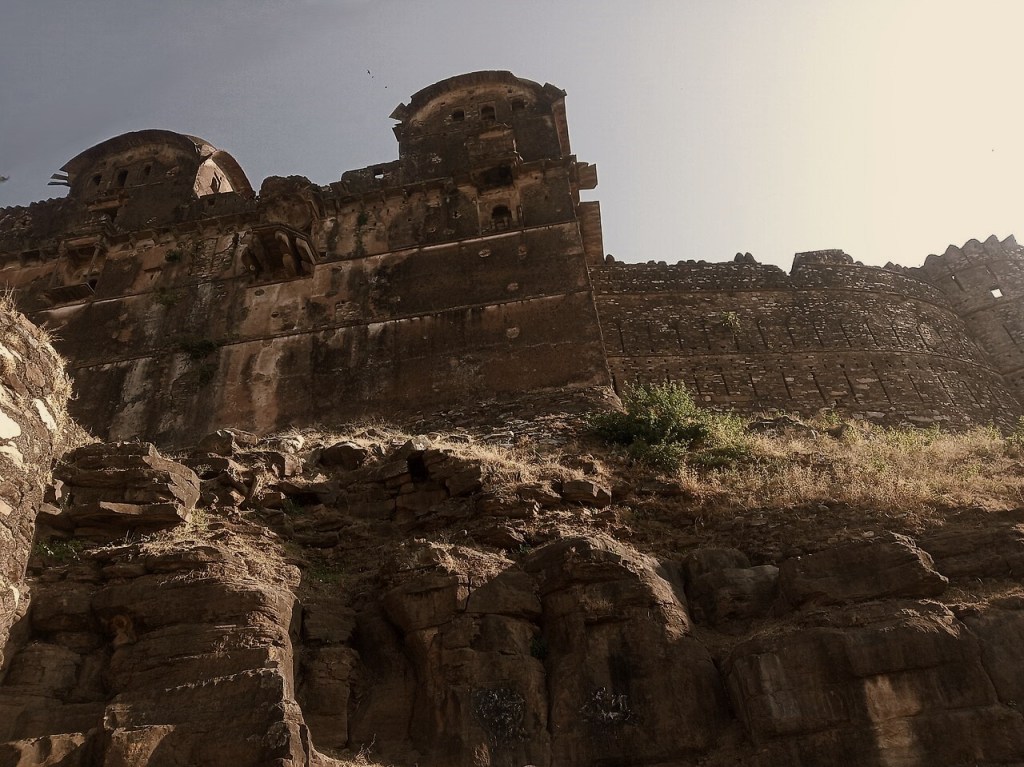
Situated on the extremity of a long, high hill, surrounded by not only other hills but nullahs and dense jungle, the rocky sides were scarped and precipitous; at one point, the cliff dropped sharply to the waters of the Bina river. To make matters difficult, its north face looked towards a densely jungled hill and was strengthened by a ditch, some twenty feet wide; the west face overlooked the town below and the Sagar Road: here stood the gateway, flanked by several square and round bastions. Not to leave anything to chance, the architects had provided the north wall and at the four angles with strong bastions at intervals to command various points. The approach from the east and south was “next to impossible,” and that from the west or the town side, “almost as difficult.” The only approach was by a steep and narrow road.
Sitting in this fortress was a garrison of Walayatis and Pathans under the command of Nawab Fazil Khan of Ambapani, a relative of the Begum of Bhopal. He was a man of some courage and energy — he had failed to usurp the Begum but had managed, instead, to install himself as a rebel leader. Joining him in Rahatgarh was the Shahzada from Mandeswar and his followers and Bajmi Khan of Sagar. They were being thoughtfully supplied by the Raja of Banpur, who had spent his time being a thorn in the side of the British. His persistent habit of sending troops across the Bina River to cut off supplies sent from Udepur in Scindia’s territory was one thing; he also made a nuisance of himself by intercepting messages with the west and, while it lasted, keeping lively communication with the ill-fated Gwalior Contingent. Besides this, he had a substantial army and presented a very real threat to Sir Hugh Rose’s back.
Meanwhile, the insurgents in the fort had been paying their followers, not from their own pockets, but by plundering surrounding villages. They spent their time not in rallying people to their cause but frightening them into submission instead; all those who did not fall in line and continued having a favourable opinion of the British could face having their noses and hands cut off, marking them for life as traitors.
The Advance
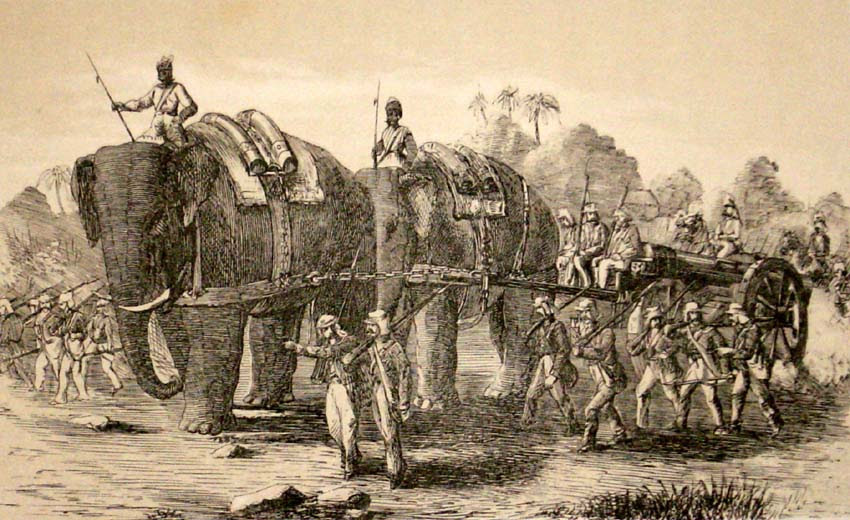
Sir Hugh began his advance on the 24th, leaving the Siege Train behind. The Siege Train intended to take things at a leisurely pace, unaware of their danger. They camped on 24 January, intending to march early the next morning. The officers enjoyed their dinner and retired early to their beds. However, their repose was short — at 10 pm, the bugle sounded, jarring in the silence of the night. Orders had been received from Sir Hugh to pack up and advance immediately — they were to proceed to Rahatgarh without delay. Sir Hugh Rose, although new to India, had chosen his intelligence officers well. He received information that rebels were assembling in numbers on his front at Udepur in Scindia’s territory and in his front; the siege train, which was one day behind him, therefore needed protection. To save time, he ordered it brought up by a night’s march to his position before Rahatgarh.
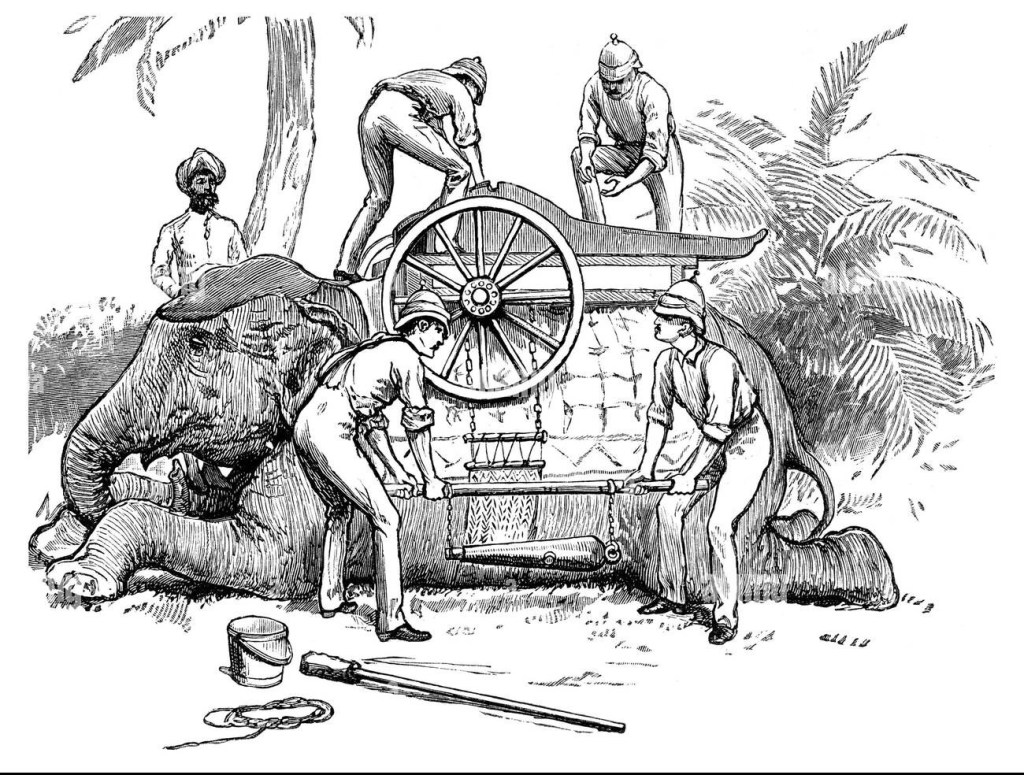
Once again, things were off to a bad start. The animals objected to being loaded, the camp followers squabbled with each other and in the din, an elephant decided he had had enough. Throwing off his load, he decamped to the jungle, overturning carts and panicking the bullocks in his flight, his mahout in vain pursuit.
After a march of three hours, during which they covered ten miles, the Siege Train joined Sir Hugh around one in the morning. The men lighted their fires and “consoled ourselves in the cold open as philosophically as could be expected, until our tents came up, and then we turned in for a nap.” By the time the Siege Train and all its followers were ready to march again, it was 10 am, and Sir Hugh was well ahead of them again. Thoughtfully, he had left behind an 8-inch howitzer and two 5 1/2 mortars with the advance guard.
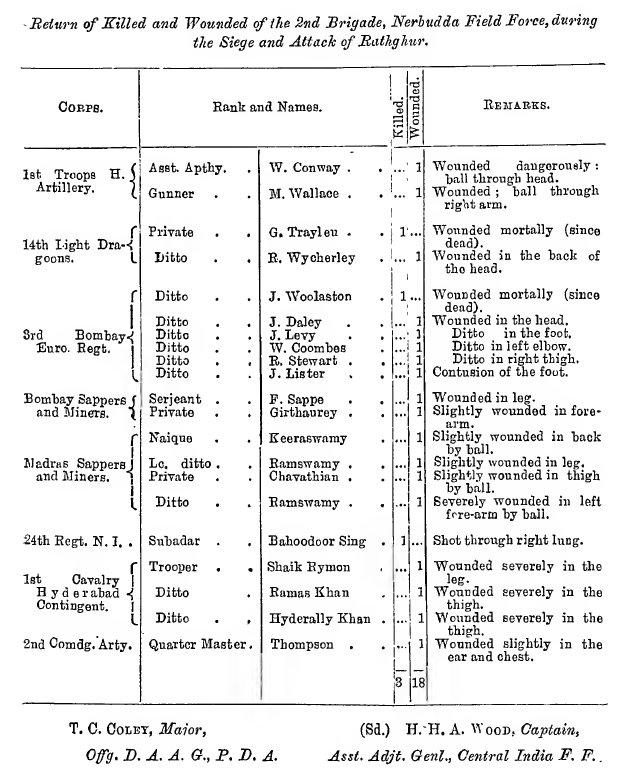
However, getting to Rahatgarh was proving troublesome for Sir Hugh. The jungle was thick and unwelcoming, and as Sir Hugh passed over a range of hills just five miles short of Rahatgarh, his officer, commanding the leading flankers, had, confused by the jungle, taken the wrong road. They ended up in the suburbs of the town instead of the plain before it, with Sir Hugh and the rest of the force behind them. Surprised by the sudden arrival of the flankers on their horses, the guards sounded the alarm at their posts, causing Sir Hugh to advance and cover them with infantry and guns to assist the return of his errant flankers. The day’s losses would be one dragoon, the subadar major of the 24th Native Infantry, and four sepoys, killed, and apothecary Conway seriously wounded.
“In rectifying this mistake, I had gained a good deal of ground to the right front, and a company of the 24th Native Infantry had taken, with spirit one or two houses and gardens; on reconnoitring, I found
that they were at the commencement of the suburbs, and that to keep all this would compromise my right, and plan of attacking the fort from the left flank. I therefore ordered the troops back to their Camp.” (Rose)
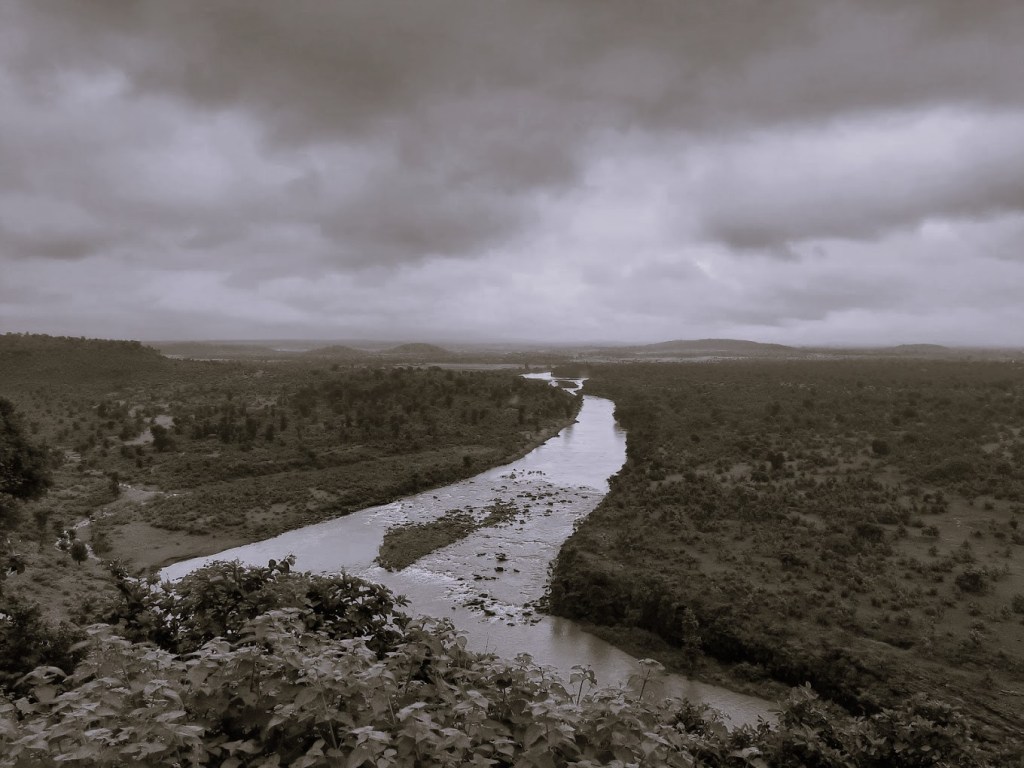
The rebels wasted no time in lining the Bina River, whose bank ran along the west side of the fort, with cavalry — Rose was having none of their menaces and ordered the Cavalry and Horse Artillery to advance, not interested in matching strength just yet, the rebels turned and fled back to the fort. Not all of them. A party of rebels, with much stealth, made off with a few bullocks, a pony and “sundry camels” and killed several unfortunate camel drivers. The 3rd Europeans were ordered to give chase, but it was to no avail.
By nightfall, the Brigade was encamped just outside Rahatgarh town, while Sir Hugh waited for the Siege Train. It was hardly a quiet night – the rebels attacked the pickets and skirmished, albeit momentarily, with the Bhopal levies.
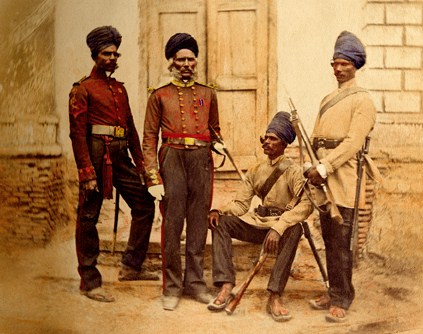
By 4pm, the Siege Train had barely advanced four miles from their camping ground. The Madras Sappers were ordered to advance ahead of the immovable column, to remove, if possible, whatever happened to be obstructing it. The sappers found, to their consternation, the problem was at the river. Hundreds of gharis were jammed together, unable to get to the opposite bank. “And so they would have remained for months, for the drivers, seeing the hopelessness of the case, had taken the thing in the quietest way possible. There they were, abusing each other like pickpockets, squatting down, and smoking their hubble-bubbles, while the obstruction was getting worse.”
There was nothing for it but to pile arms, and the sappers set to work, chopping trees, cutting the road and then carrying dry sand to cover the slippery pathway. After much hard work, it was possible to get the carts over with much pushing and pulling, but the 18-pounders turned into another hurdle. The elephants refused to climb the slippery incline with their loads. So the guns had to be pulled up, one at a time, by hand, by the Madras Sappers. When the work was finally done and every last cart was over, it was three in the morning. The Siege Train bivouacked in the jungle and, at dawn, resumed their march.
“Nothing can be more harassing than accompanying a siege train over such country…no men in the world could have done better (few so well) than our Madras Sapper in their voluntary labour in this instance. They had it all their way, and, be assured, spared neither voice nor arm in the work. Bullock drivers and officers’ servants stood by in mute amazement at what they did.”
The Siege Train finally trundled into camp at one in the afternoon on the 25th of January.
The Siege of Rahatgarh
Sir Hugh Rose had not been idle, but he was also not a man to make rash decisions. There was a fortress to be taken and rebels to be routed, but since neither was going anywhere, Sir Hugh decided, in what would be his first battle in the field, he would take no chances.
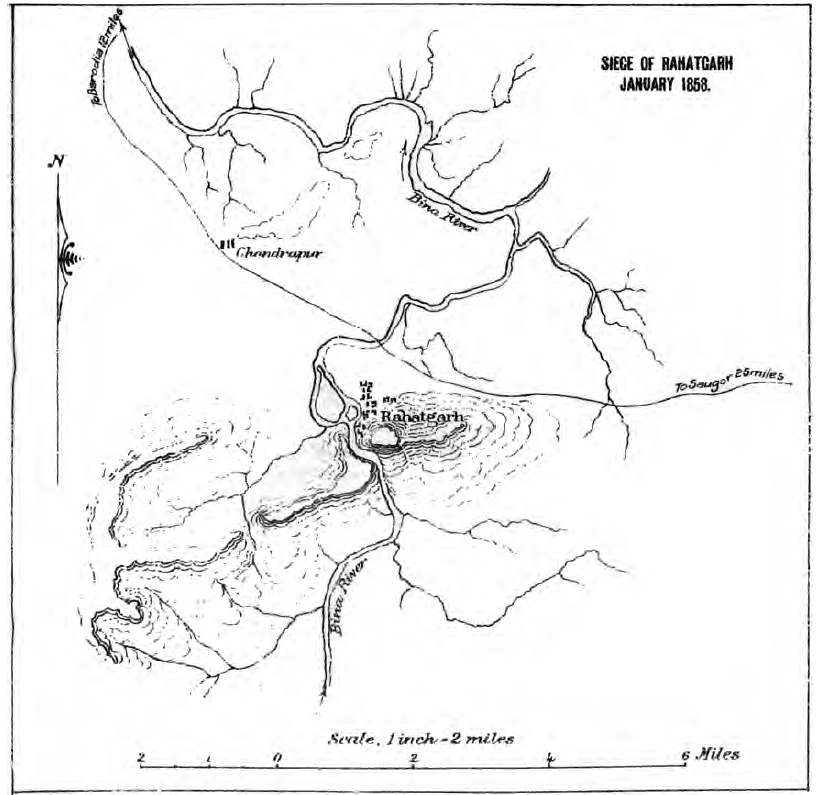
Throughout the 25th, together with Major Boileau (commanding the Engineers), a small party of the 3rd Europeans and 3rd Light Cavalry, Sir Hugh made a complete reconnaissance, some 18 miles, of the entire country surrounding the fort. It confirmed to him what he already feared — the approach would be treacherous at best, but not impossible. So he formed his plan of attack. The same evening, he invested Rahatgarh as closely as the jungles, the hills, and the river would allow. He requested the commander of the Bhopal levies to take the southwest of the fort; on the north and northeast, he placed the 3rd Bombay Light Cavalry and the cavalry of the Hyderabad Contingent. The remainder of the force would occupy the plain which cut through the Sagar Road. The fort would be attacked from the left, the southwest end of the rock, under cover of a feint from the right against the town.
26th – 28th January
Before dawn, the sappers had already been hard at work preparing fascines in the jungle at the foot of the hill. They had barely finished filling the last sandbag when Sir Hugh Rose and his staff at the head of the 3rd Europeans quietly left the camp, moving round the Sagar Road to the north of the hill, followed closely by the 18-pounder howitzers, mortars, and 6-pounders of the Hyderabad Contingent artillery. Leaving a troop of the 3rd Bombay Cavalry at the foot of the slope to cover the rear, the sappers were ordered to fall in, and the force moved from the road to the jungle. The 3rd Europeans in skirmishing order, covering the breadth of the rock, with two companies in support and the rest in reserve.
They passed through the thickets and undergrowth towards the only footpath that led to Rahatgarh Fort. Then came the first surprise; the rebels had set fire to the jungle.
“The jungle grass before, behind, and on both sides of us was in a blaze! What with the heat of the sun and the fire, we were pretty well roasted. The guide had lost the path, so we halted; the order to ‘right and face’ was given, and by the by, we came upon the track. Sir Hugh was obliged to turn back beyond the range of the flames. We had not gone far when we found ourselves jammed — progress, save by single file, was impossible. The order, ‘sappers to the front,’ was given, and away they went to cut a road up this hill for the guns. The sappers were ordered to cut a road up to the open ground in front of the east curtain of the fort, which Major Boileau had selected for the breaching batteries. The Europeans continued to thread their way to the height, and the road was soon completed for the guns. The ascent, however, was so rugged and steep that much labour was required, ere they could be dragged up to the summit.”
While the men were occupied establishing themselves on the hill, the remainder of the fort had been, on Sir Hugh Rose’s directions, Brigadier Steuart carried the town. He faced but little resistance from a body of rebels who had posted themselves in a grove of trees, who sent packing after a few rounds of shot. He then took possession of a mosque opposite the north face of the fort, within range of its main gates. At this position and to the left, he placed Captain Lightfoot’s 9-pounder battery, one 8-inch howitzer and two 8-inch mortars. These batteries would now form the right or “town attack” and would keep up a continuous fire, both day and night, towards the defensive lines and buildings of the fort.
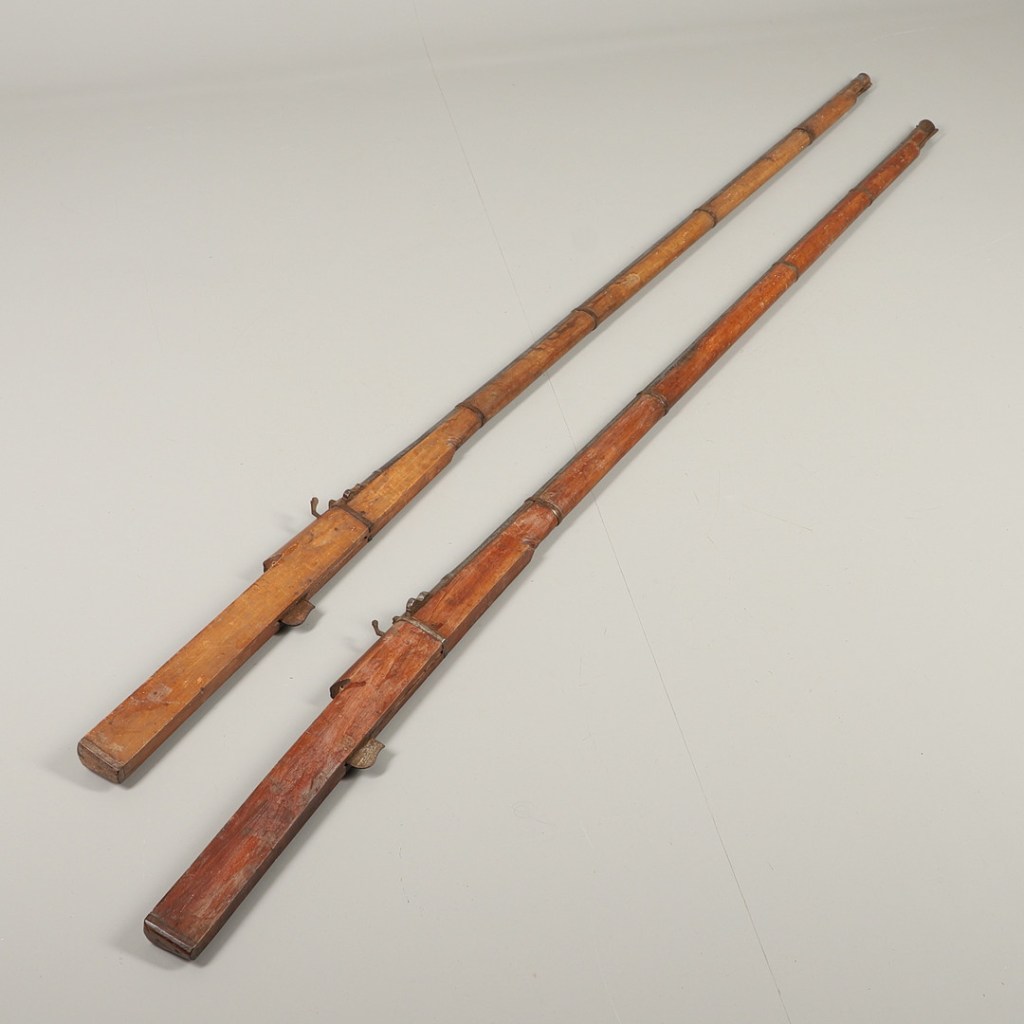
Major Boileau was directing the erection of the breaching batteries, with the mortar battery thrown up in less than four hours. While Boileau and his men worked, the six-pounders of the Hyderabad Contingent, placed to his right, kept up a constant fire of shot and shell on the fort, while the 3rd Europeans with their Enfields traded shots with the matchlock men who now lined the walls. In return, the Europeans received fire from jingals and small guns, which were answered again by the Hyderabad Contingent’s artillery. By 4 pm, the two 18-pounders, dragged up first by elephants, were pulled the rest of the way to their positions by the 3rd Europeans.
Around 11 pm, Boileau’s mortar battery opened fire; with the breaching battery complete, the 18-pounders joined the bombardment at 8 am on the 28th, firing against the outer wall of the east curtain of the fort at a distance of 300 yards. Since Sir Hugh Rose could not take Rahatgarh Fort by storm, he would blast his way in instead. It would not be until the night of the 28th that the breach was deemed practicable.
Throughout the operations, Sir Hugh Rose was ever in front. A man who had been laughed at on his arrival in India, derided by some officers on his force as a “griff” and called a “London dandy” behind his back, could be seen everywhere. The same men could now eat their words. On the 27th, he changed the 8-inch howitzer from the right to the left attack, to enfilade the defences on the north face, then he galopped off to the town, two miles distant, to direct a detachment of the 3rd Europeans, supported by another of the 24th Bombay Native Infantry, (with two companies of the 24th in reserve) to take a low massive tower close to the main gate. The idea had come from Captain Lightfoot, who felt that his howitzer could be placed in it to better batter the gate, and Sir Hugh agreed. After tossing a few 8-inch shells into the tower to drive out anyone still foolish enough to be in it, the storming party, led by Lightfoot, rushed in under a heavy fire from the fort walls. Sir Hugh waited for Lightfoot’s report.
After examining the tower, Lightfoot and Lieutenant Bonus of the Engineers reported that “the massive construction and nature of its defences prevented their being used for the offensive,” and Rose ordered the troops to withdraw. He then returned to Boileau’s batteries. Quartermaster Thompson, commanding the half-battery of the Hyderabad Contingent, was twice hit – a musket ball struck his leathern helmet, and the second struck him in the chest but deflected on his pocketbook. He continued to work his guns until the close of the day. Sir Hugh was there to thank not just Thompson but the rest of the men for their work.
The 28th of January opened. Sir Hugh Rose had just returned to camp from the battery when the rebels came out in force out of the jungle. They crossed the Bina River and attacked the vedettes in the right rear of the camp. Another large body, belonging to the Raja of Banpur, appeared at the same time on the opposite bank, advancing rapidly with their drums beating, Colours flying, and the men shouting out “warlike songs.” As boldly as they advanced, as quickly they retreated – a detachment of cavalry, horse artillery and the 5th Infantry, Hyderabad Contingent, went out to greet them. The Banpur men tossed away their guns and fled across the river without waiting for the charge; those who were not fast on their heels were cut up unceremoniously by the cavalry. As for the attack on the vedettes, Sir Hugh ordered the outlying picket of the 14th Light Dragoons, who, in less than a minute, were in their saddles, and ordering two guns and the rest of the pickets to follow in support, they made short work of the rebels. They were busily skirmishing with the vedette of the 3rd Bombay Cavalry when they realised the Dragoons were on their way. They fired a hasty discharge of muskets and rockets in their direction and then ran to the gorge of the river and up its steep banks. Captain Hare followed them with a detachment of the Hyderabad cavalry, as directed by Sir Hugh, to move by “a short line and cut off their retreat.”
Brigadier Steuart had been called up to make short work of the remaining rebels on the other side of the river, and advancing from the mosque greeted them with a few rounds, sending them tumbling in a hasty retreat to a steep ridge above the village of Chandrapur, four miles northeast of Rahatgarh, from whence they had come from in the first place.
Shortly after dark, they tried their luck again. This time, their attack was feeble and thoroughly unsuccessful on the left of the camp along the Sagar Road. They had marched up from the fortified camp at Nariaoli and Kurai Fort with the idea of relieving Rahatgarh, but again, they were beaten back.
As if Sir Hugh did not have enough to do, he now received information that his supplies, coming up from west under the charge of Scindia’s vakil, were being threatened by rebels from Chandrapur. They had killed the vakil and were, if the information was to be believed, making off with the supplies. Sir Hugh was on the point of going out to deal with them when two spies appeared, saying the supplies were safe and the rebels on their way to Barodia.
Back at the fort, the rebels had been watching the flight of their friends with dismay. The vedettes had beaten off the attack, and the Banpur men were scampering as fast as their legs could carry them back to the jungle. They would soon have to make their move; how they did, would surprise everyone.
29th January
Late on the night of the 28th, the breach in the eastern wall was deemed practicable and early in the morning of the 29th, Sir Hugh Rose went to see about the progress at the mosque battery in the town. Brigadier Steuart reported that around 4 in the morning, the rebels had attempted to make a sortie out of the main gate, but Captain Lightfoot had driven them back with his 9-pounders. Shortly after, a Bhopal officer arrived and reported that he and his men had killed 25 of some 50 men of the garrison who had attempted to force their way past his patrol. Colonel Liddell then reported to Sir Hugh that, around the same time as the breaching batteries fell silent, “judging from the stillness in the fort, that the garrison was escaping.” he had entered it with a part of the 3rd Europeans who, after exchanging a few shots with the men who remained behind the walls, had disposed of their adversaries and taken the fort. Sir Hugh went to see things for himself.
Liddell and the 3rd Europeans were, however, not the first men in the fort. That particular adventure had been taken on by Thomas Lowe, Medical Officer to the Madras Sappers and Miners, and Lieutenant Strutt of the Bombay Artillery. After the breach had been inspected for the last time and deemed practicable, everyone went to their beds in the jungle, speculating on the next day’s assault. Lowe and Strutt woke up earlier than everyone else and, on Lowe remarking on how very quiet the rebels were, even though the mosque battery was still firing shells every quarter hour or so, decided to take a look at the breach themselves. Still dark and ducking low to avoid any random shots the rebels might consider throwing at them, Lowe and Strutt approached the breach. No one fired on them. Strutt jumped down into the ditch and scrambled over the rubble left by the battering of the guns, and Lowe followed. Their curiosity piqued, two artillery men followed and without realising it, Lowe, Strutt and their companions had taken the fort. Behind them, the 3rd Europeans, posted behind the batteries, not to be undone, leapt to their feet and rushed the breach. Apoplectic with rage, Liddell ordered them back and, striding forward into the fort, caught hold of Strutt and placed him under arrest. Strutt kept quiet, and the other three narrowly escaped the same fate. Now Liddell ordered the 3rd Europeans to seize the fort.
It was found that “The main body had fled by an ancient sally port and hole dug under the parapet to the southwest, from which ropes were hanging by which they had let themselves down...The most amazing thing as to see the place from whence they had escaped. To look down the precipitous path made one giddy, and yet down this place, where no possible footing could be seen, they had all gone – men and women – in the dead of night! One or two mangled bodies lay at the bottom, attesting the difficulty of the descent. Nothing but despair could have tempted them to have chosen such a way.”
All the officers on duty now reported that these rebels had crossed a ford over the Bina to the southwest, right under the Bhopal camp, had passed through the Bhopal lines and had made off into the jungle. The Bhopal troops, for their part, stated they had fired a few shots at them; the three dead baggage animals in the ford showed the track the fugitives had taken.
The investment of Rahatgarh by Sir Hugh Rose had broken the resolve of the rebel garrison. Unable to withstand the shelling to meet the inevitable assault, those that could had chosen flight. Fazil Khan and his staff all tried to cross the Bina but upon seeing the vedettes of the 14th Dragoons on the other bank, turned back towards the fort and hid themselves in a cave under the rock, where they were shortly after captured. The vedettes and pickets placed around the rock cut down or captured many of the fugitives during the day, and 80 prisoners were handed over to Sir Robert Hamilton (accompanying the force as political officer) for him to deal with. Twenty-four were executed, and the remaining forty-eight placed under arrest. The Hyderabad Contingent Cavalry made good their pursuit and killed another forty as they fled.
At sunset, Fazil Khan and Nawab Kamdar Khan, a pensioner on the pay of the EICo and the son of the Pindari chief who had been taken by Malcolm in 1818, were hanged over the gates of Rahatgarh Fort. The next day, seventeen more rebels – some men of note – were likewise executed. Two of them were brothers of the Pindari chief and had taken part in the murder of the British assistant at Bersia, while Kishen Ram, Secretary to Fazil Khan, had ordered the murder of forty Indian Christians at the same place.
In Rahatgarh Fort
Only a few men had been left behind, and they had fired their last shots at the 3rd Europeans. A sentry was found sleeping in one of the bastions; three old men and women with a few children were found in some of the houses. They informed Liddell and the others that the rest of the garrison had fled during the night. The grounds around the walls were strewn with the dead, and scattered about lay the carcases of dead horses, bullocks and ponies. As the men wandered about the now deserted fort, they were surprised to see how little damage the shelling had actually done to the buildings – nearly all were still intact. In these, they found hiding the wives and children of the rebels – not a single one was harmed; they were led out of the fort and told to go where they might.
The tank in the centre of the fort, some fifty feet deep and cut out of the rock, had been drained of its water and in it were found a plentiful supply of salt and grain – enough for a year. In the stables stood well-fed camels and plenty of saddled horses. One of the horses was wearing its silver bridle, and another was a charger identified as belonging to the late Lieutenant Redmayne, who had been killed at Mandsaur. His accroutements, pistol, watch and sword would likewise be found in the fort. The horse had been wounded severely above the eye during the battle and, as such, was no longer the prettiest animal to look at, but it would carry Sir Hugh Rose through the next parts of his campaign.
Strewn about the fort was a multitude of camp equipment and weapons; in the smithy, the rebels had been preparing to cast a gun, and they were making their own shot. An immense pile of native letters and, of all things, English accounts was discovered in one room; in the next, “…the effigy of the head of a decapitated European female, which these supporters of a change of rule in India carried before their troops as a fitting emblem of their deeds. Other standards taken here as at Mandsaur were marked with the crescent and the bloody hand.”
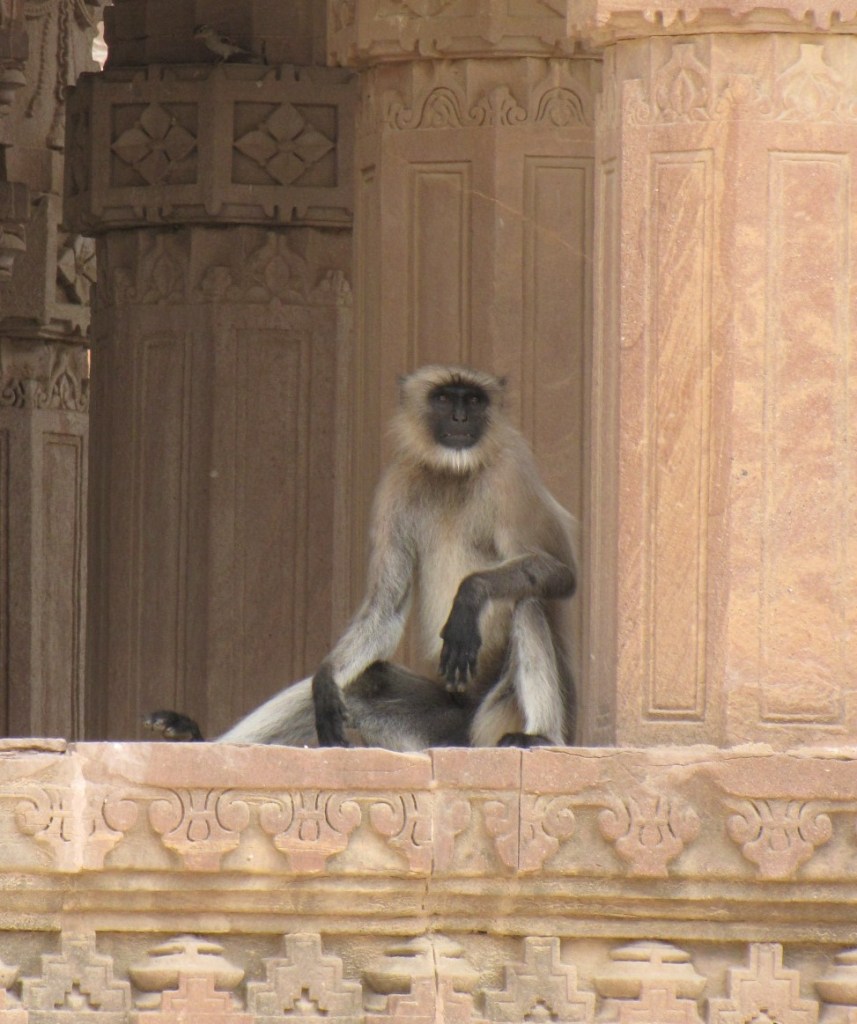
Outside in the courtyard, panicked bullocks and ponies raced about while scores of black-faced langur monkeys chattered their disaproval from the roofs at these strange new invaders. Their peace would further be disturbed when, on 30 January, the Sappers began their work of mining and demolishing the buildings of the impregnable fortress of Rahatgarh. For Sir Hugh Rose, the campaign had begun in his favour, but the relief of Sagar was still not in sight. The rebels were now consolidating their forces at Barodia, and Sir Hugh Rose would march out to meet them.
Sources:
Burton, Reginald George. A History of the Hyderabad Contingent. Calcutta: Government of India Central Printing Office, 1905.
Forrest, George W., ed. Selections of Letters, Despatches and other State Papers Preserved in the Military Department of the Government of India 1857-58. Vol. IV. Calcutta: Superintendent Government Printing India, 1912.
Intelligence Branch, comp. The Revolt in Central India 1857-59. Simla: Government Monotype Press, 1908.
Lowe, Thomas. Central India during the Rebellion of 1857-1858. London: Longman, Green, Longman & Roberts, 1860.
Malleson, G.B. History of the Indian Mutiny, commencing from the close of the 2nd Volume of Sir John Kaye’s History of the Sepoy War. Vol. III. London: W.H. Allen & Co., 1888.
Stotherd, E.A.W. History of the Thirtieth Lancers, Gordon’s Horse, formerly 4th Nizam’s Cavalry, 4th Cavalry, Hyderabad Contingent, 4th Lancers, Hyderabad Contingent. Aldershot: Gale & Polden, Ltd., 1911.
Sylvester, John Henry. Recollections of the Campaign in Malwa and Central India under Major General Sir Hugh Rose. Bombay: Smith, Taylor & Co., 1860.
 Mutiny Reflections