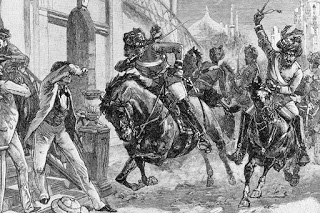
The mutineers’ arrival in Delhi on that Monday morning came as a shock. There had been no warning from Meerut, and it soon became evident that no one was coming to help. The inhabitants were left to their own devices to save themselves as best they could – as the narratives of their escapes shall be told in the next chapter, you shall see it was for the most part by the skin of their teeth. As to defence, there was no hope in that course of action, as many residents would soon discover. Being ill-prepared for a siege, encumbered by their families, the best some men could do was hope for a swift relief, but it never came. Unlike Meerut, where there was at least some attempt made to go and look for survivors after the fact, in Delhi, there was no one left to go and look for them or, indeed, save them.
The first known casualty was at the Toll House on the east side of the Bridge of Boats. The mutineers from Meerut made but quick work of murdering him, taking what money they could find and setting fire to the structure. They did, however, spare his wife.

It has never been ascertained as fact what actually happened to the next victim, Mr Charles Todd of the Telegraph Department. On that morning, he left home in his buggy and never returned. It is unclear whether he was returning to Delhi or just on his way to the cable house (the lines had been cut in Meerut on the previous day, but all Mr Todd knew was that it was not working) – without any warning, he was slain, and his body was probably thrown in the river. His pregnant wife was saved by his assistants, who managed to convince the poor woman that her husband was never coming back.
A memorial to the telegraph department still exists in Delhi. However, my dear readers, the postcard image below does not reflect today’s reality. I have attached a link below.

http://ignca.gov.in/online-digital-resources/archaeological-sites/delhi/mutiny-telegraph-memorial/http://ignca.gov.in/online-digital-resources/archaeological-sites/delhi/mutiny-telegraph-memorial/
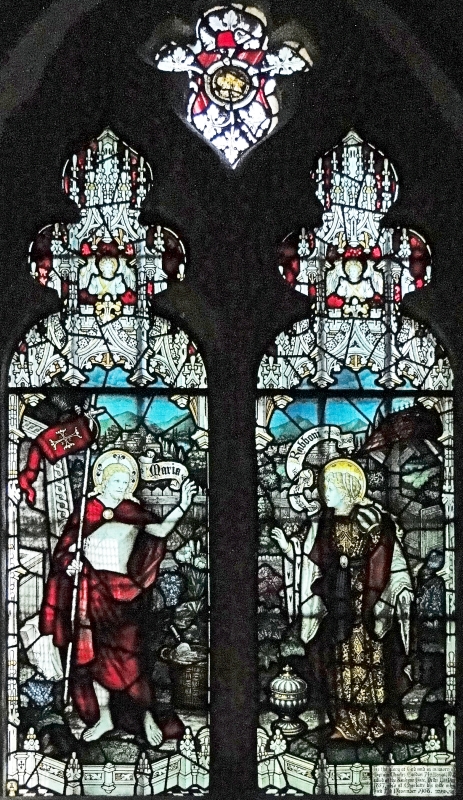
Memorials in St. James’ Church
The first church to be built in Delhi, it was commissioned by Colonel James Skinner in 1836. He built it at his own expense, spending the princely sum of 95,000 rupees. It was designed by Major Robert Smith and took ten years to complete. It is constructed on a cruciform (Greek Cross) plan with three covered porches, highly decorated stained glass windows and a central, octagonal dome.
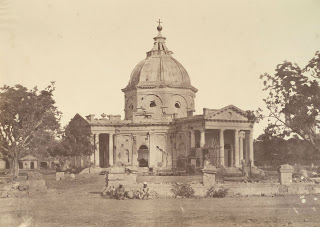

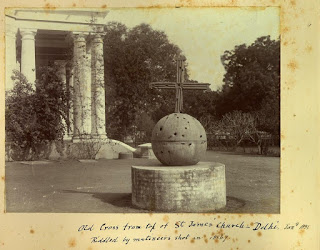
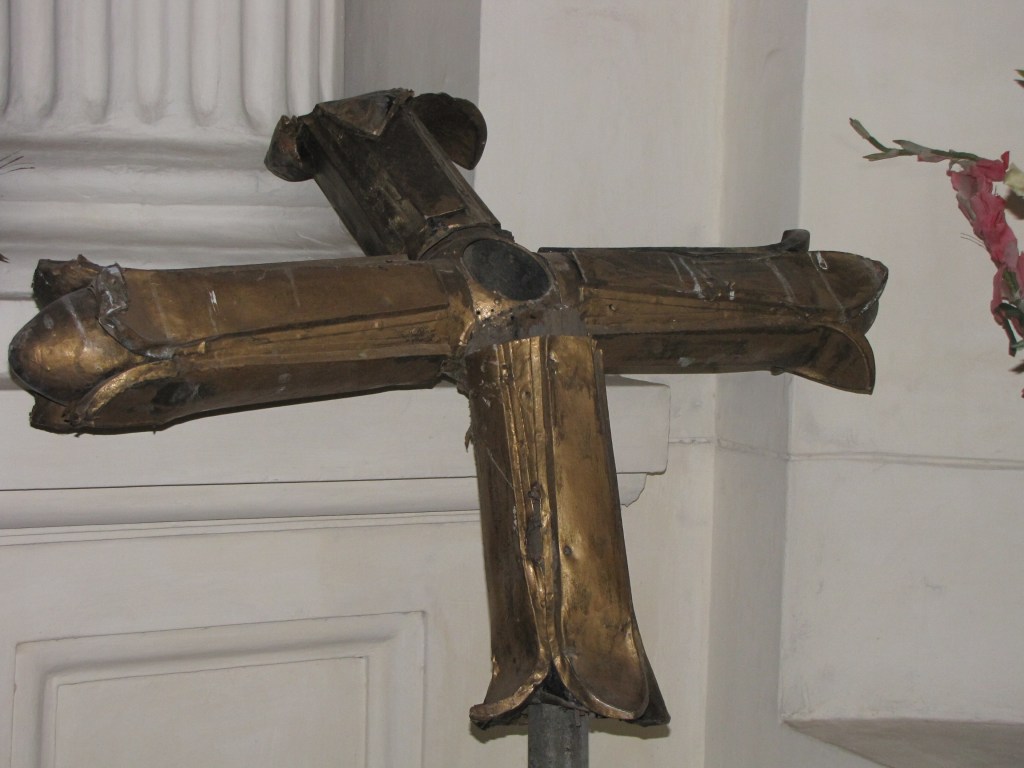
The copper ball and cross are said to be a copy of a church in Venice. In 1857, these were used as target practice by the Sepoys, sustaining irreparable damage and were eventually replaced. The church itself was damaged by shellfire during the uprising.
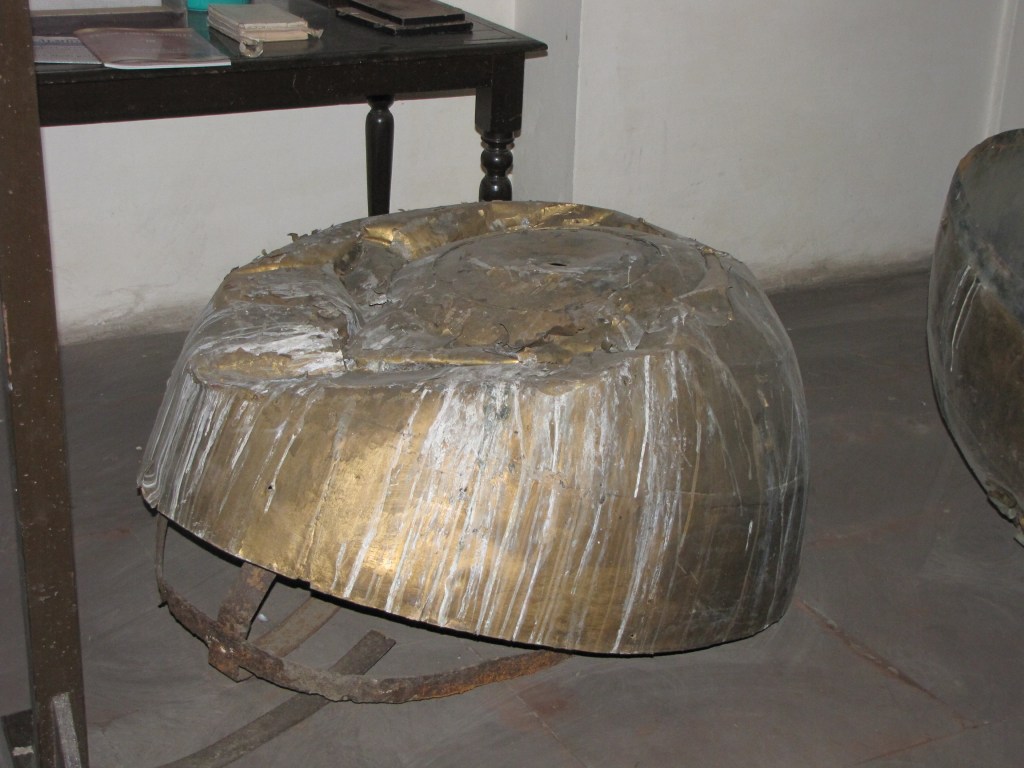
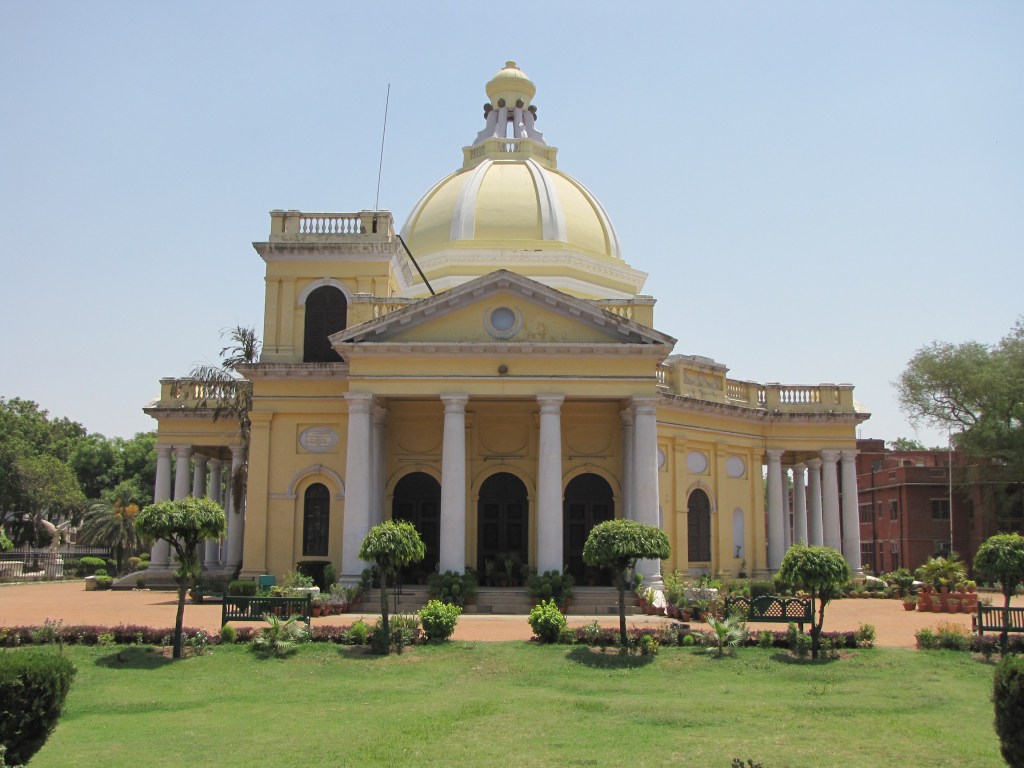

“Striving Against Carelessness and Neglect in Religious Observance” the Reverend Jennings and the Poor Girls
In 1857, Miss Annie Margaret Jennings was engaged to be married to Mr Charlie Thomason of the Bengal Engineers, son of the former Lieutenant General of Punjab. Helping her prepare for her wedding was Mary Jane Alicia Clifford, just 24 years old, who had come out to India to keep house for her brother, Wigram Clifford, aged 23, of the Bengal Civil Service, Mewati Outpost, Gurgaon. They were all sharing the lodgings with Captain Douglas of the Palace Guard and his wife.
Annie had only recently arrived in Delhi in 1857, having travelled out from England to keep house for her father while her mother was back home. She was a lovely 21-year-old blonde; she had caught the eye of Mr Lieutenant Thomason, who sang bass in the choir which Annie had organised. Annie and “the beautiful Miss Clifford”, with the vivacious enthusiasm of youth, had had a positive effect on the officers of Delhi. The men braved the lengthy, fiery sermons of Reverend Jennings to spend some time in the company of two pretty girls despite the exertions of morality by the Reverend. For exert himself he did, but not in a way designed to bring anyone any comfort.
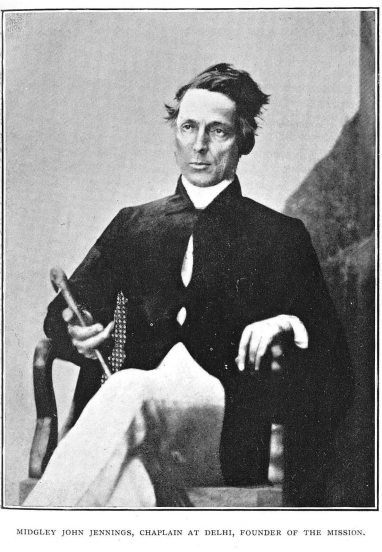
Reverend Midgley Jennings served as a chaplain to the East India Company from 1832, serving in Cawnpore and other locations until his posting in Delhi in 1852. He was committed to converting India to Christianity, and his views were seen as both brash and insensitive by many of the residents in Delhi. Although Jennings was not the sole cause of the mutiny, he and his preaching brethren certainly did nothing to promote harmony among the people of India and the British. He was described by some residents as “brash and insensitive, yet silkily unctuous.’
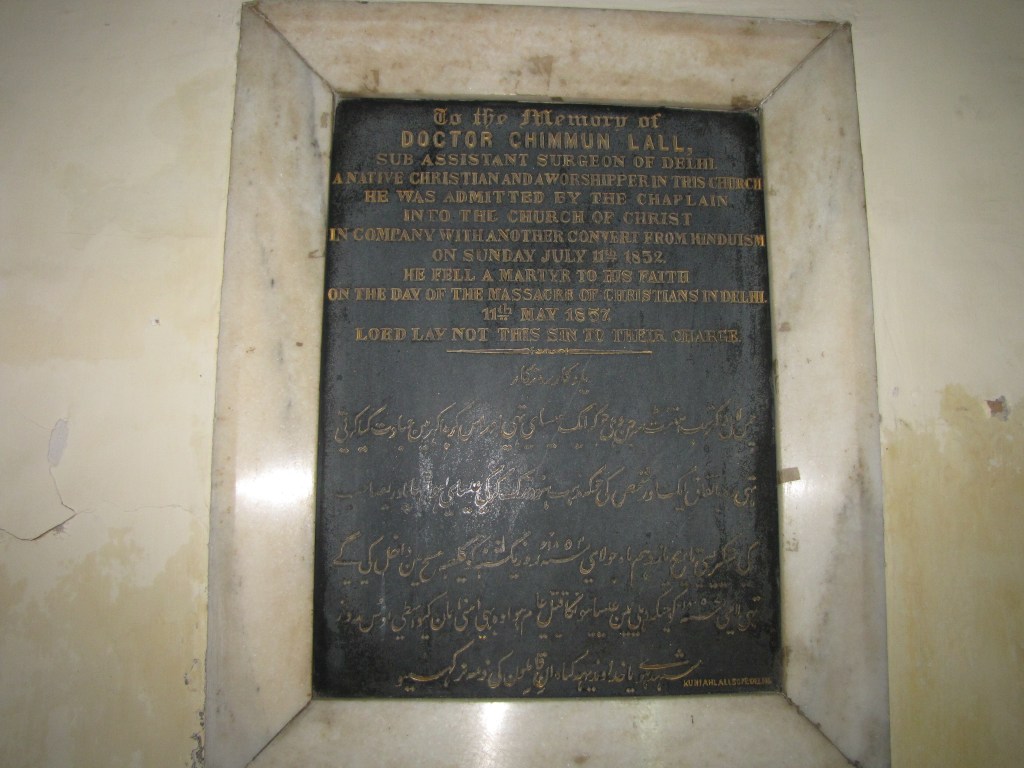
Describing the Mughal court of Bahadur Shah Zafar as the “evil empire,” unabashedly comparing Islam to the Antichrist in the Scriptures and calling Hindus “Satanic pagans”, Jennings used education as a front, fervently setting up the Delhi Mission, and he made it his goal to offer education “of a superior kind” to the elite of Delhi. Unfortunately, even though the residents might not have liked it, this rise in missionaries was met with approval from others in power and goes a long way to explain why no one stopped Reverend Jennings on his tumultuous trek of preaching in India for over 20 years. The very public conversion of Dr Chaman Lal directly led to the doctor’s death at the hands of the mutineers in 1857. He had been the personal physician to the Mughal emperor, and his baptism, along with that of the prominent mathematician Master Ramchandra, on the 11th of July 1852, did not sit well with many of the citizens of Delhi. “ Even the king Bahadur Shah Zafar did not like their conversion and offered to convert them to Islam if they were not satisfied with their own religion” (Delhi in 1857. N.K. Nigam, 1957, pp.17). Reverend Jennings could not help crowing about the baptism to the Society for the Propagation of the Gospel, writing that it “..consequentially caused the greatest excitement throughout the city.. The whole Hindu population assembled around the church on Sunday evening.” And yet, still, no one stopped the man.
In 1857, the wife of Reverend Jennings was in England, looking to the education of their younger children – their son, William John Jennings, was on his way to India when the Mutiny broke out and heard of the deaths of his father and sister while in transit in Malta. He joined the 2nd European Bengal Light Cavalry in 1858 and later transferred to Mayne’s Horse and died in 1860, aged 22. Another Jennings brother, Robert, arrived in India in 1859, joining the 2nd European Bengal Light Cavalry the same year. He attained the rank of general in 1905 and received his knighthood in 1909, eventually dying in Bournemouth in 1922, at the ripe old age of 81.
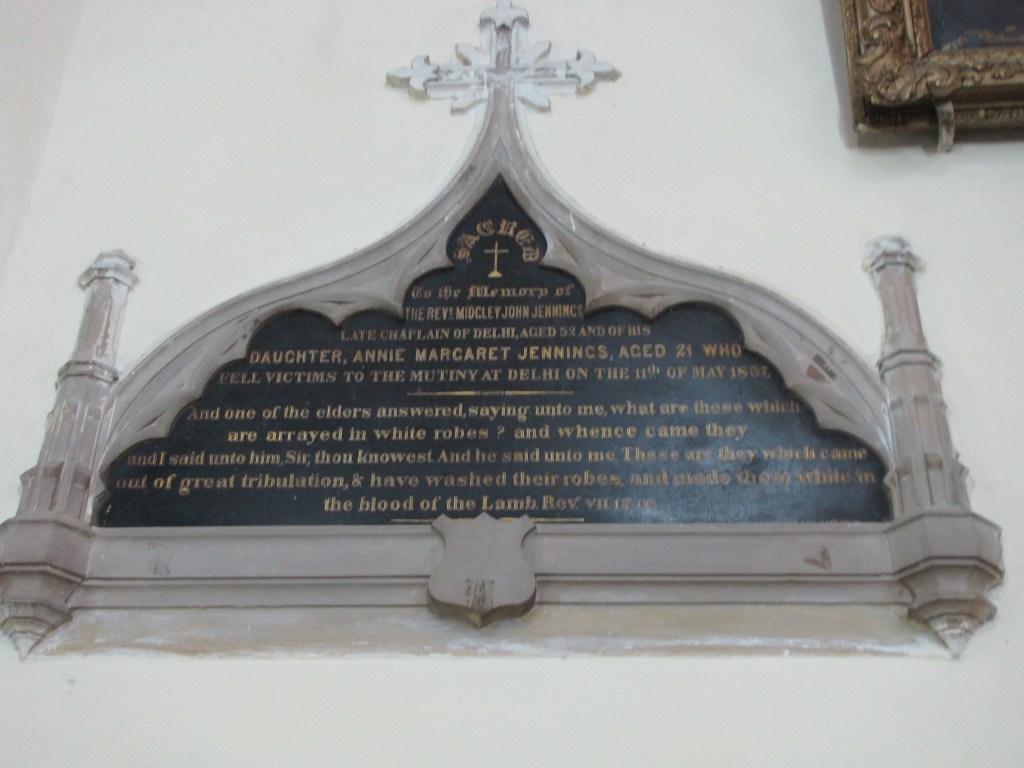
There are many myths attached to the deaths of Miss Clifford and Miss Jennings. Many of these tales were the vicious exaggerations of writers whose only intent was to sell their rags to a gullible public and fan the flames of retribution. The public was at the mercy of these unscrupulous peddlers of smut and lies. What is known is when the outbreak occurred, they were in the apartments of Mr Douglas above the Lahore Gate in the Red Fort, where they were found and murdered on the spot. Though one account has the girls hiding under a sofa and another in a cupboard, it is ultimately of little consequence. What is important to note, though, is they were neither violated, paraded naked through the streets, chopped into pieces while still alive, nor crucified on the walls of Delhi. Their deaths, though brutal, were swift.
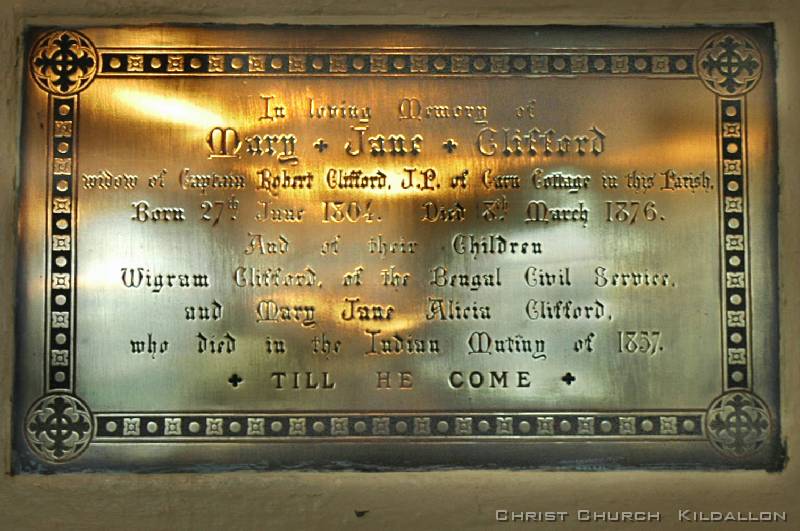
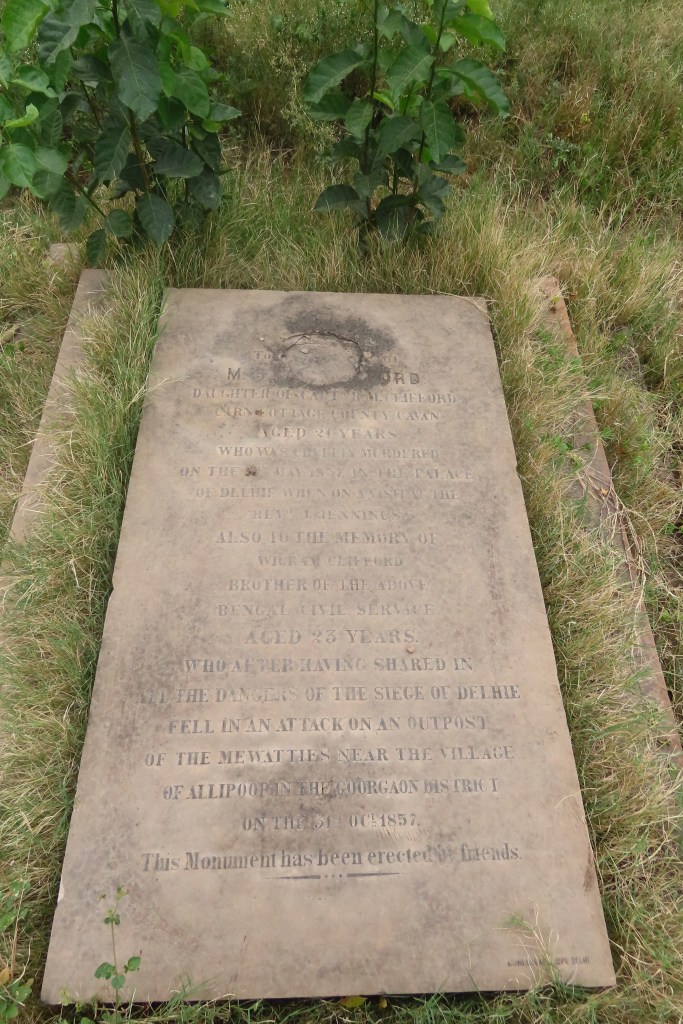
Another monument does exist to Miss Clifford and her brother, according to “A List of Christian Tombs and Monuments in the Punjab, North-West Frontier Province, Kashmir and Afghanistan Vol. II Inscriptions, 1910”, the gravestone reads as follows:
“Sacred to the Memory of M.J.A. CLIFFORD daughter of Captn R.M. Clifford, Carn Cottage County Cavan, aged 24 years who was cruelly murdered on the 11th of May 1857 in the palace of Delhie when on a visit at the Revd J. Jennings also to the memory of WIGRAM CLIFFORD brother of the above Bengal Civil Service, aged 23 years who having shared in all the dangers of the Siege of Delhie fell in an attack on an outpost of the Mewatties near the village of Alipore in the Goorgoan district on the 31st of October 1857. This Monument has been erected by their friends.”
It lies to this day in Nicholson Cemetery in Delhi.
The Cliffords had another brother who served in India, Robert Clifford. However, he missed the Mutiny altogether as the ship taking him to India broke down and was set down for lengthy repairs on the South American coast. He arrived in Calcutta too late. Born in 1839, he would have been 18 in 1857. He went on to serve with the Sam Brown Cavalry and later with the 2nd Punjab Cavalry, retiring from India in 1881. and died at Carn Cottage in 1930. Their other relative, a cousin, Richard Henry Clifford, the deputy collector of Mathura, survived the Mutiny, having been hidden away by a loyal servant.
John Ross Hutchinson Esq., B.C.S.
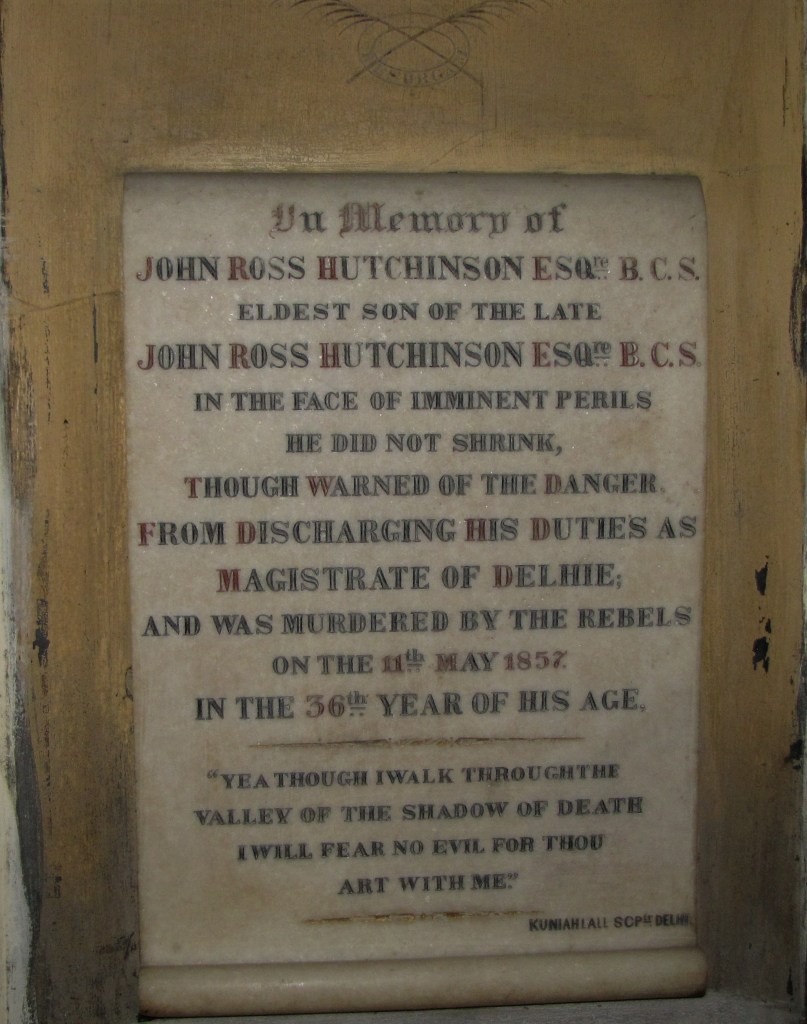
John Ross Hutchinson was murdered with Reverend Jennings and the girls in the rooms above the Lahore Gate. It was his wife that Harriett Tytler had seen, “walking hastily down the road”, her hair flowing, without a hat, a child in her arms, a bearer behind her carrying another. A description of him can be found in “Memorials of Old Haileybury College,” where he won prizes for essays in his second term, classics and Hindustani prizes in his third and the Persian Medal, Hindustani and Essay Prizes in his fourth term. His final, and what appears to be his only post, was “Joint Magistrate and Deputy Collector of Aligarh.”
His wife, Harriet Louisa Anne née Becher, had been born in India – the daughter of Colonel George Becher, who died at sea in 1857. Her brother, Septimus Harding Becher (pictured below in the family portrait holding the whip!), would end his military career as a general.
Harriet would eventually make it to Simla with her little daughters, Katie (age 3) and Lily (a few months), holding onto hope that her husband had been taken prisoner and was still alive in Delhi. No one was able to tell her how exactly he died, and it was only in September, after Delhi was taken, that she could find anything out at all. But there were never any remains for her to bury. It is here we can also see just how the mutiny affected families – be it in Lucknow, Delhi or Cawnpore, they would all be blighted by the same sadness.

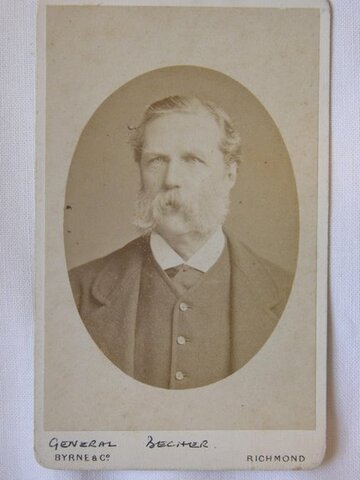
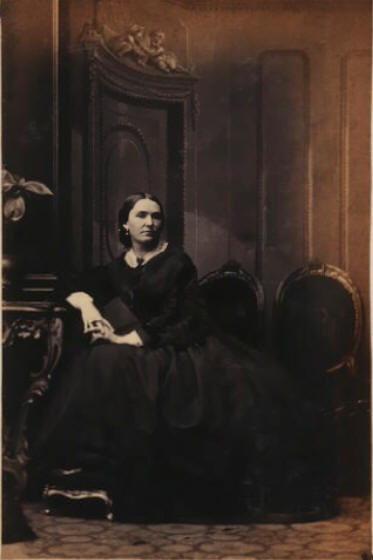

The Collins, Staines and Leeson family

In her book, Florence Wagentreiber leaves us an account of the fate of this family (although Florence, being an infant at the time, could not have witnessed any of this). Mrs Leeson survived to relate their sufferings to others.
“On the morning of the 11th of May, the members of this family, in common with all the Europeans in Delhi, were alarmed by the report that mutineers from Meerut had entered the city and were massacring Europeans. They consequently all assembled in a fine house which belonged to one of them near the Church and close to the city wall. The house had a tyekanna or deep underground apartment made for coolness in the hot weather the floor of which, though much below the level of the ground within the city, was on a level with that on the outside of the walls, and with which it communicated by a small door pierced through the city wall. Tither, they descended to the number of about thirty, including children and infants. There they remained during the whole of the 11th of May…”
On the 12th of May, they left their concealment, probably spurred on by the crying of the children from hunger and thirst.
“Their house was close to the Water Bastion, one face of which looked towards the ridge…while the other, in which was the door mentioned, looked towards the river. Through this door, they all passed and went along between the wall and the river till they came to a small arched gateway, but without a gate on it, in the city wall, and leading into the city. At this archway, they found two Sepoys who said they had orders to bring them all to the palace before the king. They accordingly brought them inside the city wall again and led them up to what are now the Government College grounds, which were then covered in dense bushes. As they were going up here in loose order, one of the Sepoys shot one of the women and her two little daughters crying out, “Oh, they have shot mama!” ran away to hide themselves in the bushes…Mrs Leeson’s account of what followed was most pathetic, but considering there were several men in the party, most unaccountable…”
Florence continues the account, describing how the family were deliberately shot down by the escort “as they walked quietly along, none of them apparently except the first two little girls, making any attempt to escape, either by running away or by attacking the two Sepoys. They seemed overwhelmed by the idea of Kismet…”
From here, one can piece together what happened to Mrs. Leeson. She was shot, and the baby in her arms was thrown injured from her arms. As she lay on the ground, badly wounded, her other two children were murdered before her eyes, as recorded by Mrs. Harriet Tytler, who saw Mrs. Leeson after she was brought to Delhi Ridge:
“Before they had killed all the others, Mrs. Leeson’s little boy of about six drew close to his mother and, raising her head, put it on his lap and began caressing her face. The little girl of three, running up to her wounded mother, laid herself down by her side. After those soldiers of the King had butchered the rest of the family, they came up to her little boy and cut his throat…They then took the little girl and cut her from ear to ear through the mouth…That poor child was some six hours before she died, all the time writhing away from her mother, in her agony, further and further from her mother till she heard one piercing shriek and then no more, so the mother supposed somebody must have killed her outright. There the poor baby lay on the ground, picking the grass and moaning pitifully, till he died too.“
Mrs. Leeson was rescued by two kindly Afghans and remained hidden in the city until August, when she was brought disguised to the British camp. They refused any reward for her rescue, saying they had saved her for humanity’s sake. She was later reunited with her husband, John, who spent the Mutiny in Agr Fort. They returned to the college grounds to look for the remains of their murdered children, but they never found them.

The Beresfords
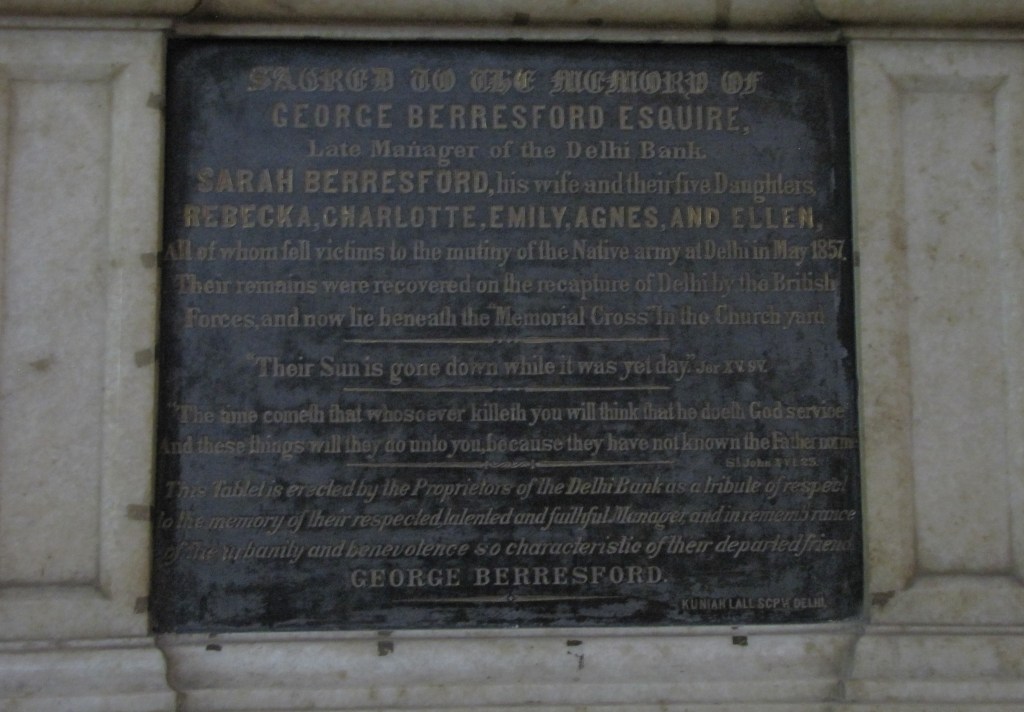
George Beresford was the manager of the Delhi Bank and would not quit his post. Though warned by his servants and had an opportunity to escape, he still decided to stay where he was. Gathering his family on the roof of an outer building, George, his wife, Sarah and a few clerks, attempted to defend themselves but were eventually overpowered. Mrs Beresford was armed with a hog spear, and with this rather formidable weapon, she managed to skewer one or two of her assailants, but ultimately, it was for nought. One of their daughters either remained in the outhouses behind the bank or otherwise escaped, but she was captured and taken to the Fort, where she was killed along with the rest of the Europeans. The deputy manager, Mr Henry F.B. Churcher, perished with them.
One of the stories, popular at the time and still often repeated, is that the Beresfords had their throats cut by broken glass. However, according to Gulab in “Annals of the Indian Rebellion”, the following account is more probable:
“I was witness to the murder of Mr. Beresford and his family. When the bank was attacked by the mutineers and the rabble, Mr. Beresford and his family retired to one of the out-offices for concealment, but when discovered, were on the roof of the building. Mr. Beresford was armed with a sword and Mrs. Beresford had a spear. The mutineers, being afraid to approach them by the staircase in front, two of the rabble suggested that they should go around and scale the wall in the rear of the house. Mrs. Beresford struck one of the assailants with a spear, and killed him; they were, however, overpowered and all killed. I don’t know what number of persons were killed at the bank, but there were several…”
I do not believe the story of the glass – the mob who attacked the Beresfords (and the clerks – remember, were defending themselves with sticks and bank ledgers!) was in an uncontrollable frenzy and doubtlessly, hacking their way from one site to the next. They were fixated on plunder and murder – it is hard to imagine they would have taken the time to go through such a lengthy process to kill them. One can only hope their end was swift. Their bodies were found after the end of the siege of Delhi and buried in the grounds of St. James’ Church.
Mr George Reade Edward Beresford arrived in India in 1835. He was appointed manager of the Cawnpore Bank (his sons, George and Charles, were born in Cawnpore in 1844 and 1846, respectively – they were most likely in England in 1857). In 1849, he transferred to Delhi, appointed manager of the Delhi Bank. He was an Oriental scholar, a keen archaeologist and had a fascination for the new art of photography. He also left us a book, “The Handbook of the Imperial City of Delhi”, published in 1856.
Fredrick Taylor
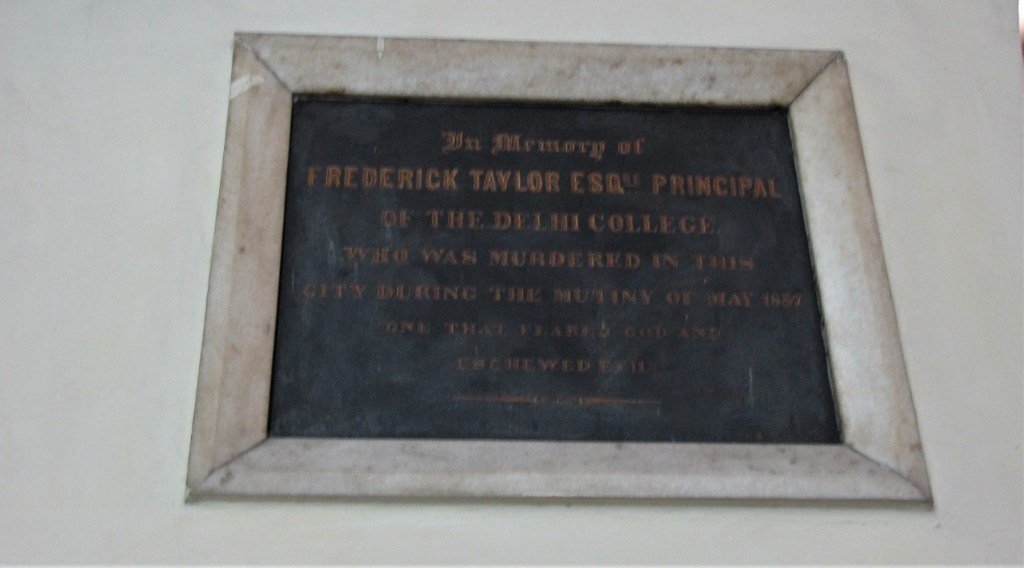
A further tablet is the one of Frederick Taylor, principal of the Delhi College. Master Ramchandra takes up the story in Annals of the Indian Rebellion:
“As it was the summer season, we attended the Delhi College at 6 a.m.; so the next day, the 11th of May, I went to the College early in the morning. At about 8 o’clock a.m., when I was teaching my class in the yard of the upper room, some students told me that the mutineers from Meerut had come to the city. I threatened the students who had said such things, not in the least believing the report. At last, some servant of Mr Roberts brought the news that the mutineers from Meerut had actually arrived and had killed a European officer in charge of the bridge. Then Mr Taylor, our Principal, thought it proper to give leave to the whole College, though he still did not consider this a very serious matter. I went to the College hall and sat down with Mr Taylor, Mr Roberts, and Mr Stewart, junior, and we talked on the subject. Mr Taylor wrote a letter to the Captain of the magazine to be informed whether these reports about the mutineers had foundation. The Captain wrote only these words in reply – ‘Come quickly.’ No sooner were these words read by Mr Taylor than we were struck with horror. Mr Taylor, Mr Heatley, the editor of the Delhi Gazette, Mrs Heatley, Mr Roberts and all the European teachers of the College went over to the magazine immediately.”
It is uncertain what happened to Mr Taylor next. If he managed to make it to the Magazine, then he was killed when it was blown up by Willoughby, as was asserted by an Urdu newspaper published in Delhi in 1857. If not, then the other account, which tallies more with the words on his plaque, could be closer. After leaving the College, he was given shelter by an Indian friend, but when trying to flee the city in disguise on the 12th of May, he was discovered and beaten to death in the street.
The Many Postings of Captain Charles Gordon

“Almost at the first discharge I saw Captain Gordon fall from his horse; a musket ball had pierced his body, and he fell with a groan a few of where I was standing..”
Edward VIbart
Captain Gordon had served in the army for 22 years. Arriving in India in 1836, he was initially sent to Dhaka to do duty with the 50th BNI, the same regiment as his older brother. From there, in January 1836, he went to Barrackpore to serve with the 6th BNI. But it was a short-lived posting, for he joined the 74th BNI in June of the same year, stationed in Bareilly. He would remain with the regiment until 1843, when he was appointed Adjutant of the cavalry of the Bundelkhand Legion. Then, in 1844, he was appointed Adjutant of infantry for the same corps. However, Gordon soon requested to rejoin the 74th.
In November 1845, with the regiment marching to Hoshangabad, Gordon took leave in Mussoorie until January 1846. Upon being recalled, he took an appointment as Adjutant of the 7th Depot Battalion at Mainpuri. However, again, this was but a brief sojourn; in March, the battalion was broken up, and he now received permission to do duty with the 50th BNI at Aligarh, as the 74th was in Mhow. He finally arrived in Mhow in December 1846, where the 74th stayed until 1850. It was a long march from Mhow to Dacca, and but a short stay. In 1852, the 74th made its way to Barrackpore and then, in 1853, to Cawnpore. He left them here in 1854 and proceeded home on furlough.
It was not much of a vacation. In February 1855, we find Charles Gordon serving on the Bosporus, his services having been placed by the Court of Directors to the government as Staff Officer to Lord William Paulet, Commandant at Scutari, and until the end of the Crimean War, Charles Gordon held his post. In January 1857, he returned to India, re-joining his regiment in Cawnpore. On the 25th of March, they arrived in Delhi. A brief two months later, while trying to keep his own men in line, he was killed by a trooper of the 38th BNI.
According to the Bombay Times of 1859, his widow, Charlotte, was given a pension of “70L and 16L for her son.” She would outlive Charles by 51 years, dying at the age of 93.

OTHER MEMORIALS
The Corbetts
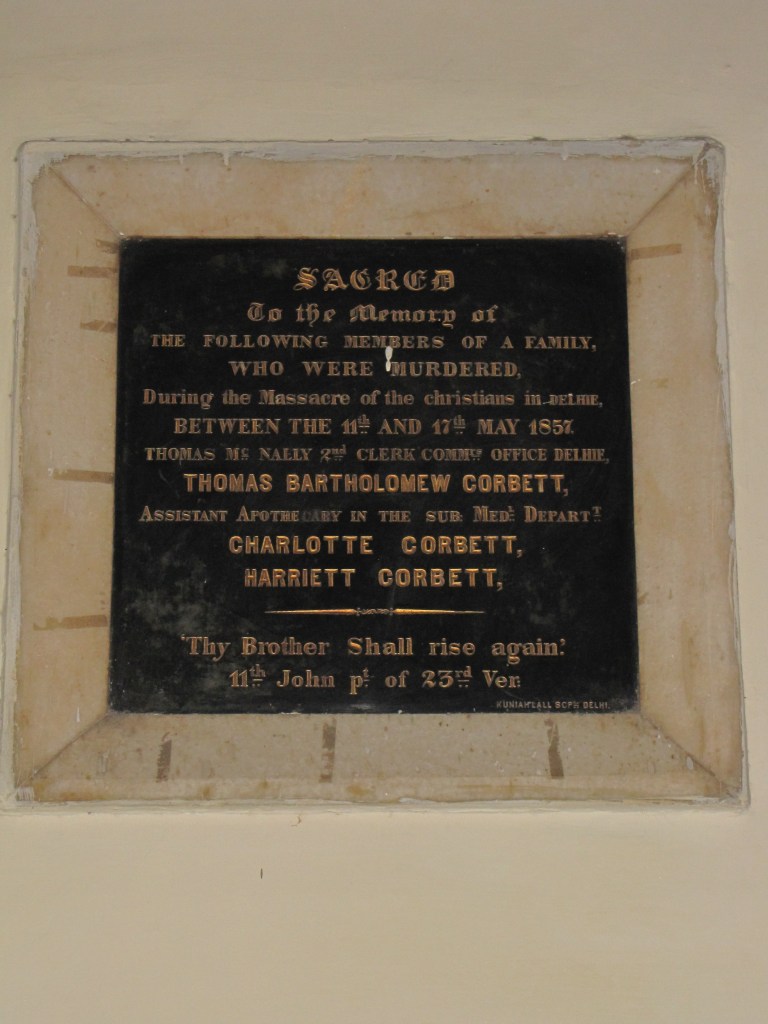
Thomas Bartholomew Corbett was born in 1828 to Joseph Corbett and his wife, Harriet. Joseph arrived in India in 1815 from Ireland. Stating on his enlistment papers his profession as “gilder” he joined up with the intention of leaving Ireland for good and signed on as a private for unlimited service. While “gilder” was certainly not a lie, he had also been a monk; the young wife he brought with him to India had been a novice at a nunnery – their elopement undoubtedly raised some eyebrows. They brought with them to India their eldest daughter, Eliza, born in 1812 in Belfast, the only child to be born in Ireland. By 1817, Joseph was serving with the horse artillery, where he remained until his untimely death at Meerut on 28 March 1833, aged just 33. His final rank was sergeant. He left behind a substantial family of nine children, but only three of the children have been traced. It is certain that two of their sons, Christopher and Thomas, would serve as apothecaries in the army. In 1853, Christopher held the rank of assistant apothecary with the 3rd Troop, Bengal Horse Artillery. He would eventually resign in 1862 and join the post office. Thomas’ career is less clear.
In 1857, Thomas was employed as an Assistant Apothecary, Subordinate Medical Department in Delhi. The Subordinate Medical Department was an uncovenanted branch of the medical service that had been formed in 1812 by the EICo to provide medical services to Indians. It consisted of a military and a civil branch. Although the staff was recruited in India, the senior positions initially could only be occupied by persons of British origins. The department existed until India’s Independence. Over time, senior positions were opened to not only Anglo-Indians but Indians as well.
Both brothers married the sisters – Christopher’s first wife was Mary Anne Morrow, whom he married in Mussoorie in 1845; poor Mary Anne died while still in her twenties, and it would appear that Thomas married a younger sister of hers, named Charlotte, on April 15, 1852.
A highly inflammatory tale was circulated regarding Thomas’ death, which is most likely untrue – according to the story, he was tied to a tree and burnt alive along with his wife Charlotte and their 4-year-old daughter, Harriet Ann Eliza, by the insurgents on 11 May 1857. Another story has Thomas still alive in September, but a prisoner of the rebels — in September 1857, when Delhi was retaken, he was tied to a stake and burned alive by one of the gates, in front of the oncoming army. Although there are accounts of a European thus displayed, these stories were never officially substantiated and the identity of the man at the stake was never ascertained. Witnesses of the Delhi massacre would state that Thomas was murdered in the city, while his wife and daughter perished on the 16th of May in the Red Fort.
Christopher served during the Siege of Delhi and received a mutiny medal with a clasp for Delhi, awarded to Apothecary Christopher William Corbett, 2nd Bengal European Fusiliers.
The mutiny stories of the Corbett family continue on — Christopher would marry a young widow named Mary Jane Doyle in 1859, the widow of Dr Charles James Doyle of Agra. Her husband was killed in December 1858 at Harchandpore during the final days of the mutiny, while attached to a company of light horse. It is, however, the meeting of Christopher and Mary Jane that would give birth to a legend. Their son, Edward James, would become known as Jim Corbett, the man who would write the book “The Man-Eaters of Kumaon” and, in later years, become an outspoken advocate for wildlife conservation. The Jim Corbett National Park in the Naini Tal district of India is named after him.
The Kellner Sisters, Wilhelmina and Anna
Extract from the will of Paul Kellner:
“Being lawfully married at Amboyna on the 11th February 1798 to my present Wife Anna Maria a legitimate Daughter of the late John Frederick Muller, a Captain in the Dutch India Army; and having by the said, my dearly beloved wife, three children, viz: Wilhelmina Elizabeth, born at Amboyna on the 7th of June 1799, and married on the 9 September 1814 to Lieutenant Henry Forster of the Rohilla Cavalry, Francis Daniel born at Amboyna on the 24th of September 1800 and Anna Amelia born at Madras on the 22d of January 1804.”
Anna Amelia Fuller was born in India, the daughter of a one-time mercenary named Paul Kellner. Paul had made his way out to India, not with the British but in the service of the VOC, or Dutch East India Company. He was attached to the Württemberg Cape Regiment, a German mercenary unit contracted from the Duchy of Württemberg to the VOC in the latter part of the 18th century. The regiment was transferred from the Cape of Good Hope to Indonesia and India in 1791, where Paul would quickly change his allegiance and join the EICo army instead. In Calcutta, he married a young lady named Anna Maria, the legitimate daughter of another German, John Frederick Müller, whose origins are unclear. In all, Paul would have three children with Anna Maria, and one adopted son, named Cornelius Frederick, who was born in 1793 in Indonesia and would be raised with his half-siblings in India. Paul Kellner died in 1822, the headmaster of the Lower Orphan School, Calcutta.
With young ladies much in demand in these early days of Calcutta society, it is little wonder that in 1814, Paul and his wife had managed to secure for their 15-year-old daughter, Wilhelmina Elizabeth, the hand of Lieutenant Henry Forster.
It was an interesting match.
Henry was the son of Henry Pitts Forster of the Civil Service, who had arrived in India in 1783, and would end his career as the Master of the Calcutta Mint. However, his position would hardly be of any use to his children, for being of mixed descent, his sons were disqualified from joining the East India Company army. Not that this deterred young Henry. Born in Calcutta in 1793, as a young man, he joined the Maratha Army instead and in 1816, was appointed adjutant of the 2nd Regiment, Skinner’s Horse. Regardless of what the British thought of men like Henry Forster, privately or publicly, they had no scruples using their services. Henry would fight under General Sir John Malcolm in the Pindari Campaign and at the Battle of Mahinpur. During 1818, and still attached to Skinner’s Horse, Henry was helping to put an end to the Pindari hordes; in 1819, he transferred to Roberts’ Local Horse, but in 1822, he had the opportunity to return to Skinner’s Horse as second-in-command. Eight years later, we find him as Adjutant of the 3rd Local Horse at Bareilly and in 1834, on his way to Neemuch. He was authorised by the government, whom he could only indirectly serve, to raise a force to suppress the Shekhawati rebellion in Rajputana. With his three sons, Henry, William and Thomas in tow, Henry Forster raised a brigade consisting of the two regiments of cavalry, two of infantry and two batteries of artillery and would go on to win the battle of Sikur, Gudhi, Kehtri and capture the Raluk Fortress. The Shekhawati Brigade would serve the British in the First Anglo-Sikh War; Lord Gough was so impressed with their turnout and fighting spirit that he secured for Forster not only the Punjab medal, but he was made a Companion of the Bath. Stubborn to the last, and likely a little embarrassed, the Court of Directors of the East India Company refused Gough’s recommendation to make Forster a colonel in their army. Rebuffed, Gough turned his back on that board and obtained the rank for his friend in the Queen’s Army instead. As for the Shekhawati Brigade, they remained loyal during the mutiny and would later be integrated into the Indian Army in 1861 as the 13th BNI and later, as the 13th Rajputs (The Shekhawati Regiment). When Colonel Henry Forster retired, his son William took over command, and in later years, they would be commanded by Colonel James Mitchell, Henry Forster’s grandson. As for the mutiny itself, Colonel Henry Forster served out the Indian Mutiny mostly in reducing, “reducing the mutinous 34th BNI and the Ramgarh Infantry” at various places. He had left his wife in Delhi with her widowed sister, Mrs Anna Fuller.
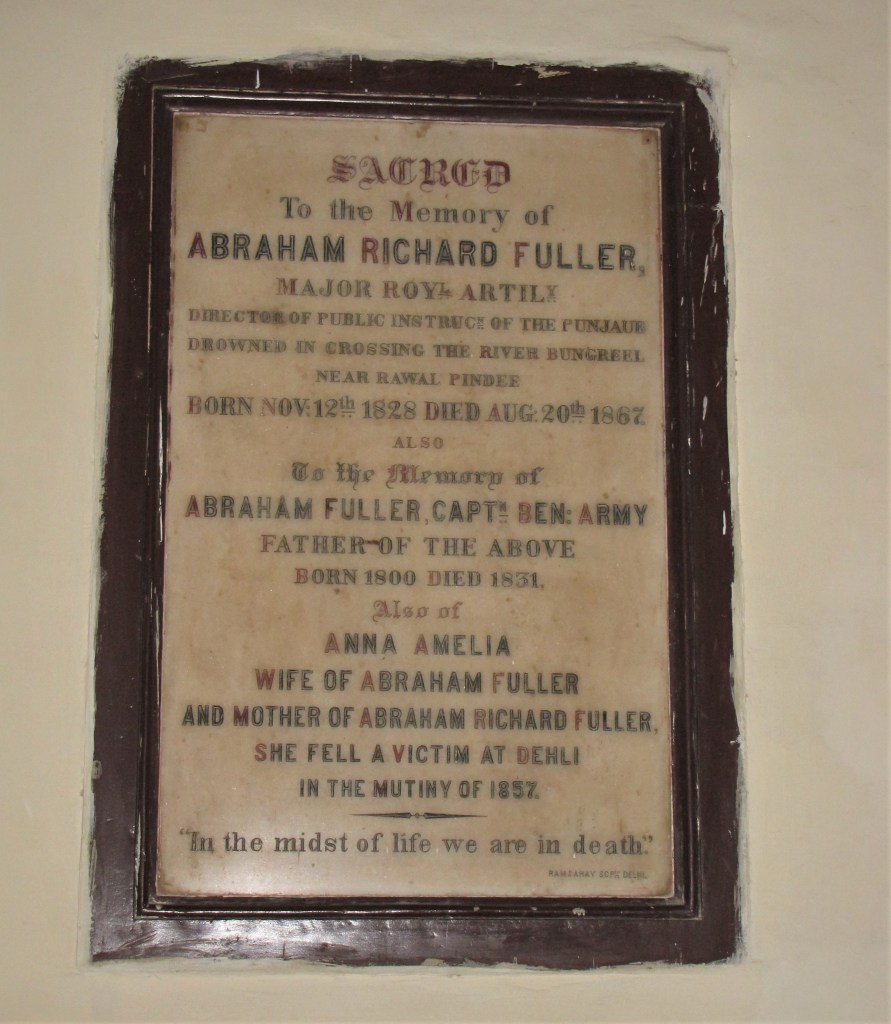
Anna Amelia married Lieutenant Abraham Fuller in 1823 in Calcutta, shortly after her father’s death. She dutifully followed her husband through the various postings of the 33rd BNI and would give him at least one son, also named Abraham, who was born in Cawnpore in 1828. Her husband had had an interesting career. Starting as an ensign with the 1/16th BNI in 1819, he then served with the Narbada Field Force in 1820, spent some time doing duty with the Rangpur Light Infantry in 1823 and saw the Sylhet frontier during the First Burma War in 1824. He remained with the Rangpur LI until 1824, when he transferred to the 33rd BNI. Between 1824 and 1826, the young family was home on furlough, possibly in Ireland, the lieutenant’s native land, having been born in Kilbride, King’s Co., in 1801, the son of one Abraham Fuller. Unfortunately, Anna was widowed in 1831, when Captain Fuller died in Cawnpore, but it seems her son, Abraham, was well provided for. Whether during his formative years Anna remained in India or was living in England, needless to say, Abraham received an English education at J.J. Barton Esq. ‘s School, Hall Place, Bexley, excelling in the classics and mathematics. At the age of 15, he applied for entrance to the EICo’s army and landed a place with the Bengal Artillery and would end his career as a major in the Royal Artillery. His life was cut short when he drowned in Rawalpindi in 1867 while serving Director of the Department of Public Instruction.
So what happened to Mrs Fuller and her sister, Mrs Forster? The ladies, it appears, had both taken on a more matronly appearance in their older years; however, both of them did manage to find their way to the Main Guard and up to the top of the gate, from whence the party would now be forced to jump into the ditch below to effect their escape. Unfortunately, Mrs Foster had to be pushed into the ditch, as she was unable to climb and due to her great weight, it was impossible to lower her down. She also refused to jump. With shots flying around the party assembled on the parapet, out of exasperation, someone pushed the screaming, terrified woman into the ditch. Stunned and with a graze on her forehead from a bullet, Mrs Forster was in no condition to carry on. She lay at the bottom of the ditch, unable to move. Some men in the party attempted to lift her, but found that her “enormous weight rendered such a feat impossible.” The two officers carrying her struggled on until they, with the rest of the party, came to a thorny, brushwood thicket through which they would be forced to make a passage; Mrs Forster had collapsed in a state of unconsciousness, and it was decided to leave her where she lay. Poor Lieutenant Vibart would write, “Truly, it was a most sad predicament; but I think there is little doubt, from the statements of those who last saw her, that the unfortunate woman’s life was practically beyond human aid, and that she never regained consciousness. May God rest her soul!” It is unclear what happened to Mrs Fuller, but it is believed she was killed in the ditch at the Main Guard. Some accounts say she refused to leave her sister’s side, and they met their fate together. A memorial to Mrs Forster was erected at Nicholson Cemetery in Delhi; however, with the passage of time, it has disappeared.
As for Colonel Forster, after the mutiny, a bracing sea voyage had done nothing to save his ailing health, so he returned to Calcutta and settled down in Ballygunge to be tended to by his second wife, an Indian lady. A prolonged attack of fever ended his life on 9 October 1862.
The Delhi Nine – Those Who for Their Country Greatly Died
No memorial of Delhi would be complete without at least something said of the men who blew up the Delhi Magazine – a moment of startling daring-do, as they knew that they would go up with it. It must be remembered that the explosion was of such a magnitude that it could be heard clearly in Meerut, almost 40 miles away. Besides killing the five men outright, it took some hundred Indians with it, indiscriminately killing men of the rampaging mob, sepoys and innocent bystanders. It was reported that bodies were flung far into the city, and the carnage was beyond description. It is more than a miracle that anyone from inside the Magazine lived to tell the tale.

For John Buckley, who survived the blast, it was a bitter day. He was already a widower once – having lost his first wife, Mary Anne Broadway and two of their three children while in Calcutta in 1845, he would remarry in 1846. His was a blighted life – in 1852, he lost the surviving child of his first marriage, and in 1853, two sons by his second marriage also died. In 1857, with three children and his second wife, John Buckley was posted to Delhi as Assistant Commissionaire of Ordnance, employed at the Delhi Magazine.
There are conflicting reports as to what happened to Mrs. Buckley and the children – it appears that on the 11th of May, she and the children joined John in the Magazine, however, they did not survive the blast. Other accounts say she was killed with the children in the town. After his escape, he rejoined the British Army and spent the rest of the Mutiny volunteering himself for ever increasingly dangerous missions, clearly a man who no longer saw any sense in living.
As for his colleagues, some were met with a bizarre turn of events.
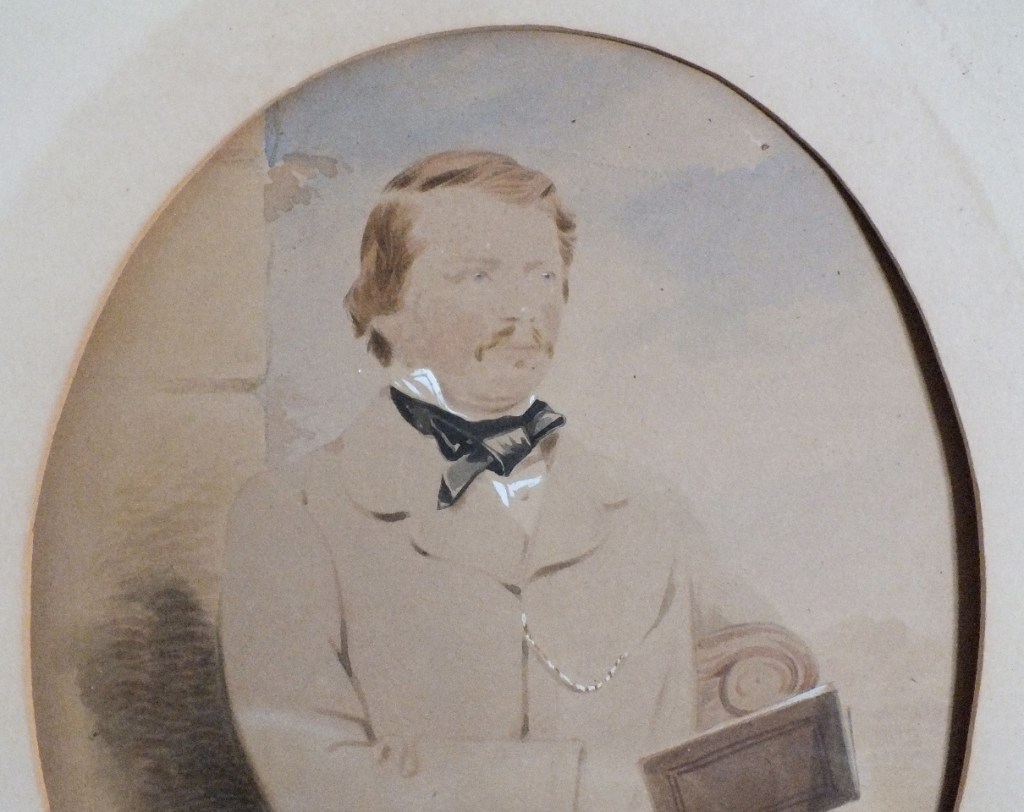
- Lieutenant George Dobson Willoughby, Bengal Artillery, Deputy Commissary at Delhi, escaped to the Cashmere Gate and was later killed on the road to Meerut. His descendants have presented a case as late as 2012 for Willoughby to receive a posthumous V.C., however, it has been denied.
A poem was written for him, which I found in a book entitled “Poetry of British India, Vol.II, 1780-1905.
Willoughby

That was the first heroic deed served
Unto the murderous rebels for a key
To the roused spirit that henceforth would be
In outraged Englishmen; his heart each nerved,
Nor from the high example ever swerved.
But though wast first in honour, and to thee
My muse would weave a wreath, brave Willoughby,
In whom the seed of heroes was preserved:
He died not then, nor lived to know his fame,
But England in such death-beds taketh pride -
Such sons upon her bead-roll doth she claim;
And through the future ages, glorified,
Shall youth with glowing cheek repeat his name,
'Mongst those who for their country greatly died.
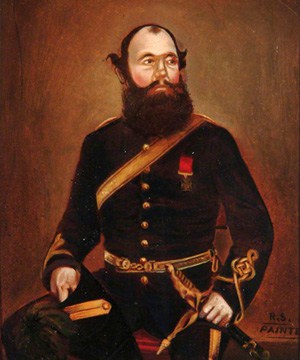
- Lieutenant William Raynor, Ordnance Dept. – escaped to Meerut, received the V.C.
- Lieutenant George Forrest, Ordnance Dept. – escaped to the Kashmir Gate, received the V.C.
- Conductor John Buckley, Deputy Assistant Commissary Ordnance Dept. – escaped to Meerut
- Conductor George William Shaw, Ordnance Dept. – killed.
As no-one could say for sure if he had died, in recognition of his gallantry he was promoted to Deputy Assistant Commissary of Ordnance with effect from 11th of May, a position he never had the chance to acknowledge. - Conductor John Scully, Bengal Commissariat – killed in the explosion. In October 1857, still no one could ascertain if Scully was dead. He was gazetted to the rank of Deputy-Assistant-Commissary of Ordnance with effect from 11th of May. It was Scully who was standing under the tree when he was ordered to light powder train.
- Sub-Conductor William Crow – killed. Before anyone could ascertain if he was dead, he was promoted to the rank of Conductor in the Ordnance Department.
- Sergeant Edwards of the Bengal Artillery – killed. There was no honour given to him.
- Sergeant Peter Stewart of the Bengal Artillery – killed. He had arrived in Delhi in April 1857, having been transferred from his post as Saddler-Sergeant at the Cawnpore Magazine, having transferred to the Ordnance Commissariat Department in 1852. As his death was uncertain to have occurred he too was promoted and would have obtained the rank of Sub-Conductor for his gallantry had he lived.
It is not in the scope of this writing to go into the details of the lives of the Nine – for now, you may avail yourself of the excellent and in-depth biographies presented at:
http://www.roll-of-honour.com/Databases/IndianRebellion1857/index.html
A Poem for The Delhi Nine
THE DELHI NINE

They stood upon the ramparts, and knew that all was lost,
When they saw the dusty cloud above the approaching host,
Like a cornfield in the sunshine waved the flashing line of steel,
And the arid plain rang loudly with the chargers' steel-clad heel,
With murmur like the distant surge came on the swarthy foe;
Above the blood-stained banner waved, o'er craven hearts below,
Then turned they from the ramparts, to protect the magazine;
Stern were the looks, and firm the hearts of those brave men I ween,
Their pulses bounded boldly, and so boldly flashed each eye,
As those brave men of Delhi took the post where they should die,
Then out spoke gallant WILLOUGHBY unto the gallant eight,
"Let others fly, be ours’ to die, if need be, by this gate!
"Our dear ones may deplore us, but shall proudly mourn our fall,
"Our country shall remember us, and God be with us all"

No time lost they, but inwardly they prayed for aid Divine,
And with the gate shut out the world, that gallant band of nine.
Like bounding wave the traitors raved, and boomed against the wall;
Firm as a rock before the shock the nine defied them all.
But spake their guns, all thundered-tongued, and backwards reeled the foe,
As through them swept that storm of grape, and hundreds were laid low,
Loud yelled the savage traitor mob, alike with fear and hate,
As man by man the cowards ran, or fell before that gate,
Calmly the savage cry to yield our British brethren heard;
Calmly the gallant nine fired on, but answer'd not a word,
That band of heroes calmly stood, defending well that gate,
The swarthy foe around them closed, and well they met their fate.

One silent prayer to Heaven they breathed, for earth one tender sigh,
They grasp’d each other by the hand, and bravely turned to die,
Long as old England’s name is known, or spoken England’s tongue,
The gallant stand of that brave band shall by her men be sung.
Their cheek shall blanch, their eye shall flash, as o’er the sparkling wine.
Thy speak of that brave action of the gallant DELHI NINE!

WILLOUGHBY, RAYNOR, FORREST, SHAW, BUCKLEY, SCULLY, CROW, EDWARDS, and STEWART.

By The Hon W. Wallace

These are by far, not all the memorials. The scale of the massacre in Delhi shall be revealed in the next concluding chapter.
Sources:
Booth, Martin. Carpet Sahib: a Life of Jim Corbett Oxford: Oxford University Press, 1991
Chick, N.A – Annals of the Indian Rebellion (Calcutta: Sanders’ Cones & Co.,1859)
David, Saul. The Indian Mutiny Penguin Books, 2003
Metcalfe, Charles Theophilus. Two Native Narratives of Delhi. Westminster, Archibald Constable & Co., 1898
Peile, Mrs. History of the Delhi Massacre. Liverpool, C. Tingling, 1858
Rawlinson, H.G. Personal Reminiscences in India and Europe of Augusta Becher. London: Constable & Co., 1930
Stanton, V.H. The Story of the Delhi Mission. Westminster: Society for the Propagation of the Gospel in Foreign Parts, 1917
Tytler, Harriet. An English Woman in India (Oxford University Press, reprint, 1986
Vibart, Col. Edward. The Sepoy Mutiny as Seen by a Subaltern from Delhi to Lucknow (London: Smith, Elder & Co., 1898
Wagentreiber, Florence. Reminiscences of the Sepoy Rebellion of 1857 (Lahore: Civil & Military Press, 1911
Hoyer, F. 2020. Relations of Absence. Germans in the East Indies and Their Families c. 1750–1820
Studia Historica Upsaliensia 270. 370 pp. Uppsala: Acta Universitatis Upsaliensis.
ISBN 978-91-513-1069-5 – https://www.diva-portal.org/smash/get/diva2:1502840/FULLTEXT02.pdf
FIBIS
Find a Grave
 Mutiny Reflections