On the Grand Trunk Road
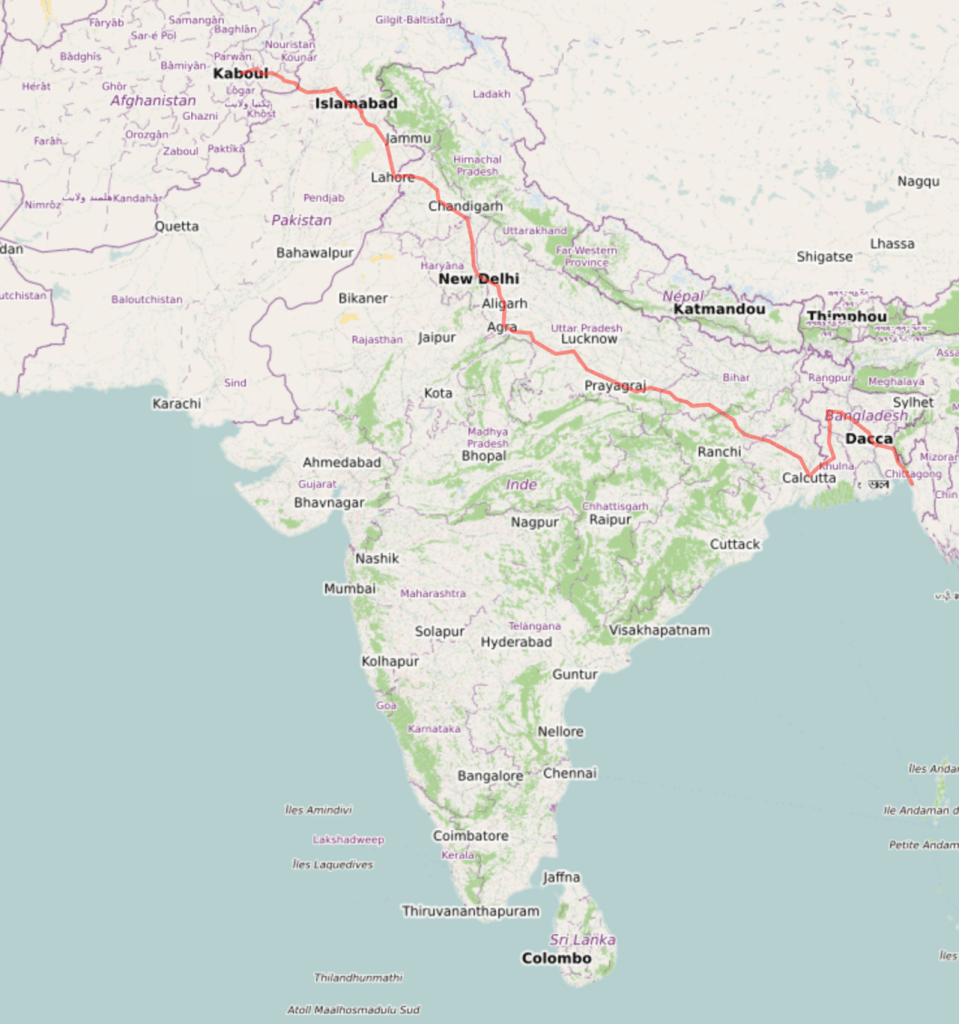
Built along a trade route that for at least the last 2,500 years has linked Central Asia to South Asia, the Grand Trunk Road is one of the oldest and longest road systems in Asia. It runs west from Teknaf (Bangladesh) on the Myanmar border, passing through Chittagong, Calcutta, Cawnpore, Allahabad, Agra, Ghaziabad, Delhi, Amritsar, Chandigarh, Lahore, Rawalpindi and Peshawar to reach the final destination of Kabul, a distance of 2’271 miles. Between 1833 and 1860, the EICo carried out a massive reconstruction project to convert this ancient route into raised and metalled road, which, when complete, would connect Peshawar and Calcutta. It was an engineering project of vast proportions, costing roughly £1’000 per mile. The roadway was built on an elevated earthwork embankment up to 40 feet wide, to protect it from seasonal floods and featuring a central metalled surface made of broken stone or kankar. With deep side-drains and shade trees along the slopes, it was not only stable, but travellers could receive some succour from the heat.
The building of the Grand Trunk Road was not a vanity project, nor was it altruistic. Although the benefits were obvious in easing the rigours of travelling, it served as a commercial artery, allowing merchants to move goods quickly from interior regions to river ports and trading hubs. The dak and official communication could now operate more efficiently, helping the EICo to maintain centralised control over newly annexed territories, and of course, it enabled the rapid transit of troops, artillery and supplies.
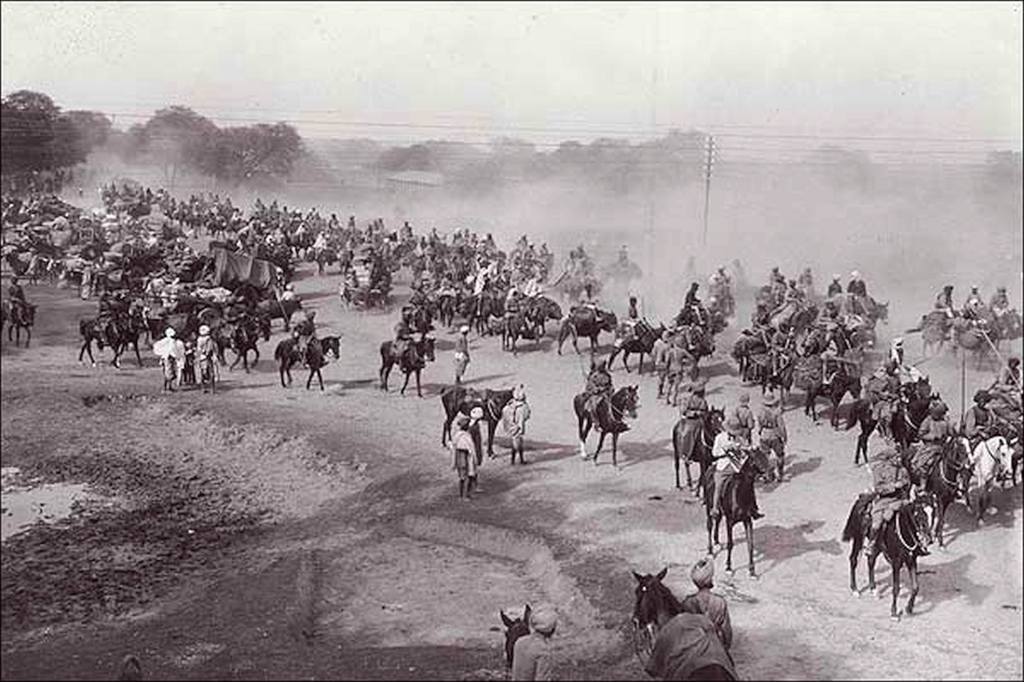
During the mutiny, the Grand Trunk Road, although as yet unfinished, played a vital role in not just easing the transport of troops but to carry supplies from the Punjab, first and foremost, to Delhi. However, it was not only being crossed by the British as they sent troops further down the roads towards Cawnpore, but it was also a route regularly used by the rebels. A part of the road traversed Bihar; it was of immense interest to their leaders.
Throughout the remainder of 1858, Amar Singh, who was operating a parallel government in the Shahabad District, routinely sent out mobile rebel columns, numbering upwards of 7000 men, to harass British supply lines, ambush patrols, and force the British to keep garrisons stationed permanently along the Grand Trunk Road. For their part, the British deployed immense resources to clear and fortify the road and, under the directives from British commanders, punitive columns marched along the corridor, employing scorched-earth tactics such as burning adjacent villages and executing suspected rebels—to deter attacks on British logistics. The European mounted police were actively moving through the Bihar districts to suppress lawlessness and were augmented by an array of volunteers, planters, civilians and, in one case, a sailor. The requisite to join up was the ability to ride, shoot and, as it would seem, a certain disregard for personal safety, as we shall see.
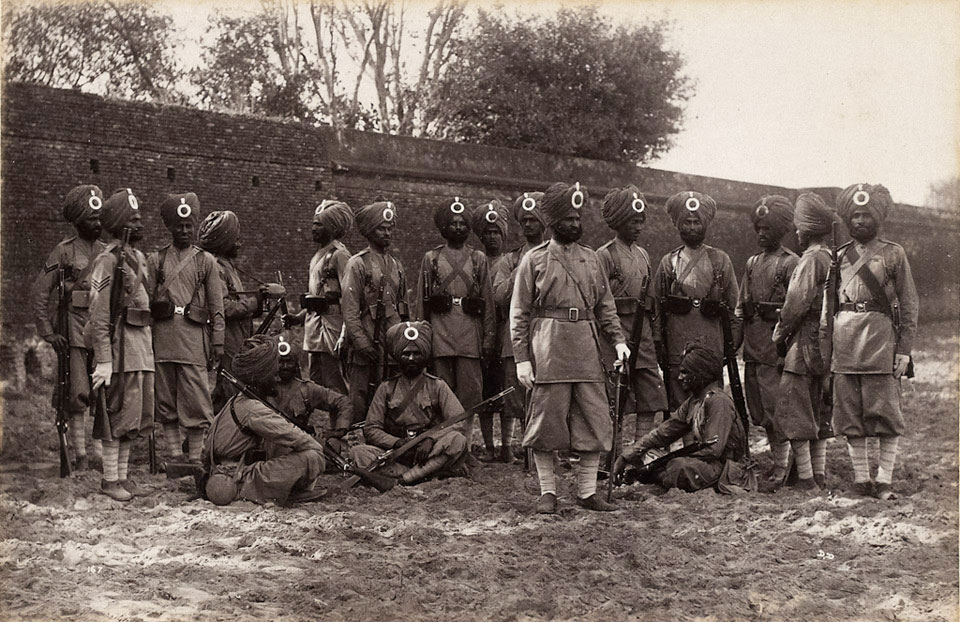
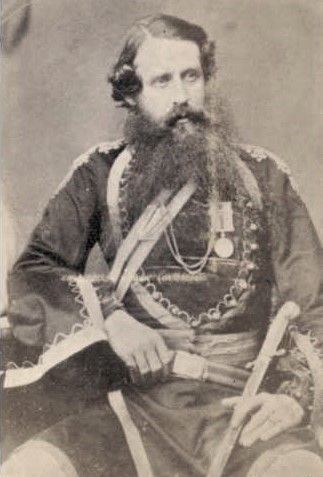
The backbone of operations continued to be the Bengal Military Police Battalion, or as they were colloquially known, Rattray’s Sikhs. The unit had been raised in 1856 by Captain Thomas Rattray in the Punjab. Amongst the recruits were ex-soldiers of the recently disbanded Sikh Khalsa, but it was not exclusively Sikh. The force consisted of both cavalry and infantry and was intended to be an armed mobile police force (as the name implies), accountable to the civil authority in the Bengal Presidency. Before the mutiny, their main purpose was to maintain law and order in the Raj Mehal Hills of the Santal Parganas, in the Lower East Provinces of Bihar. Then came 1857.
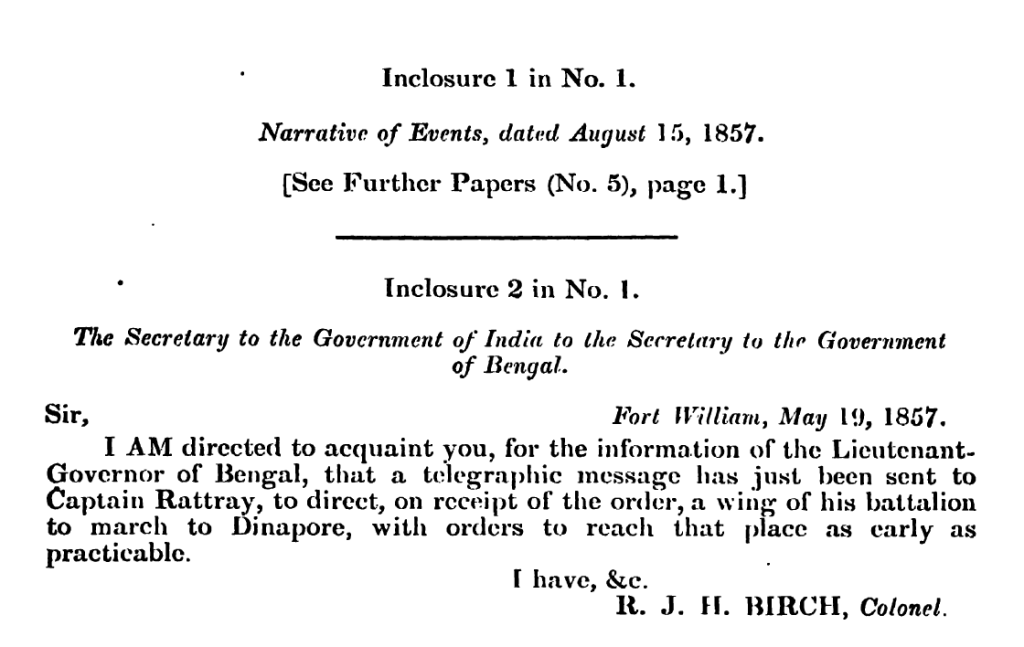
The Bengal Military Police Battalion was suddenly in great demand in Bihar – as we have seen, they were mobilised by William Tayler at Patna, and it was through his foresight that 50 of the men were present at Arrah for the siege. Over a period of 14 months, the battalion would record 30 engagements against the rebels and several minor skirmishes while on escort duty with civil officers. Unlike other forces, Captain Rattray placed his confidence wholly in his native officers, and one of them was Havildar Major Hedayat Ali. On forming the battalion, Rattray had specifically asked for Ali to be transferred to the new corps, for at the time, Ali was known as one of the best drill-sergeants in the country. Along with fifty drill instructors on loan from the Lahore Division, Rattray and Hedayat Ali strove to raise the corps into one of the finest and best trained in India.
Hedayat Ali was raised to subedar and appointed to command C- Company, Infantry, and was not only a close confidant but a personal friend of Captain Rattray. Throughout the mutiny, Subedar Hedayat Ali acted as Rattray’s right-hand man and was often given opportunities of leadership and trust rarely given to native officers. More often than not, it was Ali who acted not only as an intelligence gatherer but as a political officer and a negotiator between the military authorities and the rebel leadership. Even William Tayler had relied on Ali, for he was one of the men who tried to persuade General Lloyd, on more than one occasion, to disarm the Dinapore troops in June 1857. It was also Hedayat Ali, accompanied by six troopers, who assisted Mr Wake in keeping calm in Arrah before the siege began, covering the 35 miles from Patna to Arrah in six hours and on his orders Jemadar Hukum Singh and the 50 men of the battalion (of the 100 on escort duty) then remained behind as the Arrah garrison.
When the Mohamedan troops in Patna began their rumblings of mutiny, Subedar Hedayat Ali not only uncovered the plot but together with Captain Rattray and Mr Tayler, “revolvers in hand”, went to the house where the ringleaders slept and put them all under arrest. A few days later, Ali rode with speed into Patna to inform them that Dinapore had mutinied.
 Mutiny Reflections