The Abor Expedition cannot be viewed in the same mindset as the sepoy mutiny of 1857. The circumstances and the situation fall into the sights of one of those profit-driven enterprises that required, for the benefit of the empire, the subjugation of an entire race of people. It was a policy that was practised with some abandon over vast areas of this far-reaching northeastern frontier and would lead to the deaths of many thousands of tribals in warfare that would last for nearly a century. However, as this particular expedition follows the footsteps of Lieutenant Lewis, the Dacca Naval Brigade and our VC recipient, Arthur Mayo, it is, with some hesitation, included.
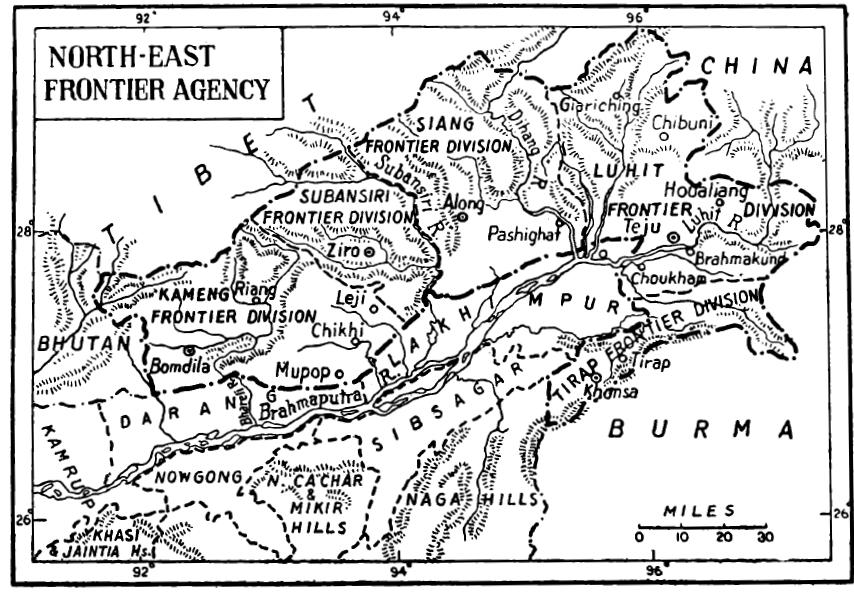
The land of the Abors fell “between the eastern watershed of the Dibong River and the western drainage of the Subansiri River and to extend from the course of the Brahmaputra River in the south to the waterparting in the north which divides Assam from the plateaux of Tibet.” The territory itself was only a few hundred square miles, but as it consists of some of the most variable terrain, quite literally between the mountains and the plains, it was hardly an area that lent itself to easy warfare. From the bitter cold in the north where the mountains reached an elevation of over 10’000 feet, to sweltering, humid jungles and deep, nearly barren valleys. Roads were unheard of; the most on offer were animal tracks and the chasms left by the rivers.
“When the traveller was not wading waist-deep through these, he was crawling along narrow ledges cut out of the face of high precipices. Now and again, he came to places where there was no ledge, while the path, such as it was, was continued by a rude gallery contrived out of the face of the cliff, or he found himself compelled to climb perpendicular cliffs with the aid of cane ropes.”
Yet, to the Abor peoples, this was their territory. They were divided into several clans, the principal of which were the Minyongs and the Padams, with the Komkar, Karko, Panggi, Pasi, Doba or Galong, Simong, and Aieng following on. The Abors who lived on the east bank of the Dihang up to the Dibang were called Bor Abors, or “Great Abors and were said to be the “origin of the whole tribe”, while those who occupied the right bank of the Dihang were called the Pasi-Meyong. Their home was originally in the mountains between Assam and Tibet, but over time, seeking land and, above all, more room for their growing population, they migrated gradually into the Assam valley through the Dihang gorge and then spread east and westwards into the lower hills, keeping to the outskirts of the plains. They were agriculturalists who kept cattle and other livestock. Each clan held their own tract of country, was fiercely independent and given, when not warring with other tribes, to fighting between each other.
“For a long time past the Abors have been cocks of the Assam border. Very independent and quarrelsome, they had come to regard themselves as the rulers of this far-distant corner of India from the fact that so many of the Miri and the Mishmi tribes had submitted to their exactions. It is to be feared, too, that the success of the expedition has been a sad blow to their self-esteem, for it has brought peace where before peace was an unknown quantity.” (In Abor Jungles)
(This is but a very short and incomplete overview of the tribes of this region – for a longer and much more detailed explanation, it is advised to refer to Chakravorty’s book in the sources below.)
 Mutiny Reflections