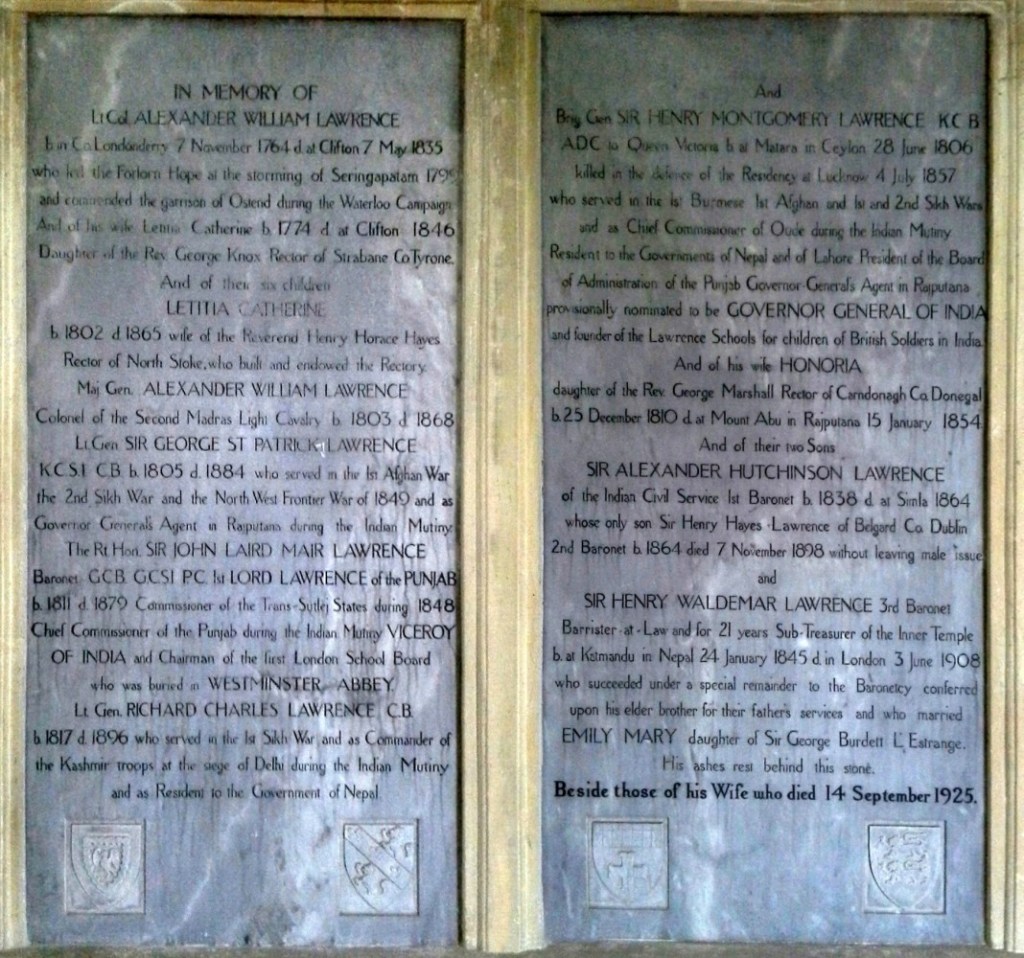
Having explored the lives of three Lawrence brothers, we shall now turn our attention to the final and most famous of the five – Henry and John.
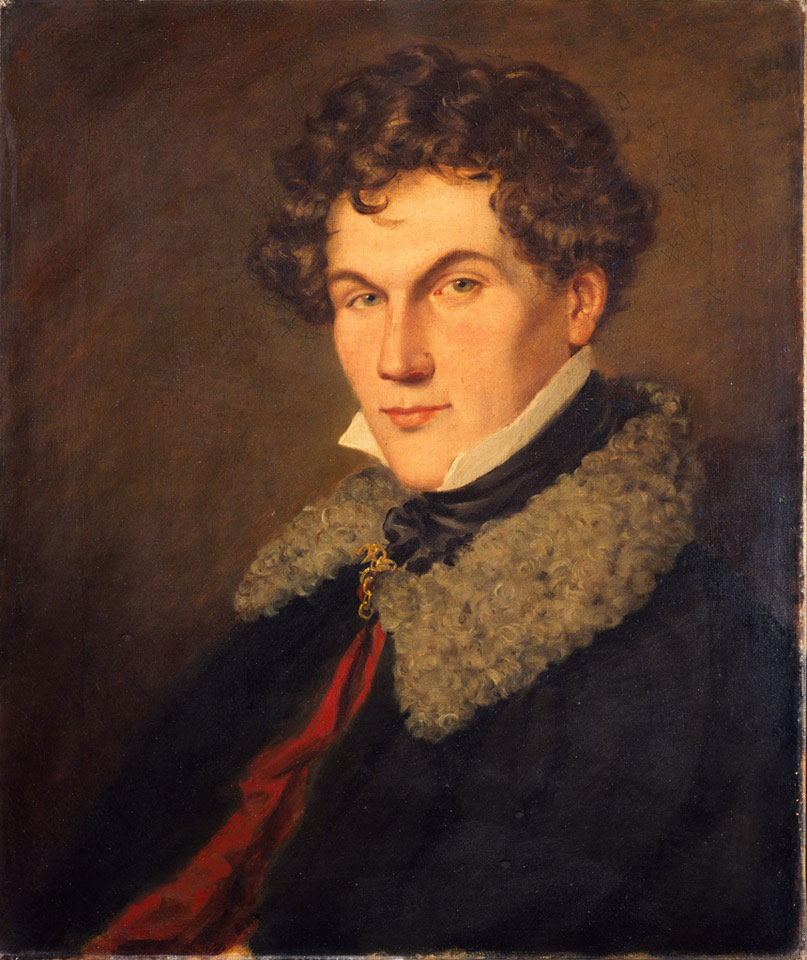
Henry was born in Matura in Ceylon in 1806, two years before his father packed up the family and set sail for home. Following his time at Foyle College, in 1819, Henry was sent to Mr. Gough’s School in College Green, Bristol. Shortly after, John joined him.
Henry then “ a bony, powerful boy of thirteen,” and John a little urchin of eight. The following reminiscences of those days are best told in John’s own words: — I remember when we were both at school at Bristol there was a poor Irish usher named Flaherty, and he had done something to offend the master of the school, who called up all the boys and got on a table and made us a great speech, in which he denounced poor Flaherty ‘as a viper he had been harbouring in his bosom’; and he also denounced some one of the boys who had taken Flaherty’s part as ‘an assassin who had deeply wounded him!’ I was a little chap then, eight years old, and I did not understand what it was all about; but as I trotted home with Henry, who was then about fourteen, I looked up and asked who the ‘assassin’ was who had ‘wounded’ the master. Henry very quietly replied, ‘I am the assassin !’ I remember, too, in connection with this very same row, seeing Henry get up very early one morning (we slept in the same room), and I asked where he was going. He said, ‘To Brandon Hill, to fight Thomas.’ (Thomas was the bully of the school.) I asked if I might go with him, and he said, ‘Yes, if you like.’ I said, ‘Who is to be your second?’ Henry said, ‘You, if you like.’ So off we went to Brandon Hill to meet Thomas, but Thomas never came to the rendezvous, and we returned with flying colours, and Thomas had to eat humble pie in the school.”
In 1820, Henry followed George to Addiscombe, from whence George wrote happily to their mother that Henry had passed his examinations to everyone’s satisfaction and had settled in most agreeably. Far from the stern, gaunt man he would become, he was known for his good sense of humour, his quick laughter and to the astonishment of his friends, his determination to always stand up for weaker boys. Though thin, he was wiry and strong; as some senior cadets soon found out to their detriment, Henry Lawrence could fight with all the ferocity of a tiger.
When it came to actual learning, Henry Lawrence soon realised the defects of his education, and yet, instead of being disheartened, he made up for it by laborious study and consistent work, which ultimately paid off.
“He was always asking the ‘reasons’ of things; and ‘tracing effects to their cause, walking slowly as it were, and marking the road.’ It was the very necessity Henry Lawrence found (says one of these lifelong friends) of understanding the reason for every process he was called upon to learn that hindered his progress in the academy. While other cadets learned mechanically or by rote (excepting in those rare instances of intuitive perception), he was thrown at each step into a reverie, and could not advance until he thoroughly understood the ground he occupied …. I have often seen him lay down the singlestick to carry out one of these investigations suggested by some unusual sentiment of his antagonist, and then return to the game with additional zest; . . . . perplexing enough to that large class of persons who act from instinct or caprice, or imitation, and have never in their lives been burthened with a reason! His character was original in the extreme. Nothing in it was borrowed. It seemed as if he felt it dishonest to make others’ opinions or acts his own by adoption. But there was no ostentation of independence in this.”
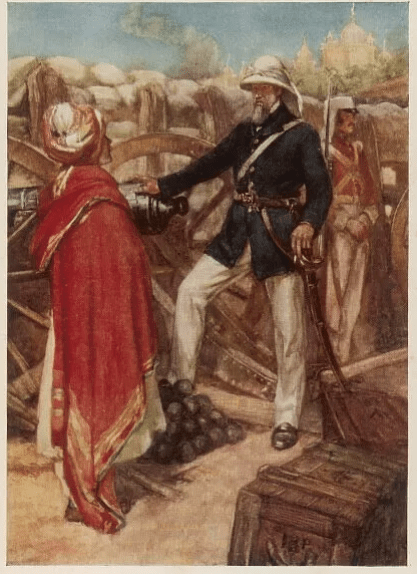
While both Alexander and George had secured appointments to the cavalry, Henry’s ambitions were clear – when he left Addiscombe, it would be as an ensign in the artillery. Unlike his brothers, Henry was not given to games or sports, nor did he covet an interest in dress or dancing, finding the former a waste of time and the latter frivolous. Instead, he spent countless hours conducting military surveys of the surrounding countryside and huddled over his books, making up for the failings of his early education. Although he finally left Addiscombe at the top of his class, neither his fellow cadets nor his teachers found him an exceptional scholar. Yet, his character, even at such a young age, left an impression on those around him. Meanness and deceit rankled his very soul, rousing up an anger that was difficult to quell; however, he was also able to admit a wrong and own up to his own flaws. All those who knew the young Henry Lawrence were struck in later life that the very qualities he had shown as a boy for unflinching honesty and simple goodness were not marred by the life he would follow in India; indeed, his experiences neither disillusioned him nor made him a cynic. Everywhere Henry Lawrence would tread in later life, it would be on a path of clear-sightedness. His beloved sister, Letitia, grieved to distraction on Henry’s departure for Calcutta in 1822, perhaps found some solace in the words of a family friend, Mr. Huddleston, who had secured the boys’ appointments to the EICo: “Your brother will distinguish himself,” he said, ” He will be Sir Henry Lawrence before he dies!”
Henry spent his first years in India in Calcutta, cultivating a reputation as a studious and, above all, pious young man. Although he did cultivate the friendship of a group of aspiring men under the tutelage of Mr. George Craufurd – assistant chaplain of the Old Church of Calcutta – who ran Bible studies at his home at Fairy Hall and provided lodgings to his students, it did lead to one of his recently converted friends to mention, “Lawrence does not seem to comprehend the doctrine of original sin, ” this was hardly the case. He had been brought up in a home where religion was not governed by strict observations of creed but as a “general way of looking at life and the world.” Although he would expand his views in later years, Henry Lawrence’s religion was serious yet unemotional, practical and muscular, devoid of fancy and ravings. Craufurd might well have been quite surprised when Lawrence stated, “What I want to be assured of, is that this Book is God’s; because when I know that, I have nothing left but to obey it.”
After two years of assiduously pursuing his duties in the Bengal Artillery, diligently studying languages, reading voraciously and developing a love for the game of chess, Henry Lawrence was taken from the dull but comfortable surroundings of Calcutta and sent to Burma and the First Burma War. His first campaign was under General Morrison, who was advancing along the coast south of Arakan with the ultimate goal of securing a passage through the hills and assisting General Campbell on the Irrawaddy. The campaign was a muddy and, above all, disorganised affair fought to prevent the arrogant court of Ava from expanding their claws into what was EICo territory. The British losses for the little they gained in the first year would be staggering. Within five months, 259 Europeans out of 1500 and 900 out of 1000 Indians died of fever and disease, and before it was over in 1826, the once 10’000 strong force was reduced to a mere 800 effectives. Although the Burmese aspirations would be checked for 26 years by the end of it all in 1826, it left Lieutenant Henry Lawrence with a dim view of British campaigning, and so desperately sick, his once robust constitution never completely recovered.
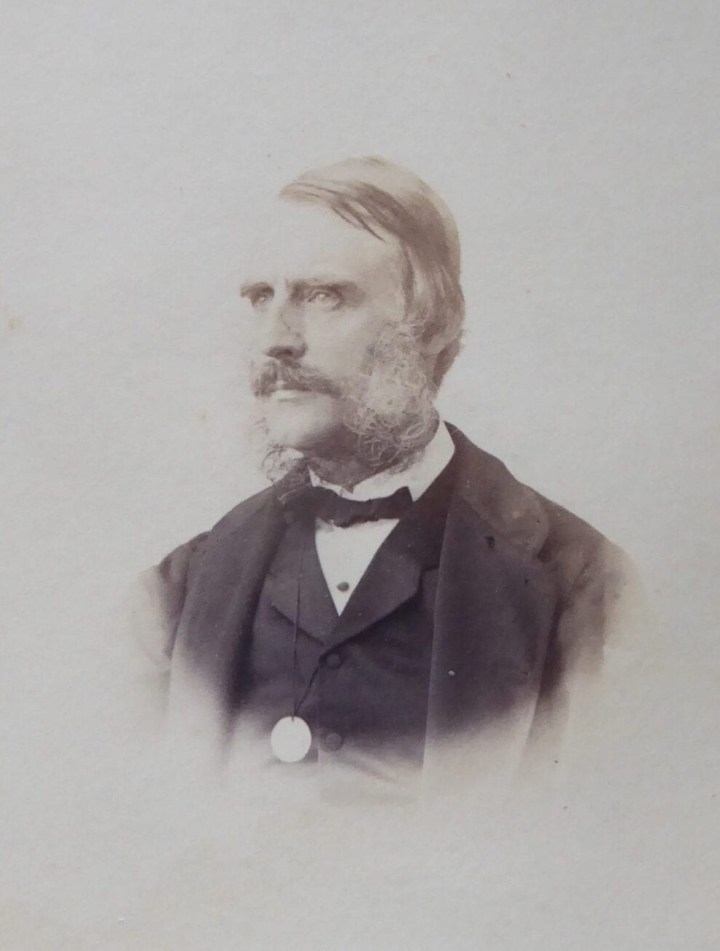
On March 11, 1811, the eighth child of Major Alexander Lawrence was born in Richmond. John doubtlessly had heard the stories of war, his father was fond of telling, and from a very young age, he wanted nothing more than to join the army. Although afflicted with a weakness of the eyes, he was an active and energetic boy and remembered by a contemporary at Wraxall Hall as “tall and overgrown. He was rough but kindly, hot-tempered but good-natured withal. “ His heart’s ambition was to become a soldier, and yet, a different life would be his to bear.
Henry returned from India on sick leave in 1826, having had his first taste of fighting in the First Burma War, and the experience had left him thoroughly disgusted. He would join forces with his father to dissuade John from pursuing a military career. The same Mr Huddleston who had so generously used his patronage to secure cadetships for Alexander, George, and Henry now offered John an appointment to the Bengal Civil Service. John, however, who had so staunchly declared that he was a soldier’s son and soldier he would be, was suddenly confronted with family opposition to his aspirations. It was finally his sister Letitia’s counsel that prevailed – John was to think not of himself or his ambitions, but to consider the advantages of civil life and, above all, the importance of becoming at a later date, the provider for his mother, who would doubtlessly be widowed in not too distant a future. The uncertainties of military life would have added yet another burden of worry to an already taxed family, and a lucrative appointment in the civil service, though far from war-like, would pave the way for him a solid future. Although John Lawrence would remain, for the rest of his life, a civilian who should have worn a red coat, now, aged just 16, he was bundled off to Haileybury, a reluctant pupil.
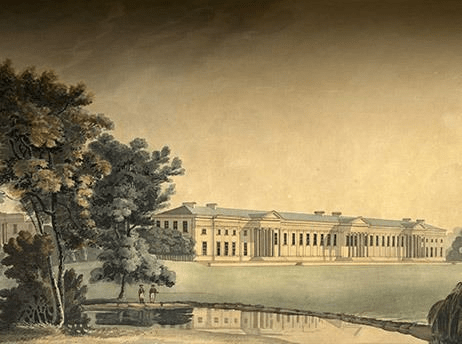
Unlike Henry at Addiscombe, John enjoyed games and beer, but like his brother, he was not often seen in general society, preferring his own company in long rambles across the countryside; he was studious and showed an aptitude for languages and had, like the other Lawrence boys, a love of reading. When he left Haileybury in 1829, he had hardly made much of an impression on either his masters or his fellow students, except that the “basis of his great character was founded on silence.” While Henry and to a lesser degree, George, would be marked by a certain refinement of character, John Lawrence would remain somewhat rugged and uncouth in comparison. However, he would prove in India just what a forceful nature could accomplish.
In 1829, John finally set sail for India, accompanied by his brother Henry, whose leave had ended, and he was returning to his regiment. The brothers had a five-month journey ahead of them, the duration of which John would spend miserably with seasickness and wearisome headaches. In Calcutta, the brothers parted, and John was thrown headlong into civilian life as a writer. He found, like Henry, there was very little to enjoy in Calcutta, and he hardly mixed in society, chaining himself to learning and giving way to homesickness. Fortunately, even this came to an end and at the end of his tenure in Calcutta, upon passing his examination on the vernacular, John requested and received an appointment in Delhi. Henry, at the time, was serving in Karnal, close enough to the city to allow the brothers to visit. Delhi would be John’s introduction to India proper and the work that he was destined for.
“Here, early in 1831, he began his work as Assistant to the Resident, and served for eight years—four years’ apprenticeship as Assistant, two years as Magistrate and Collector of the District of Panipat, and two years in charge of the District of Gurgaon. During these years, he received a thorough training in all departments of the civil administration and acquired that complete mastery of details without which he never considered a Civil Officer to be fit for his duties. With him, there was no royal road to become an efficient Officer—no road at all other than hard work and regular training. An apprenticeship had to be served in these things. His own appetite for work was insatiable. At Panipat, he worked for two years, morning, noon, and night; and to this he attributed his fortune. ‘ During my charge of the Panipat District,’ he tells us, ‘ I completed my training as a Civil Officer. It was a hard one, it is true, but one which I had no cause ever to regret. It has facilitated all my subsequent labours, no matter how varied, how onerous. I had become well acquainted with the duties of an administrator both in a large city and in an important agricultural District. I had come in contact with all classes of people, high and low. I had made acquaintance with most of the criminal classes and understood their habits of life. I had seen all the different agricultural races of that part of India. I had learned to understand the peculiarities of the tenure of land, the circumstances of Indian agriculture, canal and well irrigation, as well as the habits, social customs, and leading characteristics of the people. . . . The experience and the credit we gained stood us in good stead in after years.’
After eight years at an appointment of his choice, John Lawrence was propelled not to greater heights but to the lowly backwaters of Etawah. The work was too tame for an energetic man like Lawrence, and he found he neither liked the place nor had any enjoyment in his work. By the time the year was over, Etawah nearly became his grave: ill with a malicious fever, John Lawrence was compelled to return to England, where he arrived in June 1840. As for his brothers, John had only heard of them from afar for some years now, and while he sweated through his work in the Delhi Territory, Henry was already in the Northwestern Provinces.
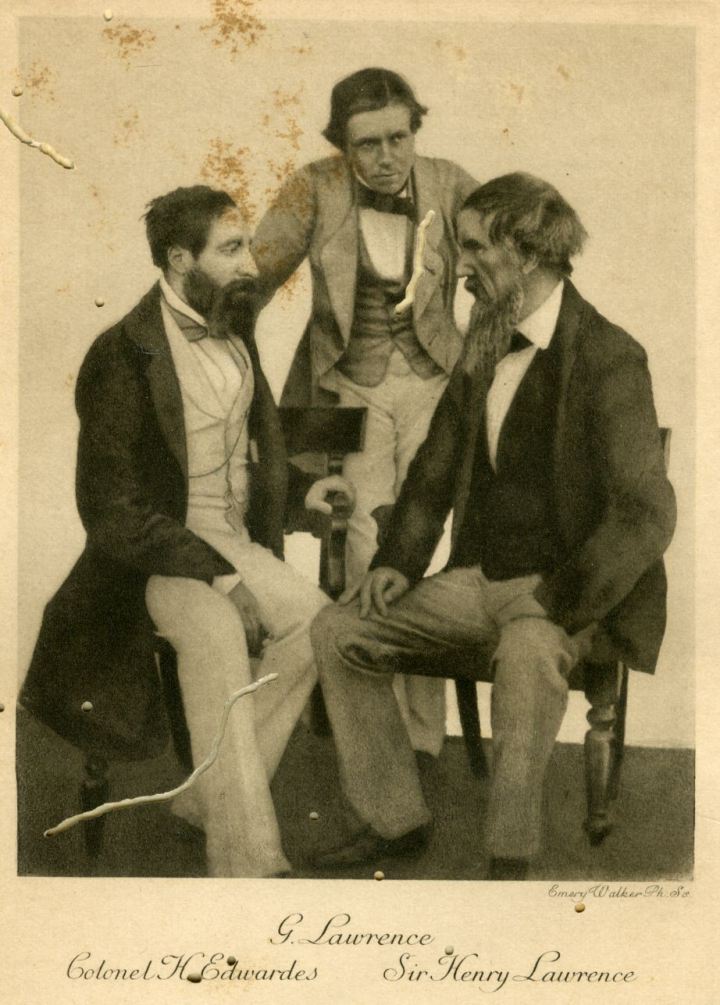
Much of what came Henry’s way was due to George.
When he returned to India in 1830, Henry was posted to a company of Foot Artillery in Karnal, where George happened to be serving as adjutant of the 2nd Cavalry Regiment. In 1831, on George’s recommendation, the Commander-in-Chief approved Henry’s transfer to the Horse Artillery. A year later, George employed his charms on Lord Bentinck and thus secured a position for Henry in the Revenue Survey. The work inspired Henry to a growing interest in civil employment, and by 1837, now married to Honoria Marshall and with a young son in tow, he earnestly set his sights on a change of career. His ambition, as written to his sister, was quite clear,
“I will willingly give up my claim of firing large guns or blowing off people’s heads…I would now much prefer preventing them from breaking each other’s heads and be instrumental in leading them into paths of civilisation.” However, he would have to wait a little longer. In 1838, Henry was informed his regiment was called up on active service, for there was soon to be work for them in Afghanistan. A man of duty, Henry applied immediately to be returned to his regiment and, at the same time, drew up the first plans for a Corps of Guides.
“If the passes of the Hindu Kush are to be fortified,” with the forward thinking that would characterise Henry Lawrence, “they will need to be surveyed, and such work will require men who had been accustomed to think lightly of hardship and make the most of materials.” Unfortunately, the government had a reply for Lawrence – they were in perfect grasp of the situation and did not need any advice from him. He was still a part of the Revenue Survey, and they would greatly prefer if he stayed there. Disappointed, Henry decided to rejoin his regiment without orders and pursue the call of war; instead, he found to his consternation that his regiment would remain in Ferozepore, while George marched off with the Army of the Indus. Henry was left behind, kicking his heels. However, the disappointment came with a silver lining – George Clerk, Agent to the Governor-General for the Punjab and the North-Western Frontier, required another assistant, and the post fell to Henry. Here he would remain until 1841, when he received a posting as Political Agent in Peshawar. During his next tenure in Jalalabad, Lawrence was instrumental in securing the release of the English captives still held by the Afghans, among them was his brother George. Hoping this would have secured him a posting in the Punjab, Henry suddenly found himself shunted off to Dehra Dun, then to Ambala – but by the close of 1843, he was on his way to Nepal. With much political wrangling, he managed to secure passage for his wife and child to join him on this lonely post. Honoria Lawrence would become the first Englishwoman to tread the courts of Nepal at the side of her husband, the appointed Resident. While his wife rejoiced in the respite from their nomadic life and even gave birth to the first English infant born in Nepal, Henry was quietly chafing at the bit. In 1845, Honoria and the two boys sailed for England, and while Henry continued to occupy himself with setting up the five Lawrence schools for the benefit of soldiers’ children, he was watching and waiting for his chance to leave Nepal behind.
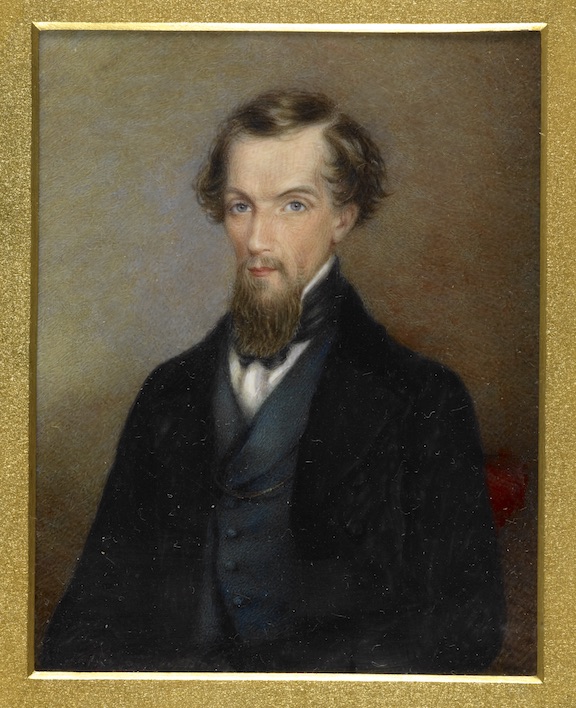
At the outbreak of the First Sikh War, Lord Hardinge ordered Lawrence to Lahore, and Henry was now back to the tumultuous political life he had begun to enjoy. It was not without a return to war, though – in 1846, Henry was present at the Battle of Sobraon; although his position was more political than military, he worked as an artillery officer. Following the conclusion of the war, Henry, now a lieutenant-colonel, headed a column of Sikh troops to establish Gulab Singh as maharaja in Kashmir. When he returned to the Punjab, his position was now vastly changed – he was confirmed as Resident at Lahore with all the trappings and pitfalls just such a position held. His conduct was governed by three clauses, set in agreement with the Sikhs:
“A British officer, with an efficient establishment of assistants, shall be appointed by the Governor-General to remain at Lahore, which officer shall have full authority to direct and control all matters in every department of the state.
Every attention shall be paid, in conducting the administration, to the feelings of the people, to preserve the national institutions and customs, and to maintain the just rights of all classes.
Changes in the mode and details of administration shall not be made, except when found necessary for effecting the objects set forth in the foregoing clauses, and for securing the just dues of the Lahore Government. These details shall be conducted by native officers as at present, who shall be appointed and superintended by a Council of Regency, composed of leading Chiefs and Sardars working under the control and guidance of the British Resident.“
Henry’s position as the first Resident was fraught with difficulties. His position was a diplomatic one, and Henry was able to place “his reliance on the humanity of personal rule fettered as little as possible by the empty logic of a settled administration,” to work and impart to his hand-selected assistance the importance of the “rightness of immediate decision.” In other words, they were to serve out justice where justice was required; they were to work with the people in the settlement of disputes and make their presence known and felt without actually throwing the whole system of government at them. Although Henry did not altogether neglect the necessity of tax returns and land settlement, he concentrated on keeping peace in a territory that he knew full well was more than capable of rising up on a whim against British rule.
Unfortunately, his tenure was short – in 1848, Henry was compelled to take leave; he sincerely hoped to return to the Punjab; in the interim, or so he believed, his place would be taken, at his request, by his brother John.
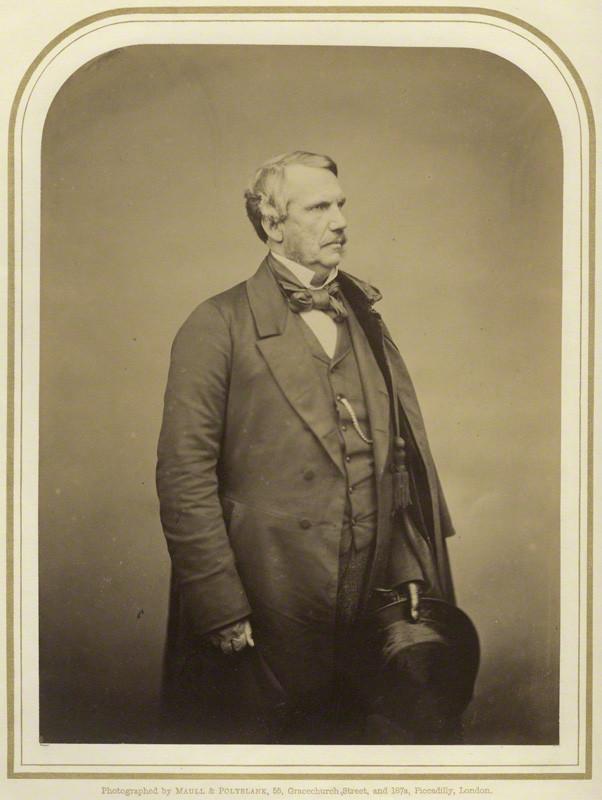
John returned to India in 1842 with his young wife. The doctor in England had despaired of John’s decision to return to India, for his health was far from recovered, and the earnest medico prophesied most gloomily that John would only tread the shores long enough to find his grave. Instead, he survived not only the tiresome journey but found himself posted to Delhi, where he was posted firstly as Civil and Sessions Judge and then as Magistrate and Collector until early 1846, when Lord Hardinge summoned John to be Commissioner of the “country acquired from the Sikhs” in the Jalandhar Doab. Very much like Henry at Lahore, John was completely enthralled with his work. He had great regard for the people of the Punjab and believed sincerely that they were better ruled by the pen than the sword – his first reports to the government were positive, and the Trans-Sutlej region of which John was now administrator, was found to be promising, prosperous and profitable. Unfortunately, there was soon to be a blight on India in the form of Lord Dalhousie, who succeeded Lord Hardinge in 1848. The murders of two political assistants – Vans Agnew and Anderson, both men personally chosen by Henry Lawrence – at Multan should have been met with swift retribution. Instead, it took several months to organise an army that would not be ready to march until the autumn, by which time the entire Sikh nation was up in arms and had even combined their forces with the Afghans. Henry Lawrence wrote to Dalhousie in October against delay, stating that had he acted with swiftness, the uprising would have been quelled with little further disturbance; John concurred, but Dalhousie would have it his way, and in the most simple terms, the Second Sikh War was propelled into being. At its conclusion in February 1949, the Sikh Army was compelled to surrender and the land that had fought for so fiercely passed under the yoke of the British. With the conclusion of the war, there also died Henry Lawrence’s hopes of a friendly, but independent Sikh State.
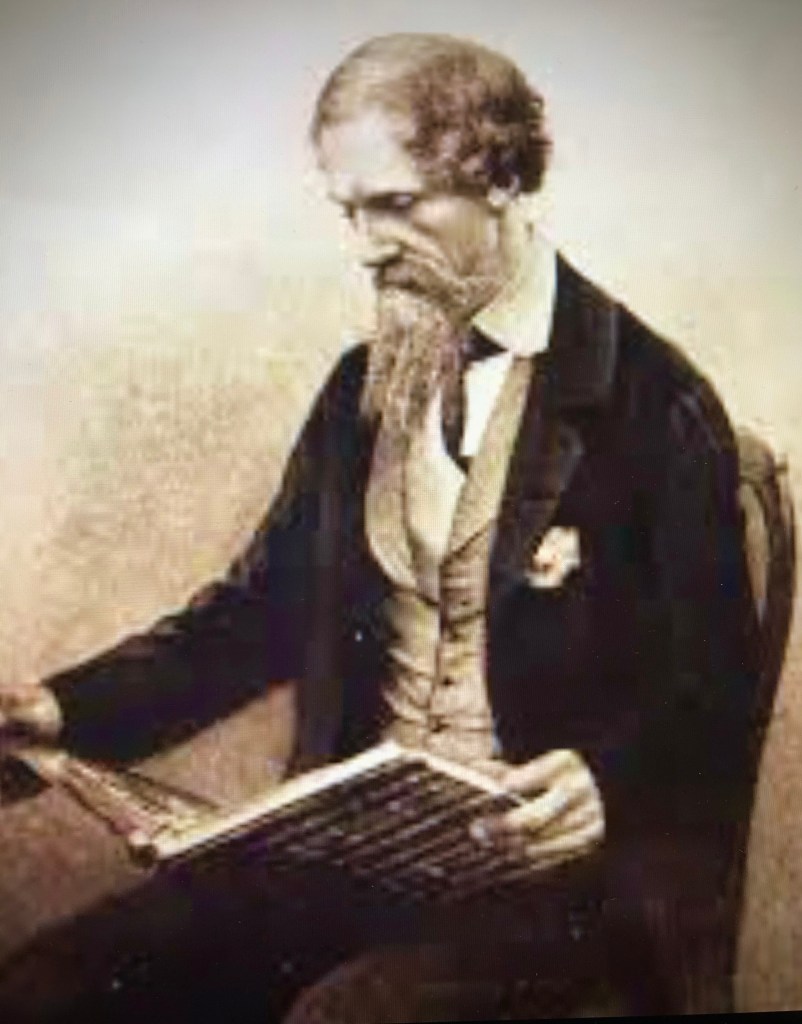
The Punjab would now be governed by a Board of Three – Henry Lawrence as chief, John as and G.C. Maunsel, who would shortly be replaced by Robert Montgomery. Montgomery’s task was a thankless one, for he would have to stand between the wills of the Lawrence brothers. Over the next four years, however, they managed to work out a system in the Punjab that not only satisfied the requirements of the British government but also the people. The Punjab was divided into four Commissionerships, which comprised four or five districts. The Deputy Commissioners over the districts were required to perform all the work of magistrates and collectors, with some duties of a judge. Each district had one or two assistants, depending on its size, and was supported by an extra assistant. Each of these officers was expected to work “in all the courts, civil, fiscal and police.” The Board actively insisted on recruitment from the local population for the last two appointments, and it was their aim to get as many Punjabis into not only these offices but into the system as tahsildars. The Lawrences strove to make “the basis of our rule a light and agreeable assessment; a strong and vigorous though uninterfering police, and a quick hearing all civil and other cases.”
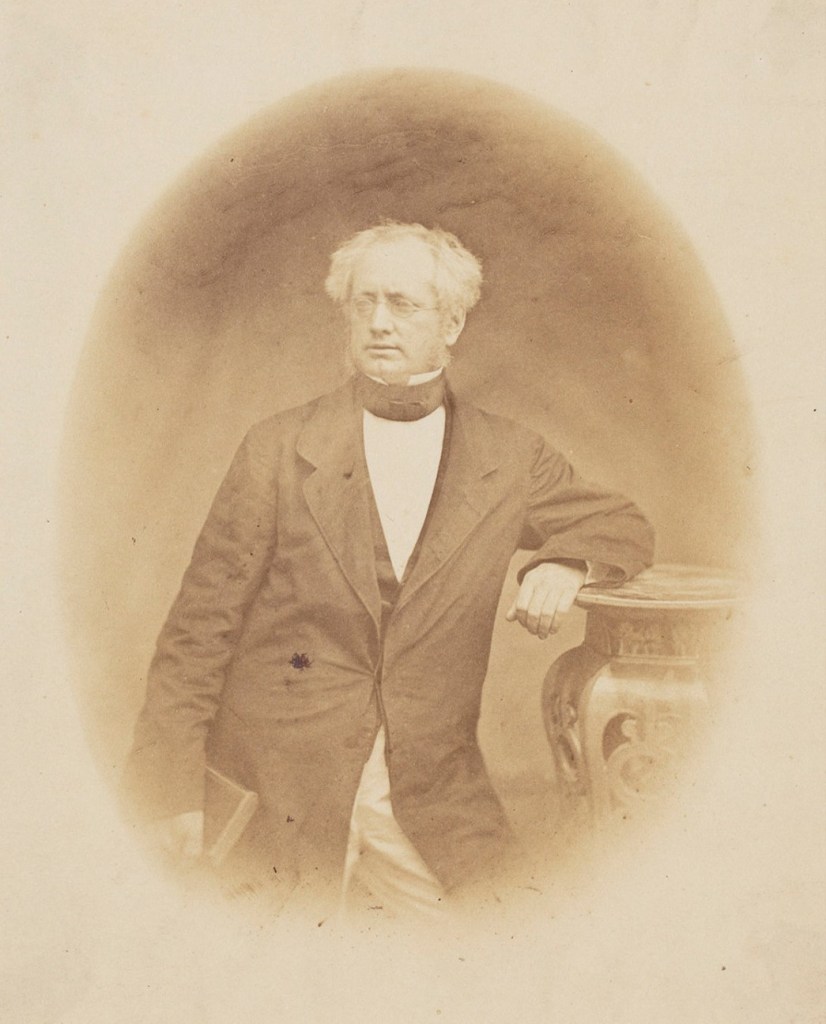
In the case of public works, they had an equally talented group of men, among them Robert Napier, busily constructing canals and roads; the defence of the frontier was being looked to by the fledgling Corps of Guides and John was setting up a revenue and land settlement, work he was far more suited to than Henry. Unfortunately, this was where their cooperation ended.
Henry was worried about the treatment of the old court’s officers, men who had been left without employment on the dissolution of the Darbar. He wanted to employ them in any position for which they were suited; John, on the other hand, wanted open employment, not restricted to Punjabis. They also squabbled about Henry’s continuing influence with the jaghirdars, who were accustomed to bringing their grievances directly to him. Henry was left in the distressing position of turning away men he had come to consider friends, while being forced to defer everything to the Board for settlement.
The situation finally became intolerable – the brothers had ceased speaking or even corresponding with each other, taking their spleens out on Montgomery’s head instead, who was caught between two masterful personalities, each convinced his plan for the Punjab was the better one. In the end, one of the brothers would have to go, a moment Dalhousie had obviously been looking forward to since 1849. He had not digested Henry’s rebuke regarding the Second Sikh War, and he had long since decided that John was “the better man.”
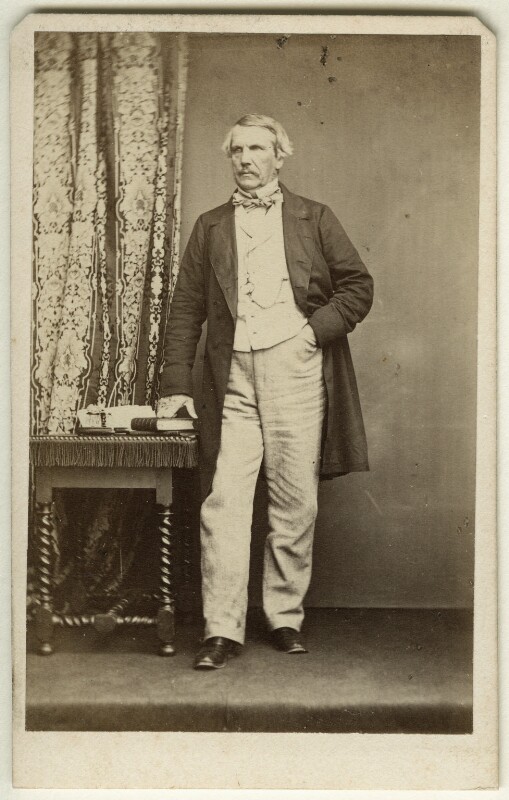
In a moment of singular fairness, both brothers tendered their resignations, each asking to be sent to the Hyderabad Residency. Henry’s resignation was quickly accepted, but instead of the coveted position in Hyderabad, he was sent to an inferior position in Rajputana. The decision shocked not only his chosen assistants, who now would have to find a way to work with John Lawrence, a thought they did not relish. When Henry left Lahore for the final time, the road was lined with a sorrowful populace, and the Sikh chiefs insisted on acting as his escort for many miles.
In a final letter to John, Henry wrote,
“I venture to offer you a few words of advice, which I hope you will take in the spirit it is given in, and that you will believe that, if you preserve the peace of the country, and make the people, high and low, happy, I shall have no regrets that I vacated the field for you. It seems to me that you look on almost all questions affecting Jaghirdars and Mafeedars in a perfectly different light from all others; in fact, you consider them as nuisances and as enemies. If anything like this be your feeling, how can you expect to do them justice, as between man and man? I am sure if you will put it to yourself in this light, you will be more disposed to take up questions affecting them in a kindly spirit. I think we are doubly bound to treat them kindly, because they are down, and because they and their hanger-ons have still some influence as affecting the public peace and contentment. I would simply do to them as I would be done by.”
Dalhousie could not help smirking at the blow he had dealt Henry Lawrence – “Lawrence has been greatly praised and petted and no doubt naturally supposes himself a king of the Punjab, but….I object to sharing the chairs…” and had “managed to get him moved away, without doing anything ungracious.” Dalhousie abolished the Board, and the governing of Punjab was given solely to John Lawrence with the enriching title of Chief Commissioner.
The brothers would now follow different paths – John as a veritable ruler of one of the largest territories in the EICo’s India, and Henry relegated to the life of a district officer, dealing with problems of land tenure, worrying himself over petitions and decisions, and administering by “presence and the showing of a person of the Government.” In his wretched state, he even considered throwing in India altogether and trying his luck in one of the “cold colonies – Cape, New Zealand or Canada..” like his father before him who was determined his sons would not throw their lives away for an ungrateful nation, Henry now believed he would be happier if he saw his sons as settlers in a distant land, rather than laying down their bones in India.
However, even though Rajputana did not offer the thrilling work he had experienced in Punjab, Henry was able to settle down comfortably with his wife, who, except for a brief stint in England, had shared all of Henry’s trials and tribulations, in Mount Abu. The climate agreed with them, and not since Nepal had they had the pleasure of only their company. And Henry still managed to be a thorn in Dalhousie’s side. He thwarted Dalhousie’s intention of seizing the state of Karauli by utilising the Doctrine of Lapse by proving the adoption of an heir as rightful. The EICo sided with Lawrence and approved his decision; he further strove, as he did in the Punjab, to understand the people he was now expected to decide over and found his work in Rajputana decidedly easier than in the Punjab. He introduced change slowly and always in deference to the clans; however, as in the Punjab, he insisted that grievances be addressed without delay and even took a decided interest in the conditions and treatment of prisoners in local jails. On the whole, his life in Rajputana was far enough away from Dalhousie for Henry Lawrence to pave the way for a state, when in the throes of Mutiny, would stand with a government that by all means was as foreign as the moon. Although Henry’s opinion of Rajputana was not flattering, believing that the kings were no better than tyrants and the thakurs hardly better than the kings and rebels to boot, he remained the same benevolent and kindly Henry Lawrence who was trying, with infinite patience, to understand all the ins and outs of the Rajputs, as he had done in the Punjab. His house was always open to visitors, and he never turned down a petitioner, no matter how late the hour might be.
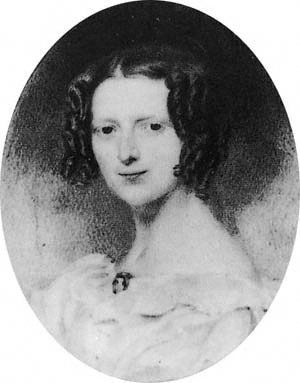
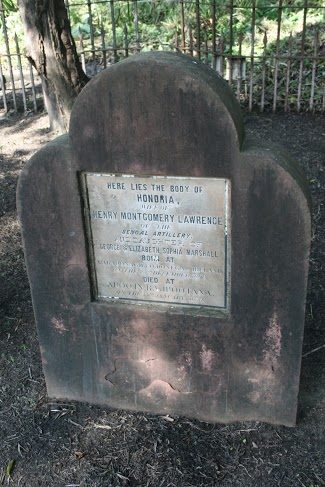
Yet the life of Henry Lawrence was dealt a dreadful blow when his beloved wife died in 1854. Honoria was buried in Mount Abu, and Henry, quietly, laid down his soul with his wife.
Back in the Punjab, John was rewriting the administration. Ably assisted by a brilliant group of young men, all hand-picked by his brother, for work in what was now known as a Non-Regulation Province. The regulations of the government were “administered in the spirit and not in the letter,” and Dalhousie, although impressed, John was driven to fury by Henry’s young men, who continued, in their fashion, to avoid Dalhousie’s regulations and act on their own initiative. However, this unconventional government promoted peace in the Punjab – the country was divided into districts small enough so every civil officer in charge would know it and its people intimately; every civil officer held not only judicial but fiscal and magisterial power, “concentrating in his person authority and undivided responsibility”; and above all, the laws and and the procedures to implement them were to be of the simplest kind, based, when possible on local customs and existing institutions. What followed would be three years of near peace in the Punjab.
By 1856, Henry had decided to return to England. He was tired, and there seemed to be no place left for him in India – but in January 1857, he received a summons from the government to proceed to Oudh to take the position of Chief Commissioner at Lucknow. Appointing Henry Lawrence was the last attempt by a desperate government to repair a grievous mistake – the annexation of Oudh. Had they sent Lawrence a year earlier, the damage done by incompetent administrators would never have happened. While the people of Oudh may not have embraced the high-handedness of this foreign government openly, the softening touch of Henry Lawrence would have gone a long way to remedy the ills of annexation. Yet by the time he arrived, it was too late. In March, Lawrence took up the reins at Lucknow – less than two months later, northern India was embroiled in mutiny; by July, Sir Henry Lawrence was dead.
Before the news of his death had reached London, the directors of the EICo had passed a resolution, declaring they intended to appoint “Sir Henry Lawrence, KCB, provisionally to succeed to the office of Governor-General upon the death, resignation or coming away of Viscount Canning, pending the arrival of a successor from England.” It was the highest accolade they could offer to a man who gave 35 years of service to a government that was, as ever, too slow to reward the worthy.
As for John, the mutiny brought with it a GCB, a baronetcy and a seat on the Privy Council and in 1863, he was informed, during a long sojourn in England, that he was to return to India as Governor-General – it was the “greatest honour England had to give”, and John Lawrence returned to a different India, as Viceroy. He remained until 1869, hardly ruffling any feathers, and in his last speech at a farewell dinner given in his honour on 11th January, he said,
“Our true policy is to avoid complications and consolidate our power in India, to give to its people the best government we can, to organise our administration on a system which will combine economy with efficiency, and so to make our Government strong and respected in our own territories…” Yet his final words summed up every Lawrence who had ever set foot on the subcontinent:
“Be just and kind to the natives of India.”
When he arrived in England, he was raised to the peerage as Baron Lawrence of the Punjab and died at home on 27 June 1879.
Sources:
Rulers of India – Lord Lawrence – Sir Charles Aitchison (Oxford: Clarendon Press, 1892)
Life of Sir Henry Lawrence, Vol I & II- H.B. Edwardes / H.Merivale (London: Smith, Elder & co., 1872)
The Necessary Hell: John and Henry Lawrence and the Indian Empire – Michael Edwardes (London: Cassell and Co., Ltd, 1958)
Lawrence of Lucknow 1806-1957 – J.L. Morison (London: G. Bell and Sons Ltd., 1934)
The Story of Sir Henry Lawrence – Lucy Taylor (London: T. Nelson & Sons, 1897)
Lord Lawrence – Sir Richard Temple (London: Macmillan & Co., 1889)
 Mutiny Reflections