In all, some 30 people survived Cawnpore; however, only three have ever reached any sort of recognition, namely: Amelia “Amy” Horne, Jonah Shepherd and Mowbray Thomson. The others did not receive much notice beyond their depositions, being mainly the wives of drummers or musicians of the mutinied regiments and not deemed completely trustworthy. Elizabeth Spiers, her mother, her brother, and her little sister Isabella survived. She also left the following deposition: “I saw several ladies taken away, amongst them Mrs J of the 67th, Mrs B of the 2nd cavalry, and Miss G, the sister of Mrs B. of the 53rd. I knew these ladies, as they had been living in the same barracks in the entrenchment. I don’t know what became of them afterwards…” She later states that Mrs B and Mrs J were taken to Savada House, but she could not verify it other than that she had been told by Kodha Buksh of the 56th, who had also been imprisoned at the Savada House. Mrs Eliza Bradshaw, Mrs Elizabeth Lett, with four children and their daughters-in-law, with the Spiers family, owed their escape from the massacre at the Satichaura Ghat because they were able to mingle with the crowds on the bank, thus affecting their escape.
In his deposition, pensioner James Stewart, late of the 56th BNI gave the following narrative:
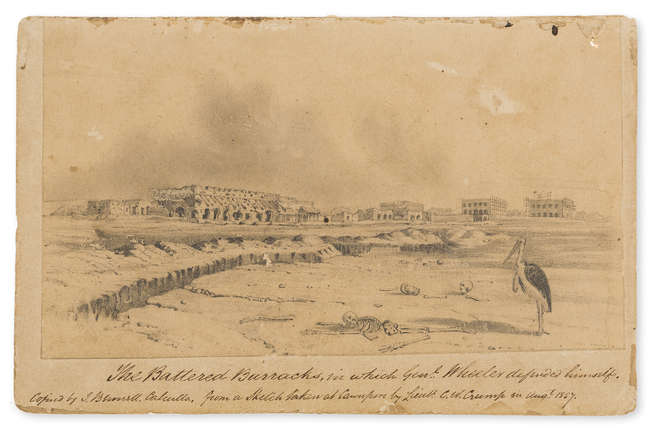
“…General Sir H. Wheeler on the 14th day put up a flag of truce (no sortie had been made as has been stated, or he wounded) as we had, i.e. the drummers of the three regiments had, the removal of all the dead, and had no more than on one occasion personally conversed with him, and received gram and a glass of brandy daily and hourly encouragement from that gallant officer. The only article of food was grain, which was steeped in four buckets and placed in such a position that all could help themselves. The term of the truce was that all in the entrenchment were to proceed by boats to Allahabad, and boats were procured by Nana Sahib, and the whole embarked; two boats only had let go, four guns were opened on them, and when they showed themselves volleys of musketry were poured on them, the boats on the ghaut shared the same fate, some sunk, others were burnt, the poor Christians there, those that escaped being shot, were either drowned or taken prisoners, and these, mostly women and children, were tied and carried before Nana Sahib, who was encamped on the Dyee Plain. The prisoners were tied and huddled together and shot. Some ladies and children were reserved for future proceedings. I, my wife, and a Mrs. Lett who were in one boat which was foundered by shots, we immediately slipped to the far side of the boat, and thereby bobbing our heads and keeping quiet, we were saved, and as soon as they moved off with their prisoners we had to strip and run in that condition, made for Allahabad, after enduring incredible hardship, what with want and exposure and dread of pulling into other brands; in twelve days we reached that station. I have managed by begging at last to be able to make my way to Dinapore, and here am I with a wife cast on the sympathies of the generous public as I am without pay, and no prospect of any for some time.”
Those that survived the entrenchment and satichaura ghat
Jonah Shepherd
It is not known how many servants left the entrenchment during the siege; there was certainly more than one – Emma Larkins’ ayah was entrusted with her last letter, written when the siege had already commenced, and managed to deliver it up to Calcutta. However, one man did leave the entrenchment on a mission, or so he thought, and that was Jonah Shepherd.
He would not get very far, would be arrested and imprisoned, and only saved from certain death by the advent of Havelock’s Column arriving in Cawnpore. Torn with guilt and grief for the loss of his family, Shepherd spent many years hunting for news of and clues to their demise and ultimately compiled the lists we have today. He was never able, however, to ascertain exactly how his family died, but allowed himself the peaceful thought they were not at the Bibighar, never having found anything to contradict this. As he writes:
““The following Lists of Names were compiled, partly from personal knowledge, from details furnished by Lieutenant Thomson and Delafosse and other survivors, from information derived from records in public offices, but most from private sources i.e. from the relatives and friends of the victims, residing in “other stations;” and although no pains were spared to make them complete as was practicable under existing circumstances, yet it is feared many names have been omitted and some incorrectly inserted.”
A more definitive list was compiled by Colonel G.W. Williams in his subsequent investigation of Cawnpore and by the time the second edition of Shepherd’s book was published, he could adopt Williams’ corrections. As it is, the lists make very sombre reading. We may never know the true number of souls who lost their lives at Cawnpore and the list of those that survived, is very short indeed.
The troubles of William Jonah Shepherd
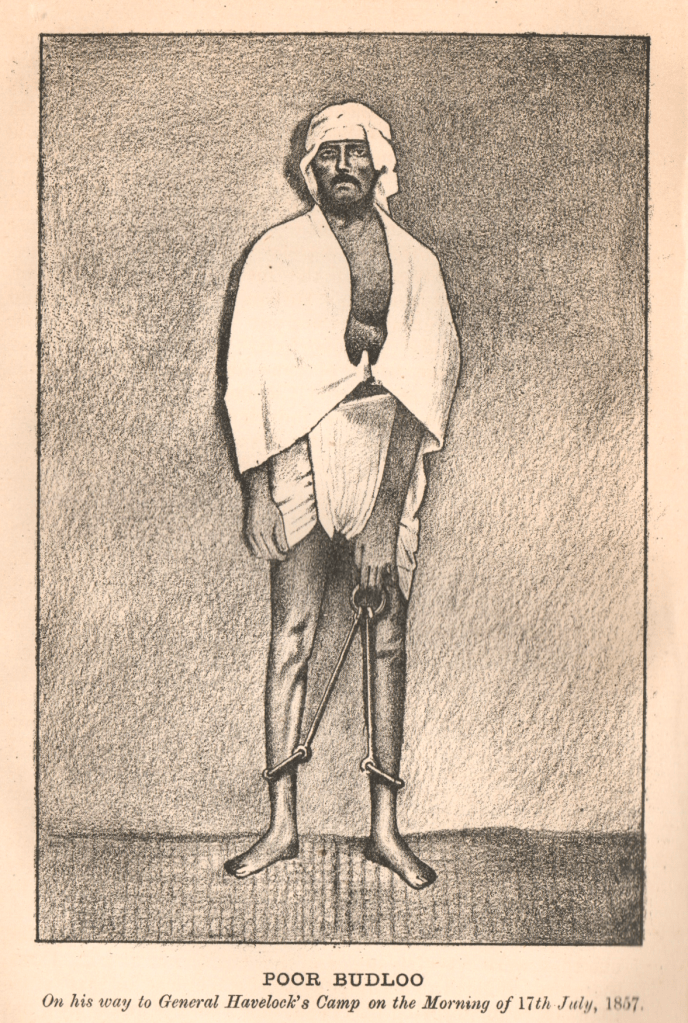
William Jonah Shepherd survived Cawnpore. He had left the entrenchments hoping to find a way to save his large family, and perhaps bring succour to the other inmates, a noble plan that failed in its ultimate execution. His mission had been to assess the city and bring back any intelligence possible. and upon his return be permitted to take his family out of the entrenchment. Disguised as a native, “clad in a sepoy’s dohtee and a cook’s ungurkha or coat which was well bedaubed with grease and altogether very dirty; my hair was cropped short all round the head leaving a tuft of long hair in the centre, over which a piece of cloth (also very dirty) was wrapped, to represent a cook’s turban; added to these a small stick in my hand, which completed my disguise.” Liberally partaking of a friend’s morning share of rum, William Shepherd bid goodbye to his family and left the entrenchment. He was unfortunately, beset with misfortune. Within hours of leaving his loved ones behind, Shepherd was taken captive by the sepoys. Managing to convince them he was a cook, he was eventually tried and convicted and sentenced to a prison term of three years with hard labour. While so imprisoned his family, consisting of his wife, 2 nieces, a brother, his sister with her infant son and 2 old ladies were killed. His infant daughter and a little girl his nieces had been bringing up were already dead. William hoped they had been killed at Satichaura Ghat but was never able to come to an absolute conclusion regarding their fates. In the chaos of the British approach to Cawnpore, he managed to escape his imprisonment but was nearly shot by the British who took him for a rebel. Only his cries of “Hurrah! Hurrah!” which a soldier thought was very un-Indian, saved his life.
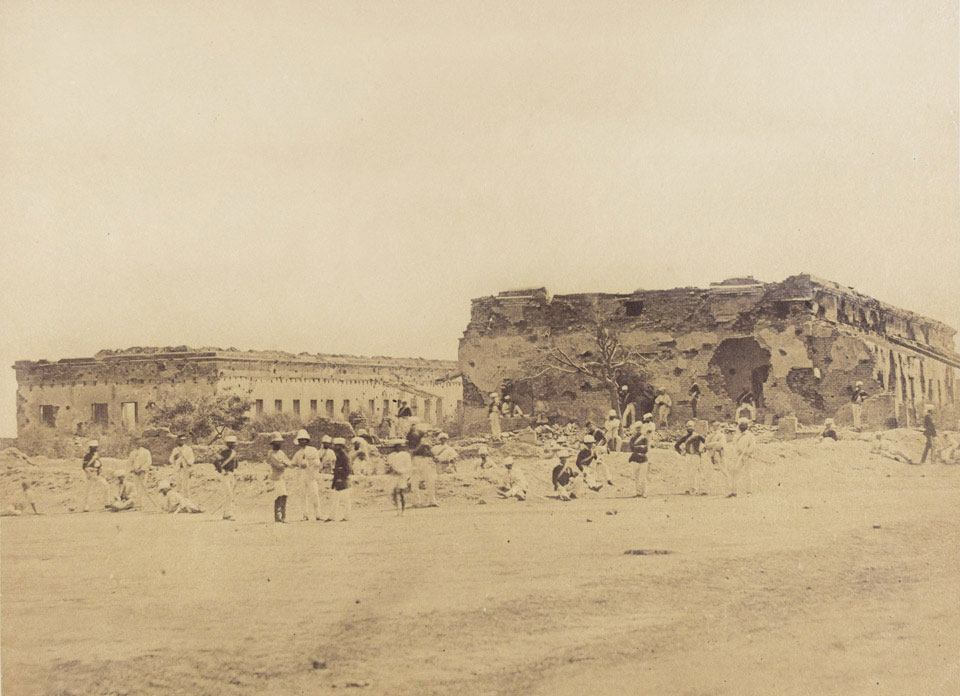
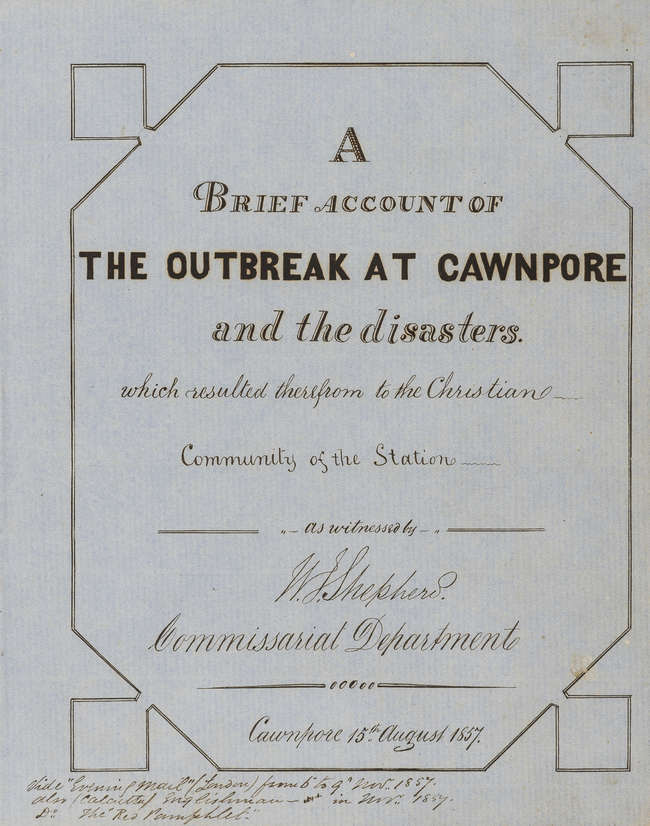
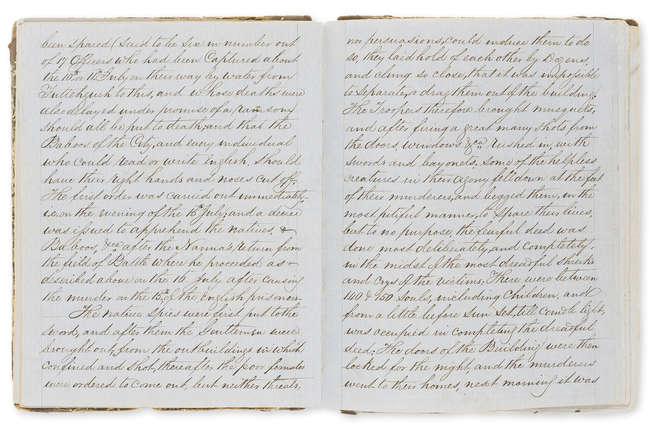
Jonah remained in Cawnpore for some time, feverishly collecting the names of all those who had been in the Entrenchment while trying to find some news about his own family. Eventually, he left Cawnpore and moved in with his brother in Agra, trying to put some distance between himself and the scene of misery. To no avail. His health continued to decline, and he gave up his position in the Executive Commissariat Office, opting instead to take medical leave. During this time, he wrote his book, ” A Brief Account of the Outbreak at Cawnpore and Massacre.” He then turned his hand at estate management, having been given land in Oudh by Lord Elgin. This venture failed, and by 1873, an impoverished William Shepherd was forced to take employment in the chief engineers’ office of the Oudh and Rohilkhand Railway. He died in 1891, at the age of sixty-six, most probably in Lucknow.
At Satichaura Ghat
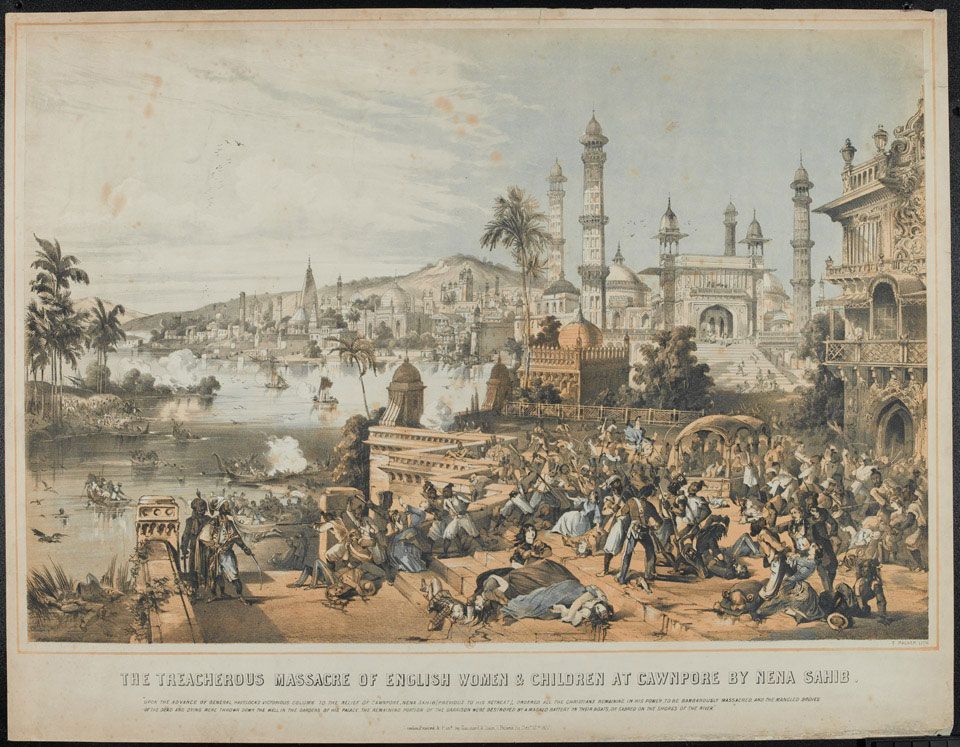
At least five girls were taken away by sowars during the massacre at Satichaura Ghat:
Amelia Horne spent ten months in captivity – when she finally resurfaced at her uncle’s home, she was unrecognisable. When she was able to tell her side of things, Amelia was not initially believed; she was derided as mad and because she was of “mixed parentage” her sufferings did not match the narrative of the English heroine with pale skin.
The Enduring story of Amelia Horne
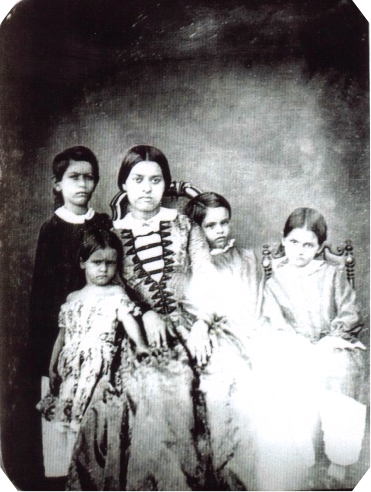
There has been much written about Amelia Horne. She has been alternately portrayed as a heroine and as a deranged liar. My aim here is not to dissect the poor girl but to present a small insight into her as a person. Other, more worthy authors than myself have examined her in great detail, and I will provide links to those veritable works.
Amelia Horne was born in 1839, the daughter of Captain Frederick William Horne and Emma Elizabeth Smith. She was a bright, pretty girl, a gifted pianist, and happily settled with her family, first in Lucknow, then in Cawnpore. It was a large family, of whom Amelia was the eldest of seven children. Her father had died when Amelia was a baby, and Emma remarried in 1847 to John Hampden Cook, by whom she would have six children: Robert, Florence, William, Ethel, Herbert and Mary. Emma was pregnant during the siege, but that baby perished at Satichaura Ghat, unborn and unnamed.
After surviving the entrenchment, Amy and her family went with the rest of the survivors to Satichaura Ghat. In the ensuing scramble, her mother was separated from the rest of the family while Amy boarded a boat with her stepfather and the children. She remained on deck with her sister Florence, whose leg had been broken by falling masonry during the siege and was clinging onto Amelia. Their boat never left ghat, boarded at the start of the massacre by a group of sepoys, bent on loot. Seeing Amelia, they first robbed her of her last possessions and after a search of her person and then grabbed her by a sowar, Mohammed Ismail Khan, who threw her into the water. He dragged her out of the river and took her to a subedar’s hut two miles away. Forcibly converted to Islam, Amelia would spend the next 10 months with the rebels, in all probability as the sowar’s wife. He eventually let her go – not before Amelia had written a letter exonerating him of all misdeeds – and she was able to make her way to the British lines. Presenting herself at the nearest police post, she was then taken by doolie to her uncle’s house, close to Allahabad. At first her relatives did not recognise her.
“Ten long months of suffering, together with my native costume had so altered my appearance that even when I gave my name they could scarce believe that one they had numbered with the dead stood before them.”
In September 1858, Amelia married William Bennett – a railway engineer – twice her age and settled in Calcutta. With him, she would have five children. Here, her narrative should have ended, but for the appearance of Maulvi.
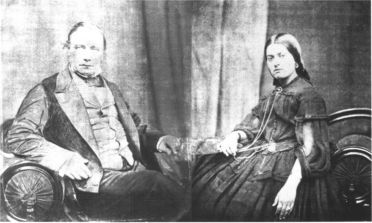
In 1872, Amelia was called as a witness at the trial of Maulvi Liakut Ali in Allahabad. The infantry soldier turned turned teacher, turned rebel leader. He was part of the force under the Nana Sahib in Cawnpore and was probably even leading the force when the Nana parted company with them. The Maulvi remained a fugitive until 1872, when he was identified and arrested. Brought to trial in Allahabad, his defence called Amelia as a witness to corroborate his statement that no Europeans were harmed under his command and although guilty of rebellion, he had acted in his authority as leader to restore law and order. He had presided over Amelia’s conversion to Islam. The trial was a pivotal moment for Amelia. After 14 years of being disbelieved by the British authorities, it was a rebel who finally gave credence to her story. Instead of searching for vengeance for her family, Amelia “expressed to the court her strong belief that there was no intention on the part of the prisoner to put her to death.” The Maulvi was transported for life to Port Blair.
Amelia left behind accounts of her ordeal, and none of them were treated with much regard. The very fact that she had survived appeared to irritate the authorities, and she did not gain much sympathy from the public. Times correspondent William Russell would go so far as to say that the statement regarding the massacres “purporting to the be the work of a lady” and although the lady was really “the daughter of a clerk. And is, I believe, an Eurasian, or has some Eurasian blood in her veins. It would be cruel to give a name, though the shame is not hers. This unhappy girl is at Calcutta…and reports of her insanity are false.”
When Amelia tried to get some restitution from the government for the losses she had incurred during the mutiny, the answer was worse than a simple no. “Madam, In reply to your letter dated the 30th Ultimo professing a claim to compensation for losses suffered by the mutinies, I am directed to inform you that the resolution of the Government of India …does not provide for the grant of compensations to the families of Europeans not in the service of the Govt killed in the mutinies…”
It would seem marriage really had been her only choice.
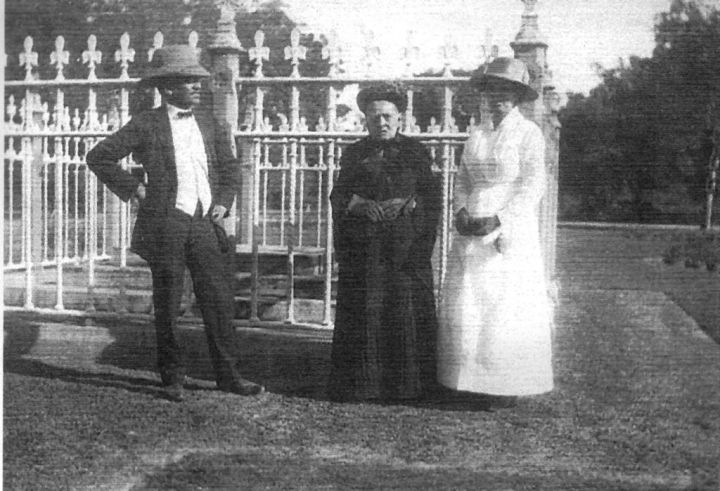
Widowed in 1877 and describing herself as a “pauper,” Amelia would support herself by giving piano lessons. Amelia died in Simla in 1921, aged 84, forever “a survivor of Cawnpore.”
The Legend of Margaret Wheeler
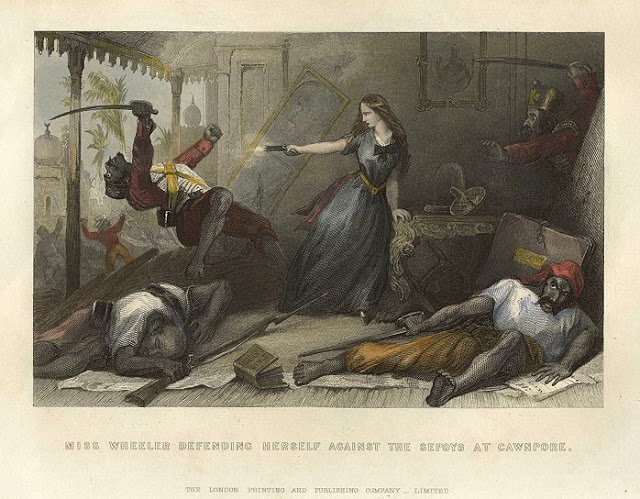
After the massacre at Cawnpore, a curious story began circulating in India, and by all means, it was quite fantastical. It was focused on Margaret Wheeler, called Ulrica by her family, who survived Sati Chaura Ghat, taken, like Amelia Horne, by sowar named Ali Khan. Things then took a sordid turn.
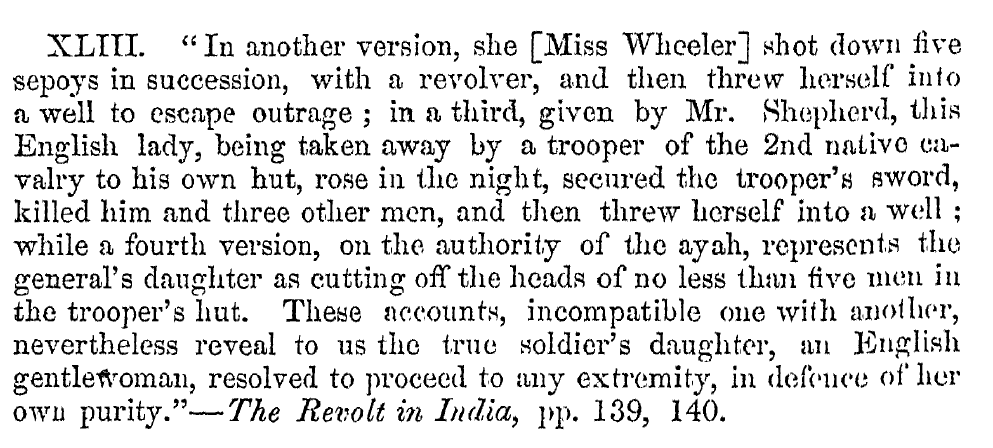
This, of course, is the same Miss Wheeler whose hair was found at the Bibighar, that the men of HM’s 53rd were presumably, taking locks of, as keepsakes. Another man purported to have found her skull, with its beautiful teeth still intact.
What happened to Miss Wheeler just after Satichaura Ghat has never been established. However, a Eurasian drummer named Fitchett would, upon being questioned during the court of inquiry, testify to seeing her at Fatehgarh, dressed in native clothes and riding a horse hardby the sowar who had saved her. When Sir Colin Campbell was seen approaching Fatehgarh in January 1858, the sowar was ordered to release Miss Wheeler to the British; however, he chose instead to gather up the girl and flee with her into the night. Although many legends sprang up about Margaret Wheeler, in actual fact, she chose to remain anonymous, for if the story of Amelia Horne is anything to go by, she probably made the right choice.
She would resurface in Cawnpore, still married to the man who had taken her, recognised over the years by a contemporary of hers, whom she would visit, but never admitting she was Wheeler’s daughter. In 1907, an old Muslim woman, on her deathbed, requested the attendance of the Catholic priest; she was requesting he take he confession and wanted to be buried with Christian rites. According to the final legend of Margaret Wheeler, she had willingly chosen the remain with the sowar, who had married her. Yet, now, at the time of her death, she could finally admit she was indeed the daughter of the general.
Amelia Spiers – her mother saw her taken away from the ghat but was never able to find any trace of her daughter again.
Miss Belson – the sister of Captain Belson of the 53rd, is said to have been taken by a sowar at Satichaura Ghat.
Jane-Amelia Jackson was “carried off struggling in her green silk gown” by a sowar from Satichaura Ghat.
The Williams Sisters:
The youngest daughter, of Colonel Williams, 56th NI, Fanny, was taken by a sowar at Satichaura Ghat; her sister, Georgiana was last seen by the river, by Amelia Horne, where she was heard to say to sepoy that had entered the shallows with his bayonet fixed on the girl, “My father was always kind to sepoys…” the man turned away but a villager came up behind her and “dashed out her brains” with a club. Their other sister, Mary, died in the entrenchment on the 15th of June. According to Shepherd, Georgiana was killed in the boats and Fanny at the Bibighar with her brother William. It is possible that Fanny was not taken away at all but released only to meet her death at the Bibighar.
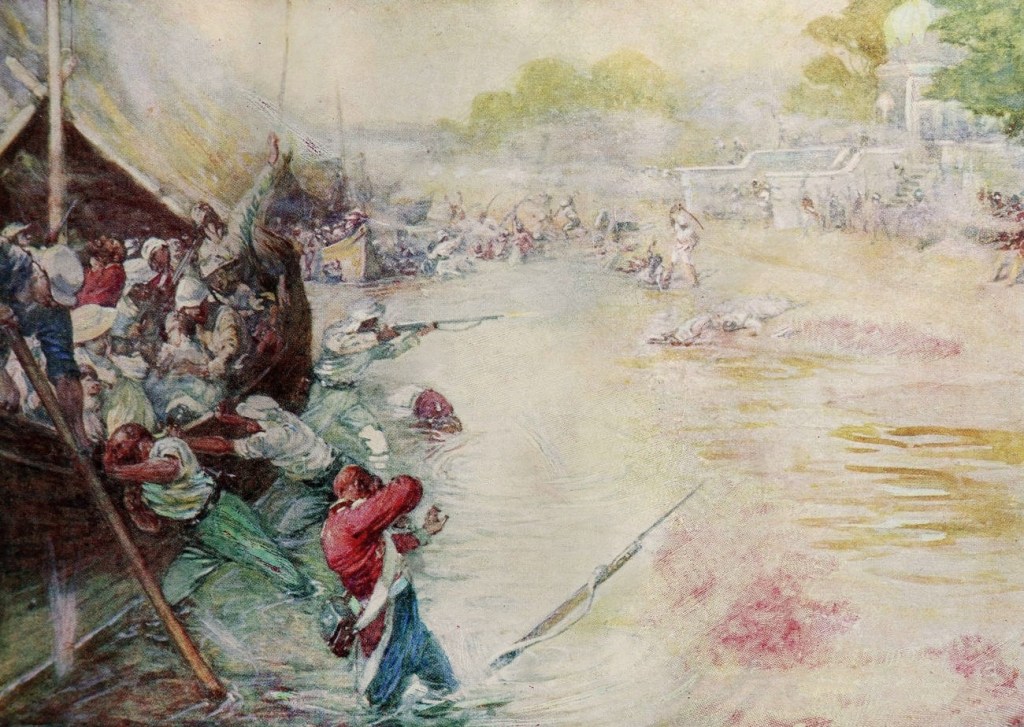
Four men survived both the entrenchment, Satichaura Ghat and formed part of the last and only boat that escaped Cawnpore.
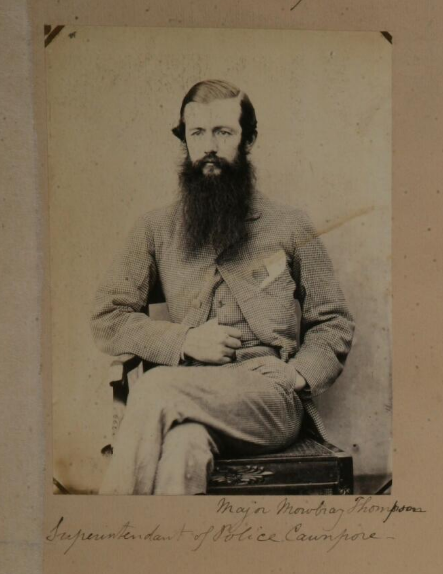
Lieutenant Mowbray Thompson, 53rd BNI
Lieut. H. Delafosse, 53rd BNI
Gunner Sullivan, 32nd Regiment – died of cholera at Cawpore
Private Murphy, 84th Regiment
The story of their survival has been told in “Decisions.” Private Murphy left behind his own account of the siege and what followed in a letter, which has been transcribed, under “The Story of Private Murphy & His Escape from Satichaura Ghat.”
Mowbray Thomson – the Model Author
One cannot research 1857 without reading “The Story of Cawnpore.” Written by Captain Mowbray Thomson, one of the survivors of Satichaura Ghat, he left behind an account which does not spare the reader the grim horrors of the entrenchment, from the garrison being reduced to eating a dog, it’s fur barely singed in the fire, to the vacant stares of the shell shocked women and the singular behaviour of the children, doing their best to cope with their surroundings. His book concludes what William Shepherd’s could not. The final desperate days of the entrenchment from the viewpoint of a military man. His survival at Satichaura Ghat and subsequent escape down river are no less harrowing to read than the account left by Private Murphy – however, the private wasn’t trying to write a book, he was attempting to secure a position. Although all four survivors would then serve with Havelock’s force at the first relief of Lucknow, their lives could not have been more different. Private Sullivan died of cholera, Lieutenant Delafosse left behind a somewhat disjointed account of Cawnpore and could never be convinced to write a book, Private Murphy a few pages, Captain Thomson would not only be celebrated for his work, but he would also gain a title and end his life as General Sir Mowbray Thomas KCIE. Unlike Private Murphy who appears to never have been able to shake off his experiences of the mutiny and became keeper of the gardens of the Bibighar Memorial and defacto tour guide to the remains of the entrenchment, Thomson was given a civilian post as political agent at Manipur and later appointed an agent of the Governor-General for Wajid Ali Shah. It was the advantage of his upbringing; although born in India, he was educated in England and then joined Addiscombe Military Seminary. In 1853, he received a commission in the 53rd BNI.
The focus of Thomson’s book, besides a remarkably detailed account of the siege, was to lay to rest the notion that the garrison had lacked courage.
Preface to “Story of Cawnpore”
“So many conflicting statements have been made respecting the sufferings endured by the unhappy victims of the Sepoy Mutiny, who were sacrificed at Cawnpore, that I have felt it incumbent upon me to present the following narrative of all that can recollect of the distressing history.
In some obscure journals, India, direct imputations have been made of the want of courage on the part of the defenders of the garrison. Justice to the dead has compelled me to refute these utterly false allegations.”
With a lack of witnesses, it is easy to understand why the garrison might have been accused of cowardice and incompetence. It needed a Mowbray Thomson to set the records straight. And he did. In his simple narrative, he brought alive the very essence of Cawnpore, and perhaps gave some comfort to those who would never see their loved ones again.
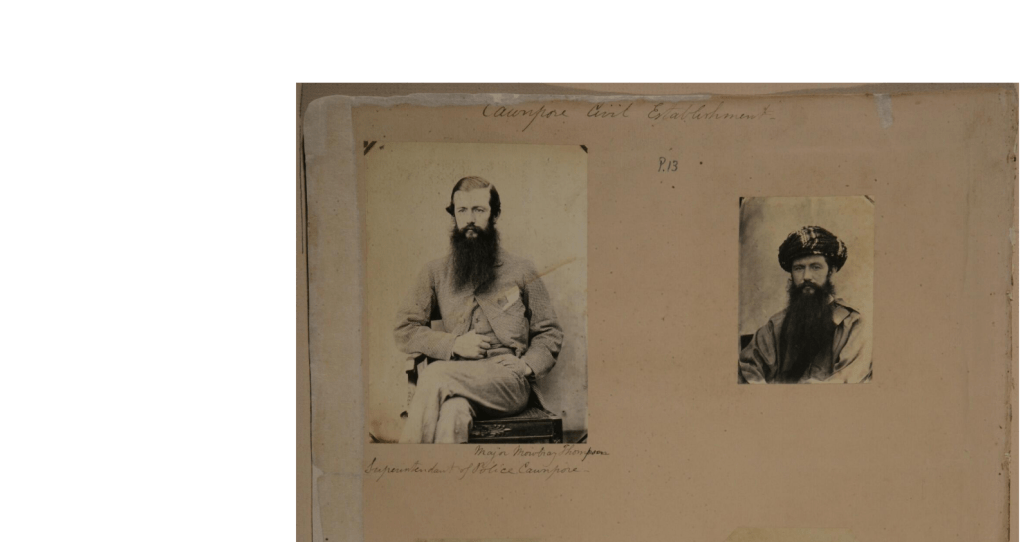
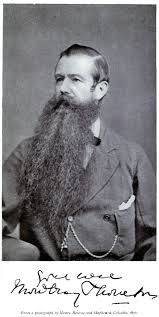
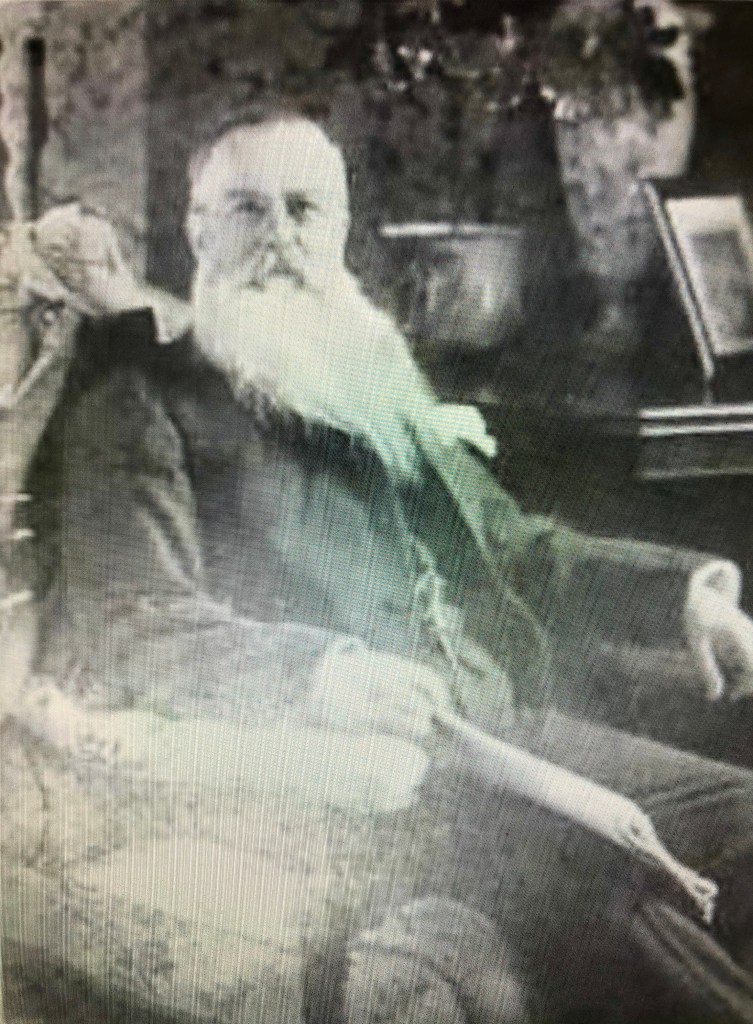
General Mowbray Thomson died in 1917.
In Cawnpore
Miss Eliza Morrison, one of the Free School Girls, since joined her parents in Dinapore.
Mr. T. Farnon, of E.I. Railway.
Mrs. Murray – the wife of the pensioned drum major of the 56th BNI, was wounded in several places at Satichaura Ghat and left for dead on the riverside. Her only son, Benjamin, who had been hiding in the city, went down to Satichaura Ghat after the massacre and found his mother. Disguised as Muslims, they managed to flee and make their way to safety to Allahabad around the time Havelock entered Cawnpore.
Mrs. Hannah Spiers, wife of Band Sergt., 5rd BNI
Miss Eliza Spiers
Miss Isabella Spiers
Miss Matilda Spiers
Master Fred Spiers
Miss Amelia Spiers, aged 14, taken away from Satichaura Ghat and not found.
Bradshaw, Eliza, Mrs. widow (56th BNI)
“My two sons, who were the prop and stay of my old age, accompanied me and their wives and two children with the rest of the garrison, from the intrenchment to the river on that fatal day. When the rebels opened fire upon us, my sons escaped the shots, but some of their own corps rushed up and were hacking them down with swords. I ran and fell upon their bodies, endeavouring to save their lives, I entreated the hard-hearted murderers, in the most supplicating manner, to spare my sons, reminding them that they were of the same corps, and had always behaved kindly towards all in the regiment. No notice was taken of me beyond pushing me aside and completing the foul deed upon my poor innocent sons. Then came the time for murdering the male children and my little granddaughter, two years old, was examined, and on finding her to be a girl, the man who held her was so disappointed that he in a rage cast her away into the river; her fall in the water saved the poor child’s life. My two daughters-in-law and myself were not placed among the other females and we managed to get away to the city and passed off for beggars. My little grandchild would constantly urge me to go to the river side, and look for her father, and on being told that he is dead and not there, would beg me with tears in her eyes to put my hands under water, and search well, that possibly he may be hid under the waves.”
Bradshaw, Mrs., and 1 child Emelia
Bradshaw, Mrs., and 1 child, Ellen
Letts, Elizabeth, widow (56th BNI)
“Another old woman, who also was saved on that occasion in a similar manner, named Elizabeth Letts, of the same corps, has a most heart-rending tale to relate. She also endeavoured to save the life of her son John Letts, but without success. His poor wife being far advanced in pregnancy, received a bayonet thrust into her stomach from a sepoy, after which another brutal fellow struck her with the butt end of his musket. The poor woman did not die immediately, but her sufferings, as described by the old woman, were truly pitiful. For three days, the unfortunate creature lingered in the utmost pain and died in the city, where Elizabeth Letts had managed to bring her away together with her two grandchildren.”
Letts, two children, Caroline and Rachel
Mary Ann, ayah to Mrs. Greenway, escaped on the 27th of June and remained hidden in the city.
The Sepoys of the 56th BNI Who Served in Wheeler’s Entrenchment
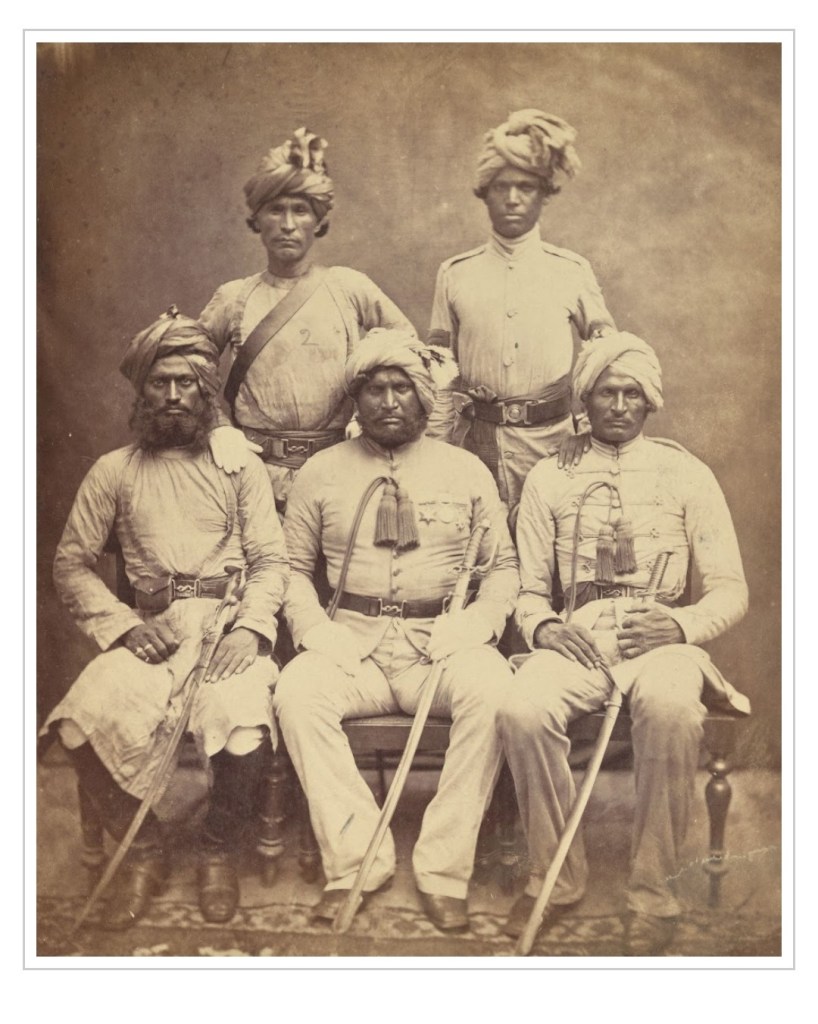
Jemandar Khoda Bux
Sepoy Elshee Bux
Sepoy Gobind Singh
Sepoy Mitter Jeet
Sepoy Mahomed Gous. He was sent out on the 23rd of June to gain information and remained hidden in the city until the 17th of July.
Native Doctot Sahib Dad Khan, 56th BNI.
Residents of Cawnpore who did not go into the Entrenchment and Survived
Abel, G., Pensioner wife and 2 children
Buttress, Thomas, Pensioner and wife
Brown, Margaret, Mrs., and child
Forrester, William, Pensioner
Farnon, Ambrose, Mrs.
Mrs. Greenway, mother of the Greenway brothers. Owing to her old age, she was not killed but “received much annoyance from the rebels.”
Ireland, J., Pensioner and wife
Jones, Stephen, Mr.and wife
Jacobi, Isabella (wife of William Jacobi)
Lowther, Mrs., and her sister Eliza
Maling, Margaret, Mrs. and her sons Thomas and Edward
MacMullen, Mrs., and child
Miss Hay – “an aged person”
Reid, W., Pensioner. Escaped to Allahabad with his wife and three children
Waterfield, Mrs., and child
Williams, Edward, escaped to Lucknow
Native Christians:
James John
Joseph, his wife and children
Ebenezer Gunput, Emanuel and his family
Two women who have not made it to any of these lists as they left Cawnpore on the 28th of May – by boat – are Helena Angelo, the wife of Lt. Frederick Cortland Angelo of the 16th BNI and Mrs.Volks. Helena Angelo had only recently arrived in Cawnpore, in May 1857. Initially, the Angelos went to the entrenchment, but her husband was sufficiently sceptical of the whole arrangement that he insisted his pregnant wife and their two daughters accompany Mrs. Volks to Calcutta. They were probably the last people to have left Cawnpore safely before the outbreak.
Frederick Angelo remained behind at Cawnpore. He survived the massacre at Satichaura Ghat but was killed while trying to escape to Lucknow. During the attack on the boats, he succeeded in swimming across the river and hiding in the reeds until nightfall. Stripping down to a waist cloth, Angelo then darted along a series of ravines, trying to make his way north towards Lucknow, when villagers surrounded him and took him to their landlord. The villagers gave him sugar and watched as he greedily devoured it with both hands. The landlord took pity on Angelo and promised to take him to Lucknow. But word of the feringhee’s capture quickly spread, and on June 28, a party of sepoys arrived at the landlord’s village to lay claim to him. The landlord refused to break his word to Angelo, but then more rebel zemindars descended on the village, overpowering his matchlockmen, and took Angelo to Baba Bhutt, who ordered him cut down on the spot. His rebel captors refused to do the deed unless the captain was himself armed. ‘Our creed does not permit us to kill a bound prisoner,‘ one of the matchlockmen explained, ‘though we can slay our enemy in battle.‘ ‘Let him strike us,’ another suggested, ‘and then we will strike him in return, but we will not strike him in his present condition.’ A sower put an end to this impasse by striking Angelo on the arm, whereupon the jullads ‘laid on with their swords, and he was despatched.’
Further Reading:
The Bloodiest Record in the Book of Time: Amy Horne and the Indian Uprising of 1857, in Fact and Fiction: Ian Breckon: : https://core.ac.uk/download/pdf/29422615.pdf
https://sites.google.com/view/fenwick-of-lambton/jane-hornby-barkley/amy-horne-step-daughter-of-john-hampden-cook?authuser=0
https://www.thecitizen.in/index.php/en/NewsDetail/index/7/18331/Was-it-Really-You-Margaret-A-Womans-Deathbed-Confession-and-Cawnpores-Eternal-Mystery–
The Tablets in the Memorial Church, Cawnpore, 1857 – a Key Describing all that is known concerning names recorded on the Tablets (Calcutta, Thacker, Spink & Co., 1894)
 Mutiny Reflections