Bartle Frere Decides
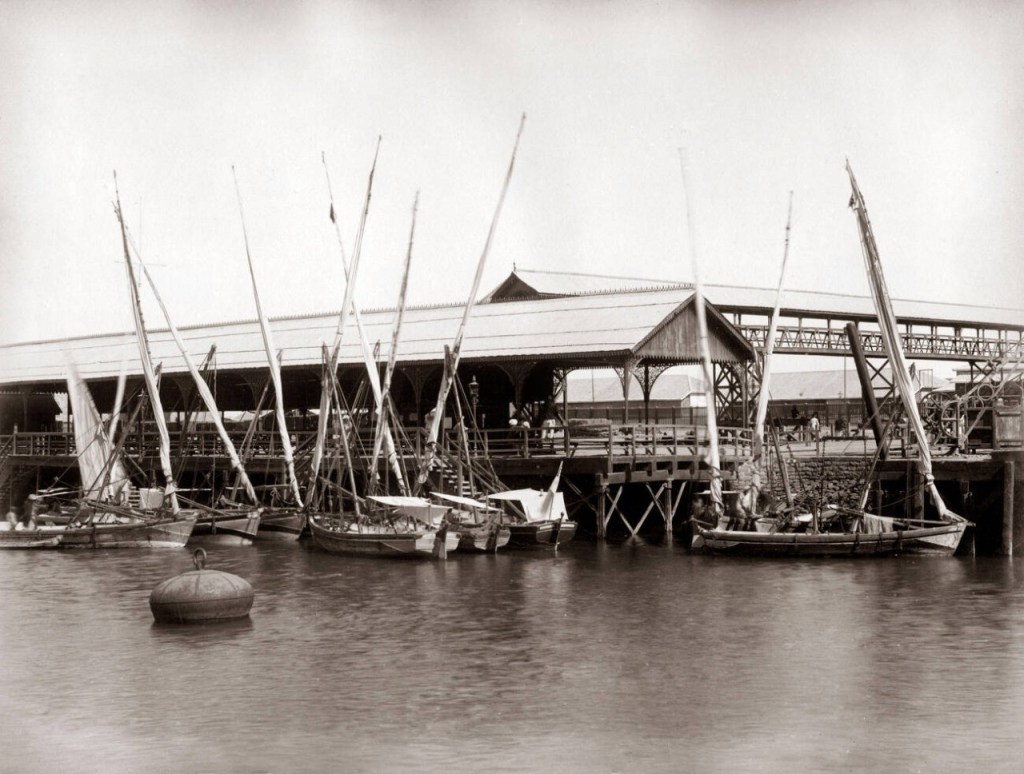
When Bartle Frere stepped off the boat at Karachi, he was tired and unwell. The passage had been singularly unpleasant in a leaky, dirty ship. As he left the landing place, he was met by trooper carrying a note from Mr Gibbs, his Judicial Assistant. With it was a letter from Mr Brunton addressed to Mr Neville Warren.
“We are in a fearful state of anxiety here. At Delhi, the whole of the Indian troops are in mutiny; they have killed every Christian in the place; at other places, the troops show the same dissatisfaction and are turning out. Here, there is expected a rumpus. At this moment, all the troops are turned out for parade at Mean Meer, and it is intended to disarm the native troops. We have only seven hundred English and a few artillery.—Ten o’clock. All arms are out of the hands of the natives. They were taken by surprise, and left them, after having piled arms, at the order ‘ right about,’ seeing at sixty yards the 81st Regiment loaded with ball, and ten guns pointing towards them loaded with grape. All men are to meet at Sir John Lawrence’s office with all the arms they can muster. We are afraid what we may hear from Amritsar, where they have no English troops.” – (Mr Brunton, Chief Engineer of the Punjab Railway, Lahore, May 13, 1857, letter to Mr. Neville Warren, Chief Engineer, Sind Railway)
Frere had suspected for some time that something was wrong in the Bengal Army. Since February, there had been news of insubordination in single regiments, and the story of Mangal Pandey was even known in Sindh. Frere had taken a dim view of Dalhousie’s annexation of Oudh, and he openly disapproved of the government’s high-handed handling of the Rani of Jhansi and their treatment of Baji Rao II, the last Peshwa of the Maratha Confederacy, who had been exiled to Bithur. “Attaching great importance to dealing tenderly and in a conservative spirit with native customs and institutions, he saw grave danger in the hard uniformity and indifference to local feeling, of which the land-system of the North-West Provinces and the harsh treatment and degradation of the native landed aristocracy of the Punjab were instances; nor did he share the prevalent belief in the contented disposition of the natives as a result of such government.”
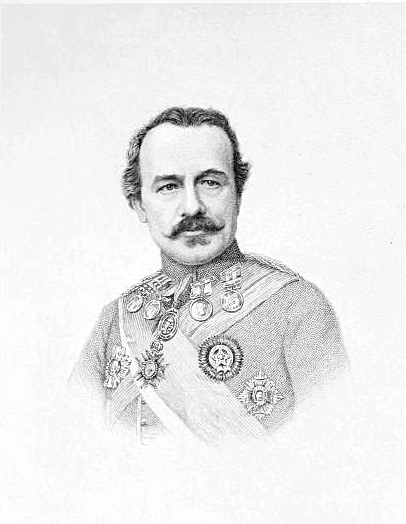
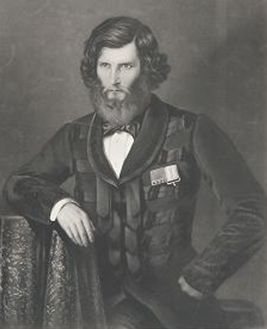
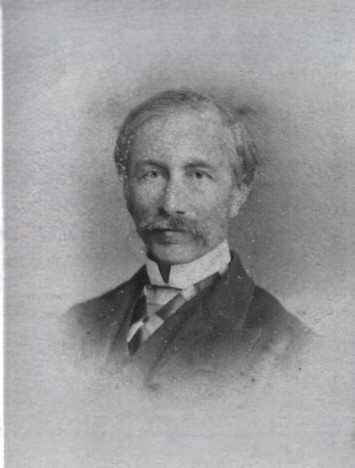
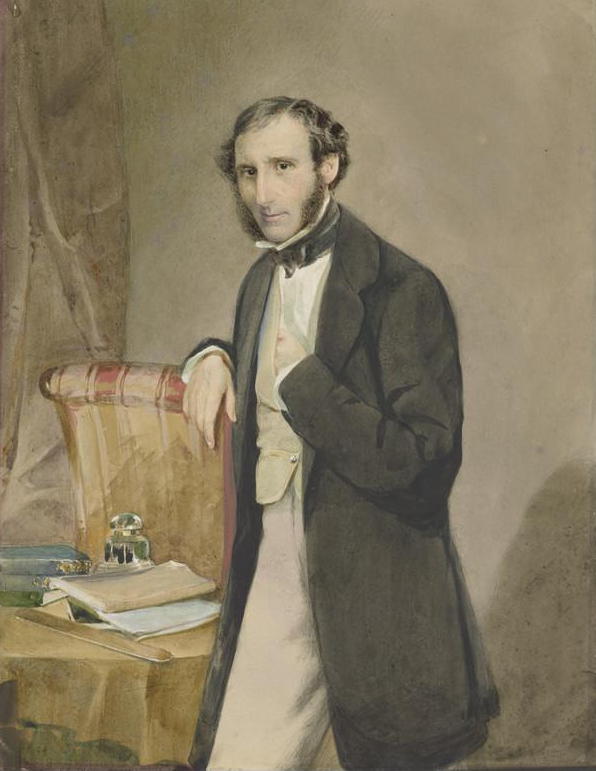
The worst had now come to pass – all the warnings had been left unheeded, and the Bengal Army was now in a state of mutiny. For Frere, the inevitable had finally occurred, and he would now have to act with haste. Within an hour of arriving in Karachi, he sent a copy of the letter by express to Lord Elphinstone in Bombay, and forwarded another to Outram and Jacob (by the same steamer that had just brought him to Karachi), who were still in Persia. To this, he urged them to return the campaign troops to India as quickly as possible. He also sent a copy to Captain Raikes, the Acting Political Agent in Kutch, a native state just south-east of Sindh. Frere pressed upon him the urgency of keeping the postal lines open at all costs and that he would take personal responsibility for the order.
Official intelligence regarding the mutiny arrived later that day, and on 19 May, he wrote again to Outram –
““The enclosed copy of a letter from Mr. Macleod, the Financial Commissioner in the Punjab, will show you that the report of the state of affairs there, as given in Mr. Brunton’s letter, of which I sent Jacob a copy yesterday, was by no means exaggerated. I daily expect a call [for help] from Sind. You know how limited our means are at present, and you will see from the enclosed that every man who can be spared from the Persian Gulf will find enough to do in the North-West before the year is out. If you have an opportunity of sending me a letter direct, will you let me know if there is any chance of your sending any, and what men, back to Kurrachee. Of the river steamers, which are the article in which we are just now most deficient, there is little chance of your being able to spare any till the monsoon is over, but you will be able to judge of this better than we can. I have no time for congratulations on your many successes, nor to say how much I wish you were out of the heat and malaria in Persia and among us again in India, where, verily, we can just now ill spare men like you and your General of Cavalry. God keep you both.”
Outram took Frere’s letters very seriously. He had received the first one while at Baghdad, and he forwarded it immediately to Lord Stratford de Ratcliffe, the British Ambassador at Constantinople, requesting that he seek permission to allow regiments from Malta to pass through Egypt. Outram received support from an unlikely source – Mrs Catherine Frere. In England, she determinedly urged Sir George Clerk, at the Board of Control, to sanction sending troops overland, at the behest of her husband. In June, Sir John Lawrence wrote to Mrs Frere saying her persistence had paid off – “a detachment of troops is to go overland. They are to start in plain clothes, and have their muskets packed in boxes.” 200 hundred men of the 57th Regiment were dressed in the plain clothes were insisted on to avoid “hurting the susceptibilities of the French.” This initial contingent was dispatched from Malta through Egypt onward to Aden, and in 1858, the main body of the regiment arrived in India.
The mutiny presented to Frere a new and unique set of problems. He realised that the Punjab, without an open line of communication, would soon become completely isolated, and John Lawrence would likely be called to send troops from his province to the Bengal Presidency, seriously depleting his own military resources to do so. Within hours of arriving in Karachi, Frere called on Major-General John Scott, commander of the troops in Sindh. Unfortunately for Frere, who knew Scott well, would have to deal with,
“A fine specimen of a gentlemanly and well-educated Light Cavalry officer, a perfect picture on horseback, and excellent at the head of his regiment, but not more fond of innovation than the Senior U.S. Club generally are, and not so young as he was twenty-three years before, when I found him at Poona, Colonel of the 4th Dragoons. However, a braver old gentleman never drew a sabre, and nothing could be better than the spirit with which he agreed to all the suggestions for diminishing his already weak force when the want of men elsewhere was urgent.”
Scott baulked at sending troops to the Punjab; he did not appreciate being ordered around by Frere, declaring himself answerable, and correctly so, only to the Commander-in-Chief of India. He was hesitant to do anything on his own initiative and continuously requested instructions from Frere, who now found himself, “against his own inclinations, suggesting, advising, remonstrating, and practically directing the disposition and movement of troops, and concerting measures of detail for the safety of Sind and the succour of threatened places outside it, as though he were himself the Commander of the troops.”
In some sense, Scott was not wrong. He knew if Frere sent troops to the Punjab, there would be no possibility of getting any replacements for Sindh. Should there be an uprising in Sindh, then Frere would most likely lose his head, and so would everyone else. However, Frere did not entertain the idea, at the moment, of an uprising in Sindh. In any case, if the province did rise, the troops at hand would likely not be able to stem the tide, in any case. In the entire province, there were only four Bombay Army regiments, a battalion of Baluchis, and two batteries of Native Artillery, one stationed at Hyderabad and the other at Shikarpur. On the frontier, there was one regiment (800 sabres) of Sindh Horse, 550 sowars of the 6th Irregular Bengal Cavalry. As for European troops, only the 1st Bombay (European) Fusiliers (nearly 1000 strong) and a depot of the 2nd Europeans, only 300 strong, were available. Scott was hesitant to do anything on his own initiative and insisted that the entire responsibility for any venture connected with the military fall squarely on Frere’s shoulders. As the months went by, Scott would continuously ask for instructions and refuse to make any decisions. Frere found himself, “against his own inclinations, suggesting, advising, remonstrating, and practically directing the disposition and movement of troops, and concerting measures of detail for the safety of Sind and the succour of threatened places outside it, as though he were himself the Commander of the troops.”
Leaving Scott to wring his hands, Frere decided to send, without any delay, troops to the Punjab and hurried off a wing of the 1st Europeans and the Baluch Battalion to Multan. By doing so, he pre-empted, by a few days, an order from Lord Elphinstone, the Governor of Bombay, who wanted him to do exactly that. The Baluchis were swiftly on their way to Hyderabad, from whence they would march to Roree to board steamers that would take them up the Indus to Multan.
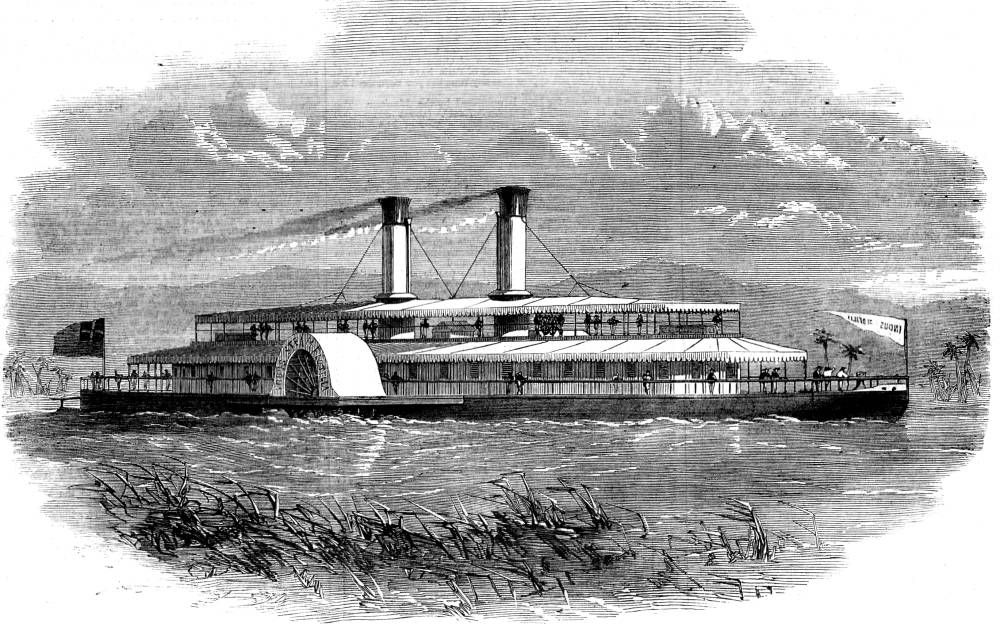
On 25 May, two steamers arrived in Karachi to take the 1st Europeans up the river; however, Frere could not embark all 650 men as the steamers were simply not large enough. To his extreme irritation, Frere found that the material, sent out from England, for four, new and larger steamers and four river flats had arrived in India in December, but the builder, Mr Laird, had refused to assemble them in Bombay as, taking previous experience as a cue when one steamer sank and another was damaged beyond repair, he insisted to the Board of Directors that the only thing to do was to assemble them in Karachi. However, the dockyard authorities in Bombay insisted they be assembled under their watch instead of in Karachi – by April, the four steamers were still no closer to being constructed. Jacob, acting in Frere’s stead, had taken a dim view of the whole enterprise and had ignored it; Barrow Ellis, who succeeded Jacob as Acting Commissioner when Jacob was called to Persia, managed to have them sent to Karachi, but found the necessary workmen had not been supplied, and the pieces of the steamers were rapidly rusting on the beach where they had been deposited. So to avoid more delay, he organised what men he could find to put them together, but he had to ask Bombay for permission to contract the workers for six months. He also applied for riveters, but by the time Frere returned in May, the new vessels were still far from complete, as the workmen had yet to arrive. To make matters worse, the serviceable but older steamers had been requisitioned for the Persia Campaign. So Frere requisitioned three much older steamers to take the troops, depleting his resources even further. The troops did eventually arrive in Multan, after considerable delays, much to Frere’s relief and that of Sir John Lawrence, who was busy emptying the Punjab of all available troops for what he knew would be a long and weary campaign of restoration in the Bengal Presidency. Frere was able to report that the Baluchi Battalion had taken it as a point of pride to have been chosen for active duty in the Punjab, and the Europeans were in the best of spirits, relieved they would not be spending any more time twiddling their thumbs in Sindh while the mutiny continued to rage.
To pacify Scott, who by now was nearly apoplectic, Frere set about organising the artillery. As the troops that had returned from Persia had been dispatched to other parts of India, Frere had no European artillery and only one troop of Horse Artillery at Karachi. Frere suggested to Colonel Hutt that he should take 90 men of the 2nd Europeans and train them up as gunners, to form a battery for the few guns that remained. Hutt approached the task with so much enthusiasm that by August Frere was remonstrating with the Bombay Government that the Commander-in-Chief at Bombay had purloined the battery for service outside Sindh, without so much as telling either Frere or Scott. The government at least took notice and insisted that in the future, Frere’s had full discretionary authority to suspend any order to withdraw troops from Sindh.
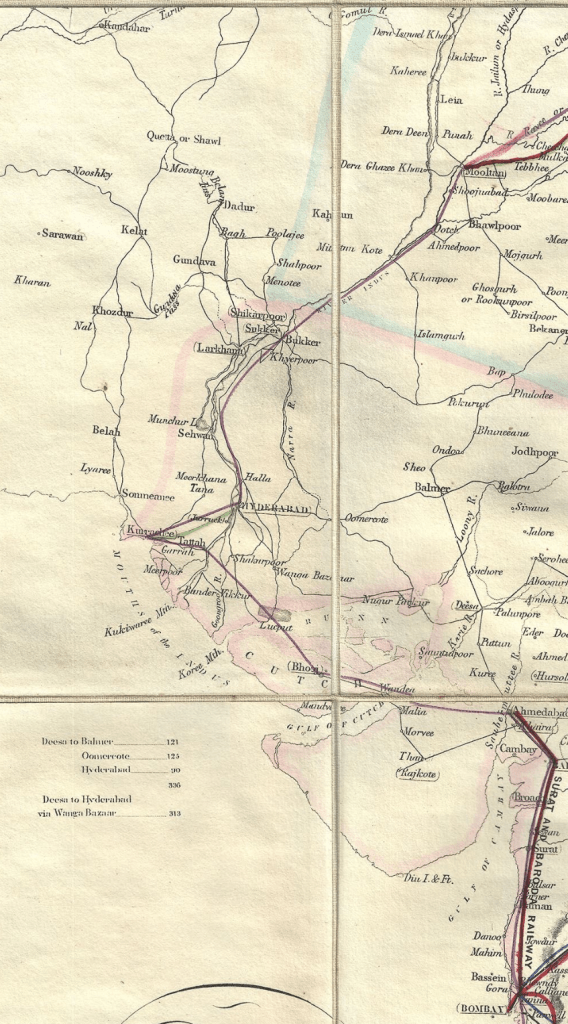
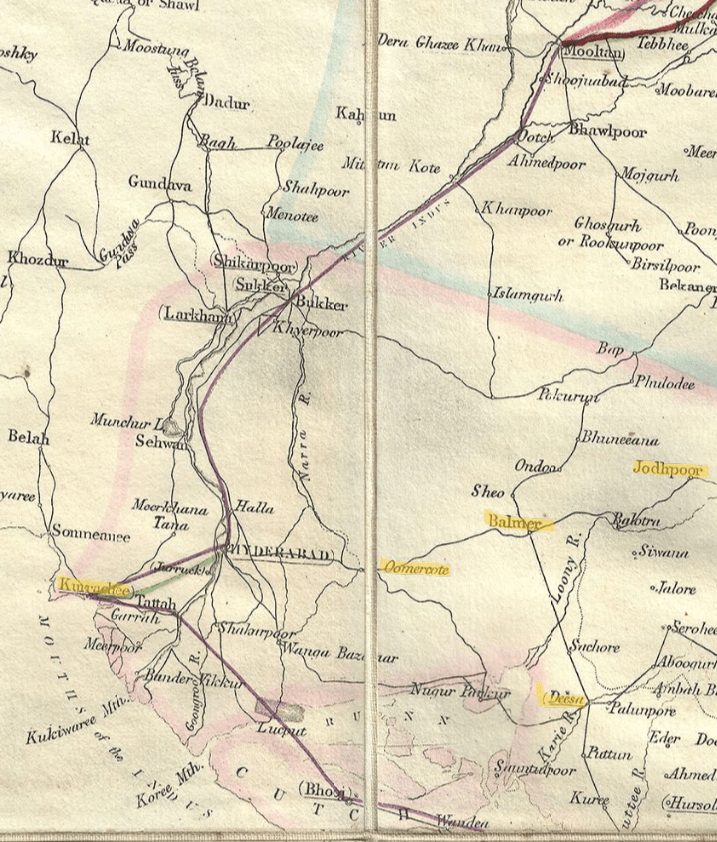
Frere surmised that the lines of communication between the Punjab and Calcutta would be severely disrupted by the mutiny, and the only way Calcutta would be able to send any messages to the Punjab would be through Bombay and, alternately, Karachi. This was hardly efficient, so Frere decided that it was time to reopen the old route via Oomercote, Jodhpur and Nasirabad to Agra, which, before the annexation of Sindh, had been the regular dak line between Sindh and Calcutta.
His plan was to connect this route at Jodhpur with branches in Bhawalpur and Multan, so letters passing to the Punjab would no longer have to traverse Sindh, thus also cutting time between Agra and Calcutta. For this, the dak would have to cross the desert. Frere had a man on hand for the job – Lieutenant George Booth Tyrwhitt of the 5th Bombay Light Infantry. Tyrwhitt was one of those rare examples of a man who thrived on danger and difficulties, to whom a sedentary life was akin to death. He ran away to sea as a boy and served as a sailor before obtaining a commission in the Bombay Army. Appointed as Deputy Collector of Mirpur and Umarkote in eastern Sindh, as one of those men no one knew exactly what to do with, Tyrwhitt relished his life on the edge of the Great Desert, forming friendships with the tribes and traders, and living more like a nomad than a collector. He took on Frere’s proposal without hesitation. With two assistants in tow and utilising his contacts among the local people, by June Tyrwhitt had managed to establish the line as far as Balmer, enabling the extension to Jodhpur. When Nasirabad fell to mutiny, and Ajmer threatened, the government instructed Frere to connect the line with Deesa. It was thanks to men like Tyrwhitt who kept the Balmer line open for the entirety of the mutiny, saving countless days in transit. Had it not worked, a dispatch from Multan or Peshawar, bound for Calcutta, would have had to traverse not just Lower Sindh but Bombay first. Instead, letters now went from Balmer to Hyderabad at the rate of eight miles an hour, an excellent rate for desert travel.
 Mutiny Reflections