“On the 31st we reached Gursuhaganj where the road to Fathgarh branches off from the Grand Trunk Road at five miles’ distance from a stream called the Kali Nadi… (Alexander)
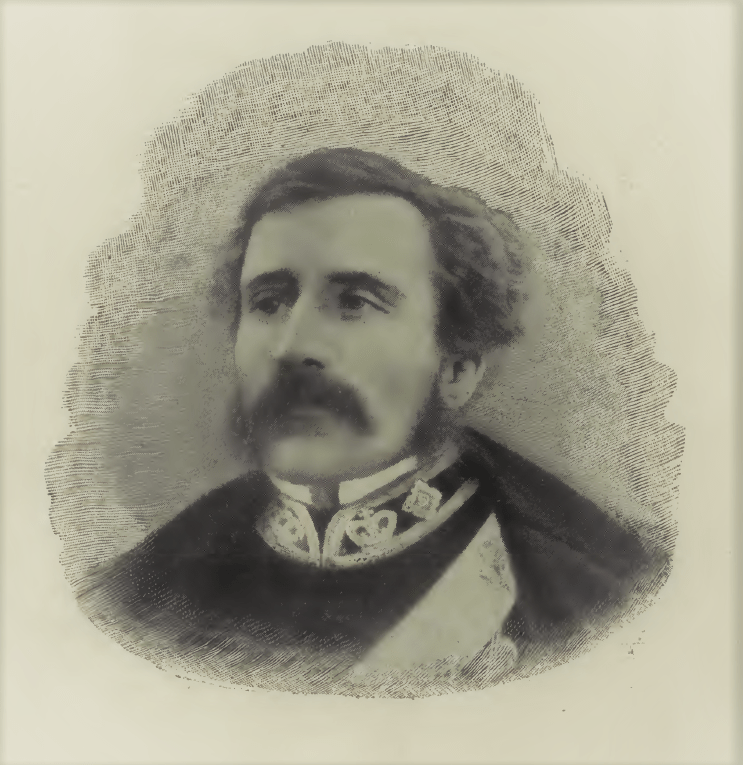
For the men under Sir Colin Campbell, 1857 ended in Gursuhaganj on the Fatehgarh road, a day of rest before the fighting commenced again the next morning. For some, it was a day of reflection. Major Anson was tired of fighting and was missing his wife — reading her letters, while on horseback, he said, made the marches shorter. At Gursuhaganj, his troop was ordered out on piquet, a mile distant from the camp, “…so here I am, about a mile from camp, sitting under a tree in a delightfully shady tope, scribbling away, seated on a morah, and commanding two guns, two companies of Infantry, and my troop of Cavalry. Our Simla friend Murray, of the H.A., is lying down by my side reading one of my books.”
For Lieutenant Hugh Gough of Hodson’s Horse, the day had brought a pleasant surprise from William Hodson himself. His brother Charles, on hearing the Guides were destined to return to the Punjab, had volunteered to join Hodson’s Horse on the march down country. He was safely ensconced with Colonel Seaton’s troops, but it would still be some time before the brothers would meet again. As for Hodson and his lieutenant, McDowell, they had delivered their despatches to Sir Colin Campbell and were riding their way back through the countryside, unaware that the chase for them was on, and Seaton was fretting himself sick. With Seaton was young Lieutenant Edward Vibart, for whom it was a sad New Year – his parents, young siblings and one cousin lay dead in Cawnpore. He was but one of many men now eagerly waiting for their chance at retribution.
That enthusiastic volunteer, Captain Oliver Jones of the Royal Navy, who had joined the whole business on a lark, spent 31 December admiring Peel’s sailors. They were as clean and tidy as if on board their good ship, and to Jones’ astonishment, had accumulated a veritable menagerie in India — “The number of pets which the sailors had was marvellous — monkeys, parrots, pigs, guinea-pigs, dogs, cats, mongooses or mongeese, which you like, and lots of other creatures. Some of the monkeys were as tame and affectionate and would follow their masters like dogs.” Campaigning in India, in Jones’ estimation, really was not so bad; the mess of the 53rd (to which he was attached) was admirable, all the fellows grand and noble, but he was still wondering where the actual fighting was to be had. Until now, he had seen none of it and was starting to wonder what the fuss was all about.
Lieutenant Edmund Hope Verney of the Shannon was spending his day at Gursuhaganj in contemplation. He still did not like riding a horse – his pony was too spirited and restless, the saddle too uncomfortable and he had distinct feeling the beast was trying to kill him, but he took time to ponder the countryside, “in some places are little brooks, clumps of nice trees, fields of wheat, tobacco, or cauliflowers; the country is nearly level with but few undulations; the trees are well grown, affording delicious shade, and generally begin to branch out at about ten feet from the ground; birds are abundant and noisy, especially green parrots some of the houses of the natives are tastefully adorned with wood carving, and we pass others with very prettily ornamented porches, the whole of which on inspection prove to be worked in dried mud.”
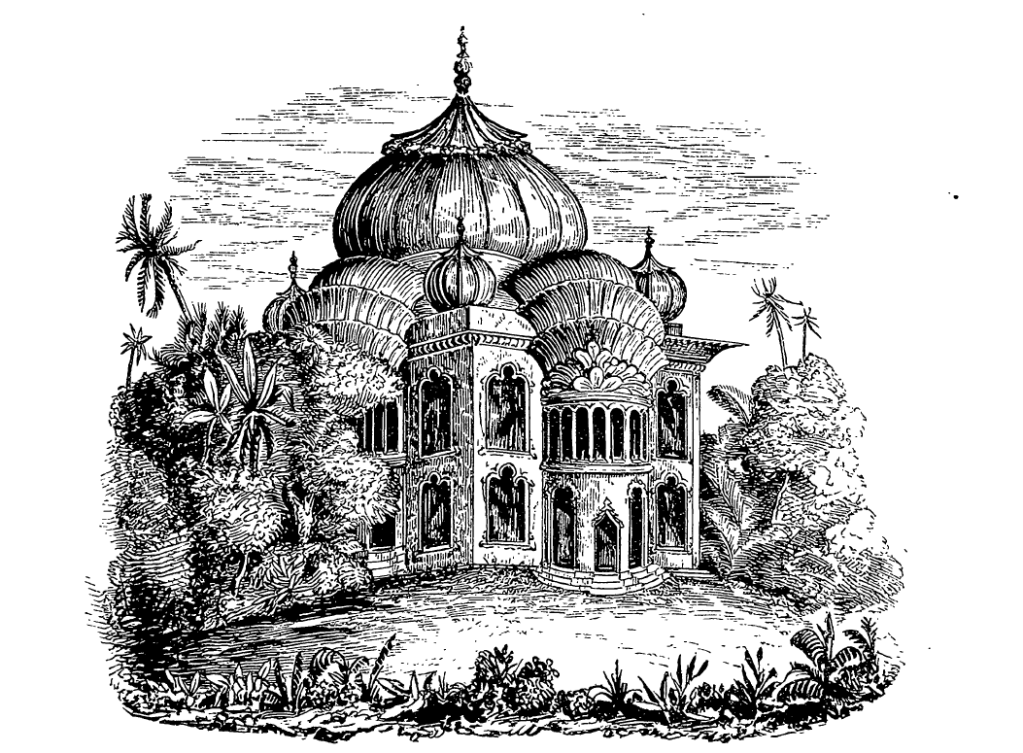
On 30 December, he spent some time sketching in Kannauj: the next day, once settled in Gursuhaganj, he contemplated the name of the place. “This place is called Goosaigunge. ” Gurh,” as in Futtegurh, means ” fort “; “Futteh ” means “victory”; “gunge, as in Goosaigunge, means “market” or “bazaar”; “pore, as in Berhampore, means “city.”
Lieutenant Frederick Roberts wrote a particularly chatty letter to his sister Harriet on the 31st – he was pleased to have come across his friend, Mackinnon, who had given Roberts ” a nice account of you all” having visited the Roberts’ family at Waterford exactly a year to the day of Roberts meeting him in a dusty camp near Cawnpore only two days hence. The reminiscences with Mackinnon, however, left Roberts wondering when happier times would come. Yet he entreated his sister to look out for “some nice girl with blue eyes and yellow hair (as Mackinnon raves about) for me, Harriet dearest, who will console me for having to return to the gorgeous East…” As for Mackinnon, he was living now in Roberts’ tent and “you may fancy how I make him talk about you.”
Back in Cawnpore, Major Ouvry was tenderly looking after Major Ewart, still near death, his gangrenous wound causing him all the suffering imaginable; his recovery was thought most doubtful. Ouvry was also writing to his wife, with the hope of seeing her again soon.
Cawnpore, 31st December, 1857.
I can only reiterate my daily prayer that you will proceed immediately to Agra. I enclose an order for one
thousand rupees, as you may be short of money. I am a little better, and if I continue to mend, of course, I cannot go home with you, as my Regiment is still on service, although the fighting may be done. I was before a Medical Board who decided that I might stay six weeks at Cawnpore to see if I could recover before going to England. My name has appeared in all Despatches, but that is all humbug and nonsense. I have now not received a line from you for three months. I bless you, my dearest, such is the prayer of your affectionate HENRY.
At the Alambagh, where Sir James Outram had been left to hold the fort, the men were settling down to another wearisome night of watching and waiting. For Captain Maude, the Alambagh was dull work – he amused himself with the antics of a bull terrier pup he had brought with him from the Residency and, like the other officers, “whiled away our spare time in a perhaps scarcely less reprehensible manner, namely, by a continual study of the devil’s picture-books.” Rumours of an attack, planned for the next day, circulated freely through the camp on the 31st — what would come of it, no one could tell.
In Other Fields
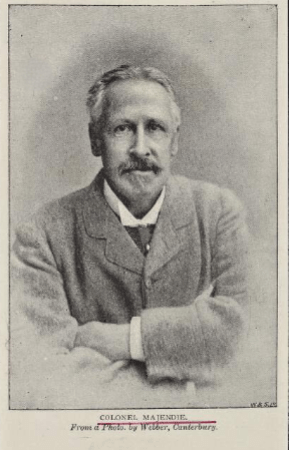
Lieutenant Vivian Dering Majendie of the Royal Artillery was far away from the war for now and was still in Calcutta, where he had just arrived. He was battling squadrons of mosquitoes instead, anointing the stings liberally with Eau de Cologne, salad oil, lime juice, mustard and “a hundred other ‘infallible cures’ to no avail… I drank gallons of cold water, I buffeted the air wildly in the air with bolsters, I tore at myself with my nails, seizing the most bristly clothes brush procurable, I groomed myself after the manner of a steed… As far as I could ascertain by inquiry and private interviews with my looking glass, it appeared to me that I had four cheeks on the left side of my face and three on the right; two and a -half upper lips, five eyelids, one nose and three-quarters, and a large proportion of ears, particularly on the right side of my head. In fact, how I found room for all these additional organs, I am at a loss to discover; but there they were, rather in the way than otherwise, for my lips kept getting into my mouth, my eyelids were in a chronic state of wink, almost entirely obscuring my sight, the enlarged state of my ears materially interfered with brushing my hair; while, as for getting my hat on to my head -ha, ha !—why, it would have been suicide to think of it.” It was a strange country this India and Calcutta, as far as Majendie could ascertain, was the queerest place he had ever seen. He found the city itself was nothing more than a “new cloth in an old garment” where civilisation and progress were “sadly wanted.” When not accosted in the local bazaar by men trying to sell him Hervey’s Brown Sauce with one hand and a second pith helmet with the other, the carved curiosities all appeared to be made in China. The English books were inferior editions, and why anyone wanted a box of French plums from a man who sold Walker’s Pronouncing Dictionary was a mystery. A servant he could not speak to as yet brought him a flannel shirt instead of his pipe and made him wonder if he would ever get out of this wretched place in one piece. All around him were the stories and sights of the mutiny — the sombre ladies disembarking from river steamers, all dressed in black with their trails of thin children, the wounded men groaning on their stretchers with bloodied limbs in dirty bandages. His gentleman companion at dinner horrified him by saying he had lost not only his wife but 13 blood relations in the events. If this was not bad enough, he saw a little boy, who had been handed over to the authorities by kindly villagers. They could not say where he came from or who he was, but he had been found by them in the countryside, a small child whose only recollection of his own name was “Mamma’s Pet.” Who he was was anyone’s guess. It is little wonder, when Majendie left Calcutta, just after the new year, he truly wanted to grip his hands around a sepoy’s throat. He would see his fair share of fighting “Up Among the Pandies, and fortunately, his attitude would change.
“If thou art worn and hard beset
With sorrows that thou would’st forget,
If thou would’st read a lesson, that will keep
Thy heart from fainting and thy soul from sleep,
Go to the woods and hills no tears
Dim the sweet looks that Nature wears.”
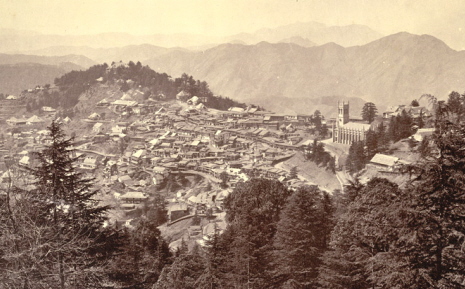
The Ladies of Lucknow spent the New Year’s Eve in Allahabad, all wondering what would happen to them next. Meanwhile, the ladies of Agra, who had left their refuge on the 12th of December, were proceeding by road towards Delhi, where they spent a strange Christmas in the “City of Horrors” before continuing their journeys, some destined for Calcutta, others for home. Ruth (Rosa Mary) Coopland, who had escaped from Gwalior in June and had given birth to her son at Agra Fort barely two months later, was heading for Simla to her aunt. She travelled on the 26th to Karnal and on the next to Ambala. A letter from her aunt was waiting for her at the hotel, with instructions regarding the rest of the journey and on31st December, after purchasing warm clothes and blankets for her baby, she set out for the hills. Two days later, she arrived. “I was delighted to find myself in an English-looking, brightly-lighted drawing room, and actually to go upstairs into a homelike bedroom, papered, carpeted, and curtained, warmed with a glowing fire, and having a little cot for my baby, and then to descend into a comfortable dining-room, where a Christmas dinner was spread.” As for Ruth, she had the satisfaction, at least, of knowing that Scindia of Gwalior had buried her husband’s body with as much dignity as he could afford it. The British officers who arrived there months later reinterred him in the Gwalior churchyard. With her grief and baby boy, she would return to England. In June 1858, Ruth instructed that a tomb be placed over her husband’s grave. As for her cousin Sarah Selina, who had married in April 1857, the mutiny was far from over — her husband, Lieutenant Gerard Noel Money (1st Bengal European Regiment), was fighting somewhere in the far-flung fields of Oudh.
Miss Madeleine Jackson, Mrs Orr and her daughter, Louisa, were still being held captive in Lucknow. Their male companions — Miss Jackson’s brother, Captain Orr, Quartermaster Sergeant Morton and Mr Burnes had been murdered in November as Campbell was relieving the Residency. Little Sophy Christian died of privation on the 24th. It would be a sore blow to her grandfather, Mr Charles Raikes, still at Agra, who was hoping above hope that someone would save her, the only child of his favourite daughter, now long dead in Sitapur with her husband. For now, the ladies were left to pray for their own salvation. It would come, but not in a way anyone could have imagined. Sir James Outram from the Alambagh was still offering handsome rewards for their release, but until now, no one had taken him up on the offer. Madeleine’s cousin, Coverley Jackson, was prowling around Cawnpore, all his plans for a swift rescue thwarted by circumstances. Mrs Orr’s brother-in-law, Adolphus of the Intelligence Department, remained at the Alambagh and, though in contact with the captors, was unable to find an avenue for their relief. For now, Lucknow remained lost and their loved ones with it.
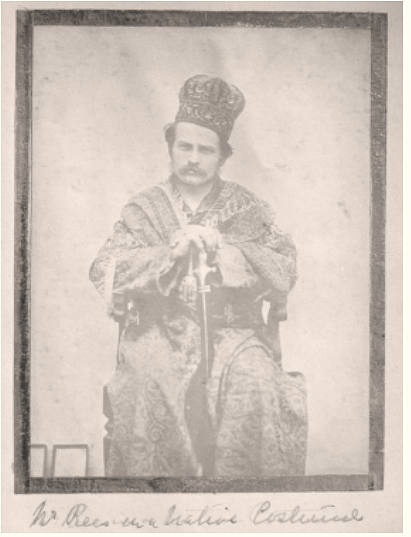
They were by far not the only captives — somewhere, Amy Horne, taken at Satichaura Ghat back in June, was still being held, now the reluctant wife of the sowar who had done his best to save her life. For her, time had little meaning, and the new year would bring another long wait in uncertainty. Her story would not end until April. Margaret Wheeler was presumed dead, but she would be seen, riding a horse and dressed in Muslim clothes, with the rebel army of Oudh, another lost girl. Her story would not end for many years to come.
“It was near Christmas in the month of December 1857, that some English clothing was sent to us and we were ordered to dress ourselves and go before the Chuckladar. Feeling puzzled at the meaning of this I enquired from the guards what was the intention of the Chuckladar to do with us. The officer of the guard said, that as far as he could learn, the Mussalmen had insisted on our being put to death and we were to be executed in English dress so that the rebels might have the gratification of scoffing at, and deriding us in our dying moments and of insulting our corpses. We were taken to the verandah of the courthouse and kept there, without food, under a strong guard all day. Towards evening we noticed certain preparations going forward in a bath-room. A number of pots of water were placed there, the floor was covered with straw, and a man was busily employed sharpening a large Goorkha kris, or knife weighing about two pounds. We knew then the fate that was intended for us.” (Yeoward)
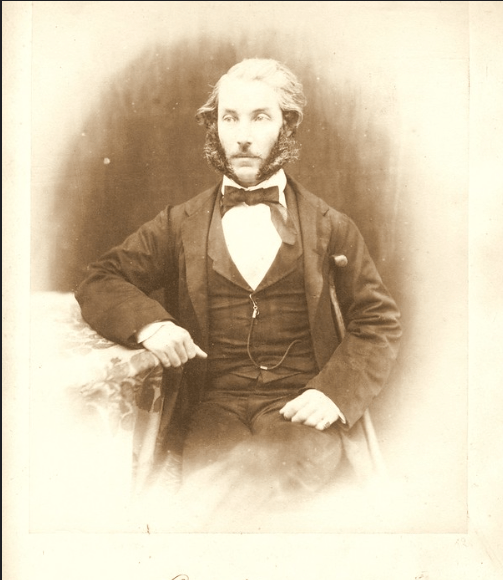
That fate, however, was fortunately postponed. Mr Yeoward (whose story will soon be told), the late head clerk of Gonda and his family were still prisoners, held in the Gorakhpur jail where they “spent a wretched Christmas day” – just one of many wretched days they had spent since fleeing Gonda in June. Like Amy Horne, no one was aware that Yeoward was alive or that he even existed. The same was true for David Churcher, the last fugitive of Fatehgarh, though not a prisoner but in hiding, a guest in the lands of Hardeo Baksh, either unwilling or unable to believe he was not the last Englishman left alive in India. In a month, his brother would find him.
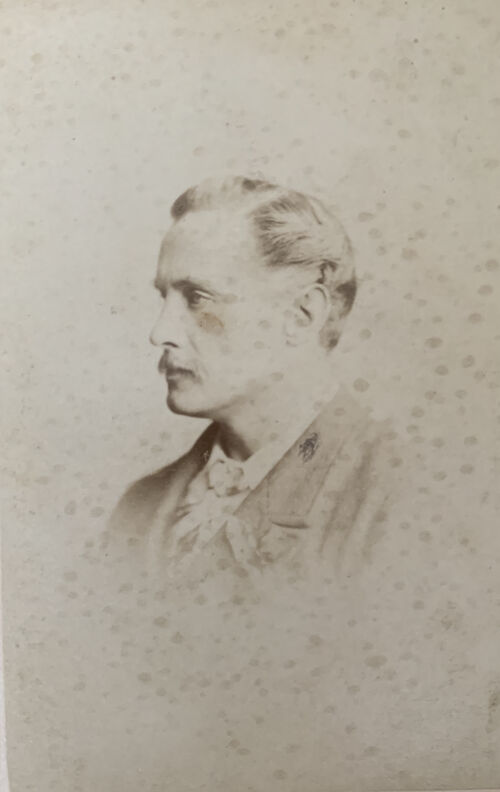
The brave but sometimes grumbling defender of Lucknow, Leopold Ruutz Rees, tired of waiting in Allahabad defied all authority and as some said, having taken leave of his senses, hired a dak and made his own way to Calcutta. He spent New Year’s Eve on the road with his companion, Mr Brant, and they arrived safely at their destination. For Rees, his adventures would end in Calcutta, “where I was granted the unspeakable pleasure of shaking hands with my dear brother, and where I could once again enjoy all the blessings and carefree comfort of life in his friend Schweighäufers’ beautiful home.” He would live to the grand old age of 80, dying in London in 1909.
In Central India, Sir Hugh Rose was planning his campaign, which would open on the 8th of January 1858, but without Henry Durand, replaced at Indore by the return of Robert Hamilton. Durand, lamenting his wife’s death, wrote on the 31st of December,” of a year of bitterness and woe. I must fight on alone in a world which, from my birth been my enemy, and in which she alone rendered life bearable. She was its great blessing, its light – all gone now.” In January, Durand would be in Calcutta without any appointment at all, and his offers to join Sir Colin Campbell in the field were soundly rejected, and he would side-stepped for the commissionership of Oudh. He would also eventually remarry a sorrowing widow in her own right, Emily Polehampton.
For Captain Edwin Maude, after the Persia Campaign, he had only seen some active service against angry Bhil tribesmen, which had led him to his present camp, overlooking the Khandeish Hills, with the mutiny far away.
“On New Year’s Eve, being in a serious and contemplative mood, I issued from my tent about midnight; it was a radiant night, the moon nearly at its full, and the blue canopy of heaven, bespangled with numerous brilliant stars, seemed engaged in a grand Hallelujah, “declaring the glory of God,” as it ushered in the New Year! All was still in my little encampment, almost hidden from view in a tope, or grove of mango trees, watered by a small and clear stream; dusky groups of Sipahees, muleteers, and servants lay slumbering around the half-extinguished watch-fires; not a sound was heard, save the measured tread of my sentry near my tent.” His lot would fall to remain where he was for some months to come.
For a brief moment, a strange stillness had fallen on India. The fire of the mutiny was still ablaze and the ashes far from cold – the next day, a new year would dawn and bring with it an unavoidable war.
Sources:
Anson, O. H. S. G. With H.M. 9th Lancers during the Indian Mutiny: The Letters of Brevet-Major O.H.S.G. Anson. Edited by Harcourt S. Anson. London: W. H. Allen & Co., 1896.
Coopland, R. M. A Lady’s Escape from Gwalior and Life in the Fort of Agra During the Mutinies of 1857. London: Smith, Elder, and Co., 1858.
Durand, H. M. The Life of Major-General Sir Henry Marion Durand, K.C.S.I., C.B., of the Royal Engineers. 2 vols. London: W. H. Allen & Co., 1883.
Gordon-Alexander, William. Recollections of a Highland Subaltern: During the Campaigns of the 93rd Highlanders in India, under Colin Campbell, Lord Clyde, in 1857, 1858 and 1859. London: Edward Arnold, 1898.
Gough, Hugh. Old Memories. Edinburgh: William Blackwood and Sons, 1897.
Jones, Oliver J. Recollections of a Winter’s Campaign in India: In 1857–58. London: Saunders, Otley, and Co., 1859.
Majendie, Vivian Dering. Up Among the Pandies; or, A Year’s Service in India. London: Routledge, Warne, and Routledge, 1859.
Maude, Edwin [Colonel E.]. Oriental Campaigns and European Furloughs: The Autobiography of a Veteran of the Indian Mutiny. London: T. Fisher Unwin, 1908.
Ouvry, Henry Aimé. Cavalry Experiences and Leaves from my Journal. Lymington: Charles T. King, 1892.
Raikes, Charles. Notes on the Revolt in the North-Western Provinces of India. London: Longman, Brown, Green, Longmans, and Roberts, 1858.
Roberts, Frederick Sleigh. Forty-One Years in India: From Subaltern to Commander-in-Chief. Vol. 1. London: Richard Bentley & Son, 1897.
Roberts, Frederick Sleigh. Letters Written During the Indian Mutiny. Reprint. New Delhi: Lal Publishers, 1979. (Note: This captures the primary source material compiled from his personal correspondences).
Ruutz-Rees, Leopold Edward. Selbsterlebtes während der Belagerung von Lucknow. Leipzig: F. A. Brockhaus, 1858.
Verney, Edmund Hope. The Shannon’s Brigade in India: Being some Account of Sir William Peel’s Naval Brigade in the Indian Campaign of 1857-1858. London: Saunders, Otley, and Co., 1862.
Wylie, Macleod [M.]. The English Captives in Oudh: An Episode in the History of the Mutinies of 1857–58. Calcutta: G. C. Hay and Co., 1858.
Yeoward, George. An Episode of the Rebellion and Mutiny in Oudh of 1857 and 1858: Describing the Adventures and Rescues of a Small Party of Fugitives. Lucknow: American Methodist Mission Press, 1876.
 Mutiny Reflections