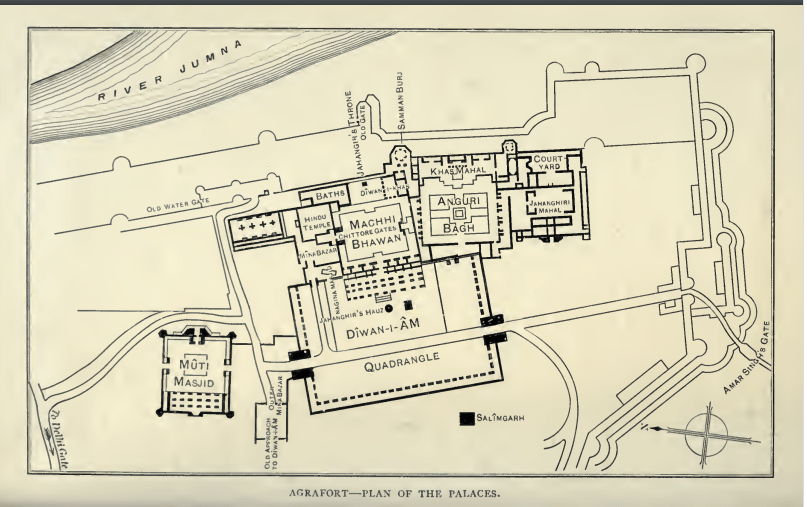
Agra Fort would seem a strange place to Mark Thornhill and William Muir today.
While it has been transformed into a tourist spot, the army retains 75% of it, leaving visitors with not as much to see as perhaps they would envision, especially those tracing the steps of 1857.
The entrance today is the Amar Singh Gate as Delhi Gate remains closed to the public.
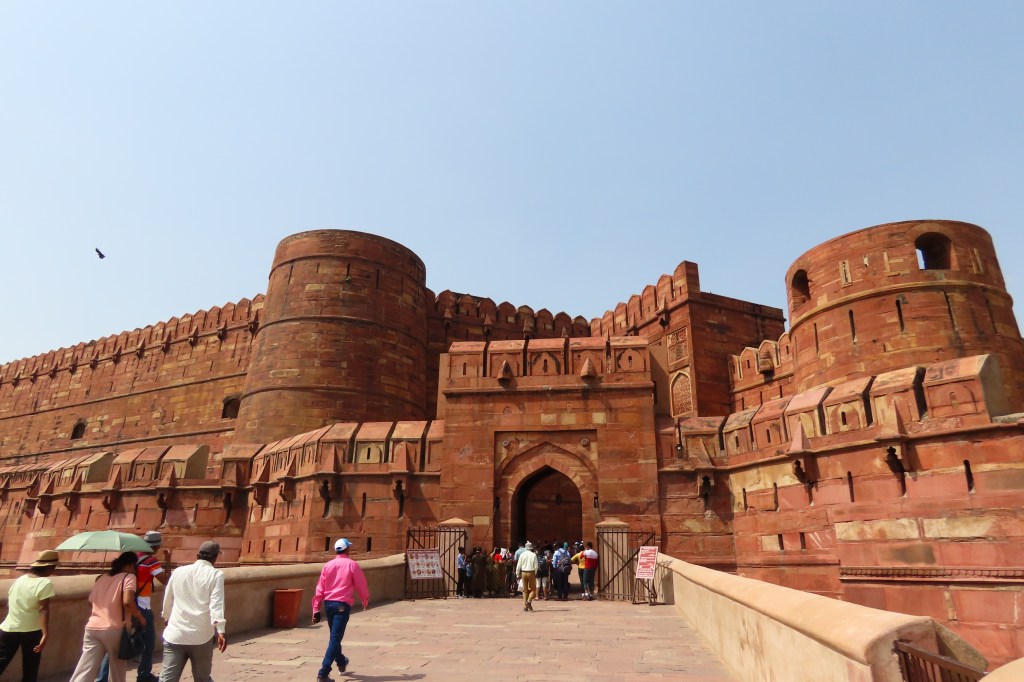
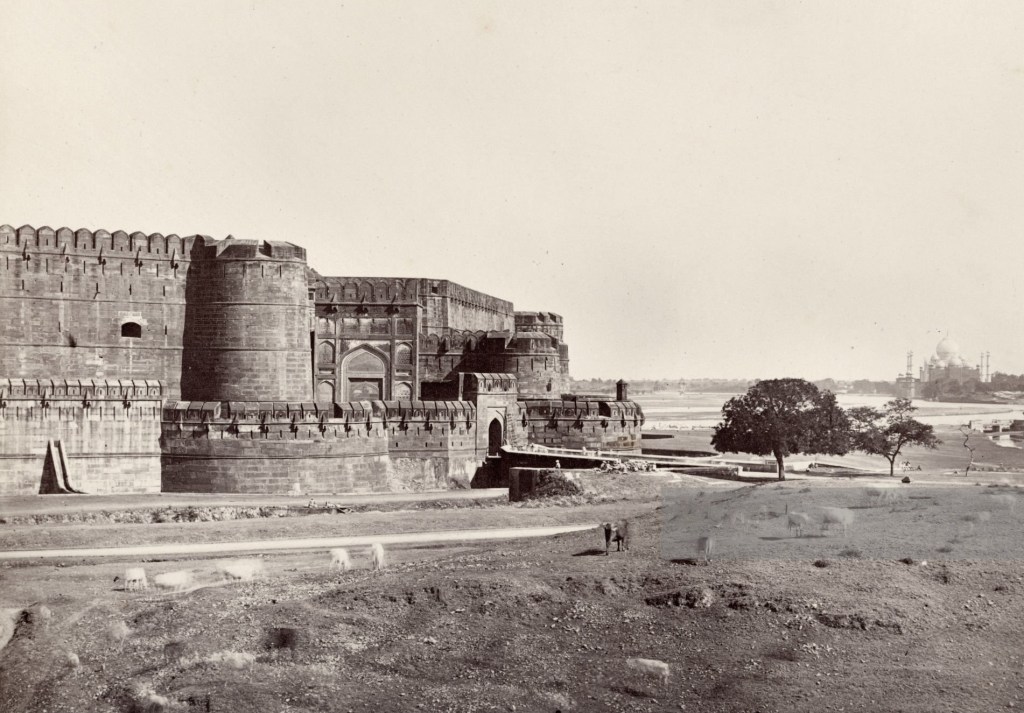
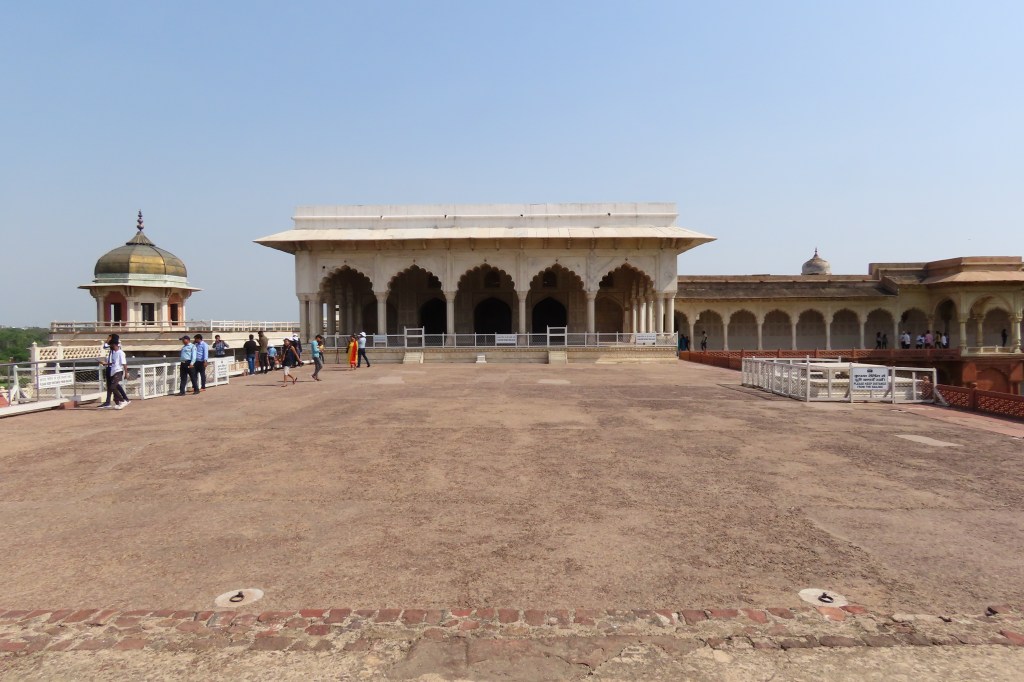
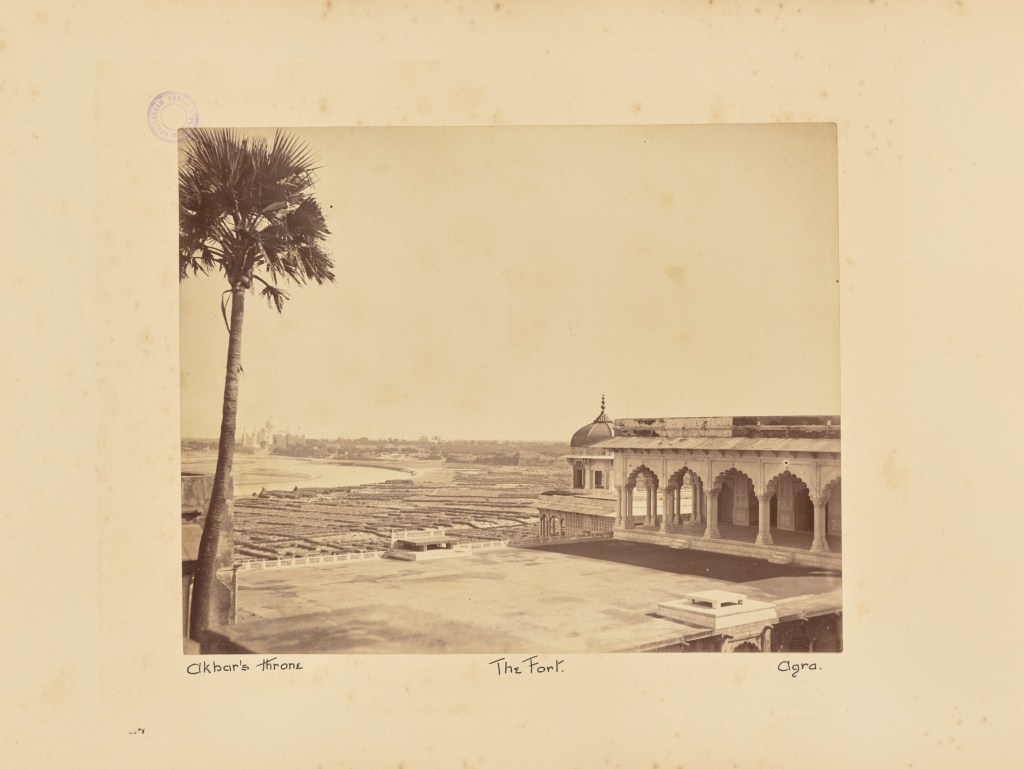
Once inside, it is striking how some views are remarkably unchanged.
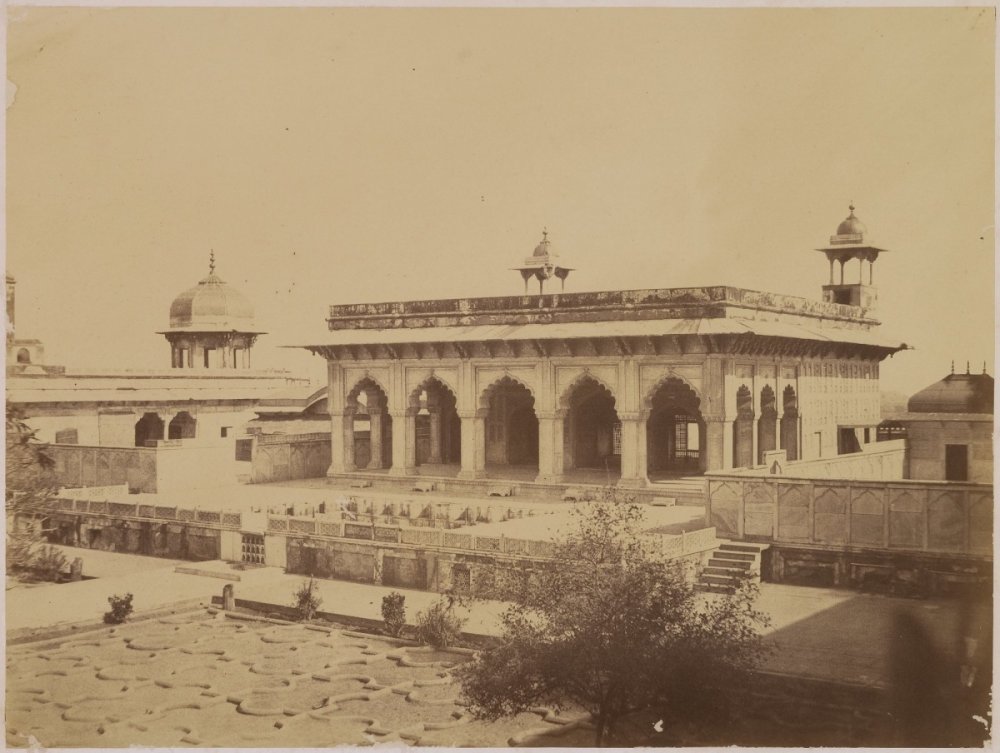
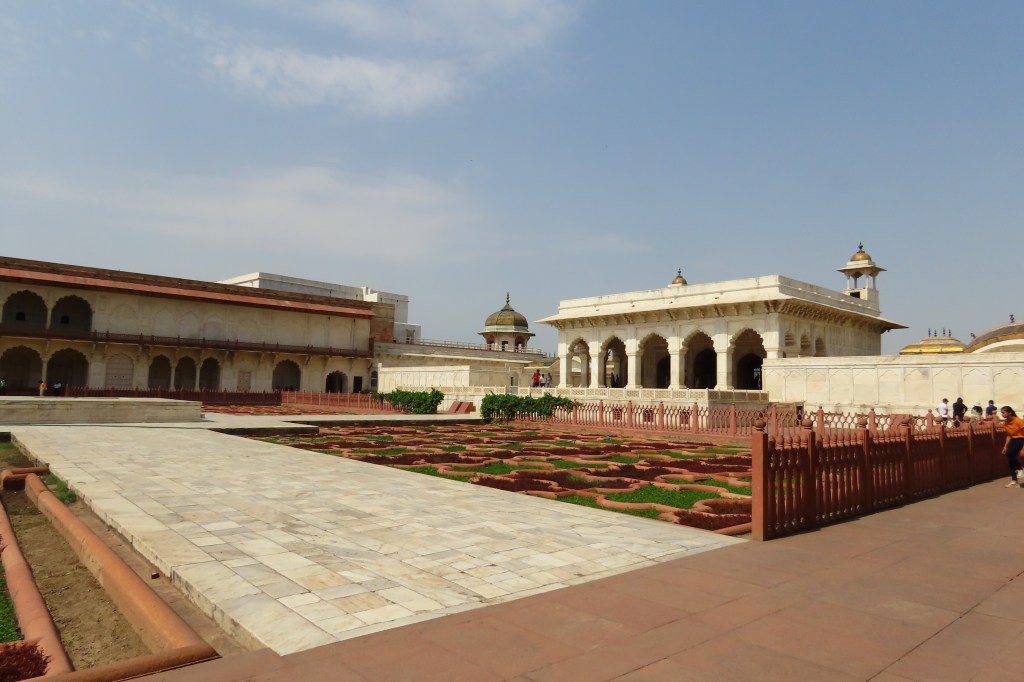
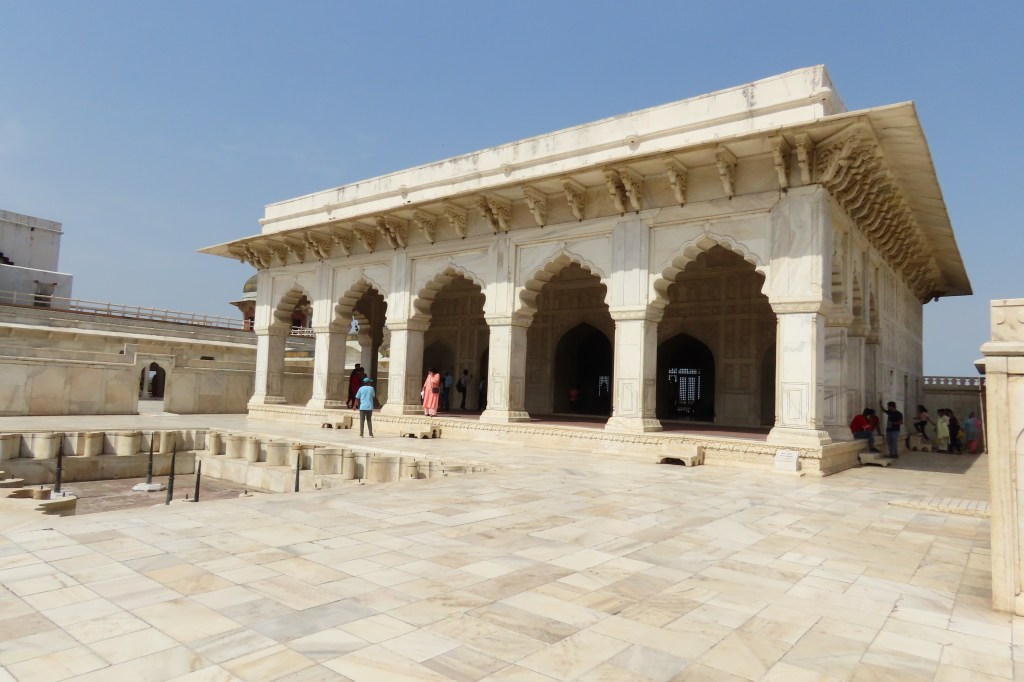
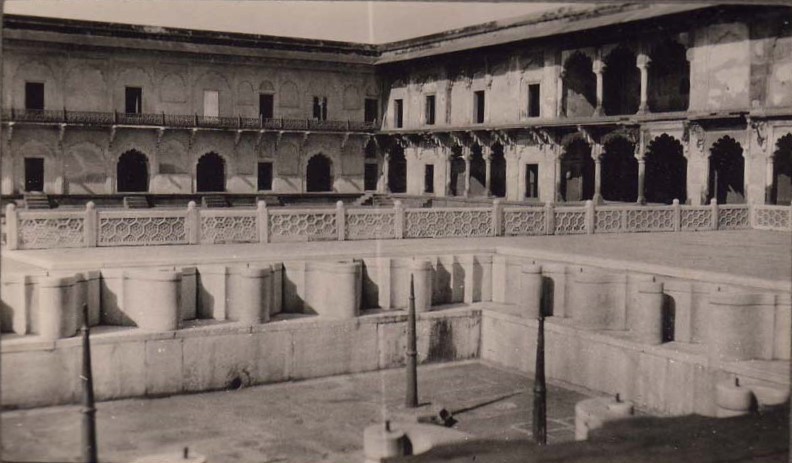
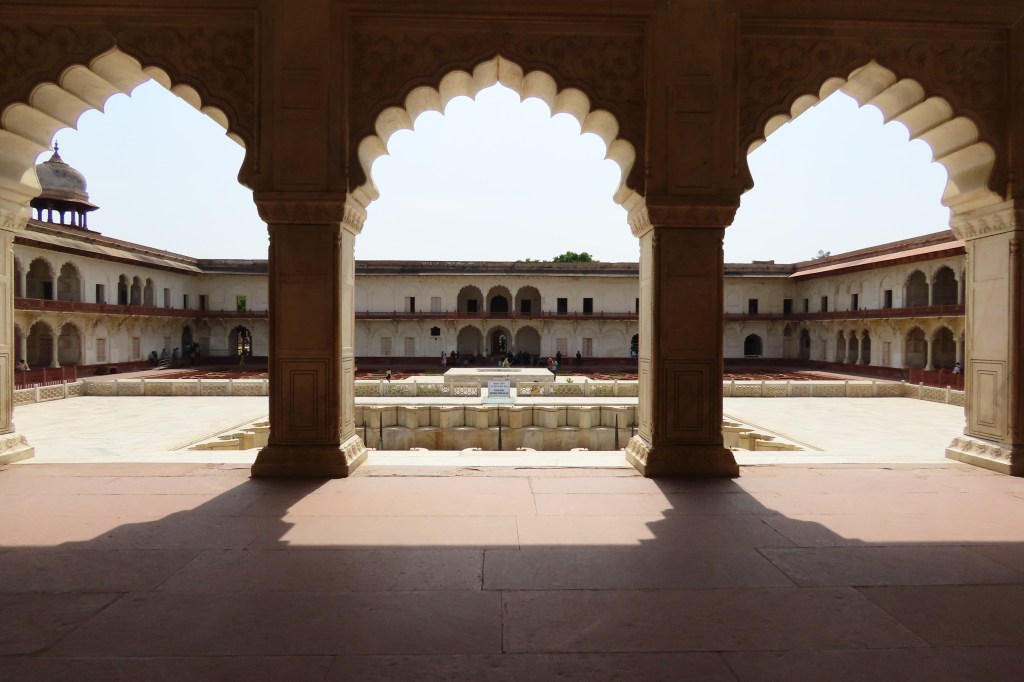
Some transformations are evident in the passage of time.
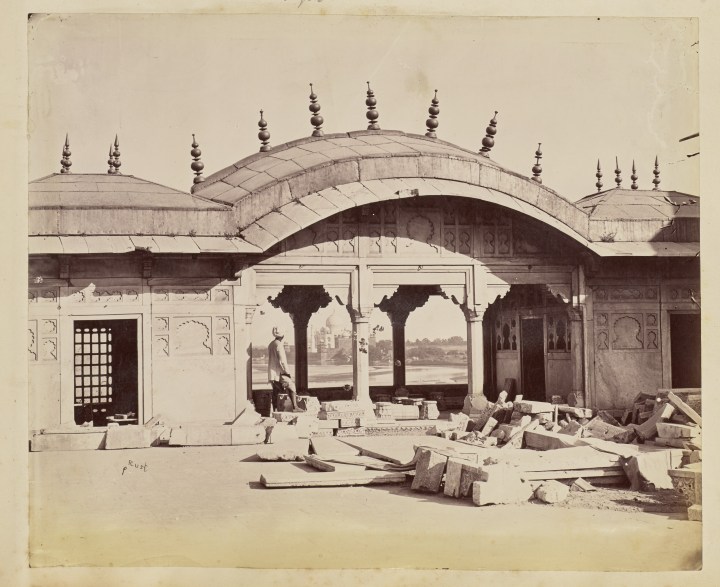
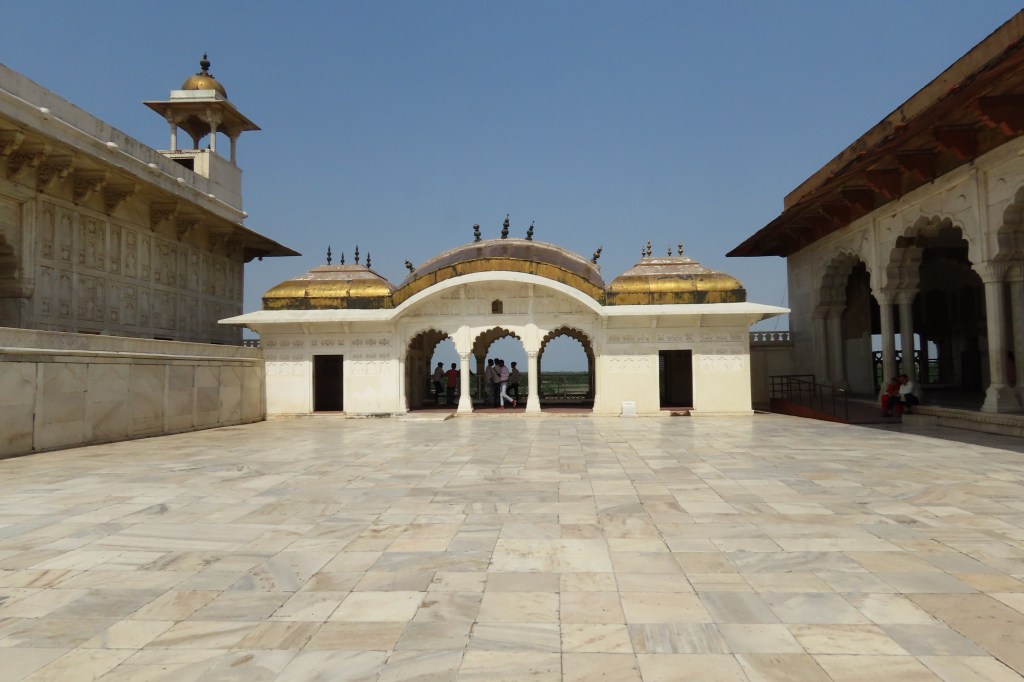
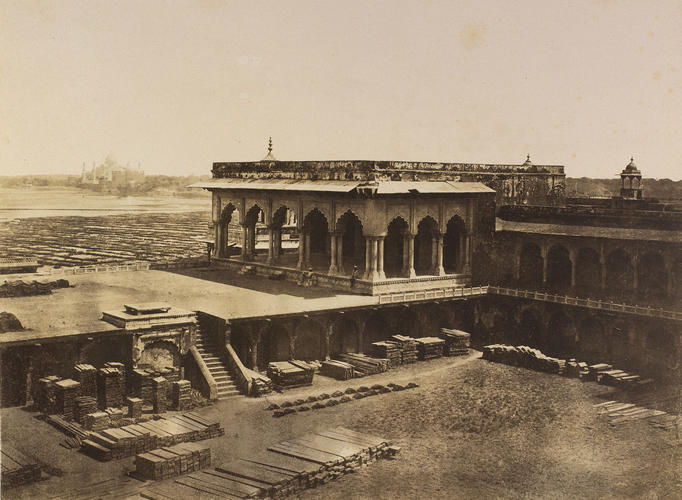
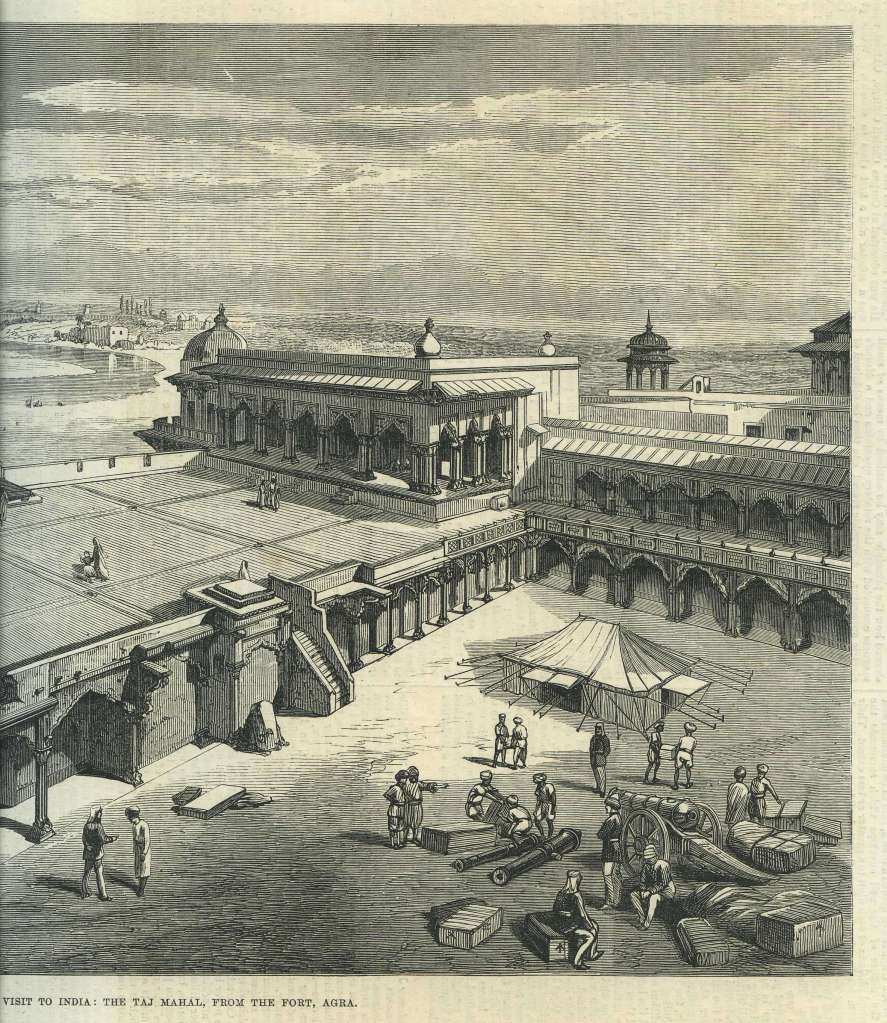
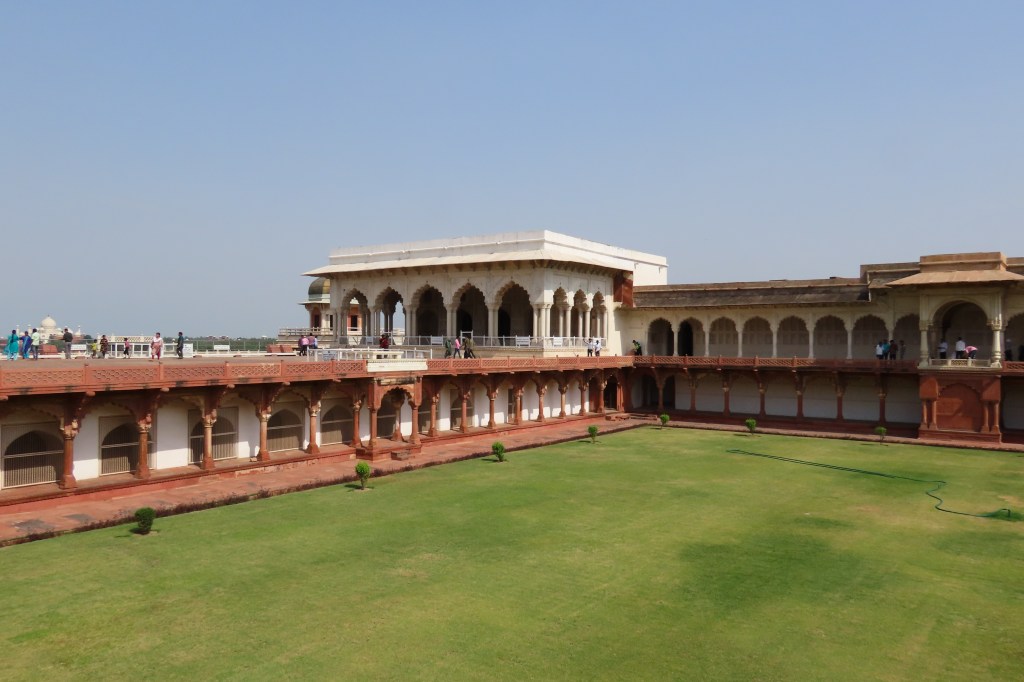
However, others are still the same.

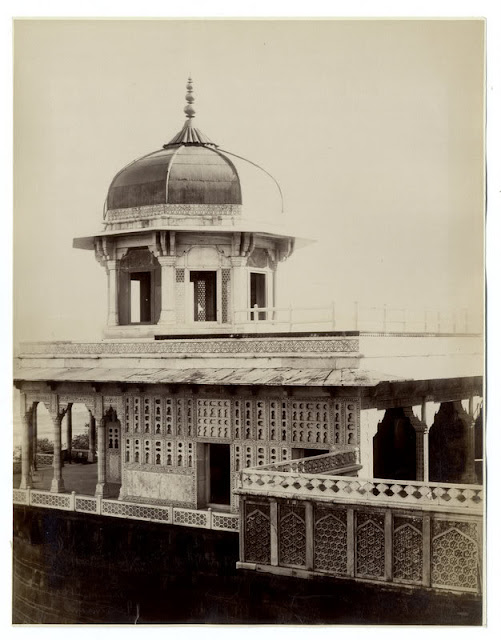
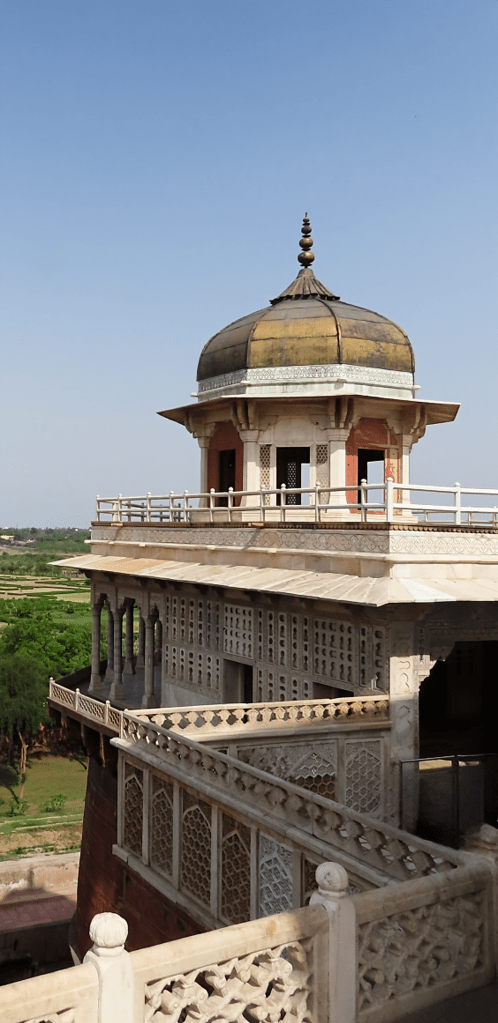

One time, a curious visitor stood in a doorway.
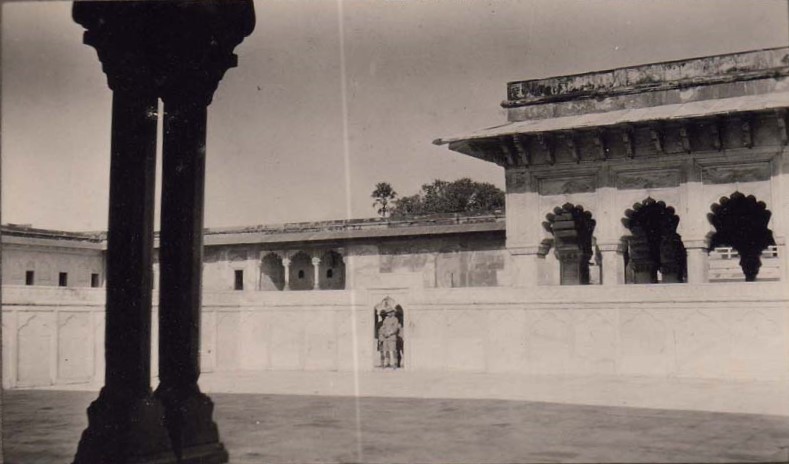
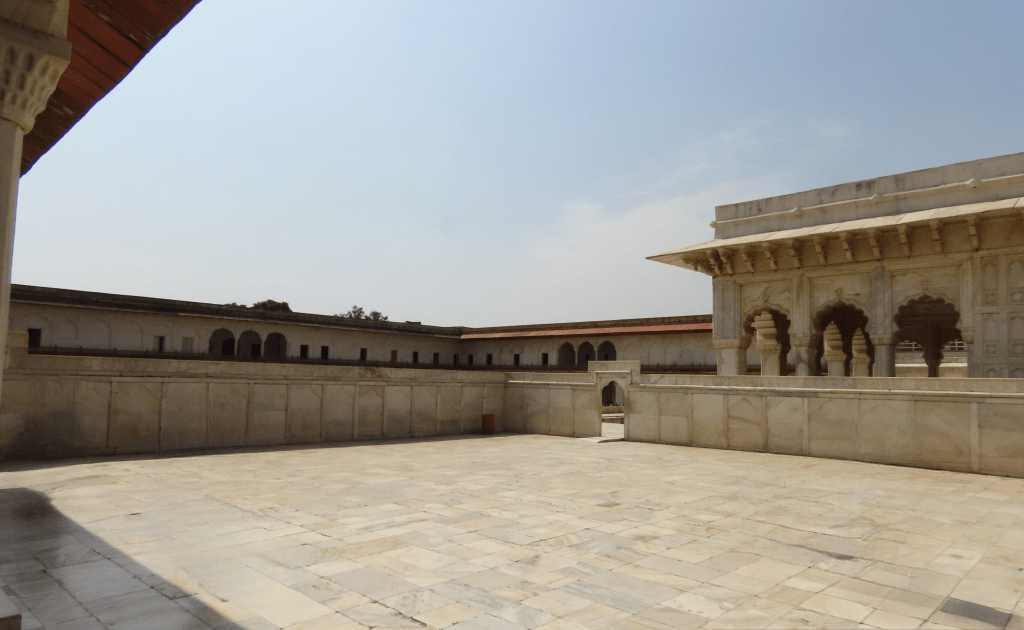
While his footsteps are long silent, the doorway remains.
Another will never leave.
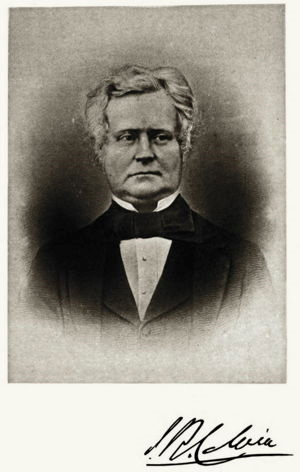
The fourth child of James Colvin, a merchant in the firm Colvin, Bazett&Co, in Calcutta, John Russel was born in 1807.
Sent to England at an early age, he was educated at the East India Company College in Hertfordshire and returned to India in 1826. A young man of some promise, Colvin became private secretary to Lord Auckland in 1836 and served him during the time of the First Anglo-Afghan War of 1837. With the war ending in disaster, Colvin saw his fortunes and favour wane as he was sent to Tenasserim in Burma as Commissioner from 1846 to 1849. In 1853, Colvin had done his due-diligence in Burma and a more favourable Lord Dalhousie appointed him Lieutenant-Governor of the North-West Provinces. In 1853, Colvin took up residence in Agra. He was
“..considerable ability; conscientious, painstaking, courteous, and amiable. He was animated by a thorough sense of duty, gave all his energies to the public service, and never spared himself. It is not too much to affirm that had his lot been cast in ordinary times his reputation as Lieutenant-Governor would have rivalled that of the most eminent of those who, before and subsequently, have held that office. But with all his ability, his experience of affairs, and his devotion to duty, Mr. Colvin lacked that one quality, the possession of which is absolutely necessary to enable a man to buffet successfully against the storms of fortune. Mr. Colvin wanted, in a word, that iron firmness—that rare self-confidence—which enables a man to impress his will upon others.”
Colvin died in Agra Fort in September 1857, worn out in body and mind, harangued and hassled by his quarrelsome subordinates and by long, demanding letters from Calcutta, insisting he produce his administration reports for the past year. The records, however, had been burnt and the information Calcutta so urgently desired was lost. While a war raged around him, Colvin was trying to please the government he served.
He died at 5 pm on the 9th of September, 1857 and was buried in the spot he chose for himself – in front of the Diwan-i-Am.
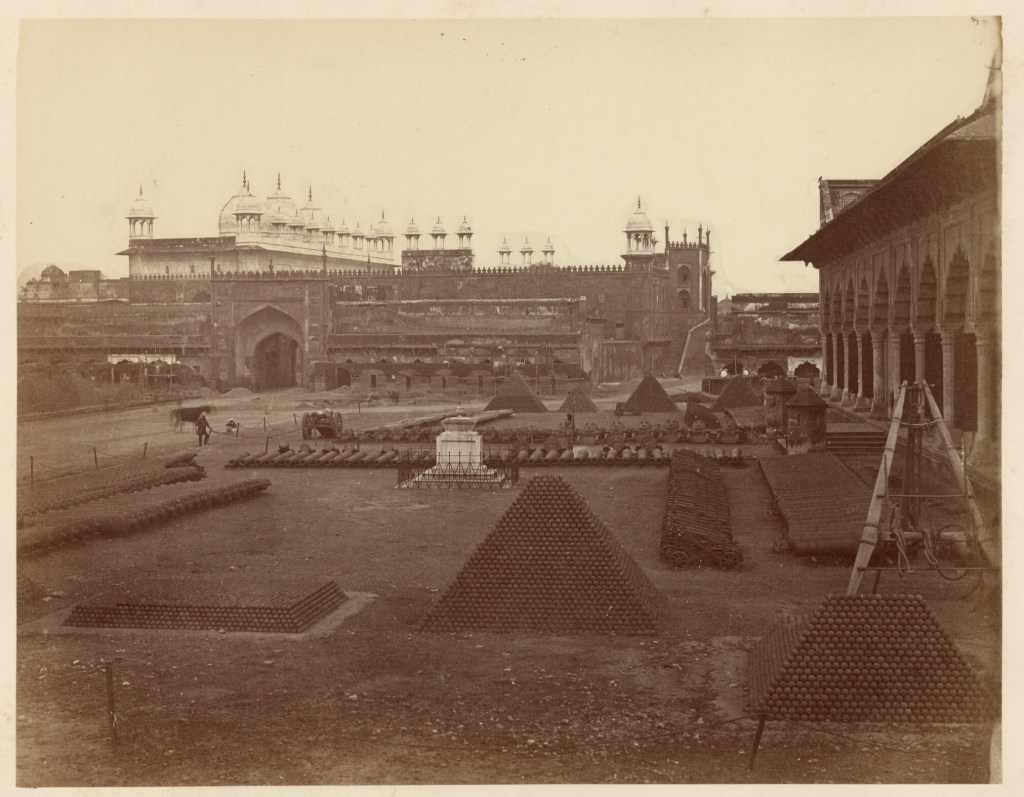


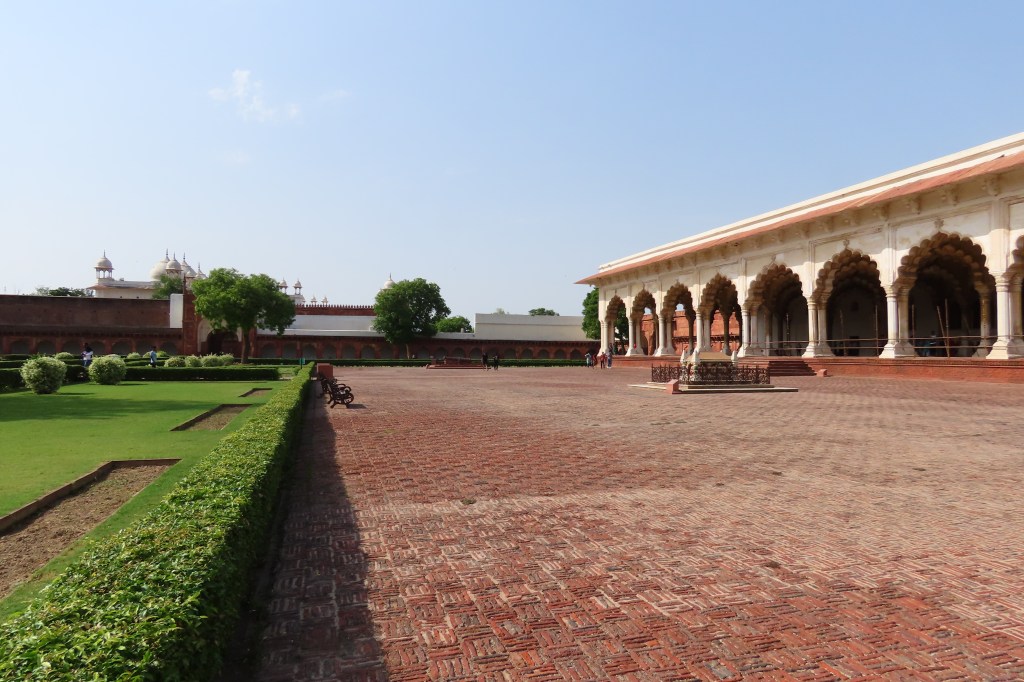
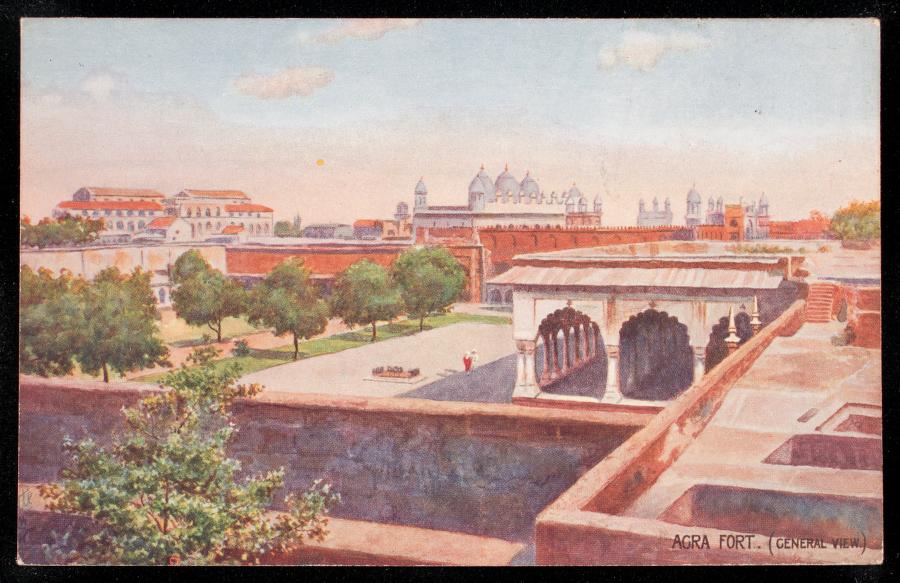
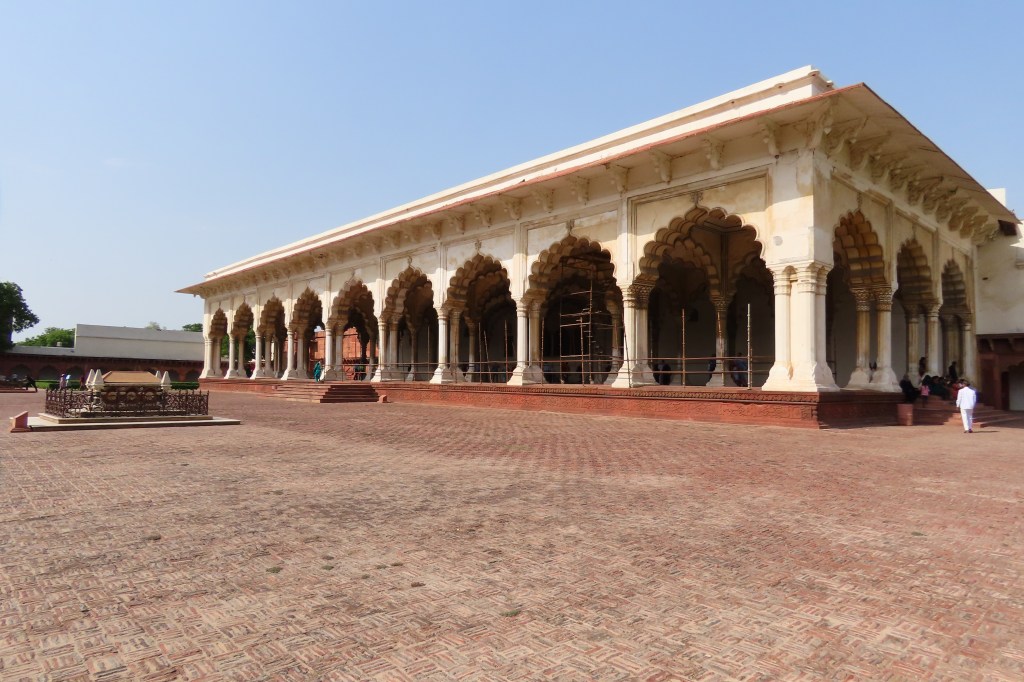
Behind a guarded gateway sits the Moti Masjid, the famed Pearl Mosque. No longer open for visitors, it can be seen from afar.
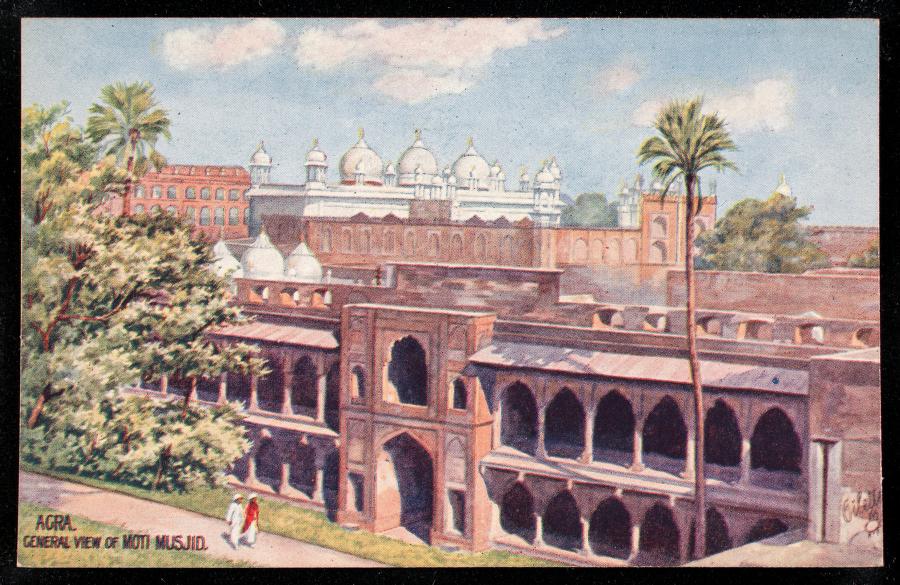
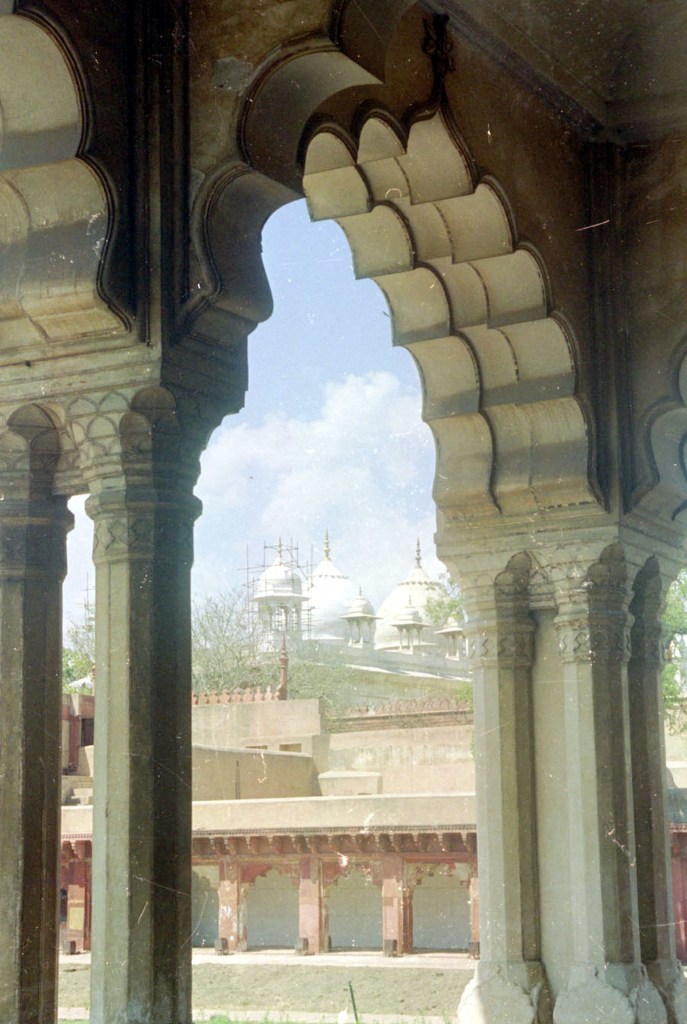
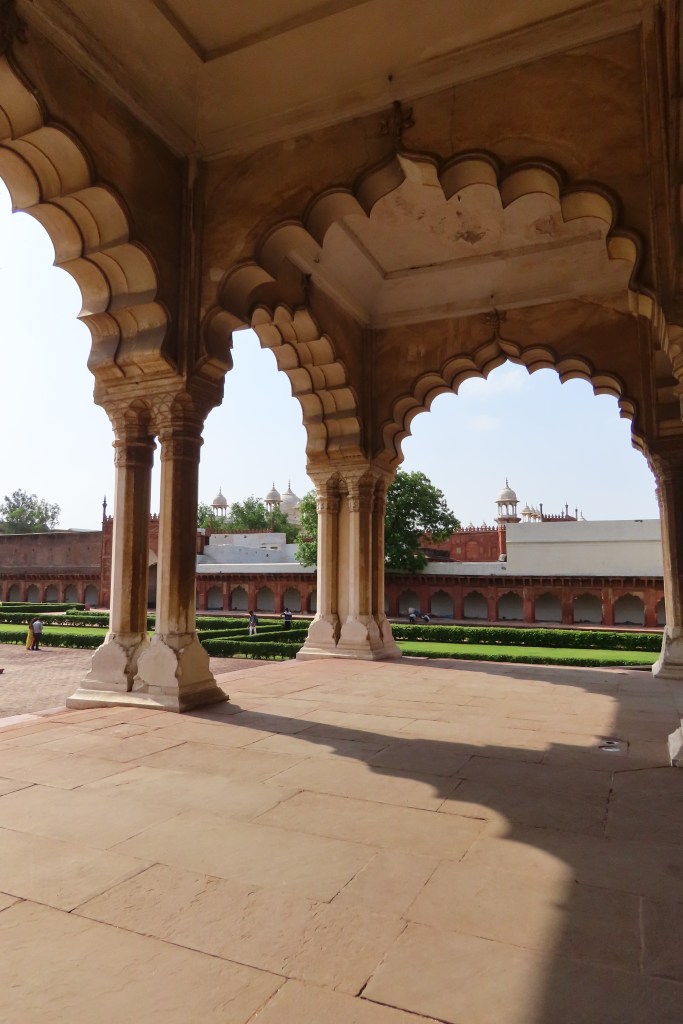
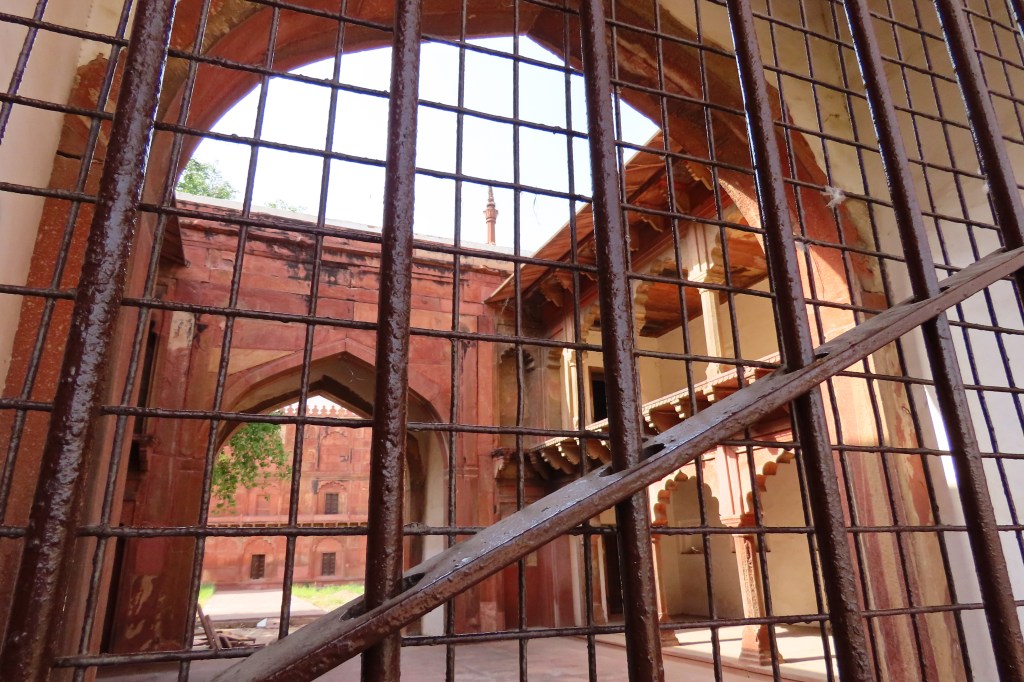
And so we leave Agra Fort to its ghosts, its revellers and wanderers.
 Mutiny Reflections
Such a wonderful read ! Thank you for visiting the old city of Agra, filled with treasures of stories that never end.
LikeLiked by 1 person
You had an excellent day for a visit – no monkeys and few people! ;-)
LikeLiked by 2 people
I also had 44 degrees centigrade in the shade. It was a scorching hot day in May!
LikeLiked by 1 person
A fairly brutal day too then! 😮
LikeLiked by 1 person
It was a brutally hot trip in all. I did go to the hills for a few days to cool off.
LikeLiked by 1 person
Very wise!! ;-) Where did you go?
LikeLiked by 1 person
I went up to Mussoorie in the Himalayan foothills. Just around 2000 meters above sea level. I could see the Plains shimmering in the heat!
LikeLiked by 2 people
I used to love going up into the hills and that lovely moment when you could switch off the AC and open the windows to clear air as the road started to climb! 😉
LikeLiked by 1 person
It truly was a relief. Mussoorie was a slight disappointment but of course nothing can stay the same. I had gone to school there in the late 1980’s and had not been back in 20 years. So it was a bit of a shock seeing the town and the school, what they have turned into. But it was still a pleasure to be back in the hills even if they are now full of ghosts and memories.
LikeLiked by 1 person
Welham?
Well, they say never go back but I think it’s human nature to do so! I remember my first visit to Delhi in 1990 – the city is almost unrecognisable today.
LikeLiked by 1 person
No I went to Woodstock School. It too is nearly unrecognizable today.
LikeLiked by 1 person
Ah, I see. I had a 50-50 chance and blew it haha! 😉
LikeLiked by 1 person
Beautiful. View of the Taj from deewane khas is lovely. Thanks for sharing.
LikeLiked by 2 people
I will be publishing more pictures shortly but probably on my other site, thoughtsdepart.wordpress.com
Thank you so much for your kind comment!
LikeLiked by 1 person
Interesting to see how little has changed!
LikeLiked by 2 people
It was a little surreal walking around the fort – I had been there before but now I was trying to look at it through different eyes, so to speak. I could really understand why Mark Thornhill found the place so overwhelming 166 years ago!
LikeLiked by 2 people