When the mutiny broke out, it was feared that the fire would spread not only to the State of Hyderabad but to the Hyderabad Contingent. It was composed of men who had been mostly recruited in Oudh – and it was surmised they would, by default, be prone to rebellion. Matters were not made easier when emissaries of Tantya Tope were skulking around the city and the lines, hoping to incite the population to mutiny. The consequences of a rising in Hyderabad would inevitably be that the mutiny would move further through India and would result in a tide impossible to control.
The State of Hyderabad consisted mostly of a raised plateau some 1800 feet above the sea, ranges of hills and several rivers. To the north rises the Satpura Range, the Pen Ganga and the adjoining Godavari demarcating the south-easterly boundary, while in the south itself, the territory of the Nizam was limited by two more rivers – the Krishna and the Tangabharda. On the west lay the Ahmednagar and Sholapur Districts.
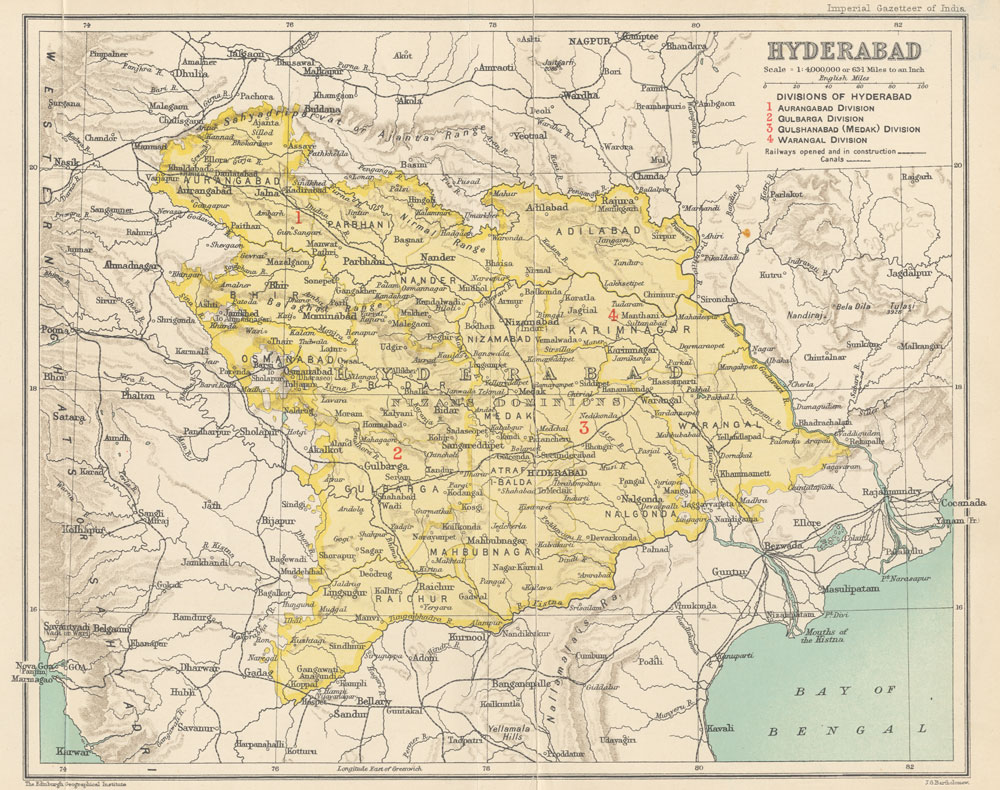
The Nizams had ruled Hyderabad since the 18th century. The founder, Mir Qamar-ud-Din Siddiqi or Asaf Jah I, had served as suzerain of the Deccan sultanates at the Mughal court from 1713 o 1721. He had, as needed, ruled the region independently following the death of Emperor Aurangzeb in 1707. By 1724, with Mughal power waning, Asaf Jah ruled independently of the empire – following the founding of his state, he became the first Nizam of Hyderabad. Until the final dissolution of the Mughal empire in 1857, the Nizams called themselves “Servants of the Emperor” as their title emanated from the Delhi Court; however, by means and rights, they were independent princes of an independent state.
Following the death of Asaf Jah in 1748, both the British and the French became involved in the following war of succession – in history too long to relate, in 1799 Asaf Jah IV signed the subsidiary alliance with the British and lost control of not only its foreign affairs but the state’s defences and Hyderabad became a princely state. The French battalions of Hyderabad were disbanded and Nizam, bound now by a treaty, was no longer permitted to employ any Europan to his service without the prior consent of the British.
The treaty of 1801 further obliged the Nizam to furnish a military contingent of 6000 infantry and 9000 horse to be placed at the disposal of the British in times of war. Unfortunately, this force proved rather worse than useless in the field. From the History of the Hyderabad Contingent:
“It was only after considerable difficulty and delay that even a portion of this contingent was furnished in 1803, the Nizam’s Government showing themselves obstructive, if not hostile, in their dealings with their allies. Of this obstruction, we find constant complaints on Wellesley’s part, nor do such troops as were furnished appear to have been serviceable or to have borne a very active part in the campaign. The battalion which had formed the French party seems to have been the only body of infantry that had any pretensions to military efficiency, and the Hyderabad Contingent will scarcely desire to be in any way identified with the quota of troops furnished by the Nizam’s Government in 1803.”
Wellesley’s complaints ranged from calling the Nizam’s Horse “very useless” and accusing the troops of being ill-behaved. They served, but neither with distinction nor consequence. During the following years, they would be employed against the Pindaris in Berar with little note; from these rather unpromising beginnings, the Hyderabad Contingent was born.
The state of the Contingent in 1806 was far from promising and appeared to suffer from too many officers from too many nations. The Resident presented the following report and solution:
“The State of the Nizam’s infantry in Berar demands the most serious attention of the British Government. The several corps which are under the immediate and personal command of Mohiput Ram are the remains of Mons. Raymond’s party. These corps are dressed in the French costume ; they are disciplined in the French exercise and words of command. They are naturally attached to the French cause, and this disposition has been designedly encouraged by Raja Mohiput Ram. An English officer of the name of Draper was desirous to introduce
“…the English exercise and words of command, but the sepoys peremptorily refused to comply with his orders, and the officer was obliged to concede the point to prevent a’ disturbance. The person, who really commands these corps and has considerable influence over them, is one Clementi, a Spaniard, faithfully attached to Mohiput Ram, and notoriously hostile to the British cause. This man calls himself a Portuguese and had sufficient interest at Goa to procure the credentials of an Ambassador from the Portuguese Government to the Soubahdar of the Deccan. These credentials were seized by the late Resident, and are still in my possession. But the man is really a Spaniard. There are many Europeans and half-caste men, of different nations and characters, who are distributed amongst the several corps in Berar and are most of them under the control and influence of the Spaniard Clementi. These subordinate officers have gradually crept into the Nizam’s service without having excited attention, but it is of much consequence that their numbers, their nation, and their characters should be ascertained and that such as are liable to suspicion should be dismissed from the service and sent out of the country. In the event of a peace between Great Britain and France the state of the remains of the French corps and the character and dispositions of their Commanding Officers must be regarded with a jealous and vigilant eye. Every effort of the- British Resident will be required to prevent the admission of secret emissaries who may be employed in attaching the Corps of Infantry in theNizam’s service to the interests and cause of the French nation. 1/ have therefore determined to procure a list of all the Europeans or sons! of Europeans at present in the Nizam’s service, and to make enquiry their nation, characters, and sentiments. And I propose as a future general regulation, that such Europeans as are worthy of being retained in the service shall receive commissions from this Government countersigned by myself; that a list of them shall be kept at the Residence* describing their rank, station, and period of service; and that all Europeans and half-castes who cannot produce these commissions shall be seized and sent out of the country. Upon the principles before stated I have judged it proper to require that Clementi and some others shall be dismissed from the Nizam’s service, and Meer Alluum has determined to reform the Corps of infantry in Berar, and place them on a respectable footing under the command of English officers who are already in the service of this State. To effect this seasonable reform and to enable the English officers to create and maintain a proper influence and authority over their respective corps, it will be of much importance that a detachment of British troops should be stationed in Berar. By the general influence and example derived from the presence of a British detachment, and under the regulations which Meer Allum intends to adopt, for the regular payment, clothing, and equipment of the corps in Berar, it may be expected that these corps will gradually attain to a degree of discipline and subordination which may render them useful and creditable auxiliaries in any future war.”
The officers role for 1800, though deficient in its completeness consisted of quite a colourful band who had the command of battalions:
Colonel Don Clementi de Avila, a Spaniard.
Major Johnstone, an East Indian.
Captain Don Torribio Paulo Denis, a Portuguese.
Captain Joseph Gordon.
Captain Freeman, an East Indian.
Captain Guest, an Englishman.
Captain Bridges, an Englishman.
Captain Drew, an Englishman attached to the troops of Salabut Khan, Jaghirdar.
Captain Elliot, an East Indian.
Those who ranked as subaltens were no less diverse:
Captain Vincente, a Spaniard.
Captain Blake, an East Indian.
Don Silvestre, a Portuguese.
Senor Joachim, a Portuguese.
Mr. Key, an Englishman. , Mr. Kullick, an Englishman.
Mr. Joachim Schmidt, an East Indian of Dutch extraction.
Mr. Plight, an East Indian.
Mr. Marten, a Portuguese.
And in the brigade of Colonel Finglas we find Captain W. Palmer, an East Indian, who would later head the famous firm of Palmer&Co. He had been the “first British subject to to enter the Nizam’s army in 1799“” but by 1810 he was already more interested in business than in war, although he did continue in the Nizam’s service, rising to the rank of brigadier.
The Resident, Mr. Russell, proceeded to Berar to view the Nizam’s troops and found them in such a deplorable state, completely neglected and disorganised. The officers consisted of Europeans of a mercenary nature who would change allegiance for better pay, and the Anglo-Indian officers could only be distinguished from the regular troops because they chose to wear hats. As for the cavalry, no one had any idea how to assess them – it was “so deplorable, that amelioration scarcely seemed possible.” The Nizam, however, finally agreed something had to be done; besides having a force which was worse than useless, he was spending money on them, and it was quite clear the expenditure was for nought.
Under the reforms, the infantry would consist of six corps of 1000 sepoys each; they would receive their pay in a regular manner through their Commanding Officer, while all the chief officers were to be “respectable Europeans” (no ragtag mercenaries, and definitely no one from France or even Spain). No radical reforms to the cavalry were attempted, but arrangements were made for “periodical musters and for the regular payment of the quotas furnished.” The whole force was to place under the control of “two Mohammedan nobles in whom confidence could be reposed.”
The reforms proceeded slowly – by 1811, the Berar corps was still not able to cope with the Pindaris and other freebooters who regularly overran the Nizam’s territory. They were equally unable to control the various zamindars who were just as openly plundering the country and feeding amongst themselves and their neighbours. While the reforms crawled on, in 1812, the Muhammedan sepoys in one of the Nizam’s infantry regiments broke into open mutiny. They made their point quite clear by tying their commander, Major Edward Gordon to the muzzle of a gun, threatening to blow him to pieces if they were not paid and given a free pardon for their actions.
Almost simultaneously another mutiny broke out, in the regiment of Mr. Clarke – although both uprisings were dealt with, it forced the Nizam to accept the raising of 2 battalions of regular infantry which would be trained, paid and equipped like regular company sepoys. While the men who remained faithful and had not tried to blow up their officers were subsequently drafted into the newly raised corps, the mutineers were caught and executed.
These new corps formed the Russell Brigade (named after Mr. Henry Russell, the Resident at Hyderabad) and subsequently the 1st and 2nd Infantry, Hyderabad Contingent. Their uniforms and armaments were indistinguishable from the regular sepoys of the EICo and they were paid, on the 1st of every month directly from the Resident’s treasury. The Brigade was also armed from the Company stores with one 24-pounder gun, four 6-pounder guns, and two 5-inch howitzers. Another 5-inch howitzer, with carriage, limber, and tumbril was obtained in July 1813, with a pistol for each gunner. Meanwhile, no time was wasted in reforming the Berar troops – when all was complete, the Berar Regular Infantry comprised of 4 battalions in addition to Salabat Khan’s two battalions, forming the Ellichpur Brigade, with its artillery, which had also undergone reorganisation. By 1815, Mr. Russell could despatch with some satisfaction the following report to the Secretary to Government:
“The regular corps in the service of the Nizam form a body entirely distinct in every particular from the corps composing the remainder of his army. They now consist of three brigades: two in the Berars and one at Hyderabad. Of the two brigades in Berar, the first is commanded by Mr, Elliot, who has been 17 years in the Nisam’s army, and served during the Seringapatam campaign in 1799, the second by Mr. Fraser, who was formerly in His Majesty’s 65th Regiment, and entered the Nizam’s service in 1809. The command of the Brigade at Hyderabad is held by Lieutenant Hare, of the Honourable Com- pany’s army, who was nominated to it by His Excellency the Governor General in April 1814.
The Brigades in Berar have for some time been in so advanced a state of discipline as not to require, I believe, any assistance from the men of our own army. They have both been employed on service and have been found extremely useful in maintaining the internal authority of the local Government and suppressing innsurections which
but for them, must either have been suppressed by the employment of our own troops, or have been suffered to prevail to the manifest injury of the common service. Major-General Rumby looked at the First Battalion of Mr. Fraser’s Brigade in February 1814 and told me that he found it in a very high state of discipline and efficiency.
Mr. Hare’s Brigade is the only regular corps at Hyderabad, and the only one in the drill and discipline of which the men of our own army are now employed. I have been at great pains since the original formation of this corps to have it placed on such a footing as to obviate, as far as possible, the objections which have occasionally been urged against the policy of encouraging any improvement in the military establishments of our native allies. It is commanded by an officer in the Company’s service, and all the other officers are gentlemen of unquestionable honour and fidelity. The men are chiefly recruited from our own territories and are not in any instance received from any other corps in the Nizam’s service. It is paid every month out of the Resident’s Treasury by an order on the Peshcush. It is armed, dressed and equipped in every respect like one of our own corps…the men of these corps consider themselves as being troops much more of the Company than of the Nizam.”
By 1816, the cavalry too had undergone stringent reforms –
The whole force of Irregular Cavalry in Berar would consist of 8,000 men, composed of troops to be supplied by Rajas Govind Bakhsh and Chandu Lai, additionally from Salabat Khan’s Rissala of 1500 men, and 1,500 Mysore Horse, allowing for the employment of 2000 men in four separate risalas. An EICo officer as Commandant would superintend the whole, aided by a further 5 company officers of which one would act as Staff Officer to the Commandant. Pay would be dispersed without any stoppages or deductions –
“For the immediate adjustment of the charges on account of the Reformed Horse, Raja Govind Bakhsh had engaged to provide for the pay of 3,000 men, so that they should never be more than one month in arrears, and Raja Chandu Lai settled with the celebrated House of Palmer and Co., that they should remit rupees 52,000 monthly for the pay of the troops, about 1,000 in number, sent under the Raja’s orders from Hyderabad.”
In their new reformed state, the Hyderabad Contingent would now constitute an integral part of the forces at the disposal of the EICo and although further reforms would take place between 1817 and 1826, they would prove themselves, (through the Maharata Wars and beyond) as a powerful fighting force, a far cry from the days of Wellesley.
Under a new treaty, signed in 1853, as the payment of the contingent had by now seriously fallen into arrears, any district yielding a gross revenue of 50 lakhs or more was assigned to British control and it was further agreed the British would maintain the auxiliary force of 5000 infantry, 2000 cavalry and four field batteries. Furthermore, after the contingent was paid, and other charges and interest on the Company’s debt provision, the surplus would be made over to the Nizam. He would retain full use of the contingent and the subsidiary force and be released from his obligation to provide service in time of war; as such, the Contingent was no longer a part of the Nizam’s army but was now an auxiliary unit kept by the British Government for the Nizam’s use. The Nizam’s own army was separate from the Hyderabad Contingent. His personal troops consisted of not only regular but irregular forces and those for his personal protection.
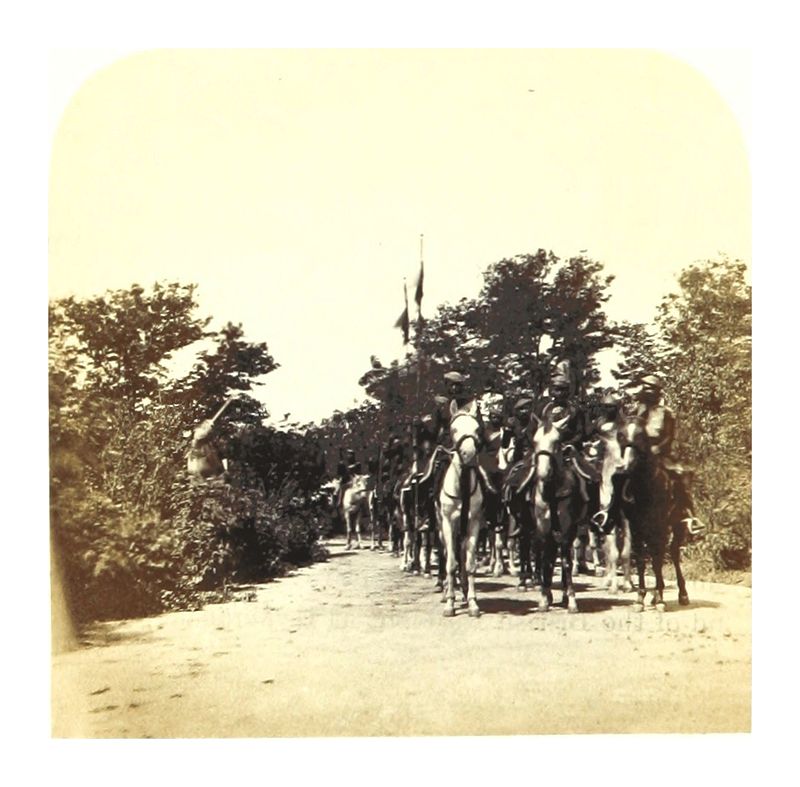
Renamed in 1853 as the Hyderabad Contingent, there were fourRegiments of Cavalry:
1st Cavalry, Hyderabad Contingent 20th Deccan Horse
1790 raised as Asif Sah’s Irregular Cavalry under the Colours of the Nizam of Hyderabad in Berar
1801 became the Nizam’s Contingent
1816 became 1st Reformed Horse (Nawab Jalal-ul-Daula’s)
1826 became 1st Regiment, Nizam’s Cavalry
1854 became the 1st Cavalry, Hyderabad Contingent
Hyderabad Contingent 29th Lancers (Deccan Horse)
1790 raised as Asif Sah’s Irregular Cavalry under the Colours of the Nizam of Hyderabad in Berar
1801 became the Nizam’s Contingent
1816 became 2nd Reformed Horse
1826 became 2nd Regiment, Nizam’s Cavalry
1854 became the 2nd Cavalry, Hyderabad Contingent
3rd Cavalry, Hyderabad Contingent 3rd Lancers, Hyderabad Contingent
1790 raised as Asif Sah’s Irregular Cavalry under the Colours of the Nizam of Hyderabad in Berar
1801 became the Nizam’s Contingent
1816 became 3rd Reformed Horse
1826 became 3rd Regiment, Nizam’s Cavalry
1854 became the 3rd Cavalry, Hyderabad Contingent
4th Cavalry, Hyderabad Contingent 30th Lancers (Gordon’s Horse)
1826 raised by Capt Sir John Gordon as the 4th Regiment, Nizam’s Cavalry
1854 became the 4th Cavalry, Hyderabad Contingent
Six Infantry Regiments
1st Infantry, Hyderabad Contingent
1813, raised as 1st Battalion of Sir Henry Russell’s Brigade
1826 became 1st Regiment Infantry, Nizam’s Army
1854, became 1st Infantry Hyderabad Contingent
2nd Infantry, Hyderabad Contingent
1813, raised as 2nd Battalion of Sir Henry Russell’s Brigade
1826 became 2nd Regiment Infantry, Nizam’s Army
1854, became 1st Infantry Hyderabad Contingent
3rd Infantry, Hyderabad Contingent
1797 raised as 2nd Battalion of the Aurangabad Division
1826 became 3rd Regiment of Infantry, Nizam’s Army
1854 became 3rd Infantry, Hyderabad Contingent
4th Infantry, Hyderabad Contingent
1794 raised as 3rd Battalion of the Aurangabad Division
1826 became 4th Regiment of Infantry, Nizam’s Army
1854 became 4th Infantry, Hyderabad Contingent
5th Infantry, Hyderabad Contingent
1788 raised as 1st Battalion of the Ellichpur Brigade
1826 became 7th Regiment of Infantry, Nizam’s Army
1854 became 5th Infantry, Hyderabad Contingent
6th Infantry, Hyderabad Contingent
1788 raised as 2nd Battalion of the Ellichpur Brigade
1826 became 8th Regiment of Infantry, Nizam’s Brigade
1854 became 6th Infantry, Hyderabad Contingent
Hyderabad Contingent Artillery
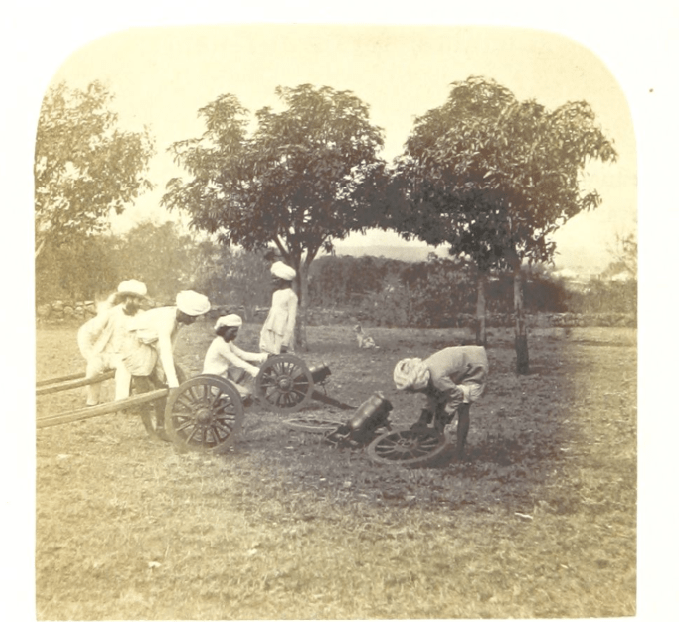
No.1 Field Battery
This battery was formed from the ordnance which had been attached to Russell Brigade in 1812.
Initially known as “Artillery, Russell Brigade”, they were later designated “Artillery, Hyderabad Division”. In 1826, they were renamed “1st Company Artillery, Nizam’s Army”, but by 1853, they became “1st Company of Artillery, Hyderabad Contingent.”
No. 2 Field Battery
The 2nd Field Battery was formed from the guns of the Berar Brigade and had been titled “Artillery, Aurangabad Division. The Artillery was formed into a separate corps in 1819 when both European and Indian artillerymen were employed with this brigade. In 1826, they were designated “2nd Company, Nizam’s Artillery” and in 1853, became “2nd Company of Artillery, Hyderabad Contingent.”
No.3 Field Battery
This battery was originally the “Artillery, Hingoli Brigade,” formed at Hingoli in 1824. In 1826, the Hingoli Brigade became the “3rd Company, Nizam’s Artillery”, and the title was changed in 1853 to “3rd Company of Artillery, Hyderabad Contingent.”
No.4 Field Battery
Formed from the Ellichpur Brigade, who were originally the jagir troops of Salabat Khan, Nawab of Ellichpur, they were employed on the Nizam’s frontier as early as 1814. In 1822, the Ellichpur Artillery, after reorganisation, was placed under a European officer, while in 1826, they became the “4th Company, Nizam’s Artillery.” In 1853, they were redesignated as “4th Company of Artillery, Hyderabad Contingent.”
Between 1855 and 1859, the Hyderabad Contingent consisted of 49 European officers, 56 56 Warrant and Non-Commissioned Officers, 2’300 Cavalry, 6’282 Infantry and Artillery, 24 guns, and 644 Camp followers.
The Contingent also had a subordinate medical department.
The history of the Hyderabad Contingent continued well into the 20th Century. As one of the Presidency Armies in British India, they later became a part of the Kumaon Regiment. At the commencement of the First World War, a Kumaon Battalion was developed in 1917 as the 4/39th Kumaon Rifles Regiment. The unit was renamed as the 1st Battalion, 50th Kumaon Rifles in 1918, and later a 2nd battalion was formed. These units were amalgamated with the Hyderabad Contingent to form the 19th Hyderabad Regiment in the year 1923. Following the conclusion of the First World War, some of the companies in the regiment were disbanded. Later, during the Second World War, the regiment was again extended. The 19th Hyderbad Regiment was re-designated as the 19th Kumaon Regiment in 1945. Following the Partition in 1947, they were assigned to India and renamed the Kumaon Regiment. They are one of the most decorated regiments in the modern Indian Army.
The 19th Hyderabad regiment was again re-designated as the 19 Kumaon Regiment on 27 October 1945.
Amidf the strife around them, in 1857, the Hyderabad Contingent on a whole remained loyal, except for some men in one regiment, and it was these that Woodburn, dispatched by Lord Elphinstone to Indore, had wasted considerable time over.
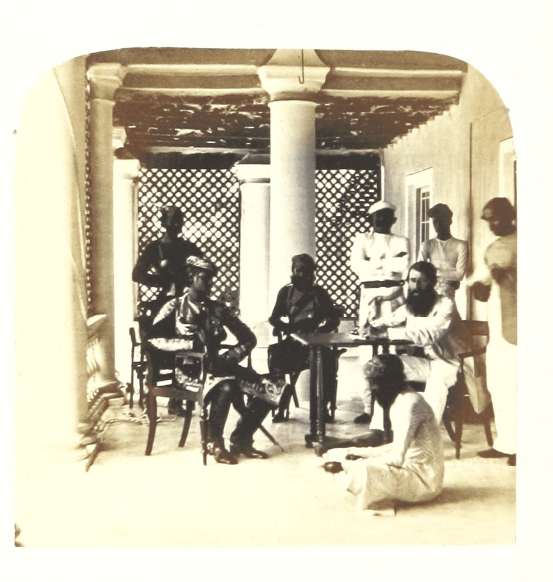
Recollections of the Campaign in Malwa and Central India – Assistant Surgeon John Henry Sylverster (1860)
A History of the Hyderabad Contingent – Major Reginald George Burton (1905)
Kaye’s and Malleson’s History of the Indian Mutiny Vol V- Colonel Malleson (1907)
The Revolt in Central India 1857-1857, compiled in the Intelligence Branch (1908)
(https://wiki.fibis.org/w/Hyderabad_Contingent)
 Mutiny Reflections