On the 12th of June, the force from Disa arrived at Nasirabad. It consisted of four hundred men of H.M.’s 83rd Regiment, the 12th Bombay Native Infantry and a troop of European Horse Artillery. Colonel Lawrence sent 100 men to reinforce the Mairs at Ajmer. He did not have enough resources to man the small fort overlooking the city, although it commanded the city and the magazine. In Lawrence’s favour, close to this fort stood a Mahomedan shrine — he entrusted the shrine’s defence and defacto that of the fort, to the chief priests. Explaining to them that it was in their interest to remain faithful, Lawrence found they took him at his word – until the end of hostilities, they continued to garrison the fort with “zeal and fidelity.” A better impromptu force Lawrence could not have hoped for.
With Nasirabad and Ajmer taken care of, Lawrence allowed Neemuch to be occupied by detachments from Mewa, Kota and Bundi – unfortunately, in their ranks were too many men who were brethren to the mutinied sepoys – at the next opportunity, Lawrence replaced them with men from the Disa column.
It was hardly possible however for Lawrence to be everywhere, spending as much time already as he could between Ajmer, Beawar and Nasirabad: he needed to trust his subordinates at their respective stations — it was unfortunate at this juncture, Showers had vanished off into the countryside chasing mutineers without orders when he should have been doing his due diligence at the Udaipur court. Fortunately, not everyone was as keen to disobey orders as Showers had been.
Major Eden and the Jaipur Army
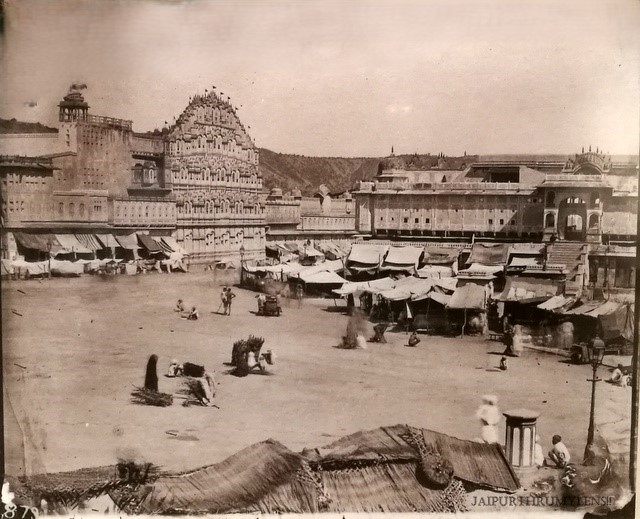
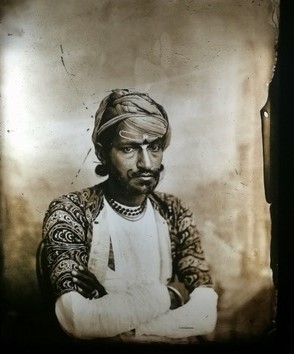
At Jaipur was Major William Eden and the reigning Raja, Maharaja Sawai Ram Singh. His father had died in 1835 when the Maharaja was only 2 years old; although he was his heir and would by right ascend the throne in 1854, his childhood and above all his education, from 1844, had been in the hands of the British, under the political agent Major John Ludlow, assisted ably by Major Thoresby and Captain Records and his guardian, Pandit Sheo Din. It is, therefore, not surprising that Malleson writes of the Maharaja,
“…owed his throne, his education, it might almost be said his life, to the British. He had been extremely well-educated, was naturally intelligent, and, being well acquainted with the history of Rajputana during the later days of Mughal sway and the entire period of Maratha oppression, he was profoundly convinced that his own safety, the permanence of his rule, and the prosperity of his subjects were bound up in the maintenance of the British suzerainty.” The young Maharaja was supported in his relatively fledgling rule by his trusted ministers, Thakur Lachman Singh, Pandit Sheo Din and Bakhshi Faiz Ali Khan. Just as the mutiny broke out, on the advice of his able ministers, the Maharaja put an army of infantry and cavalry with seven guns (in all some 7000 men) at Major William Frederic Eden’s disposal. When Eden took the force to the field, only 718 Nagas were left to protect the capital.
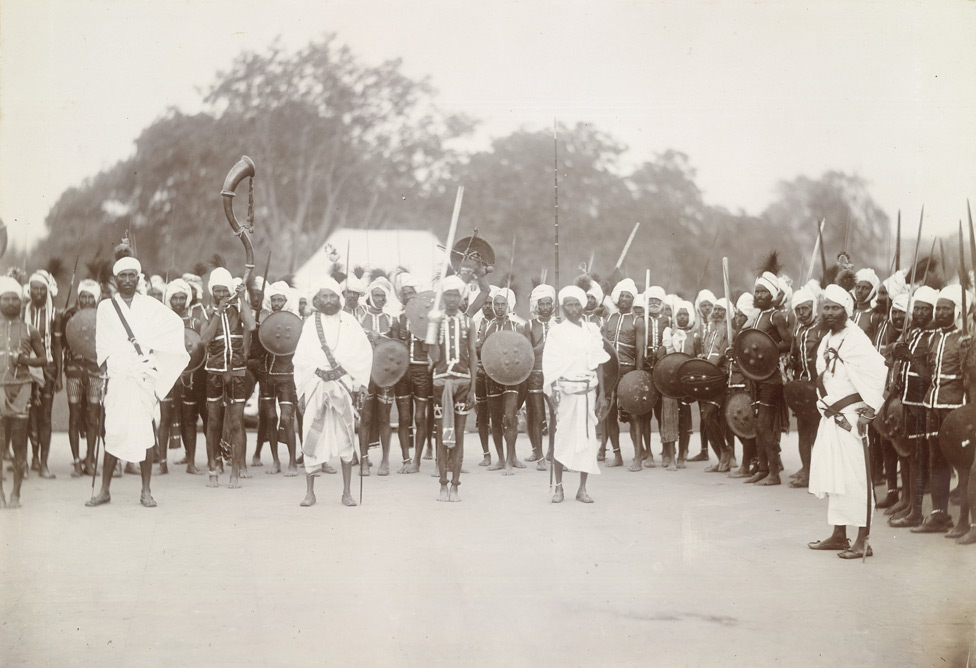
“The Nagas of Jaipur are a sect of militant devotees belonging to the Dadu Panthi sect, who are enrolled in regiments to serve the State; they are vowed to celibacy and to arms, and constitute a sort of military order in the sect.” – Rajputana Gazetteer, 1879
Almost half the army sent with Eden also consisted of Nagas, “a strong and sturdy body of military celibates of a semi-religious order” who pledged their loyalty as staunchly to the Maharaja as they did to their religious chiefs. The army was commanded not by Eden directly but by Bakhshi Faiz Ali in person and Thakur Ranjit Singh of Achrol. Eden at once marched the army towards Delhi intending to strike a blow at any mutineers interested in joining the cause behind those great walls. On his arrival at Reawari, Eden changed his plans. The entire Gurgaon district, which lay between him and Delhi was in anarchy. On the 11th of May the rebellious Meerut cavalry, passing through on their way to Delhi had come to Bijwasan a few miles from the civil station of Gurgaon: despite the efforts of Mr. Ford (Collector and Magistrate) who went on the offensive and unsuccessfully attacked the mutineers. Gurgaon was plundered, put to the torch and the prisoners were released from the jails. Ford, along with the other officers including the Patrols and Assistant Patrols on the customs lines running through the district, were forced to flee. While they scrambled through the district, flying from place to place, the customs line – that extended for nearly a thousand miles along the border of British India – was burnt and destroyed, effectively cutting off all communication with the rest of the country. This end to law and order gave the Meos – “a turbulent and lawless people”- who lived in almost half the district, an opportunity to engage in plundering of their own, laying the towns of Firozpur, Tawur and Nuh to waste.
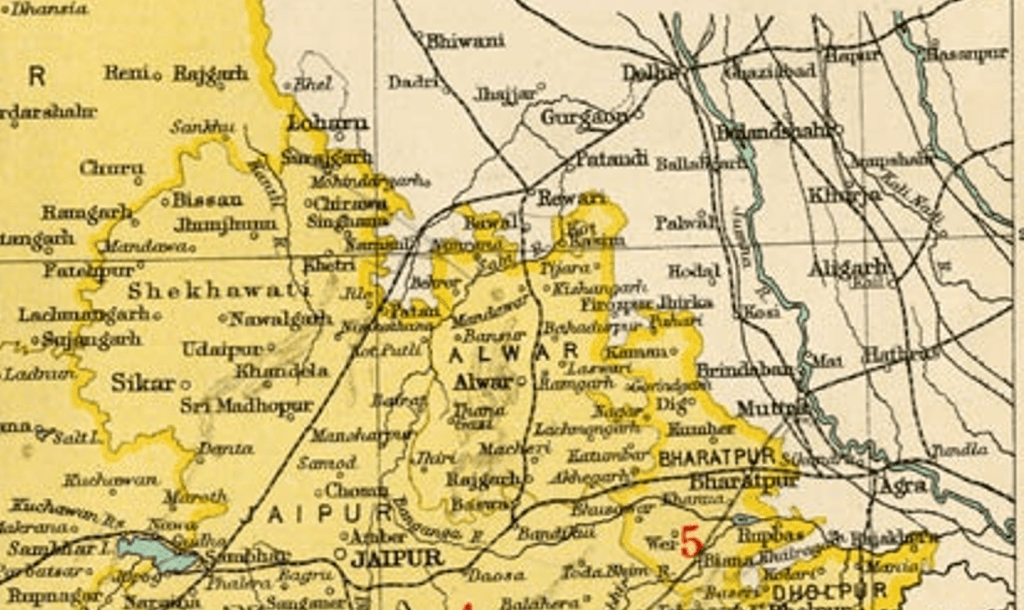
Eden decided his time could be better employed in rescuing the British officers and restoring order in the district, rather than making battle against mutineers – he also found to his chagrin, that the army at his disposal was not willing to engage the sepoys – “though loyal and willing to perform every service, was not with its defective drill and discipline, capable to cope with the mutineers expert in every military operation…” in other words, they would not take arms against the sepoys. It was not lost on Eden that a sizeable proportion of the men of the Jaipur army were “of the same class, exposed to the same influence and had the same religious feelings” as those he had expected them to fight against. Many of them had family in Delhi, and they were in constant contact with the city: it was just as well Eden turned away from that road and turned his attention to the Meos.
The road between Tawru and Sohna lay at the time across many deep ravines of the surrounding hills in which the Meos had their villages; as Eden marched his army across their territory, the Meos turned out in their thousands. One of them, the Thanedar of Sohna – Jahangir Khan – acting as a representative of the Maos, rode out to meet the army. A mile west of Sohna, he crossed Bakhshi Faiz Ali Khan. Grabbing the reins of his horse, Jahangir Khan demanded a ransom to prevent the Meos from plundering Eden’s column. Bakhshi was having none of it – at the minister’s order, his men cut the thanedar to pieces; the guns unlimbered and opened fire on the Meo villages, causing hundreds of deaths in the razed villages.
Eden halted the army for three days at Sohna – news spread quickly and thirty European officers including the son of John Colvin, the commissioner Mr Harvey and William Ford were able to make their way to Eden’s camp. We have seen this part of the history already, in the rather wild ride of Mr. Stewart in “Proceedings of Voluntary Character.”
The army remained in place between Palwal and Hodal on the Delhi-Agra road: unfortunately, the rains were falling heavily, and sickness broke out amongst the men, including cholera. The sepoy element of the army deserted – three regiments – and marched off to Delhi -it was very much to the credit of Bakhshi Faiz Ali Khan they did not break out into mutiny before they left.
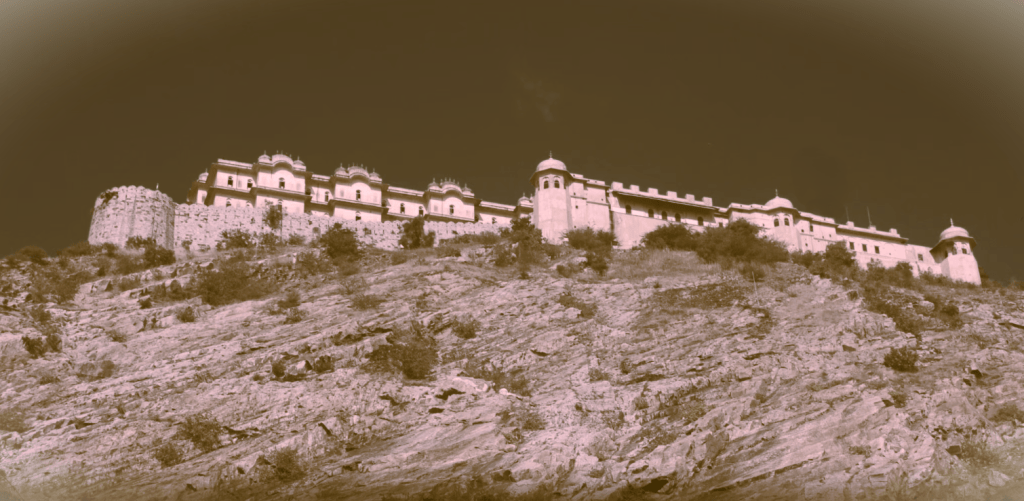
Back at Jaipur, the Maharaja and his ministers were facing problems of their own. Under his care, he had Mrs. Eden and the other European families – they were housed initially in the lake palace of Badal Mahal, but as things started looking questionable in Jaipur, he moved them to the Nahargarh Fort, overlooking the city and well out of the way of troublemakers. It was just as well – the Nasirabad regiments passed through Jaipur on their way to Delhi and took a moment to demand the Maharaja hand over the Europeans. The Maharaja flatly refused and dared the mutineers to come and get them if they were so inclined. At the same time, the troops in the city were preparing to give the rebels a fight with Sheo Din and Lachman Singh, mustering the forces and organising 18 guns to be brought down on the rebels’ heads. It was Mrs Eden who prudently advised the Maharaja that the rebels he was facing were not ordinary sepoys – they were Lord Ellenborough’s Illustrious Garrison, men who had seen fighting in Afghanistan, Ghazni and Jalalabad; they were thoroughly disciplined, awash with practical experience and completely inured to hardship and privation. The raw Jaipur troops were hardly a match for them.
It was just as well for Jaipur then that the Illustrious Garrison was not having one of its better days. Unnerved by the Maharaja’s defiance and somewhat put off by the resistance that Jaipur was willing to show, they changed their minds and left. There was another reason for their speedy departure – laden with plunder as they were, the Nasirabad regiments had fallen to squabbling between each other; the 15th seizing the treasure from the 30th and the cavalry snatching it from everyone; jealous and mistrustful now of each other, they wanted to march to Delhi to settle their dispute in the court of the Bahadur Shah Zafar.
Meanwhile, Eden returned to Jaipur with the army after this hardly successful mission. While Ford hastened off to Delhi with Stewart, the remaining officers were packed off to Agra under a strong escort sent for this purpose by the Thakurs Bhopal Singh Nathawat and Sobhag Singh Ladkhani. For now, Gurgaon and the surrounding area would remain in the hands of anarchy. However, the road between Agra and Ajmer remained open, enabling the dak to continue, protected by the combined efforts of Jaipur and the States of Bharatpur and Kishangarh.
 Mutiny Reflections