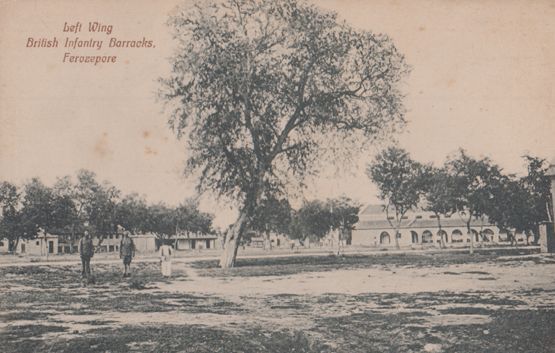
Ferozepore in the Punjab
The news of the uprising in Meerut reached the ears of Brigadier Peter Innes in Ferozepore on the 13th of May. He was not having the easiest day, having arrived the day before to take command of the station. At Ferozepore were garrisoned the 45th and 57th Regiments of Bengal Infantry, the 10th Native Light Cavalry, the 61st (South Gloucestershire) Regiment of Foot and a further 150 men of a European Light Field Artillery Battery. Ferozepore served as a depot and possessed a large Magazine – but besides this obvious feature, it was not a thrilling post.
The 61st had been in India since 1845 – a 15-year deployment that was slowly ending. It had been eventful enough seeing service during the Second Sikh War (1848-49) at the battles of Ramnagar (1848) and Chillianwallah (1849). The 61st mustered nearly 1’000 men, half the number old and gallant veterans of ten to twenty years service, who were lamenting their fate at being doomed to service in India, and a station like Ferozpore offered little consolation. Other regiments had gained glory in Crimea, and others were testing their mettle in Persia; the 61st was basking in the heat of another hot season, with nothing at all to look forward to.
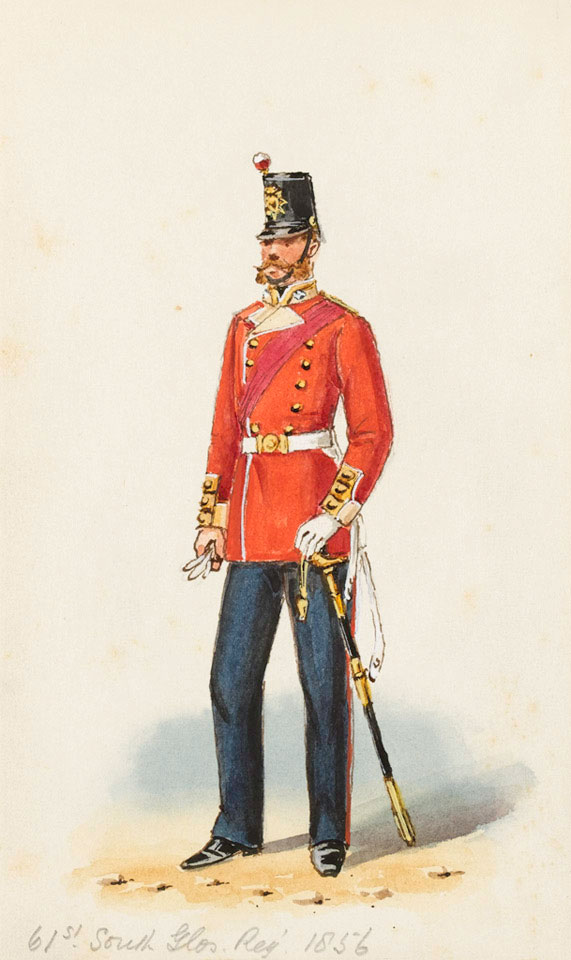
One of their officers, Lieutenant (later Captain) John Charles Griffiths, himself recently returned to Ferozepore, – in March 1857 – described the scene as such:
“Nothing occurred for the next two months to break the monotony of an Indian cantonment. Parade in the early morning, rackets and billiards during the day, a drive or a ride along the Mall in the cool of the evening and the usual mess dinner – these constituted the routine of our uneventful existence.”
For the European officers, mutiny was not something they had given any thought in Ferozepore – until the fateful day was upon them. Located in the Punjab on the banks of the Sutlej River close to what is now the Indo-Pakistan border, it was a long way from Bengal.
“With us at Ferozepore, there was little, if any, indication of the coming outbreak. True it was that some of us noticed sullen looks and strange demeanour among the sepoys of the two battalions. They, on occasions, passed our officers without the customary salute, and, if my memory serves, a complaint of this want of respect was forwarded to their Colonels. Our billiard-marker, too, a high caste Brahmin who had served on our side in the Afghan campaigns of 1839-42 in the capacity of a spy, a man of cunning and intelligence, warned us in unmistakable terms of the increasing disaffection among the sepoys of Ferozepore, and stated his opinion that the spirit of mutiny was rife among them. We laughed at his fears, and dismissed from our minds all alarm, vaunting our superiority in arms to the dusky soldiery of Hindostan, and in our hearts foolishly regarding them with lordly contempt.”
A Startling Announcement
As an officer in the 61st, Griffiths would not have been too concerned with the goings on in the Indian regiments. His concern and that of the regiment’s adjutant, Henry George Austin Vicars, on the 13th of May, was with ices – a novel and yet time-consuming way to spend the heat of the day with the promise of a cooling treat at the end of it.
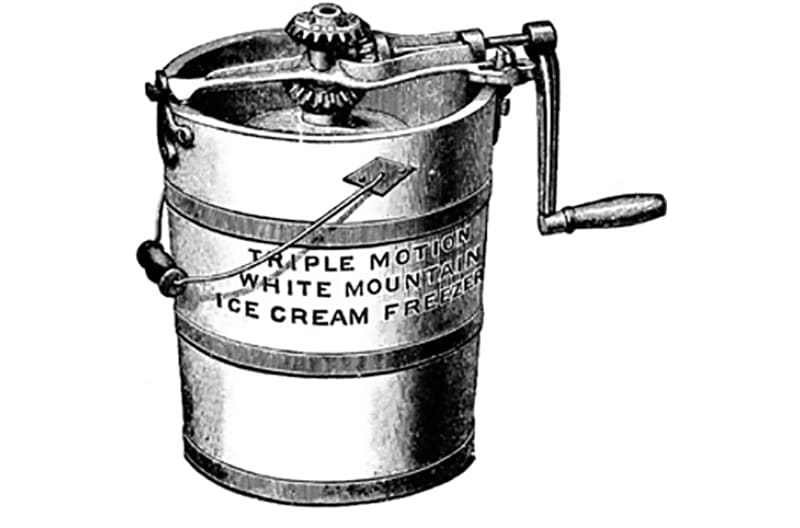
Their other housemate, the major, had been called away to a meeting with Innes. Griffiths and Vicars were fairly settled in, seated on the floor in their pyjamas, watching the process of congelation as they had done for so many long, hot afternoons. Their concentration was broken by the sudden return of the Major. Throwing himself in a chair in a state that resembled utter despair that so shocked the young men, Vicars and Griffiths leapt to their feet, upsetting their utensils and spilling the contents all over the floor.
“What on earth is the matter ?” we asked. Slowly, and as though uttered with considerable difficulty, the answer came :
“All the Europeans in India have been murdered !” Now this was rather a startling announcement, and somewhat premature, considering that we three, at any rate, were in the land of the living, with no immediate prospect of coming dissolution.
Vicars and Griffiths, in their pyjamas, standing in a puddle of melted ices, stared at the portly, distraught major and at last, fully alive to the absurdity of the gallant officer’s remark, our pent-up sense of the ridiculous was fairly awakened, and we roared with laughter again and again. Swiftly rebuked by their major, they quickly became acquainted with the facts as far as he knew them – a telegram had arrived that morning from Meerut, and suddenly, the disturbances in Bengal had landed on their doorstep in the Punjab.
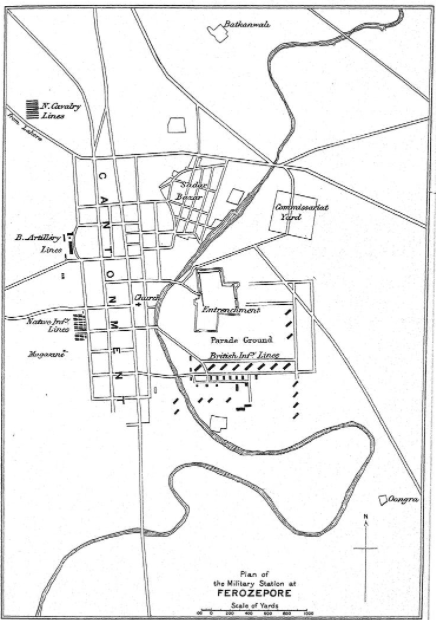
An hour later, at 4 pm, the 61st was called up for a general parade along with the European artillery in front of the artillery barracks. The regiments of the 45th and the 57th, too, were marched from the quarters, accompanied by the officers, but not together. The 45th was marched out into the countryside, leaving Ferozepore on the right and the 57th out of cantonments to the left rear lines of the European infantry. The officers had been told to tolerate no stragglers and keep their men in hand, march them out four miles and then halt. Meanwhile, the 10th Native Light Cavalry – in whose loyalty no one doubted – were ordered to parade mounted under arms in their own lines, ready if any emergency arose.
Innes had taken the threat to the Europeans seriously – wasting no time, he ordered all the women and children of his married officers to proceed without delay to the barracks, as far from cantonments as could be managed in half an hour. It might not have been ideal, but at least they were under the guard of the 61st.
“The barracks of the European infantry at Ferozepore were distant half a mile from the station and consisted of ten or twelve large detached buildings, one for each company, arranged in echelon, with some thirty paces between each. In front of these was the parade ground where we were drawn up, and before us an open plain, 300 yards in width, extending to the entrenched camp, or, as it was generally called, the fort and arsenal of Ferozepore. The space around the fort was quite clear, its position being directly opposite the centre of the cantonment, from which it was separated by some 200 yards. From our situation on parade, we had a direct and unbroken view of the localities I have endeavoured to describe, and holding this vantage ground, we should be enabled to act as circumstances might require.”
First Shots Fired
Griffiths watched as the 61st wheeled into line – some 900 men. 100 others were detached under a field officer to disarm the sepoy guard in the fort and secure the arsenal. Not long after they had entered the fort, the first shots of the Ferozepore mutiny were fired – the sepoys had refused to lay down their arms, and one of them shot Major Redmond in the thigh. The men of the 61st responded in kind, killing two sepoys and wounding several; apart from the Major, no one from the 61st was injured in this first encounter. Seeing themselves outnumbered, the guard surrendered.
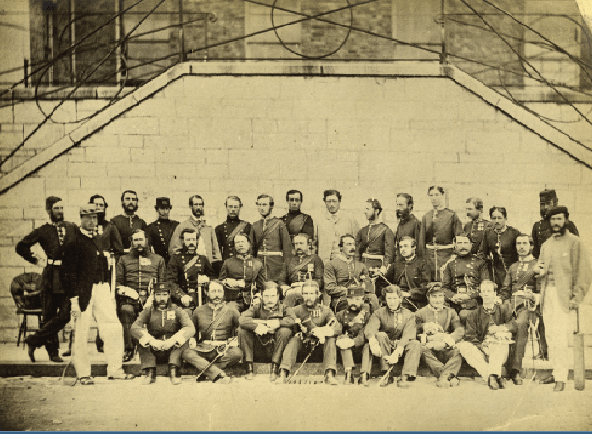
Another company was sent to reinforce the men in the fort – but nothing else happened. The 61st and the artillery stood under arms for a full two hours before the sepoy battalions (who had been sent out of the town) returned to Ferozepore. The question racing through Griffiths’ mind was one of uncertainty – would the regiments fight? Would they remain loyal, or would they bolt? He watched with increasing apprehension as
“…the heads of the columns emerged from the houses and gardens of the station, the 45th Native Infantry advancing in almost a direct line to the fort, while the 57th Native Infantry were inclined to their right, and followed the road leading to the rear of our lines. All eyes were turned on the former regiment, and its movements were ardently scanned. Closer and closer they came to the fort, till, when only about fifty paces distant, the column wavered. We could see the officers rushing about among their men, and in another instant, the whole mass broke into disorder and ran pell-mell in hundreds towards the ditch which surrounded the entrenchment.”
Part of the 45th rushed the fort.
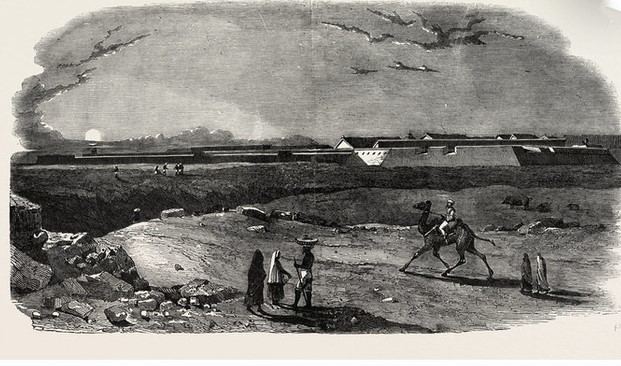
The Europeans watched as 600 sepoys burst into the fort, firing on the assembled company of the 61st. Still, no one advanced. More shots were fired, and the comrades on the parade ground grasped their muskets in horror and fury.
“The order, at last, was given to fix bayonets, and then came the welcome words:
“ The line will advance.”
Every heart thrilled with excitement. All longed to have a brush with the mutineers and help our comrades in the fort who were fighting against such odds.
Twenty paces only we advanced, and then, by the Brigadier’s command, our Colonel (William Jones, CB) gave the order to halt. The men were furious and could hardly be restrained from marching forward, when, looking towards the outer side of the fort, we saw some sepoys on the ramparts, evidently, in a state of panic, throw themselves into the ditch, and mounting the other side, run helter-skelter into the country. These were followed by numbers of others, who all made off as fast as their legs would carry them, and then we heard a true British cheer, our men appeared on the walls shooting at the fugitives, bayonetting and driving them over the glacis.”
Barely 200 men of the 61st had successfully fought off the 45th and stood in possession of the fort – the sepoys who had not managed to retreat threw down their arms and allowed themselves to be taken prisoner.
Brigadier Innes could have ridden on the wave of this success, pursued the rebellious sepoys and crushed the mutiny in Ferozepore. The artillery guns were loaded, the cavalry was still taking his orders, and the men were ready. Yet, in a repetition of Meerut, he did nothing. By nightfall, the 61st still stood where they had stopped, and as soon as the cavalry assembled, the 61st was allowed to pile arms, with some men throwing themselves on the ground from sheer tiredness, while others sat sittingtogether in uncomfortable groups. By 8 pm, 19 bungalows and the Mess House of the 61st were in flames, followed by the church, the Roman Catholic chapel and a further 20 bungalows. “The sepoys, mostly of the 45th Native Infantry, attended by dozens of badmashes marched unchallenged through the station with lighted torches fixed on long bamboo poles, with which they set fire to the thatched roofs of the various houses.” While the 61st watched helplessly, fires leapt high into the dark night sky. The Brigadier was absent, and the colonel refused to give any orders without his consent.
“Even after this long lapse of years, I cannot think of that night without a feeling of shame. Here were 700 men, mostly veterans, of one of Her Majesty’s regiments, doomed to inaction through the blundering and stupid perverseness of an old sepoy Brigadier. The same unhappy events as those I have narrated occurred at the outbreak of the Mutiny in three other stations in the Bengal Presidency. The commanders would not act against their trusted sepoys, who, as in our case, plundered, outraged, and destroyed all and everything that came in their way.”
In their flight, the men of the 45th had seized their arms and their regimental Colours and marched off towards Faridkhot. For twelve miles they were pursued by two squadrons of the 10th Bengal Light Cavalry under Majors Beatson and Harvey, who had along with them Major Marsden, the Deputy Commissioner. Unable to thwart the pursuit, the rebels broke, tossing away not just their arms but the Colours. While some were brought back as prisoners to Ferozepore, others were later turned by villagers and several were captured by the Patiala Raja who imprisoned them. However, a number of the rebels still managed to achieve their goal and succeeded in reaching Delhi. Subsequently, it was found that 520 men of the 57th and 260 of the 45th did not mutiny.
The night in Ferozepore passed as quietly as it could.
The 14th of May
By morning, Brigadier Innes appears to have gotten over his inertia and, in a moment of sudden energy (and sheer panic), ordered the regimental magazines of the 45th and 57th to be blown up. But he had failed to pursue the 45th who had managed in the meantime to disband themselves and were getting ready to start for Delhi.
The main arsenal however remained intact.
Griffiths was called upon shortly after breakfast to take his company and proceed to the cantonments. Their mission was to patrol the area and take any remaining sepoys and badmashes who might still be in the vicinity, prisoners. He was also to visit the commissariat quarters, disarm the guard and secure the treasure chest, which contained some 200’000 rupees. Taking 90 men with him, Griffiths marched through the station – a pointless venture it turned out – Ferozepore was deserted. As for the commissariat, no one was there at all – the sepoy guard at some point during the night had procured a cart, piled up the treasure and taken it to the fort where they handed it over to the officer in charge. After dispatching this last duty to the company, they turned away and started off towards Delhi.
As for the 57th, who had been marched to the rear of the 61st barracks the night before, had not uttered a sound the whole night. By morning, without harming their officers, 300 sepoys ” quietly but firmly announced that they released themselves from the service of the East India Company, and were about to become enrolled as subjects of the King of Delhi. Then, in several instances even saluting their officers and showing them every mark of respect, they turned their faces to the great focus of rebellion…” They walked away, disappearing into the countryside. The remaining 300 returned to their lines and following their colonel’s instructions, laid down their arms.
Around midnight, an attack, anticipated through intelligence received by Innes, was made on an outlying picket – but it was too dark to see who it was, and after a few shots were fired, one sentry of the 61st was found shot fatally through the heart. Griffiths sent a few men off in pursuit but there was no one to find and the countryside was silent.
By the morning of the 15th, even Innes was wise to the fact that more than half of two battalions of sepoys had marched off to Delhi, and he was left with 300 disarmed men of the 57th and the 100 or so sepoys who had surrendered at the fort. He now issued a flood of orders, determined at last to protect Ferozepore (from what and who was apparently irrelevant) and Griffiths now found himself in a “regular groove of guard and picket duty.” The men of the 61st, supplied amply with shovels, were set to work digging deep pits into which all the ammunition, powder barrels and small arms were packed and stowed away, then buried under a cover of dirt, several feet deep. According to Griffiths,
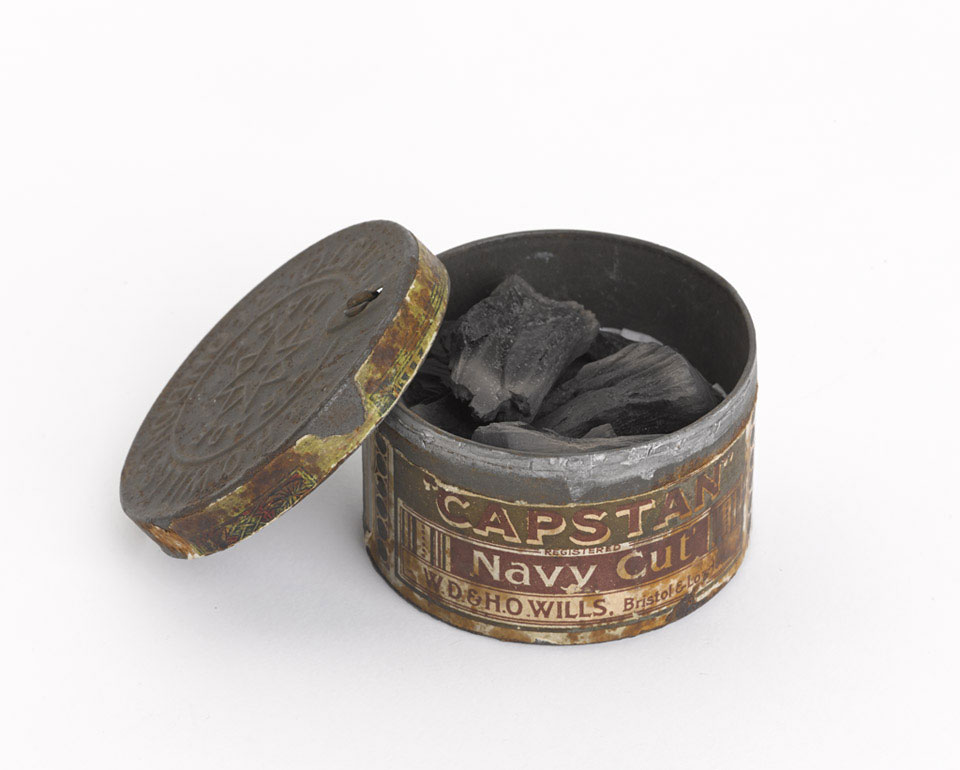
“This was a very needful expedient, for a stray spark might have blown up the vast stores of munitions of war, without which it would have been impossible to carry on future operations against the enemy. No fires for any purpose were permitted in the fort, and, greatest deprivation of all, the men were not allowed to smoke during the twenty-four hours they were on guard.”
Innes at least was trying to do something to salvage his reputation.
A few days after the outbreak, Griffith set out on a mission of his own. Accompanied by a few labourers, he proceeded to the cold ruins of the 61st Mess House, where he had been ordered by the Colonel to search for the regiment’s silver plate.
“We knew the locality of the plate chest, and, setting the coolies to work, after infinite labour, which lasted some hours, we succeeded in removing a vast heap of cinders, and found portions of the silver. A little lower down we came on more; and here were seen spoons melted almost out of shape by fire. The large silver dishes, plates and cups—many of the latter of priceless value, for they had been acquired by the regiment during the Peninsular War— were lying one on top of the other just as they had been placed in the chest, but all ruined and disfigured, half melted and blackened from the intense heat.
Close by, where they had fallen off a table, were the four massive silver candelabra, the gift of a distinguished officer who had formerly served in the corps. These were twisted out of all shape, and beyond hope of repair, of no value but for the bullion. Other articles there were, such as snuff-boxes, drinking-horns, and table ornaments; not one single piece of silver had escaped the action of the fire.”
It was insult over injury – Griffith and the labourers piled up what they could find and carted it morosely back to the barracks. At a later date, when the mutiny was over, the regiment would try to retrieve their losses by presenting the remuneration committee with a stout bill of £2000.- for their losses but received only half, with the treasury claiming they had overvalued their possessions.
In the meantime, the trial of the prisoners was ongoing. It was a general court-martial comprising thirteen officers presided over by the Lieutenant-Colonel. The charges were mutiny and rebellion for all of them. Of the 24 men found guilty and sentenced to death, 12 turned “Queen’s evidence” and gave information, thus securing their reprieve. Two were hung while the rest were blown from guns.
It was a shocking punishment and although future historians would claim it was invented during the mutiny by the British, it had in fact been an instrument of punishment in common use in India and countless times by the Moghuls in cases of rebellion. Nor was it widely used as presently surmised – the last time prior to the mutiny, when such a punishment had been resorted to by the British, was in 1825 when a regiment had refused to proceed over the sea during the 1st Burmese War. In any case, Innes thought it was a fitting sentence. It was ghastly price to pay striking fear into the hearts of Hindus and Muslims alike. For the Hindus it deprived him of the being burned to ashes upon death and consigned to the sacred river. In the Mohammedan faith, a body must be buried whole in order to join paradise (unless he loses limbs in a fight for the faith). Either way, blowing from guns deprived Hindus and Muslims of an honourable, ritually sound death, resulting only in shame and dishonour.
Men like Griffiths and Vicars were appalled by this, galled by the inhumanity of the entire proceeding. However, Innes, a long serving officer of the HEICo of some 40 years, understood the message he was sending.
The 13th of June was set as the date of execution.
The Morning of June 13th
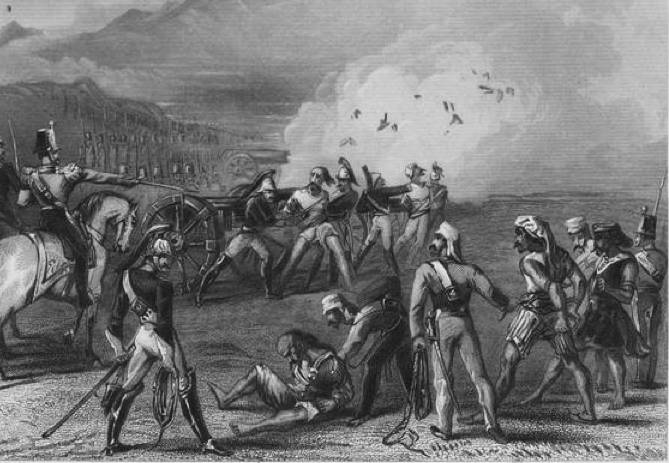
“10 of them were fastened on to the muzzles of the guns which had been loaded with powder. They seemed quite cool and said they were martyrs, etc. etc. The guns were fired together and a shower of legs arms and heads etc was all that remained of the mutineers. It was a fearful sight.” (Henry Vicars)
The rest of the mutineers were sentenced to transportation for life.
On the same morning, a courier arrived from Lahore, with instructions from Sir John Lawrence -a wing of the 61st Regiment was to march to Delhi to reinforce the army of Sir Henry Barnard, who were dug in – stalemated – on the Ridge before the walled city.
5 companies were chosen to form the wing – Grenadiers Nos 2,3,7 and the Light Company. Including the officers and the band, 450 men paraded for the last time in Ferozepore, bid goodbye to their comrades and by 8 o’clock the same night had set off on a 350-mile march to Delhi.
16 Days to Delhi
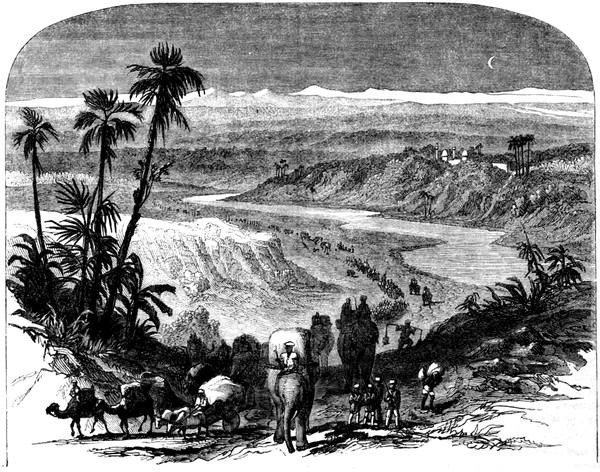
The march of a European regiment in India entailed a certain amount of theatre. It could not be accomplished without a vast array of camp followers – each corps had its quota – in the case of the 61st, 450 men required a retinue of 2000 people. The baggage train itself extended over a mile and consisted of elephants, camels and bullocks. According to Griffiths, the officers had been ordered to limit their baggage to two camels – for their tent and personal effects – by their standards, a small kit.
They would march during the night – progress was obviously slow, with frequent halts to allow the baggage train to catch up. At sunrise, they would pitch camp and remain sweltering under canvas for the remainder of the day. Pre-monsoon temperatures could soar as high as 46°C (115°F) – in desperation, some men gave up on beds and lay in the dirt under a table to fend off the relentless sun that was baking their tents, while a servant occasionally doused them with water. Sleep was fitful and short.
The scourge of any regiment was cholera, and the 61st was pursued mercilessly throughout their march. By the 1st of July, when they finally reached Delhi, they had lost 30 men, and a further 250 would fall victim to the disease by the end of the year. Many who survived were declared unfit for duty and invalided home.
Innes Excuses Himself
Innes did his best to exonerate himself from the blunders of the Ferozepore mutiny. In an appropriately long-winded letter, he stated that he had “but a handful of Europeans and an extensive arsenal to defend.” He was also quick to remind the adjutant general that his quick thinking had prevented the slaughter of the women and children on the 13th of May, and protecting them had of course added to his burdens. Besides stating the men of the Bengal regiments of whom he personally had no knowledge appeared on parade to him to be “haughty” he wastes no time in pushing the responsibility onto Lieutenant-Colonels John Liptrap of the 45th and George Edward Darvall of the 57th who had only to report that they found no fault in their men for him to be satisfied with their reports. If they said so, so it was. At least Innes was fair not to actually lay any blame on Liptrap or Darvall directly, nor on any of the other officers, but at the same time, he refused to put himself solely in charge. What he does not recognise it was the work of Liptrap and Darvall that kept at least half the 57th and a portion of the 45th faithful – and it was their command that prevented the rebels from cutting their throats. What Innes fails to mention is that Lieutenant-Colonel (later General) John Liptrap had managed to bring his men to order 4 times before they finally ran off – and it can easily be conjectured that if Innes had not blown up the respective magazines of the 45th and 57th, they might have remained reasonable. He was also quick to point out that casualties were minimal, Major Redmond had been injured and one private killed – however, he left out the damage that had been done to the people of Ferozepore in one night of looting and destruction.
The 10th Native Light Cavalry
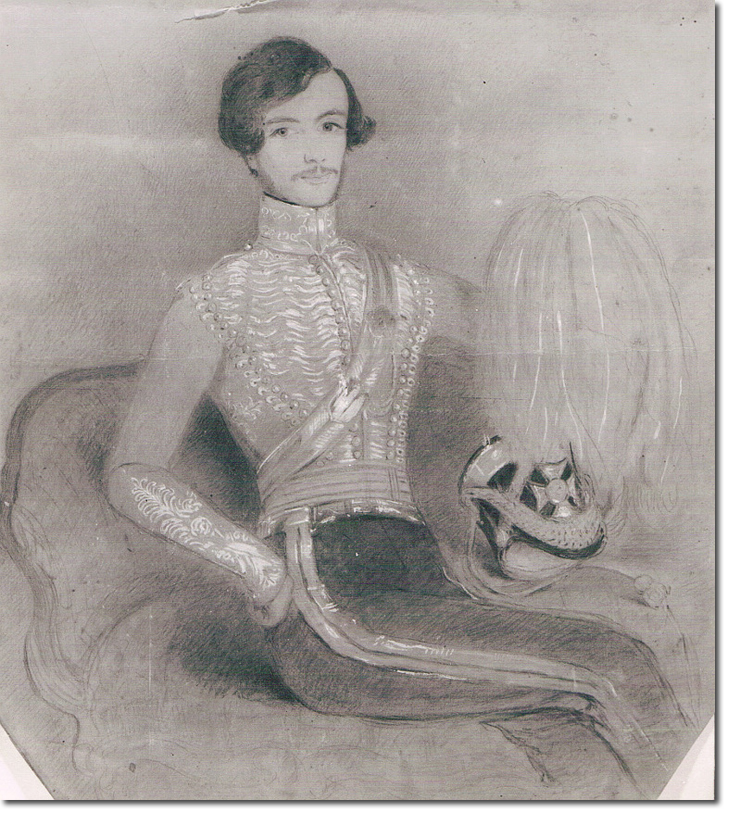
https://www.britishempire.co.uk/forces/10blc1840.htm
Raised in 1825
Fought at Bhurtpore, Cabul 1842 and Maharajpur
Officers: Commanding, Major MacDowell. Captains Beatson, Harvey, Dumbleton and Cotton; Lieutenants Harrison, Hamilton, Prednergrast and Graham; Cornet Beadon; Surgeon Anderson; Veterinary Surgeon Williams; Riding Master Keily.
Captain Alexander was serving with the 11th Irregular Cavalry while Captain W. Alexander was with the Gwalior Contingent.
“‘It is gratifying to state that the 10th light cavalry have remained staunch, and have done good service. The greatest credit is due to Major M’Donell and his officers for keeping his regiment together, for his corps must have the same ideas as the other portions of the native army….I cannot conclude this part of the report without stating the gallant and enduring conduct of the 61st, artillery, and 10th cavalry, who have been under arms day and night, and the excessive heat is very trying to the Europeans, who cheerfully stand sentry on the scorched walls of this entrenchment. The 10th cavalry are constantly in the saddle.’ (Innes)
As for the 10th, they remained loyal when the mutiny broke out in Ferozepore. They continued to do good service, even earning the praise of the Commander-in-Chief. However, their subsequent behaviour was unaccountable and hard to understand. With a strength of 419 men, they had shown no sign of disaffection.
On the 10th of July, Innes suddenly deemed it necessary, as a matter of precaution due to another cavalry regiment that had just mutinied in Sialkot, to dismount and disarm 100 sowars. Their lines were searched and all private arms were confiscated even though it was a matter of common knowledge, had they wanted to, the sowars could have replaced these with ease. One squadron was absent on escort duty to Ambala under Captain Dumbleton – when they arrived in Ludhiana they were informed what had occurred in Ferozepore. Again, they allowed themselves to be disarmed and dismounted without showing any hesitation.
However, the trouble only really started when their horses, which had been left picketed in the regimental lines, were gradually being siphoned off to serve as replacements in Delhi. This insult, along with the disarming and what was obviously empty praise from the C-in-C was the last straw for the men of the 10th Cavalry. Feeling their loyalty was in vain, on the 19th of August, the men, “made a rush at their horses, cut loose about 50 of them, and seizing every pony or horse they could find in the station, including many officers’ chargers, mounted and rode off for Delhi. With the connivance of the native horse-keepers of the Artillery, they also attacked the guns but were repulsed, though not until they had killed three of the 61st Regiment and wounded three, of whom one was a female. They also cut down Mr. Nelson, the -Veterinary Surgeon of their Regiment. “
Because blunders appeared to be a mainstay in Ferozepore, it was little wonder when, quite foolishly, a gun from the nearest bastion to their lines opened fire in the wrong direction, killing nearly 100 horses, panicked the others and allowing 200 sowars to charge out of the station on whatever mounts they could save.
Only 100 men did not mutiny but of those that did -200 in all, 142 were later captured, “40 were executed, and the remainder, with 25 of the Artillery horse-keepers, transported or imprisoned.”
A Short History of the Mutinied Regiments
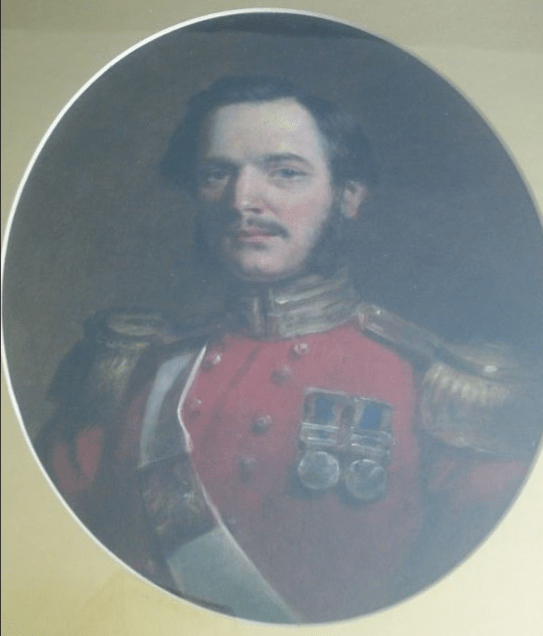
In 1857, he raised the 31st Regiment of Punjab Infantry in Ferozepore, known as Bloomfield’s Sikhs.
The 45th Regiment Bengal Native Infantry Murreeroo ke Daheena Paltan
Lieutenant-Colonel Liptrap in command
Raised in 1815 raised as 1st Btn 29th Regiment of Bengal Native Infantry
1824 1st Battalion became 45th Regiment of Bengal Native Infantry under Major J Fergusson
Battle Honours: Moodkee, Ferozeshuhur, Punjab, Chillianwallah, Goojerat
The 57th Regiment Bengal Native Infantry – Lord Moira ka Paltan
Lieutenant-Colonel Darvall in command
1804 raised as 1st Btn 29th Regiment of Bengal Native Infantry following 1796 reorganisation when previous 29th became 2nd Btn 9th Regiment
1824 1st Battalion became 57th Regiment of Bengal Native Infantry under Major J Swinton
Battle Honour – Assam
For the remaining men of the 57th who had not mutinied, there was little honour in loyalty. At the final parade of the of the remanent of the regiment an order was read out, announcing their disbandment. The sepoys were sent home and the number 57th BNI was erased from the army list.
It was a sad ending for three proud regiments.
Sources:
Chick, Noah Alfred. Annals of the Indian Rebellion. Calcutta: Sanders, Cones, and Co., 1859.
Gimlette, G. H. D. A Postscript to the Records of the Indian Mutiny. London: H. F. & G. Witherby, 1927.
Griffiths, Charles John. A Narrative of the Siege of Delhi, with an Account of the Mutiny at Ferozepore in 1857. London: John Murray, 1910.
Malleson, G. B. The Indian Mutiny of 1857. London: Seeley & Co., Ltd, 1891.
Punjab Government. Gazetteer of the Ferozepore District, 1888–1889. Compiled and published under the authority of the Punjab Government. Lahore: Government Press, 1889.
Links:
Quote of Henry Vicars, taken from “Henry George Austin Vicars diaries, 1853-1865” – https://archives.lib.duke.edu/catalog/vicarsgeorge
FIBIS
https://www.britishempire.co.uk/index.htm
https://www.flickr.com/photos/stokesblandfullerkingancestry/with/26252823604
 Mutiny Reflections