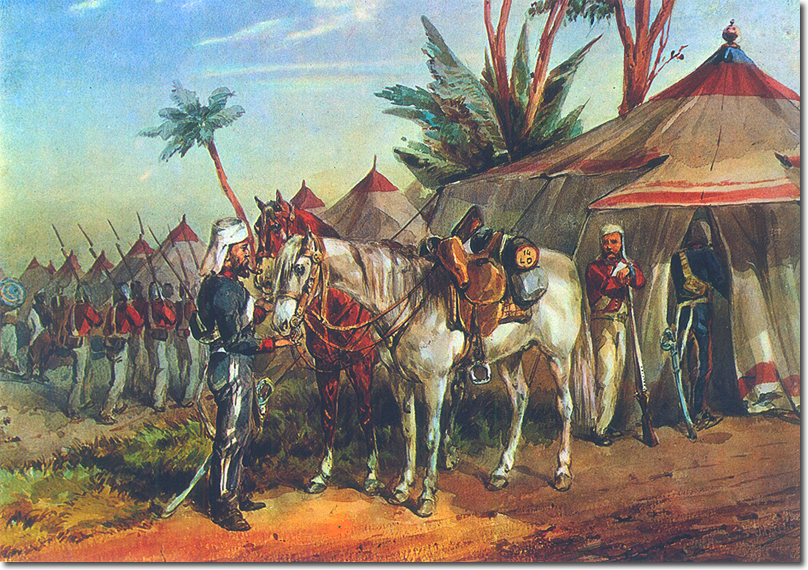
Early on the evening of the 22nd of May 1857, Jaswant Rao Paur, the Raja of Dhar, was suddenly struck down by cholera. Before his untimely end, he adopted his half-brother, Anand Rao Bala Sahib as his successor, a mere lad of thirteen. When he died the following morning he left his state in the hands of his two helpless widows and a minor; the elder widow quickly styled herself as Regent and wanted to appoint her brother, Sardar Rao as Dewan but, after this caused a considerable outcry, she reluctantly assented to the appointment of Ramchandra Bapuji or Babu Sahib, as Dewan. Unfortunately, the government of the EICo were somewhat preoccupied with the mutiny and would not be able to formally recognise the young Raja until the 28th of September. But in their defence, there was never any objection to the adoption and his right to rule was already recognised in May. After all, they felt they had nothing to worry about – Ramchandra Bapuji, who with his thorough knowledge of English and obvious devotion to the EICo was, after all, hardly a threat to British interests. He would, so they thought, keep Dhar on the straight and narrow.
However, he had other ideas. In direct contradiction to government policies, he started enlisting, worryingly enough, mercenaries – Arabs, Afghans and Mekranis and there really was no one to stop him. As soon as the Indore uprising became news in Dhar, 400 mercenaries joined forces with the mercenaries of the Raja of Amjhera and plundered not only Bhopawar but also Sirdarpur. They were stooping so low as to burn down hospitals with the wounded and sick still in them. When they returned to Dhar, laden with plunder, they were greeted enthusiastically by Rao Bonsla, the young raja’s uncle, who placed three of the guns they brought him on the roof of the palace. As of the 31st of August, these mercenaries took hold of Dhar fort, with or without consent of the Dhar Darbar could not be clearly ascertained. The political agent at Dhar, Captain Hutchinson, reported his belief the raja’s mother, and his uncle was complicit and the Darbar was “suspicious” as their agents had “purposely deceived him regarding the negotiations entered into by its members with the mutinous mercenaries and the number of men they had enlisted, and that it had received with attention and civility emissaries from Mandisar, the centre of the Muhammadan rising.” Durand, for his part, immediately dismissed the Dhar agent that had sought him out at Mhow and sent with him a clear message – the Darbar and its members would be held responsible for anything and everything that happened in Dhar. The Darbar, if they wanted to prove to Durand they were not rebels, would have to expel the mercenaries. How Durand imagined they would do this is anyone’s guess, but as they did not, Durand felt, by October, it was time to teach Dhar a lesson.
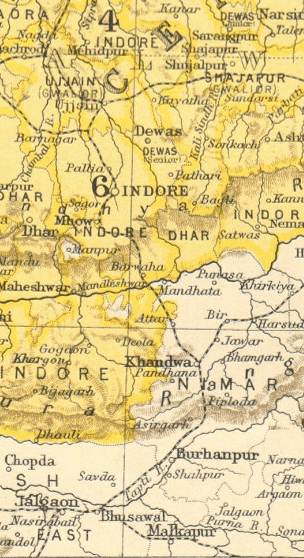
The rains were over, and operations could begin. On the 12th of October, with news that a band of marauders was planning to move on Mandlishwar to plunder the treasury, the 3rd and 4th troops cavalry of the Hyderabad Contingent under Lieutenant Clarke were dispatched to cut them off at the village of Gujeri. Another detachment of the 3rd cavalry was rapidly pushed forward to Mandlishwar to support Captain Keatinge, who had taken up his post as Political Agent there.
As the Walayatis had been plundering, pillaging and leaving destruction close to Mhow and had destroyed the dak bungalow at Manpore, it was deemed necessary to put an end to their ruthless behaviour before they reached the treasury. However, things were about to become a little more interesting.
At 1.30 am on the 14th of October, Mhow was suddenly a hive of activity. Stuart, now Brigadier Stuart, suddenly ordered three guns and three companies of the 25th Bombay Native Infantry under their commander Major Robertson and 50 Dragoons of the 14th to proceed, with all haste, in support of Lieutenant Clarke. The 25th marched out under their commander, Major Robertson. Then, on the 16th, more ammunition was sent to Major Robertson; on the 19th, orders were issued for the remaining force to march while all Europeans left in Mhow were to make their way to the fort. The cantonment was left in charge of a small detachment of the HM’s 86th, a portion of the 25th and a detachment of the Bombay sappers under Lieutenant Dick with the Bombay sappers were all that was left to guard Mhow.
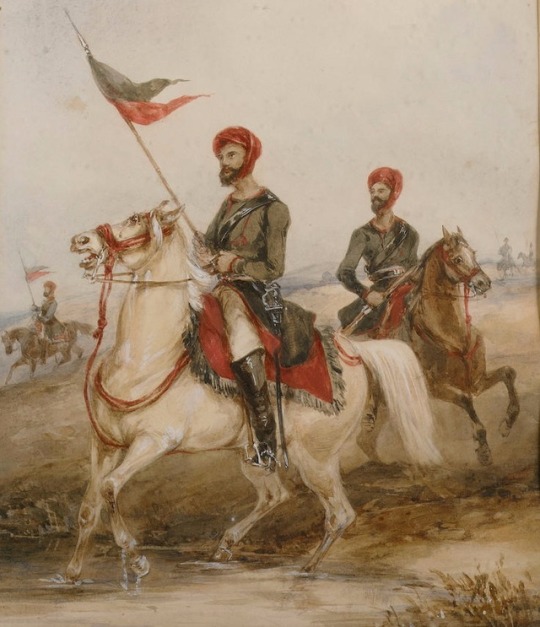
The next day, half of B Company of the Madras Sappers with the 86th under Major Keane, Woolcomb’s Battery, the remaining troops of the Hyderabad Contingent and a squadron of Dragoons were to proceed to Dhar. Early the same morning, the 2nd Infantry, a squadron of the 1st Cavalry and three guns of the Hyderabad Contingent, under the command of Captain Speed, arrived in Mhow from Simrole, adding, at least for a moment, some comfort to the Europeans shut again in the fort.
The time spent in Mhow had allowed for arrangements to be made at leisure rather than haste; a siege train was made ready, and as soon as October rolled around, all that was left was to put it into motion.
The field force under Major Robertson had been but the advance guard of the Brigade which would take to the field, divided, with Major Keane commanding one division and the other under Brigadier Stuart. They left Mhow using different roads, making the ruse complete; the objective of both was Dhar, but the insurgents would not be cognisant of the fact until the force was standing at their very doorstep when they were investing the fort from both sides.
It was a dangerous move. Durand and Stuart took a calculated risk – they were leaving Mhow minimally protected, with an unhappy Indore, and the Gwalior Contingent some 20’000 strong and uncertain of their direction, who could at any moment sweep Mhow out of existence but there was a plan – Dhar and Amjhera would first be brought to heel, then the force would march to Mandsaur and take care of Feroz Shah – after that, they could strike back to Indore or take up the march against the Nana Sahib.
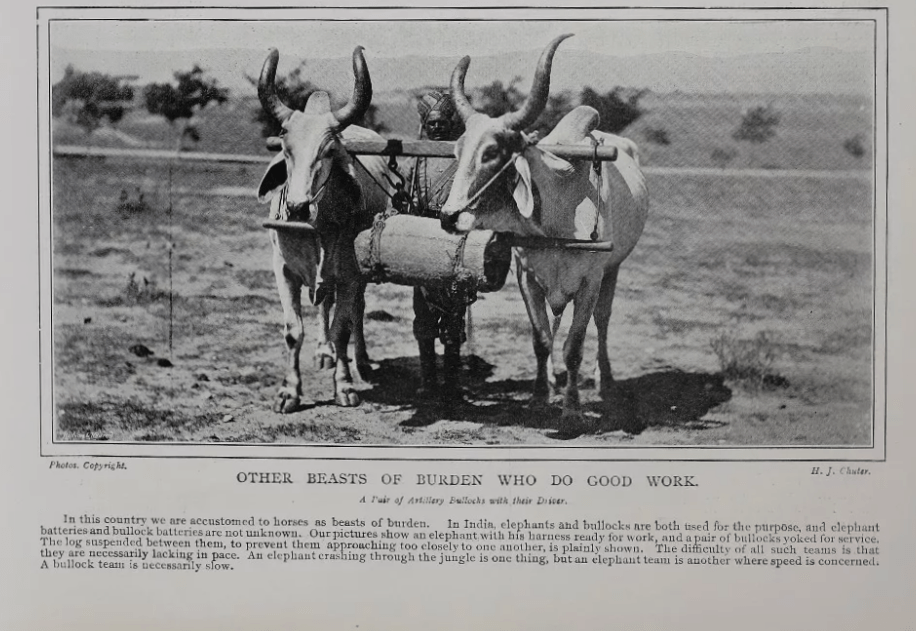
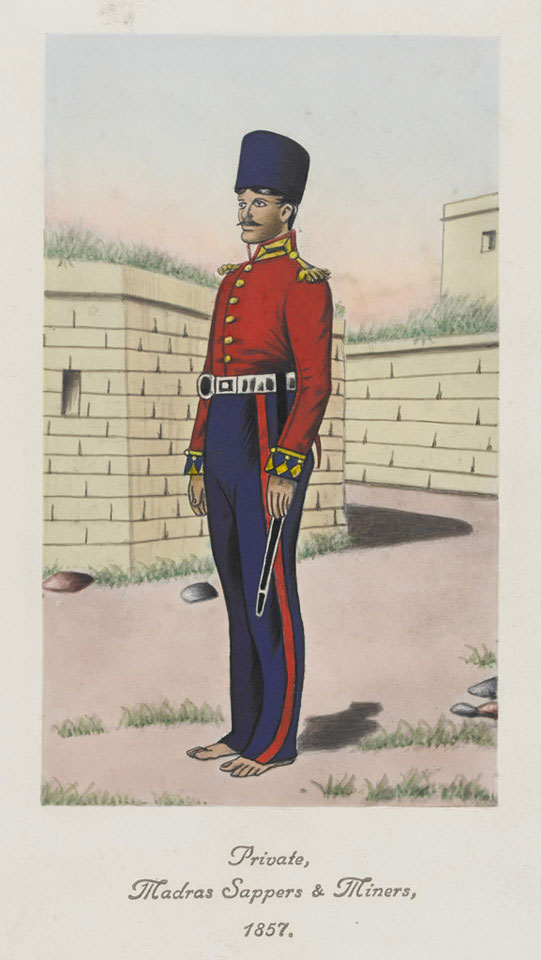
The remaining portion of the Madras sappers left Mhow on the 21st, conducting the siege train. Although preparations were made for a 2 am start, they did not move out until four hours later and had only accomplished 10 miles (ca. 16 km) by 7 pm. While haste was the order of the day, the bullocks dragging the guns had other ideas. For one, the rains had left the roads in a deplorable state; almost every 50 yards (ca. 46 m), the stubborn animals called a halt. No amount of “pricking and twisting of tails and yelling” would convince them to move – it would be left up to the elephants to extricate the guns from the holes and miserable mud heaps the bullocks had decided to stand in. And stand they did, every mile they went on the offensive, but the guns were wanted at Dhar, and whether the bullocks liked it or not, they were going to war. As if this was not enough to try the patience of man and beast, the road was lost, and the force wandered for nearly two miles (3.22 km) in the wrong direction before they realised their mistake. By some chance and the continued efforts of the men, finally, on the 22nd of October, now on the right road, they met up with Major Robertson at the village of Guzeri, where he had been waiting for them.
A cavalry reconnaissance under Captain Mayne now returned to report they had been fired on from the town – there was a quick halt to refresh the men before the battle began.
Our Cavalry and Artillery followed our skirmishers up the rising ground, from which every part of the enemy’s position and surrounding country could be seen. Nothing could have seen more picturesque,
dotted about as this territory is with lakes and trees:. between us and the fort was an expanse of water, on the extreme, right Major Keane’s column in the heat of the engagement, and on our left a series of hills, rocks, and ravines. On one of the eminences, the rebels had placed a battery of English nine-pounders, which greeted us with rounds of hammered shot: these, in their passage through the air, created a most disagreeable whi-r-r-r, while those that fell short in the lake threw up miniature waterspouts. The clusters of the enemy’s infantry, too, had scores of many-coloured banners, all lending considerable able effect. ‘We formed line and opened fire on the fort and hill battery, soon disabling one of the guns on the latter position, but the fort proved out of range and the heavy guns were making gaps in our Cavalry ranks.
The column under Major Keane was the first to arrive on the scene and was directed against the north side of the fort, where the insurgents immediately opened with their guns, still unaware that Robertson and Stuart were waiting for them on the other side. When they realised their predicament, the mercenaries made a mistake – instead of waiting it out in the fort, they left their positions and flooded out to meet the Malwa Field Force in the open. They began confidently enough.
Major Robertson with the 25th Bombay Native Infantry, along with Major Gall and the Dragoons, had set their sights on the hill guns, which they took with hardly any opposition, which the sepoys of the 25th quickly turned on the enemy. Simultaneously, the four companies of the 86th and the sappers, flanked ably by Woolcombe’s Bombay and Hungerford’s Bengal batteries, advanced against the centre, leaving the cavalry to threaten the insurgents on their flanks while the dragoons under Major Gall on the left and the Hyderabad Contingent under Major Orr on the right. Bewildered by the 25th who now reigned down shot from the hill guns and the guns from Hungerford and Woolcomb plying from the centre, the insurgents attempted to make a rapid movement to the left, in a vain attempt to turn the British right. At this moment, the cavalry – the dragoons and the Hyderabad Contingent- charged. The insurgents had had enough – leaving forty dead on the field, they ran back to the fort. Three dragoons were wounded with sabre cuts, one jemadar and one sowar of the 3rd Cavalry, Hyderabad Contingent were killed and two wounded.
” The former encountered the enemy’s Cavalry in swampy ground, where neither could get away: hand-to-hand encounters ensued, which resulted in victory to the dragoon, with perhaps a trifling wound, and death to the rebel…” Unfortunately for the insurgents, many of them had not taken bows and arrows to the fight, which they soon found proved ineffective against a vigorous cavalry charge. The cavalry then made a complete circuit around the fort, ensuring that not a single insurgent was still out in the open. The troops now plied into the ridge of hills commanding the fort and occupied the ground.
All that was left now was to take the fort.
The camp at Dhar was pitched a mile from the Fort on the south side, in a large ravine surrounded on all heights by enormous fissures. From the neck of the ravine was a gorge through which a road ran onwards to a large tank surrounded by trees. Further on was the town of Dhar. As camps go, it was well situated; the road was hidden from the insurgents by hills and could not be seen from the fort. On a hill, some 2000 yards from the fort, Stuart directed a sandbag battery built from where the artillery could throw shots at the fort. On the east and north faces, strong cavalry pickets of dragoons and irregulars and of the 25th and 86th were positioned. To the west was a lake. If the insurgents attempted to move out of the fort again, they would have waded straight into a trap. However, the beating they had received on the 22nd convinced them to keep their heads down, satisfying themselves with shooting at Stuart’s reconnoitring parties and occasionally flinging a shot in the direction of the camp.
“After continued bugling to cease firing, it was assembled and marched into a sort of basin amongst the hills, and encamped, leaving strong pickets and outposts of both Cavalry and Infantry. An irregular fire from the fort was kept up through the day and night. At dark, flaming torches were seen in active movement, and the noise of camels was heard, and doubtless, many of the enemy moved off to Mundesoor. On the following day, five elephants and all our Commissariat bullocks were sent to help to drag in the siege guns for without them, we were helpless against stone walls. Six elephants were seen leaving the fort with a small guard. The Cavalry gave pursuit, overtook them in a village, which was burnt, the elephants brought into camp, and several of their guard killed.”
 Mutiny Reflections