The ports ye shall not enter
The roads ye shall not tread
Go make them with your living
And mark them with your dead.
- Rudyard Kipling
It had been an ambition of mine for many years to visit Kanpur. I had made one visit in the past, some 25 years ago which turned out to be something of a failure. I was still relatively new to researching the events of 1857 and had, unfortunately, not prepared myself. The visit was a disaster – I could not see the entrenchment, nor visit the church as I was not able to get past the security at the cantonment gates. I then ended up at a ghat but could not be sure if it was Satichaura since no one would tell me if it was. I ended my visit to the Kacheri Cemetery, hoping to save at least a little of the day only to find myself standing in the middle of a nest of rather angry wasps. So I went back to Lucknow, miserable, with badly stung feet and rather angry with myself. The same evening, I booked the night train to Dehra Dun, vowing to spend the rest of my vacation in a slightly less hazardous manner.
I continued to visit India and Lucknow but never ventured back to Kanpur. It was, in my estimation, nothing short of a cursed city. Of course, that fateful trip had ultimately failed due to my lack of preparation. It was not the ghosts of Nana Sahib’s army who had thwarted me. However, that makes a much better story.
Finally, this year, almost 25 years to the day after my failed venture, I returned to Kanpur.
This time, I printed out maps so I would not be led astray and packed a bottle of calamine lotion, just in case I met with another swarm of petulant wasps. I ensured I had a spare battery for my camera, a hat on my silly head and with much anticipation, awaited the journey. As you will see, I had made a plan.
Instead of blundering around Kanpur on my own, relying on auto rickshaw drivers and rather clueless passersby, I had written an email to Tornos of Lucknow.
Tornos must have their tale told.
Founded in 1994 by the godfather of experiential tourism in India, Mr. Prateek Hira, Tornos is the only company in India to offer exclusive tours relating to 1857. Be it their expansive programme in Lucknow or their intriguing tour of Delhi, they also offer a day tour of Kanpur, with an additional side trip to Bithur.
The guides of Tornos are experts in the field who have a curated knowledge of their subject. Be it food walks, heritage walks, or any of the other 50 experiences Tornos offers, the guides are armed with fascinating, encyclopedic expertise. The tour to Kanpur was no exception.
Professionalism is the hallmark of Tornos.
The car with the driver and guide picked me up promptly at 08:30 am. It was to be a two-hour drive to Kanpur and as soon as I stepped in the car, it was clear this was to be no ordinary tour. The car was beautifully turned out, and with bottled water and snacks on hand, we set off.
Within minutes conversation turned to 1857. By the time we had passed through Lucknow, we were well into discussing causes, effects, consequences and results. It was going to be a great day. Finally, I met someone who did not find 1857 dull and dreary. Judging by the animation in the guide’s voice, he was as passionate about the subject as myself.
Before leaving Lucknow, we stopped at Alambagh and Havelock’s Memorial. Unfortunately, it was still too early in the day and the monument was closed, but there is always an opportunity for pictures.
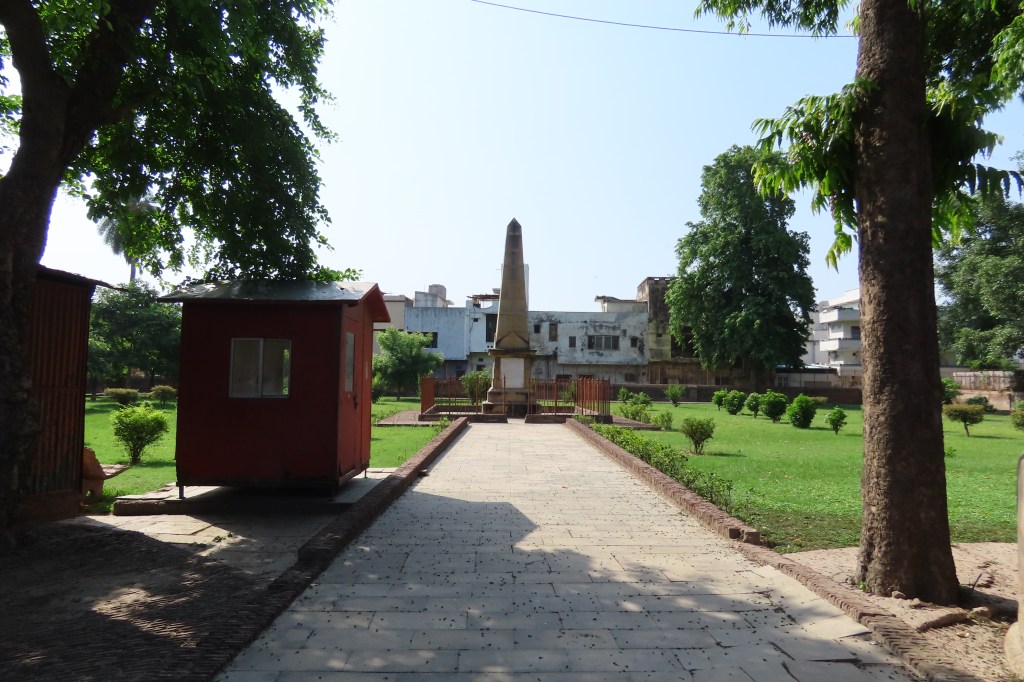
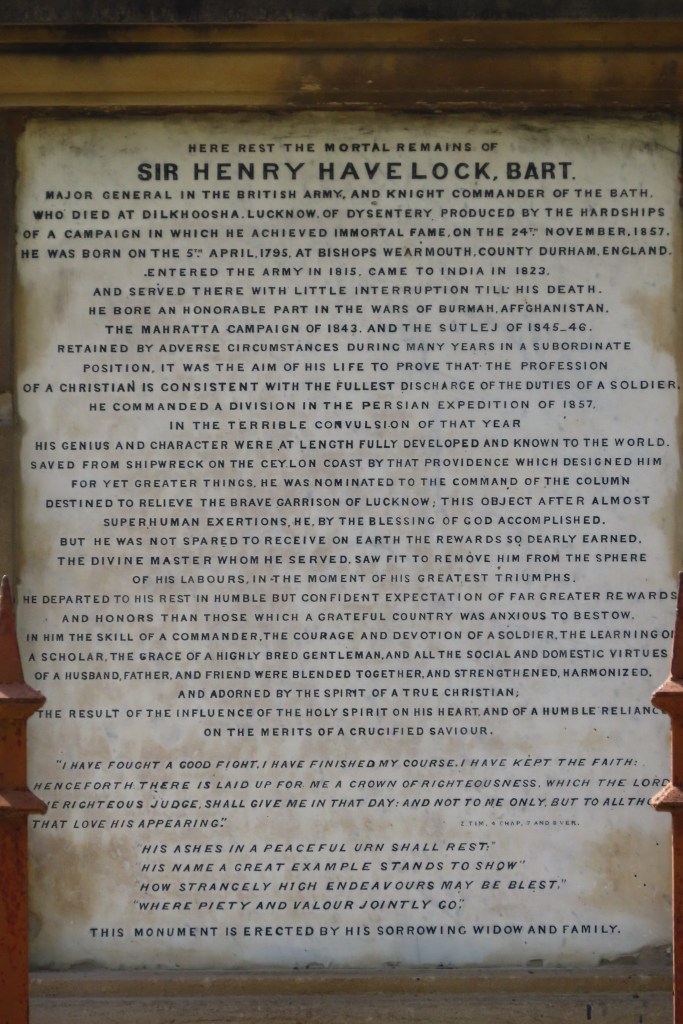
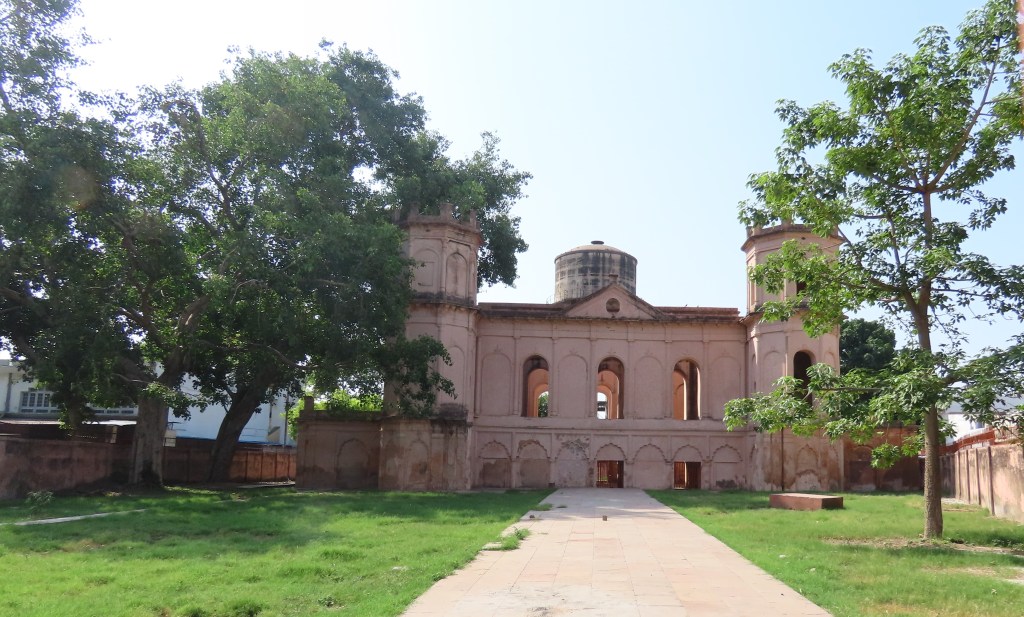
Onto Kanpur.
Along the road, there is time to ponder what it must have been like to march, on foot, from Kanpur to Lucknow. While today we can sit in our airconditioned vehicles while the mayhem of Indian roads passes us by, in 1857 it would have been a gruelling 2-day march. The glimpses of the countryside with so little shade told as much and I could not help but be reminded of the words of John Sherer in his book, “Havelock’s March on Cawnpore.”
“We rode a long way, as it seemed to us, without seeing anyone at all. It was an exceptionally hot morning; the rising sun struck us obliquely, and we were much troubled with what the elder Lord Lytton would have called the “glint of the beam…We were almost beat with the morning sun. I remember I dismounted at a well and poured water on my head, then got some neem leaves, soaked them, and put them in my sola hat. But even then I was so giddy I could scarcely manage to proceed.”
Sherer arrived in Kanpur in July, shortly after the rains had started. Today was the 2nd of June, 166 years later, and India was baking at its pre-monsoon best. At 8.30 in the morning, the temperature in Lucknow had been 37°C in the shade.
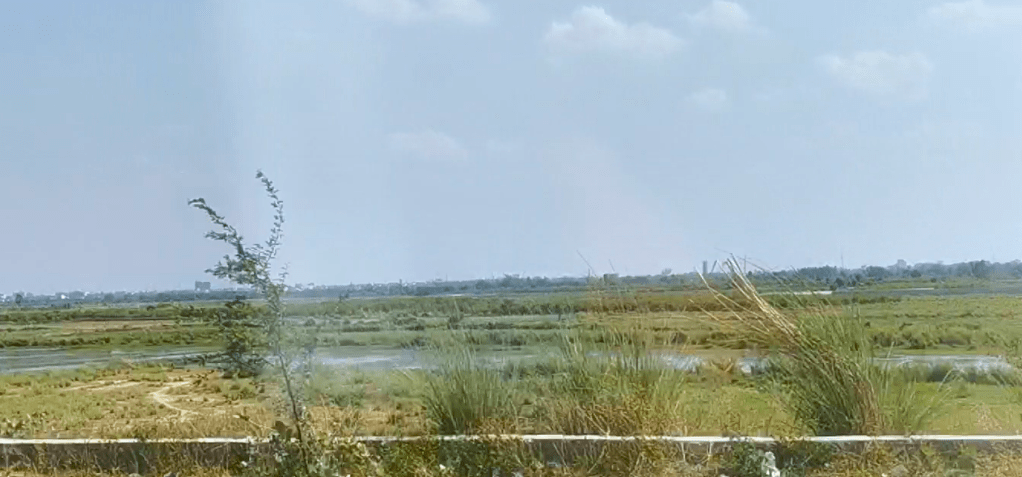
As we entered Kanpur and weaved our way through the cantonment, passing austere bungalows with pristine gardens and rather ominous soldiers in full uniform and armed to the teeth, we were nearing our first destination – All Soul’s Church.
Suddenly the car stopped. Tornos had called in advance and informed not just the current pastor of the church but the army headquarters we were coming. After a quick formality, we were allowed to drive on. My passport was not demanded but I had been told to carry it in case.
After a few moments to car stopped. We had arrived.
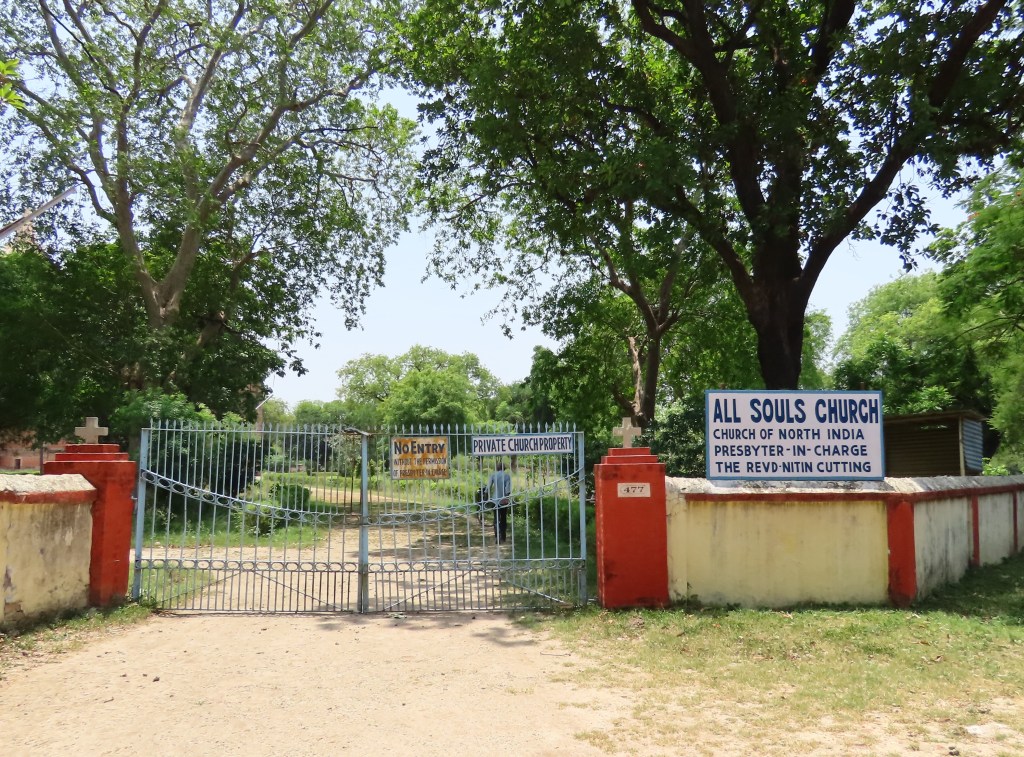
Designed by Walter Granville – Consultant Architect to the Government of India – who had started his career with the East Bengal Railway, All Soul’s Church or the Kanpur Memorial Church as it is also called was built in 1875 and constructed in the Lombardic Gothic style in red brick, quite unlike Granville’s neo-classical buildings in Calcutta which include
The General Post Office
The High Court ( Indo-Saracenic rather than neo-classical)
and the Indian Museum
All Soul’s Church was meant to be sombre, thoughtful and above a memorial to the garrison at Kanpur. It was constructed to honour the dead of 1857 and is to date, the only site in India to do so.
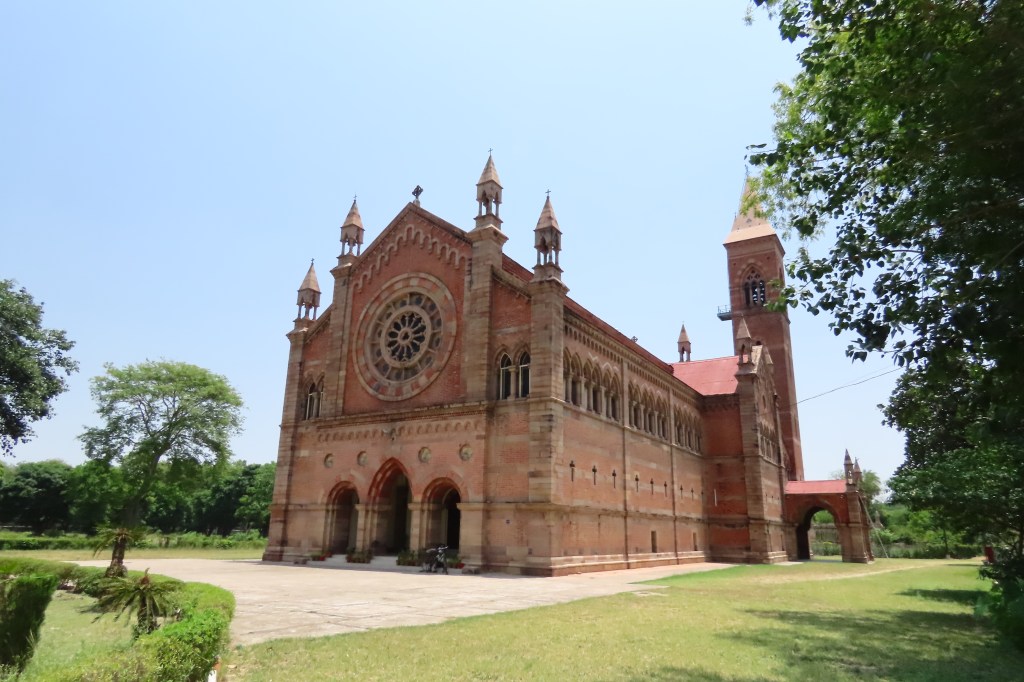
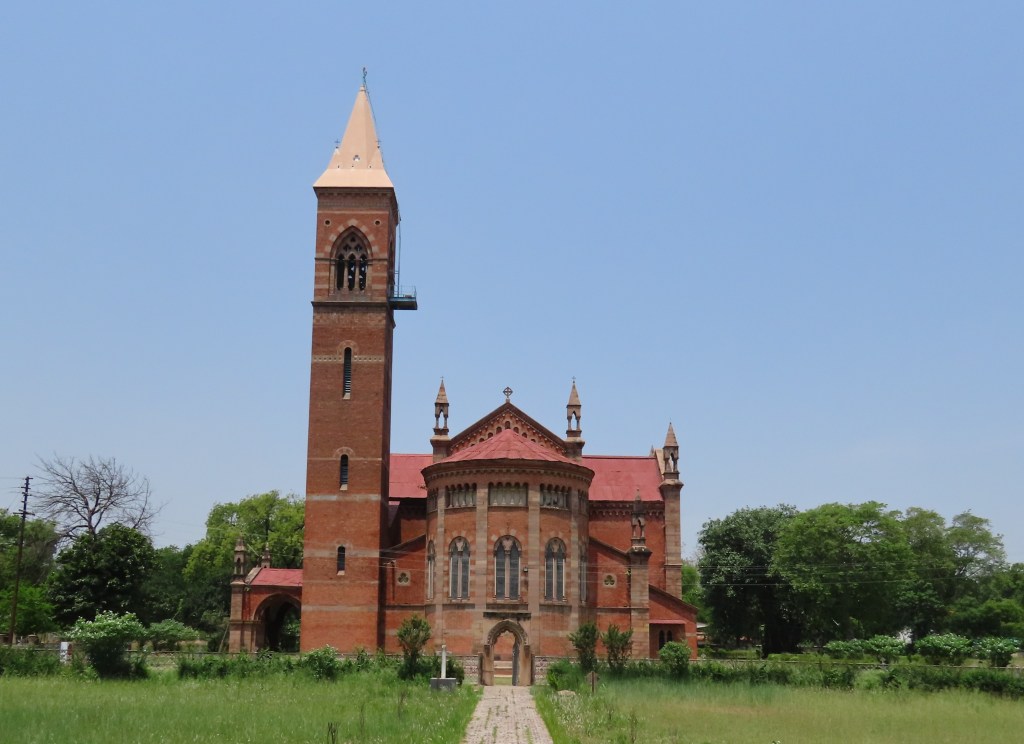
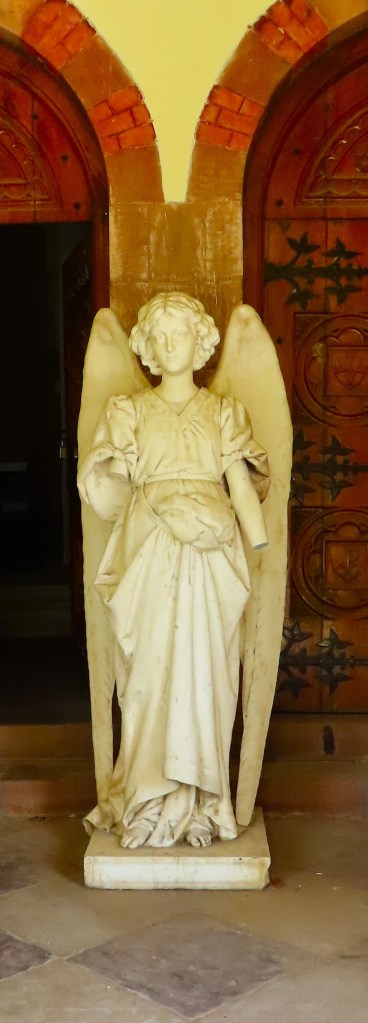
The entrance is not, as one would imagine, through the three portals under the round window but on the side, through a small portico next to the tower. The hallowed halls of the dead await. A sadly maimed and broken angel is perhaps a fitting monument for the visitor can expect within.
The interior is cool and quiet, more like a sepulchre than a church. There is a stillness in the air, a feeling of mourning unending, the vast space is dominated by a domed ceiling, painted blue with small silver stars.
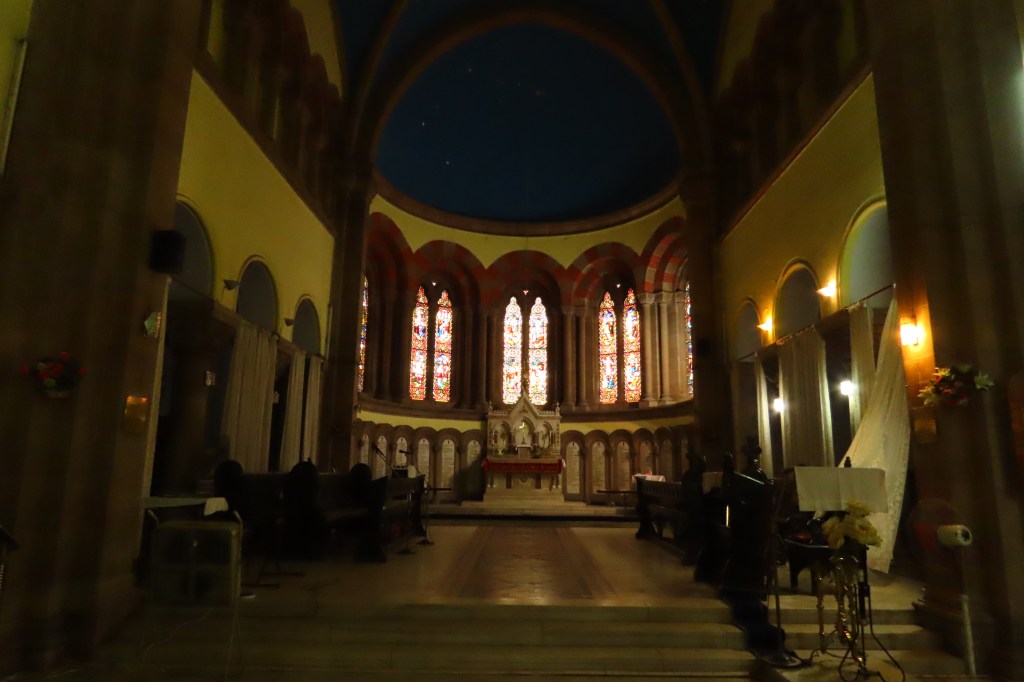
Up the cold marble steps is the altar, surrounded by plaques commemorating the names of those who perished in Kanpur in 1857. One name is missing – Major Edwin Wiggins, thought to be a coward during the siege and last seen cowering in one of the boats by Mowbray Thomson, his death by a bullet to the head was considered a fitting end. Thomson did not mention him by name in his book, but later authors were less discerning. So Major Wiggins remains unnamed among the 1000 names in All Soul’s Church.
There is one difficulty with churches, especially in India. The lighting is notoriously terrible. While the Victorians may have favoured candles and later generations had gas lamps, modern lighting for the most part extends to garish tube lights and low-wattage bulbs or something resembling poorly placed spotlights. There is also the problem of getting anyone to turn them on. The caretaker did, bit by bit and just as quickly turned them back off. All Souls has been spared tube lights but it remains a complicated place to photograph, especially for someone who is not equipped with anything more than a bridge camera.
Another problem is the placing of objects. Some of the plaques were obscured by a large box that was the size of a small refrigerator but was probably an air cooler, and there was no way around it. The other issue was a table which had been placed in from of the plaques. I finally moved it away myself, taking care to replace it after.
However, this does not take away from the fact the memorial plaques are stunning. Carved on white marble in black lettering are the names. The names of people I have written about and searched for in endless books and some of whose faces I have found in pictures. It was a sobering moment to realise that here they were, in this silent church, memorialised forever. A sobering moment indeed.
Dear readers, here I shall desist from presenting any more pictures of the memorial plaques. These will be shown in another post. Yet visitors to All Soul’s Church should not miss the opportunity to walk around and look at the other tablets in the walls, the personal memorials erected by friends and family of the deceased. It is a veritable home of sorrow.
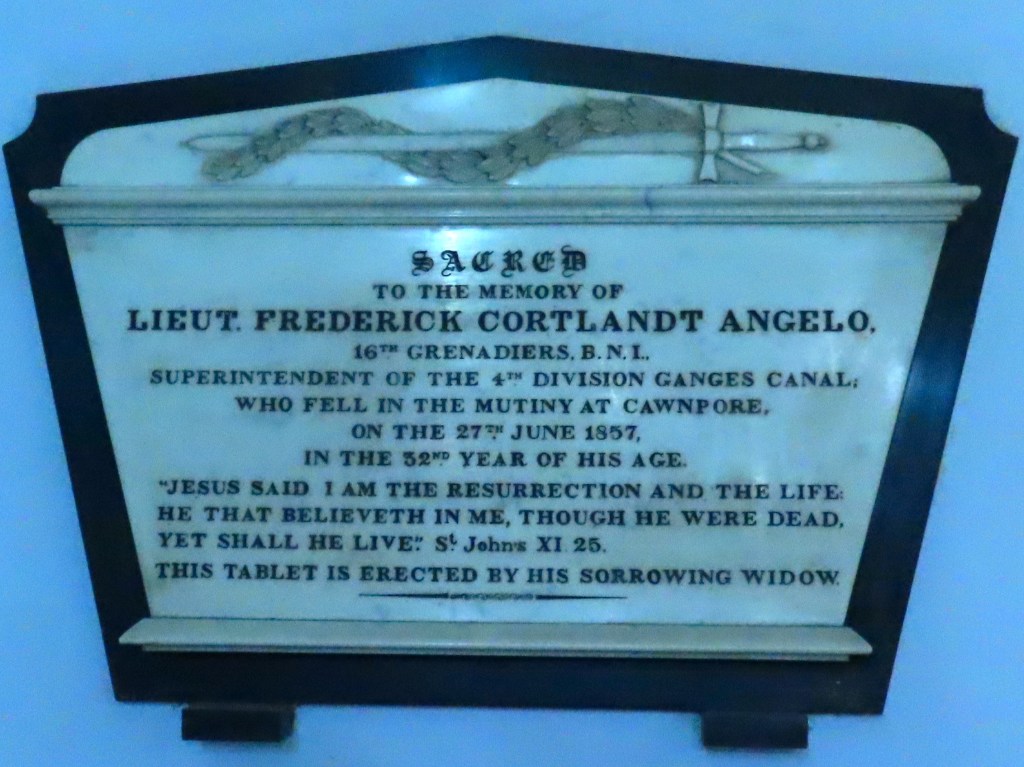
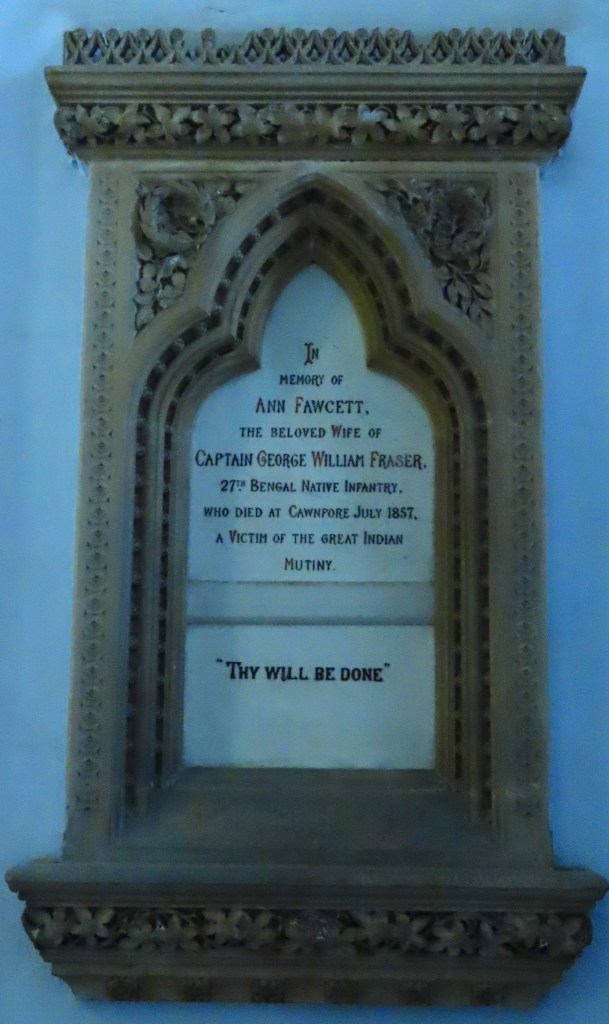
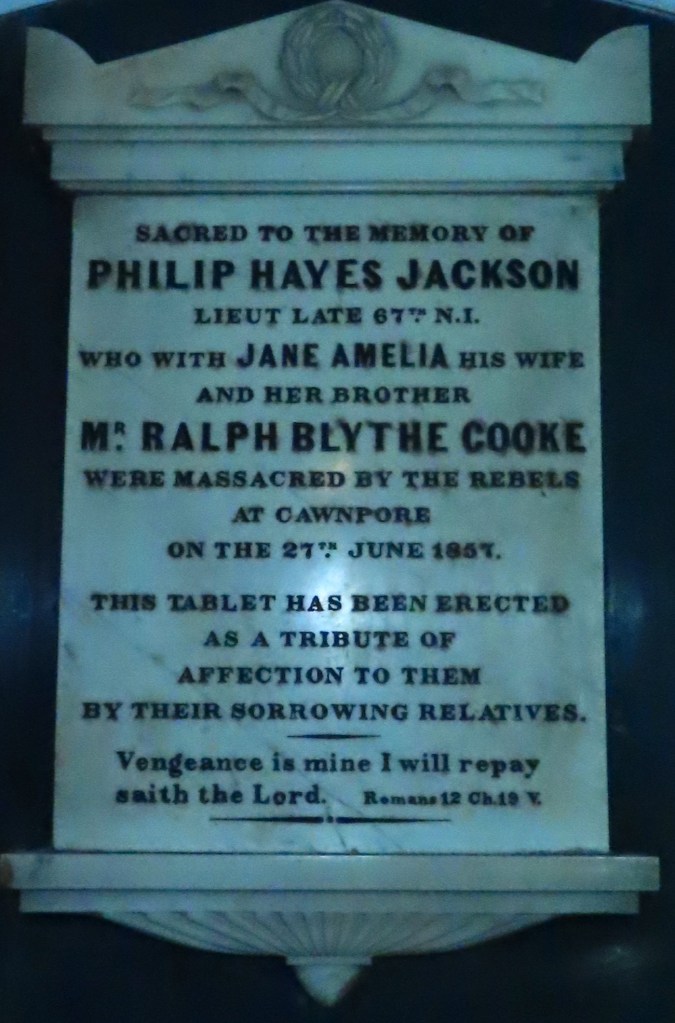
As we leave the church, the caretaker asks me to sign the visitor’s book and make a donation. He does not stipulate an amount. It is for the upkeep of the church and the diocese of NWP is doing a sterling job.
Leaving the sacred abode to the dead, we walk outside, back into the heat of a June day, much like what Wheeler and his garrison must have encountered, but a mere 5 days later when the first cannon shot ripped through the entrenchment.
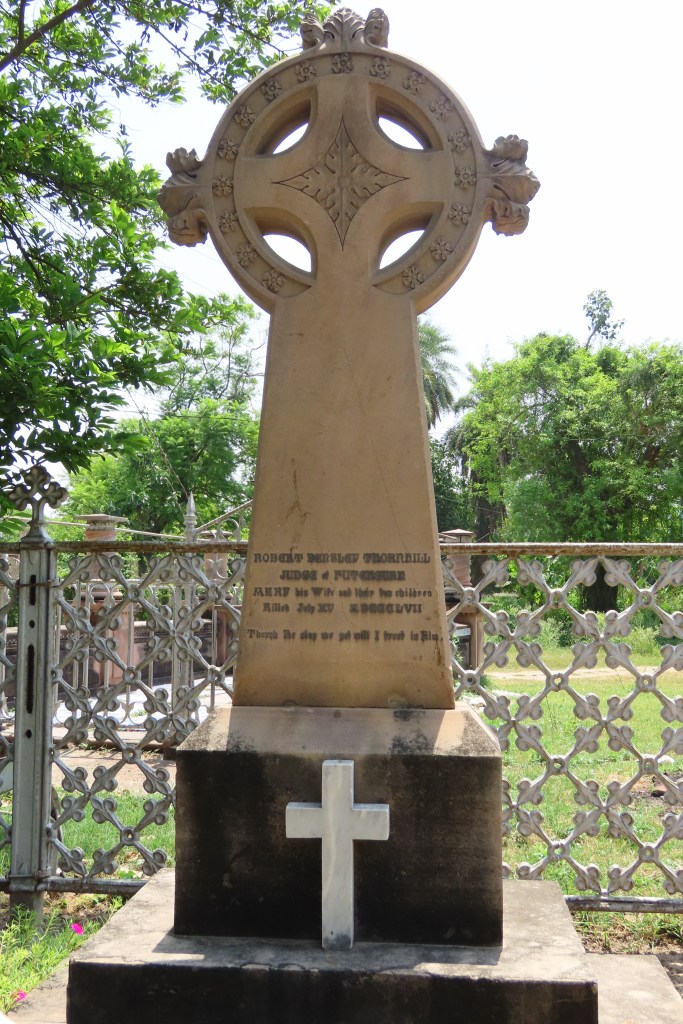
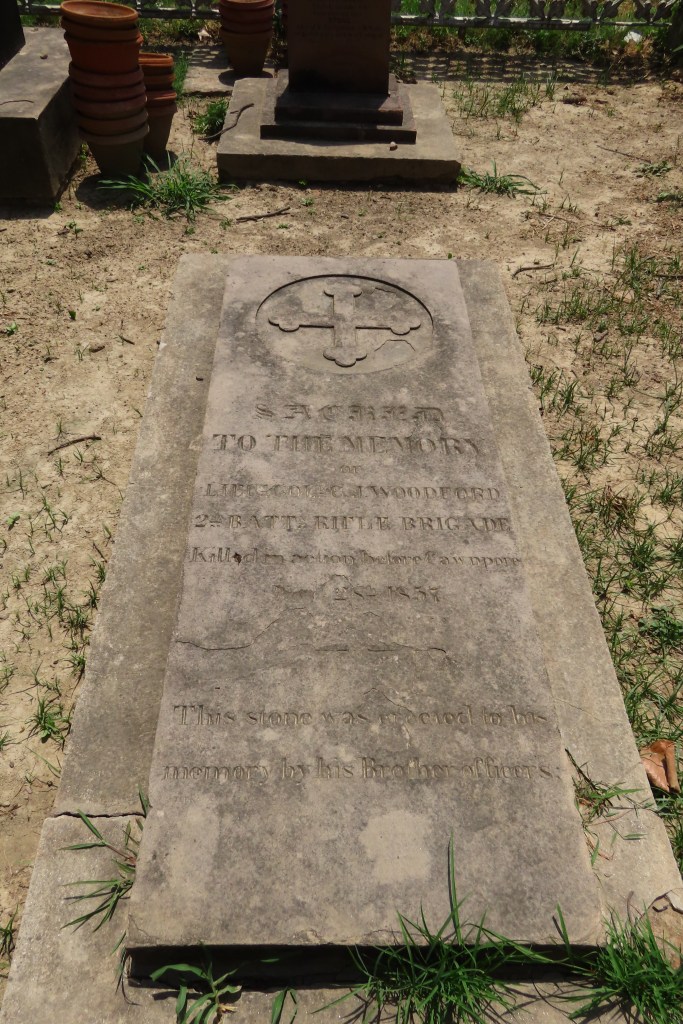
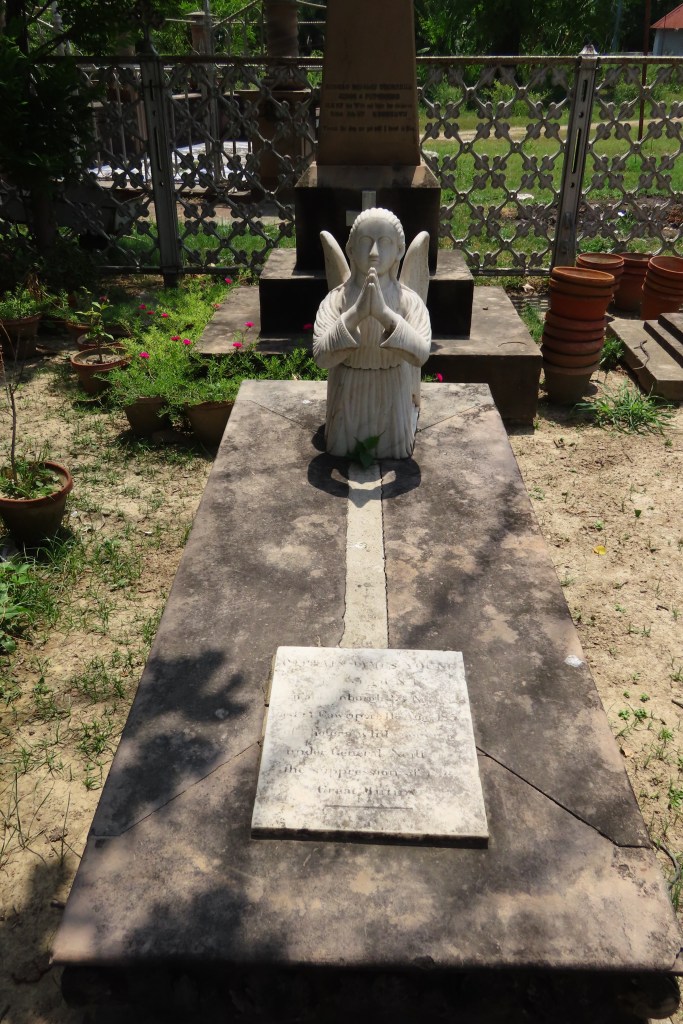
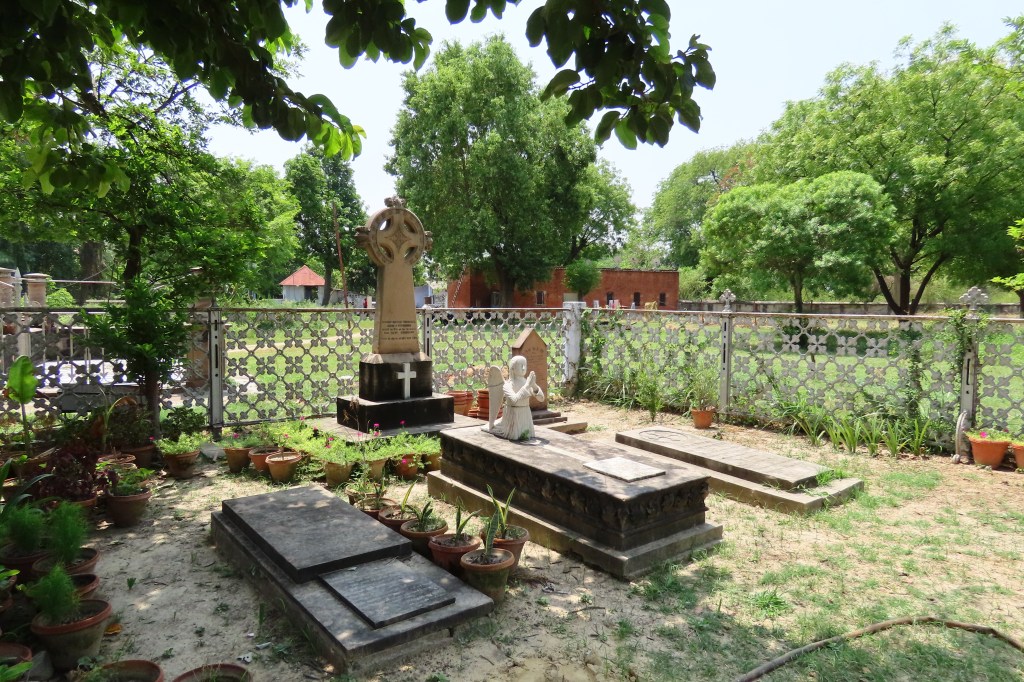
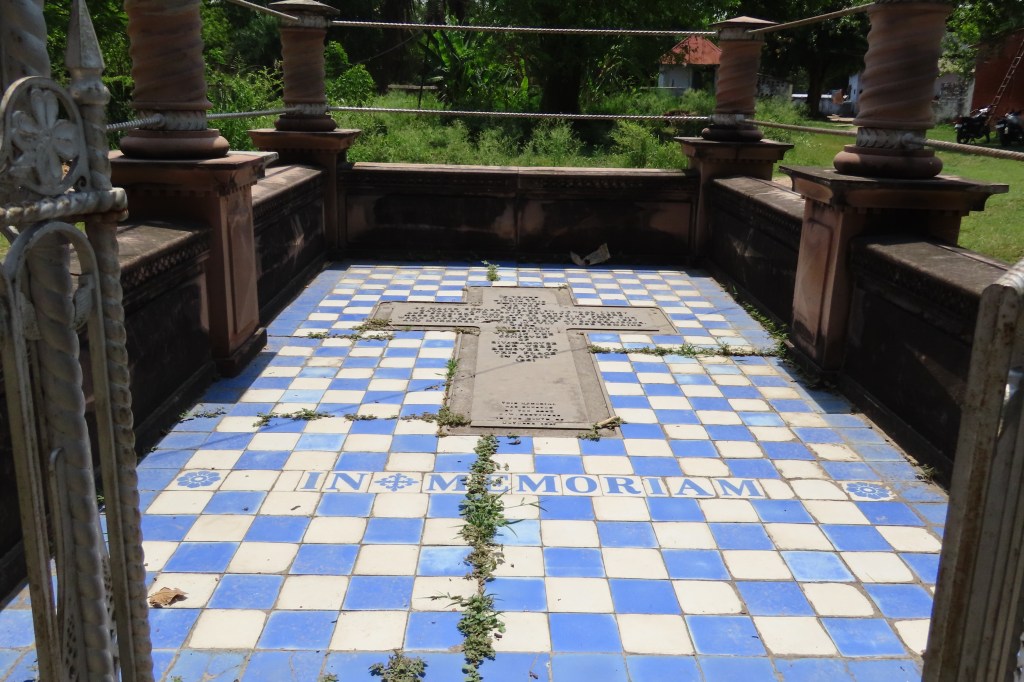
While the church is in sterling repair, the entrenchment leaves something to be desired. The memorial tablets outside are in a state of disrepair and some are woefully hard to read. The compound abounds with boundary markers, demarking the walls of the entrenchment. A few other pillbox markers too remain, but the words are rapidly fading. The Redan, Ashes Battery, Provisions Godown and Magazine are visible but another sits in an overgrown field and is impossible to reach. The water well is there but now there are scrub trees growing out of its foundations. As for the sepulchral well, which was used during the siege to bury the dead is not accessible. Tornos tried to organise a visit but it was not permitted. It sits in what is now considered a sensitive location. Tornos has repeatedly asked for that well to be cordoned off and has requested permission to see it, but they have been denied. One wonders what condition it is in, 166 years later.
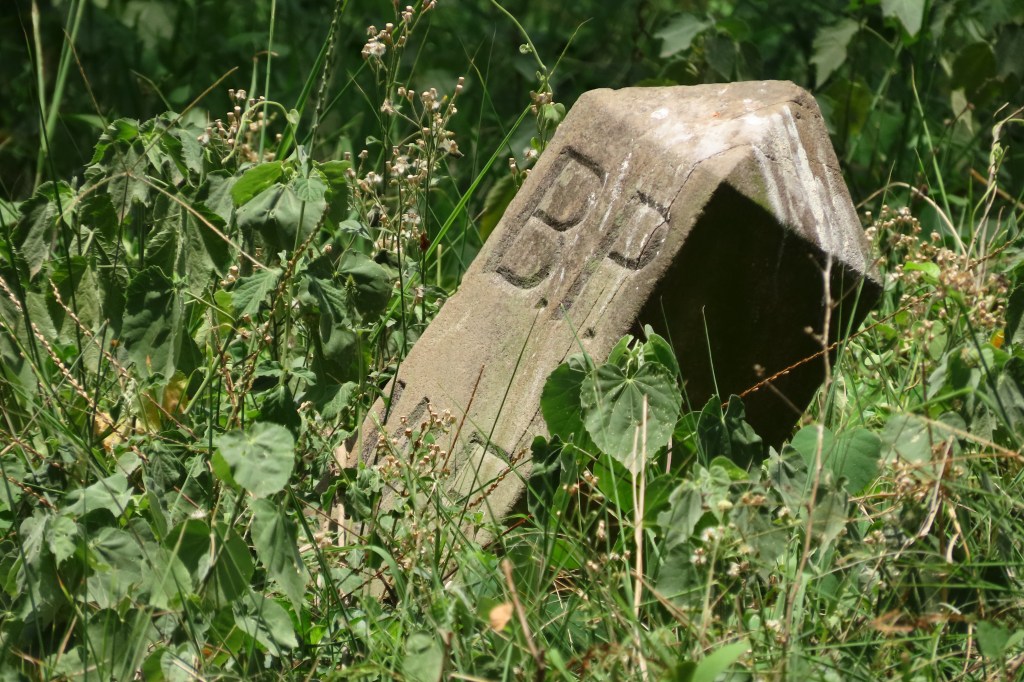
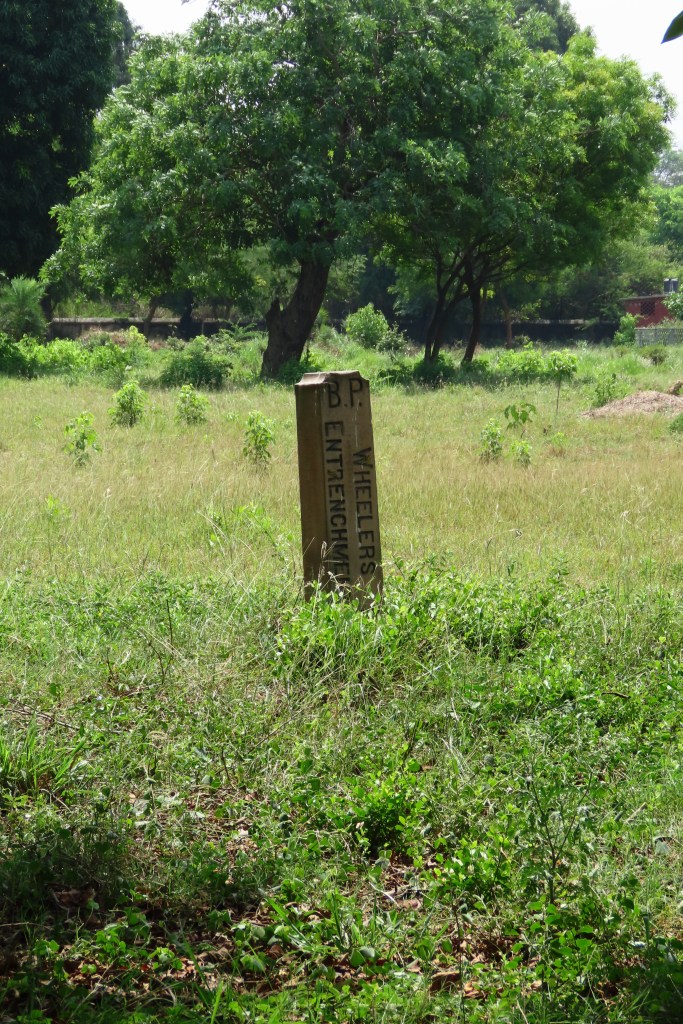

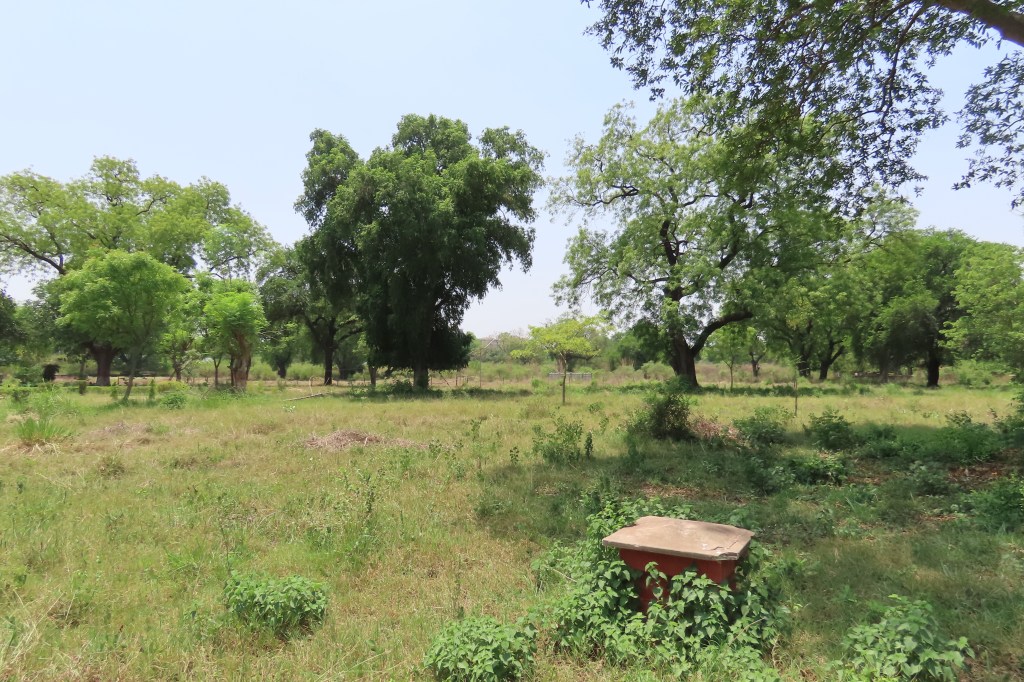
A sense of desolation still prevails throughout the grounds of the Entrenchment. Even on a bright sunny day as this was, it felt as if the siege had not ended. Somewhere, just out of sight, a battle was still raging. By the time we found the well, I was positive we were not alone. It is that moment when you look behind you, expecting someone to be standing there, a movement from the corner of your eye, passing too quickly to be seen, who says ghosts do not like the daylight has never been to Wheeler’s Entrenchment.
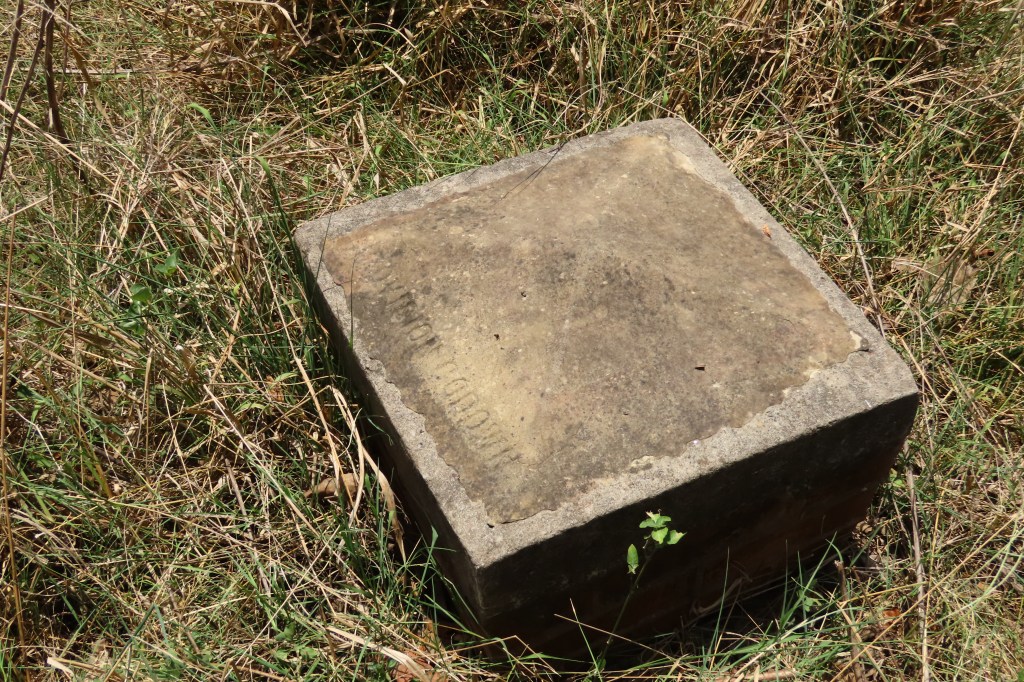
This feeling stayed with me for the rest of the day.
Behind the church are the remains of the Bibighar memorial.
It must be pointed out this is not the site of the Bibighar and the angel was moved to its present location after Independence. A part of the screen designed by Henry Yule stands here as well. What became of the rest is unknown. The angel can be approached through a gateway, presumably taken from the original Bibighar memorial.
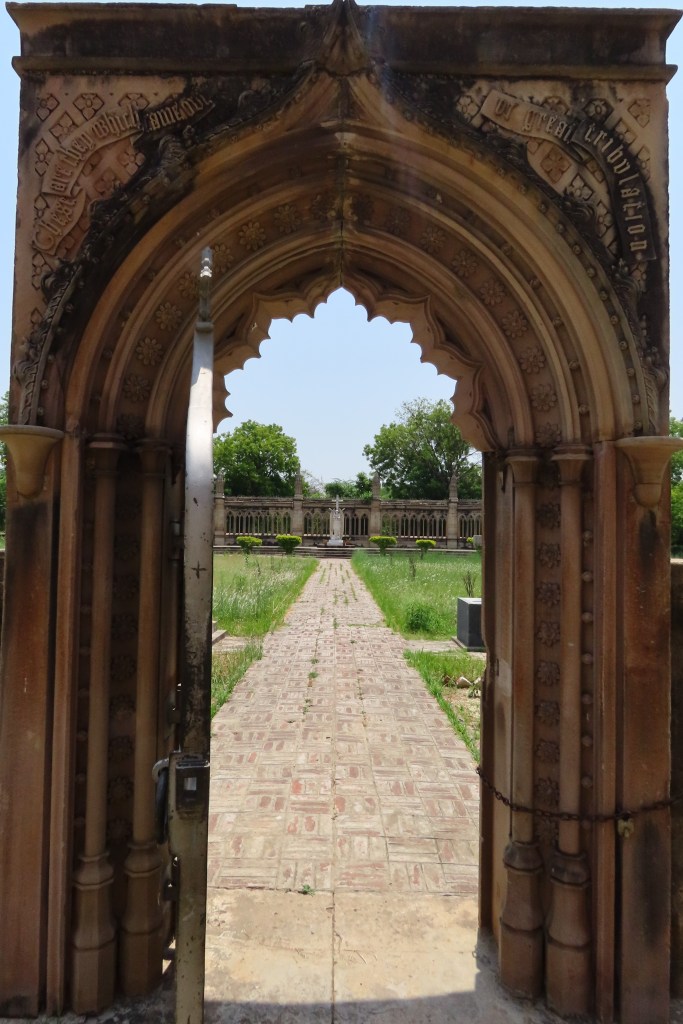
Once inside, there are three further memorial stones which should not be missed.
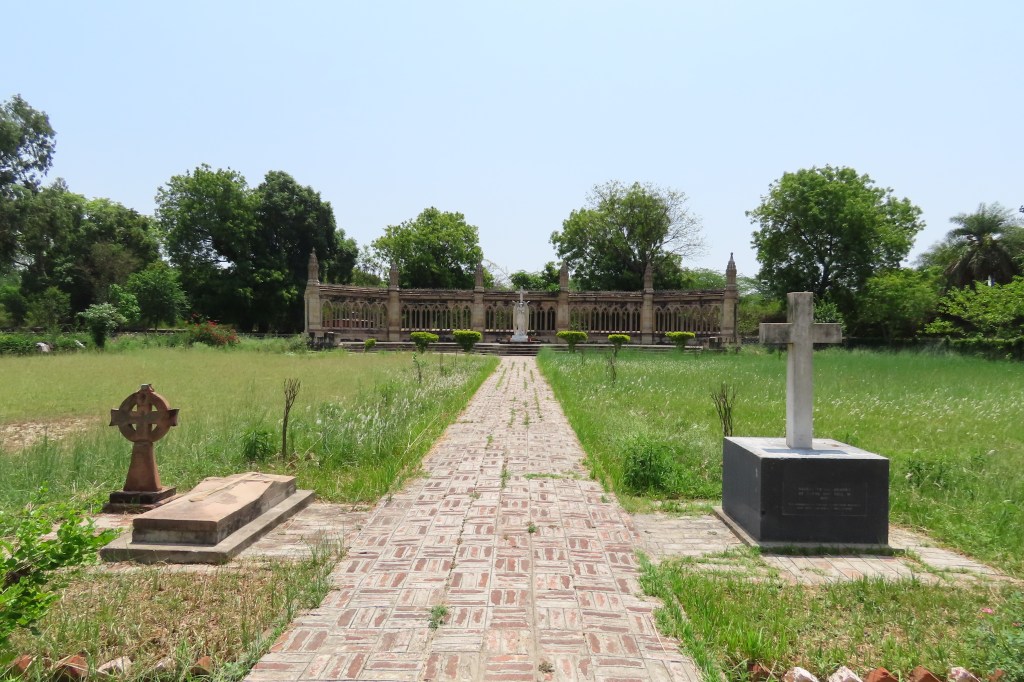
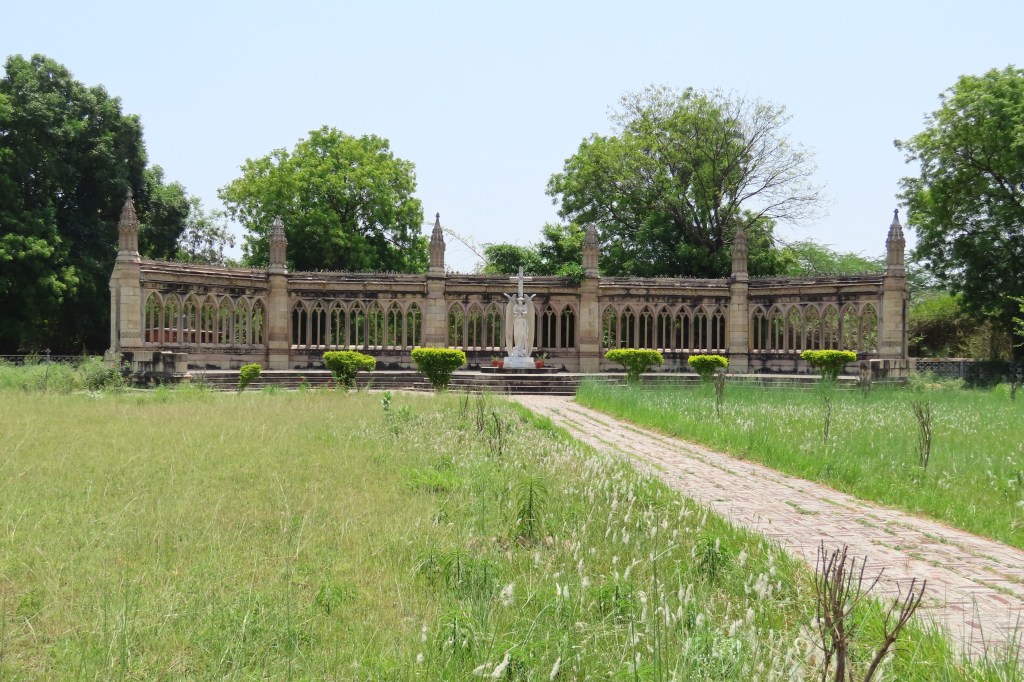
Called the “Angel of Cawnpore” or Marochetti’s Angel, the idea for a memorial garden was devised by Charlotte, Countess Canning and her sister Louisa, Marchioness of Waterford who originally drew the design for the angel. Baron Carlo Marochetti was commissioned to carve the statue, which he did, albeit with some alterations to the original design. The screen was designed by Colonel Sir Henry Yule and superintending architect, C. B. Thornhill, who also happened to be the Commissioner of Allahabad. His Robert along with his wife and children had fled Fatehgarh only to be murdered in Kanpur – the laying out of the original memorial garden had been a very personal journey for Thornhill and he was determined to do the dead justice.
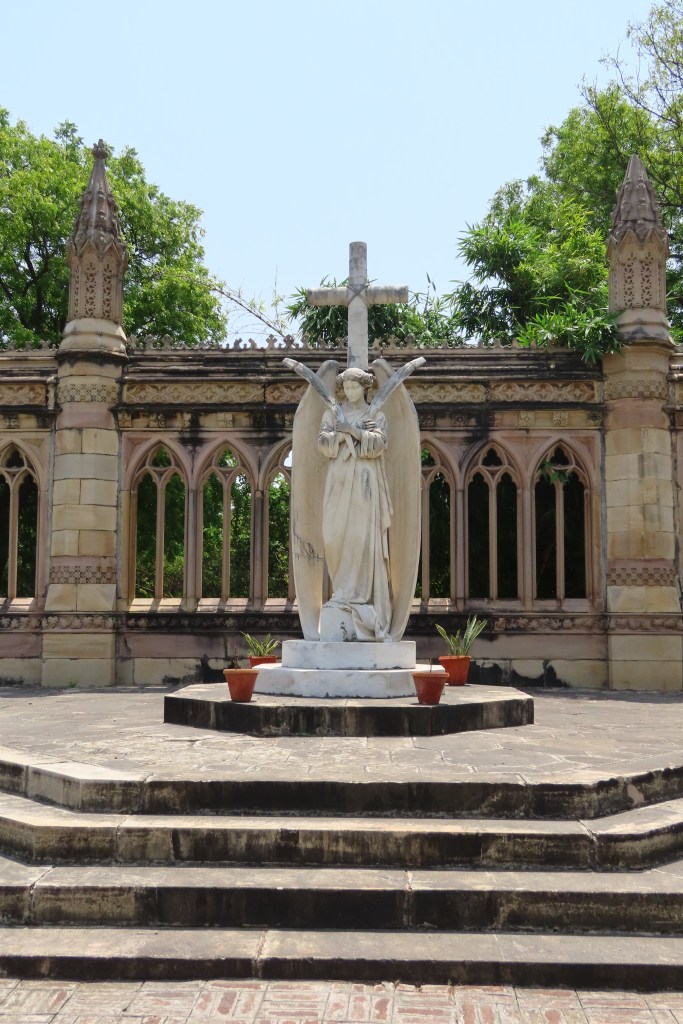
Once again, it is clear the angel has been well cared for. It would be nice to see the Entrenchment receive the same attention. The boundary posts are there, but the markers of the posts need some attention, and without a map in hand it is difficult to make a clear picture of the position as a whole. I recommend anyone who visits the Entrenchment to carry a copy of one – Mowbray Thomson or even Shepherd have good ones in their books and they are available online. Perhaps in the future, a little more care will be given to all that remains of Wheeler’s Entrenchment.
Satichaura Ghat
Leaving the church the tour continues, down the now shady roads to Satichaura Ghat.
“When we reached the place of embarkation, all of us, men and women, as well as the bearers of the wounded and children, had to wade kneedeep through the water, to get into the boats, as not a single plank was provided to serve for a gangway. It was 9 o’clock a.m. when the last boat received her complement. And now I have to attempt to portray one of the most brutal massacres that the history of the human race has recorded, aggravated as it was by the most reckless cruelty and monstrous cowardice.” (Mowbray Thomson, The Story of Cawnpore).
The ghat today is bereft of mourning and sorrow. Boats float lazily, moored close to the shore, while boys play in the water and men worship in the temple above. Imagination serves as the best guide.
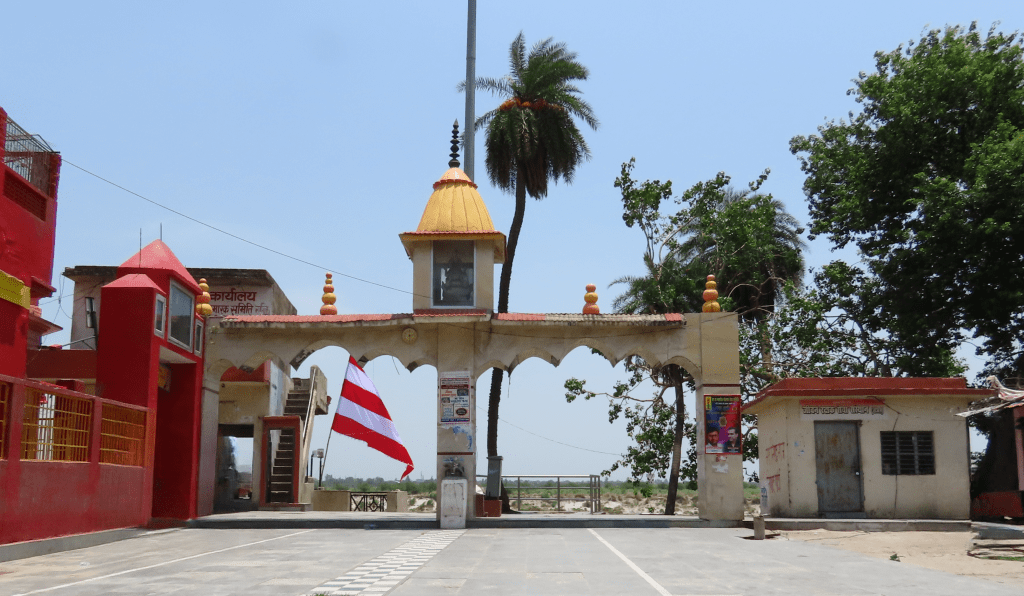
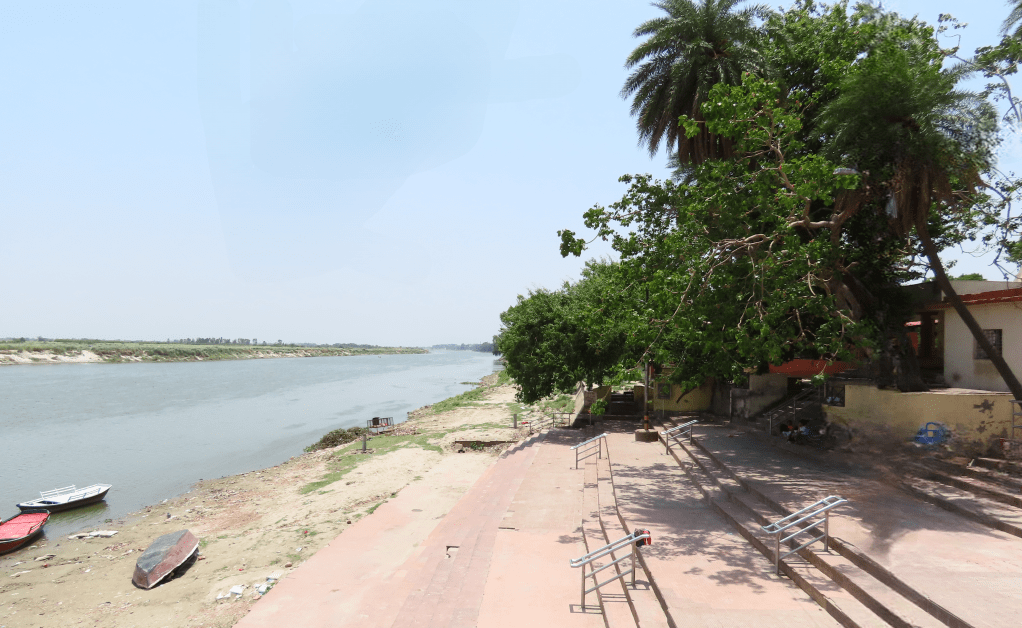
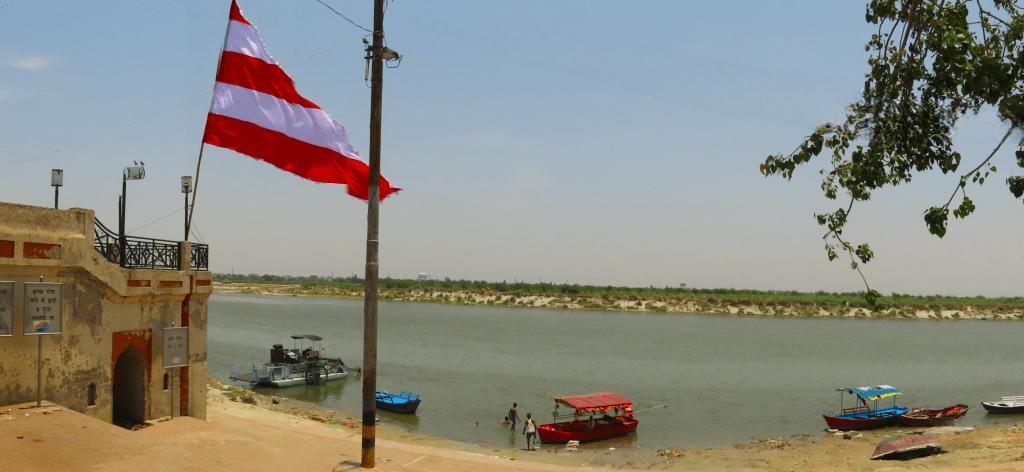
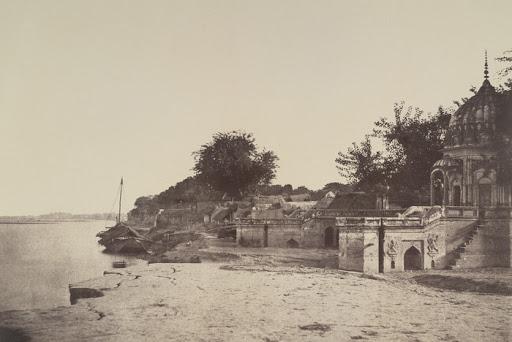
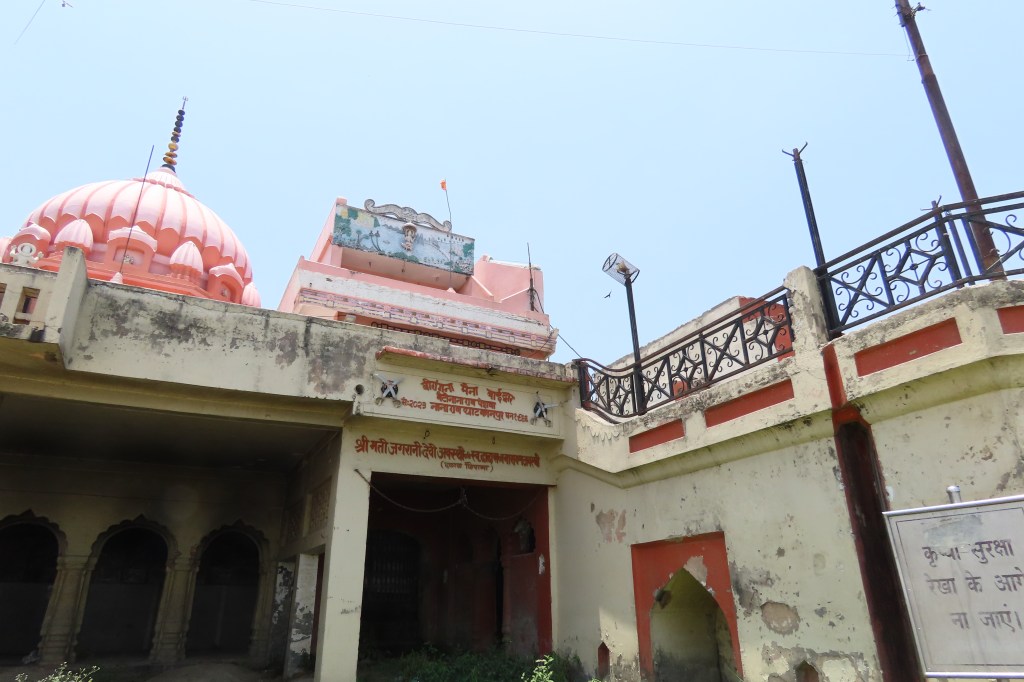
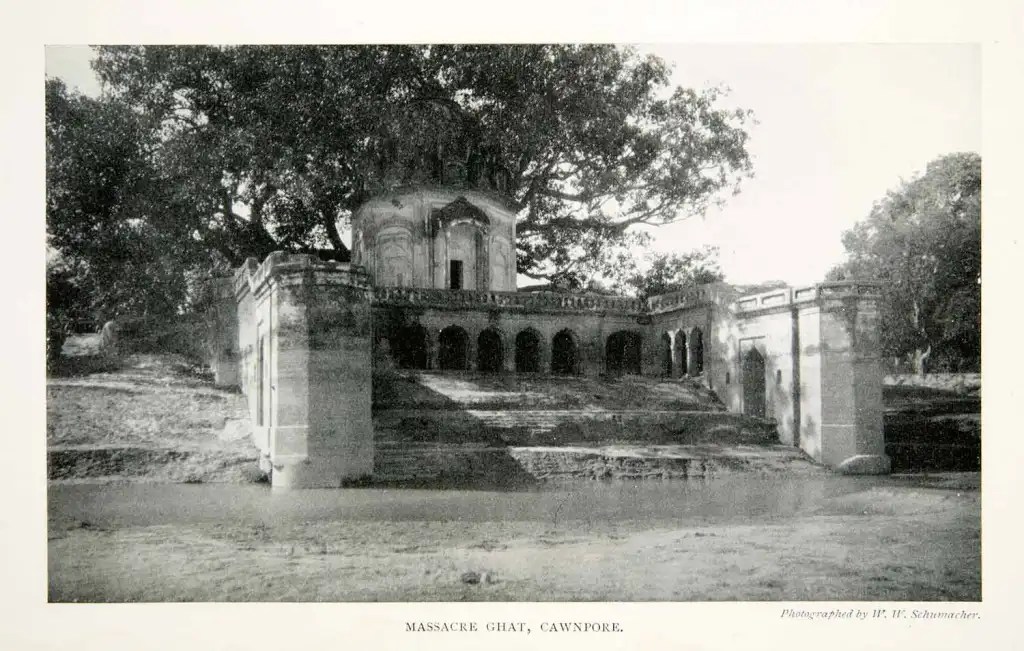
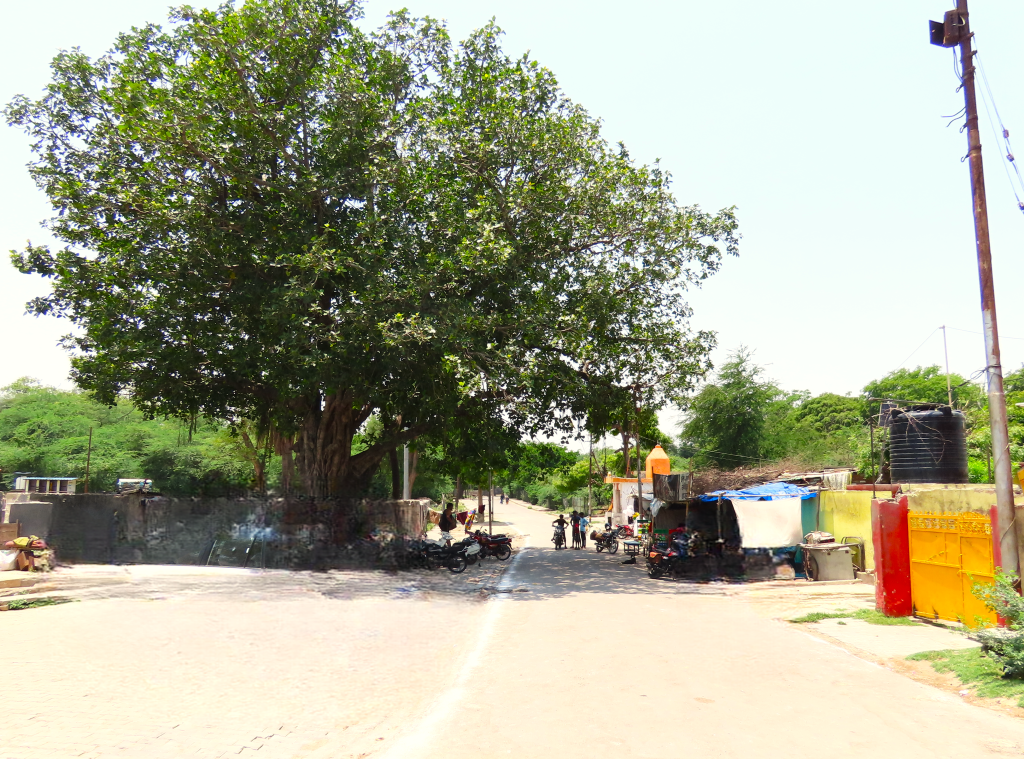
Mrs. Christie’s house once stood on a hill overlooking the ghat. As I looked at the yellow gates, I wondered if somewhere in there was her home and what she saw in her last moments from the river, there in the ground remain her memories. No one knows anymore – 166 years ago is a long time.
The first part of the tour had a sobering effect on both of us and we needed a break.
A brief stop for lunch in a cool, air-conditioned restaurant, away from the heat, a moment to keep Kanpur outside in a place where ghosts cannot follow.
After a lovely, appetising lunch, we moved on to the next stop.
The Memorial Well / Nana Rao Park
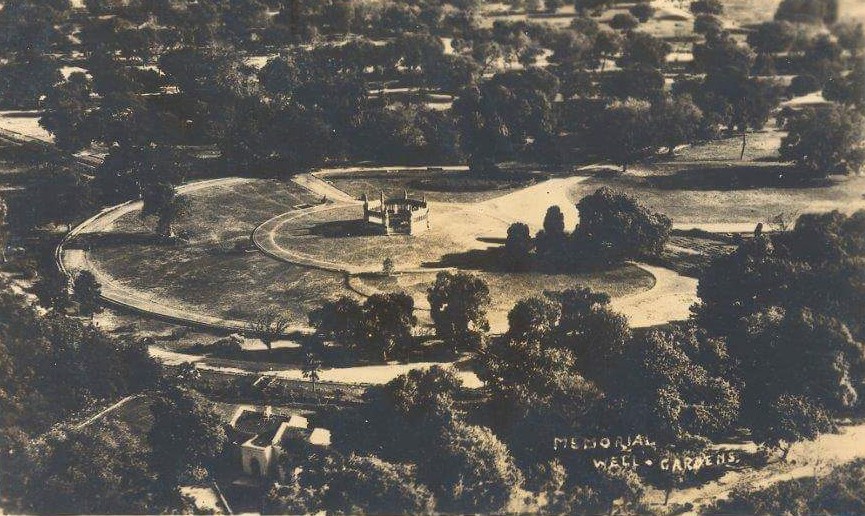
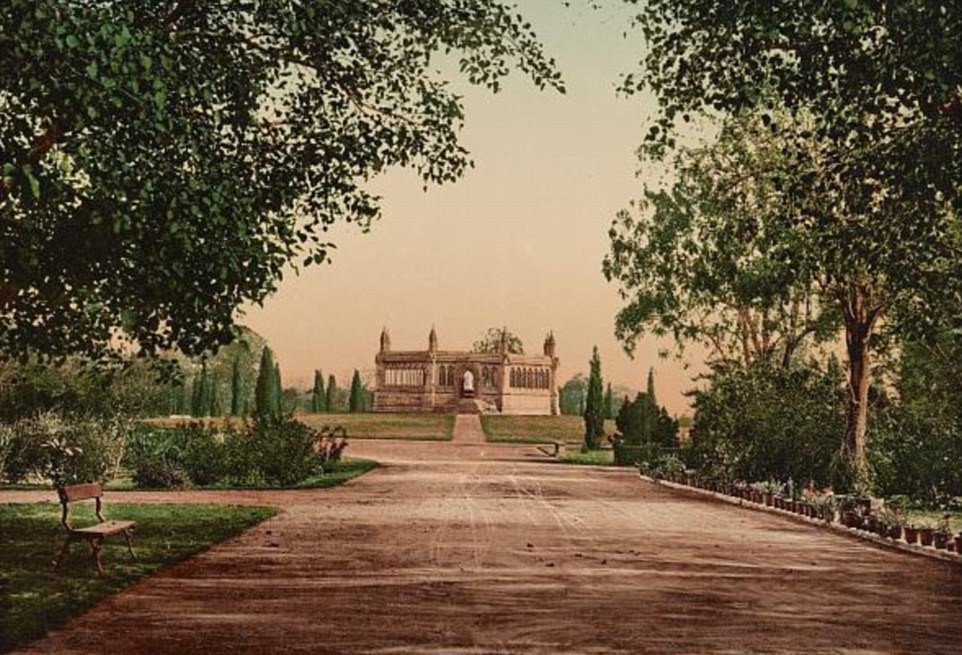
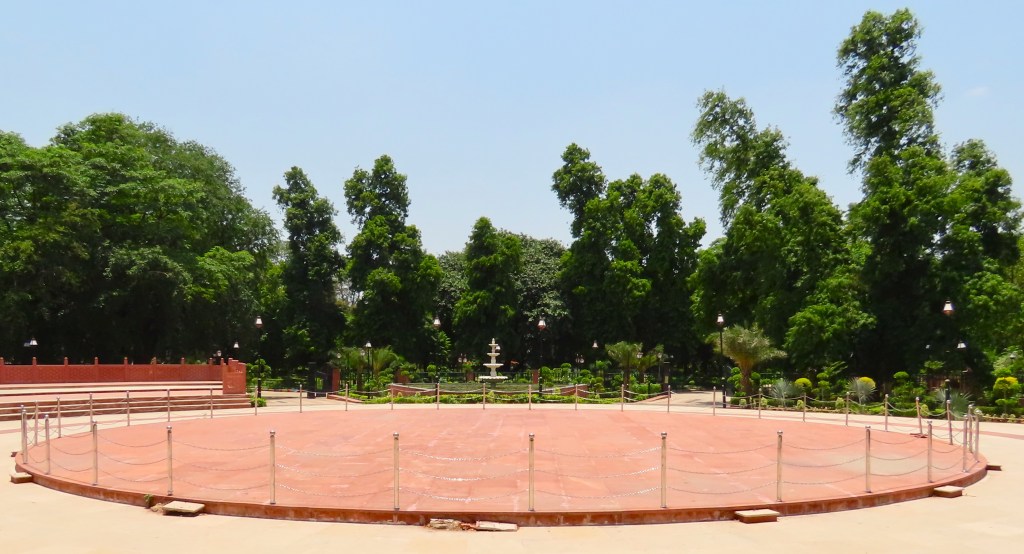
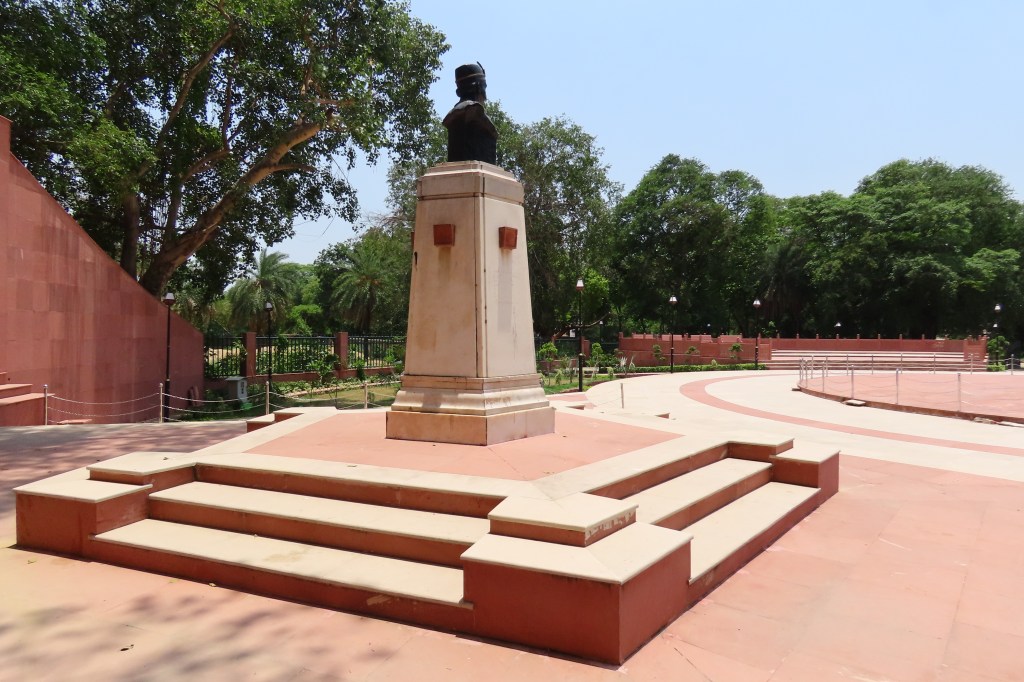
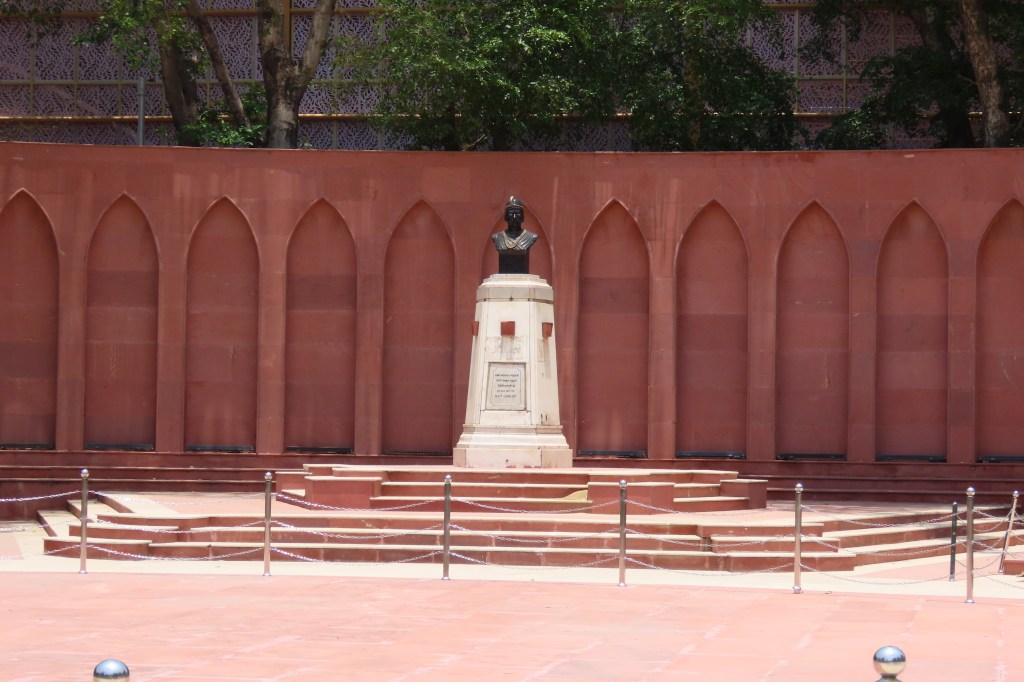
The Memorial Garden with Marochetti’s Angel and Yule’s screen covered the Bibighar Well until 1947. The picture above is an aerial view before its demolition by the British themselves a year after independence as they were no longer, either financially or politically, able to protect the site from vandalism. Today, the park is replete with statues of “leaders of the Indian freedom struggle” and was renamed in honour of Nana Sahib. The remains of a circular ridge of the well can still be seen and has been cordoned off to prevent wayward roller-skaters and cricket matches. As the inhabitants of Kanpur had been forced to pay, as retribution, for the creation of not just the memorial garden but the church, it is hardly surprising that there was little sympathy for the dead of Bibighar. There are now no signs indicating what the origin or history of the site is, or why indeed, the sandstone circle is surrounded by a chain barrier. That it hides the bones of the victims of the Bibghar massacre has been effectively erased from the memory of Kanpur.
In 1957, a statue of Tantya Tope was erected in the centre of the circle, the erstwhile government official claiming he had no idea what the site represented. The remaining British community in India launched a complaint to not just the regional but national authorities and escalated it further to the British High Commission in Delhi. As a result of the justifiable outcry the statue was moved to its own plinth a little further away from the well – now Tantya Tope merely gazes down on the dead instead of sitting on them. It had been stipulated by the Memorial Well Garden Society when the park was handed back in 1948 that nothing be built over the sandstone circle something which had been blatantly disregarded by 1957.
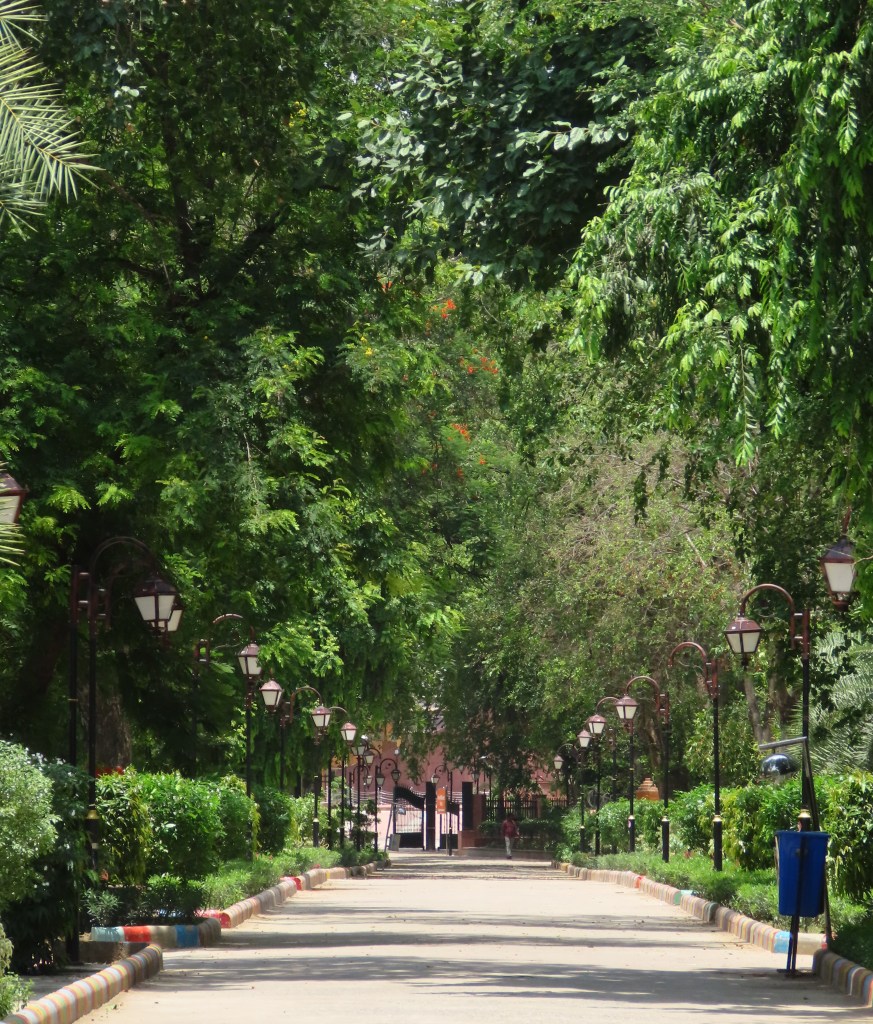
The infamous banyan tree called “Boodha Bargad” from which the 144 Indians were hung in 1857 is long gone but a stone marks its place.
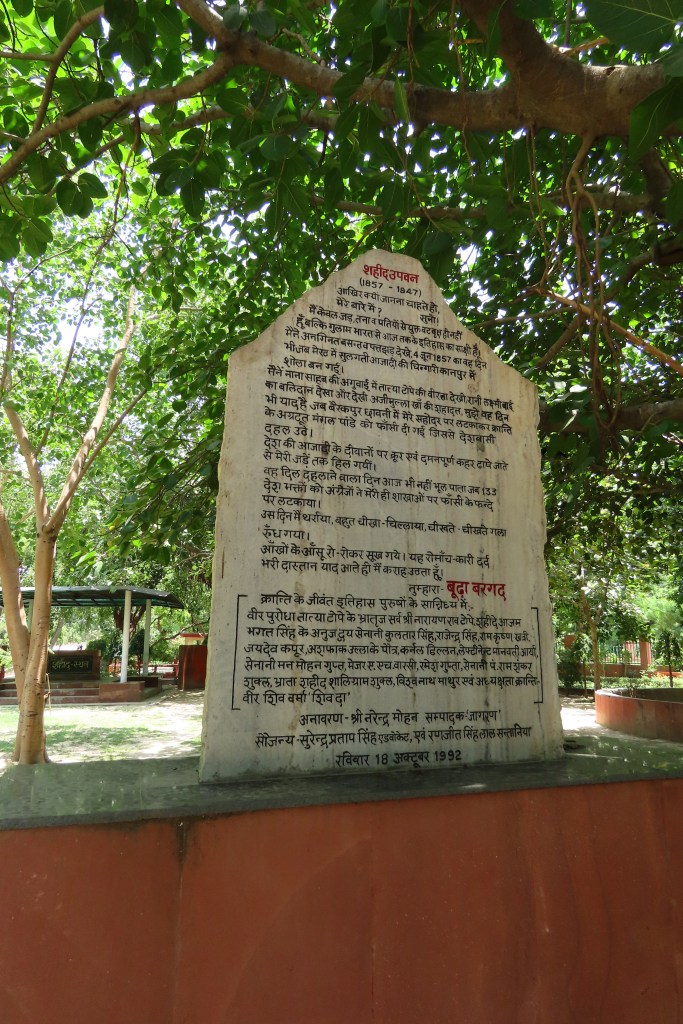
The solemnity of the Bibighar memorial is long gone. The world has moved on since 1857 and a city like Kanpur which bore the brunt of the blame dished out following the massacres deserves a chance to recover from its past. However, I say this with some reservations. Erasing the past is not the same as dealing with it. While the banyan tree is rightly commemorated, as the hangings were indiscriminate with the fever of revenge leaving little thought for guilt or innocence, it would not be amiss to paint the fuller picture. The women and children too, were unjustly murdered and they should not be consigned to a future of one-sided history. A small plaque explaining the sandstone circle would explain a little bit of the story.
We had arrived at the end of the Kanpur segment of the tour.
A suggestion was offered to visit the Kanpur cemetery, the same one where the wasps had played me a nasty afternoon so many years ago. It was not the memory of them which kept me away but I could not commune with the dead anymore. I had followed the story of Cawnpore for over 30 years – now I had finally seen what had become of the people I have researched all those years and all the heartfelt stories I had read. I could not deal with any more of Kanpur’s dead, no matter how interesting it would have been. In hindsight, I should have taken the time to see the cemetery but I will wait for winter when the heat is less oppressive than in June.
Our final stop of the day was Bithur.
Another park named Nana Rao Smarak was the end of the tour. Anyone wishing to see the remains of the palace must be content with ruins hidden behind tall trees and safely ensconced behind a wall. Again, history is kept from view to tout the next rather laborious commemoration, this time to Nana Sahib and others. A small museum, rather poorly managed, sports a bewildering array of strange artefacts from a broken spinnet, photocopies of newspaper clippings and bizarrely, stamps. A few rusted swords sit tip down just touching the floor, accompanied by busted matchlocks, and the dusty cabinets show bronze figurines and various strange ornaments. No photography is allowed inside but there was hardly anything worth taking a picture of anyway.
Just like the park itself. With the interesting bits out of view, there is no real reason to visit Bithur although the drive is exceptionally beautiful and worth the detour if only to see the countryside.
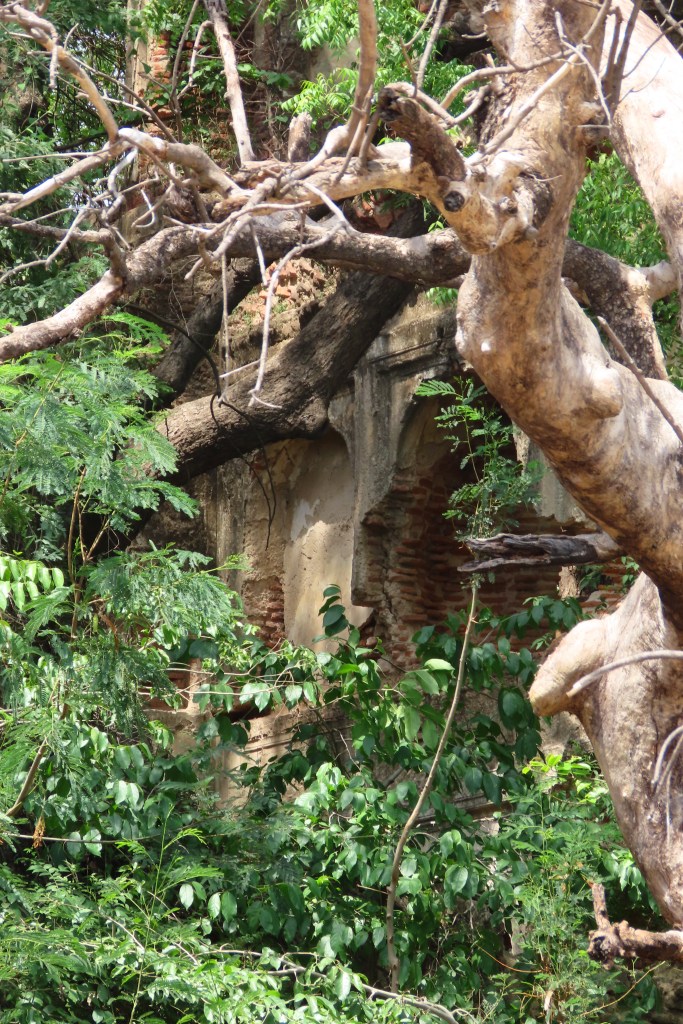
From here it was a two-hour drive back to Lucknow, a time to reflect on the events of the day, to think of the past and consider the present.
The tour, for those who are interested, is available through Tornos, Lucknow. Anyone visiting Lucknow who has an interest in 1857 and wants to spend a day exploring one of the most infamous places on the mutiny map cannot go amiss. Set aside a full day and go. There is nowhere else better to immerse oneself in the events and walk on the same grounds. With the knowledgeable and professional guides of Tornos, even the most novice explorer of 1857 will have an amazing experience.
While in Lucknow, don’t forget to check out the other tours offered by Tornos. They go beyond the normal into the extraordinary.
https://www.tornosindia.com/kanpur-mutiny-tour/
TORNOS DESTINATIONS (India) Pvt Ltd.
Tornos House, C-2016, Indira Nagar,
Lucknow – 226 016, UP, INDIA
+91-9935538105 (24×7)
(0522) 2346965, 2349472, 4009654
 Mutiny Reflections