The March from Delhi
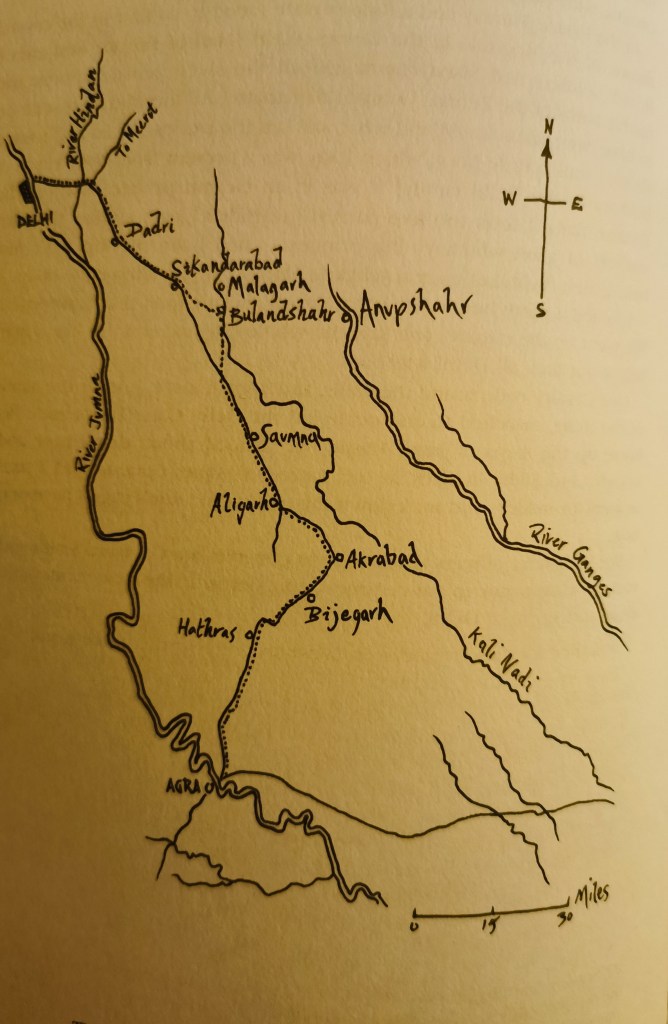
From”Lahore to Lucknow” – The Indian Mutiny Journal of Arthur Moffatt Lang, edited by D. Blomfield and illustration by Julian Mann (1992)
Delhi was completely taken on the 20th of September – amid the rejoicing, plundering, pillaging and hanging, there was some other business to tend to of a grave nature.
Henry Havelock, having succeeded in breaking the first siege of Lucknow but unable to move from his position for lack of troops and support was anxiously waiting for reinforcements. The country towards Punjab was still unsettled and the rebel forces from Delhi had dispersed in different directions. British forces continued to move down from Calcutta and up from the south but it all appeared to be a little too slow to be of any consequence.
The most logical decision then was to send some of the troops from Delhi, who, having taken the city, were still strong enough to be put to other work. From Agra, the news continued coming in, but it was somewhat disjointed. One day, they were worried about the Gwalior Contingent but in September, they were still in Gwalior, arguing with Scindia. Then it was the Indore mutineers, but they were biding their time in Dholpur and had been since the 7th of September. The regiments from Delhi were the next threat but again, no one could say for sure where they were or for that matter, how many remained to carry on the fight. Agra was critical but Cawnpore was a priority and Lucknow was foremost in everyone’s minds. Securing the area immediately around Delhi and along the road to the Punjab and reinforcing Havelock were the most sensible plans – Agra had waited this long without incident, they were neither starving nor beleaguered, perhaps somewhat undermanned, but no one was actively attacking them, unlike Lucknow. While marching to Cawnpore, the new field force could take their time pacifying the countryside while chasing the remains of the Delhi regiments.
That, at least, was the plan.
The larger of the two forces was put under command of Colonel Edward Greathed. It consisted of:
European Infantry (450 men)
HM 8th Regiment of Foot – Major Hinde
HM 75th Regiment of Foot – Captain Gordon
Punjab Infantry (1,200 men)
2nd Punjab Infantry – Captain Green
4th Punjab Infantry – Captain Wilde
British Cavalry (300 men)
HM 9th Lancers – Colonel Ouvry
Indian Cavalry (320 men)
1st Punjab Cavalry
2nd Punjab Cavalry
5th Punjab Cavalry
Wing of Hodson’s Horse – Lieutenant Hugh Gough commanding (180 men)
Capt Blunt’s Troop of Horse Artillery (60 men, 5 guns)
Capt Remmington’s Troop of Horse Artillery (60 men, 6 guns)
Bourchier’s Light Field Battery (120 men, 5 guns)
Pearson’s 9-pounder Battery
Sappers and Miners (200), with whom were Lieutenants Home and Lang.
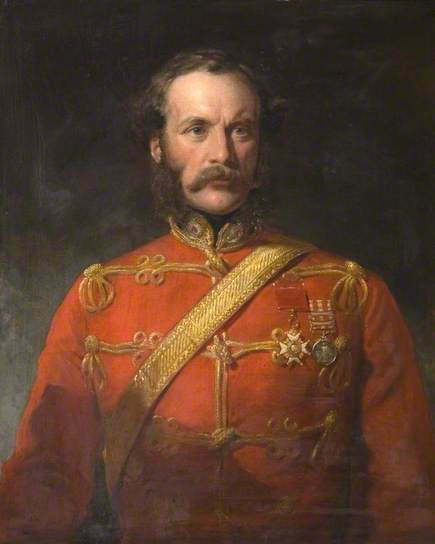
Lieutenant Hugh Gough was particularly pleased.
“The cavalry of Greathed’s force consisted of the 9th Lancers, 1st, 2nd, and 5th Punjab Cavalry (detachments), each under Lieutenants John Watson, Dighton Probyn, and Younghusband respectively, with the wing of “Hodsons Horse” under myself—my subaltern being Lieutenant Gr. A. A. Baker of the late 60th Native Infantry. Colonel Ouvry, commanding the 9th Lancers, was in command of this brigade, with Captain H. A. Sarel as Brigade Major.
Our senior officer of the four detachments of Irregular Native Cavalry was John Watson of the 1st Punjab Cavalry, and to him, we all looked up as our own immediate Brigadier. A finer officer never breathed—cool, dashing, and intrepid. Probyn was next senior: his name is still a motto in the Bengal Cavalry as one of the most gallant sabreurs that service has ever known.”
It was an illustrious brigade indeed.
What no one could understand was why General Wilson had chosen Greathed to lead the column and it perplexed a few minds in Delhi.
“No officer of note or high rank being available, the command of the column should have been given to the senior regimental officer serving with it, viz., Colonel Hope Grant, of the 9th Lancers; but for some unexplained motive Lieutenant-Colonel Greathed, of the 8th Foot, was chosen by General Wilson. Captain Bannatyne, of the same regiment, was appointed his Brigade-Major… On the fall of Delhi, the whole of the Head-Quarters staff returned to Simla, except Henry Norman, whose soldierly instincts made him prefer accompanying the column, in order that he might be ready to join Sir Colin Campbell, the newly-appointed Commander-in-Chief, who had shortly before arrived in India.”
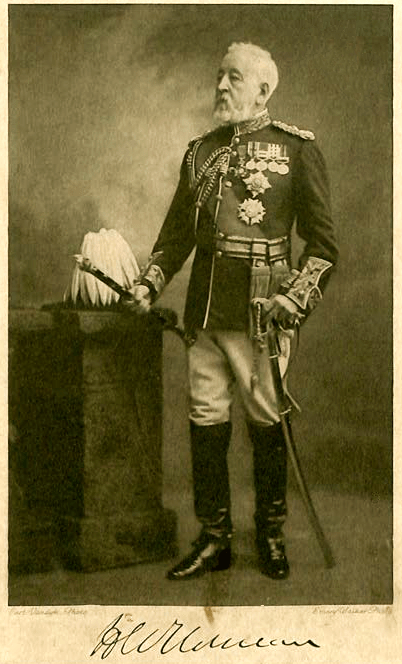
Henry Norman had been side-lined in this strange amalgamation of promotions and demotions. This hitherto excellent officer was “merely a staff officer on his way to report himself to his Commander-in-Chief with no responsibility for the details of the operations of the column.’ Following the break up of the Delhi Field Force and their departure from Delhi on the 24th of September, Norman’s position had changed. As he belonged to the army department of the Adjutant-General of India, it was his duty to join the new Commander-in-Chief, Sir Colin Campbell. As the rest of the officers of the army headquarters were either dead or indisposed, Norman was the only officer of the two departments of the Adjutant-General and Quartermaster-General of the army who was fit enough to join Campbell. As Greathed had his own staff, which included Lieutenant Frederick Roberts as his DAQmG, there was little for Norman to do but merely join the column as a passenger. However, as events will show, it was not without its merits.
Riding with the 9th Lancers, was Brevet Major Octavius Henry St. George Anson of HM’s 84th Regiment of Foot and he had a few things to say. Though initially planned to march on the 23rd of September, last-minute changes needed to be made, to swap out the men of the 61st for the 75th – the 61st begged off of active duty, citing themselves too sick and unfit. The delay of one day meant they marched on the 24th – and their first stop was Camp Ghaziudeennagar, on the left bank of the Hindun where Wilson had routed the rebels in May.
“I had to put my head inside a morah and protect myself as well as I could from the sun till one o’clock when the buggy arrived and afforded me its friendly shelter. My tent was not up till six, and my bed not till 9 p.m. This state of discomfort and exposure applied more or less to us all and was caused by the breaking of the bridge of boats, which let an elephant through into the water, load and all. The bridge took some time mending, and the baggage was of course delayed. Moreover, the camels are all more or less weak and sickly, and unable to carry their loads. I have now taken an expensive hackery into my service…” Like at Delhi, Anson could not help a grumbling about costs. “I am so bothered with the servant’s wives and children. It is they who have compelled me to ruin myself with a four-bullock hackery, which will cost me thirty-two rupees a month and more…”
Not everyone was as miserable as Anson.
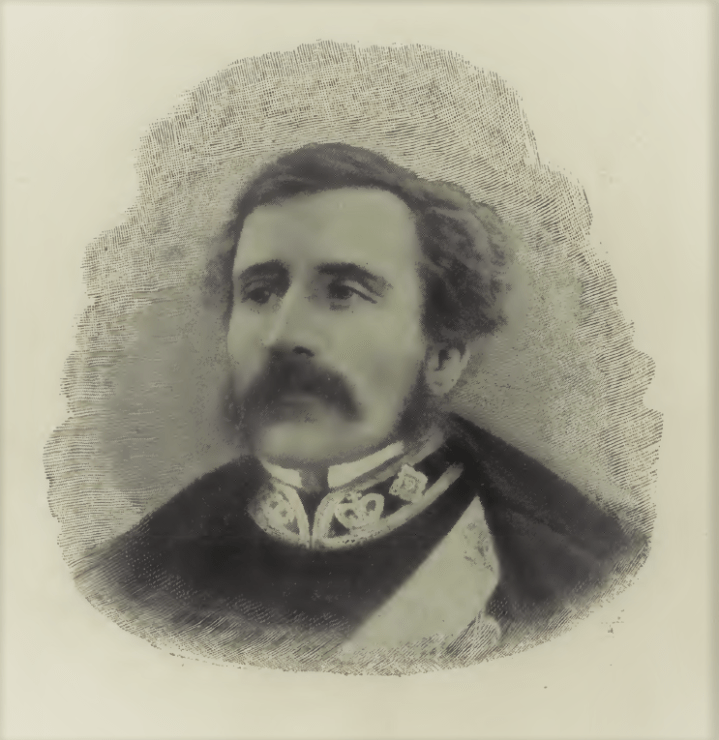
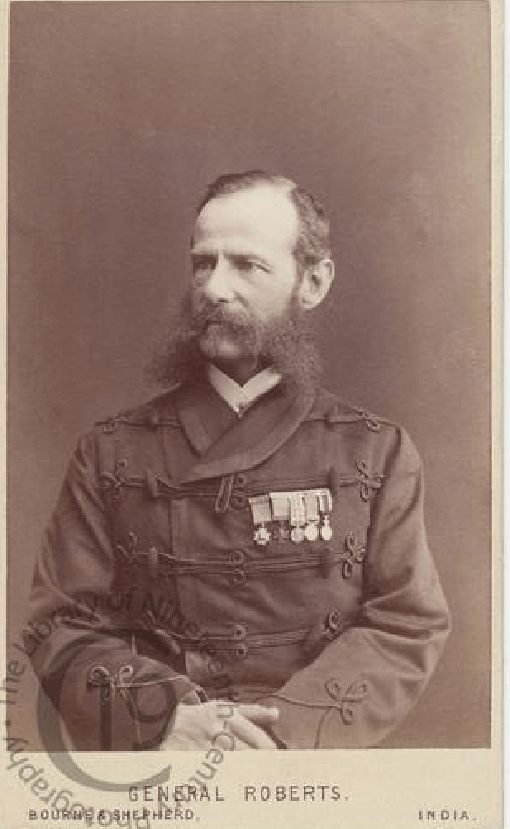
For a young lieutenant, Frederick Roberts, leaving Delhi was a relief. The city, after a week of severe fighting, had been reduced to a charnel house -nothing but vultures and pariah dogs now thrived.
“That march through Delhi in the early morning light was a gruesome proceeding. Our way from the Lahore Gate by the Chandni Chowk led through a veritable city of the dead; not a sound was to be heard but the falling of our own footsteps; not a living creature was to be seen. Dead bodies were strewn about in all directions, in every attitude that the death struggle had caused them to assume, and in every stage of decomposition. We marched in silence, or involuntarily spoke in whispers, as though fearing to disturb those ghastly remains of humanity. The sight we encountered was horrible and sickening to the last degree. Here a dog gnawed at an uncovered limb; there a vulture, disturbed by our approach from its loathsome meal, but too completely gorged to fly, fluttered away to a safer distance. In many instances, the positions of the bodies were appallingly life-like. Some lay with their arms uplifted as if beckoning, and indeed, the whole scene was weird and terrible beyond description. Our horses seemed to feel the horror of it as much as we did, for they shook and snorted in evident terror. The atmosphere was unimaginably disgusting, laden as it was with the most noxious and sickening odours.”
As Roberts moved away from the city he looked back with one regret – Nicholson’s funeral had taken place at daybreak and he, like many others, had not been able to attend. A man so many regarded a hero of the siege had found his last resting place. Through the stillness of the morning, the heart-rending cry of Nicholson’s loyal levy broke the air, wails of men from a frontier far away, who had left their homes for a man they revered like a god. They would not stay and they would not fight. After the funeral, they packed their plunder and left Delhi.
As they marched further away from Delhi, the air became clear, and one officer broke out into song. He could not help himself, he said. Even Roberts noticed how quickly the change of air affected the men – they became less morose, and their steps lightened. However, by the time they reached Ghaziabad, cholera reared its ugly head.
The first to be struck was Captain Wilde, commander of the 4th Punjab Infantry. Surgeon James Fairweather of the same corps was in attendance. By the morning of the next day, Wilde was not better and Fairweather expected he would bury him by noon – in a last-moment effort to revive the ailing captain, the surgeon procured some champagne from Dr. Clarke of the 2nd Punjab Infantry – the first sip appeared to revive Wilde, who as the day progressed, rallied enough to be sent in a doolie, with an escort, back to Delhi. He would not rejoin his regiment until after the Relief of Lucknow.
Three new officers joined the column – Captain C. Lane and Lieutenant R.D. Osborn, previously of the 26th NI and Captain Grey, who had previously been with the 16th NI but had transferred to the 26th. They were soon joined by a few enterprising civilians, including Alfred Lyall, who was on his way to take up his position as Assistant Magistrate at Bulandshah.
Lyall and Brand Sapte had joined another force following their eviction from their district – the somewhat dubious and short-lived Khaki Risala, a volunteer force raised in Meerut in May by Robert Henry Wallace Dunlop, consisting mostly of civilian volunteers. Their task was to keep order on the roads and in the villages in and around Meerut – their duty was quite simply, to
“…assist in keeping open the communication between this station (Meerut) and the neighbouring ones; in fact undertaking, either within the district or beyond it, such duties as the limited numbers can perform.” Although they lacked military experience, being mostly magistrates, collectors and deputies of various civil appointments, they made up for it by being excellent riders, crack shots and admirable swordsmen – everything the sporting life they had led in India had trained them to be. They also had a keen insight into the workings and machinations of district life and many of them were fine linguists. One civilian did not join their ranks, though often pressed to do so – John Cracoft Wilson, ex-judge of Moradabad, who after effecting his escape to Meerut, chose to strike out on his own. Surrounded by 30 sowars of the 8th Irregular Regiment who had followed him from Moradabad, Wilson “rode about the country with these highly suspicious characters, making them escort treasure, or hang criminals, as might be required…” As for the Khaki Risala, in which there also served several Sikhs who had refused to join their mutinous comrades from various regiments, they had been hard at work from the end of June, mainly fighting against the Gujars and actively attacking rebellious leaders. By the fall of Delhi, the Risala was no longer required but continued for a time to act as civilian constables.
 Mutiny Reflections