We will now return to events in Cawnpore, following on from the massacre on the 27th of June.
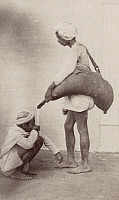
When Nana Sahib ordered the killing at Satichaura Ghat to stop, the survivors were gathered together, dragged out of the water and pulled onto the shore. Some 120 women and children had made it through the slaughter, and many were wounded. The sepoys snatched the rings off their fingers and tore earrings from their ears, splitting their lobes into shreds. A party of bheesties were the only ones who showed a little compassion to them as they sat on the ground in their bloody, sodden garments and gave them a little water to drink from their skins.
“And then they were led back along the road which they had traversed a few hours before; not as they came, loi nothing was left them now, save a new grief and a sharper terror. In front, behind, and on either side, surged along a crowd of sepoys, exulting with an un¬ holy joy and rich with inglorious spoils. This one carried a girdleful of rupees and broken jewellery. That had secured a double-barrelled fowling-piece, marked with a name illustrious in the London trade. Another dragged a fine setter or Skye terrier, the pride of some cadet who, in too harsh a school, had taken his first and last lesson of war. They started beside the Fisherman’s Temple. They threaded the winding lane. They plodded wearily past the white railing and the European bazaar, past the chapel, the racket court, and the ruinous entrenchment. Through the disputed line of outposts, and across the plain they went, until the procession halted before the pavilion of the Maharaja; who, after reviewing his captives, ordered them to be transported to the Savada House, and there confined until further notice. Two large rooms, where a number of native soldiers had slept nightly during the previous month, were cleared out for their reception, and a guard placed over them from the ranks of the Sixth regiment, which had lately marched in from Allahabad.” (Trevelyan)
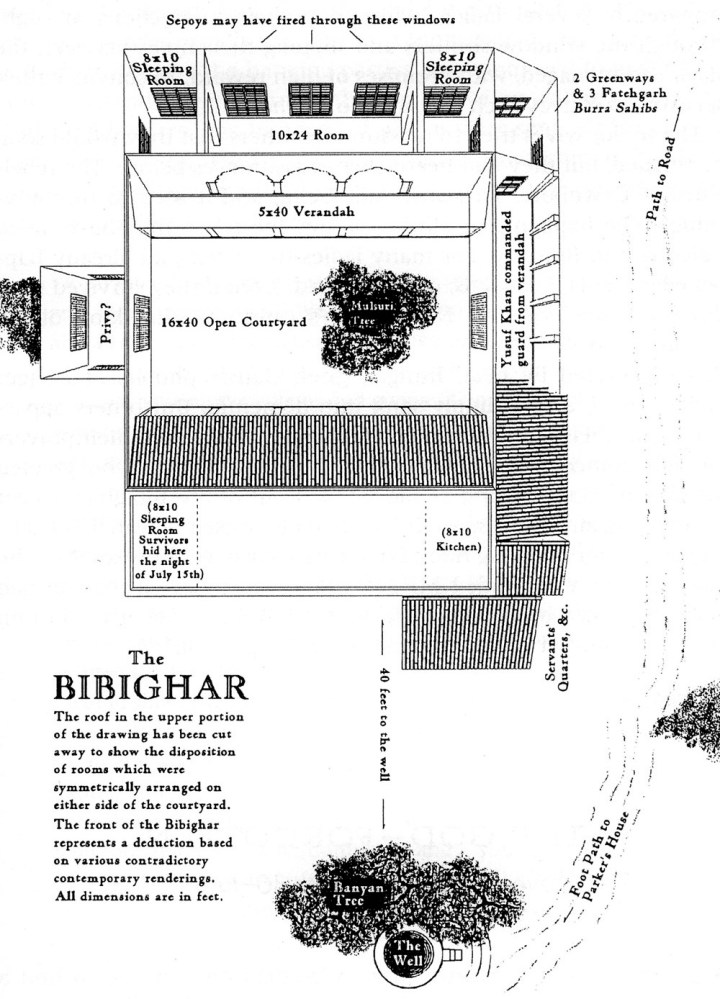
After a few days, they were loaded into bullock carts and brought to their last residence in Cawnpore – the Bibighar, or House of Ladies. Once the home of a bibi or mistress to an English officer, the house was not built to host so many occupants. It comprised two small rooms, no more than twenty feet by ten, a few windowless ones once used by domestic servants, and an open court only fifteen yards square. There was no furniture and no bedding save a few coarse straw mats. A small corner room was designated as their kitchen and another as a toilet. Into this misery, the survivors of Cawnpore were soon joined by the women and children of the last flotilla from Fatehgarh. Kept separately from the women were three men from Fatehgarh: Colonels Smith and Goldie and Mr. Thornhill; they were joined by Edward Greenway, a Cawnpore merchant, while the other was hardly a man but his son, 13-year-old Frank. Edward died before the slaughter, leaving his son in the care of the three men.
“The same day, the headbearer of Colonel Williams came to pay his respects to the daughter who was the sole survivor of the officer’s household. “ I could not,” he says, “ get near the ladies on account of the sentries, but saw “that food was being distributed to them. It consisted of native bread and milk. I remonstrated with a soldier who had formerly served under my master and begged of him to supply with better food people who had lived in a very different way. He gave me eight annas (twelvepence) to go to the bazaar and buy some sweetmeats. I did so, and on my return, Miss Georgiana and a married lady came into the verandah to meet me. Miss Georgiana repeated to me her mother’s injunctions about my going to her brother. I gave them the sweetmeats and had little time to speak to them, for, seeing me, the other ladies came out in the verandah…”
They were allowed a few personal belongings, brought to them by their servants – a little needlework, a few combs and brushes. However, with little water to drink, there was not enough to bathe in, and the food was served to them by the same men who cleaned out their latrine. Lice infested the women’s hair, their filthy clothes, and suppurating wounds attracted flies while the heat during the day and the torrential monsoon rains only added to their misery.
For the next two weeks, they would cling to an existence in the Bibighar.
“Hardship, heat, wounds, and want of space and proper nourishment released many from their bondage before the season marked out by Azimoolah for a jail delivery such as the world had seldom witnessed. A native doctor, himself a prisoner, has left a list of deaths which occurred between the seventh and the fifteenth of the month. Within these eight days, of which one was incomplete, as will be seen by those who read on, there succumbed to cholera and dysentery eighteen women, seven children, and an Hindoo nurse. There is a touching little entry which deserves notice. In the column headed “ Names ” appear the words
“eck beebee ” (one baby): under that marked “ Disease ” is written “ ap se” (of itself).“
The Nana Sahib had appointed one of his courtesans’ servants, a woman named Hussani Khanum, to look after the needs of the captives at Bibighar. Now in her thirties with streaks of grey in her hair, she had once been one of Baji Rao’s slave girls. Her haughty airs had earned the title “Begum.” No womanly instincts or motherly sympathy reached her heart – her charges could live, suffer or die. She “…endeared herself to no one but her malicious lover, a Eurasian bodyguard named Sarvur Khan…Through swarms of flies, the Begum paraded officiously barking gratuitous commands at the servants and inmates, contemptuously averting her eyes from the children’s wretchedness and covering her nose and mouth against their stench…” (Ward, Our Bones Are Scattered, p. 408) The very sepoy guards hated her. Although Nana Sahib had ordered the prisoners be treated with some respect directing a doctor be sent to care for them and clothes be provided from what the washermen could provide, if the food improved a little it was not because the Begum so ordered it but at Nana’s bidding, possibly a little horrified by his failings as a host. The Begum stopped the servants from bringing their former mistresses a little food or comforts, and every day, she ordered a few of the women to grind gram, much to the amusement of the onlookers who laughed at their feeble efforts.
Not that this really mattered. The women, who had had their last hope taken from them, would only have two final weeks to contemplate their time on earth. Havelock was approaching, and for all intents and purposes, they had now become the Nana’s biggest liability.
While he could have pawned them off as hostages to the approaching force, or at the very least released them if he was forced to retreat, there was no room for witnesses to the Satichaura Ghat massacre. Though it has been speculated that the atrocities committed by Havelock’s force on their march from Allahabad had fueled the rage of the insurgents to vent their revenge on the women and children in the Bibighar, it is unlikely the Nana Sahib was privy to such lofty ideals. He wanted to save his own skin, and being lumbered with this many women and children made his life difficult. Whatever the case may be, he could no longer extricate himself from the rebellion.
On the 15th of July, the men were brought out of their cell and taken down the road. From the Bibighar, the women watched as they filed past, each man muttering under his breath a prayer, Magistrate Thornhill gripping tight to young Frank Greenway’s hand.
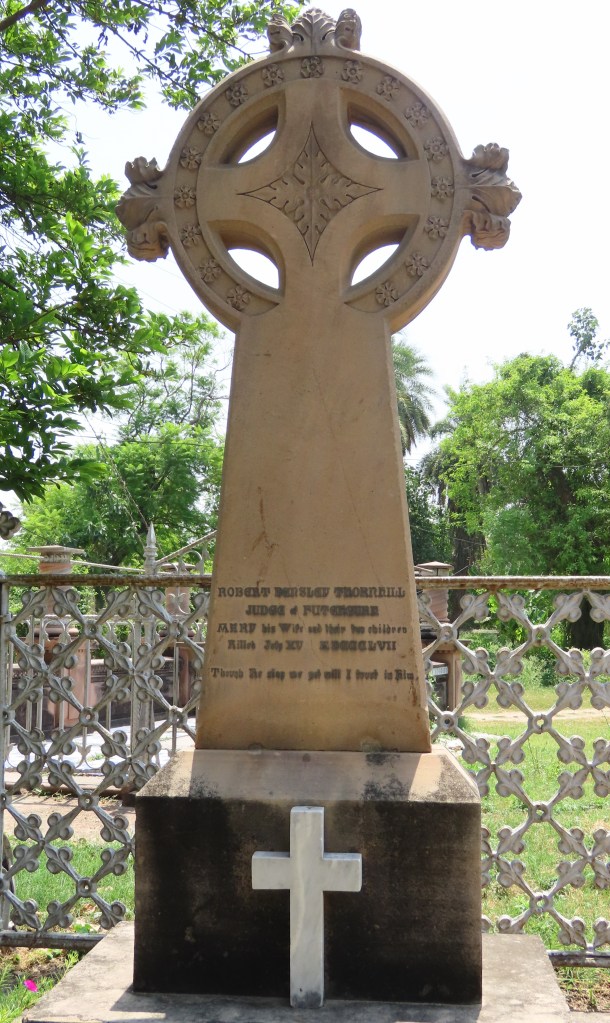
They were brought to the wall of the Commissariat godown, and there, in front of the Nana Sahib, his entourage and a growing crowd of curious onlookers, Tatya Tope gave the order for the sepoy jemadar to open fire. Thornhill fell first, followed by Frank and the two colonels. Their bodies were thrown into a ditch.
The sound of the shots would have carried to the Bibighar.
The rest of the prisoners were now ordered out onto the road, and a little before sunset, the Begum flung open the doors of the Bibighar and ordered the women out. The doctor, cook, and sweeper were hastily pushed outside while Hussaini Khanum scornfully informed the women the Nana Sahib had ordered “their immediate destruction.” She then closed the doors again.
Through one of the windows, Mrs. Moore saw Jemadar Yusuf Khan and asked him if what the Begum had said was true. He replied he had not received any orders and she should not be afraid. He then quickly spoke to his men. With Havelock’s army approaching and their guilt in the mutiny sealed, they reasoned the only way they could perhaps escape death was by saving the women and children. When the Begum returned from overseeing the murders of the doctor and the servants, they flatly refused to follow her orders. The Jemadar boldly stepped forward and told her his men had vowed not to harm the prisoners, and when the Begum berated them, they said in return, “Who are you to give us orders?”
Furious, the Begum went to get help of her own.
She returned with Tatya Tope, who demanded Yusuf Khan explain himself. The Jemadar stoutly replied he would kill every man but would not raise a hand against the women and children. Tatya Tope accused him of being in league with Havelock’s army and then called him a coward. As a last resort, Tope threatened to shoot him and his men. Now, stuck between an advancing army that might execute him and a rebel leader who probably would, Yusuf Khan backed down.
With much reluctance, he formed up his men and followed the Begum to the doors of the Bibighar.
Realising what was happening, many of the women and children cowered in the recesses away from the doors and windows, others locked arms around pillars of the verandahs, vowing the sepoys would never drag them away while the remaining boys resolutely came to the front, prepared to defend their mothers and sisters. The doors were shoved open, and in strode the Begum. The women tightened their grips on the pillars and clung to each other’s arms and waists while their terrified children hid in what remained of their skirts. The sepoys half-heartedly pulled a few of the groups, pushed some others and then declared to the Begum they could not separate them. The women would not leave the Bibighar.
So if they would not leave and the sepoys could not drag them out, the prisoners would die where they were – at this point, the Nana Sahib who had been watching the proceedings walked away, leaving the matter in the hands of his officers as Yusuf Khan ordered his men to stand outside the doors and windows. Thrusting their guns through one of the shuttered windows along the long wall, they opened fire.
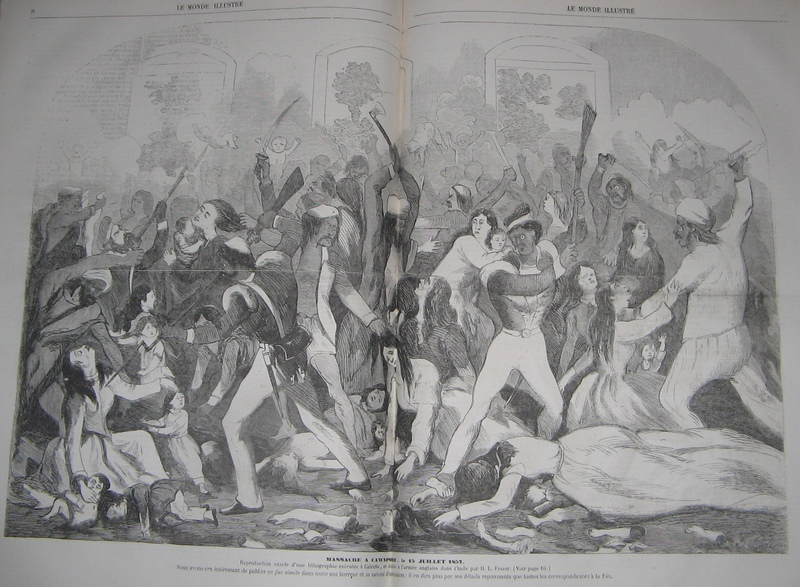
The first volley brought down a few of the women and injured some in the second row. The first group of sepoys moved away, and the second one took their place. The screaming and shrieking from inside the building were too much for the men. They emptied their muskets into the air and fell back. They then refused, in a body, to repeat the procedure. Tatya Tope could do what he liked, and even Havelock could have their heads, but they would not shoot the women and children again. Infuriated by their defiance and seeing her remonstrations were having no effect, the Begum told the sepoys that she would find real men to do their job. Her lover, Sarvur Khan, on her orders, quickly rounded up four companions, each with a tulwar in hand. Two of them were Muslim butchers, one low-caste villager and the fourth a Brahmin swordsman.
The women had tried, in a final futile attempt, to secure the doors by tying the handles together with strips of cloth. Meanwhile, two ladies, Mrs. Jacobi and Mrs. Probett, both daughters of artillerymen and quite capable of holding their own, stood in front of their nine children ready to defend them to the end. The doors burst open, and as one of the women stepped forward to talk to the advancing men, Sarvur Khan cut her down with one stroke.
It took just over an hour to kill the women and children in the Bibighar, the butchers coming out to replace their broken swords as necessary with new ones, always returning to their grim work without any sign of remorse. When their work was done, they walked out into the night, closing the door on a scene of horrific slaughter. Witnesses said the moaning and cries continued through the night, becoming fainter as the night went on – in the morning, when the doors were opened, the sweepers who had been engaged to clean up made a dreadful discovery. Several women and as many children were found huddled together under the dead in a side room. They had survived the night despite horrific injuries – some of the women could still speak and begged to be put out of their misery. Instead, the sweepers dragged them out of the Bibighar and dumped them on the ground near the well where they waited to be killed. Their bodies, as with the other dead, were quartered and thrown into the well.
The few remaining children, uninjured but out of their minds with terror, were not spared. There was, as an eyewitness said, “… none to save them. No, no one said a word and tried to save them.” It can only be hoped they too were killed before being thrown into the well however, witnesses say they were thrown in alive and suffocated under the bodies thrown on top of them. The well was 60 feet deep but could not contain all the grisly remains- what bodies were left after the well was filled were dumped in the river.
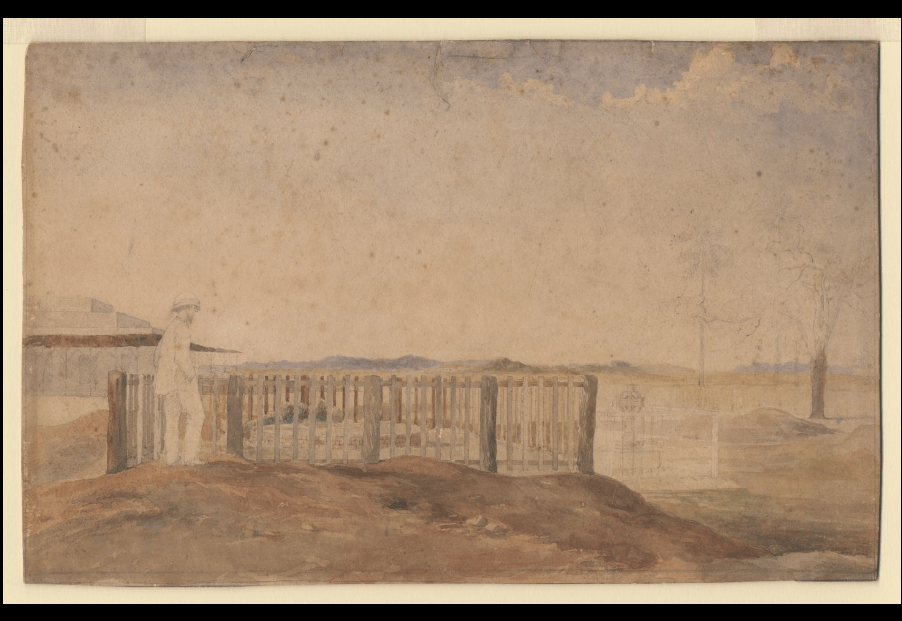
So ended the siege of Cawnpore. The work of destruction that had started 40 days earlier at the entrenchment came to a brutal end at the Bibighar. There was no happy end for anyone, and when the scale of the horror finally became known, many families who had hoped that their loved ones had been spared were faced with the horrible truth that there was no one left. The Probett Walsh family lost 22 members; Charles Thomas Probett and the Walsh brothers, all pupils at Martniere College, left the Lucknow Residency as orphans. When news of the massacre became known, the cry “Remember Cawnpore” echoed through India with terrible consequences.
Sources:
Chick, Noah Alfred. Annals of the Indian Rebellion. Calcutta: Sanders, Cones and Co., 1859.
Forrest, G. W., ed. The Indian Mutiny 1857-58: Selections from the Letters, Despatches and Other State Papers Preserved in the Military Department of the Government of India, 1857-58. Vol. 3, Lucknow, Cawnpore. Calcutta: Military Department Press, 1902.
Kaye, John William. A History of the Sepoy Revolt. Vol. 2. London: Longmans, Green, and Co., 1896.
Shepherd, W. J. A Personal Narrative of the Outbreak and Massacre at Cawnpore. Lucknow: Methodist Episcopal Church Press, 1879.
Thomson, Mowbray. The Story of Cawnpore. London: Richard Bentley, 1859.
Trevelyan, G. O. Cawnpore. London: Macmillan and Co., 1866.
Ward, Andrew. Our Bones Are Scattered: The Cawnpore Massacres and the Indian Mutiny of 1857. New York: Henry Holt and Co., 1996.
 Mutiny Reflections