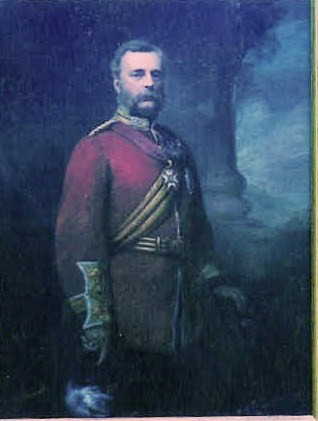
https://the-bechers-in-india.weebly.com/arthur-mitford-becher-1816-1887.html
Killed and Wounded in the action at Badli-ki-Serai and the Taking of the Ridge
Some sad particulars:
“Wasn’t it sad news I wrote you yesterday about poor Chester? I have since heard more accurate particulars about his death. It seems he lived for a minute or two after he was struck down, and young Barnard, Aide-de-Camp, jumped off his horse and went to his assistance, holding his head until he died. He was quite sensible at first, and spoke to Barnard, asking him to raise his head that he might look at his wound; and seeing – as well he might, poor fellow – that he couldn’t live, he want Barnard to leave him, which he would not do, but gave him some water to drink, on which he said, “What’s the use of giving me water?” But it seemed to revive him a little, and he died without apparent pain. His remains were interred in the burial ground yesterday evening, Mactier and I having had the body bound up in blankets, and got Mr. Rotton to perform the service. That poor fellow, Russell, also whose wound proved mortal, was laid by Chester’s side in another grave.
I am sorry to say that two more officers were killed that I had not of when I wrote to you yesterday: Harrison, Her Majesty’s 75th, and Delamain 56th Native Infantry, and poor Howell, I regret to add, died of cholera the night before we left Alleepore. Light, of the Artillery, slightly wounded in the forehead; Greville, 1st Fusiliers slightly in the hand, and young Davidson, of the Artillery, was severely burnt by the blowing up of a tumbrell. I don’t think there can be any more casualties among the officers, or I should have heard of them.” – Colonel Keith Young to his wife, Camp, Delhi Cantonments, Tuesday, 9th of June (10 1/2 A.M.)
Colonel Chester was mortally wounded by roundshot which tore through his side. It also killed his white horse, “Sir Walter” who he was riding at the time, instantaneously.
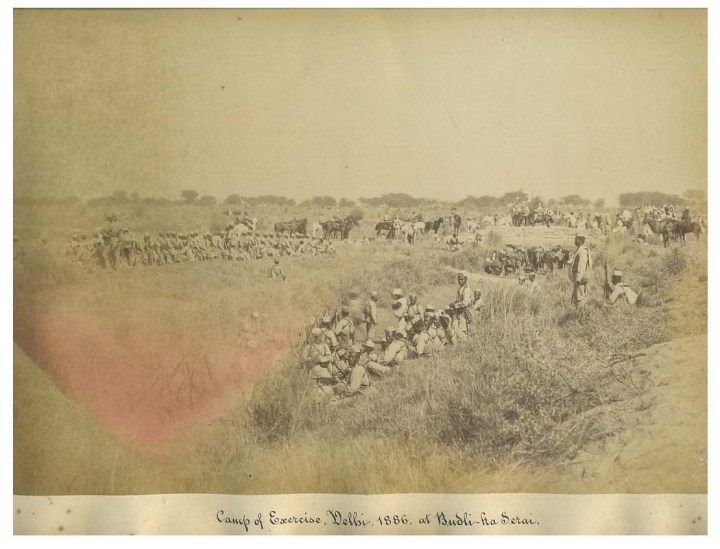
Staff Officers
Colonel Charles Chester, killed.
Born in 1803, the son of Sir Robert Chester and his wife Eliza, in Hintlesham, near Ipswich, Co. Suffolk. He entered the services of the EICo’s Bengal Army in 1820 and arrived in India the following year to take up duties with the Bengal European Regiment, then stationed at Ghazipur. The following year, he was in Sultanpur with the 2nd Battalion, 4th BNI, but in September 1823, now Lieutenant Chester was reposted to the 2nd Battalion of the same regiment before being appointed to the 1st Battalion, 20th BNI, then at Singapore. The army reorganisation saw him removed from the rolls of the 1st Batt. 4th BNI and placed on the newly formed 23rd BNI (lately 2nd Batt. 4th BNI), but he continued serve with the 25th BNI (lately 1st Batt. 20th BNI) in Singapore. In 1825, he returned to Calcutta, where he was appointed to the commissariat and, on their strength, would be sent to Arakan to serve out the rest of the First Burma War. However, he was not about to leave Burma. Appointed as Assistant to Mr. Craufurd, Envoy to the Court of Ava, he would not return to Calcutta until the end of February 1827. Furlough was the order of the day, and Chester went home, only returning to India in the autumn of 1830. His regiment, the 23rd BNI was in Ludhiana so it was off to the Punjab, where he would remain in various positions until 1833, when he resigned his adjutancy to attend and conduct to Calcutta a deputation from the Maharaja Ranjit Singh to the Right Honourable, the Governor-General,” that kept him busy until 1835. Ten months on sick leave in Simla were followed by furlough in 1837, and he did not return to India until 1839. What followed was a variety of postings, including Brigade Major of the Eastern Frontier District, officiating Deputy Judge Advocate General of the Presidency District, and not only officiating Deputy Assistant Adjutant General of the Saugor Division, but in 1846, of the Cawnpore Division. As Assistant Adjutant General of the Second (Gilbert’s ) Division of the Army of the Punjab for the Punjab Campaign of 1848-49, Chester was present at the crossing of the Chenab and at Chillianwallah, where he nearly lost his life trying, gallantly but fruitlessly, to save the life of a fellow officer. Immediately after the battle, he was appointed officiating Assistant Adjutant General of the Army, with the position of Second Assistant Adjutant General at Army Headquarters following barely two weeks later and dated with effect from the battle. In this capacity, he served for the remainder of the Punjab campaign, including the Battle of Gujerat.
Promoted to the rank of Lieutenant-Colonel by brevet and with the Punjab campaign medal with two clasps firmly pinned to his chest, Chester was nominated Dirst Assitant Adjutant General of the Army, which quickly turned into the charge of the Adjutant General’s office at the Presidency.
In 1850, he was granted two years’ leave to visit the Cape Colony, New South Wales and Egypt but returned to India before his leave was over in November the same year in time to accompany the new Commander-in-Chief, Sir William Gomm to the Upper Provinces. In 1855, Chester went home on sick leave and arrived back in India in March 1856 as Adjutant General of the Army.
In 1857, he was in Simla with the Army Headquarters when the mutiny broke out and accompanied the Anson until his death at Karnal, after which Chester continued on with the Delhi Field Force under Sir Henry Barnard. Colonel Chester was killed a Badli-ki-Serai when he was struck by a cannon-shot during the first few minutes of the battle. He was 53.
“To the memory of Colonel Chester Adjutant General of the army, who fell mortally wounded at the battle of Badlee Suraie. This monument is erected by his brother officers of the General Staff in token of their affectionate regard and esteem. his remains were here interred on the 8th June 1857.’ (Rajpura Cemetery at Delhi).
1st Brigade Bengal Horse Artillery, 2nd Troop
Bombardier William Hill – severely wounded in the shoulder
1st Bengal European Fusiliers
Privates
Brummage, William – killed
Liddle, William – killed
Manning, James – mortally wounded. Died of wounds
McVey, Thomas – killed
Philipps, George – killed
Roberts, John – dangerously wounded
Siddle, William – killed
2nd Bengal European Fusiliers
Sergeants
Kenney, Dennis – right arm shot off
Cain, William – wounded in the right shoulder
Corporals
Barry, Edward – severely wounded in the foot, amputated
Cain William – wounded
Drummer John Stunt – dangerously wounded. Died of wounds 12 August
Privates
Angus, John, – wounded in the leg
Boyd, Robert – mortally wounded. Died of wounds 9 June
Brown, John – wounded in the shoulder
Corner, Henry -mortally wounded. Died of wounds 9 June
Frost, Edward – dangerously wounded. Died of wounds 13 June
Kain, James – wounded
Maguire, Robert – burnt on hand
Meake, William, wounded slightly
Drummer John Stunt, dangerously wounded. Died of wounds 12th of August, 1857
54th Bengal Native Infantry
Captain Claude W. Russell – killed
56th Bengal Native Infantry
Captain John Weston Delamain – killed, aged 30.
Born in 1827, the son of Captain John Delamain would do his best to have a colourful career. He entered EICo’s Bengal Army in 1845, and upon his arrival in India the following year, joined his regiment, the 56th BNI, in Agra. With the 56th, Delamain would join the Army of the Punjab in 1848, where they were present at the passage of the Chenab, the action at Sadulapur and the following battle of Chillianwallah, where he lost his arm to grapeshot.
His career, up to Chillianwallah, was being watched closely by his brother-in-law, Captain Henry Aimé Ouvry (3rd (The King’s Own) Regiment of (Light) Dragoons) who sent periodic progress reports to his wife, lamenting in, September 1848, that he was sorry to say that(Johnny), would not do much good, “without passing language examinations; he will never be able to get any appointment, and he not pass an examination, as he will not even try.” Furthermore, “He is among a terrible set, and it comes off safe it will be next to a miracle., I have been told that he is not in debt, but who can tell what may happen when he sees around him bankrupt?” Besides this, Johnny was refusing to write back to Henry, who, persistent to the last, asked an old officer about him, “…he told me he that he did nothing but smoke and drink beer, and was obstinante when spoken to…” Henry presumed Johnny was worried that his overly concerned brother-in-law would write to his mother!
The men would in November 1848, when both their regiments were serving the Army of the Punjab. It was Ouvry’s squadron that was ordered out after the battle of Chillianwallah to try and save some of the wounded, and the first man Ouvry came across was none other that John Delamain, together with a sepoy of his regiment that had steadfastly remained with the young man. What Ouvry saw filled him with horror. Delamain’s left arm had been shattered by a Zumburruck ball, and as he could see, there would be no way to save it. Delamain had been wounded in the afternoon, around 2 pm, but with no provisions for the wounded, he spent the next four hours wandering about the battlefield, under fire, until Ouvry found him. As if to prove a point, as Ouvry was bundling Delamain into a doolie, the Sikhs opened fire on him.
Delamain was deemed by the surgeon too weak to withstand cholorform, so his arm was amputated close the the shoulder while he was conscious. The next day, when Ouvry saw him again, he was still lying in his bloodied dhoolie but with companions – two wounded men had crawled into it during the night to stave off the cold. Ouvry quickly disentangled Delamain from the other two men, one of whom was laying on top of him and sent him to his tent. This would come back to Ouvry years later in Cawnpore, when he took charge of another man, Lieutenant Colonel Ewart of HM’s 93rd, who was wounded in almost the same way as his poor brother-in-law. Delamain was eventually sent to the hills to recover; he received one year’s pay, a pension of £ 75 for the loss of his arm and a staff appointment. Ouvry, in the meantime, had changed his mind about his wayward brother-in-law, “Since I have been on the campaign, I have learnt to like him better than I thought I should have done at first, and he is too good to throw away in the Indian Service.”
Delamain remained in Simla on sick leave until October 1850; when he was fit enough to resume service, he was given a staff appointment with an irregular regiment in Fatehgarh, but at his own request, the appointment was cancelled, and he rejoined the 56th BNI as their adjutant, a post he held for the next five years. The regiment was called for duty against the Santhals, and Delamain was present throughout the entire operation. On gaining his captaincy, he continued acting as adjutant until his replacement arrived and then remained in the Santhal District with the 56th until the end of 1856, when the regiment was ordered up to Cawnpore. Fortune perhaps smiles on the brave, for Delamain, who was nominated Brigadier Major of the 56th in April 1857, happened to be away in Simla on private business and did not take up his appointment; he was still up in Simla when his regiment mutinied in June. On hearing of the outbreak in May, Delamain cancelled his leave and hurried down to Ambala, where he was attached to HM’s 75th. Acting as Orderly Officer to Brigadier Wilson, Delamain, ever in front, was shot in the mouth; the bullet passed through his spine, killing him instantly. As soon as Ouvry arrived on Delhi Ridge, he fulfilled a promise he had made to his wife – he would bury Johnny Delamain.
Bengal Field Artillery
Second Lieutenant A.G. Davidson – severely wounded
Second Lieutenant Charles Hunter – slightly wounded
Sergeant John Orrall – severely wounded in the forehead
Bombardier James Kirkpatrick – killed
Gunners
Benyon, Henry – slightly wounded in the forehead
Howfield, Howfield – unposted recruit, killed
Moffatt, Thomas – unposted recruit, contused wound from shell splinter
6th Dragoon Guards
Sergeant Edward Langford – wounded
Troop Sergeant Major Joseph Mantan – wounded
Corporal John Mayling – wounded
Privates
Hill, Samuel – killed
Taylor, Stephen – wounded. Died of wounds, 9 June
Smith, Alfred – severely wounded. Right leg amputated
9th Lancers
Troop Sergeant Major Patrick Nugent – killed in action
Sergeants
Lindsay, Horatio – killed
Helstone, Henry – slightly wounded
Ronayne, John – slightly wounded
Corporals
Bishop, John – killed
Kelly, J. – killed
Roberts, John – wounded. Died of wounds.
Saunders, William – wounded. Died of wounds
Privates
Allison, Samuel – killed
Arnold, Daniel – killed
Burns, John – killed
Clarke, WIlliam – killed
Daily, Hugh – killed
Donovan, Henry – severely wounded
Everett, Thomas H. – slightly wounded
Fairweather, James – killed
Gardiner, John – killed
Gray Andrew – killed
Hartley, John – killed
Martin, Thomas – dangerously wounded. Died of wounds
Parker, George – dangerously wounded. Died of wounds
Rimel, William – killed
Rudland, Francis – dangerously wounded. Died of wounds
Shepherd, Joseph – killed
Taylor, Richard W. – severely wounded
White, James – killed
75th Foot (1st Btn, Gordon Highlanders)
Lieutenant Colonel Charles Herbert – severely wounded
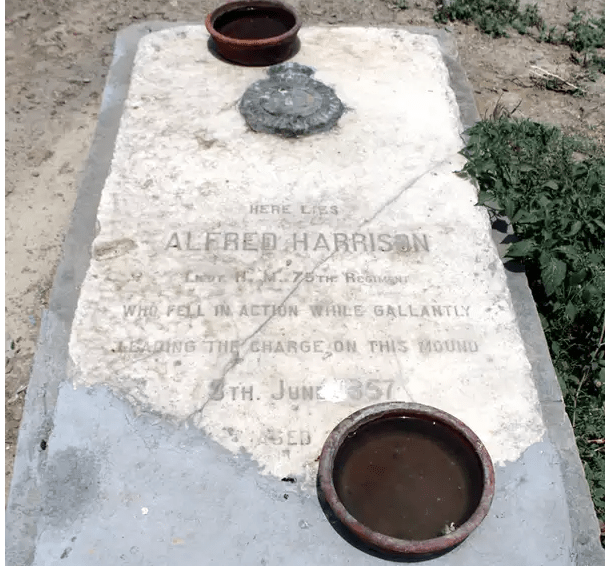
Captain Alfred Harrison – killed in action
Born in 1830, Harrison entered HM’s Service on 25 August 1848 as an ensign in the 75th Foot and sailed with the regiment to India in May 1849. Promoted to lieutenant in 1850, he took leave towards the end of that year to Calcutta, but he was far from well and went home on sick certificate in early 1851. When his leave expired, Harrison remained in England, doing duty with the regimental depot at Chatham for a year before returning to India in 1855. The 75th was in Kasauli when the mutiny broke out, and Harrison marched with them to Ambala to join the Delhi Field Force. Badli-ki-Serai was his first and last engagement in the field. He was killed while “gallantly leading his men in a charge on the enemy’s guns. “
Lieutenants
Barter, R. – severely wounded
Rivers, C.R. – slightly wounded
Ensign C.M.Pymm – wounded
Assistant Surgeon S.A. Lithgow – wounded
Sergeant John Pearce – slightly wounded
Drummer William Magennis, killed
Corporals
Collins, Edwin – severely wounded “…by a musket ball, which entered the upper and outer side of the right thigh, and lodged, fracturing the femur; ball extracted; a piece of bone came away. July 20th. – Wound healed; right leg about two and a half inches shorter than left; femur bent; fractured ends of bone overlap, and there is abundant deposition of new bone; the long splint was used. Has a good, useful limb and can walk a long distance. September 6th, 1858.—Sent to modified duty. October 6th.- Invalided by an order from the Horse Guards.”
Ford, Aaron – killed
Harris, Samuel – slightly wounded
Herringshaw – Thomas, slightly wounded
Privates
Adams, William – killed
Alderidge, George – severely wounded
Armstrong, Edward – slightly wounded in the right knee
Armstrong, James – slightly wounded in the right foot
Austin, Nathan- wounded in the right side
Baker, George Baker – severely wounded
Baker, Frederick – wounded
Barry, John – slightly wounded
Bourke, Michael – slightly wounded
Burke, Michael – wounded in the left thigh
Calvin, John – severely wounded
Clyde, Samuel – slightly wounded
Condrin, John – slightly wounded in the left foot
Corbett, Michael – killed
Coughlan, Patrick – killed
Croad, John – killed
Daine, John – killed
Dalton, John – killed
Daniels, Christopher – severely wounded
Deveney, Brian – killed
Dobney, Thomas, severely wounded in the right ankle “…by a grape shot, which struck him on
the inner and posterior aspect of the tibia, one inch above the right ankle, and passed out through the external malleolus. Several pieces of bone have come away. July 20th.- Wound healed. Skin adherent to bone and parts much thickened. Ankle-joint anchylosed. Considerable loss of bone of both tibia
and fibula. November 11th, 1858.- Invalided.” At the time of his injury, he was 38 years old.
Douglas, John – killed
Dowton, Humphrey – killed
Gallagher, Patrick – severely wounded in the right foot
Galvin, John – severely wounded in the right thigh
Gillespie, John – killed
Grant, Thomas – killed
Greenfield, Charles – severely wounded in the chest by grapeshot
Hanlon – Michael, killed
Hawkins, Thomas – severely wounded in the left leg
Holmes, Henry – severely wounded in the right leg
Horan, Thomas – wounded in the neck
Houston, James – killed
Hugo, Hugh – killed
Johnston, John – dangerously wounded, arm amputated
Johnston, Thomas – severely wounded in the shoulder and chest
Jones, William – killed
Keane, Patrick – killed
Lally, Martin – killed
Leigh, Edward – wounded
Leckie, David – severely wounded in the arm
McClure, Robert – slightly wounded
MacLoughlin, Peter – slightly wounded in the left ankle
Metters, Thomas – killed
Montgomery Colin – slightly wounded
Morrison George – slightly wounded
Norton, William – killed
Paine, William – slightly wounded in the right hip
Parker, Thomas – bayonet wound in the right thigh
Reid, George – slightly wounded
Reynolds, John – slightly wounded
Rice, William – killed
Robson, Robert – slightly wounded in the left side
Ryan, Edward – severely wounded in the left arm
Silk, John – wounded in the right arm
Stafford, Jame – killed
Steggles, Charles, killed
Thompson, Francis – dangerously wounded, died of wounds
Varley, George – wounded in the left thigh
Walsh, Peter – killed
White, Edwin – slightly wounded
Wilson, James – killed
The British force lost 51 killed, including 3 officers, 131 wounded and 11 missing out of a force of 600 cavalry and 2400 infantry. They were supported by 22 guns of questionable quality.
8th of June- the Ridge
1/60th Foot
Privates
Carthy, Michael, – severely wounded
Jennings, George – killed in action
75th Foot
Captain R. Dawson – severely wounded in the leg by round shot
Sergeant John Pearce – slightly wounded
Privates
Parker, James – slightly wounded
Peel, John – slightly wounded
Young, James Young – wounded in the right side
2nd Bengal European Fusiliers
Corporals
Merrifield, John, slightly wounded
Privates
Brown, John – wounded through the shoulder
Corrorner, Henry – died of wounds
Nally, Thomas – wounded in the neck
Porteous, Willliam – left hand amputated
Reily, Edmond – died at Delhi
9th of June
6th Dragoon Guards
Private John Hayden – Slightly wounded
1/60th Foot
Privates
Connoboy, Patrick – slightly wounded
Cranmer, Job – slightly wounded
Higgins, John – severely wounded
Geering, Henry – wounded
Hakeman, William – killed in action
Higgins, John – severely wounded (there are 2 men of the same name, this one bears No.3338)
Kearney, Thomas – slightly wounded
Pugh, Richard – severely wounded
Smith, Richard – dangerously wounded
Wakeman, William – killed in action
75th Foot
Privates
Crosbie, Robert – severely wounded in the arm and hand
Graham, Lysander – wounded in right thigh
1st Bengal European Fusiliers
Corporal John McGee – Killed in action
2nd Bengal European Fusiliers
Sergeant William Cain- wounded in the right shoulder
Corporals
Barry, Edward – left foot amputated
Merrifield, John– slightly wounded on the right knee
Privates
Boyd, Robert – died of wounds
Corrorner, Henry – died of wounds
Kelly, Thomas – killed in action
Reily, Edmond – died at Delhi
Corps of Guides
Lieutenant Quentin Battye (56th BNI)– dangerously wounded, died of wounds 11th of June. Attached to the Guides Cavalry – Aged 25. Born at Kishnagarh, Bengal. Son of George Battye. Served in the Burma Campaign (1853). Grave at Rajpura Cemetery, Delhi – “Sacred to the memory of Quintin Battye, Lieutenant in the late 55th Regiment Bengal Native Infantry and 2nd in command of the Corps of Guides who fell whilst nobly performing his duty against the mutineers before Delhi on the 9th June 1857. this tomb is erected by his brother officers in the Guides as a slight token of their respect and esteem for his many soldierlike and amiable qualities.”
Lieutenant C.W. Hawes (43rd BNI) – slightly wounded.
Bengal Field Artillery
Gunner Michael Glenaun (3/3) – slightly wounded in the head
10th of June
1/60th Foot
Private Henry Geering – wounded
75th Foot
Private Robert Crosbie – severely wounded
Bengal Horse Artillery, 1st Brigade, 1st Troop
Gunners
Baker, Henry – killed in action
Denehy, Daniel – killed in action
Sirmoor Battalion
From Major C. Ried, Commanding the Sirmoor Battalion and Main Piquet, to Captain H.W. Norman, Officiating Adjutant-General of the Army – No. 71, dated Hindu Rao’s House, 11th June
For the information of the Major-General Commanding the Forces, I have the honour to report that about five o’clock yesterday evening, the mutineers, about five hundred strong, with two light guns and a party of cavalry, came out of Ajmere Gate, with the intention apparently of turning our right flank and threatening our rear. I immediately proceeded out with two guns of Major Scott’s battery, seven companies of the Sirmoor Battalion , two companies of the 60th Rifles, and a hundred and fifty of the Guides. The latter I threw out in skirmishing order, with directions to encourage the enemy to approach. The Rifles I extended on my left flank,, wih Gurkhas in line on my right. About six o’clock the mutineers approached in force. The guns they had with them opened with grape on the right line of skirmishers. I then threw out another company of my own regiment in skirmishing order in continuation of the first line. They advanced steadily with orders to spare ammunition as much as possible. Whilst the Gurkhas were advancing the mutineers called out to them,saying they would not fire as they (the mutineers) wished to speak to them. Others called out, “We expect the Gurkhas to join us; we won’t fire.” The Gurkhas replied, “Oh yes, we are now coming to join you.”
They closed upon their centre and went up withing twenty paces of the mutineers when they gave a well directed volley, killing between twenty and thirty, and followed them up until fired upon by the batteries at Ajmere Gate.
Major Scott’s guns opened with grape, ad apparently with good effect on the infantry and cavalry, which were seen retreating towards the Ajmere Gate. About 7.30 pm the mutineers retreated, on which I withdrew.
Our loss was three killed and two wounded in my regiment. The Guides three killed, but as yet no report of wounded (since reported, three wounded). Major Scott’s battery (two guns) three horses wounded, one killed.
The total loss in my regiment up to the present time is as follows –
3 Sepoys killed
Wounded: 1 Jemadar, 1 Havildar, 1 Naick, 12 Sepoys
Total Killed and wounded: 18
“The jemadar is severely wounded, and is just now a great loss to me, as I consider him one of the smartests officers in the regiment. He is certainly worthy of promotion; and although I have no vacancies, I trust the Major-General Commanding will be pleased to authorise me to promote him at once to the grade of subadar, retaining him on the rolls of my regiment as a supernumerary subadar until a vacancy occurs.”
11th June
1/60th Foot
Private James Power– died of wounds
12th of June
1/60th Foot
Lieutenant P.J. Curtis, – severely wounded –“a shot between the arm and side which took a bit out of each” (H.Greathed, letter to his wife, June 13th)
Lieutenant H.G. Deedes – slightly wounded
Sergeant William Courtenay- slightly wounded
Ensign Everard Aloysius Lisle Phillips (11th BNI) attached to the 1/60th, slightly wounded
Privates
Bastable, Edward – slightly wounded
Eastment, George – severely wounded
Johnson, Thomas – slightly wounded
Lewis, William – slightly wounded
Rae, George – severely wounded
75th Foot
Captain Edward William John Knox – killed in action – Aged 37. Son of John and Maria, of Co. Mayo. Joined the Army in 1839. Husband of Charlotte Gardiner. Ref. The Times 28-8-57: ‘before Delhi, while gallantly leading his picket to repel the assault of the rebel army on The Tower Battery, he was shot through the head.’
He had only a moment before shot a mutineer when “his eye caught sight of a sepoy levelling a musket at him. “See,” said he, to one of his men, “that man pointing at me, take him down.” The words had hardly escaped his lips when the fatal shot took place upon his person. He was on one knee when singled out as a mark by the mutineer…as soon as he received the shot, he rose regularly “to attention” and then fell and expired without a word or groan.” (Rotton)
There are two stories about Knox’s death. The one comes from the pen of Reverend Rotton, as stated above, though colourful, contradicts that of an eye witness. Knox was neither shot in the head nor kneeling. He “was on his feet at the time and that as he was shouting orders to his men, a ball entered his mouth. It crashed through his cervical vertebrae and hurled him backwards to the ground, stone dead.” (de Rhe- Philipe)
Privates
Banks, Abel – killed in action
Bates, Thomas – severely wounded in the hand
Child, Thomas – wounded in the left leg
Cullen, Brian – killed in action; shot in the abdomen
Dinsdale, John – slightly wounded
Farrell, John – wounded in right hand
Freeman, Patrick – wounded in left leg
Kelly, Daniel – wounded in left leg
Knights, Samuel – slightly wounded
Rourke, Richard – slightly wounded
Sibley, Thomas – slightly wounded in right hand
2nd Bengal European Fusiliers
Corporals
Greenback, Richard – wounded in the spine
McKinnon, John – dangerously wounded in the right leg
Maguire, Robert – musket ball through the wrist
Privates
Blair, John – wounded in the shoulder
Cox, Henry – killed in action
Frost, Edward – killed in action
Lynan, Christopher – wounded in the hand
Neil, John – died of dysentry
Prentice, Richard – dangerously wounded in the right arm, died of wounds
Rowland, Charles – wounded in the shoulder
Ryan, Patrick – wounded in the right foot
Smith, John – killed in action
Swindells, David – wounded in the shoulder and leg
Corps of Guides
Lieutenant Thomas Gilbert Kennedy (62nd BNI) – severely wounded
Bengal Horse Artillery, 3rd Brigade, 3rd Troop
Sergeant James MacAllister – severely wounded
Corporal Edward Redden – wounded
Gunner Matthew Bissett – severely wounded
13th of June
1/60th Foot
Privates
Bergin, Dennis – severely wounded
Burne, Patrick – slightly wounded
Caroll, Michael – slightly wounded
Kerr, John – dangerously wounded by a musketball “causing a compound comminuted fracture of the right radius about its middle, doing also much injury to the flexor tendons; several pieces of bone were taken away at the time.” He lost the use of his hand and was invalided out of the service at the age of 20 on July 21st, 1858.
75th Foot
Private Charles West – killed in action
1st Bengal European Fusiliers
Private James Pople – dangerously wounded, died of wounds
2nd Bengal European Fusiliers
Private Benjamin Teale – died of cholera
15th of June
9th Lancers
Private Thomas Whitehead – severely wounded
1/60th Foot
Corporals
Forbes, Peter – severely wounded
Hickey, Michael – severely wounded
Privates
Green, Thomas – wounded
Healey, Daniel – died of wounds
75th Foot
Corporal Joseph Gibson – shot in right forearm
Corporal John McDonald – severely wounded in the elbow. He was able to return on modifed duty in September 1858, but had lost most of the use of his arm.
Privates
Atterbury, Wiliam – slightly wounded
Brondell, Henry – wounded in right thigh
Cook, William – wounded in the right shoulder
Greenfield, Charles – dangerously wounded in chest by bullet. According to “Gunshot Wounds of the Indian Mutiny,” Greenfield, aged 25, was wounded by grape-shot, weighing 4 ounces, on the left side of his chest. The ball “entered through the anterior fold of the axilla, and passed- downwards, backwards, and inwards, in a slanting direction, through the left lung, and made its exit apparently between the ninth and tenth ribs, close to the spinous process of the tenth vertebra. The entrance aperture soon healed ; that of exit did not heal for seven months, and for six or seven days portions of his food passed through it, and air from the lung.” He would not be fit for modified duty until August 1858.
Leary, Patrick – dangerously wounded in chest by bullet
Loraine, George – killed in action
McCue, James – shot in left shoulder
McDonald, John – shot in arm. He received a musket-ball in the lower part of the elbow. Although is wounded healed, he could barely bend his arm and he could no longer open his “little and ring-fingers” while the remaining were “powerless.” Following the injury, his arm was three inches shorter than the other but he returned to modifed duty on September 8th, 1858. He was 26 years old. (From “Gunshot Injuries from the Indian Mutiny”)
McDonagh, William – killed in action
Rolph, Thomas – killed in action
Starkey, William – slightly wounded
Widenham, Edward – killed in action
Bengal Field Artillery
Gunners
Mardney, Ralph – dangerously wounded, died of wounds 20th of June
16th June
1/60th Foot
Privates
Healy, Daniel – died of wounds
Riordan, Daniel – wounded
17th of June
6th Dragoon Guards
Privates
Hartnett, Thomas, – killed in action, Hindu Rao’s House
Jarvis Robert – killed in action, Hindu Rao’s House
McNamara, James – severely wounded
Sheeley, William – slightly wounded
1/60th Foot
Ensigns A.S. Heathcote – slightly wounded in Delhi Camp
Privates
Alexander, James, severely wounded
Conray, John – killed in action
Douglas, George – severely wounded
Myers, George – slightly wounded
Richards, James – severely wounded
1st Bengal European Fusiliers
Captain E. Brown – severely wounded
Private John McDonald – killed in action
Private John Neglan – killed in action
2nd Bengal European Fusiliers
Sergeant John Roberston – wounded
Private Patrick Carberry -died of cholera
Bengal Horse Artillery, 1st Brigade
Colonel Henry Tombs – wounded
Bengal Engineers
Lieutenant A.E. Perkins – slightly wounded
Engineers
Second-Lieutenant J.N. Champlain slightly wounded June 17
Sirmoor Battalion
List of killed, wounded and missing in the 2nd Column, commanded by Major C. Ried in the attack on the enemy’s position at Kissengunge on the 17th of June
Corporals and Naicks killed – 1
Sepoys wounded – 2
Ensign E.C. Wheatley (54th BNI) attached to the Sirmoor Battalion. Killed in action by cannon ball.
The shot which killed Wheatley killed a further seven men in Hindu Rao’s House, wounding another 2 who ultimately died of their wounds. Wheatley was said to be sleeping in a corner of the house when the fatal shot fell. He had been “well thought of for his gallantry and untiring energy of character.“
18th of June
1st Bengal European Fusiliers
Private Joseph Abecco – died of wounds
60th Regiment of Foot
Private Peter Forbes, aged 32- was severely wounded “…by a musket ball, which struck the left
testicle, passed through the pubis and bladder, and made its exit posteriorly in the centre of the right hip. The left testicle was so much injured that it was removed the same day.”
Artillery
Captain J. Young slightly wounded (Cave-Brown does not give a regiment)
Engineers
Second Lieutenant E.R. Jones, wounded, died of wounds July 24th
19th June
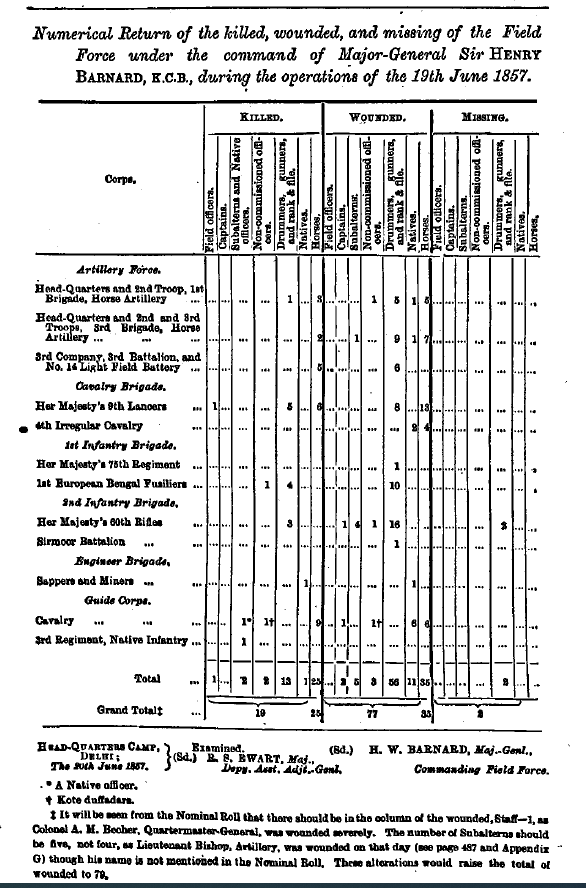
Staff
Colonel Arthur Mitford Becher (Quartermaster General) wounded, slightly musket ball in the arm “through the fleshy part of it below the elbow…” (Colonel Keith Young, letter to his wife, Camp Delhi, 20th June)
9th Lancers
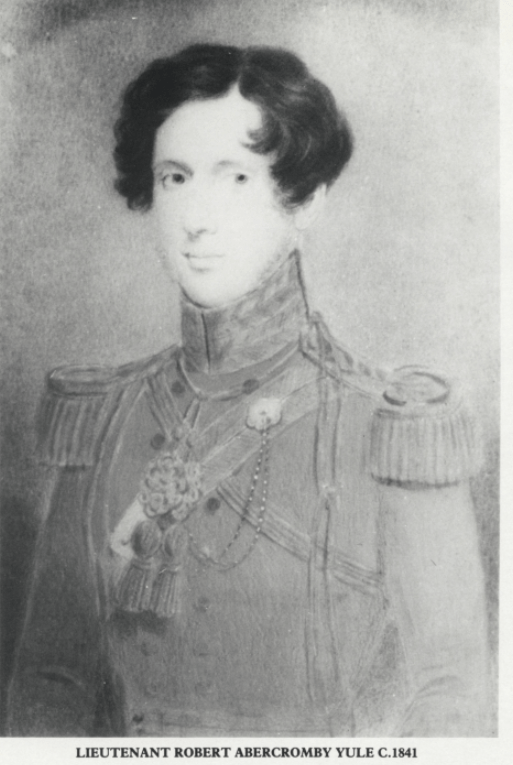
Captain & Lieutenant Colonel Robert Abercrombie Yule – killed in action. Served Ghuzni 1839 (16th Light Dragoons – medal), Sutlej 1845 (medal and bar), 9th Lancers in 1847, Punjab 1848 (medal and 2 bars). Married Margaret Rodgers at Edinburgh, 9th November 1841. Author of a treatise “on cavalry tactics “Notes on the Employment of the Cavalry.” .He was 40 years old when he died leading his men on the 19th of June.
In the perfect chaos of the day, Yule lost his life.
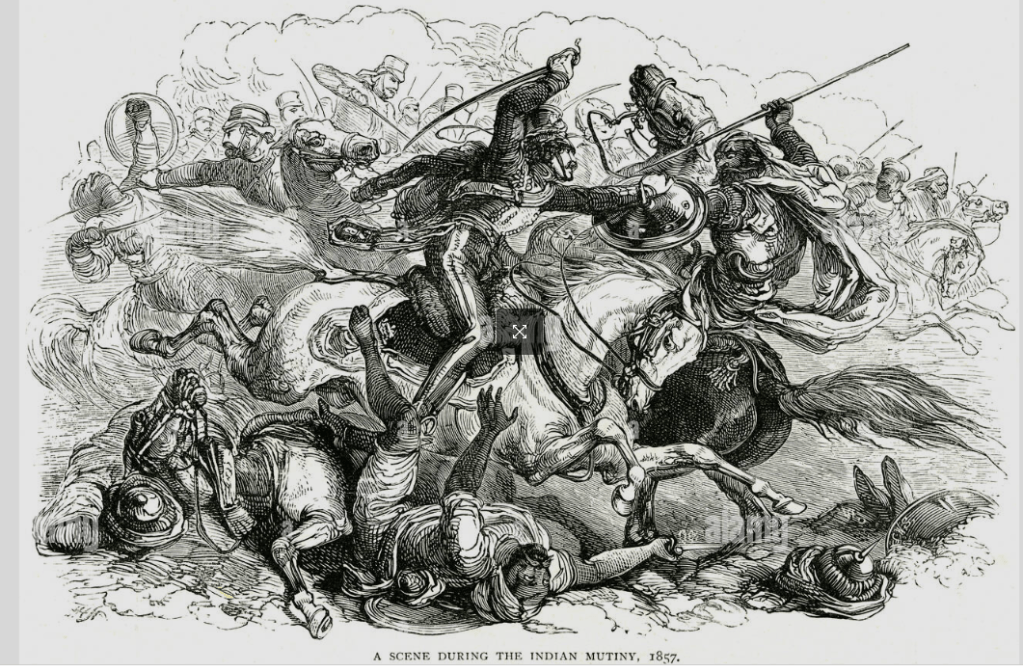
“Turner exhorted poor Yule to advance to save the guns, so we advanced and formed up across the road between the Guns and the enemy taking the fire on ourselves. Major Turner now begged Yule to charge saying (I believe) that unless the Cavalry advanced the guns would be lost….” The words however were heard by Lieutenant Alfred Stowell Jones and he stated Turner had, in fact, said: “Get along to the front, you cavalry, I can’t stand this!” This so excited Yule, he brought his men to the front and cried “Charge!” before Jones had the time to organise the squadron. This led to Lieutenant Blair rushing impetuously forward with his men without waiting for Jones who “had looked at the road and seen it was not fit to charge. He watched Yule for a moment, saw his face change so Jones tried to stop them. But they were too late so Jones went with the rest.”
Writes J.Campbell Brown who rode in the charge:
“Away we went under a most tremendous fire of musketry from the Enemy’s infantry with whom each side of the road was lined and who fired into us at a yard or two distance, we of course cleared the road and on our advance the enemy’s guns were withdrawn off the road where of course with the Cavalry we could not follow so after going 1/2 mile at a gallop and running the gauntlet not only of the enemy’s fire but that of our own artillery who mistook us in the dusk for the enemy’s Cavalry and killing a few of the enemy who did not get off the road on time we halted and formed up at the first place where there was enough open ground to deploy the Squadron on, for we had been forced to charge by the narrowness of the road, in a sort of column of threes, or rather in a mass as best we might.
“There we first knew the extent of our losses, one man after another failing to answer his name, and one man said he had seen poor Yule’s horse pass riderless and another that he had seen poor Yule himself lying face downwards, dead on the road. Some of us wanted to charge back to try and recover the wounded, whom we saw in the distance being sabered by the enemy’s Sowars, however, we were not allowed…So we moved off and after being repeatedly fired on by our Guns succeeded in getting back…” (Letter of J. Campbell Brown)
On the same day, another man was wounded – Henry Daly of the Corps of Guides. As he lay on the ground with a bad wound in his shoulder, he saw Yule, “Poor Yule! I knew him well; he came up after I was down; he trotted by me as I lay on the ground. It was quite dusk. He ought not to have been killed. The darkness did it. I fear he was left but wounded. The enemy prowled about the field during the night and found him there.” (Memoirs of General Sir Henry Dermot Daly (ed) Major Hugh Daly (London, 1905) pp.148)
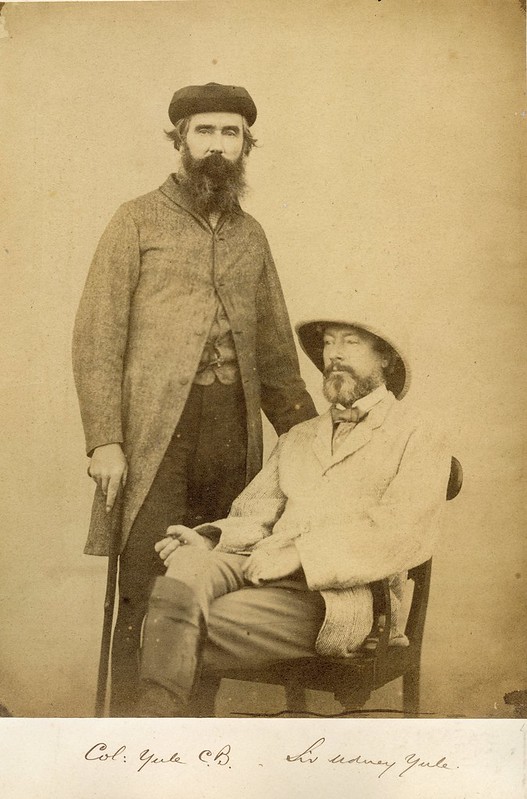
Daly was found by his men, but no one came back for Robert Yule until the next day. Reverend Rotten, who saw Yule’s body before he buried it, stated it was much mutilated, though this detail was left out in letters to Yule’s widow and his brothers. Yule had two brothers, the eldest “Sir George Udney Yule (1813-1886), who was a distinguished Indian civilian and a famous shikari. During the mutiny, with a corps of mounted European volunteers, he maintained order throughout the division of Rhagalpur, driving out large bodies of the mutineers and keeping open the navigation of the Ganges while preventing communication between the rebels in East and West Bahar. He subsequently served as chief commissioner of Oudh, as resident at Hyderabad, and finally on the governor-general’s council, from which he retired in 1869″. The other was Colonel Sir Henry Yule (1830-1889), a renowned geographer and orientalist. (Dictionary of National Biography)
Corporals
Lee, James – severely wounded
Hancock, Thomas – severely wounded
Farrier George Crittenden – killed in action
Privates
Bowling, William – killed in action, 19th June
Butler, Michael – severely wounded, 19th June
Cullum, William – slightly wounded, 19th June
Durtnall, Edward – killed in action, 19th June
Leech, Alfred – killed in action, 19th June
Peckham, James -dangerously wounded, 19th June, died 24th June
1/60th Foot
Captain H.F. Williams – dangerously wounded, left femur fractured
Lieutenants
Dundas, J.D. – slightly wounded
Humphreys, Mervyn Archdall (20th BNI) – mortally wounded, died of wounds. Attached to the 1/60th Foot. Aged 26. Son of William and Anna, of Co. Cavan. Joined the Bengal Army in 1850. Grave in Rajpura Cemetery, Delhi – “Sacred to the memory of Lieutenant M. A. Humphrys of the 20th N.I. who was killed in action on the 19th June 1857.”
According to Reverend Rotton, who attended Humphreys, he had been struck by a musket ball in the neck “…and the wound impeded very considerably the organs of speech; the ball seemed to have travelled, and in its course, wounded the lung. The wound ultimately proved fatal: the poor young fellow linger through the night, and his sufferings were very great. I was a witness to them, and to the exemplary patience with which he bore them. I knew little of this officer in cantonments but saw him much in camp…My recollections of him, especially those which have reference to his last moments, are very pleasant. His conduct always inspired me with respect, but now I felt a deeper sympathy.”
McGill, J.S.D. – slightly wounded in Delhi Camp
Sergeant George Waller – severely wounded by gunshot in left thigh
Ensign E.A. Lisle Phillipps – slightly wounded 30th of May, again 19th of June, aged 22.
Private John Chilcott – killed in action
Private John Flynn – wounded by a musketball in the left leg, aged 21. The musket ball “entered the
inner side of the left tibia, two inches above the ankle-joint, and probably passed out at the external malleolus. Several pieces of bone came away from the entrance wound.” Flynn survived but his ankle joint was partially disabled.
75th Foot
Privates
Bennett, Henry – severely wounded in the back
Ford, Martin – dangerously wounded, right leg amputated. Died of wounds
1st Bengal European Fusiliers
Sergeant William Hawkins – killed in action
Privates
Armstrong, Henry – killed in action
Edwardes, Michael W. – killed in action
2nd Bengal European Fusiliers
Privates
Bateman, William – died of wounds received in action
Coyne, Michael – died of cholera
Dines, Thomas – slightly wounded in the left leg
Heffernon, William – killed in action
O’Brien, Patrick – wounded in the stomach
Sterling, William – wounded in left knee
Walton, John – died of cholera
3rd Bengal Native Infantry
Lieutenants
Alexander, Robert Waller – Killed in action – Son of Rev. Robert Alexander. Grave at Rajpura Cemetery, Delhi – “Sacred to the memory of Robert Waller Alexander 3rd NI. Son of Revd. R. Alexander of Blackheath Ireland who was killed before Delhi on the night of the 19th June 1857 whilst gallantly engaged in repelling an attack made by the mutineers on the British outposts.
Yorke, James – Dangerously wounded. Attached to the 4th Sikh Infantry. Died of wounds, 1st July
Corps of Guides
Captain Henry Daly – severely wounded
Bengal Horse Artillery, 1st Brigade, 1st Troop
Gunners
Saxton, John – dangerously wounded, died of wounds 21st of June
Turley, Hugh – killed in action
Bengal Horse Artillery, 1st Brigade, 2nd Troop
Corporal James Milligan – severely wounded
Gunners
Gaynor, Bernard – severely wounded in left arm
Hogan, John – severely wounded
Woods, James – slightly wounded
Bengal Horse Artillery, 3rd Brigade, 3rd Troop
Sergeant Matthew Gelverton – wounded
Gunners
Davis, Andrew – severely wounded
Pitt, Robert – severely wounded
Quinlan, James – slightly wounded
Russell, Lawrence – severely wounded
Scott, Henry – wounded
Bengal Field Artillery
Corporal Charles Corcoran (4/6) – severely wounded in thumb, side and groin
Gunners
Reilly, Timothy – (3/3) severely wounded in breast
Walsh, Robert (3/3) – slightly wounded
Williams, John (3/3) – slightly wounded in right side
Artillery
First Lieut H Bishop slightly wounded
20th of June
Regiment 1/60th Foot
Corporal Thomas Jennings – severely wounded
Privates
Boulter John – severely wounded
Coulter, William – severely wounded
Dixon, Thomas – severely wounded
Flynn, John – severely wounded
Hannick, Thomas – wounded
Hart, Christopher – severely wounded
Heaver, Edward – slightly wounded
Jones, George – dangerously wounded, died of wounds 28th of July
McDonald, John – dangerously wounded, died of wounds
Sheeley, Michael – severely wounded
Sullivan, Daniel – severely wounded
Turner, Samuel – slightly wounded
Wallace, Edward – slightly wounded
2nd Bengal European Fusiliers
Connelly, William – died of cholera
Daly, Patrick – died of cholera
Marshall, James- died of cholera
Bengal Horse Artillery, 2nd Brigade, 3rd Troop
Captain H.P. Bishop – slightly wounded
Bengal Horse Artillery, 3rd Brigade, 2nd Troop
Gunner James Lennox – dangerously wounded, died of wounds
21st of June
1/60th Foot
Private Edwin Carthy – killed in action
2nd Bengal European Fusiliers
Privates
Kelly, Patrick – died of cholera
McDonald, Patrick- died of cholera
Bengal Horse Artillery, 3rd Brigade, 2nd Troop
Gunner John Thomas – dangerously wounded, died of wounds
Bengal Field Artillery
Gunner Ralph Moroney (3/3)– dangerously wounded, died of wounds
22nd of June
1/60th Foot
Privates
Brown, Charles – slightly wounded
Corcoran, Philip – died of wounds
McPherson, John -killed in action
Regiment – Bengal Field Artillery
Gunner James Smith (3/3) – dangerously wounded, died of wounds
23rd of June
1/60th Foot
Captain C. Jones – severely wounded
Colour Sergeant James Baker – slightly wounded
Sergeant John Fairweather – severely wounded at Hindu Rao’s House
Corporal Samuel Ormsby – severely wounded
Privates
Butler, William – severely wounded, Hindu Rao’s House
Chisnell, Robert – severely wounded
Dickerson, John – dangerously wounded, Hindu Rao’s House, died of wounds
Eaid, Thomas – killed in action
Gordon, James – slightly wounded
Higgs, William – killed in action
Hogan, Thomas – killed in action
Irish, Samuel – killed in action
Lidgebird, John -slightly wounded, Hindu Rao’s House
Moncur, Alexander – slightly wounded
Palmer, Hugh -slightly wounded
Spick, George – severely wounded
Walker, Daniel – slightly wounded
Walker, James – severely wounded
Whitlow, Thomas -killed in action
75th Foot
Corporal D. Butler – slightly wounded
Private John Pellister – severely wounded in right arm
1st Bengal European Fusiliers
Colonel J. Welchman – severely wounded
Sergeant Richard Harcourt – killed in action
First Lieutenant Stuart Hare Jackson – killed in action – Aged 19. Joined the Bengal Army in 1855. Third son of the late A.R. Jackson, MD of Warley Barracks. Buried at Rajpura Cemetery, Delhi – “Beneath this lies the mortal remains of Lieut. S.H. Jackson 2nd EB Fusiliers killed in action against the rebels on 23rd June 1857 during the siege of Delhi. erected by his brother officers as a mark of deep esteem.”
Corporal Matthew Bryan – died of wounds
Privates
Austin, Edward – killed in action
Austin, John – killed in action
Comyns, Martin – killed in action
Daly, Michael – killed in action
Hemsley, John – killed in action
Hogan, Edward – killed in action
Kerr, George – killed in action
McArthur, John – killed in action
Smith, William – killed in action
Willcock, Esau – killed in action
2nd Bengal European Fusiliers
Staff Sergeant John Kean- killed in action
Sergeant Michael McNamarra – wounded in the thight
Corporals
Fread, Thomas – wounded in the shoulder
McLoughlin, John – severely wounded, leg amputated
Thomas, William – killed in action
Privates
Armsby, James – killed in action
Brown, James – killed in action
Cantle, Charles – killed in action
Connors, Patrick – killed in action
Creagan, Francis – died
Donovan, Dennis – wounded in the neck
Fryers, Thomas – killed in action
Gallon, Terrence – severely wounded in the right shoulder and breast
Hales, William – wounded in the thigh
Kelly, Michael – wounded in the leg
McCartney, Samuel – killed in action
McLoughlin, John – dangerously wounded in leg; amputated
Maguire, John – wounded in thigh
Mehan, Patrick – wounded in the knee
Morgan, Benjamin -killed in action
Morton, Thomas – wounded in the chest
O’Dwyer, Michael – killed in action
Ormsby, James – killed in action
Parry, William – killed in action
Power, James – wounded in the knee
Wilson, James – killed in action
Corps of Guides
Lieutenant A.W. Murray (42nd BNI) – slightly wounded
Bengal Field Artillery
Bugle Major John O. Byrne (H.Q. /6) – wounded
Unposted Recruit, Patrick Tynan – thigh fractured by a musket ball
24th of June
75th Foot
Private James Guinane – killed in action
2nd Bengal European Fusiliers
Privates
Ambrose, William – wounded in the leg
Hutchinson, William -died of wounds
25th of June
1/60th Foot
Colour Sergeant William Court – slightly wounded
2nd Bengal European Fusiliers
Privates
Brown, James – died
McGrath , John – died
Bengal Field Artillery
Gunner James McDonald – (3/3) – dangerously wounded, died of wounds
26th of June
2nd Bengal European Fusiliers
Private Michael Hanna – died
27th of June
1/60th Foot
Privates
Bathurst, James – severely wounded
Callaghan, John – severely wounded
Carter, Thomas – severely wounded
Dooley, Robert – died of wounds,
Hand, Henry – severely wounded
1st Bengal European Fusiliers
Private Michael Murphy – killed in action
2nd Bengal European Fusiliers
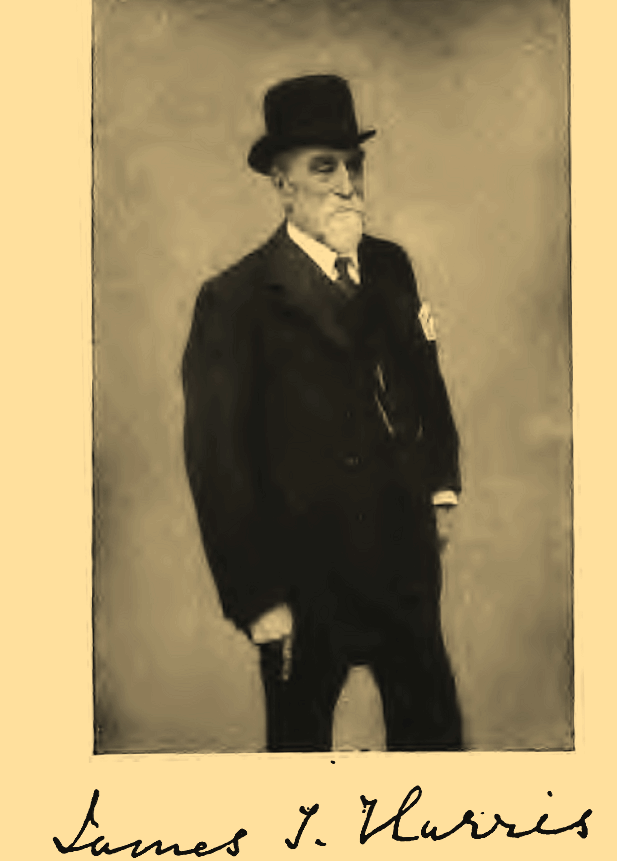
Lieutenant J.T. Harris – severely ., For this,we have Harris’ own account:
Ordered to Hindu Rao House on the morning of the 27th, he advanced with his men to the Sabzi Mandi.
“While wondering what to do in the vast assamblage of huts, I received an order from the Commanding Officer of the picket telling me to the place with my men.
In answer I wrote back at once that if he would send me a thousand men I should be happy to obey him but with my force all I could hope to do was to try to defend the line of road.” Harris took possession of a few stout buildings on his side of the road to try keep the road between himself and the approached mutineers who were streaming in numbers out of the Lahore Gate.
As the buildings were detached but only thirty yards apart, Harris found he could talk from one to the next one, thus ensuring his orders could still be heard and followed – the men barricaded the doors and Harris posted most of the men on the roof afforded shelter by the three foot parapets on each. The house Harris found himself in had only one very small door facing the road..”As we had no entrenching tools whatever, I went to this doorway to examine the thickness of the wall and to see if the men could loophole it with their bayonets While I was standing the doorway about twenty sepoys fired a volley at me fron the other side of the road. The bullets hit the both the woodwork on which I was standing and that which my head was touching. They smashed against the brick wall by the side of my ear, and one bullet took me in the thigh diagonally and came out near my hi, and aonther hit a man by the name of James Hartley in the iliac artery.”
Harris was unfortunately holding his naked sword in his left hand as the scabbard had been shot away – the volley “made me start so violently that I drove my sword right through my left foot and through the sole of my boot…”
Possibly the adrenalin pumping through his veins and the mad rush of battle did not allow Harris to realise how badly hurt he really was. There was fight in him yet.
“I limped back from the doorway to find my young subaltern and my colour-sergeant Noon were both crying. Language cannot express my feelings of rage at these men for shedding tears because I had been hit. I grabbed a pugaree, put a bullet into it, and made a rough tourniquet of it, twisting it very tightly with a man’s bayonet.”
Aware that James Hartley was bleeding to death, Harris quickly put his thumb over the artery and with the help of another man, fashioned another tourniquet for Hartley.
“During this time I was both in frightful pain and as angry as a man can be. But in the way of misfortune tings had reached a climax, for shortly afterwards we cleared the enemy off the opposite side of the road and eventually they retired. When all was quiet again I posted by men carefully, and improved as far as possible the facilities for firing to the front.” He then saw to the other buildings after which he allowed himself to taken back to the camp. Harris would not be fit to rejoin his regiment for the rest of the siege of Delhi only returning to the Fusiliers in February 1858. (China Jim – Being Incidents and Adventures in the Life of an Indian Mutiny Veteren – Major-General J.T. Harris, 1912)
Colour Sergeant James Dickson – killed in action
Privates
Agnew, James – wounded in the right foot
Bosher, James – severely wounded in the right arm; amputated
Briggs, Arthur J. – killed in action
Cook, John – killed in action
Doyle, John – slightly wounded in the left thumb
Dunkerton, Herbert – wounded in the right arm
Hartley, James – severely, died of wounds
Hanlon, Michael – wounded in the fingers
Harwood, Charles – wounded in the right thigh
Hones, George – wounded in the left leg
Keen, Lawrence- wounded through the groin
Moore, George – wounded through the body
Sharkey, John – wounded in the breast and arm
Walsh, John – dangerously wounded in the abdomen
Webster, James – killed in action
Bengal Field Artillery
Gunners
Harding, William (3/3) – killed in action
McGillicuddy, Thomas (3/3) . slight graze on face
Unposted Recruit, John Woolridge – severe contusion of groin
28th June
1/60th Foot
Private Charles Mowatt – slightly wounded
29th June
2nd Bengal European Fusiliers
Privates
Ahern, Dennis – died of cholera
Cleary, Timothy- died of cholera
30th of June
1/60th Foot
Privates
Duggan, Patrick – severely wounded, 30th June
Enfield, Charles – severely wounded
Osborne, George -slightly wounded (regimental number:3167)
Peters, William – severely wounded
Tomlinson, George – wounded
2nd Bengal European Fusiliers
Lieutenant Charles Renny Blair – dangerously wounded (according the Tavender, Blair was wounded on the 31st of July, however Colonel Young write of the incident in a letter to his wife on the 1st of July). Blair was shot through the liver and it seemed, by the nature of the wound, he had been shot by his own men from behind; there was suspicion this may have been a case of taking care of old grudges rather than wounds of war. Nothing was ever proved. Lieutenant Blair survived his wound and ended his career as a general.
Private James Smith – wounded in the spine
3rd Bengal Native Infantry
Captain Caulfield – slightly wounded at Delhi. Attached to the 1st Bengal Fusiliers
4th Bengal Native Infantry
Lieutenant C.F. Packe – severely wounded. Attached to the 4th Sikh Infantry
Artillery
Lieutenant E.H. Hildebrande – wounded
God of our fathers, known of old,
Lord of our far-flung battle-line,
Beneath whose awful Hand we hold
Dominion over palm and pine -
Lord God of Hosts, be with us yet,
Lest we forget - lest we forget!

"Recessional" (Rudyard Kipling, lines 1-6)
Sources:
Letters Written During the Siege of Delhi by H.H.Greathed, Esq., edited by his Widow (1858)
Selections of Letters and Dispatches Vol I edited by G.W. Forrest
The Chaplain’s Narrative of the Siege of Delhi – Reverend John Edward Rotton, M.A.(1858)
Gunshot Injuries from the Mutiny in India with a Description of the Preparations of Gunshot Injuries Contained in the Museum at Fort Pitt – George Williamson, M.D. (1859)
History of the Siege of Delhi by an Officer who served there – W.W. Ireland (1861)
The Siege of Delhi -Mutiny Memories of an Old Officer – Richard Barter, 1869 (London, the Folio Society, 1984)
Delhi-1857 – edited by General Sir Henry Wylie Norman and Mrs Keith Young (1902)
The Punjab and Delhi in 1857 Vol I- Rev. J. Cave-Browne M.A. (1911)
Inscriptions on Christian Tombs or Monuments in the Punjab, the North-West Frontier Province, Kashmir and Afghanistan, Part II Biographical Notices of the Military Officers and Others Whose Names Appear in the Inscriptions in Part I. – compiled by George William de Rhe- Philippe (1912)
Casualty Roll for the Indian Mutiny, 1857-59: The Casualties to All Regiments of the British Army, Naval Brigade and Europeans Serving in the Bengal, Madras and Bombay Armies” by I.T.Tavender (1983)
The Letters of Brevet Lieutenant-Colonel Robert Abercromby Yule: Part II
Journal of the Society for Army Historical Research Vol. 64, No. 259 (Autumn 1986), pp. 152-172 (21 pages)
https://www.jstor.org/stable/44225138
The lists are compiled from different sources, the primary being the indispensable “Casualty Roll for the Indian Mutiny, 1857-59: The Casualties to All Regiments of the British Army, Naval Brigade and Europeans Serving in the Bengal, Madras and Bombay Armies” by I.T.Tavender (1983). To cross reference, I have also used “Selections of the Letters and Dispatches preserved in the Military Department of the Government of India 1857-58, Vol I, edited by George W. Forrest.
The Appendix in Volume II of Reverend J. Cave-Brown’s work “Punjab and Delhi in1857” provides further names, however, he is not always clear as to which regiment the men belonged. As such, the names are transcribed exactly as found in the work. The entries given are simply Artillery and Engineer.
I have also referred to glosters.tripod.com and FIBIS.
Several entries in the Bengal Field Artillery have a listing in brackets next to the name – this is the brigade and troop indication for this particular individual and has been copied from Tavender in its exactness, should anyone require at some future date to know more about this person. Such small details can make tracing an ancestor infinitely easier. For the Corps of Guides, there are similar entries – it must be remembered that the Corps was made up of men who were attached to the Corps for a duration of time. The regiment they originally served with remained unchanged. As regiments mutinied or disbanded, their officers and men would be left with, in effect, nothing to do. Those who could found employment in other regiments or formed into volunteer corps. When possible, I have indicated this in the entry as well.
 Mutiny Reflections