Jaunpore, 5th June
The mutiny at Benares, which although not altogether a failure, was not the resounding success it could have been, for either side. The sepoys had been frightened into mutiny; the Sikhs caught in the middle were shot at for no reason, and the British were left bruised and shaken. Then, Neill came in and hung everyone he could find, joined by a group of rope-happy civilians. Yet the event would have consequences for the station of Jaunpore, a station 36 miles away from Benares.
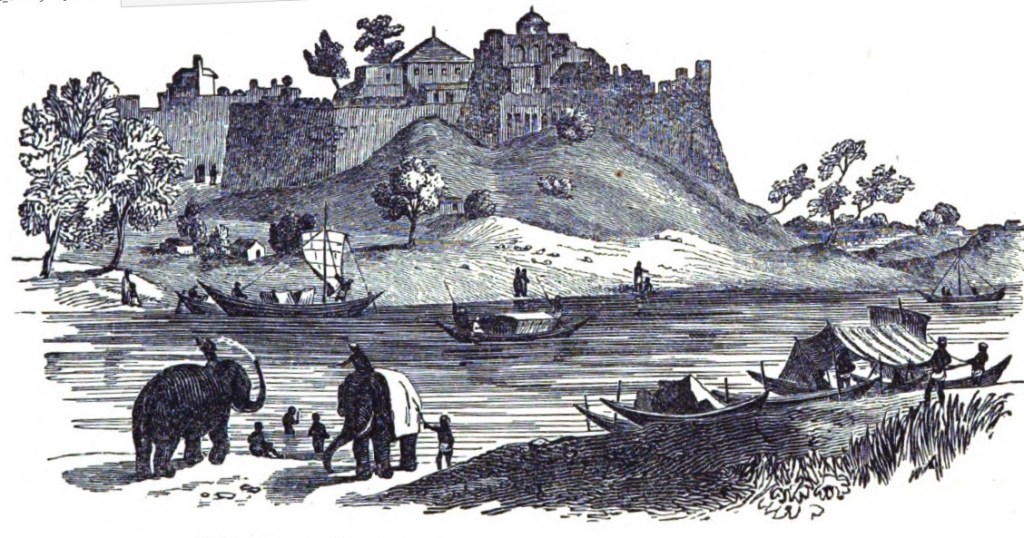
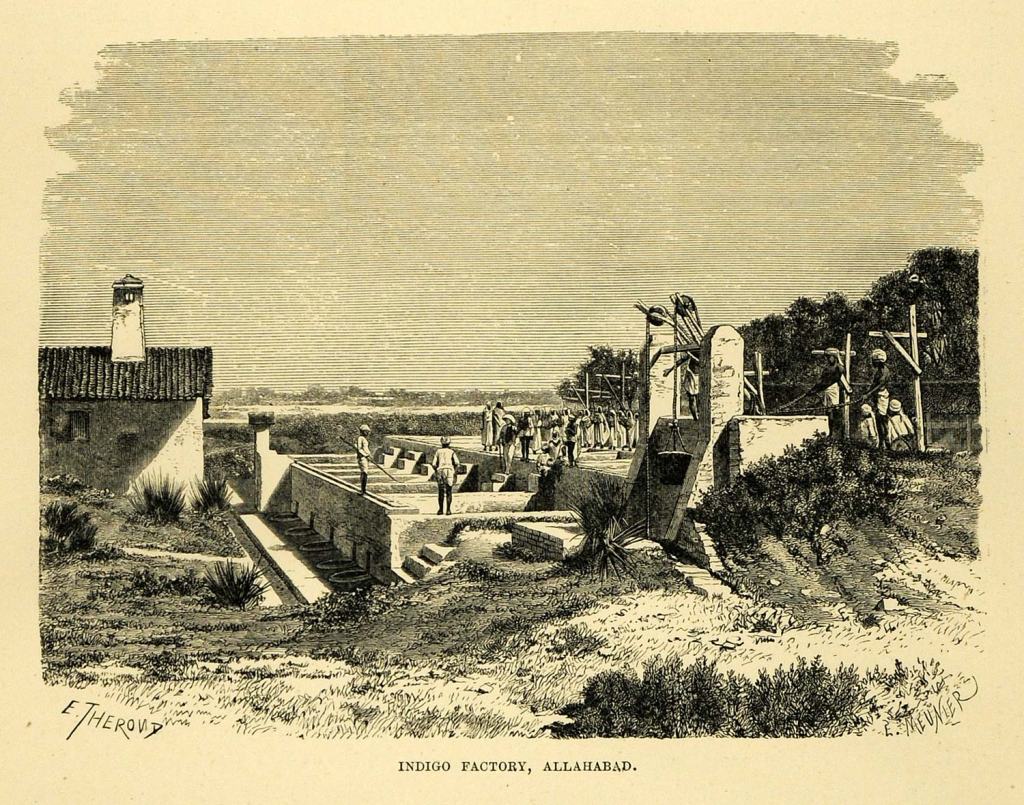
On the morning of the 5th of June, an indigo planter named Mr. Beynon and his assistants, Mssrs. Tuttle and Unsworth were attacked at the Bubcha indigo factory by a party of the 37th BNI who were fleeing Benares.
Overwhelmed by numbers, Benyon and his companions realised their best chance of surviving was in flight, and under a shower of bullets, the three men rode off towards Jaunpore. Arriving in Jaunpore, they quickly informed the residents. It was not unexpected, seeing as the mutiny in Azimgarh was already well known in the district, and the news of the events at Benares was seeping into the station, so at least some preparations had been made.
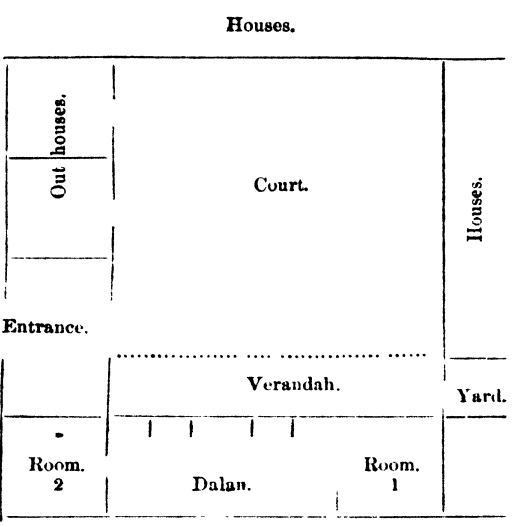
It had already been decided the kutcherry would serve well as a meeting point -and duly informed, the Europeans made their way thither. The Ludhiana Sikhs – some 75 in number and thought perfectly loyal by the commander, Lieutenant Patrick Mara – too were ordered to the kutcherry to act as a guard for the company assembled. The rest of the Sikhs were on guard at the Treasury. The assembly now awaited the arrival of the sepoys of the 37th, who, after ransacking the Bubcha Factory, were sure to enter Jaunpore during the day. It can only be surmised that if the sepoys had done as expected and arrived in Jaunpore that morning, the Sikhs would have stayed true and fought for their Lieutenant. The sepoys chose to move towards Oudh instead. In their place arrived two Sikhs from Benares. It would prove unfortunate for Lieutenant Mara that they belonged to the same regiment as he did, and upon arriving, they informed their comrades of the events at Benares – they had been fired upon by the Europeans who now seemed hell-bent on their destruction, and a number of their colleagues had been killed. So Lieutenant Mara, not being particularly popular with the men under his command, became the focus of their rage.
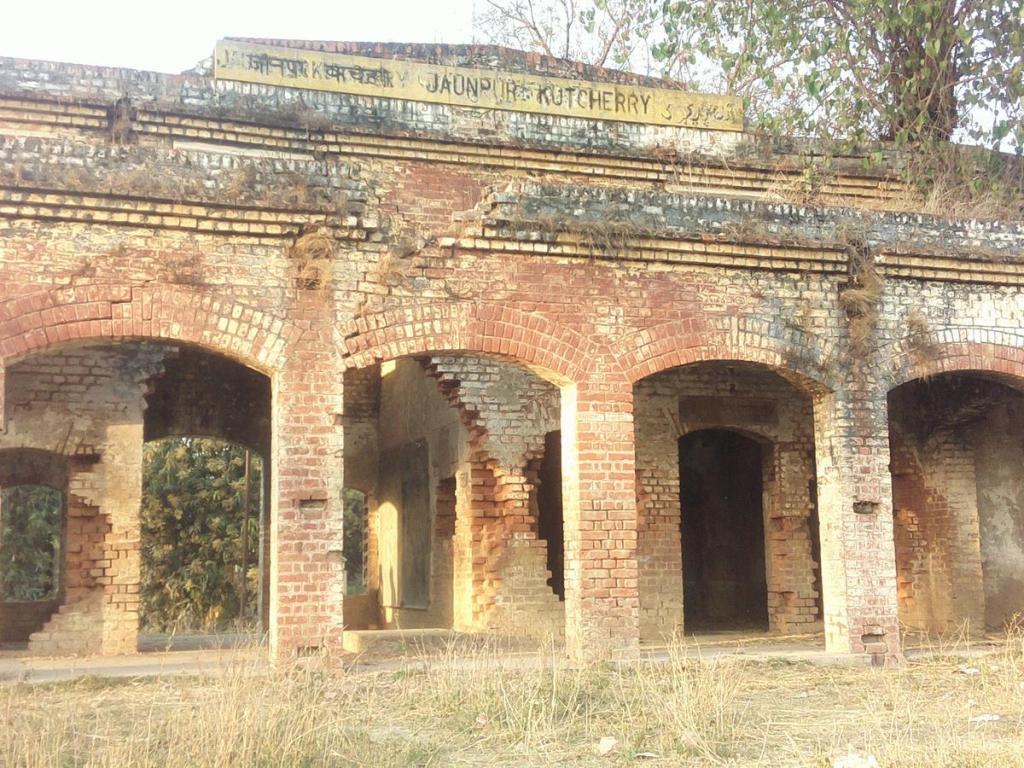
The scene in the kutcherry was surreal, where the focus was less on defence and more on food. “Some of the table servants had brought breakfast, and orders were given for dinner…”The commanding officer had dismissed the men from the positions they occupied on our first going to Cutcherr,y and having laid aside his regimentals, he took a nap…”
Around half-past two, Lieutenant Mara awoke. He advised the assembly they should remain the night in the kutcherry and should send for anything they required from their bungalows. As he stood on the verandah with the other gentlemen, a shot rang out, and Lieutenant Mara fell to the floor, blood spilling from his chest. A few more shots were fired at the building – the gentlemen did not wait for another invitation“…we retired to the Joint-Magistrates Cutcherry and barricaded the doors as well as we were able. We did this with little hope of escaping from the hands of the mutineers. They were about 140 in number, and the gentlemen of our party in the room (for some were absent) were but nine or ten. We fully expected a rush would be made into the apartment and that we should all be slaughtered. It was a solemn moment; the hour of death seemed to have arrived; the greater part were kneeling or crouching down, and some few – perhaps many – were engaged in prayer.”
What Mr. Julius P. Caesar (the author of the words above) did not realise was that it was not the 37th that had just shot Mara; it was Mara’s own men. Seeing the Lieutenant fall, the Sikhs fired a few desultory shots at the kutcherry and made off for Treasury, leaving the Europeans cowering behind their ad hoc barricade, behind which they very quickly concluded there was little point staying in Jaunpore.
Their first order, however, was given to them by Mrs. Mara. Upbraiding the men for leaving her husband senseless on the verandah, she insisted he be carried in. It turned out that although desperately injured, he was not dead. Some of the men went out and brought in the poor Lieutenant and laid him down on a charpoy.
Meanwhile, everything appeared quiet outside. Mr. Caesar quickly peeped out the door – all he saw was the rebels sauntering along the road with bags of money on their shoulders. They had finished with the Treasury and appeared to be departing. Deeming the coast clear, the party resolved to leave Jaunpore themselves by foot.
Lieutenant Mara could not rightly be left behind, so four men elected to carry the charpoy, each one taking a corner of the bed. Mr. Caesar, for his part, decided very quickly the Lieutenant was simply too heavy for him to carry, and he obliged a servant to take his place, taking Mrs. Mara instead by the arm. However, he did not find her any less irksome- being equal in corpulence to her husband, Mr. Caesar found himself dragging the woman along at a pace not much to her liking. At the gate of the kutcherry, the party stumbled upon one of their friends, Mr. Cuppage, Joint Magistrate. He had gone off shortly before the firing started to check on the jail guard, but he had been shot, the bullet entering his back and exiting his heart. His body was also found to be missing a little finger – some rascal had cut it off to steal his ring.
Lieutenant Mara, in his injured state, was proving more of a hassle for the party than they wanted to contend with. Taking the opinion of the doctor who ascertained that the Lieutenant would not survive for long, they abandoned Mara and left him to die on the roadside. Shortly after, Mr. Caesar, finding Mrs. Mara more of a nuisance than he had bargained with, enlisted the help of a servant to grab her other arm to drag her along. Doctor Paske, as they passed his house, was able to organise a carriage to accommodate the ladies and children – Mr. Caesar found room on the coachbox – where he sat, revolver in hand. Mr. Reuther was relegated to the backboard with an ayah. A pensioned sergeant named Bigwood was offered the last seat, but he refused, stating he would prefer to shift for himself. Doctor Paske and two other men were on horseback while another three walked. Around 4 pm, the party was finally on the Benares road while in Jaunpore, the
“…British government was expunged, as it had been at Azamgarh, and its chief representatives were glad to find a hiding-place for themselves in quarters which, a little time before, their fiat could have swept away like summer dust. Then, the station was given up to plunder, and the mutiny of a few Sikh mercenaries grew into a general insurrection of the people. The houses of the English were gutted and burnt. The soldiery, burdened with moneybags, having gone off towards Oudh, the plunder of “the Treasury was completed by decrepit old women and wretched little boys, who had never seen a rupee in their lives.”
The party now consisted of Messrs Fane, Tuttle, Beynon, Unsworth and Bradford. Mr. Reuther with wife and children, Mr. Julius Caesar with his wife, Dr. and Mrs. Paske, Mrs. Mara, Mr. and Mrs. Thriepland with children and Miss Robinson. Not all of them would make it to safety. The Threiplands had been poorly served by the friends. Wracked with guilt, Mr. Caesar would note, “it appears that Mr. Threipland came to the carriage and asked if there was room for Mrs. Threipland. The reply was there was no room inside and on looking outside it, it was supposed to be full; so they walked away.”
Had they kept up instead of trying to hide in Jaunpore, they would have both found a place in the carriage of Lieutenant Mara as his coachman had gone off in search of the party. He brought with him the Maras’ palanquin gari (coach).
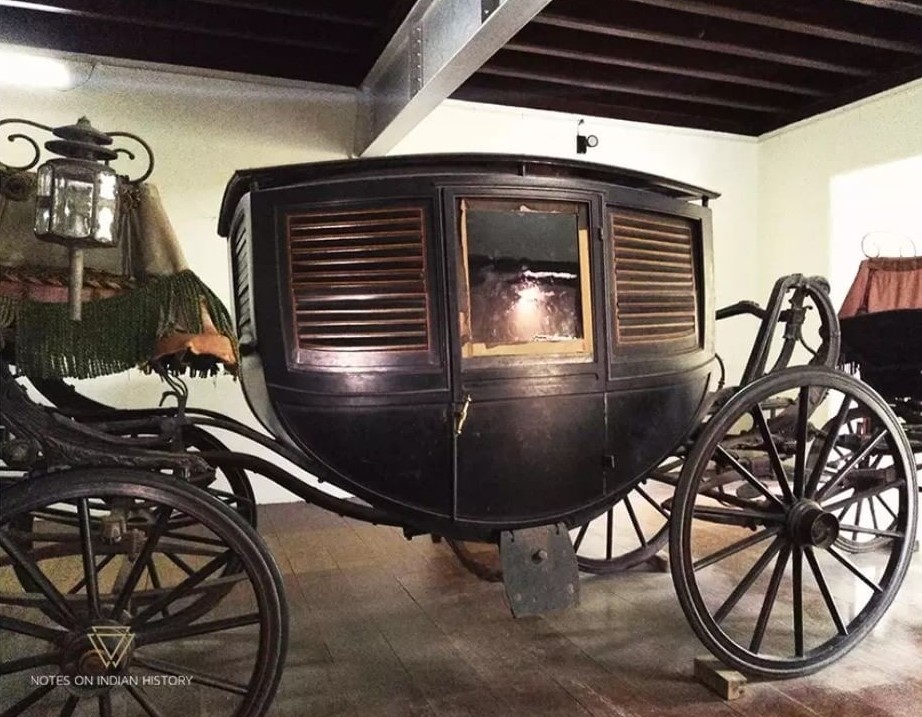
This was, of course, helpful to the party but no longer any help to the Threiplands and their children. They were left without any option but to return to their home and hope for the best. Mr. Threipland was shot by some of the Benares mutineers while his wife was turned out of her hiding place by one of their servants and murdered. Their two children were protected by their ayah, who managed to bring them to Benares. Mr. Caesar hoped he had not caused Mrs. Threipland’s death – not being aware the lady needed a seat, he had kept his; had he known she required it, Mr. Caesar claimed he would have gladly walked. As it was, no one noticed the Threiplands were missing until the party stopped at the indigo factory of Passewar.
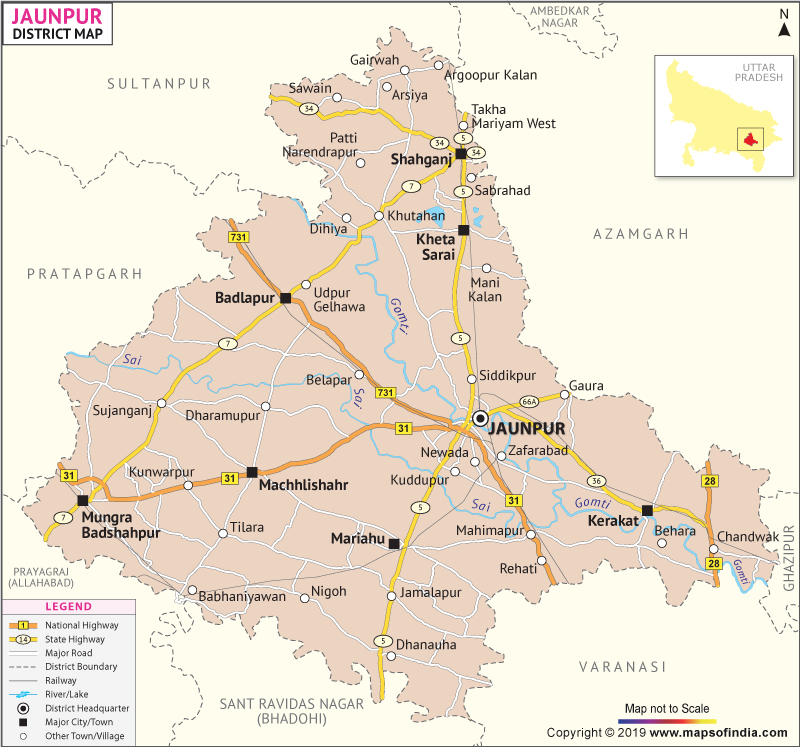
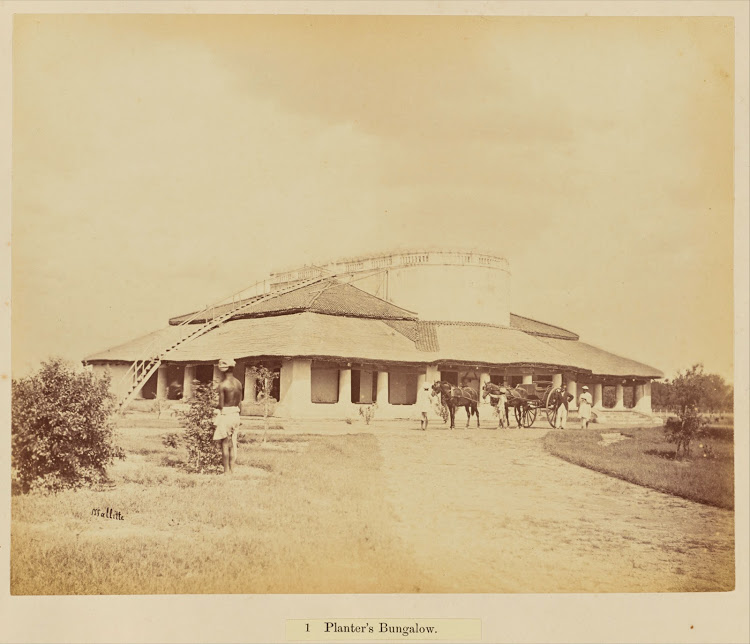
To reach the factory, they had been obliged to cross the river Gumti by ferry, making several trips to ensure the seven horses, two carriages, and all the occupants and riders made it over. The ferryman demanded a watch from one of the gentlemen, stating he would not need very much longer anyway. With this sobering thought in mind, they finally arrived at Passewar at sunset. Mr. Nicholls was at home with several members of his large family who had come in from neighbouring factories. Welcoming the party most heartily, Mr. Nicholls treated them to dinner. They sat down to their meal with some relish. Everyone, that is, except poor Mrs. Mara. She was taken out of the carriage speechless – the doctor presumed she had had an apoplectic fit brought on by grief – and although restoratives were applied, by 11 pm, she was dead and buried in the factory garden. Mr. Reuther read the burial service.
The problem was, of course, where to go from Passewar. To proceed by road was foolhardy – the countryside was crawling with mutineers, and the only choice left was to try to reach Ghazipore by boat. Mr Nicholls made the arrangements, and shortly after midnight, the Jaunpore party returned to the river. The river proved to be very shallow as the monsoon had not yet broken, so the boat was constantly going desperately near the banks. By dawn, villagers started to gather and ran along the shore, keeping up with the boat – at one place, they came down armed with lathis and matchlocks, intimating their intention to attack.
Seeing Nicholls’ kitmutgar as one of the party, they determined to search the boat for the planter. He, however, had stayed behind. Satisfied he was not hiding onboard, they let them go. Pulling into the ghat at Carakat, Mr Fane sent for the tahsildar of the place to bargain for assistance – however, the tahsildar begged to be excused, his authority was all but gone, and the mob was ruling in his place. A crowd of two or three hundred collected around the boat, and their mood was far from comforting, alternately throwing stones and brickbats at the occupants or firing off their guns in their general direction. It took the intervention of the Rajput zamindars of the place to prevent an all-out massacre. One of these, Hingun Lal, offered to accompany the party wherever they wanted to go – he did not foresee, however, that the boatmen now refused to budge. Without them, the party was lost.
Hingun Lal did what he now thought was for the best and invited the party to his own house, where they could stay until they decided what to do next. “He informed us that he had a few armed men and that they must cut his throat before they could get to us.” It was perhaps not the most comforting proposition, but the party acquiesced to his request and left the boat.
For the next few days, Hingun Lal protected the fugitives at great personal risk to himself, for while he had influence in his immediate surroundings, there was little he could do to protect them from the townspeople of Carakat or, indeed, from his neighbours. It must have been something of a relief when a note arrived from Mr Nicholls, requesting them to decamp back to Passewar, sending the doctor’s carriage and a strong guard of horsemen and footmen as an escort. Even though the villagers wanted him dead, Mr Nicholls still had friends in the local zamindars, and they, in their turn, had pledged to save his life and that of his family. Hingun Lal, however, provided them with a guard of his own and promised to visit them in Passewar the next day. They set off at sunset.
Their journey back was perhaps a little less comfortable, but the distance was traversed in two hours – provided with tea, the party lay themselves down to sleep. The next morning, they received a letter from Mr. Tucker, Commissioner of Benares, addressed “to any Europeans that be hiding at Carakat…” He intimated that a party of 12 volunteers accompanied by men of the Irregular Cavalry were ready to come to their relief, but he needed to ascertain where exactly the Europeans were before he needlessly sent out the volunteers with a cavalry escort he could not trust.
Meanwhile, Mr. Philpotts, the road overseer, arrived at Passewar. He had been trying to find the party ever since they had left the kutcherry – having arrived after they had left, he was told by the Sikhs to go away. They had offered him no menace, but he had been robbed of his clothes by the villagers on the road and in his embarrassing state, he appeared at the factory. He was at least able to give the fugitives the news – the sowars were hunting for them, which regiment they belonged to is uncertain, but they had determined that not one European was to be left alive.
On the 9th of June, a portion of the volunteers from Benares arrived – they had exchanged the Irregular Cavalry for Europeans instead – the rest of the escort was waiting on the other side of the river. It must have been an interesting scene. Besides the two carriages the Jaunpore party already had, Benares had thoughtfully sent three elephants. While the Nicholls family set off in their buggy and on horseback, some of the Jaunpore fugitives now accommodated themselves on the backs of the pachyderms. With one officer and four European soldiers, they could have done very little to defend themselves, but the zamindars were not about to send Mr Nicholls away unprotected – they sent their guard with him. After taking leave from Hingun Lal and his men, the party crossed the river safely at Carakat. Waiting for them on the other side was the magistrate of Benares, Mr Lind, twelve civilian volunteers and as many European soldiers.
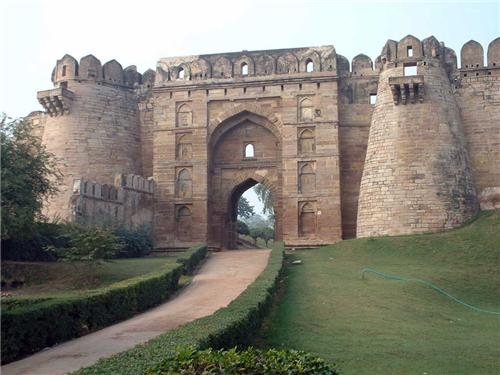
Although their adventurous journey only took five days to accomplish, others remained in hiding far longer or paid with their lives. Sergeant Bigwood had returned to his house, where he was killed. Mr Davies, formerly an indigo planter’s assistant and recently a resident of Jaunpore, had refused to go to the cutcherry – he chose to set out on his own but was killed a few miles outside the station. The native Christians were not offered the protection of the cutcherry and had to rely on themselves. The Mission School teacher, upon hearing of the attack at Bubeha, made his way directly to Benares, leaving his family behind who had to make their way as best they could in his wake. Others were protected by kindly neighbours until they, too, could make their way out of Jaunpore. As for the planters in the district, they fared little better than the Christian converts and had to rely on the help of the zamindars and even hiding in the Jaunpore Fort, under the protection of the Raja.
Indigo as a Cause
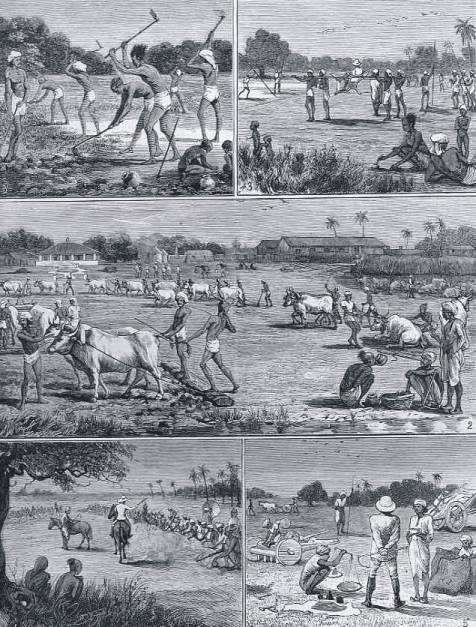
It cannot be ignored that one of the main problems in the district was indigo. This crop, so revered for the blue dye it produced, indigo was one of the main sources of profit for the EICo traders and in consequence, a vast amount of dye was produced and exported from India in the 18th and 19th centuries, destined for the cloth factories of England. It was a lucrative business with many EICo officials leaving their posts to take up positions as factory owners, while numerous Scotsmen and Englishmen arrived in the country to become planters. By 1810, 95% of all indigo imported to England was from India alone. Indigo was often planted by force instead of sustenance crops, and the workers were often paid minimal wages, suffering the abuse at the hands of the indigo planters and the factory owners.
Faced with starvation as they were coerced into planting what was for them essentially worthless vegetation, the peasants had no part in the ultimate profit of the planters or the owners, so it could not have come as a surprise when the indigo planters and their factories were among the first to be attacked. The planters and the factory owners were more often than not genuinely hated by the local population. That they received assistance from the zamindars in the vicinity could only be explained by the zamindars receiving a tidy sum of profit – so it was in their interest that the factories were running.
However, the hatred against the planters would have one positive aspect.
As a result of the mutiny, the forcible planting of indigo was prohibited by the Indigo Commission, and gradually, as synthetic indigo dyes became readily available from Germany, the cultivation and processing of natural indigo dwindled. Although the legislation came too late for the thousands who had suffered under the indigo exports, the mutiny at least brought about some change.
Escaped from Jaunpore and Outskirts
Mr. Henry Prinsep Fane, Magistrate of Jaunpore
Mr. Tuttle
Mr. Bradford
Mr. Reuther, wife and children
Mr. Julius Caesar and his wife, Anne
Dr. Paske and wife
Miss Robinson
Mr. Beynon
Mr. Unsworth
Two children of Mr. Threipland
Mr. Bunny, his wife and son, and one child who was supported by Mr. Bunny – although they had been notified to come the kutcherry, the Bunnys remained in Jaunpore and escaped to Benares disguised as peasants.
From Passewar Factory
Mr. Nicholls and family
Mr. Collis, assistant
From Battowrah
Mr. Matthews senior
Mr. Matthews junior
2 Miss Matthews
They were protected by the Raja of Jaunpore
From the Basharatpore Factory
Mr. Patrick Saunders, junior
Messrs. F. & C. Cooke
They remained at the factory and defended themselves with the help of local zamindars.
From Kuthan Factory
Mr. Auguste Waleski, junior – wounded in the head by the inhabitants of Muchlee Shuhen. Recovered.
From Amgaun Factory
Mr. J. Cosserat
From Colinjerah
Mr. Waleski senior and son
Mr. Green – escaped to Allahabad
From Badshahpore
Mr. Reybaz – escaped to Allahabad
Those Who Died
Lieutenant Patrick Mara, who commanded the two companies of Ludihana Sikhs
Mrs. Mara died of grief and was buried in Passewar
Mr. Burke Robert Cuppage – Joint Magistrate, Jaunpore, shot.
Sergeant Bigwood, pensioner, lately of the 13th Irregular Cavalry. Killed in or near his house.
Mr. Thomas Threipland, Deputy Collector of Jaunpore and wife
Mr. Bradford, Deputy Inspector of Customs – although he did escape to Benares, he would die on board the steamer Gorai, bound for Calcutta, and would be buried in Berhampore. The cause of death was undetermined, however, he had arrived in Benares with a slight fever and then caught a cold which became progressively worse during his stay in the city. In his weakened state, the river journey at the end of August proved too much for his constitution.
Mr. George Cruttenden Davis – killed by inhabitants of Menzah Newadah
Mr. Matthews, senior, died in Calcutta on the 15th of June 1858, aged 81.
Sources:
Chick, Noah Alfred. Annals of the Indian Rebellion. Calcutta: Sanders, Cones, and Co., 1859.
Dodd, George. The History of the Indian Revolt and of the Expeditions to Persia, China, and Japan, 1856–7–8. London: W. & R. Chambers, 1859.
Kaye, John William, and G. B. Malleson. Kaye’s and Malleson’s History of the Indian Mutiny of 1857–8. Vol. 2. London: W. H. Allen & Co., 1892.
Malleson, G. B. The Indian Mutiny of 1857. 3rd ed. London: Seeley and Co., 1891.
Memorials of Old Haileybury College. Edited by Frederick Charles Danvers. Westminster: Archibald Constable and Co., 1894.
The Missionary Magazine and Chronicle. Vols. 19–20. London: London Missionary Society, 1855.
 Mutiny Reflections